
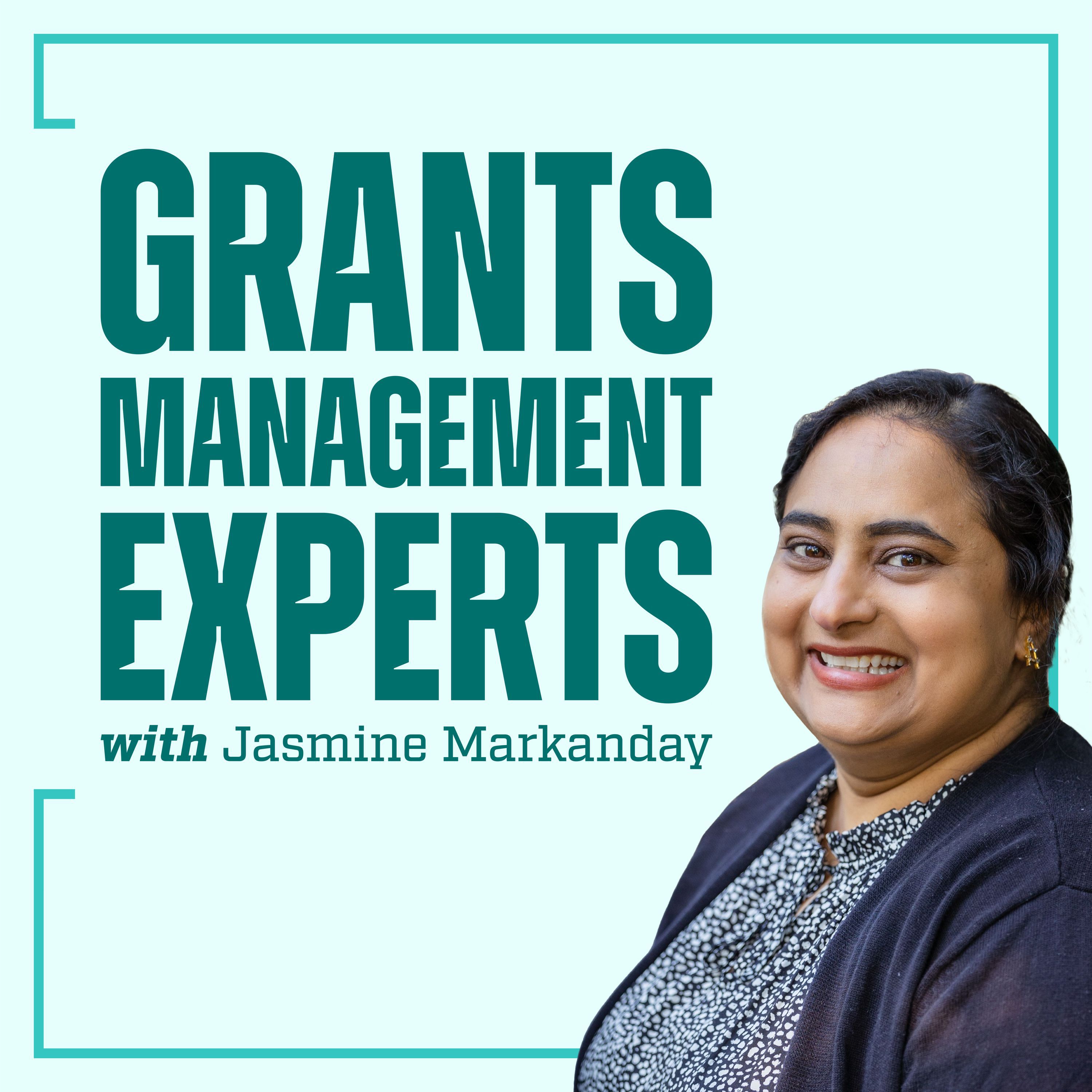
PODCAST · education
Grants Management Experts
by Jasmine Markanday
If you're looking to excel in grant management and maximize your grant funds' potential, then you should definitely check out Jasmine Markanday's podcast. In the Grants Management Expert Podcast, Jasmine shares her insights and expertise on various aspects of grant management, including tips, tricks, and best practices. Tune in to learn how to navigate the world of grants management and take your grant funding to new heights.
-
18
Ep.8 - From Suspension to Termination: The Realities of Grant Noncompliance
In this season finale of Grants Management Experts, Jasmine Markanday wraps up Season 2 with one of the most crucial and often daunting areas of federal grant management: when things go wrong in federal grants.Under 2 CFR 200.339–343, Jasmine explains the federal remedies available when a recipient or subrecipient fails to comply with grant requirements from temporary suspensions to full terminations and how you can protect your organization through proactive compliance, strong internal controls, and effective communication.What You’ll Learn in This Episode The consequences of non-compliance:How federal agencies can withhold payments, disallow costs, or suspend/terminate awardsThe impact of termination listings in SAM.gov and how it affects future funding opportunities Understanding termination:The three ways termination can occur: by the agency, mutual consent, or by the recipientWhat a termination notice must include reasons, effective dates, and scopeWhy transparency and procedural fairness (2 CFR 200.341–.342) matter in the appeals process The financial impact:What happens to costs incurred during suspension or termination (hint: most are unallowable)The two limited exceptions that may apply How suspension or termination halts your ability to charge costs to the award How to protect your organization: Strengthening internal controls and training staffDocumenting compliance, communication, and corrective actionsUnderstanding your right to object, appeal, and provide evidence before termination decisions are finalKey TakeawaysKnow the risks: Non-compliance can lead to more than disallowed costs; it can result in termination, SAM.gov reporting for five years, and future funding loss.Act quickly: If you receive a notice, respond immediately and explore corrective actions.Prevention is everything: Strong internal controls, policies, and staff training are your best defense.Resources & Links2 CFR 200.339–343: Remedies for Non- ComplianceLearn more at markanday.consultingConnect with UsInstagram: @markandayconsultingLinkedIn: @markandayconsultingIf this episode was helpful, please share it with your colleagues and leave a review to help other grant professionals find the show. That’s a wrap for Season 2! Join Jasmine next season as she continues unpacking practical insights, compliance strategies, and expert guidance to help you stay informed and stay compliant.Quote to Remember: “Grants management isn’t just about going after the money, it's about protecting your organization, the communities you serve, and the trust they’ve placed in you.” - Jasmine Markanday
-
17
Ep. 7 - From Micro-Purchases to Formal Solicitations: 2 CFR 200 Procurement Standards
In this episode of Grants Management Experts, Jasmine dives into one of the most practical — and often misunderstood — areas of federal grant management: procurement standards under 2 CFR 200.320. Whether you’re a recipient, subrecipient, or grants professional supporting compliance, understanding procurement methods is critical for both cost allowability and audit readiness.What You’ll Learn in This EpisodeThe three procurement methods:Informal (micro-purchases & simplified acquisitions)Formal (sealed bids & proposals)Non-competitive (sole source under limited circumstances)Key thresholds you must know:Micro-purchase threshold: $10,000, increasing to $15,000 on October 1, 2025Simplified acquisition threshold: $250,000, rising to $350,000 in October 1, 2025Self-certification option to raise micro-purchase thresholds up to $50,000 — and the conditions requiredHow to apply each method:When micro-purchases are appropriate and how to document price reasonablenessConditions for sealed bids versus proposals under the formal methodSituations where sole sourcing is allowed — and the documentation requiredSpecial considerations:Procurement of architectural and engineering services through qualifications-based selectionState, local, or tribal rules that may further limit thresholdsThe importance of self-certification and internal risk assessmentsKey TakeawaysAlways align procurement decisions with written procedures that match both federal rules and your organization’s policies.Documentation is everything: from price reasonableness to risk assessments and self-certifications.Understand thresholds now — and prepare for the upcoming October 2025 changes.Remember: in grants management, fairness, competition, and compliance are the foundations of procurement.Resources & Links:2 CFR 200 Procurement StandardsLearn more at markanday.consultingConnect with Us:Instagram: @markandayconsultingLinkedIn: @markandayconsultingIf this episode was helpful, please share it with your colleagues and leave a review to help other grants professionals find the show.Stay tuned for next week’s SEASON FINALE episode, where Jasmine will continue breaking down essential compliance topics in federal grants management.Quote to Remember:“As a grant professional, it is your job to help your organization find the right method, apply it consistently, and document, document, document” — Jasmine Markanday
-
16
Ep. 6 - Drawing the Line: Understanding Direct Costs in Federal Grants
In this episode of Grants Management Experts, Jasmine Markanday breaks down one of the most critical concepts in federal grant compliance: direct costs. Guided by 2 CFR 200.413, Jasmine explains what qualifies as a direct cost, when certain costs can shift from indirect to direct, and why consistency is the cornerstone of compliance.From administrative staff salaries to minor purchases, unallowable costs, and nonprofit-specific considerations, this episode equips you with the clarity to correctly classify expenses and avoid compliance pitfalls. Whether you’re writing a grant budget or managing one post-award, this deep dive will help you protect your organization’s resources and credibility.What You’ll Learn:The definition of direct costs under 2 CFR 200.413 and how they differ from indirect costs.Key questions to ask when deciding if an expense is a direct cost.Special conditions for charging administrative and clerical salaries directly.How to handle minor items and apply consistent treatment.The role of unallowable costs in calculating indirect cost rates.Nonprofit-specific rules for member and client service activities.Key Takeaways:A cost is direct if it can be specifically tied to a grant’s objectives with accuracy.Consistency is non-negotiable—similar costs must be treated the same way across funding sources.Some typically indirect expenses (like cybersecurity upgrades) can be charged directly if they clearly support one grant.Administrative salaries may only be charged directly if they meet all three CFR conditions.Unallowable costs, while not chargeable, must still be included in the direct cost base for rate calculations.Pro Tip:Train your staff on cost classification policies—misclassification can lead to audit findings, repayment of funds, and loss of credibility.Connect with Us:Instagram: @markandayconsultingLinkedIn: @markandayconsultingEnjoyed this episode? Leave a review, subscribe, and share it with your grants team!Quote to Remember:“Direct costs aren’t just about accuracy—they’re about fairness to your organization, your funders, and the federal government.” — Jasmine Markanday
-
15
Ep. 5 - Unlocking The Grant Allowable Costs
In this episode, Jasmine Markanday dives into one of the most fundamental yet confusing areas of federal grant compliance: understanding what costs are allowable under 2 CFR 200.403.From budgeting to closeout, Jasmine breaks down the criteria that determine whether an expense can be charged to your award, explains how consistency and documentation protect your organization, and shares practical examples to help you apply the rules with confidence. Whether you’re new to grants management or a seasoned professional, this episode provides clarity on the building blocks of compliant cost management.What You’ll Learn:The seven key factors that make a cost allowable under 2 CFR 200.403.Why “necessary and reasonable” is the foundation of cost allowability.How to identify costs excluded by your grant’s terms and conditions.The role of organizational policies and procedures in ensuring consistency.Documentation best practices that safeguard you during audits.Administrative closeout costs—what’s permitted and how to manage them.Key Takeaways:Always ask: is this expense essential to achieving the project’s goals?Costs must conform to award terms, exclusions, and organizational policies.Consistency in financial treatment builds accountability and audit readiness.“Document, document, document”—good records are your best defense.Closeout costs are allowable, but must be liquidated before the final report.Pro Tip: Don’t wait until the audit to figure out cost allowability review award terms and set up compliance-friendly systems from the very beginning.Connect with Us:Instagram: @markandayconsultingLinkedIn: @markandayconsultingEnjoyed the episode? Leave a review and share with your grants team!Quote to Remember: “Planning, consistency, and documentation will be the key on your grants management journey.” — Jasmine Markanday
-
14
Ep. 4 - Pass through Challenges: managing subrecipients and contracts
In this episode, Jasmine Markanday unpacks one of the most confusing compliance areas for grant recipients: how to correctly classify a partner as a subrecipient or a contractor under 2 CFR 200.331.From avoiding costly audit findings to building monitoring plans, Jasmine walks through the rules, real-life examples, and documentation tips every grants professional needs to confidently manage pass-through funding. Whether you’re with a nonprofit, university, or public agency, if you work with subawards or contracts, this episode is for you.What You’ll Learn:How to determine if an entity is a subrecipient or a contractor under 2 CFR 200.331.Why proper classification protects your funding and your organization.Monitoring requirements for subrecipients, from risk assessments to site visits.Contractor compliance essentials, including procurement standards and invoice accuracy.Common pitfalls in pass-through funding and how to avoid them.What to include in subaward agreements to ensure compliance and accountability.Key Takeaways:Misclassifying a partner can lead to audit findings, penalties, or funding loss.Subrecipients carry out a portion of the federal award and are subject to program compliance; contractors provide goods/services and operate in a competitive market.Use a classification checklist to document your decision-making process.Build monitoring plans for subrecipients that include regular reviews, clear deliverables, and risk-based oversight.Tailor agreement templates for each subaward or contract to spell out responsibilities, reporting, and compliance requirements.Pro Tip:Don’t guess when classifying — use documented criteria and keep your reasoning on file. This not only supports compliance but also strengthens your defense in the event of an audit.Connect with Us:Instagram: @markandayconsultingLinkedIn: @markandayconsultingEnjoyed the episode? Leave a review and share with your grants team!Quote to Remember:"Funders may not say it plainly, but they will hold you accountable for how you classify and manage subrecipients and contractors." — Jasmine Markanday
-
13
Ep. 3 - Navigating Intangible Property in Grants: Key Insights
In this episode, Jasmine Markanday breaks down a topic that often flies under the radar for grant recipients: intangible property under 2 CFR 200.315.From ownership rules to copyright rights, research data transparency, and public access obligations this episode is packed with need-to-know insights for grant professionals managing digital or intellectual assets. Whether you're a nonprofit, university, or public agency, if your grant work includes reports, websites, or research, this one’s for you.What You'll Learn:What qualifies as “intangible property” under 2 CFR 200.315.The rules around ownership and proper use of federally funded intangible property.Why “encumbering” intangible assets without approval is a compliance risk.Copyright guidance for grant-funded materials and what rights federal agencies retain.What counts as “research data” and how FOIA (Freedom of Information Act) applies.The distinction between protected data (drafts, trade secrets) and publicly shareable data.Best practices for managing public access expectations and protecting sensitive info.Key Takeaways:If you acquire intangible property with federal funds, you own it but you must use it for the grant’s authorised purpose.You can copyright your work, but the federal government retains royalty-free, irrevocable rights to use and share it.Research data cited in federal rulemaking may be subject to public disclosure.Prepare early with clear data management plans to protect your organisation and remain compliant.Public access isn’t just a suggestion, it's a condition of funding. Collaborate with your funding agency to meet expectations.Pro Tip:Get legal and compliance teams involved early in the process especially when your grant involves publishing data or creating digital content. Planning from day one helps ensure secure and compliant handling of your intangible assets.Connect with Us:Instagram: @markandayconsultingLinkedIn: @markandayconsultingEnjoyed the episode? Leave a review and share with your grants team!Quote to Remember:"You can’t sell, restrict, or repurpose grant-funded intellectual property without federal approval." — Jasmine Markanday
-
12
Ep. 2 - Grants & Goods: What You Need to Know About Supplies & Inventory
In this episode, Jasmine dives into a detail that often gets overlooked at the end of a federal grant: what to do with leftover supplies. If your organization has a closet full of unused materials at closeout, this one’s for you. Learn what counts as a “supply” under 2 CFR, how new federal thresholds might affect your next audit, and the steps you need to take to stay compliant.What You'll Learn:The updated federal threshold for supply value—from $5,000 to $10,000 as of October 1, 2024.What qualifies as a “supply” versus “equipment” under 2 CFR.When you need to repay the federal government for unused supplies.How to calculate what’s owed based on your grant’s funding percentage.Allowable deductions for selling or handling costs.Best practices for documenting internal re-use of leftover items.A compliance reminder for subrecipients on using supplies in fee-based services.Key Takeaways:Supplies left over at closeout aren’t just yours to keep—you may owe the federal government if the total value exceeds the applicable threshold.Always check your grant's start date and terms to determine which threshold applies.Selling the supplies? You can deduct up to $1,000 in reasonable handling costs.Clear documentation and communication with your program officer are key.Don’t undercut market rates if using federally funded supplies for services—that’s a compliance risk.Pro Tip: Even if your leftover supplies don’t exceed the threshold, documenting how they’re reassigned or disposed of is a best practice that could save you headaches during audits.Connect with Us:Instagram: @markandayconsultingLinkedIn: @markandayconsultingEnjoyed the episode? Leave a review and share with your grants team!Quote to Remember: "Strong grant management isn’t just about winning grants—it’s about closing them the right way." — Jasmine Markanday
-
11
Trailer - Ep. 2
Are you navigating the world of grants or looking to step into a grant management role with clarity and confidence? Season 2 of Grants Management Experts is here to guide you through the ins and outs of grant compliance, policies, and procedures—without the overwhelm.Hosted by Jasmine Markandey, a certified expert with deep experience across nonprofits, government agencies, tribal nations, and higher education, this season breaks down what it really takes to manage grants effectively from post-award to audit readiness.You’ll get real-world insights, practical advice, and stories from the field to help you:Build stronger systemsAvoid costly compliance mistakesMaximize the impact of your fundingWhether you’re new to grants or a seasoned pro, this podcast will help you stay on top of your game. Hit subscribe and get ready to become grant compliant—one episode at a time.
-
10
Ep. 1 - What Happens to Equipment After the Grant?
Welcome back to Season 2 of Grant’s Management Experts, the podcast where we break down the complex world of grants so you can manage them with confidence! I’m your host, Jasmine Markanday, president and owner of Markanday Consulting.In this kickoff episode, we’re diving into an often overlooked but critical part of the grant lifecycle: equipment disposition.When your federally funded project wraps up, what happens to the equipment you purchased with those funds? Can you keep it? Sell it? Use it for another grant? And what rules must you follow to stay compliant?Here’s what you’ll learn in this episode:What "equipment disposition" really means in the grant worldHow to determine if your item qualifies as "equipment" based on 2 CFR 200 thresholdsWhen you need to request disposition instructions from your funding agencyThe updated federal thresholds: $5,000 vs. $10,000 — and how to know which appliesWhat to do if equipment is worth less than the threshold vs. more than the thresholdReal-life examples to make the rules crystal clearWhat to include in your documentation for audit readinessBest practices for inventory tracking, valuation methods, and internal policiesWhether you’re closing out your first grant or you're a seasoned grant manager, this episode is packed with practical guidance to help you stay compliant, avoid surprises, and keep your audit trail clean.️ Pro Tip: The equipment is still considered federal until all disposition rules are followed — don’t skip the final step! Connect with Jasmine & Markanday ConsultingInstagram: @markandayconsultingLinkedIn: @markandayconsultingQuestions or feedback? Send us a DM or write a review! If you found this helpful, share it with a colleague and hit that subscribe button to keep learning how to master grants management, one episode at a time.
-
9
Trailer - Ep. 1
We’re back with Season 2 of Grants Management Experts! In this quick trailer, Jasmine sets the stage for what’s ahead this season—real-world topics, expert insights, and the kind of clarity every grants professional needs.If you’ve ever found yourself navigating complex post-award processes, you won’t want to miss what’s coming up.Season 2 kicks off with Episode 1, dropping soon. Make sure to follow and stay tuned!
-
8
Episode #5 Grant Manager's Guide to Internal Control
Internal Controls, what are they? process, effected by the entity’s board of directors, management, and other personnel, designed to provide reasonable assurance regarding the achievement of objectives related to operations, reporting, and compliance. Who provides the framework? COSO: Committee of Sponsoring Organizations of the Treadway Commission The framework provides 3 objectives 1. Operations 2. Reporting 3. Compliance Objectives (ORC) 1. Operations 2. Reporting 3. Compliance Components (mnemonic) 1. Control Environment - set of standards, processes, and structures that provide the basis for carrying out internal control across the organization. 2. Risk Assessment - involves a dynamic and iterative process for identifying and assessing risks to the achievement of objectives. 3. Information & Communication - are the actions established through policies and procedures that help ensure that management’s directives to mitigate risks to the achievement of objectives are carried out. 4. Monitoring Activities - are the continual iterative process of providing, sharing, and obtaining necessary information. 5. Existing Control Activities- represents the process of ongoing and periodic evaluations to ascertain whether the components of internal control are present and functioning. To the extent control deficiencies are found, they are communicated in a timely manner to responsible parties, including senior management and elected officials, for corrective action. Internal Controls, what are they? process, effected by the entity’s board of directors, management, and other personnel, designed to provide reasonable assurance regarding the achievement of objectives related to operations, reporting, and compliance. Who provides the framework? COSO: Committee of Sponsoring Organizations of the Treadway Commission The framework provides 3 objectives 1. Operations 2. Reporting 3. Compliance Objectives (ORC) 1. Operations 2. Reporting 3. Compliance Components (mnemonic) 1. Control Environment - set of standards, processes, and structures that provide the basis for carrying out internal control across the organization. 2. Risk Assessment - involves a dynamic and iterative process for identifying and assessing risks to the achievement of objectives. 3. Information & Communication - are the actions established through policies and procedures that help ensure that management’s directives to mitigate risks to the achievement of objectives are carried out. 4. Monitoring Activities - are the continual iterative process of providing, sharing, and obtaining necessary information. 5. Existing Control Activities- represents the process of ongoing and periodic evaluations to ascertain whether the components of internal control are present and functioning. To the extent control deficiencies are found, they are communicated in a timely manner to responsible parties, including senior management and elected officials, for corrective action. In today's episode, we discuss the importance of internal controls to help organizations achieve their objectives. Do your organization have reasonable controls in place to operate, report, and stay compliant? Do you understand the COSO framework? Tune in to learn.
-
7
Episode #4 The Importance of Indirect Costs (Overhead Costs)
Proper handling of indirect costs contributes to the organization's overall sustainability and financial health. Effectively managing and accounting for indirect costs is crucial when dealing with Federal and Private grants.
-
6
Episode #3 Comparing Grant Budgets vs. Actuals
As a grant professional managing a grant, you have the power to make a positive impact on the world. By adhering to the guidelines set forth in 2 CFR 200, you can ensure that your grant is managed effectively and in a way that meets performance evaluation and financial reporting standards. Remember that your work is key to making a difference in your grant programs.
-
5
Episode #2 Navigating Federal Grants Policies & Procedures
This podcast on navigating federal grant policies & procedures helps you understand what your organization needs to implement federal grant programs. Join us as we unravel the intricacies of managing grants effectively and complying with federal regulations. Stay informed and stay compliant.
-
4
Trailer
Season 1 Trailer
-
3
Episode #1 How to Review the Federal Grant Terms & Conditions
What to do when you receive a federal grant? What are the requirements for you as a grantee? Click here to download your free copy of the Grants Team Development Meeting template, designed to help you streamline your grant management process.
We're indexing this podcast's transcripts for the first time — this can take a minute or two. We'll show results as soon as they're ready.
No matches for "" in this podcast's transcripts.
No topics indexed yet for this podcast.
Loading reviews...
ABOUT THIS SHOW
If you're looking to excel in grant management and maximize your grant funds' potential, then you should definitely check out Jasmine Markanday's podcast. In the Grants Management Expert Podcast, Jasmine shares her insights and expertise on various aspects of grant management, including tips, tricks, and best practices. Tune in to learn how to navigate the world of grants management and take your grant funding to new heights.
HOSTED BY
Jasmine Markanday
CATEGORIES
Loading similar podcasts...
URL copied to clipboard!