
PODCAST · business
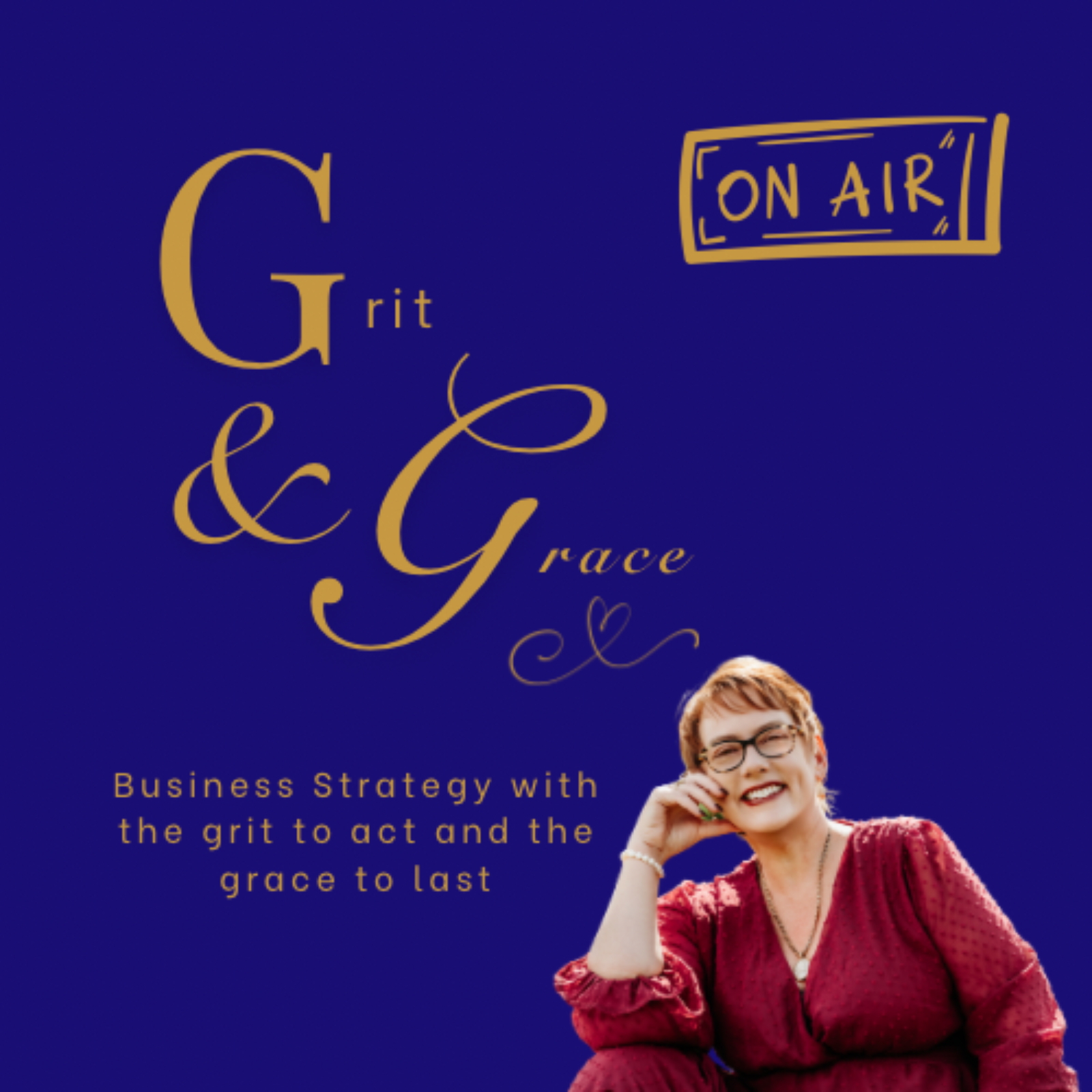
Grit & Grace
by Donagh Archer
Grit & Grace is a podcast for anyone who wants to grow with both strength and sustainability. Hosted by an Australian accountant, each episode blends practical business strategy and money clarity with mindset and leadership tools — so you can build a profitable business, set boundaries that protect your time and energy, and lead with calm confidence.If you’re ready to stop playing small and start building on your terms, press play!
-
12
Imposter Syndrome: Why It Hits Right Before You Win
Imposter syndrome rarely appears when you’re doing something easy. It shows up right before you do something that matters: sending the proposal, naming the price, pitching the client, posting the content, taking up space.In this episode of Grit & Grace, we unpack why imposter syndrome often hits at the exact moment you’re about to level up — and how it can quietly turn into bargaining, delay, and shrinking your standards. This is a story-led, practical episode designed to help you recognise the pattern in real time, interrupt it, and take the next right step without waiting to “feel confident” first.In this episode, we cover:The “send button” moment and why your brain starts negotiating with your standardsWhat imposter syndrome actually is (a growth signal, not proof you’re a fraud)How to separate feelings from decisions and lead yourself through discomfortThe CEO Evidence Method: label it, collect evidence, and take action within 48 hoursA simple weekly challenge to build confidence through a track record, not a moodDisclaimer: This episode is general information only and does not take into account your personal circumstances. It is not financial or tax advice. Please seek advice specific to your situation.
-
11
Imposter Syndrome and Self‑Sabotage: The Moment You Stop Believing Every Thought
Imposter syndrome rarely shows up when you’re doing something easy. It shows up right before you do something that matters: raise your rates, pitch the client, post the content, lead the room, take up space.And self-sabotage usually doesn’t look like quitting. It looks like delay, perfectionism, overthinking, and “just one more tweak” — the tidy, plausible habits that keep capable women stuck.In this episode of Grit & Grace, we unpack imposter syndrome and self-sabotage in a grounded, practical way — without hype and without fluff. You’ll learn how to recognise the moment the thought hits (“Who do you think you are?”), why self-sabotage often disguises itself as productivity, and how to build confidence the only way that actually works: evidence and follow-through.In this episode, we cover:What imposter syndrome really is (and why it spikes before a level-up)A vivid example of self-sabotage in disguise: the late-night “website tweak” spiralThe three most common sabotage patterns: perfectionism, preparation-as-procrastination, and overcommittingThe practical reset: “do it scared, do it small”The CEO Evidence Method: name it, collect evidence, take the next step within 48 hoursA simple 7-day challenge to stop obeying the thought and start building a track recordDisclaimer: This episode is general information only and does not take into account your personal circumstances. It is not financial or tax advice. Please seek advice specific to your situation.
-
10
The Week I Stopped Negotiating With My Standards
If your business feels stretched, reactive, or harder than it should, this episode is your reset. In this episode I walk through a week where I stopped negotiating with my standards — and the difference it made to cash flow, boundaries, time, and mental load.This is not a lecture and it’s not a “perfect morning routine” episode. It’s practical leadership in real life: the email you don’t want to send, the invoice follow-up you’ve been avoiding, the pricing moment where you usually discount too quickly, and the boundaries that quietly determine whether your business supports your life or consumes it.In this episode, we cover:How negotiable standards create stress, resentment, and scope creepWhy clarity is kind (and profitable)How to make money management procedural rather than emotionalThe “Nice Girl Tax” moments that drain margin and energyHow meeting windows and a weekly review create calm without lowering standardsA simple 7-day challenge: choose one standard and hold it, with one action taken within 48 hoursDisclaimer: This episode is general information only and does not take into account your personal circumstances. It is not financial or tax advice. Please seek advice specific to your situation.
-
9
The Hundred Acre Wood Boardroom
The Hundred Acre Wood BoardroomSome days you’re calm and clear. Some days you overthink everything. Some days you start ten things and finish none. And some days you’re doing everyone’s job because it’s “faster”. That doesn’t make you broken — it makes you human.This episode is the integration session for The Hundred Acre Wood Boardroom series: a practical CEO playbook you can use any time your business feels heavy, emotionally loud, or stuck. Instead of trying to “fix your personality”, you’ll learn how to identify the pattern you’re operating in, understand the cost (time, money, energy, or consistency), and choose one reset action that brings you back into leadership.In this episode, we cover:The weekly reset framework: Today I am… / It’s costing me… / So this week I will… / And I will protect it with…Pooh: simplifying by 20% and protecting what mattersPiglet: fear-led decisions and the power of one brave rep within 48 hoursTigger: focus, finishing, and the container that stabilises momentum (and cash flow)Rabbit: control, delegation, and building standards that are teachableEeyore: separating feelings from forecasts and leading with evidenceOwl: cutting complexity, implementing within 48 hours, and using decision rules for momentumChristopher Robin: calm direction, clear standards, and the next right stepYou’ll finish this episode with a repeatable method to lead yourself through any season — with grit and with grace.Disclaimer: This episode is general information only and does not take into account your personal circumstances. It is not financial or tax advice. Please seek advice specific to your situation.
-
8
The Hundred Acre Wood Boardroom - Christopher Robin
Christopher Robin’s Lesson: Calm Leadership WinsYou do not need louder leadership. You need steadier leadership.In this bonus instalment of The Hundred Acre Wood Boardroom series, we focus on Christopher Robin — the integrator and the leader in the Hundred Acre Wood. After exploring the patterns represented by Pooh, Piglet, Tigger, Rabbit, Eeyore and Owl, this episode is about what holds it all together: calm direction, clear standards, and leadership without drama.In this episode, we cover:Why calm is not a personality trait — it is a business strategy you can buildHow to lead when your capacity is stretched (without becoming reactive or chaotic)Why direction beats intensity, and how to set a clear 30-day outcomeHow trust is built through standards and follow-through (not endless flexibility)The Christopher Robin CEO Reset: Direction / Standards / Next Right Step — a practical framework you can use any week you feel pulled in too many directionsThis episode is a reminder that you can be kind and firm at the same time, and you can build a business that feels stable even when life is not.Disclaimer: This episode is general information only and does not take into account your personal circumstances. It is not financial or tax advice. Please seek advice specific to your situation.
-
7
The Hundred Acre Wood Boardroom - Owl
Owl’s Lesson: Clarity Beats Complexity (Stop Learning, Start Leading)If your business has become a research project — courses, podcasts, screenshots, endless tabs — but you still feel stuck, this episode is your reset. Because information is not the same as implementation.In this instalment of The Hundred Acre Wood Boardroom series, we use Owl as a mirror for a pattern that quietly blocks progress: overthinking, overcomplicating, and delaying decisions under the banner of “learning more”. Owl energy is intelligent and well-intentioned, but under pressure it can turn into analysis paralysis — and your business pays the price in stalled momentum.In this episode, we cover:Why information is not transformation (and how “preparing” can become avoidance)The difference between knowledge and evidence — and why evidence is built through actionThe one-sentence CEO test: simplifying your offer so it becomes easier to sell and easier to buyA practical implementation rule: learn it, then implement one part within 48 hoursDecision rules that reduce mental load and stop you renegotiating with yourself dailyThe Owl Implementation Plan: What I’m Learning / What I’m Implementing / When It’s DoneThis episode will help you cut through complexity, choose clarity, and lead with action — without burning out or overhauling everything at once.Disclaimer: This episode is general information only and does not take into account your personal circumstances. It is not financial or tax advice. Please seek advice specific to your situation.
-
6
The Hundred Acre Wood Boardroom - Eeyore
Eeyore’s Lesson: Feelings Aren’t Forecasts (Lead With Evidence)If you’ve caught yourself thinking, “What’s the point?” or “It probably won’t work anyway”, this episode is for you. Those thoughts can feel protective in the moment — but over time, they become a ceiling.In this instalment of The Hundred Acre Wood Boardroom series, we use Eeyore as a mirror for a common pattern in business: heavy stories, low expectations, and mood-led decision-making. Eeyore isn’t laziness — it’s often self-protection when hope feels risky. But when that protection runs the business, it can lead to inconsistency, withdrawal, and missed opportunities.In this episode, we cover:How to validate how you feel without letting your feelings run the strategyWhy “I feel like it’s not working” isn’t the same as “it’s not working”The evidence-first approach: replacing vague worry with clear dataA simple three-number mini dashboard (so you can lead with evidence, not mood)The “bad week protocol”: what to do when capacity is low, sales are quiet, or confidence dipsThe Eeyore Reality Check: The Story / The Evidence / The Next Step — a practical reset you can use any time you start spirallingThis is not a “think positive” episode. It’s a leadership episode — designed to help you stay steady, make accurate decisions, and keep moving forward even in a hard season.
-
5
The Hundred Acre Wood Boardroom - Rabbit
If you keep doing everything yourself because it’s “faster”, this episode will feel very familiar. Control can look like competence — but it quietly becomes a ceiling on your time, capacity, and profit.In this instalment of The Hundred Acre Wood Boardroom series, we use Rabbit as a mirror for a pattern many high-performing women in business slip into under pressure: over-functioning, perfectionism, and becoming the bottleneck in your own business. Rabbit energy brings high standards and strong execution — but without systems and delegation, it can turn into long hours, constant mental load, and a business that relies on you for everything.In this episode, we cover:Why control feels safe, but costs you time, energy, and growthThe difference between perfection and a minimum viable standard (and why defining “done” is leadership)How to make your standards teachable, so delegation doesn’t feel like a risk“Document once, delegate forever”: using checklists and simple processes to buy back timeThe Rabbit Bottleneck Audit: Only I Can Do / Someone Else Could Do / I Should Stop DoingOne practical release you can implement this week to reduce overwhelm and increase capacityThis episode is about keeping the standards — and losing the self-sacrifice — so your business can grow without consuming you.Disclaimer: This episode is general information only and does not take into account your personal circumstances. It is not financial or tax advice. Please seek advice specific to your situation.
-
4
The Hundred Acre Wood Boardroom - Tigger
Tigger’s Rule: Finish What You Start (The “Fresh Start” Trap)If you’ve ever said, “Right — fresh start. New plan. New week”… and then found yourself saying the same thing the following Monday, you’re not lazy. You’re in a pattern.In this episode of Grit & Grace, we unpack Tigger: big energy, big ideas, and the very real way enthusiasm can turn into chaos when there’s no container. Starting feels like progress, but half-finished projects create mental noise, background guilt, and a business that constantly resets instead of building momentum.We explore why “done” is a decision (not perfection), how uncontained energy creates hidden costs (including cost creep and inconsistent revenue), and how finishing builds self-trust — the foundation of consistency.In this episode, we cover:The “fresh start” trap and why it keeps you stuckWhy half-finished projects are heavier than you thinkThe difference between starting energy and finishing disciplineThe numbers fingerprint of chaos (cost creep, inconsistent marketing, capacity mismatch)A simple 7-day finish challenge to create immediate momentumDisclaimer: This episode is general information only and does not take into account your personal circumstances. It is not financial or tax advice. Please seek advice specific to your situation.
-
3
The Hundred Acre Wood Boardroom - Piglet
Piglet’s Rule: Courage First, Confidence Second (Send the Email)There’s an email sitting in your drafts — the follow-up, the boundary, the invoice reminder, the message that says “that’s outside scope”. And you keep telling yourself you’ll send it when you feel more confident.Here’s the truth: confidence usually arrives after you act.In this episode of Grit & Grace, we use Piglet as a mirror for a common pattern in women-led businesses: hesitation, overthinking, and fear-led decision-making disguised as being “nice”, “careful”, or “not wanting to upset anyone”. This isn’t about toughening up or becoming a different person. It’s about leading yourself through the moment you’d rather avoid — with clarity, professionalism, and self-respect.In this episode, we cover:Why avoidance doesn’t remove discomfort — it extends itHow Piglet shows up in business as undercharging, overgiving, and overexplainingThe core principle: courage first, confidence secondThe 48-hour rule for sending the message you’ve been putting offClear, kind scripts for scope, payment follow-up, and availability boundariesA simple 7-day courage challenge: one message, one standardDisclaimer: This episode is general information only and does not take into account your personal circumstances. It is not financial or tax advice. Please seek advice specific to your situation.
-
2
The Hundred Acre Wood Boardroom - Pooh
Pooh’s Rule: Simple Is Profitable (A Story About the Week Everything Got Too Loud)If your business feels heavy, it’s often not because you need a bigger strategy — it’s because you’re carrying too much complexity that’s draining your time, energy, and decision-making.In this episode of Grit & Grace, I share a story about the week my business got too loud: too many moving parts, too many “quick” requests, too many half-finished ideas, and a constant sense of mental clutter. The solution wasn’t another tool or another offer. It was simplicity — the kind Winnie the Pooh quietly models.I also share why Pooh became meaningful for me during grief after my husband’s death, and why reading it as an adult reveals powerful patterns about how we lead ourselves in real life and in business. This isn’t about doing less because you’re tired. It’s about doing less because you’re leading.In this episode, we cover:How “business noise” creates hidden costs (time leaks, mental load, unclear scope, inconsistent delivery)Why clarity calms people — clients includedHow simplicity increases follow-through (and follow-through is where profit comes from)A practical 7-day challenge to make your business 20% quieter, without shrinking your ambitionDisclaimer: This episode is general information only and does not take into account your personal circumstances. It is not financial or tax advice. Please seek advice specific to your situation.
-
1
Know Your Numbers (Without Losing Your Mind)
If the word numbers makes you want to close your laptop and suddenly find something—anything—else to do, you’re not alone. Many women in business aren’t avoiding the numbers because they’re incapable. They’re avoiding them because they’ve been made to feel intimidating, overly technical, or like a measure of personal worth.In this episode of Grit & Grace, I’m simplifying business numbers in a way that feels clear, practical, and genuinely useful—without turning it into a finance lecture. You don’t need to become an accountant to run a strong business, but you do need a simple way to read the dashboard so you can make decisions with confidence.This episode is about shifting your relationship with numbers from avoidance and overwhelm to visibility and calm. Because your numbers aren’t there to judge you. They’re there to guide you. When you understand a few key metrics and build a consistent rhythm, you stop guessing, stop getting surprised, and start leading your business like a CEO.In this episode, you’ll learn:Why “being bad with numbers” is often a story, not a fact—and how shame keeps business owners stuckThe reframe that makes money easier: business numbers are like a dashboard, not a school testThe four key numbers that give you clarity without drowning you in reports:Cash (your reality check, and why looking creates calm)Profit (what’s left after costs—and why profit equals stability, not greed)Margin (the number that explains why high revenue can still feel exhausting)Debtors (money owed to you, and why delayed payments create unnecessary pressure)A simple weekly habit: the CEO Money Moment (20 minutes per week, same time, same day)Why profit doesn’t always match your bank balance in plain language—without jargon (timing, GST/tax, owner drawings, debt repayments, and irregular bills)The point of this episode:Not to make you obsessed with spreadsheets. Not to make you “perfect” with money. But to help you build the kind of visibility that makes decisions easier, boundaries stronger, and growth more sustainable.Practical actions to take this week:Write down your four numbers: cash, profit, margin, debtors.Put a recurring 20-minute CEO Money Moment in your diary.Choose one lever to adjust this month based on what you see: pricing, scope, costs, delivery efficiency, or collections.Disclaimer: This episode is general information only and does not take into account your personal circumstances. It is not financial or tax advice. Please seek advice specific to your situation.
-
0
Why Grit & Grace Exists - The Podcast for People Building Business on Their Terms
In Episode 1 of Grit & Grace, I explain why I created the podcast and who it’s for: business owners who want to grow profitably and sustainably, without burning out. I unpack what “grit” means in this context (clear decisions, consistent execution, and raising your standards) and what “grace” looks like (boundaries, capacity, and building a business that supports your life, not one that consumes it). You’ll also get three practical actions to set your direction for 2026: define your one sentence business aim, choose one key metric to track weekly, and commit to one boundary that protects your time, energy, and profit.
We're indexing this podcast's transcripts for the first time — this can take a minute or two. We'll show results as soon as they're ready.
No matches for "" in this podcast's transcripts.
No topics indexed yet for this podcast.
Loading reviews...
ABOUT THIS SHOW
Grit & Grace is a podcast for anyone who wants to grow with both strength and sustainability. Hosted by an Australian accountant, each episode blends practical business strategy and money clarity with mindset and leadership tools — so you can build a profitable business, set boundaries that protect your time and energy, and lead with calm confidence.If you’re ready to stop playing small and start building on your terms, press play!
HOSTED BY
Donagh Archer
CATEGORIES
Loading similar podcasts...
URL copied to clipboard!