
PODCAST · entrepreneurship
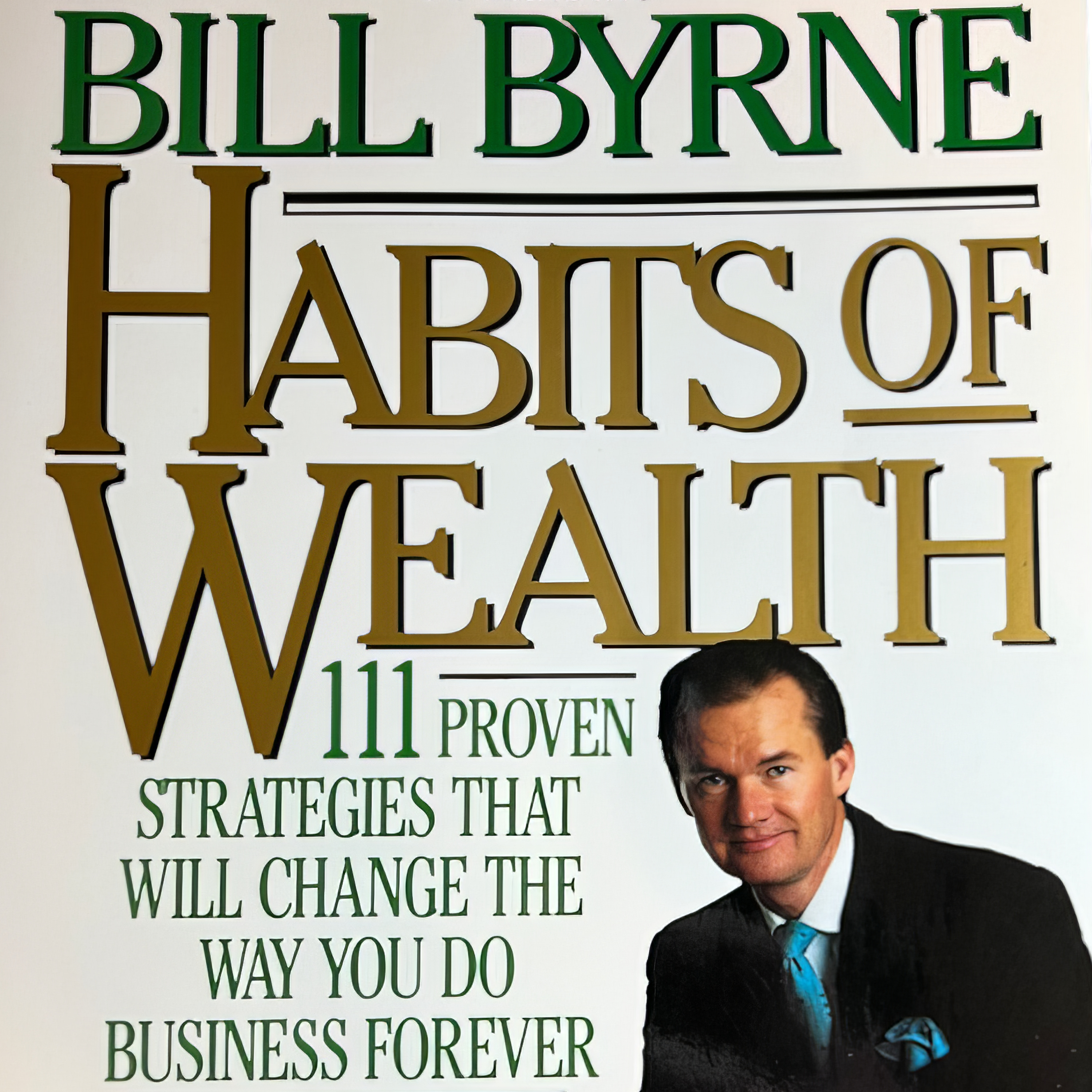
Habits of Wealth
by Bill Byrne
I wrote a business classic in the 90’s…..which was published in multiple languages. Habits of Wealth offers 111 common sense, timeless professional and personal Habits that are as helpful today as they were then. And now, all the content is available to you. FREE. My purpose in releasing these Habits is to assist in your successes.
-
144
Afterword
In this afterword segment, the host thanks the listeners for reading "Habits of Wealth" and congratulates them for making it to the end. The host then encourages the listeners to reflect on the habits discussed in the book and to share their thoughts. Listeners are asked to identify the most relevant and least relevant habits, express their interest in learning more about certain topics, and offer ideas for future writings or training sessions. The host also mentions the possibility of meeting the listeners during speaking engagements around the country and invites them to reach out for any assistance they may need. The conclusion emphasizes the listeners' turn to write.
-
143
Integrate Your Personal and Organizational Planning
In this episode, we focus on integrating personal and organizational planning to create and preserve wealth through entrepreneurial behavior. While creating wealth is important, it is equally crucial to ensure that it is preserved. To achieve this, we need to thoroughly review and align personal wills and trusts with business documents prepared during the business continuation planning process. Optimizing federal estate tax credits and considering alternatives like Living Trusts or Irrevocable Trusts can also help reduce probate expenses and provide liquidity for federal estate taxes. Many people create a will early in life but fail to update it as their financial situation changes. Just like how people tend to change their cars as their needs and success evolve, we should also consider updating our financial plans accordingly. This chapter offers valuable planning information that can be taken to a lawyer and insurance agent who meet the suggested selection criteria. They can then utilize this chapter as a foundation for creating tailored legal documents and funding recommendations that suit individual needs. The author emphasizes that achievement creates wealth, but it is planning that preserves it. The concepts discussed in this chapter have been successfully implemented to create and preserve wealth. By following these planning strategies, listeners can also experience financial success and security.
-
142
A Strategic Planning Short Course Part 2
In this episode of "A Strategic Planning Short Course," the focus is on the tactical, or deliverable, phase of strategy planning. Three necessary pieces on the tactical side are discussed: what needs to be done, who will do it, and by when it needs to be completed. The episode also dives into organizational goals, objectives, and measurements. Goals are expressed in two to five brief conceptual sentences starting with "to be," such as being the best in providing customer delight or viewed as the best place to work. On the other hand, objectives consist of six to 14 "to do" statements related to specific items that need to be achieved, with measurements outlining the actions and responsible parties required to meet these objectives within specific timeframes. Once the strategic plan is in place, it is crucial to consult it consistently and frequently. Responsible parties should consult it weekly, while the planning group as a whole should review it quarterly. It is important for the plan to become an integral part of the organization's fabric and personality. The success of the plan is heavily dependent on following through with its implementation, which requires clear responsibility assignments, specific dates for completion, and continuous measurement and follow-up. Without effective planning and implementation, the risk of failure increases, and success becomes elusive. Planning is the key to achieving success and remaining competitive in the marketplace.
-
141
A Strategic Planning Short Course
In this episode, we explore the importance of strategic planning in business. While business planning focuses on the preparation before going into business or seeking external financing, strategic planning is essential for creating wealth through effective entrepreneurial thinking. Strategic planning formalizes the focus, direction, and expectations of an organization, ensuring success and preventing pitfalls such as employee disengagement or lack of clarity. It is crucial to set clear goals, objectives, and measurements to keep the fire of success burning, and to periodically revisit and update the plan. The strategic planning process can be intimidating, but it can be simplified and facilitated by an experienced professional to ensure its effectiveness. During the episode, common questions about strategic planning are answered. Most plans are for three years, with annual updates. The best time to complete the plan is at least one month before the start of the fiscal year. The planning process involves key departmental personnel in larger organizations, while smaller organizations can include everyone. The initial plan usually takes two full days to complete, with annual updates taking at least one full day. The length of the plan varies depending on the organization's size. A simplified strategic plan outline is provided, including the development of purpose and mission statements, as well as organizational goals, objectives, and measurements. Once the plan is in place, it should be consulted regularly and responsibility for each objective measurement should be assigned and followed up on. In conclusion, strategic planning is essential for the success of any organization. Without a clear plan, the direction becomes blurred, and employees may create their own strategies or foster negative behaviors. Planning is a process that requires continual renewal and ensures that the organization is on track towards its goals. By planning effectively, businesses can navigate through the dark and reach their destination safely and efficiently, putting them ahead of the competition. Remember, if you fail to plan, you're planning to fail.
-
140
Giving Scrutiny to your Business Continuity Part 4
In this fourth episode of the series titled "Giving Scrutiny to Your Business Continuity," the discussion delves into the magic of Split Dollar arrangements and the potential benefits for partners who choose to retire at the same time. The episode explains that if both partners survive until retirement, Partner A can use the earnings within their permanent life insurance policy to make a down payment in order to buy out Partner B's interest. The withdrawal from the policy to repay the company is tax-free, and the remaining balance can serve as a personal tax-deferred cash asset to supplement retirement income. Additionally, the episode introduces the concept of Salary Continuation as a way to further enhance retirement benefits. It suggests that a Salary Continuation agreement should be drafted alongside the Cross-Purchase and Split Dollar agreements to ensure that each insured partner recovers the premium advances made on the Split Dollar policy. The Salary Continuation plan would provide supplemental income to Partner A and their estate in the future, without incurring current tax liability. The episode concludes by emphasizing the importance of installing a Business Continuation Agreement, including an annually updated valuation, to create wealth and ensure efficient use of resources. Regardless of the specific legal contract used, business owners are advised to prioritize business continuity and regularly reassess the value of their businesses.
-
139
Giving Scrutiny to your Business Continuity Part 3
In this episode of "Giving Scrutiny to Your Business Continuity," we dive into the funding alternatives and agreement options for ensuring the smooth continuation of business operations in the event of a partner's death. We explore four funding alternatives, including borrowing, using corporate surplus, term insurance, and permanent life insurance. While borrowing may be challenging and term insurance becomes cost-prohibitive in the long run, the permanent life insurance alternative is shown to be the most cost-efficient, requiring only 16 cents to create a dollar. Moving on to agreement alternatives, the Cross-Purchase agreement is typically preferred over the Stock Redemption agreement due to its tax advantages at death. However, in situations involving multiple shareholders, the Stock Redemption agreement may be more convenient, allowing the corporation to become the single buyer in the event of a partner's death. By structuring the Business Continuation Agreement as a Cross-Purchase, the surviving stockholder can benefit from a "stepped-up" cost basis, reducing the capital gain liability. We also take a closer look at the concept of Split Dollar insurance, which allows business owners to use corporate funds to pay insurance premiums, providing personal insurance and cash benefits on a favored basis. Split Dollar is particularly suitable for C corporations, while S corporations often opt for the Executive Bonus concept. By making a collateral assignment to the company, the policy values can be utilized by the business and the premiums paid by the company can be reimbursed upon the insured's death, disability, or withdrawal. It is crucial to consult with legal and insurance advisors to navigate the complexities and select the most efficient option for business continuity planning. Overall, this episode highlights the importance of carefully assessing funding alternatives, agreement options, and insurance strategies to ensure the financial stability and continuity of a business in the face of unforeseen circumstances.
-
138
Giving Scrutiny to your Business Continuity Part 2
In this episode, we continue our series titled "Giving Scrutiny to Your Business Continuity." We start off by discussing the importance of choosing the right insurance company to secure our financial future. With billions of dollars in corporate bonds defaulting in the past and the potential insolvency of major life insurers, it is crucial to conduct thorough research and not rely solely on an insurance salesperson's opinion. To evaluate an insurance company's financial strength, we should check the ratings provided by reputable rating services such as Moody's, Standard and Poor, and A. M. Best. These agencies assign ratings based on the company's financial stability and performance. In February 1991, Moody's and Standard and Poor's highest AAA ratings were given to only a fraction of North American life insurers, while A. M. Best's top A+ rating was given to 259 insurers. However, even with these statistics, choosing the right insurer can still be a complex process. Ultimately, the decision of which insurance carrier to choose will have a long-lasting impact on one's personal and business planning. It is essential to prioritize quality and security, especially when dealing with substantial insurance amounts. By conducting careful research and consulting with professionals, like Steve Garry and New York Life, we can ensure that we make the best decision to protect our financial future.
-
137
Giving Scrutiny to Your Business Continuity
This audio content discusses the importance of having a Business Continuity Agreement in place for business owners. The host shares his personal experience with a trusted insurance agent who helped him with his business and personal planning. The speaker emphasizes the need for proper planning and discusses the different types of agreements available. The audio also highlights the importance of selecting the right professionals, such as an attorney experienced in estate planning and an insurance agent with expertise in business insurance. The speaker mentions the significance of choosing the right insurance company and provides information on the different rating services that assess the financial strength of insurance companies. The content explains the funding alternatives and agreement alternatives that exist for Business Continuity Agreements. It discusses the advantages of the Cross-Purchase agreement and the Stock Redemption agreement, as well as the concept of Split Dollar insurance. The speaker also briefly touches on the concept of Salary Continuation as an additional component of a comprehensive plan. Overall, the audio stresses the necessity of having a Business Continuity Agreement and working with knowledgeable professionals to ensure proper planning and protection for business owners.
-
136
Planning For Your Permanent Prosperity
In this episode, we delve into the crucial topic of planning for long-term prosperity. According to expert Paul J. Meyer, lack of progress in achieving our goals can often be attributed to a lack of clearly defined objectives. Therefore, it is essential to prioritize planning right from the beginning of our business careers. Understanding the significance of planning is key to building and maintaining personal and organizational wealth. By committing to a well-thought-out plan, we are better equipped to track our progress and make strategic decisions that align with our goals. Whether it is in our personal or professional lives, careful planning can pave the way for continued success and prosperity.
-
135
The Entrepreneur's Credo
The Entrepreneur's Credo, published by the American Entrepreneurs Association in 1986, is a powerful statement about the mindset and values of those who choose to participate in free enterprise. It emphasizes the desire for opportunity rather than security, the willingness to take calculated risks, and the refusal to trade freedom for handouts. Entrepreneurs are described as uncommon individuals who seek the thrill of fulfillment and are unafraid to think and act for themselves. The Credo encourages entrepreneurs to proudly stand erect, take ownership of their creations, and boldly proclaim their achievements with the help of God. This inspirational message serves as a reminder for entrepreneurial achievers to embrace their unique path and make a meaningful impact in the world.
-
134
Have You Made Your Life's Choices?
In this episode of "Futuristic Habit", the host discusses the importance of making choices in life and how it has influenced their own journey towards entrepreneurial success. The host shares that their motivation for writing a book, "Habits of Wealth", was to give back and share their philosophy of entrepreneurship for personal and organizational prosperity. They emphasize that success and achievement should be measured not just quantitatively but qualitatively, and that self-knowledge is key. The host recounts a conversation with a friend at a New Year's Eve party in 1986, where they were asked what they thought they would be doing in five years. Despite their disciplined organizational planning, they admit that they didn't know the answer and that not knowing is a reflection of their entrepreneurial spirit. They stress the importance of knowing what one wants to be in life, as it gives the freedom to choose what to do. They then share their own "Life's Choices" and encourage listeners to think about and write down their own priorities. The episode concludes by stating that formalizing personal choices can create personal success, just as formal, written planning helps create success for organizations. The host encourages the audience to think about what they want to be and commit their choices to writing.
-
133
The Three Levels of Joy
In this episode, we explore the three levels of joy as described by Father Tom Mosher. The first level is "Oh" joy, which involves unexpected and pleasant surprises that make us feel good. It could be a spontaneous kiss from a loved one or a compliment from someone unexpected. The second level is "Alleluia" joy, which comes from accomplishing something significant in our lives. Whether it's graduating from college, having a child, or achieving a professional goal, this level of joy is more lasting and leaves a permanent impression. The highest level of joy is "Amen" joy. This is when we reach a place of personal comfort, satisfaction, and peace with our lives. It could be having a happy marriage, seeing our children live ethically and morally, or feeling fulfilled in our professional achievements. "Amen" joy is deep, warm, and everlasting, and it is the level of joy that aligns with our conscience. As we reflect on our future, it's essential to consider how we can structure our lives and achievements so that our conscience allows us to look back and say, "Amen." This involves finding fulfillment in both our personal and professional lives and living in alignment with our values.
-
132
Read, Read, Read
In this episode, we dive into the power of reading and how it can enhance our knowledge and skills. The host shares their personal experience with the 15/15 plan, which involves dedicating 15 hours per week to nonfiction reading for the past 15 years. They emphasize that reading, along with hands-on experiences, is the most effective way to acquire knowledge. The host advises listeners to make reading a part of their daily and weekly routines to expand their knowledge base. They encourage investing in oneself and highlight the rewarding and profitable outcomes of this habit. Whether it's for personal growth or developing future strategies, reading is emphasized as an excellent way to inhale information and stay ahead.
-
131
A Special Way to Give Something Back
In this episode, we explore the importance of giving back and contributing to education. As achievers, we have the opportunity to share our knowledge and experiences with others, particularly in the field of education. The decline in basic skills among workers entering the workplace is a growing concern, and part of the problem lies within our educational system. Private schools have excelled despite spending less and paying teachers less than public schools, highlighting the need for improvement within the public education system. The issue of teacher pay is raised, emphasizing the importance of measuring teacher effectiveness and rewarding great teachers. Additionally, parental involvement and the involvement of the business community are seen as crucial missing links in improving education. Mentoring is also discussed as a meaningful way to give back, with mentors providing guidance and learning opportunities for proteges. Overall, the episode emphasizes the significance of sharing our intellectual capital with students and supporting the future of education.
-
130
Speaking of Your Success
In this episode, we discuss the different types of speakers and the importance of credibility and personal experience in delivering a impactful speech. The first type of speaker is those who make a living speaking but lack substance and leave little of value behind. The second type is the speaker who shares personal experiences and has credibility, making a lasting impact on the audience. The third type of speaker speaks for profit but also offers depth and value to the audience, often seen in celebrity executives and authors. If you are a successful achiever, people will want to know about your journey and how you achieved success. We provide helpful tips for beginning speakers, including talking about a topic you are passionate about, organizing material effectively, and preparing extensively. We also emphasize the importance of the first five minutes of your talk, changing the pace to maintain attention, and rehearsing your message to be able to speak without a script. Additionally, we discuss the significance of writing your own introduction, being authentic and comfortable with yourself, using physical participation from the audience, and using visual aids cautiously. We also encourage spending time with the audience before the talk to establish rapport, using a microphone, and utilizing body movement and altering your voice during the speech. Finally, we highlight the importance of eye contact, asking thought-provoking questions, using short and crisp sentences, and ending with emphasis to leave a lasting impression on the audience.
-
129
The Risk/Reward Relationship. Constantly Re-defined. Constantly Revised.
In this episode of "Futuristic Habit", we explore the risk/reward relationship and how it is constantly redefined and revised in the world of entrepreneurship. We hear the story of an entrepreneurial friend who sold his company for a significant amount of money, only to lose most of it in risky real estate deals. The key takeaway is that as one's financial position changes, so should their risk parameters. The episode discusses the misconception that more wealth allows for more risk-taking. While the absolute amount that can be put at risk may increase with more assets, the percentage of personal wealth that is at risk should actually decrease. This is because as assets increase, the need to protect them becomes more important. The episode concludes by emphasizing the importance of analyzing one's debt responsibly. There are three acceptable levels of debt: one that can be covered by personal earnings, one that can fund itself through increased cash flow, and one that is offset by savings or other ready cash. Going beyond these levels of leverage, especially for individuals with considerable assets, is not advisable. Overall, the risk/reward relationship is one that should always be changing and adjusting as one's financial situation evolves.
-
128
What You Dream Is What You Get
This episode discusses the importance of having a vision and dreaming big in order to achieve one's goals. The host shares a personal story about his wife's dream of having a mountain home in the Rocky Mountains. They talked about it frequently, even though they couldn't afford it at the time. They visited different properties and kept their dream alive. Eventually, they came across a development called Watch Hill and fell in love with a unit there. However, it was too expensive for them. They left Colorado with the vision of Watch Hill and their fantasy of owning a mountain home. A year later, they returned and found that the price had significantly dropped. They bought the unit at Watch Hill and fulfilled their dream. They realized that their success was a result of their vision and persistence. The episode concludes by emphasizing the importance of visualization and the role it plays in achieving goals. The host states that he used to be skeptical of the power of visualization but has since learned that goals cannot be attained without having them in the first place. They believe that their future will be as bright as they envision it to be and that what they achieve is limited only by what they are able to visualize. They encourage listeners to dream big and have a clear vision of what they want in order to make their dreams come true.
-
127
Make Yourself a Healthy Commitment
In this audio content, the speaker emphasizes the importance of making a healthy commitment in both our personal and professional lives. They highlight the link between good health and high productivity, and how unhealthy habits can hinder individual and organizational productivity. The speaker suggests taking drastic actions such as implementing smoking bans and drug testing programs to promote health. They emphasize the importance of considering the desires and rights of nonsmokers and creating a stress-reducing work environment. The speaker shares their personal experience of realizing the benefits of a healthy lifestyle after a health scare and encourages listeners to prioritize their own wellness by consulting with their doctor and incorporating regular exercise into their routine. They conclude by emphasizing that health, like wealth, is a gift that must be earned and preserved, and urge leaders to lead by example and prioritize the health needs of their associates.
-
126
Focusing on Your Future
In this episode, we delve into the topic of focusing on your future. It is a lifelong journey of discovering what we want to be and achieve. The quote by Robert Collier emphasizes the idea that our thoughts shape our actions and ultimately determine what we can do, be, and have in life. While the question of what we want to be when we grow up may seem daunting, it is a question that should never be fully answered. This ongoing exploration keeps us motivated and propels us towards personal growth and achievement. The answer lies in the contemplation of our desires and aspirations, providing us with insight into the essence of who we are becoming. The chapter's habits guide us towards a more purposeful future, encouraging us to prioritize fulfilling and ethical goals. By cultivating these habits, we set ourselves on a path towards a rewarding and meaningful life. So join us as we embark on this journey of self-discovery and explore the habits that will shape our future.
-
125
How Do Leaders Create Wealth from Mistakes?
In this episode of Leadership Habit, we discuss how leaders can create wealth from mistakes. As Mark Twain said, good judgment comes from experience, and experience comes from bad judgment. Mistakes are essential for growth and learning as they create knowledge that helps leaders avoid repeating the same mistakes in the future. Mistakes are particularly important in business, as they can lead to greatness if one learns from them and avoids making the same mistake again. However, it's crucial to note that while mistakes are valuable, one big mistake can be detrimental to a business. It's a journey of trial and error, and leaders need to navigate the roller coaster of entrepreneurship, accumulating wisdom along the way. The episode also highlights the top ten mistakes made by leaders of new businesses. These include improper pricing, numerical ignorance, poor timing, competing with a dominant competitor, losing focus on your niche, lack of control over suppliers, not distinguishing between cash and profit, excessive pursuit of growth without adequate resources, setting unrealistic customer expectations, and most importantly, talent deficiency. Leaders must pay attention to these mistakes and learn from them to build a successful business. By avoiding these pitfalls and attracting and retaining talented individuals, leaders can increase their chances of achieving significant accomplishments in their entrepreneurial journey.
-
124
Sometimes Leading Means Following
In this episode, we hear about leadership habit 14, which focuses on the idea that sometimes leading means following. The host shares a personal story about meeting a couple who were trying to make a movie in South Dakota. Despite having limited resources, the couple had a strong sense of commitment to their project. The host decided to invest in their film and became the executive producer, primarily handling the business side of things. Throughout the movie-making process, the host realized that their role was more about supporting the entrepreneurs and letting them learn and grow, rather than taking charge. Although the movie didn't achieve financial success, the host believes it was an opportunity to give back and witness the completion of a project against all odds. The movie, "From Hollywood to Deadwood," was released nationwide and internationally. Overall, this story highlights the importance of sometimes stepping back and allowing others to lead, especially when they have a strong passion and commitment to their goals. It also emphasizes the value of giving back and supporting emerging entrepreneurs in their endeavors.
-
123
If It's Lonely at the Top, You Should Have Taken the Stairs
In this episode of Leadership Habit, we discuss the common misconception that life at the top is always fulfilling and happy. Titled "If It's Lonely at the Top, You Should Have Taken the Stairs," we explore the idea that reaching the top too easily can leave individuals feeling unfulfilled, while the struggle to achieve success can bring a sense of self-esteem and satisfaction. The episode shares a story about a friend who had the opportunity to join a competitor and run their new division for a substantial compensation package. Despite the financial success that followed, his life took a turn for the worse. He experienced marital issues, turned to heavy drinking, and felt undeserving of his newfound wealth. This serves as a reminder that if one doesn't feel they deserve their success, they won't find contentment in having it. Ultimately, the episode concludes that those who have had to work hard for their achievements may have a better chance of enjoying their success once they reach the top. Life at the top can range from loneliness to happiness, and sometimes the journey is just as important as the destination.
-
122
Leadership in Balance Is Leadership at Its Best
Leadership in balance is crucial for success. Balanced success encompasses both financial and spiritual well-being. Balanced leaders lead a fulfilling life that aligns with their core values, enabling them to make decisions with a long-term perspective. They understand their essential self and prioritize the needs of their family, career, and personal satisfaction. Balance empowers leaders to navigate through challenging times, both personally and professionally. It provides an ethical vantage point from which they can assess the impact of their actions. Balanced leaders focus on what is permanent rather than transient, and their essential self acts as a source of stability amidst the turbulence they face. They strive to align their beliefs with their behavior, constantly working to reconcile any discrepancies. True success cannot be measured solely in financial or influential terms. It requires a balanced life that encompasses strong relationships, personal happiness, and a connection to one's essential self. Striving for balanced success ensures the right perspective and long-term fulfillment. As an insightful 67-year-old executive reflected on his life, he realized the importance of not waiting too long to enjoy the fruits of his labor. Achieving true success is spelled B-A-L-A-N-C-E.
-
121
Will You Listen to Me?
In this episode, we explore the importance of listening for effective leadership. True leaders are often seen as informed and inquisitive individuals with a genuine interest in others and their subjects. Charisma and looks are not the first characteristics that come to mind when we think of leaders, but rather their ability to listen and engage with others. Good leaders listen more than they speak, constantly ask questions to assimilate knowledge, and give equal attention to everyone regardless of their background. Eye contact, visual feedback, and clarification are crucial elements of effective listening. Ultimately, true leaders understand that knowledge can come from unexpected sources and that everyone deserves an equal opportunity to be heard. Listening is not always easy, but it is a skill that can be developed and honed for successful leadership.
-
120
When Personal and Positional Leadership Come in the Same Body, You Have a Winner
In this episode, we explore the concept of leadership strength and whether it comes from one's persona, position, or both. We delve into the idea of positional leadership, where individuals are given leadership roles based on their position within an organization or community. We also examine the role of personal leadership, which comes from within and is independent of one's position. Positional leadership can sometimes be a shortcut to community leadership, as individuals are invited to join boards or committees based solely on their professional credentials or affiliations. However, personal leadership is where the real power lies. Personal leaders are those who generate their power independently of their position and can truly make a lasting impact. If your goal is to attract talent and create a strong community, it is important to focus on personal leaders. These individuals, who have the ability to lead regardless of their title, are the ones who will have a lasting impact and drive positive change.
-
119
Don't Over Commit-tee
In this episode, we explore Leadership Habit 9, which urges leaders not to over-commit themselves. It is important for leaders to recognize that it is acceptable to say no to certain opportunities or invitations. While community involvement is important, leaders should only participate when they are truly passionate about the cause. Joining a committee or board without genuine interest can ultimately detract from the organization's goals. Community organizations require more than just members; they need dedicated individuals who are willing to put in the work. It is crucial to prioritize quality over quantity when it comes to decision-making and involvement. Accepting a committee or board invitation should only be done after careful consideration of one's own abilities and patience level. If the passion is not there, it is better to decline the invitation and allow someone who genuinely cares about community service to take on the role. In conclusion, leaders should not feel obligated to join every committee or board. Instead, they should focus on opportunities where they can truly make a difference and contribute meaningfully. By avoiding over-commitment and choosing to participate only when there is genuine passion, leaders can ensure that their contributions are valuable and impactful.
-
118
It's OK to be Tough as Long as You're Fair
In this episode, we discuss the importance of being tough as a leader, as long as you are fair. Employees want leaders who provide clear guidelines and expectations. They also prefer leaders they can count on in difficult situations and someone who is decent, dependable, and fair. Effective supervision requires clarifying the agenda and bringing order out of chaos. As a leader, it is important to ask for a hard day's work from your employees, but do it fairly. Treat everyone the same, without any bias or favoritism. Clear out non-performers to make room for achievers to grow. Toughness is a required characteristic at times, and people are attracted to organizations led by individuals who are competent, caring, and know where they are going. Leaders who possess fair-minded toughness earn respect from their employees.
-
117
Tell Me, Are You Thinking, or Are You Feeling
This episode of Leadership Habit explores the fundamental difference between thinking and feeling and how it impacts effective communication. Understanding whether the person you're communicating with is thinking or feeling can make all the difference in your success. When someone is feeling an emotion and the other person is thinking a thought, communication becomes disabled. However, when both parties recognize and acknowledge whether the other is thinking or feeling, they can connect and effectively communicate. The left brain thinker and the right brain feeler often clash because of their different communication styles. It's difficult, if not impossible, to change someone's natural inclination. However, there is a way to bridge the gap. The first step is to pause and observe whether the other party is feeling or thinking. They may even explicitly tell you. Once you understand where they are coming from, adjust your approach accordingly and make a connection. By being aware of the difference between thinking and feeling, and adapting your communication style accordingly, you can gain an advantage in any discussion.
-
116
The Power of Punctuality
In this episode of Leadership Habit, we explore the power of punctuality and the impact it has on productivity and relationships. Punctuality is a habit, just like tardiness, and it is one that can greatly affect our professional lives. Research has shown that habitual lateness can disrupt the productivity of an entire team, causing frustration and dissatisfaction. Many people who are chronically late may not even realize the cost of their tardiness. It can lead to dissatisfied customers who silently go elsewhere, and it can also create strong negative feelings among colleagues and associates. Those who habitually arrive late may do so to create a sense of importance or to make a grand entrance, but in reality, it only perpetuates an inferiority complex. At the core of our professional existence is our ability to meet the expectations of others. By maintaining punctuality, we not only fulfill our commitments and promises, but we also establish ourselves as reliable and trustworthy individuals. Being on time shows respect for others and their time, and it plays a crucial role in how we are perceived in the professional world. So, let's embrace the power of punctuality and make it a habit in our lives.
-
115
He Who Talks First Loses
In this episode, we explore Leadership Habit 5: "He Who Talks First Loses." Both public speakers and negotiators need to be comfortable with periods of silence. A brief pause can increase the speaker's impact, while a negotiator may remain quiet to see if the other party will commit first. When it comes to negotiation, it is commonly said that he who talks first loses. Negotiation is important because it allows us to obtain something we cannot get without someone else's agreement. However, it is crucial to approach negotiation in a non-adversarial and non-hostile environment, especially when we are negotiating with people we will have ongoing business relationships with. Effective negotiators begin by setting priorities and understanding that they won't get everything they want. The desired outcome of a negotiation is when both parties can honestly say that they got what was most important to them. To negotiate effectively, here are some rules to follow: first, emphasize listening and waiting for the other party to commit first; second, know your priorities and be prepared to give up certain things; third, be deliberate but flexible and willing to let go when necessary; fourth, find a solution where all parties can win; fifth, agree on an agenda before starting discussions; sixth, offer ideas for settlement while staying true to your priorities; seventh, maintain decency and avoid turning the negotiation ugly; eighth, put the agreement in writing to ensure clarity and avoid future misunderstandings. The art of negotiation should be frequently used to solve disputes that could otherwise end up in costly legal battles. By enhancing the role of negotiation, we create opportunities for everyone involved to achieve mutually beneficial outcomes.
-
114
Vince Lombardi Was Wrong. Winning Isn't the Only Thing.
In this episode, we explore the idea that winning isn't the only thing, challenging the famous quote by Vince Lombardi. The quality of the competition you select can play a significant role in whether you win or lose. The narrator shares a personal example from their regular golf foursome, where their playing partners have all won state golf championships while they often take the most strokes. Despite this, the narrator does not consider themselves a loser, as they believe they benefit from playing with better golfers. They question whether winning can be solely determined by the scorecard or if it should also consider the level of competition. Ultimately, they suggest that losing isn't always bad and depends on how we define it, including doing our best and learning from the experience.
-
113
You Can Tell Leaders Anything, But They May Not Agree
Leadership Habit 3: You Can Tell Leaders Anything, But They May Not Agree Leadership is not just about making decisions based on numbers, graphs, and research. It is also about filtered intuition and the ability to think contrarily. Ted Turner, the founder of CNN, is a prime example of a courageous leader who trusted his intuition and went against the consensus. When he announced the formation of CNN, he was ridiculed for his dream. However, he believed in the concept and had a strong intuitive idea that proved to be a winner. This shows that a strong instinct and intuitive track record are significant decision-making inputs for leaders, even if they go against expert consensus. The process of decision-making is more than just gathering advice and opinions. Seasoned decision makers come to understand that their own intuition is often the best opinion. The achiever pays little attention to the often errant consensus of experts. Many significant achievements find little support during their initial stages, but if one believes thoughtfully and intuitively in an opportunity, it is important to stay with it, even if others disagree. The ability to trust one's intuition and be willing to prove it can lead to groundbreaking accomplishments that reshape the world, just like Turner did with CNN. In summary, leaders have the ability to understand and trust their intuition even when faced with opposition or ridicule. Intuition and the ability to think contrarily often lead to significant accomplishments that may not be supported initially. Turner's success with CNN proves that the courageous leader with a strong instinct can make a lasting impact, even if they may not agree with expert consensus.
-
112
To Lead or to Manage—A Million Dollar Question
In this episode of the podcast, we explore the difference between leadership and management. It's often a million-dollar question - should we lead or manage? The answer lies in understanding the distinctions between the two. While managers focus on bringing order to complexity and reacting to market trends, leaders thrive by creating visions and strategies and anticipating market changes. Managers are practical and implement institutional values, while leaders are conceptual and create these values. Managers execute plans, while leaders write them. Leaders inspire and influence behavior, while managers administer and accomplish goals. A key distinguishing characteristic of leadership is unselfishness. There is no such thing as a selfish leader. Leaders give, design, and create, while managers do and analyze. The art of leadership lies in inspiring others, while management is a discipline focused on maintaining order and efficiency. Join us in this episode as we delve into the world of leadership and management and discover the qualities that set them apart. Whether you're a leader, a manager, or aspiring to be one, understanding the distinctions between these two roles can help you navigate your professional journey with clarity and purpose.
-
111
Tantalizing Tips for Pursuing Leadership Excellence
In this episode, we explore the first leadership habit for pursuing excellence in leadership. We learn that good is not enough when better is expected. The keys to excellence shared in this episode are specifically designed for leaders in small- or medium-sized businesses who are looking for a brief and high-impact reference. The first key to pursuing leadership excellence is to constantly put yourself in the employee's shoes. It's important to look at your decisions from their perspective and do a constant perception check. The second key is to communicate your vision and make it the vision of your teammates. Break down your vision into small increments and reward each incremental achievement. The third key is to make sure everyone on staff has a reason to feel important. This can be achieved by keeping the organization trim and finding ways to increase productivity without adding unnecessary personnel. Another important key is to take a chance on gifted people. Surrounding yourself with talent is crucial for achieving prominence and creating substantial wealth. Establishing regular and consistent opportunities to communicate is also essential. Be creative and keep everyone feeling good about their work and their future. Lastly, celebrate events and accomplishments unexpectedly to create excitement and appreciation. Put employees at risk by emphasizing the importance of their work and giving them a feeling of ownership in positive results. Incentive compensation opportunities are a great way to convey a sense of ownership and make employees feel valued. Lastly, treat each employee like your best customer, as their happiness directly impacts the happiness of your customers. Delighted employees create delighted customers, so it's important to prioritize their well-being and satisfaction.
-
110
Achieving Through Leadership
In this episode of "Achieving Through Leadership," we delve into the difference between managing and leading. While many influential figures like Winston Churchill, Franklin D. Roosevelt, and John Kennedy are recognized as leaders, we rarely hear them referred to as managers. It is important to note that leadership is primarily learned through experience rather than formal education. Even fresh graduates may have the potential to become leaders, but they still need to develop their skills on the "firing line." To help you navigate the path to effective leadership, this chapter presents 15 Leadership Habits. While reading this won't instantly transform you into a leader, it will provide valuable insights to distinguish between managing and leading. These habits serve as road markers to guide your journey towards continuous improvement in your leadership techniques. Remember, leadership is a lifelong learning process, and these habits will set you on the right path.
-
109
Internal Informality–External Formality
Successful entrepreneurial organizations often have a dual personality, with internal informality and external formality. Internally, the organization fosters a highly verbal and comfortable working environment, where employees feel free to express themselves. This informality encourages more direct communication and fewer internal memos. It creates a productive atmosphere and also benefits customers, as employees are more accustomed to verbal communication. On the other hand, externally, the organization maintains a formal approach to avoid misunderstandings with suppliers and customers. This formality includes dealing with agreements and understandings in writing, rather than relying on verbal conversations. Achieving excellence requires competent leaders to know when to communicate informally and when to formalize their communications. The difference between mediocrity and excellence often lies in the attention to detail. Externally informal organizations tend to operate with a handshake rather than a contract, focusing less on specific details. As a result, they may miss deadlines and goals. This external informality is not accidental but can be attributed to laziness and managers' discomfort with writing. However, successful organizations recognize the importance of recording agreements and understandings. Effective communication requires leaders to adapt their communication style to the situation, knowing when to be informal and when to be formal. Overall, winning organizations strike a balance by maintaining internal informality and external formality, keeping the inside loose and the outside tight.
-
108
Keeping Your Organization I/U Balanced
Keeping Your Organization I/U Balanced In this episode, we explore the importance of maintaining a balance between innovation and utility in organizations. We categorize organizations into two types: entrepreneurial and non-entrepreneurial. Entrepreneurial organizations are naturally inclined towards innovation. Their experimental approach can be advantageous, as long as it does not become excessive. However, when an organization becomes overly focused on pursuing innovation, it may lose sight of the practicalities of making a living. This excessive tinkering can lead to mediocrity or even the extinction of the organization. On the other hand, non-entrepreneurial organizations are characterized by a lack of attention to innovation. These organizations resist change and continue to operate in the same manner as they did decades ago. As a result, growth is minimal and the workplace becomes stagnant and uninteresting. These organizations suffer from their archaic nature, ultimately affecting their performance. To be truly successful, organizations must find a balance between innovation and utility. A balanced organization is like a corporate gyroscope, with both innovation and profitability supporting each other interdependently. When an organization effectively blends the virtues of innovation with the practicalities of making a living, it creates an equilibrium that leads to excellence. Join us in this episode as we delve deeper into the significance of keeping your organization I/U balanced and explore strategies for achieving this equilibrium. Together, let's discover the secrets to building an organization that thrives in today's dynamic and competitive business landscape.
-
107
Every Organization Has a Culture and Is Therefore Eligible for Culture Shock
Every organization has a unique culture, and when a new leader is brought in from the outside, there can be a clash between the existing culture and the new leader's approach. In one example, a company hired a highly competent CEO with strong credentials, but he ultimately failed because his style didn't align with the organization's 50-year tradition. He disrupted the company's culture by challenging the established network, which ultimately led to his replacement by someone more in line with the organization's culture. This story serves as a reminder that businesses are like mini-societies with their own culture. Cultural changes can cause havoc, so it is important for newly appointed leaders to understand and respect the organization's heritage during the transitional period. Leading is not just about implementing new systems and providing solutions; it is also a cultural experience that requires adaptation and understanding. In summary, every organization has its own culture, and when a new leader is brought in, there is a potential for culture shock. Competence alone is not enough for success; leaders must also navigate and accommodate the organization's culture. Understanding and respecting the heritage of the organization is crucial for a smooth transition and effective leadership.
-
106
It's Time to Become a Working Environmentalist
In this episode of Organization Habit 7, we explore the importance of becoming a working environmentalist. As a boss or leader, it is crucial to take care of the working environment for yourself and your associates. This includes aspects such as air quality, noise pollution, and climate. Creating a pleasant working environment not only leaves a positive impression on visitors, but it also has a significant impact on your fellow workers. The episode provides an example of a sales representative who praises the host's office while expressing disgust towards his own office. This emphasizes how working environments can influence perceptions. Additionally, the host highlights the importance of encouraging feedback from co-workers regarding any deficiencies that need attention. By being a workplace environmentalist, it is not just a matter of responsibility; it has direct impacts on productivity, worker attitudes, customer image, and employee retention. Ultimately, taking care of the working environment is good for business. In summary, taking charge of the working environment is essential for bosses and leaders. It not only leaves a positive impression on visitors but also has a significant impact on co-workers. By being a workplace environmentalist, it enhances productivity, worker attitudes, customer image, and employee retention. Encouraging feedback and addressing deficiencies is crucial in creating a pleasant working environment that benefits both individuals and the business as a whole.
-
105
To Over-Consult Is an Insult
In this episode of "Organization Habit," we delve into the topic of consulting and the importance of being cautious when choosing a consultant for your business. The host starts off by stating that there are approximately 50,000 business consultants in the U.S., but most of them are not good at what they do. Consultants often charge a fee to provide services that they can't even do for themselves. They are seen as clever individuals who borrow your watch to give you the time and then charge you for the information. Despite this, many business people still hire consultants who lack expertise and personal business experience. The host highlights the similarities between consultants and attorneys, stating that both are heavily relied on by businesses but can also be more focused on obstacles rather than opportunities. Unlike attorneys, consultants have the freedom to set up their practice anywhere, anytime, which leads to a wide variation in skills and competence. However, the host warns listeners to be cautious when choosing a consultant and offers some suggestions. It is important to have a clear understanding of the problem you need help with and find a consultant who specializes in that area. Checking references and interviewing multiple consultants before making a decision is advised. The host also suggests considering a CPA firm with a consulting division if they have experience in your specific area of need. To hear more about the pitfalls of over-consulting and how to choose the right consultant for your business, tune in to this episode of "Organization Habit."
-
104
When Your Attorney Wins, Everyone Else Loses
In this episode, we discuss the topic of lawyers and the impact they have on society. The episode begins with a quote from Alexander Solzhenitsyn, highlighting the limitations of a society solely governed by the letter of the law. The host shares a personal rule: if they ever end up in court, they consider it a failure. The episode then examines the theory that lawyers create their own demand, as exemplified by the story of a lawyer who struggled to find business until another lawyer opened a practice nearby. With over 760,000 licensed attorneys in the United States, the episode explores the reasons behind the growth of the legal profession and the lucrative nature of the field. The episode delves into the consequences of excessive litigation in American society, particularly the comparative numbers of lawyers per capita in the US versus other countries like Japan and Great Britain. The host argues that the litigious mentality and overuse of legal services contribute to societal problems and hinder progress. They suggest that both individuals and businesses should take responsibility for reducing legal reliance and seek alternatives to litigation whenever possible. The episode concludes with a discussion on ethics within the legal profession and the importance of holding lawyers accountable for their actions. The host mentions legal scholar Walter Olson's book that addresses the abuse of the legal system and its impact on the economy. They propose potential solutions, such as abolishing contingency fees and making the losing party responsible for paying the fees of the winning side. The episode ends with a call to action, urging listeners to consider alternatives to litigation and to communicate and negotiate before resorting to legal action.
-
103
Stay in Your Niche to Avoid the Ditch
In this episode of Organization Habit, we discuss the importance of staying in your niche to avoid pitfalls. The '90s saw a shift from the belief that bigger is better to the emergence of small, highly niched companies that provide goods or services to a targeted audience. We've learned that sticking to your niche and understanding your industry leads to better results, and many established companies that made acquisitions without industry knowledge are now being bought back by smaller, more specialized businesses. This downsizing trend reflects an increasingly entrepreneurial society and highlights the importance of creating and serving niche markets. One key factor contributing to the success of niche marketers is media segmentation. The ability to reach a targeted audience with tailored and informational messages is crucial. Fortunately, media is becoming more specialized, allowing niched marketers to efficiently advertise and promote their products to specific audiences. The segmentation of media confirms the viability of a more targeted marketplace, where the size of the audience is less important than the type of audience reached. The future of advertising and promotion will be shaped by demographic and psychographic targeting, with mass media outlets like newspapers and network television potentially falling out of step. Radio, on the other hand, is becoming increasingly important as a promotional vehicle due to its adaptability to audience segmentation and geographical coverage. As viewers and advertisers make decisions aligned with their specific needs, waste is being eliminated, and targeted audiences are prioritized. Additionally, the increasing regionalization of markets will require businesses to reach further out geographically to find an adequate customer base. This trend presents opportunities for entrepreneurial thinkers with the ability to recognize and capitalize on niched market opportunities. In summary, staying in your niche and understanding your industry is crucial for long-term success. The downsizing of companies and the rise of highly niched businesses reflect a shift in thinking from big to specialized. Media segmentation and the increasing viability of targeted marketplaces offer niche marketers more opportunities to reach their intended audience efficiently. Demographic and psychographic targeting, as well as regionalization, are important future influences that entrepreneurs can leverage for success in the highly niched market.
-
102
Partnerships Can Work if You Work at Them
Partnerships Can Work if You Work at Them In this episode, we explore the topic of partnerships in business. While it is generally advised to go solo when starting a business, there are instances where partnerships can be successful. The host shares his own experience of having a 20-year partnership with Dean Neese in their restaurant business. Despite encountering challenges along the way, they have managed to maintain a strong friendship. The episode also highlights the importance of certain factors that contribute to a successful partnership. These factors include geographic distance, having non-competing interests, consistent success, separation of finances and management, shared values, and clear written plans. The host emphasizes the need for proactive communication and addressing future needs to avoid potential conflicts. The key takeaway from this episode is that partnerships can indeed work if you work at them. While it's important to be cautious and select the right partner for the right reasons, partnerships have the potential to add considerable value to entrepreneurial endeavors.
-
101
Grow, Stabilize, Then Grow Some More
The second habit for organizations is to "Grow, Stabilize, Then Grow Some More". It emphasizes the importance of a gradual and steady growth trend for achieving companies, rather than erratic or excessive growth. Many high-growth companies that aim for a consistent growth rate of over 20 percent per year often face debt, layoffs, and multiple crises as they don't leave enough margin for error. These organizations need to understand the significance of stability and avoiding impulsive and unsustainable growth in order to thrive. The temptation to become a sprinter rather than a long-distance runner is common in the business world. The allure of high-tech and high-growth industries can be captivating, but often lacks staying power. The darlings that make headlines and receive awards are usually short-lived, with many of them ending up bankrupt. Diversification can also be attractive, but the key is to focus on developing a deep understanding of one product, service, or technology instead of trying to do everything simultaneously. The preferred growth graph for organizations is compared to a stair-step pattern, where growth is followed by stabilization periods to consolidate knowledge and fortify finances. It is crucial to fill in the valleys and avoid reaching the highest peaks to ensure sustainable growth. By growing, stabilizing, then growing again, organizations can plan and prepare for more significant advancements while maintaining stability.
-
100
The Top Twelve Human Characteristics of Organizations Bill Byrne Wants to Build
In this episode, the focus is on the top twelve human characteristics that Bill Byrne wants to build in organizations. The first characteristic is the organization's focus on excellence, which requires constant dissatisfaction with current conditions and a perpetual reaching for something better. Planning is emphasized as a perfect practice that sets goals and objectives, forming the foundation for excellence. The second characteristic is the effective selection of talent. Achieving organizations reduce selection risk by matching the job to the talent, resulting in increased productivity and reduced turnover. Selection is not seen as a one-time process but as a continuing evaluation that includes building a base of knowledge for reviewing, coaching, and promoting employees. The third characteristic is the organization's busyness. Employees in achieving organizations prefer an environment with challenge and high expectations. People rise to expectations and want to be part of a working group that creates organizational success. High per employee productivity is highlighted as a strategy used by achieving organizations. Other characteristics include caring, effective measurement, enhanced relationships, distributed choices, ethical behavior, encouragement of experimentation, sharing of success, treating employees the way leaders wanted to be treated, and promoting lifelong learning. These characteristics contribute to building successful organizations that prioritize excellence, talent, productivity, and the well-being of their employees.
-
99
Achieving Through The Organization
In this episode, we explore the vital role of organizational leadership in achieving success. Peter Drucker's quote emphasizes the need for leaders who can anticipate innovation and make it economically effective. The difference between thriving organizations and those that struggle lies in the quality of their leaders. Successful leaders create an environment that attracts talented individuals. They encourage innovation, experimentation, and challenging the status quo. The presence of creative leadership can be observed through certain characteristics. Is the organization hierarchical or decentralized? Does it continuously attract and accommodate talent? Is self-improvement encouraged? Does the organization adapt quickly to external influences? And, most importantly, is it customer-focused? Achieving organizations answer these questions with a resounding "yes." In conclusion, achieving success through organizational leadership requires nurturing a culture of innovation, encouraging talented individuals, and focusing on the needs of customers. The role of the leader is to create an environment that fosters creativity and anticipates changes in the business landscape. By addressing these key elements, organizations can position themselves as forward-looking and entrepreneurial, ensuring their long-term success.
-
98
A Company Is Known by the Customers It Keeps
In this episode, we discuss the importance of customer habits and how it reflects on a company's reputation. We explore ten customer goals that serve as a guide to building strong relationships with customers and ensuring their satisfaction. The first goal is to prioritize customer retention. We delve into ways companies can keep their customers by providing excellent services and products that meet their needs. Additionally, we touch upon the importance of contributing to customers' prosperity and how it can ultimately benefit the company as well. We then explore the significance of maintaining a positive image among customers and the general public. By focusing on attracting new customers and satisfying their needs, companies can enhance their reputation and secure long-term business relationships. Lastly, we discuss the importance of effective complaint handling and how it can foster better relationships with customers. By treating every customer complaint as an opportunity to improve, companies can solidify their reputation as a customer-centric organization.
-
97
Creating the Delighted Customer Part 2
In part 2 of "Creating the Delighted Customer," the podcast focuses on Customer Commandments 13 through 24. The episode starts by emphasizing that customer delight requires a good product or service and cannot be achieved through trickery. The genuine integrity and quality of an organization must be reflected in their interactions with customers. Additionally, the right words are crucial in delivering customer delight, as choosing the proper language when dealing with complaints can greatly impact the customer's experience. The importance of protecting customer productivity is highlighted through a story of a sales representative needing a loaner car. While one dealer offered the car at a significant cost, a competing dealer provided it at minimal expense, gaining a loyal customer. The podcast then discusses the need for specific response parameters and immediate resolution of customer needs. This includes calling back customers with an update, even if a solution cannot be found on the same day, to show urgency and commitment to problem-solving. Furthermore, the podcast emphasizes that achieving customer delight is a team effort. Every contributor in the customer delight chain should have occasional opportunities to meet the customer, fostering stronger relationships. It is also vital to anticipate and address customer feelings, focusing on their needs rather than your own. Using a customer's name, providing satisfaction, and personalizing service are effective strategies to create delightful customer experiences. Finally, the seven ways to show appreciation to customers are shared, emphasizing the importance of genuinely caring, giving of oneself, listening actively, smiling, complimenting, recognizing customers by name, and making a sincere effort.
-
96
Creating the Delighted Customer
The current buzz topic in business and on the speaking circuit is how a business can continuously and effectively reinforce customer relationships. The term customer service is incomplete and fails to communicate the depth of the relationship that excellent organizations develop with customers. Customer service is a self-perception, meaning that the business may think it is serving the customer well, but if the customer disagrees, it means nothing. Customer service should not be confused with service effectiveness, as customers define the strength of a relationship by how effectively their objectives are met. Winning and keeping customers requires providing value that propels their lives forward, which is why businesses should aim for customer satisfaction and even customer delight. To achieve customer delight and strengthen customer relationships, businesses should prioritize their existing customers and not just focus on acquiring new ones. It is important to maintain regular contact with customers to reinforce the relationship, even when there is no immediate sale to be made. Delivering more than promised and surpassing customer expectations is key to creating delightfully satisfied customers. It is crucial to be genuine and genuinely focused on helping customers rather than just serving them. Customer delight starts during the sale and continues after, with follow-up and personalized attention. Empowering employees and giving them the authority to go above and beyond to create customer delight is essential. Organizations should prioritize meeting customer needs within acceptable time limits and responding to customer inquiries promptly. Finally, businesses should aim to show appreciation to their customers through care, giving, listening, complimenting, recognizing, and trying their best to create customer delight.
-
95
Scoring Customer Points with Telephone Manners
In this audio content, the speaker recounts a phone call they made to a company called Mountain Pine Company. When the speaker asks to speak to John, they are put on hold by a woman named Miss Manners who later informs them that John cannot come to the phone. The speaker is left feeling uncertain and offended by John's apparent unwillingness to take their call. The speaker goes on to criticize the practice of asking for the caller's name before connecting the call, suggesting that it is a display of self-importance rather than a necessary screening method. They argue that important people simply pick up the phone without asking who is calling. The speaker emphasizes the importance of using the caller's name when answering the phone and expresses their preference for reducing barriers and promoting accessibility in telephone communication. Overall, the speaker reflects on the negative impact of poor telephone manners, encourages the use of the caller's name, and suggests that good leaders strive to be accessible and approachable in both face-to-face and telephone interactions. They urge listeners to consider how their telephone manners impact the caller's feelings and to remove barriers in order to foster positive personal and customer relationships.
We're indexing this podcast's transcripts for the first time — this can take a minute or two. We'll show results as soon as they're ready.
No matches for "" in this podcast's transcripts.
No topics indexed yet for this podcast.
Loading reviews...
ABOUT THIS SHOW
I wrote a business classic in the 90’s…..which was published in multiple languages. Habits of Wealth offers 111 common sense, timeless professional and personal Habits that are as helpful today as they were then. And now, all the content is available to you. FREE. My purpose in releasing these Habits is to assist in your successes.
HOSTED BY
Bill Byrne
CATEGORIES
Loading similar podcasts...
Frequently Asked Questions
How many episodes does Habits of Wealth have?
Habits of Wealth currently has 50 episodes available on PodParley. New episodes are automatically indexed when they're published to the podcast feed.
What is Habits of Wealth about?
I wrote a business classic in the 90’s…..which was published in multiple languages. Habits of Wealth offers 111 common sense, timeless professional and personal Habits that are as helpful today as they were then. And now, all the content is available to you. FREE. My purpose in releasing these...
How often does Habits of Wealth release new episodes?
Habits of Wealth has 50 episodes. Check the episode list to see recent publication dates and frequency.
Where can I listen to Habits of Wealth?
You can listen to Habits of Wealth on PodParley by clicking any episode. We provide an embedded audio player for direct listening, and you can also subscribe via your preferred podcast app using the RSS feed.
Who hosts Habits of Wealth?
Habits of Wealth is created and hosted by Bill Byrne.
URL copied to clipboard!