
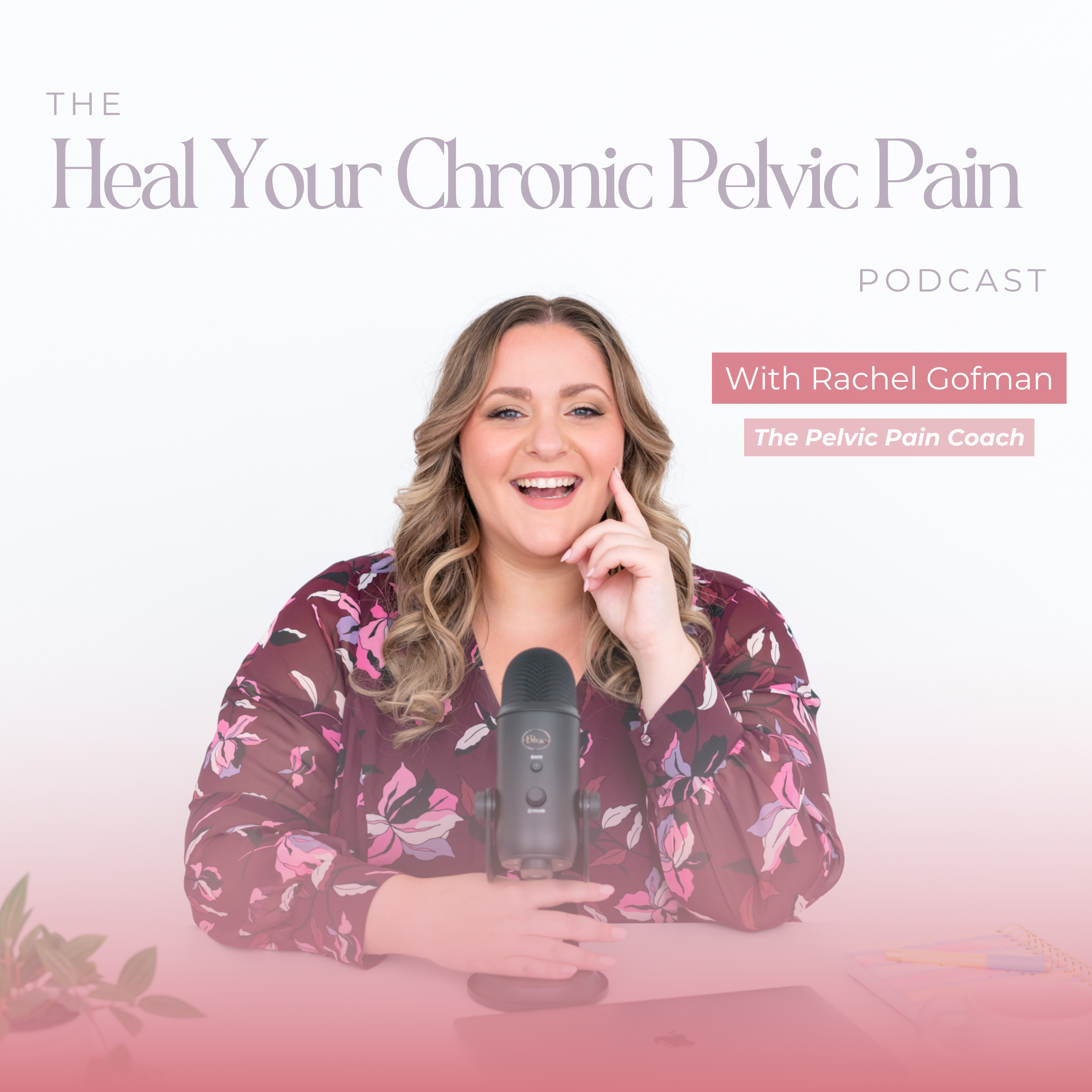
PODCAST · health
Heal Your Chronic Pelvic Pain
by Rachel Gofman, DPT
The Heal Your Chronic Pelvic Pain Podcast helps you heal chronic pelvic pain through a proven mind-body approach. Hosted by Rachel Gofman, DPT – a pelvic pain coach and physical therapist who overcame years of her own pain — each episode gives you science-based tools and compassionate guidance to partner with your nervous system to heal symptoms and reclaim your life.
-
30
Your Future Self (Part 2): The Practice
Last week I talked about the concept. This week, I'm giving you the practice.The Future Self Visualization is a guided imagery practice that up until now has only lived inside my program, Beyond Chronic Pelvic Pain. It was a big part of my own healing. I listened to some version of this almost every single day for years. Until I healed. Until I became my future self.In this episode:Why your brain might resist this (and what to do with that resistance)The full guided Future Self VisualizationHow to take that energy into your actual dayThe one question to ask yourself when you feel stuck, overwhelmed, or like it's not workingBefore you press play: find somewhere safe to sit or lie down where you won't be disturbed. You'll want to close your eyes for part of this.Ready to stop just visualizing your future self and start becoming her?That’s what I help you do inside Beyond Chronic Pelvic Pain. Doors Close TONIGHT 5/1 at midnight. When doors reopen at the end of June, the price goes up.[Learn More + Join BCPP]Resources & Links:Follow me on Instagram: @thepelvicpaincoachGet Your Free Pain Flare Plan (download): https://thepelvicpaincoach/painflareplanDisclaimer: This podcast is for informational and educational purposes only and is not a substitute for medical advice, diagnosis, or treatment.
-
29
Connecting with Your Future Self (and Becoming Her)
There's a version of you who has already healed.Who feels safe in her body.Whose life is no longer consumed by pain. Who is living the life you've been dreaming of.And, she's closer than you think.In this podcast episode, I discuss practice that changed everything for me in my own healing: connecting with your future self.Not as a theoretical concept. As a decision-making tool.Because when you're in pain, everything narrows down to: how do I feel better right now?And that urgency keeps you stuck in the same patterns that created the pain in the first place.What shifted things for me the most was learning to ask a different question:If I knew I was going to get there... what would I do right now?In this episode, I walk you through how to actually start thinking and making decisions from that place. And I share a deeply personal moment where this practice carried me through one of the hardest days of my healing journey.Want support applying this work?If you’re ready to stop doing this alone and actually start becoming her, I’d love to support you inside Beyond Chronic Pelvic Pain.This is your last opportunity to join at $847. Doors close May 1st. When we reopen, it will be $1200.👉 Join the programDisclaimer:This podcast is for informational and educational purposes only and is not a substitute for medical advice, diagnosis, or treatment.
-
28
Why You’re Still In Pain and What To Do About It (Free Masterclass)
If you’ve been doing everything right… and you’re still in pain, this episode is for you.In this short episode, I’m directing you to a free masterclass I created:“Why You’re Still In Pain, And What To Do About It.”What you might be missingMost providers are only trained to treat pain from a structural perspective.So when nothing shows up on testing, or your symptoms continue after something has been treated, you’re often left without real answers.But that doesn’t mean there aren’t answers.Inside the masterclass, you’ll learn:Why pain can continue even when nothing is structurally wrongThe different types of pain and what’s actually driving your symptomsWhat needs to shift to start moving forwardWatch the Free Masterclass👉 Click here to watch 🗓 Available until April 27thIf you’re feeling stuck or unsure what to do next, this is your next step.Want support applying this work?At the end of the masterclass, I share how to go deeper inside Beyond Chronic Pelvic Pain.Disclaimer: This podcast is for informational and educational purposes only and is not a substitute for medical advice, diagnosis, or treatment.
-
27
The Validation Trap: A Hidden Block to Healing Chronic Pelvic Pain
In this episode, I’m talking about something I see all the time with my clients, and something I personally experienced for a long time:The push-pull between validation and empowerment.And how the very thing that once helped you survive… might now be covertly blocking your ability to move forward.In this episode, we talk about:Why the need for validation makes so much sense (especially after medical gaslighting and invisible pain) How self-validation can turn into a loop that keeps you stuck The turning point: wanting to be well more than wanting validation The difference between self-pity and self-compassion (this one is big) What self-compassion actually looks like in real time The grief that comes with realizing no one can fully understand your experience Reflection questions to help you shift out of the validation loop and into healingA question to sit with:Are you validating yourself in a way that helps you feel supported and capable…Or in a way that keeps you stuck, cycling through how hard and unfair this is?If you’re ready for support…This is exactly the work we do inside Beyond Chronic Pelvic Pain.Inside the program, you’ll learn how to: Understand why your pain is happening Shift out of fear and symptom focus Respond to your body in a new way Stay in process, even when it feels hard Build real momentum in your healingYou don’t have to figure this out alone.👉 Learn more here: https://thepelvicpaincoach.com/healing-programDoors are currently open, but enrollment is closing at the end of April. When we reopen at the end of June, it will be at a new price.Healing is possible for you.Rooting for you, always 💜Disclaimer: This podcast is for informational and educational purposes only and is not a substitute for medical advice, diagnosis, or treatment.
-
26
Lagging Results: When the Work Is Working (But You Can’t Feel It Yet)
If you’ve been doing the work:✅Regulating your nervous system, ✅Responding to symptoms with safety✅Practicing self-compassion…but you’re still not feeling better yet, this episode is for you.Because one of the hardest parts of the healing journey isn’t learning what to do.It’s continuing to do it when it feels like nothing is changing.In this episode, we’re talking about lagging results — the experience of doing the work without yet seeing symptomatic change.And more importantly… how to stay in the process without spiraling, doubting yourself, or giving up.Inside this episode, we cover:What “lagging results” actually are (and why they’re normal)Why constantly checking your symptoms can keep you stuckHow urgency and outcome-dependence signal danger to your nervous systemThe real mechanism behind neuroplastic healing (what’s happening beneath the surface)Why healing often feels like “nothing is working” right before things start to shiftThe difference between inputs vs outcomes (and where to focus your energy)How to stay in the work, even when your brain is telling you it’s not workingThe core message:You are not doing it wrong.The work is working.The results are just lagging.A reframe to take with you:Healing is not like flipping a switch. It’s more like planting a seed.For a while… nothing looks different. But underneath the surface, everything is changing.Reflection questions to support you:Where am I measuring success only by symptoms right now?What inputs am I consistently providing, even if I can’t feel the results yet?What would change if I trusted that my nervous system is rewiring beneath the surface? What would it look like to stay in process without needing proof right now?Want guidance and support?If this episode resonates and you want guidance and support learning how to consistently ground back into what’s actually in your control, so your energy is moving in the direction of healing, Rachel would love to support you inside her coaching program, Beyond Chronic Pelvic Pain.Inside the program, you’ll get a self-paced curriculum grounded in modern pain neuroscience and specifically tailored for healing chronic pelvic pain, along with weekly live group coaching calls where you can ask questions, get clarity, and receive support applying this work to your real symptoms and your real life.You don’t have to do this alone anymore.You deserve to live a life beyond chronic pelvic pain.👉 Learn more about the program hereRooting for you, always 💜 RachelDisclaimer: This podcast is for informational and educational purposes only and is not a substitute for medical advice, diagnosis, or treatment.
-
25
Why Fun, Play, and Joy Are Essential for Healing (with Lauren Garchow, LCSW)
If you’ve been approaching your healing like something to figure out, fix, or do perfectly… this episode is for you.In this conversation with psychotherapist and mind-body coach Lauren Garchow, we’re talking about something that doesn’t get nearly enough attention in the healing space: that fun, play, joy, and lightness are POWERFUL healing modalities.We explore why so many of us struggle to access these states (especially if you’re driven, analytical, or used to pushing through), how pressure builds in the body and contributes to symptoms, and why expanding your life is actually part of how you heal, not something you wait to experience once you’re symptom-free.This is a grounded, practical conversation that will likely shift how you think about “doing the work.”Together, We Cover:How play, joy, and lightness help regulate your nervous systemWhy fun can feel unsafe or inaccessible (and what to do about it)The difference between top-down vs bottom-up healingHow to start accessing joy when it feels completely out of reachWhy trying harder can actually make symptoms worseThe role of self-compassion and acceptance in healingHow community and co-regulation support your nervous systemWhat it looks like to expand your life while you healYou don’t have to wait until you’re symptom-free to start living your life.Even small moments of joy, presence, or lightness are doing something meaningful in your nervous system.This work isn’t about forcing yourself to feel good.It’s about slowly expanding your capacity to experience more of the good.If fun feels far away right now, start small:Listen to a song you love and notice how it feels in your bodyWatch something that makes you laugh (this counts)Spend time with someone who feels easy to be aroundStep outside and let your mind take a breakNotice even one second of something enjoyableEvery little bit counts. About Lauren:Lauren Garchow, LCSW, is a psychotherapist, mind-body coach, and speaker based in Los Angeles, CA. Her own chronic pain healing journey revealed the mind’s powerful ability to change and adapt, igniting a deep passion to support others in their mind-body healing.As the owner of Lauren G therapy, she focuses on helping women feel at home in their bodies and has guided numerous clients through diverse chronic symptom challenges, including pelvic pain. Her work connects physical symptoms with the broader context of a person’s life, including their experiences, relationships, and identity—empowering clients to explore their minds and bodies with curiosity and compassion.Lauren deeply values balance in her life. In order for her to show up whole-heartily in this work, she prioritizes having a full life outside of it. A key part of her healing journey was learning to have more FUN and lighten up on herself. She brings this perspective into her work, encouraging clients to cultivate play, creativity, and connection as part of their healing process.Website: www.laurengtherapy.comInstagram: @laurengarchowLinkedIn: Lauren Garchow Resources & UpcomingSomatic Tracking for Dizziness (Live on Curable)March 27 at 10 AM PST→ Join + get 6 weeks free:
-
24
The Thoughts That Keep You Stuck vs. The Ones That Move You Forward
In this episode, Rachel introduces a powerful framework:Stop Healing Thoughts vs. Keep Healing ThoughtsYou’ll learn how to identify the thoughts that pull you out of the process of healing, and how to gently shift into thoughts that help you stay in it long enough for healing to actually happen.In This Episode, You’ll Learn:Why your thoughts are not the problem, but how you relate to them isHow your nervous system state influences the thoughts you thinkWhat “Stop Healing Thoughts” are and how they keep you stuckWhat “Keep Healing Thoughts” are and how they support healingWhy healing doesn’t require perfect thinking, just staying in the workA simple practice to identify your own thought patterns and shift themYour Takeaway Practice:Take a few minutes and write down:Your Stop Healing Thoughts (What pulls you into fear, hopelessness, or quitting?)Your Keep Healing Thoughts (What helps you take your next step, even when it’s hard?)This awareness alone can change everything.Want Support Applying This Work?If you’re listening and thinking, “Okay, I get this… but how do I actually apply it to my symptoms and my life?”You don’t have to figure that out alone.Inside my Beyond Chronic Pelvic Pain Healing Program, I walk you through exactly how to do this work step-by-step, with guidance, structure, and support.You’ll learn how to:Understand your symptoms through a mind-body lensReduce fear and nervous system threatBuild safety in your bodyReturn to movement, intimacy, and lifeStay consistent in the work (even when your brain wants to spiral)✨ Learn more here
-
23
Why Time (Alone) Doesn’t Heal Chronic Pelvic Pain
Many people living with chronic pelvic pain hold onto the hope that if they just wait long enough, their pain will eventually just go away. You rest. You avoid certain activities. You give it time.But months pass. Sometimes years. And the pain is still there.In this episode, Rachel explains why time alone doesn’t heal chronic pelvic pain, and what actually creates healing.If you've been stuck in the frustrating cycle of waiting and hoping things will improve on their own, this conversation will help you understand what’s really happening in your body and why a different approach is needed.Chronic pain isn’t simply a matter of tissues needing more time to recover. When chronic pelvic pain persists beyond normal healing timelines, it often means the nervous system has learned a protective pattern that continues to generate symptoms even when the body itself is safe.True healing happens when the nervous system begins to receive new signals of safety.In this episode, Rachel breaks down the three key areas where safety must be rebuilt in order to retrain the nervous system and move out of chronic pelvic pain.If you’ve been waiting for time to heal you, this episode will help you understand why that hasn’t worked and what can.And most importantly, it will remind you that healing is still possible.In This EpisodeWhy it’s completely normal to believe that time will heal chronic pelvic painThe difference between acute injury pain and chronic painWhy persistent symptoms often mean the nervous system has learned a protective patternHow waiting, resting, and avoiding can unintentionally reinforce pain pathwaysThe three types of safety your nervous system needs in order to healWhy healing chronic pelvic pain requires active nervous system retraining, not just timeMentioned in This EpisodeListen to the Understanding Pain Series (Episodes 2–6) for a deeper explanation of pain science and neuroplastic symptoms.Ready to Go Deeper?If you’re ready to stop waiting for your pain to go away and start actively retraining your nervous system, Rachel invites you to join her coaching program:Beyond Chronic Pelvic PainThis 4-month coaching container helps you:Understand what’s actually driving your symptomsRetrain your nervous system out of chronic painBuild safety in your body, yourself, and your lifeReturn to living a full and empowered life while you healThe program includes a structured curriculum plus weekly live coaching calls with Rachel for guidance and support as you apply this work to your own body and life.You can learn more here.Connect with RachelFollow me on Instagram: @thepelvicpaincoachGet Your Free Pain Flare Plan (download): https://thepelvicpaincoach/painflareplanDisclaimer: This podcast is for informational and educational purposes only and is not a substitute for medical advice, diagnosis, or treatment.
-
22
Everything You Weren't Told About Endometriosis (with Jill Mueller PT)
This is a special episode. It's the first time I've had a guest on the podcast. I sat down with Jill Mueller, a pelvic health physiotherapist with over 20 years of experience, whose own journey with endometriosis, period pain, and fertility challenges led her to dedicate her career to this work. Jill brings together pain science, nervous system education, and deep clinical expertise in a way that I find genuinely rare in this space.If you have endometriosis, suspect you might, or have had a procedure and are still in pain, this conversation is for you.We talk about what endometriosis actually is, why diagnosis is so difficult to access, what surgery can and can't do, and what else beyond the tissue may be driving your pain. We also talk about lifestyle, nervous system regulation, the role of emotional health in healing, and Jill's incredible interdisciplinary program, Endometriosis360.I hope this episode gives you clarity, and most of all, hope.In This Episode We Cover:What endometriosis actually is, and why it's so often misunderstoodThe different types of endo and where it can be found in the bodyWhy diagnosis is so hard to access, and what to look for in a providerImaging vs. laparoscopy: what the updated guidelines now sayAblation vs. excision surgery, and why it mattersWhy pain can return after surgery, and what that actually meansThe role of the nervous system in driving endo-related painConditioned responses, sensory remapping, and how the brain maps the bodyWhy support groups can sometimes increase distress rather than reduce itLifestyle factors, nutrition, and nervous system resilienceThe Endometriosis360 interdisciplinary programWhy hope is not naive. It's necessary.Resources Mentioned:Endometriosis Network of Canada: find a provider in CanadaI Care Better (US): find a provider in the USDavid Butler's Pin Box demonstration on YouTube (sensory motor dysregulation)Inside Out 2 (genuinely assigned homework from both of us)About Jill Mueller:Jill has been a physiotherapist since 2001, but her passion for pelvic health was born from personal experience. After years of struggling with period pain and fertility challenges due to endometriosis, she shifted her focus to understanding and addressing the complexities of this condition.Through deep dives into pain science and endometriosis research, Jill recognized a significant gap in education and practical support for those living with endo. Whether working one-on-one, leading group programs, or speaking internationally, she is dedicated to empowering people with pelvic health conditions and equipping healthcare practitioners with the knowledge needed to provide better care.Jill is also a founding member and lead physiotherapist of Endometriosis360, an innovative interdisciplinary virtual group program designed to help individuals with endometriosis.Connect with Jill:Instagram: @endotogether | @endometriosis360 | @oakvillephysioWebsites: www.endotogether.com | www.endometriosis360.ca | www.hbpw.ca
-
21
The Real Reason You’re Afraid to Hope
Hope can feel almost dangerous when you’ve been living with chronic pelvic pain for months, years, or even decades.If you’ve been dismissed.If you’ve been misdiagnosed.If you’ve been told your condition is “chronic” (and framed as permanent).Then…Of course hope feels naive. Of course it feels embarrassing.Of course your brain wants to protect you from getting your hopes up again (and potentially being disappointed or devastated…again). That makes sense. And also, we need some hope in order to do the work of healing. So, in this episode of The Heal Your Chronic Pelvic Pain Podcast, I’m breaking down:Why your resistance to hope makes sense How hopelessness becomes a nervous system protection strategy The real reason your brain avoids hope (hint: it’s not about symptoms) What’s actually required to allow hope back in Why hope isn’t magical thinking or forced positivity How hope directs your brain toward safety and possibilityBecause the truth is:Hope isn’t being delusional. It’s being directional.What part of you isn’t allowing you to take your next step? What is that part afraid will happen? • What is it trying to protect you from? What would it need to know in order to soften, even slightly? Can you promise yourself self-compassion no matter how this goes?Because here’s what I truly believe:It is safer to allow hope and try, than to deny yourself hope and the possibility of change.If you’re listening and thinking:“This makes sense… but how do I actually live this?”This is exactly why I created Beyond Chronic Pelvic Pain.Inside the program, you’ll learn how to:Understand your pain through a pain science lens Partner with your nervous system Build emotional capacity Stop symptom spiralsReclaim movement, pleasure, rest, and your LIFE. This isn’t about enduring pain. It’s about teaching your nervous system that you no longer need it. You don’t have to navigate this alone.👉 Learn more hereReflection Questions from This Episode Want Support Applying This?Healing is possible for you. You’ve got this. And I’m rooting for you, always
-
20
The Tools that Actually Help You Heal Chronic Pelvic Pain
What’s the best tool for healing chronic pelvic pain?Is it journaling? Somatic tracking? Pelvic PT? Breathwork? Visualization?If you’ve spent any time in the mind-body healing world, you’ve probably heard someone confidently say:“This is what healed me.” “This is the thing.” “If it’s not working, you’re not doing it right.”And it’s confusing.In this episode, I’m breaking down the truth:All tools can work. And none of them are magic. Because it’s not about the tool. It’s about the intention behind the tool and the level of safety you’re building in your nervous system.When chronic pelvic pain is neuroplastic, it’s not about damaged tissue. It’s about a nervous system stuck in protection mode. The practices themselves don’t heal you. What heals is the shift in meaning, fear, and internal safety that those practices create.In this episode, we explore:Why the healing industry often markets one tool as the answerThe real reason tools “work” for some people and not othersThe difference between urgency-driven practice and safety-driven practiceThe 3 categories of safety required for lasting symptom resolutionHow to do a “Threat Audit” to identify where your real work isWhen I look at healing chronic pelvic pain through a mind-body lens, I see three core areas that must be addressed.✨ Safety in your body Understanding pain science. Reappraising symptoms. Learning that pain does not automatically mean damage. Teaching your nervous system that you are physically safe and your body isn’t broken.✨ Safety with yourself Building self-trust. Allowing emotions instead of suppressing them. Practicing uncertainty tolerance. No longer abandoning yourself when symptoms spike. Reducing perfectionism and internal pressure.✨ Safety in your life Looking honestly at boundaries, stress, relationships, work, routines, and alignment. Making your life feel authentically safe to live.You likely don’t need more tools. You likely need a framework that helps you systematically build safety in all three areas.If you’re ready to stop piecing this together on your own, I’d love to support you inside my four month coaching container:Beyond Chronic Pelvic Pain Healing Program👉 Learn more hereHealing is possible for you. You’ve got this.Rooting for you, always 💜 Rachel
-
19
Radical Responsibility: What Changes When You Stop Outsourcing Healing
This episode covers one of the most important and most resisted concepts in healing chronic pelvic pain: radical responsibility.This is not about blame, fault, or doing everything on your own. It’s about what shifts when you stop waiting for someone or something outside of you to fix this, and take the lead in your own healing.If you’ve been holding out hope for the next doctor, test, medication, procedure, or protocol to finally be the thing that saves you, this episode gently but honestly explores why outsourcing can keep you stuck, and what becomes possible when you claim radical responsibility for your healing. Please note: This episode may feel activating. If you’re not in the place to hear this message yet, that’s okay. You can come back to it when you’re ready.In this episode, we cover:What radical responsibility actually means (and what it does not)Why outsourcing healing reinforces waiting and helplessnessHow the Western medical model conditions us to look outside ourselvesThe grief that comes with accepting no one else can do this work for youWhy healing must happen inside your own nervous systemReflection questions to help you apply this shift to your own healingReflection Questions from the EpisodeWhere am I still waiting for someone or something to fix this for me?What am I afraid will happen if I fully stop outsourcing my healing? What feels unfair about having to do this work?What grief have I not yet allowed myself to acknowledge?If I stopped waiting today, what would I do differently today, this week or this month?You Don’t Have to Do This AloneEven though no one can do this work for you, you don’t have to do it alone.If you want guidance, structure, and support applying this work to your specific symptoms and your life, Rachel offers a coaching program designed specifically for healing chronic pelvic pain.✨ Beyond Chronic Pelvic Pain includes:A self-paced curriculum grounded in modern pain neuroscienceWeekly live group coaching calls for support and clarityA grounded, compassionate space to stop waiting and start healing👉 Learn more about the program hereDisclaimer: This podcast is for informational and educational purposes only and is not a substitute for medical advice, diagnosis, or treatment.
-
18
How to Reclaim Your Power: What’s in Your Control vs. What Isn’t
If you’ve been feeling powerless or stuck on your healing journey, this episode is for you.In this episode of The Heal Your Chronic Pelvic Pain Podcast, Rachel talks about one of the most important shifts you can make when healing chronic pelvic pain: learning how to tell the difference between what is and isn’t in your control, especially in moments when symptoms are loud. When so much of your energy goes toward trying to change symptoms in the moment, it’s easy to feel exhausted, frustrated, and defeated. This episode helps you understand why that happens, and where your real agency and power actually live.• Why trying to control symptoms in the present moment often backfires• What is not in your control when symptoms flare (and why that matters)• What is in your control, and how focusing there supports healing• How redirecting your energy helps rewire your nervous system over time• Why this shift is hard, and why it gets easier with practiceThis episode isn’t about giving up or accepting a life with pain. It’s about stopping the fight that keeps your nervous system stuck in threat and redirecting your energy toward what actually moves healing forward.If this episode resonates and you want guidance and support learning how to consistently ground back into what’s actually in your control, so your energy is moving in the direction of healing, Rachel would love to support you inside her coaching program, Beyond Chronic Pelvic Pain.Inside the program, you’ll get a self-paced curriculum grounded in modern pain neuroscience and specifically tailored for healing chronic pelvic pain, along with weekly live group coaching calls where you can ask questions, get clarity, and receive support applying this work to your real symptoms and your real life.You don’t have to do this alone anymore. You deserve to live a life beyond chronic pelvic pain.👉 Learn more about the program here:https://thepelvicpaincoach.com/healing-programRooting for you, always 💜 RachelDisclaimer: This podcast is for informational and educational purposes only and is not a substitute for medical advice, diagnosis, or treat
-
17
Uncertainty Tolerance: The Skill That Allows You to Move Forward
In this episode, I’m talking about uncertainty tolerance, why your brain hates it so much, and why learning to tolerate uncertainty is actually one of the most important skills required to heal chronic pelvic pain.If you deal with anxiety, OCD tendencies, reassurance-seeking, flare fear, or constantly wondering “What if this doesn’t work?”, this episode is for you.We’ll talk about:Why anxiety and OCD are really attempts to create certaintyWhy your brain keeps searching for guarantees (and why that never works)How intolerance of uncertainty keeps your life smaller and more fear-drivenWhat uncertainty tolerance looks like in both the long-term and the day-to-dayWhy allowing the possibility of a flare is part of how healing actually happensWhat most people are missing when fear spikes and symptoms returnI’ll also share why so many people feel like they’re “starting over” again and again, and how having a clear framework for moments of fear and uncertainty changes everything.Free Workshop InvitationIf healing has been feeling like two steps forward and one step back, and every flare makes you feel like you’re starting over, Rachel invites you to join her free live workshop:How to Stop Starting Over 🗓 Monday, January 26th ⏰ 12 PM EasternIn this workshop, Rachel will:Help you understand what’s actually happening in your nervous system during flaresShow you how to respond differently in the moment of fear or symptom spikesIntroduce the Rewiring Recovery Roadmap, her framework for building and sustaining momentum even when symptoms fluctuateHelp you assess what’s been working, what hasn’t, and what to do nextYou’ll leave with clarity, direction, and tangible next steps.👉 Save Your Seat!Healing is possible for you. You’re not alone. And you don’t have to keep starting over.Learn More About My New Coaching Program: https://thepelvicpaincoach.com/healing-programAdd Yourself To The Waitlist For My New Coaching Program: https://thepelvicpaincoach.myflodesk.com/m4wq35ssflDisclaimer: This podcast is for informational and educational purposes only and is not a substitute for medical advice, diagnosis, or treatment.
-
16
Why Accepting a Neuroplastic Diagnosis Can Feel So Hard (Especially for Women)
Accepting a neuroplastic or nervous system based explanation for chronic pelvic pain isn’t just intellectually challenging, it can be emotionally loaded, especially for women who have already experienced medical gaslighting, dismissal, or invalidation.In this episode, Rachel explores why resistance to a mind-body approach makes so much sense, and why difficulty accepting a neuroplastic diagnosis is often not about disbelief, but about self-protection.Rachel shares her own journey of initially feeling defeated and offended by the idea that her pain could be related to her nervous system, and unpacks how black-and-white thinking, medical trauma, and systemic failures in women’s healthcare can make neuroplastic explanations feel threatening rather than empowering.This episode is for you if:● You’ve ever bristled at the suggestion that your pain might be “your nervous system”● You’ve felt angry, resistant, or shut down when mind-body work was mentioned● You worry that accepting a neuroplastic explanation means your pain isn’t real● You’ve been stuck cycling between medical testing, alternative treatments, and self-doubt● You want validation and real answers, not dismissalIn this episode, we cover:● Why mind-body explanations can feel emotionally unsafe after medical gaslighting● How black-and-white thinking keeps people stuck between “it’s structural” vs “it’s all in my head”● The very real impact of historical and societal dismissal of women’s pain● What neuroplastic pain actually is (and what it is not)● Why ignoring psychosocial context is not ethical care● How validation and accurate pain science can and should coexist● Why choosing a mind-body approach is not giving up, but moving forward● The hidden fear many people carry that “if it’s neuroplastic, I have to heal alone”Free Workshop InvitationIf healing has been feeling like two steps forward and one step back, and every flare makes you feel like you’re starting over, Rachel invites you to join her free live workshop:How to Stop Starting Over 🗓 Monday, January 26th ⏰ 12 PM EasternIn this workshop, Rachel will:Help you understand what’s actually happening in your nervous system during flaresShow you how to respond differently in the moment of fear or symptom spikesIntroduce the Rewiring Recovery Roadmap, her framework for building and sustaining momentum even when symptoms fluctuateHelp you assess what’s been working, what hasn’t, and what to do nextYou’ll leave with clarity, direction, and tangible next steps.👉 Save Your Seat!Healing is possible for you. You’re not alone. And you don’t have to keep starting over.Disclaimer: This podcast is for informational and educational purposes only and is not a substitute for medical advice, diagnosis, or treatment.
-
15
This Is Part Of It
When you’re healing chronic pelvic pain, there are moments that feel terrifying, discouraging, and defeating, moments where it feels like you’re back at square one and nothing is working.In this episode, I share one simple phrase that carried me through countless moments of panic and despair on my own healing journey:“This is part of it.”This phrase helped me stop interpreting flares, fear, and doubt as signs of failure, and instead see them as a predictable part of the healing process.In this episode, I walk you through:• How “this is part of it” interrupts the spiral into urgency and despair• Why outsourcing reassurance never actually brings relief• The powerful shift from asking “What if I can’t do this?” to “What do I need to support myself through this?”• How to move from self-doubt into self-support during hard momentsIf you’re in the messy middle of healing and questioning whether you’re still on track, this episode is for you.Nothing has gone wrong. You can get there from here.👉 Sign up for the free workshop here: How To Stop Starting OverOther Resources & Links:Follow me on Instagram: @thepelvicpaincoachGet Your Free Pain Flare Plan (download): https://thepelvicpaincoach.myflodesk.com/painflareplan🎧 Recommended Listen: “This Is the Part Where” by Kara Lowentheil on the Unf*ck Your Brain* podcastDisclaimer: This podcast is for informational and educational purposes only and is not a substitute for medical advice, diagnosis, or treatment.
-
14
How To Stop Starting Over (A New Year, New Approach to Healing)
If New Year’s feels more devastating than hopeful, this episode is for you.For many people living with chronic pelvic pain, January 1st doesn’t feel like a fresh start. It can feel like a painful marker of how long you’ve been in pain and how much you wish things were different.In this episode, I talk about why arbitrary time points like New Year’s often work against your nervous system, and how to reflect on your healing journey without turning it into proof that you’re behind or failing.We cover:Why healing has no deadline and doesn’t follow a linear timelineHow to use reflection without judgment or pressureWhat to look for when assessing progress beyond symptomsWhy healing can feel like starting and stopping, over and over againWhat actually helps you maintain momentum when symptoms fluctuateIf you’re tired of feeling like every flare means you’re back at square one, I want you to know you’re not doing this wrong. What’s usually missing isn’t effort, it’s clarity.I also share details about my new FREE live workshop, How to Stop Starting Over, where I’ll teach you how to respond to symptom spikes without spiraling and how to create and sustain momentum in your healing.👉 Sign up for the free workshop here: https://thepelvicpaincoach.myflodesk.com/r3freayg1gYou deserve a life beyond chronic pelvic pain. I want to help you get there.Rooting for you, always 💜Other Resources & Links:Follow me on Instagram: @thepelvicpaincoachGet Your Free Pain Flare Plan (download): https://thepelvicpaincoach.myflodesk.com/painflareplanDisclaimer: This podcast is for informational and educational purposes only and is not a substitute for medical advice, diagnosis, or treatment.
-
13
Why Healing Can Feel Unsafe at First
If you’ve ever started healing work and felt more anxious, activated, or symptomatic, this episode will help you make sense of that experience.We’re talking about why healing can feel unsafe at first — and why an increase in symptoms or discomfort doesn’t automatically mean something has gone wrong. In fact, it’s often a sign that your nervous system is changing. You’ll learn the five phases of nervous system rewiring, why awareness can initially amplify symptoms, and how rest, joy, and pleasure can feel threatening when you’ve been oriented to urgency or pain for a long time. We’ll also talk about the “push–pull” phase and what it really means when your system tries to pull you back toward the familiar.If you’re in a season where things feel loud or confusing, this episode will help you understand what’s happening — and how to support yourself through it.In this episode you'll learn: Why healing often feels worse before it feels better How your system interprets all change — even good change — as threat The phases of nervous system rewiring Why rest, joy, and pleasure can feel unsafe at firstResources & Links:Follow me on Instagram: @thepelvicpaincoach Get your free Pain Flare Plan:https://thepelvicpaincoach.com/painflareplanLearn more about my course Beyond Chronic Pelvic Pain: https://thepelvicpaincoach.com/courseDisclaimer: This podcast is for informational and educational purposes only and is not a substitute for medical advice, diagnosis, or treatment.
-
12
Why Pelvic PT Didn’t Work (And why you can still heal)
Rachel explains why pelvic PT often calms symptoms for a short period, but rarely resolves chronic pelvic pain long term, because most treatment focuses on the physical response rather than the nervous system state driving the patterns. This episode validates why relief fades, helps you make sense of the gap, and reinforces that healing is still absolutely possible.In this episode you’ll hear:Why pelvic PT isn’t trained to address nervous system driversWhy tight muscles are a response, not the root causeWhy pain isn’t a reliable guide in chronic symptom rehabHow pelvic PT works best when paired with a mind-body approachCourse Discount Podcast listeners receive fifty dollars off the course with code BEYOND50 before December 3rd, 2025.Learn more and purchase at: https://thepelvicpaincoach.com/courseLinks:Get Your Free Pain Flare Plan (download): https://thepelvicpaincoach/painflareplanInstagram: @thepelvicpaincoachDisclaimer: This podcast is for informational and educational purposes only and is not a substitute for medical advice, diagnosis, or treatment.
-
11
Why Chronic Pelvic Pain Is Different (and Why It’s Not)
In this episode, Rachel talks about a belief that keeps so many people stuck. The idea that pelvic pain is different from every other type of chronic pain. She shares why pelvic pain really does feel uniquely heavy for many people, and also why it is not different in the ways that determine your ability to heal.Rachel explores the shame, isolation, fear of infection, medical dismissal, and impact on identity and relationships that often come with chronic pelvic pain. She also explains why the nervous system works the same way no matter where symptoms show up, which means neuroplastic pelvic pain can be unlearned.Course Discount Podcast listeners receive fifty dollars off the course with code BEYOND50 before December 3rd, 2025.Learn more and purchase at: https://thepelvicpaincoach.com/courseLinksGet Your Free Pain Flare Plan (download): https://thepelvicpaincoach/painflareplanInstagram: @thepelvicpaincoachDisclaimer: This podcast is for informational and educational purposes only and is not a substitute for medical advice, diagnosis, or treatment.
-
10
When Healing Feels Urgent (and What to Do About It)
If you’ve ever found yourself thinking, “I should be further along by now” or “I just need this pain to go away,” this episode is for you.Rachel dives into one of the most common emotional hurdles in mind-body healing: the urgency to heal. That deep, desperate feeling that you need to be better now. You’ll explore where that urgency really comes from—the fear that this might never go away, the grief for time and experiences lost, and the belief that your life can’t move forward until the pain is gone.Through compassion, honesty, and practical tools, Rachel helps you:Understand why your urgency is valid and where it stems fromSee how urgency actually keeps your nervous system stuck in protection modeLearn how to relate differently to the “urgent” part of you with compassion instead of pressureShift into safety, trust, and patience so your body can finally do what it’s designed to do—healYou’ll also hear how adopting the mindset “it takes as long as it takes” can calm your nervous system and speed up the healing process by releasing pressure and fear.If you’ve been feeling behind, pressured, or afraid you’re running out of time, take a deep breath before you listen. You’re not behind. You’re not out of time. It’s safe for this to take as long as it takes.💜 Resources & Links:Rachel’s self-paced course, Beyond Chronic Pelvic Pain, which walks you step-by-step through her mind-body framework for healing. This course will only be available for independent purchase until December 3rd. After that date, it will only be offered through group or 1:1 coaching.Use code BEYOND50 for $50 off before December 3rd: thepelvicpaincoach.com/courseFollow me on Instagram: @thepelvicpaincoachGet Your Free Pain Flare Plan (download): https://thepelvicpaincoach/painflareplanDisclaimer: This podcast is for informational and educational purposes only and is not a substitute for medical advice, diagnosis, or treatment.
-
9
When You’re Scared It’s an Infection (and How to Move Through It)
Have you ever felt that sudden spike of fear — what if this time it’s a real infection? If you’ve been on a mind-body healing journey and experienced this worry, this episode is for you.Rachel shares her personal experience navigating infection fears (especially around UTIs) and the framework she now teaches clients for handling those moments with clarity and self-trust instead of panic. You’ll learn how to tell when to seek medical care, how to support your nervous system (no matter what’s going on), and how to stay grounded in a mind-body approach — even when there’s a possibility of a true infection.In this episode, you’ll hear:Why the fear of a true infection can feel so traumatic — especially if your symptoms started after oneHow to tell the difference between a neuroplastic flare-up and a possible infectionWhy infections and mind-body healing are not mutually exclusiveThe 4-step process for navigating infection fearsWhy nervous system regulation supports your immune system and can reduce true infections over timeKey Takeaway: A true infection doesn’t mean you’re going backward. It doesn’t invalidate your progress or your mind-body approach. You can handle it, care for your body, and continue healing — with calm, clarity, and self-trust.Resources & Links:Follow me on Instagram: @thepelvicpaincoachGet Your Free Pain Flare Plan (download): https://thepelvicpaincoach/painflareplanLearn more about my self-paced course Beyond Chronic Pelvic Pain: https://thepelvicpaincoach.com/courseDisclaimer: This podcast is for informational and educational purposes only and is not a substitute for medical advice, diagnosis, or treatment.
-
8
How to Keep Going When You’re Struggling To Believe You Can Heal (Belief Series Part 2)
What if belief itself feels like the barrier?In this part two of the belief mini series, Rachel shares how to move forward even when you’re filled with doubt. You’ll learn how to take action without certainty, work through fears that something was missed medically, and make peace with not being “100% certain” — while still healing.In this episode:The two layers of belief: symptoms vs. selfWhy waiting for 100% certainty keeps you stuckHow to move forward with doubt (and still make progress)Listen if you’ve ever thought: “I want to believe I can heal... but I’m just not sure.”Resources & Links:Follow me on Instagram: @thepelvicpaincoachGet Your Free Pain Flare Plan (download): https://thepelvicpaincoach/painflareplanLearn more about my self-paced course Beyond Chronic Pelvic Pain: https://thepelvicpaincoach.com/courseDisclaimer: This podcast is for informational and educational purposes only and is not a substitute for medical advice, diagnosis, or treatment.
-
7
Believing You Can Heal (Part 1 — Why Belief Matters and How to Build It)
If you’ve ever struggled to believe that healing is possible for you, this episode is for you.In Part 1 of this two-part series, we’re talking about why belief matters in the process of healing chronic pelvic pain — and how to start building it, even when you don’t feel anywhere close to believing right now.We’ll explore the neuroscience behind belief (and how your brain literally filters your world through what you already believe), how doubt and skepticism are actually signs of protection — not failure — and why belief isn’t something you have to “just have.” It’s something you build.If you’ve ever felt like belief was another thing you were “not doing right,” or that you needed perfect belief to heal, this episode will help you reframe what belief really means — and how to begin cultivating it in a way that feels possible for you.In this episode, you’ll learn:⭐ Why belief plays such a powerful role in neuroplastic pain and healing⭐ How the Reticular Activating System (RAS) filters your reality based on what you believe⭐ What “belief perfectionism” is and why it keeps so many people stuck⭐ How to begin building belief even while scared, skeptical, or uncertainBelief isn’t all or nothing — and it’s not pass/fail. It’s a practice. And you don’t have to do it perfectly to heal. Resources & Links:Follow me on Instagram: @thepelvicpaincoachGet Your Free Pain Flare Plan (download):https://thepelvicpaincoach/painflareplanLearn more about my self-paced course Beyond Chronic Pelvic Pain: https://thepelvicpaincoach.com/courseDisclaimer: This podcast is for informational and educational purposes only and is not a substitute for medical advice, diagnosis, or treatment.
-
6
Your Pain Flare Pep Talk
If you’ve ever found yourself in the middle of a pain flare—overwhelmed, distressed, and just wishing someone could remind you that you’re okay—this episode is for you.In today’s episode of The Heal Your Chronic Pelvic Pain Podcast,I’m offering you a short pep talk you can come back to again and again. These are the reminders I wish I’d had in my own hardest momentsThis pep talk is designed to support you when you need it most: ✨ During high-sensation, high-distress moments ✨ When fear and frustration feel overwhelming ✨ When you need a reminder that your healing journey is still unfoldingRemember, flares are a normal part of healing. How you move through them can shift how your brain and body respond in the future. This episode will help you practice meeting flares with self-compassion, validation, and safety — because you don’t have to navigate them alone.Resources & Links:Follow me on Instagram: @thepelvicpaincoachGet Your Free Pain Flare Plan (download):https://thepelvicpaincoach/painflareplanLearn more about my self-paced course Beyond Chronic PelvicPain: https://thepelvicpaincoach.com/courseDisclaimer: This podcast is for informational and educational purposes only and is not a substitute for medical advice, diagnosis, or treatment.
-
5
How to Navigate Pain Flares: Stop Fixing, Start Soothing
If you’ve ever been in the middle of a pain flare, you know how fast the fear, urgency, and “I need to fix this right now” thoughts can take over.But here’s the truth: Flares don’t mean you’re failing, and they don’t mean you’re going backwards. They’re actually a normal part of the healing process.In this episode, I’ll invite you to consider a new way to approach flares — one that doesn’t rely on scrambling to urgently fix your symptoms (which never worked in the first place), but instead helps you soothe your nervous system and move through flares with more safety and ease.Here’s what you’ll learn: ✨ Why flares happen (and why you don’t need to figure out the “why” in the moment) ✨ The difference between “fixing” your pain vs. “soothing” your nervous system ✨ How to create your own individualized plan to navigate future flares with less fear and more ease✨ A powerful reframe that helps you see flares as opportunities, not setbacksResources & Links:Follow me on Instagram: @thepelvicpaincoachGet Your Free Pain Flare Plan (download): https://thepelvicpaincoach/painflareplanLearn more about my self-paced course Beyond Chronic Pelvic Pain: https://thepelvicpaincoach.com/courseDisclaimer: This podcast is for informational and educational purposes only and is not a substitute for medical advice, diagnosis, or treatment.
-
4
Outcome Independence Explained (and How to Actually Practice It)
One of the most requested topics I get when it comes to healing chronic pelvic pain is outcome independence.In this episode, I share:What outcome independence is and why it matters for healingWhy it feels so hard to practice (and why that’s completely normal)How radical acceptance and self-compassion are the essential tools that make outcome independence possibleYou’ll hear me share my own story of resisting self-compassion, why it felt so uncomfortable at first, and how it ultimately became the key to creating safety with myself and teaching my nervous system that pain was no longer needed.Listen in and learn how to:Stop measuring your progress only by whether symptoms changePractice radical acceptance Practice self-compassionBuild a safe and secure relationship with yourself, no matter what your symptoms are doing. Because the point of this work isn’t to get better at enduring pain — it’s to teach your nervous system that you no longer need it.✨ Tune in now and start practicing outcome independence with more compassion and ease.Resources & Links:Follow me on Instagram: @thepelvicpaincoachGet Your Free Pain Flare Plan (download): https://thepelvicpaincoach/painflareplanLearn more about my self-paced course Beyond Chronic Pelvic Pain: https://thepelvicpaincoach.com/courseDisclaimer: This podcast is for informational and educational purposes only and is not a substitute for medical advice, diagnosis, or treatment.
-
3
The Mind-Body Approach: Your Path to Healing Chronic Pelvic Pain (Understanding Pain Series Ep 5)
What exactly is a mind-body approach to healing chronic painIn this episode, I break down:Why separating “mind” and “body” in Western medicine has left so many people stuckHow pain becomes chronic, and why fear of pain fuels the cycleThe role of chronic stress, trauma, and self-abandonment in keeping your nervous system on high alertWhy pain is a form of protection (not proof of damage)The four steps of my Pelvic Pain Freedom Formula—a practical framework to help you partner with your nervous system and healHere’s the key takeaway I want you to leave with: If pain is danger, the solution is safety.This episode will help you understand what a mind-body approach really means—and why it’s the missing link in healing chronic pelvic pain.Resources & Links:Follow me on Instagram: @thepelvicpaincoachGet Your Free Pain Flare Plan (download): https://thepelvicpaincoach/painflareplanLearn more about my self-paced course Beyond Chronic Pelvic Pain: https://thepelvicpaincoach.com/courseDisclaimer: This podcast is for informational and educational purposes only and is not a substitute for medical advice, diagnosis, or treatment.
-
2
Become Your Own Symptom Detective: How to Spot Neuroplastic Pain (Understanding Pain Series Ep. 4)
How do you know if your pain might be neuroplastic?That’s the focus of today’s episode, because understanding this difference is one of the most important steps in healing. If your pain is nervous system-generated rather than structural, that means there is so much more hope for your healing. You don’t have to be 100% certain right now. Think of this episode as helping you gather clues, like symptoms detective, so you can start to build your case.In this episode, you’ll hear:The most common times neuroplastic symptoms begin (stress, trauma, after procedures, or following infections)Dr. Howard Schubiner’s FIT Criteria—Functional, Inconsistent, Triggered—and how they help identify nervous system-driven painWhy physical findings like tight muscles or trigger points are real, but most often NOT the root causeHow to reframe common pelvic pain diagnoses through a neuroplastic lensWhy pain is always real, and determining the type of pain you have helps to guide your approach to healing If you recognize yourself in even a piece of what I shared today, I want you to know: there is real hope for change. You and your body are always on the same team.Resources & Links:Follow me on Instagram: @thepelvicpaincoachGet Your Free Pain Flare Plan (download): https://thepelvicpaincoach/painflareplanLearn more about my self-paced course Beyond Chronic Pelvic Pain: https://thepelvicpaincoach.com/courseDisclaimer: This podcast is for informational and educational purposes only and is not a substitute for medical advice, diagnosis, or treatment.
-
1
How Pain Becomes Chronic: Why Your Brain Can Learn Pain… and Unlearn It (Understanding Pain Series Ep. 3)
In this episode of The Heal Your Chronic Pelvic Pain Podcast, I explain how pain becomes chronic, and why neuroplastic pain is the most common cause of ongoing symptoms. You’ll hear:The 3 types of pain, and why neuroplastic pain is differentThe two main pathways into chronic pelvic pain — (with real-life examples)How the pain–fear cycle wires pain into the nervous systemWhy the brain can learn pain (and also unlearn it)By the end, you’ll understand:Chronic pain does not always mean tissue damageFear is fuel for pain — but safety is fuel for healingIf the brain can learn pain, it can unlearn itResources & Links:Follow me on Instagram: @thepelvicpaincoachGet Your Free Pain Flare Plan (download):https://thepelvicpaincoach/painflareplanLearn more about my self-paced course Beyond Chronic Pelvic Pain: https://thepelvicpaincoach.com/courseDisclaimer: This podcast is for informational and educational purposes only and is not a substitute for medical advice, diagnosis, or treatment.
-
0
Pain Science 101: The Basics You Need to Know (Understanding Pain Series Ep. 2)
In this episode of The Heal Your Chronic Pelvic Pain Podcast, I explain how pain works when we do have tissue damage, and how we can also have pain without any tissue damage. You’ll learn why pain is always about protection, not just injury, and how this changes the way we must approach healing.You’ll hear:How the brain decides whether to create pain (and why context matters more than you think)How tissues heal reliably within predictable timelinesExamples of pain without damageBy the end, you’ll understand:Your pain is always real, even if it isn’t coming from damaged tissuesFear and belief play a powerful role in how pain is created and feltIf you’ve ever wondered how you can still hurt after “everything looks normal,” this episode will give you a new, science-backed lens — and more hope than you’ve likely been given before.Resources & Links:Follow me on Instagram: @thepelvicpaincoachGet Your Free Pain Flare Plan (download): https://thepelvicpaincoach.myflodesk.com/painflareplanLearn more about my self-paced course Beyond Chronic Pelvic Pain: https://thepelvicpaincoach.com/courseDisclaimer: This podcast is for informational and educational purposes only and is not a substitute for medical advice, diagnosis, or treatment.
-
-1
Rethinking Pain: A New Model (Understanding Pain Series Ep. 1)
Most of us were taught the old model of pain: that it always starts in the body and reflects tissue damage. But science has moved far beyond that — and the old model is outdated, incomplete, and often misleading.In this episode of The Heal Your Chronic Pelvic Pain Podcast, I break down why the old model leaves so many people stuck, scared, and without real answers. Then I introduce the new model of pain: one that recognizes pain as a protective response generated by the brain, not just a signal from the body.My hope is that this episode gives you a fresh framework for understanding pain — and reassurance that healing is possible, even if past treatments haven’t worked.Resources & Links:Follow me on Instagram: @thepelvicpaincoachGet Your Free Pain Flare Plan (download): https://thepelvicpaincoach.com/painflareplanLearn more about my self-paced course Beyond Chronic Pelvic Pain: https://thepelvicpaincoach.com/courseDisclaimer: This podcast is for informational and educational purposes only and is not a substitute for medical advice, diagnosis, or treatment.
-
-2
How I Got Here: My Journey of Healing Chronic Pelvic Pain
Chronic pelvic pain can take over every part of your life — physically, emotionally, mentally, and socially. For years, I lived in constant fear, chasing answers that never seemed to fit, and wondering if I’d ever get my life back.In this first episode of The Heal Your Chronic Pelvic Pain Podcast, I share my personal healing story — from the first confusing symptoms and endless rounds of tests, to the treatments and approaches that didn’t work, and the turning point when I finally discovered the mind-body approach that changed everything.Whether you’re brand new to the mind-body approach or have been piecing it together on your own, my hope is that this story offers clarity, validation, and hope that healing is possible for you too.Resources & Links:Follow me on Instagram: @thepelvicpaincoachGet Your Free Pain Flare Plan (download): https://thepelvicpaincoach.myflodesk.com/painflareplanLearn more about my self-paced course Beyond Chronic Pelvic Pain: https://thepelvicpaincoach.com/courseDisclaimer: This podcast is for informational and educational purposes only and is not a substitute for medical advice, diagnosis, or treatment.
-
-3
The Heal your Chronic Pelvic Pain Podcast Trailer
You’re not broken — and you can heal from chronic pelvic pain.I’m Rachel Gofman, pelvic pain coach and physical therapist who’s been where you are. After years of searching for relief and navigating misdiagnoses, I found lasting healing through a mind-body approach, and now I help others do the same.In this podcast, you’ll learn how to partner with your nervous system, understand the science behind your symptoms, and use practical tools to move from fear and frustration to safety and confidence.Whether you’re brand new to a mind-body approach or have been exploring it for a while, this show will give you the clarity, tools, and hope you need to get unstuck and return to living a full and empowered life while you heal. Your next step toward healing starts now — subscribe and join me each week.Want my FREE Pain Flare Plan to help you feel more in control during symptom spikes?Grab it at: https://thepelvicpaincoach.com/painflareplanPlease Remember: This podcast is for informational and educational purposes only. It is not a substitute for medical or mental health advice, diagnosis, or treatment.
We're indexing this podcast's transcripts for the first time — this can take a minute or two. We'll show results as soon as they're ready.
No matches for "" in this podcast's transcripts.
No topics indexed yet for this podcast.
Loading reviews...
ABOUT THIS SHOW
The Heal Your Chronic Pelvic Pain Podcast helps you heal chronic pelvic pain through a proven mind-body approach. Hosted by Rachel Gofman, DPT – a pelvic pain coach and physical therapist who overcame years of her own pain — each episode gives you science-based tools and compassionate guidance to partner with your nervous system to heal symptoms and reclaim your life.
HOSTED BY
Rachel Gofman, DPT
Loading similar podcasts...
Frequently Asked Questions
How many episodes does Heal Your Chronic Pelvic Pain have?
Heal Your Chronic Pelvic Pain currently has 34 episodes available on PodParley. New episodes are automatically indexed when they're published to the podcast feed.
What is Heal Your Chronic Pelvic Pain about?
The Heal Your Chronic Pelvic Pain Podcast helps you heal chronic pelvic pain through a proven mind-body approach. Hosted by Rachel Gofman, DPT – a pelvic pain coach and physical therapist who overcame years of her own pain — each episode gives you science-based tools and compassionate guidance to...
How often does Heal Your Chronic Pelvic Pain release new episodes?
Heal Your Chronic Pelvic Pain has 34 episodes. Check the episode list to see recent publication dates and frequency.
Where can I listen to Heal Your Chronic Pelvic Pain?
You can listen to Heal Your Chronic Pelvic Pain on PodParley by clicking any episode. We provide an embedded audio player for direct listening, and you can also subscribe via your preferred podcast app using the RSS feed.
Who hosts Heal Your Chronic Pelvic Pain?
Heal Your Chronic Pelvic Pain is created and hosted by Rachel Gofman, DPT.
URL copied to clipboard!