
PODCAST · business
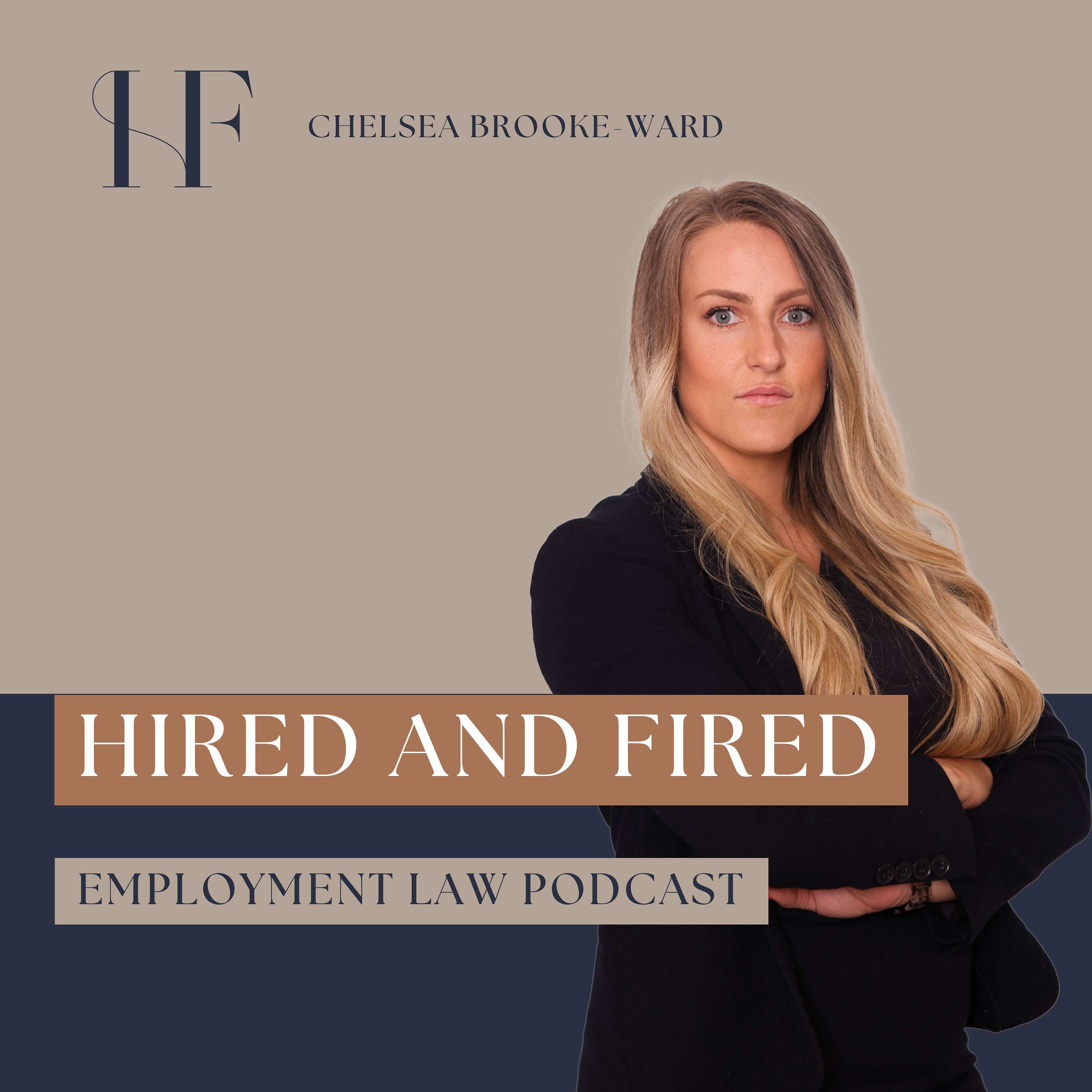
Hired and Fired - Employment Law Podcast
by Chelsea Brooke-Ward
Hired and Fired – The Employment Law PodcastWelcome to Hired and Fired, the ultimate employment law podcast for HR professionals, business owners, employees, and legal minds alike. Hosted by award-winning employment barrister Chelsea Brooke-Ward, this podcast unpacks the latest legal developments, key tribunal cases, and workplace disputes with clarity, insight, and a touch of humor.From unfair dismissal to discrimination claims, TUPE transfers to redundancy rights, Hired and Fired delivers straight-talking analysis, practical advice, and real-world case studies to help you navigate the complexities of employment law. Whether you’re managing a workforce, fighting a claim, or just curious about your rights, this podcast gives you the knowledge you need—without the legal jargon.New episodes drop regularly, covering hot topics, industry trends, and interviews with expert guests. Subscribe now an
-
2
Calculating Time Limits Respondent Pitfalls
The webinar, led by Chelsea Brooke-Ward, focuses on the correct calculation of statutory time limits and the importance of using the forward calculation method. It highlights the flaws in the commonly used backward calculation method and the consequences of incorrect calculations. The strategic approach, tabular format for calculation, continuing course of conduct, and early conciliation certificate are also discussed in detail.TakeawaysCorrect Calculation of Statutory Time LimitsImportance of Forward CalculationChapters00:00 Introduction and Focus of the Webinar08:20 The Correct Approach: Forward Calculation Method15:29 Consequences of Incorrect Calculation and Strategic Considerations26:07 Strategic Approach and Tabular Format for Calculation32:04 Continuing Course of Conduct and Early Conciliation Certificate
-
1
Restrictive Covenants - What really does not work
In this episode, Chelsea lifts the lid on restrictive covenants — the clauses employers love, employees fear, and most people completely misunderstand. From non-competes to non-solicitation and confidentiality, Chelsea explains what actually makes a covenant enforceable.What You’ll Learn in This Episode1. What Restrictive Covenants Actually Are (Not What People Think)Purpose: protecting legitimate business interestsTypes: non-compete, non-solicitation, non-dealing, poaching, confidentialityWhy “one-size-fits-all” contracts are the fastest route to unenforceabilityWhy judges hate overly broad restrictions2. The Legal Test for EnforceabilityChelsea breaks down — in human English — the two-step test:(1) Is the employer protecting a legitimate interest?Clients, staff stability, trade secrets, confidential info(2) Is the restriction reasonable in scope, geography, duration, and activity?And why “12 months for a receptionist” isn’t passing any test.3. Common Myths Debunked“If I never signed it, I’m fine.” (Maybe. Maybe not.)“It’s in my contract so it must be enforceable.” (Bless you.)“HR said it’s standard.” (Doesn’t mean a Tribunal or Court will touch it.)“I can just work for a friend’s company — they can’t trace it.” (Ah, but they can.)4. Why New Employers Get Dragged Into the DramaTortious interferenceKnowing assistance in breach of covenantWhy the new employer is often the one with money, making enforcement worthwhileWhy employers write “courtesy letters” to the new employer — and the tactical power of doing itThe reality: employers don’t sue the ex-employee if they can sue the business they joined5. The Employee’s PerspectiveWhat you can do, what you shouldn’t do, and what will definitely get you suedHow to leave a company without triggering a legal warDigital footprints that betray you (LinkedIn updates, emails to yourself, quiet deals with clients)Why leaving gracefully is a legal strategy, not a personality trait6. The Employer’s PerspectiveDrafting covenants that actually stand up in courtWhy you need to evidence the legitimate business interest — not guess itWhen to send the “warning shot” letterMonitoring restrictive covenant breaches without breaching data lawsThe cost-benefit analysis of enforcement7. Garden Leave vs Restrictive CovenantsHow garden leave protects employers better than half the covenants in circulationWhen garden leave is enforceableWhy “payment in lieu” can completely change the enforceability mathsHow these interact with non-competes8. Confidential Information (The Most Misunderstood Area)What counts as confidential informationWhat doesn’tWhy customer lists often aren’t confidentialCopying vs memorisingHow forensic IT comes into play9. Case Law Themes (Explained Without Boring You)What the courts consistently strike outWhat they consistently upholdWhy clarity beats clever draftingWhy seniority matters“The grace period” — the informal, unspoken
We're indexing this podcast's transcripts for the first time — this can take a minute or two. We'll show results as soon as they're ready.
No matches for "" in this podcast's transcripts.
No topics indexed yet for this podcast.
Loading reviews...
ABOUT THIS SHOW
Hired and Fired – The Employment Law PodcastWelcome to Hired and Fired, the ultimate employment law podcast for HR professionals, business owners, employees, and legal minds alike. Hosted by award-winning employment barrister Chelsea Brooke-Ward, this podcast unpacks the latest legal developments, key tribunal cases, and workplace disputes with clarity, insight, and a touch of humor.From unfair dismissal to discrimination claims, TUPE transfers to redundancy rights, Hired and Fired delivers straight-talking analysis, practical advice, and real-world case studies to help you navigate the complexities of employment law. Whether you’re managing a workforce, fighting a claim, or just curious about your rights, this podcast gives you the knowledge you need—without the legal jargon.New episodes drop regularly, covering hot topics, industry trends, and interviews with expert guests. Subscribe now an
HOSTED BY
Chelsea Brooke-Ward
CATEGORIES
Loading similar podcasts...
Frequently Asked Questions
How many episodes does Hired and Fired - Employment Law Podcast have?
Hired and Fired - Employment Law Podcast currently has 2 episodes available on PodParley. New episodes are automatically indexed when they're published to the podcast feed.
What is Hired and Fired - Employment Law Podcast about?
Hired and Fired – The Employment Law PodcastWelcome to Hired and Fired, the ultimate employment law podcast for HR professionals, business owners, employees, and legal minds alike. Hosted by award-winning employment barrister Chelsea Brooke-Ward, this podcast unpacks the latest legal developments,...
How often does Hired and Fired - Employment Law Podcast release new episodes?
Hired and Fired - Employment Law Podcast has 2 episodes. Check the episode list to see recent publication dates and frequency.
Where can I listen to Hired and Fired - Employment Law Podcast?
You can listen to Hired and Fired - Employment Law Podcast on PodParley by clicking any episode. We provide an embedded audio player for direct listening, and you can also subscribe via your preferred podcast app using the RSS feed.
Who hosts Hired and Fired - Employment Law Podcast?
Hired and Fired - Employment Law Podcast is created and hosted by Chelsea Brooke-Ward.
URL copied to clipboard!