
PODCAST · business
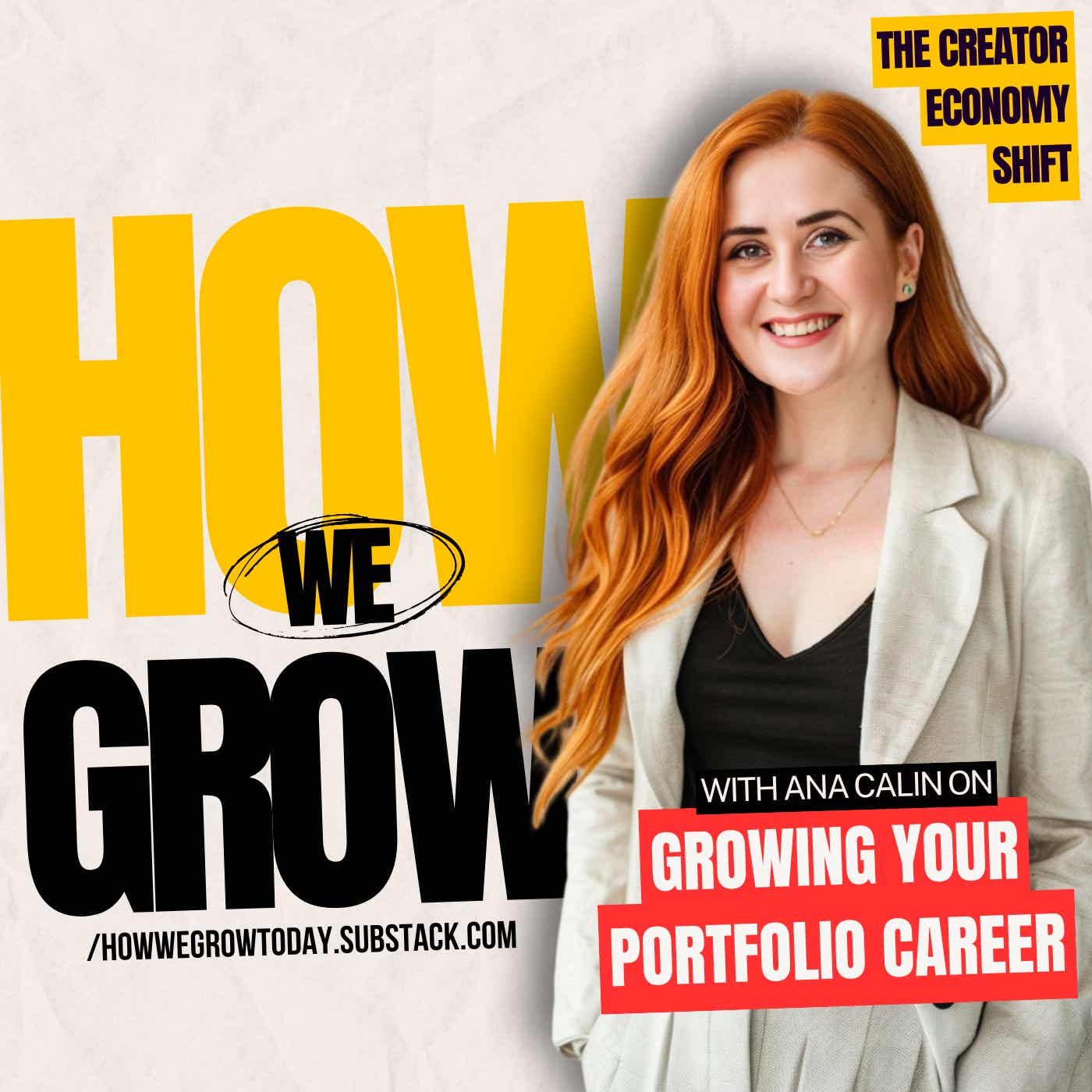
How We Grow
by Ana Calin
Simple branding & practical growth so you can build your portfolio career (in weeks, not years) howwegrowtoday.substack.com
-
26
Why the Most Profitable Substack Creators in 2026 Will Be Storytellers, Not Strategists
The rules have completely changed. If your perfectly planned content calendar isn’t converting subscribers into buyers, you’re not alone. Your analytics look good, open rates are decent, you’re consistent and providing value. And yet... crickets when you ask for money.In this video, I reflect on my journey of growing my newsletter from 0 to over 70,000 subscribers in less than a year and discuss the shift from the how-to content era to what I call the story economy. While AI can generate strategies, what people truly crave is story-driven transformation that connects on an emotional level. I share my personal experiences that led to a significant revenue increase, demonstrating that storytelling is what drives subscriptions and sales. And I invite you to rethink your content approach by focusing on stories from your life that illustrate your lessons, rather than just sharing strategies. Your action step is to write your next newsletter post starting with a personal story that makes your audience feel something.00:00 Year of Growth Reflection02:19 AI and Content Commoditization04:12 Storytelling as a Revenue Driver06:56 Psychology of Decision Making11:18 Shifting to Story-First Approach19:15 Embracing the Story EconomyRead the full story: https://open.substack.com/pub/howwegrowtoday/p/why-the-most-profitable-substack?r=4coz9x&utm_campaign=post&utm_medium=web&showWelcomeOnShare=true This is a public episode. If you'd like to discuss this with other subscribers or get access to bonus episodes, visit howwegrowtoday.substack.com/subscribe
-
25
Why I stopped trying to be “relatable”
The Vulnerability ParadoxI’ve been struggling with the word “vulnerability” lately.It’s become this gold standard in the online world. If you aren’t bleeding on the page, if you aren’t posting the crying selfie, if you aren’t giving a play-by-play of your burnout, are you even a creator? Just this morning I saw another “I almost quit” note, and two scrolls later the “3 months sober” one.We seem to be obsessed with the idea of being “real,” but in our desperate sprint away from the polished, curated Instagram era, I think we’ve accidentally run into a different kind of ctrap.We are now curating our disasters just as carefully as we used to curate our wins.And to be honest, I don’t know where I fit in that spectrum anymore.I sit here writing this with a newborn in my lap. My reality right now is objectively messy. There is a cold cup of coffee on a stack of unread mail. I am operating on fragmented sleep. There are days when I feel like I am holding my business together with duct tape and a prayer.I could post about that every single day.I could turn my sleep deprivation into content. I could package my anxiety into a hook. It would be “authentic.” It would be “relatable.” It would probably get a flood of comments telling me how brave I am.But every time I go to write that post, my fingers freeze.Not because I’m ashamed of the mess—I’m actually quite at peace with it—but because turning it into content feels like a betrayal of the moment.It feels like a performance of imperfection.And this is where the paradox begins for me.The moment you share your struggle specifically to get a reaction, are you being vulnerable? Or are you just commoditizing your pain?I realized that for a long time, I was confusing Processing with Leading.Processing is when you are in the middle of the storm. You are wet, cold, and scared. When you scream for help in that moment, you are looking for validation. You are asking the audience to hold space for you.Leading is when you have found the shelter. You dry off. You look back at the storm and you figure out how you survived it. Then, you walk back out to the edge of the rain to show others the way in.One is a cry for help; the other is an act of service.And I think we have confused the two.We think that to be “authentic,” we have to invite 70,000 strangers into the storm with us. But I’m starting to believe that true authenticity—the kind that actually respects your audience—is doing the work in private so you can show up with clarity in public.It’s the difference between sharing a wound and sharing a scar.A wound is still bleeding. It needs attention. It triggers worry in the people watching you.A scar is healed. It’s proof of survival. It triggers trust.I don’t want you to worry about me. I want you to trust that I can help you.And perhaps that is why I have leaned so heavily into Systems this year.It isn’t because I am a robot who loves spreadsheets.It is because the System is the only thing that allows me to be useful to you when I am a mess.The system is my way of protecting you from my chaos.It allows me to show up, deliver value, and help you build your own life, even when I am writing this with one hand and a baby on my chest.To me, that is the quietest, most honest form of authenticity I can offer.It isn’t about performing a perfect life, and it isn’t about performing a messy one.It is about Congruence.It is about making sure that the person I am online is reliable enough to help the person you are offline.I realized I don’t need to be “relatable” to be valuable.I don’t need to mirror your pain to validate it.I just need to be steady.So, if you’ve been feeling the pressure to bare your soul for the algorithm, or to perform a version of “messy” that feels just as exhausting as perfection... maybe you can just stop.You don’t owe the internet your trauma.You just owe your audience your truth.And sometimes, the truth is just: “I’m here. I’m working. And I figured out a way to make it easier. Here it is.”I might do a Part 2 on the actual mechanics of this—how to technically distinguish between a “wound” post and a “scar” post when you are sitting at the keyboard drafting content.But I felt like we needed to dismantle the pressure to perform first. This was the foundation.Thanks for letting me think out loud.Love,Ana This is a public episode. If you'd like to discuss this with other subscribers or get access to bonus episodes, visit howwegrowtoday.substack.com/subscribe
-
24
Everything you’ve been taught about audience building, content creation, and monetization is backwards — and most creators will never figure it out.
The internet sold us a dream.Build an audience. Post valuable content. Grow to 10,000 followers. Then monetize. Launch a course. Build a membership. Scale to six figures. Hire a team. Become a thought leader.I bought into this dream too. It left me exhausted and broke.These online gurus set you up to completely misunderstand how creator businesses actually work. It’s hard to escape because everyone around you has been fed the same playbook. I spent three years building newsletters, launching programs, and working with 3,000+ creators.I figured out how creator businesses really work by watching who actually makes money. Here’s the brutal truth about the creator economy that nobody wants you to know...The disgusting lie hidden in plain sightThe traditional path teaches us to build an audience first, monetize later.This is financial suicide.So you spend 12-24 months posting content, growing followers, “providing value” — all without making a dollar. You’re told this is “planting seeds” and “building trust.”It’s b*s. and you know it.What’s really happening is you’re working for free while social media platforms extract value from your content. They get ad revenue. You get likes and comments.Every time a creator guru tells you “focus on audience growth first,” they’re keeping you broke. Why? Because they make money selling you courses on how to grow your audience. They don’t make money from their audience — they make it from YOU.Let’s go deeper down the rabbit hole.All the advice you consume about building a creator business comes from people who built their business in 2015-2019. Back then, social media algorithms were different. Competition was lower. People hadn’t heard this advice 10,000 times yet.That world doesn’t exist anymore.Yet no one questions whether 2015 strategies work in 2025. It’s odd when you think about it because creators work their entire lives following outdated playbooks.Now we get to the math problem.Most creators are told they need 10,000 followers before they can make real money. Some say 50,000. The magic number keeps moving.But here’s what nobody tells you: Audience size doesn’t determine income.I’ve seen creators with 500 subscribers making $5K/month. I’ve seen creators with 50,000 followers making $200/month.The difference isn’t audience size. It’s business model.But the creator economy Industrial Complex doesn’t want you to know that. If you knew you could monetize with 200 people, you wouldn’t buy their $2,000 “Scale to 100K Followers” course.You’d just build an offer and sell it.Maybe you’re reading this thinking “But Ana, I only have 1,000 followers. I need to grow first.”The lie continues.You don’t need more followers. You need more revenue per follower. A creator with 1,000 followers making $10 per follower per year earns $10,000. A creator with 10,000 followers making $1 per follower earns the same.Except the first creator spent 3 months building their business. The second spent 3 years.The average creator doesn’t know that. So they keep posting. They keep hoping. They keep waiting for the day they’re “big enough” to monetize.That day never comes.Now we get to the good bit.Successful creators do the opposite of what you’re told. They don’t build audiences. They build offers. They don’t wait until they’re “ready.” They launch immediately. They don’t scale. They stay small and charge premium prices.It’s why you’re seeing creators with tiny audiences making $10K-$30K months. While influencers with millions of followers are broke.The next question is why...The bigger picture that’s easy to misunderstandNone of this is a conspiracy. Creator coaches and social media gurus aren’t trying to screw you. They’re just repeating what worked for them in 2017.But here’s what billionaire investor Naval Ravikant said: “Play long-term games with long-term people.”This tiny statement changed everything for me.Here’s what it means: The creator economy rewards depth, not breadth.One client who pays you $5K and stays for two years is worth more than 100 people who buy your $97 course once.But the entire creator advice industry is built on selling you courses. So they teach you to build $97 products. Then they tell you that you need 10,000 followers to sell enough of them to make real money.It must be this way. Their business model depends on it.These short-term tactics create the hamster wheel. Post content → grow audience → launch cheap product → make $3K → do it all again next month.Tax on your time. Tax on your energy. Tax on your mental health.When you need more money, you need more followers. You can’t scale your income without scaling your audience. This game of chasing followers is happening to every creator.It’s a deadly trap. And history shows it won’t stop.It gets worse.As you grow your audience, engagement goes down. Algorithms change. Platforms die. What worked on Twitter doesn’t work on LinkedIn. It definitely won’t work on Substack. What worked in 2023 doesn’t work in 2025.So you’re on a treadmill. You must keep running just to stay in place.You may not care.But when your income depends on platforms you don’t control, algorithms you can’t predict, and audiences that expect free content forever... you don’t have a business. You have a hobby that occasionally pays.This entire process also creates burnout. Given that most creators start because they want freedom and flexibility, ending up more stressed than their corporate job is a cruel irony.“I quit my job to be a creator. Now I work 12-hour days and make less money.”A normal person would see this as failure. A successful creator would think to themselves, “Did I build a bad business or did I follow bad advice?”Can you now start to see the illusion?People work for years building audiences without understanding what they’re really building. You could even call this modern sharecropping. It’s so sophisticated most creators will never work it out.And unless you understand how creator businesses work, you’ll be enslaved by them.No matter how great your content is, how engaged your audience is, or how many followers you have... you cannot outrun this systematic flaw.The flow-on effects nobody is paying attention toWe’re living in two separate creator economies.One economy is the 2015-2019 playbook: massive audiences, cheap products, scale through volume, constant content, social media dependence.The other economy is emerging now: small audiences, premium pricing, depth over breadth, systemized launches, platform independence.These two economies are diverging. And most creators haven’t figured it out.The limitations of the old model are becoming obvious. Creators are burning out. Platforms are changing rules. Ad revenue is collapsing. Audiences are exhausted.This is why we’re seeing mass creator exodus right now. People going back to corporate jobs. It’s a sign the old creator economy playbook is broken.The old world assumed infinite attention and infinite energy. The incentives made no sense for the creator or the audience.As more creators opt out, things will keep breaking. What’s really happening is the market is quietly rearranging itself.The way people build businesses, the way they monetize, the way they define success — it’s all fracturing.In the meantime, the guru Industrial Complex will continue selling the old playbook. They’ll tell you that you need more followers, more content, more products. Eventually more creators will wake up to the fact that this path leads nowhere.This isn’t a reality to be afraid of. It’s a huge opportunity. But it starts with understanding why the old model is broken, and why most creators’ understanding of how business works is backwards.What I’m doingI am not a multi millionaire.And I don’t know everything there is to know about business. I’m nowhere near as successful as some of the creators on social media. I’m writing about this in my 40s because I’m dealing with it right now.I built a newsletter to $50K/month in 14 months. I work 2 hours a day. I started with 0 subscribers, not 50,000. I am mostly active on 1 platform, not on 10.I’ve been forced to figure out how creator businesses really work. If I followed the traditional advice, I’d still be “building my audience” and making $500/month.So I’m never going back to the old playbook.I’m focusing on premium pricing, small audiences, and depth. Every day I learn more about what actually makes money (versus what gurus say makes money), so I can prepare for the next phase of the creator economy.I study business models. I learn from people making real money, not people teaching how to make money. I stay curious. I don’t fear going against the grain.What this really means for youUnderstanding the lie — that’s been planted in your mind by the creator guru Industrial Complex — is the first step.The next part is to rethink what success looks like. That’ll likely lead you to stop chasing followers and start building offers. You’ll probably realize you don’t need a massive audience to make real money.The old creator dream is to hit 100K followers and monetize with ads, sponsorships, and $97 courses. In most niches this is now unprofitable. It forces you to be a content machine, forever at the mercy of algorithms.Plus, the exhaustion of posting daily causes enormous stress and limits your options.You’ll need to look at alternative business models. Small audiences. Premium pricing. High-ticket offers. Depth over breadth.The final part is freedom. The whole myth is you build a creator business to have freedom. But if you’re posting 3X a day, launching every other week, and constantly chasing growth... you’re less free than you were in your 9-to-5.Harsh truth: Most creators will never be free.There’s a good and a bad side. For people like me, I love what I do because I built it to fit my life. For creators who followed the traditional playbook, the freedom they thought they’d have isn’t coming.It’s time for all of us to stop following outdated advice and learn what actually works.Otherwise, the hours of our lives will be quietly stolen by algorithms we don’t control.The deeper you get into premium offers and small audiences, the more likely you are to escape the creator hamster wheel.Choose wisely.Ready to build differently?Most creators are preparing to launch cheap offers in December.I’m teaching the opposite in The Business Accelerator: premium pricing, small audiences, systems that run in 2 hours a day.I only have 7 spots left. This is not fir everyone. We start December 2nd.Email me: [email protected]: “Accelerator”Ana This is a public episode. If you'd like to discuss this with other subscribers or get access to bonus episodes, visit howwegrowtoday.substack.com/subscribe
-
23
50K Strong & Growing!: Ana Calin’s Substack Playbook That Breaks the Rules
This is a public episode. If you'd like to discuss this with other subscribers or get access to bonus episodes, visit howwegrowtoday.substack.com/subscribe
-
22
She made 5x her investment in 7 days. Here’s how.
One week after joining my Money Map Bootcamp, Marni:✅ Doubled interest in her own coaching & ✅ Revamped her offer✅ Got 5 paying members immediately✅ And best of all — she’s just getting started.In this live, she shares exactly what changed, why the 30-day support made the difference, and how the Money Map Bootcamp gave her clarity and momentum.Marni also shares the details of her own bootcamp happening this May (and yes, I’m cheering for her every step of the way).Check it out here:Watch the replay. Then join us for the next round of Money Map Bootcamp.🚀 We don’t just talk strategy. We implement it — together. This is a public episode. If you'd like to discuss this with other subscribers or get access to bonus episodes, visit howwegrowtoday.substack.com/subscribe
-
21
How to monetise your newsletter and everything growth with my guests
(BTW, we just reached 50,000 beautiful souls on How We Grow and to celebrate, my annual subscription is at 50% off - only until April 24 EOD. If you wanted in, this is your chance now) This is a public episode. If you'd like to discuss this with other subscribers or get access to bonus episodes, visit howwegrowtoday.substack.com/subscribe
-
20
The Money Map Bootcamp and everything growth with Michael Simmons
This is a public episode. If you'd like to discuss this with other subscribers or get access to bonus episodes, visit howwegrowtoday.substack.com/subscribe
-
19
The money map bootcamp and everything growth
Your Path to Multiple Income Streams Starts April 15th – Don’t Miss Out!The bootcamp starts April 15th, and special pricing ends Wednesday, April 10th:Regular price: $297 Special offer: $147 (50% off, ends April 10th)Paid members: Just $97 (my thank you for supporting How We Grow) - check your access at the bottom of this email.And if you're on the fence about becoming a paid member...My annual membership is also 40% off until April 10th (just $106 instead of $177). Sign up for an annual membership and you'll get the bootcamp almost for free - just $97 instead of $297!Is this really for you?This bootcamp is perfect for you if:* You've been putting off monetization because you're unsure when or how to start* You want to build multiple income streams, not just rely on subscriptions* You're tired of publishing great content that doesn't convert to income* You want to shortcut your growth journey with proven strategies* You're ready to transform your newsletter from hobby to businessIf any of those sound like you, I'd love to see you in the bootcamp.Time investment:* 1.5 hours for 3 days - April 15-17* Schedule: 10:30 am EST / 15:30 GMT every day. Here’s a time converter for you.* You cannot make it live? No problem. All sessions will be recorded and you get access to replays + all toolkits shared This is a public episode. If you'd like to discuss this with other subscribers or get access to bonus episodes, visit howwegrowtoday.substack.com/subscribe
-
18
Substack Growth Hacking: How I Created the Holy Grail for Struggling Creators.
Only 3% of Substack writers have a clear strategy for growth. Most of us wing it, hoping that good content will magically attract readers. But the truth is, consistency is key. It's not about writing the perfect essay or pouring your heart out. It's about showing up, day after day, with value that resonates. The question is, what's your plan for the next 30 days? Discover how I cracked the code to Substack growth with a revolutionary new tool - Substackulous. Ditch the struggle and unlock your full potential. Get ready to transform your Substack in just 30 days!Substackulous is launching in March.Which is your favorite functionality yet? (or what else you would like to have)You have a friend who would also benefit from this? Share this post with them today. This is a public episode. If you'd like to discuss this with other subscribers or get access to bonus episodes, visit howwegrowtoday.substack.com/subscribe
-
17
Most people make offers that get ignored.
Most people make offers that get ignored.They drop a link and hope.They slap a price on something and pray.They assume people will just know why it’s worth it.That’s why they don’t sell.Here’s how I make an irresistible offer:I stack the value.I don’t sell a newsletter. I sell results.✅ Growth challenges that get you more subscribers.✅ Live workshops with step-by-step guidance.✅ A community that helps you grow faster.I remove the risk.No one wants to waste money. So I make it a no-brainer.📌 "Join, get massive value, or unsubscribe. No hard feelings."I make the deal too good to pass up.💡 “One strategy from this newsletter can make you thousands.”💡 “Join today, and you get access to $2,500+ in marketing tools.”💡 “Founding members? Lifetime access, no renewals. Ever.”Most people just say, ‘Subscribe to my paid newsletter.’And wonder why no one does.Make your offer so good, people feel stupid saying no.That’s how you win.Thank you Trevor Casper, Tim Fortier, Jane Bertch, Aneta, Anjali Krishnakumar, and to the 354 people tuning into my live video!Want more hands on insights? Check these 2 webinars (free access for all How We Grow members): This is a public episode. If you'd like to discuss this with other subscribers or get access to bonus episodes, visit howwegrowtoday.substack.com/subscribe
-
16
I Reverse-Engineered the Top 1% of Bestselling Creators—Here’s the 3-Step System They Use to Monetize
Here’s What No One’s Telling You.Ever wonder why some creators effortlessly turn followers into paying members—while others, despite posting consistently, never break past free subscribers?I did. So, I went deep.After months of testing, tweaking, and analyzing hundreds of successful monetization strategies across newsletters, YouTube, and online courses, I found something shocking:The creators who successfully convert followers into paying subscribers don’t have the best content. They don’t post the most often. They don’t even have the biggest audiences.They just understand something about human nature that others don’t.And today, I’m pulling back the curtain on what actually makes people pay for content.The Myth That’s Keeping You StuckMost creators believe if they just keep giving insane value for free, people will feel compelled to pay them.Wrong.Here’s the truth: Your audience will NEVER upgrade unless you create a clear reason why they should.Think about it:* Your free readers aren’t sitting around thinking, “Wow, this person gives so much away. I should really pay them.”* They’re thinking, “This is great. I’ll keep reading for free.”❌ The mistake most creators make: They assume their best free content will automatically convert people into buyers.✅ What actually works: Creating tension—a clear, emotional, and logical reason why free content alone isn’t enough.The 3 Psychological Triggers That Make People UpgradeIf you don’t use these, your free subscribers will stay free forever.1️⃣ The ‘Oh Sh*t’ MomentPeople don’t pay for content.They pay for realizations.💡 Your job isn’t to inform. It’s to shift their mindset.🛑 Wrong: “I teach newsletter growth.”✅ Right: “Most people think more content = more subscribers. But here’s what they’re missing: The fastest-growing newsletters are posting LESS frequently, not more.”How to use this today:→ In your next post, don’t just give value. Create a moment where your reader realizes they’ve been doing something wrong.2️⃣ The “What You’re Missing” EffectFree readers feel like they’re getting everything they need—until you show them what they DON’T have.How to make them feel the gap:❌ Bad CTA: “Upgrade to paid for more.”✅ Good CTA: “This post gave you the strategy. Paid members get the step-by-step execution plan, plus my personal help.”Example:📌 “I just outlined the biggest mistakes killing your audience growth. But here’s what I didn’t include—my personal system for fixing them. That’s inside the paid membership.”3️⃣ The “Regret Not Buying” StrategyIf people don’t feel urgency, they won’t act. Period.How to make them regret waiting:* Show them what will happen if they DON’T join today.* Make them feel the opportunity cost of staying stuck.Example CTA:❌ “Join anytime.”✅ “Every week you wait, you’re losing subscribers who could be paying you. You can figure it out alone, or you can plug into a system that’s already working.”What Happens When You Get This Right?When I applied these principles to my own growth system:✅ 41,000+ subscribers in 5 months✅ Paid memberships exploded✅ $15,000+ in monthly revenue from subscriptions aloneBut here’s what matters more:👉 It’s repeatable. Anyone can do it, if they understand the strategy.Which brings me to this:Want the Blueprint? Join My Growth System Today.Inside my paid membership, you’ll get:✅ The Monthly Growth Challenge – This month: Turn Your Followers into Paying Subscribers✅ Step-by-Step Workshops worth thousands – Get the full system behind audience growth, monetization, and branding. Some of the latest workshops added that you will get access to:* How to create an irresistible offer that converts* Hooks that stop the scroll * The 3 types of notes that drive growth* Why your content is not converting and how to fix itPlus* 30 days of content calendar and my favourite examples turned into templates* My personal swipe file of the best performing notes* and more✅ Real-Time Feedback – I personally review every week paid members’ offers to help them sell more✅ Private Q&As + Tools – $2,500+ worth of growth resources💡 For the next few days, I’m offering 34% off for early members.👉 Join Now & Get Instant Access.This is the Moment.❌ You can keep posting without a plan, just hoping people will eventually pay.✅ Or you can use proven strategies that make upgrading a no-brainer.The choice is yours.BTW, What’s stopping you from converting more followers into paid subscribers? Drop your biggest challenge in the comments. Let’s fix it. 💬🔥 If this was helpful, restack & share! More creators need to hear this. This is a public episode. If you'd like to discuss this with other subscribers or get access to bonus episodes, visit howwegrowtoday.substack.com/subscribe
-
15
An irresistible Substack offer starts with…
Thank you Florian Martinon, Elle Wolfe, Chris Jenkins, and many others for tuning into my live video! Join me for my next live video in the app.Join me on my next Live Webinar and learn:All growth members get access to this webinar and the entire Growth Challenge this month. Join them so you can grow your Substack exponentially too. (Save 27% off on the annual plan for the next 15 subscribers) This is a public episode. If you'd like to discuss this with other subscribers or get access to bonus episodes, visit howwegrowtoday.substack.com/subscribe
-
14
A bit of Monday motivation
Join me for my next live video in the app This is a public episode. If you'd like to discuss this with other subscribers or get access to bonus episodes, visit howwegrowtoday.substack.com/subscribe
-
13
Monday motivation
Join me for my next live video in the app This is a public episode. If you'd like to discuss this with other subscribers or get access to bonus episodes, visit howwegrowtoday.substack.com/subscribe
-
12
💡 How I Turned Notes Into a Subscriber Engine (and How You Can Benefit From It)
If you’ve been following me for a while, you know my thoughts on social media and growth.For a long time, Notes felt like just another feature. Post something, get some likes, move on. I didn’t see the potential.But then something changed.Join now my Notes to Subscribers January Growth Challenge by becoming a paid member and get access to weekly growth webinars, tools, notes boost and our community. Save your spot at 20% off with the annual plan forever and practically access it all at $9/month, paid annually.Just look at my last 30 days growth as a matter of “proof”All because of notes like these:Fast forward to today: 60% of my Substack growth now comes from Notes.I want the same for You!Here’s why Notes matter, how I turned them into a growth machine, and my best advice for turning your Notes into subscribers (paid ones, too).Why I’m All In on NotesHarsh truth: You don’t own your audience on social media.* You’re at the mercy of algorithms deciding who sees your content.* Even with over 33,000 subscribers, only a small fraction of my audience interacts with each post.* Notes? They’re direct, personal, and designed to build connections.With Notes, I’ve gained direct access to my readers—people who care enough to subscribe and engage.Here’s why Notes are my favorite growth tool:* They build trust. Each Note is a chance to share insights or start conversations.* They’re quick but impactful. Bite-sized content that gets results.* They’re perfect for testing ideas. Some of my best-performing posts started as Notes.Join now my Notes to Subscribers January Growth Challenge by becoming a paid member and get access to weekly growth webinars, tools, notes boost and our community. Save your spot at 20% off with the annual plan forever and practically access it all at $9/month, paid annually.How I Turned Notes Into a Subscriber Engine1️⃣ I Changed My ApproachAt first, I treated Notes like social media posts—quick thoughts and random musings.It didn’t work.Then I shifted to writing Notes with purpose:* Hooks that make people stop scrolling: “Why isn’t anyone talking about this?”* Questions that invite engagement: “What’s your biggest challenge with growing a Substack?”* Controversial takes that spark curiosity: “Most creators are doing this all wrong.”2️⃣ I Built a Notes CalendarConsistency without strategy is a waste of time. That’s why I created a system:* Growth Notes: Bold opinions and trending topics to grab attention.Example: “Your Substack isn’t too small to matter. Drop your link, and I’ll check it out!”* Educational Notes: Bite-sized insights that build authority.Example: “Your quietest readers are often your most loyal. Write for them, even when it feels like nobody’s watching.”* Entertaining Notes: Relatable, funny, or personal stories that connect.Example: “Confession: My first 10 Notes flopped. Here’s what changed.”This mix keeps my content fresh and engaging while growing my audience.You can still get access to The 3 Types of Notes webinar in which I breakdown all that it takes to write notes that drive growth + access to your working file + Bonuses.(all paid subscribers get free access to this and All weekly webinars + Bonuses. If you’re not yet ready to become a paid member, you can access it for just $37)3️⃣ I Made Notes About My Readers, Not MeYour audience doesn’t care about your random thoughts. They care about what’s in it for them.Here’s what worked:* Asking my readers what they’re struggling with and turning their responses into Notes.* Sharing stories they could see themselves in.* Writing Notes that solve small, specific problems.4️⃣ I Showed Up Daily (But Smarter)Notes are a long game. Showing up consistently—on Notes and in comments—builds relationships and keeps you top of mind.But here’s the key:* Engage meaningfully. Don’t just drop emojis; add value.* Focus on Notes that spark conversations, not just reactions.* Use Notes to direct readers to your long-form posts.5️⃣ I Focused on Conversions, Not LikesIt’s easy to get distracted by engagement numbers, but here’s the truth: Likes don’t pay the bills.What I tracked instead:* Engagement: Are people replying or sharing?* Conversions: Are Notes leading to new subscribers?* Momentum: Is my audience growing steadily over time?Some of my best-converting Notes had fewer than 10 likes but brought in dozens of subscribers.My Best Advice for Turning Notes Into SubscribersFocus on connection, not perfection.* Treat each Note as a way to serve your readers.* Write like you’re talking to a friend—be real, honest, and approachable.* Don’t overthink it; your audience values consistency and authenticity more than polished perfection.Your TurnWhat’s your biggest struggle with Notes? Or, what’s one tip that’s worked for you?Drop it in the comments—I’ll share my favorite responses next week.P.S. My January Growth Challenge is in full swing! We’re diving deep into turning Notes into a subscriber engine this month.👉 This is a public episode. If you'd like to discuss this with other subscribers or get access to bonus episodes, visit howwegrowtoday.substack.com/subscribe
-
11
Nobody Commented on My Posts. Until I Learned to Ask the Right Questions.
Why Engagement MattersWhen I started writing on Substack, I had this picture in my mind: I’d hit publish, people would rush in, comments would flow like wine, and my inbox would light up with notifications.Reality? Crickets.It took me longer than I care to admit to realize this: you don’t get engagement by accident.Engagement is something you create. It’s the secret sauce that turns passive readers into loyal subscribers and loyal subscribers into superfans who share your work like it’s gospel.Here’s what I’ve learned—through trial, error, and a lot of awkward silences—about how to build conversations that actually matter.Your Bonus:This January, I’m sharing exactly how to drive engagement that grows your audience:* My 3-Note Framework for writing Notes that spark real conversations.* A Notes Calendar to stay consistent without feeling overwhelmed.* Swipe files of my most engaging Notes (and why they worked).* Weekly Notes Boost Parties to engage with your Notes and grow faster.💥 Join now and get 37% off for on the annual plan the next 24 hours. (Basically you save your spot at just $7.19 per month, paid annually) This is a public episode. If you'd like to discuss this with other subscribers or get access to bonus episodes, visit howwegrowtoday.substack.com/subscribe
-
10
Substack Secret Santa 🎁: So We Can Grow Together This Holiday Season
🎁 This December, let’s grow together—Secret Santa style. 🎁Substack can feel like a solo game sometimes—just you, your keyboard, and the hope someone’s out there reading.But growth isn’t just about audience size or paid subs—it’s about connection. It’s about building relationships with people who get what you’re doing, who cheer for you when you’re not in the room.That’s what this is about: A little connection, a little creativity, and a whole lot of thoughtfulness.Introducing: Substack Secret Santa—Digital Edition.No addresses. No stress. Just thoughtful digital gifts to celebrate growth, creativity, and this community we’re all a part of.How It Works 🎅* Sign Up by December 17* Drop a comment with:* Your name* Your Substack username* A short “about me”—what you write about or what makes you light up.* Example: “I’m Ana! I write about portfolio careers, growth, and creativity. I love art, personal stories, and anything about how people build their lives.”* Get Your Match on December 18* I’ll personally and randomly pair you with another Substack writer and send you their details. You’ll get:* Their name* Their Substack link* Their “about me” description* Deliver Your Digital Gift by December 24 🎁* It’s a digital-only Secret Santa, so here’s where you can get creative:* A thoughtful letter or shoutout about why their work matters.* A resource, playlist, or article you think they’d love.* A mini review or share of their Substack in your next post.* A personalized note about what you enjoy in their writing.* A membership access to your subscriptions * A gift subscription to a newsletter you love* So many ideasThe gift doesn’t have to be big. It just has to show you see them. That you care.Why Do This? Growth isn’t just about numbers—it’s about people.This Secret Santa is about showing up for each other, cheering each other on, and reminding ourselves that this journey doesn’t have to feel so solitary.* You’ll make someone’s day.* You might discover a writer who inspires you.* And who knows—you might get a new reader, collaborator, or friend out of it.The Rules 📜* Digital gifts only—no addresses or physical items needed.* Be thoughtful. This isn’t about fancy—it’s about meaningful.* Share your gift by December 24.* Please commit only if you mean it. It would be a pitty to make someone wait. Santa’s seeing you.How to Join 🎄Simple: Just Drop your name, Substack link, and a little “about me” in the comments below.Deadline to enter: December 17Matches sent out: December 18Gifts delivered: December 24 (or earlier if you wish so)Let’s make this December about growth that matters—about connection, creativity, and supporting one another.Drop your details below, and let’s spread a little holiday magic. 🎁✨Drop your name, Substack link, and a little “about me” in the comments below.Ready to play Secret Santa? 👇 Let’s grow together. 🚀 This is a public episode. If you'd like to discuss this with other subscribers or get access to bonus episodes, visit howwegrowtoday.substack.com/subscribe
-
9
🎯 5 Ways This Challenge Will Change How You Pitch Forever
We’re rolling into Week 2 of the December Growth Challenge: Get Your First Brand Deal! 🚀Over 50 creators have already joined, and the momentum is real. Whether you’re here to land your first deal or level up your brand, this challenge is about so much more than just brand partnerships.This Challenge Will Help You:✅ Learn how to pitch like a pro – A skill that’s useful for brand deals, client work, collaborations, and beyond.✅ Define your differentiator – What makes you stand out and why brands (or anyone) should work with you.✅ Strengthen your personal brand – Clarity and confidence in who you are and what you bring to the table.✅ Grow your exposure – Build relationships, open doors, and make yourself visible to the right people.✅ Level up your communication – Craft pitches that connect, whether for partnerships, job offers, or project opportunities.This is bigger than one deal. These are skills that will help you grow your portfolio career for years to come.Week 2: Craft Your Perfect PitchThis week, we’re diving into:🔥 How to identify the right brands – Stop shooting in the dark and start targeting opportunities that fit YOU.🔥 Proven pitch templates – Emails that grab attention and get responses.🔥 Research tips – Tools to find decision-makers fast so you can pitch with confidence.By the end of this week, you’ll have:✅ A pitch you’re proud of and ready to send✅ A list of brands to target✅ The confidence to put yourself out thereThe tools are waiting for you 👉Haven’t Joined Yet? It’s Not Too Late!This challenge is packed with everything you need to move forward:* Step-by-step guides* Time-saving templates* A community of 50+ creators cheering you onHere’s how to join:* Comment “I’m in!” below.* Use the Challenge Tracker to log your progress.* Jump into the chatroom and connect with others.Why Now?This is the ONLY free Growth Challenge I’ll be running. Starting January, Monthly Growth Challenges will be paid subscriber exclusives.Next Month’s Growth Challenge:👉 Get Your Notes to Go Viral – Learn how to grow your audience fast with strategies that actually work.Want in on every challenge?👉 Lock in 91% off with your annual subscription now and get access to all future challenges, tools, and resources. Forever!The group is on fire, and I can’t wait to see the pitches you create this week.Whether it’s your first brand deal, your next client, or simply a clearer personal brand—this challenge will help you get there.Let’s make it happen. 🚀See you in the chatroom,AnaP.S. 2 creators already landed a pitch call, and another found clarity on their niche this week. Your win could be next! This is a public episode. If you'd like to discuss this with other subscribers or get access to bonus episodes, visit howwegrowtoday.substack.com/subscribe
-
8
How I Became a Substack Bestseller in 3 Months
That’s the headline, but you know what’s missing?The messy, chaotic, not-so-glamorous truth behind it.The truth that “overnight success” is just what people call the years of work they didn’t see.Thanks for reading How We Grow! This post is public so feel free to share it. This is a public episode. If you'd like to discuss this with other subscribers or get access to bonus episodes, visit howwegrowtoday.substack.com/subscribe
-
7
How I Became a Substack Bestseller in 3 Months (and What They Don’t Tell You About Growth)
On November 15th (my husband’s b’day), I woke up to see How We Grow marked with that shiny Bestseller badge. Three months after going all in on Substack, and I hit a milestone I wasn’t even sure was possible this fast.🎉 26,000 subscribers in 3 months 🎉That’s the headline, but you know what’s missing? The messy, chaotic, not-so-glamorous truth behind it. The truth that “overnight success” is just what people call the years of work they didn’t see.Thanks for reading How We Grow! This post is public so feel free to share it.The Reality Behind the NumbersLet’s rewind. By the time I launched How We Grow in September, I wasn’t starting from scratch. I brought over 5,000 subscribers from my email list and social media, built over years of showing up, writing, testing, and sometimes failing.Here’s what those three months really looked like:* Over a decade of refining my voice—working with clients, building personal brands, and studying what connects with people.* Hundreds of LinkedIn posts to a professional audience, figuring out how to simplify ideas and resonate.* Launching and failing with other projects, learning what works (and what doesn’t).* Stayed Consistent (Even When It Was Hard)The unsexy truth about growth? Consistency is king. I showed up every single week, no matter what.* I wrote when I was tired.* I posted Notes when I wasn’t sure they’d land.* I kept engaging, even on slow days.Those three months of growth were built on years of foundation. So, no—it wasn’t “just” three months. It was a culmination of everything I’d done before.You don’t grow a newsletter by being perfect. You grow it by showing up.How Substack Changed EverythingFor years, I’d been on LinkedIn, building my personal brand. I’d seen success there, but the platform often felt noisy and transactional. Substack? Substack felt like home.* Here, people actually read. * They engage. * They stay for the depth and connection, not just the surface-level soundbites.When I moved to Substack, I realized I could create something more meaningful: a space where solopreneurs, creators, and high-performers could learn to build portfolio careers and multiple income streams—without burning out or selling their souls to the hustle grind.That clarity became the backbone of How We Grow.What Worked (And What Didn’t)What worked:* Notes as a discovery engine: * I posted daily, shared insights, and connected with others. * This wasn’t just growth—it was community building.* A clear value proposition: * I made sure new readers knew exactly what they’d get—practical strategies, hard-won lessons, and no fluff.* Optimized My Newsletter Page (and Made It All About Them)* Smart pricing: * My annual plan at 91% better than subscribing monthly was a no-brainer for many readers.* Built Relationships with Creators (Not Competitors)* I didn’t treat other creators as competition—I saw them as allies. Substack is a community, and leaning into that community was one of the smartest moves I made.* What I did:* Cross-promotions: I partnered with newsletters in complementary niches to feature each other’s work.* Engagement: I didn’t just promote myself—I genuinely supported other creators, sharing their posts and commenting on their work.* Genuine connections: I reached out to creators I admired, not to “network,” but to learn and collaborate.* Told My Story (and Shared My Journey)People subscribe to people, not just content. I made my newsletter about more than just tips—I made it personal.I shared:* Why I left my executive role to start over and build a portfolio career.* The struggles I faced along the way (like the fear of starting at zero).* The wins: Like being featured in Forbes and landing my first major brand deal.* Wrote with Relentless Value (and a Dash of Controversy): * From personal stories to actionable strategies, I made every post count.* Every post & note had a purpose:* Actionable tips they could implement immediately.* Contrarian takes that made them think differently.* Stories they could relate to.Don’t just write—overdeliver. Make free readers feel lucky to get your content, and make paid subscribers feel like they’ve found a goldmine.What didn’t work:* Cold DMs: Not my thing, and frankly, they rarely work.* Big discounts: My pricing strategy was already compelling. Flash sales weren’t necessary.* Overthinking: I kept it simple—write, post, engage. That’s it.Why the Bestseller Badge MattersLet’s address the elephant in the room: Isn’t this just vanity?Maybe. But here’s what it’s done for me:* Credibility: It’s proof that my strategies work. If I’m teaching others how to grow and monetize, I need to walk the walk.* Visibility: The badge adds weight to my profile and attracts new readers and opportunities.* Exclusive perks: Advanced stats, access to Substack’s Product Lab, and Business School. These tools have been game-changers for understanding growth and retention.The Article That Broke It All DownRecently, I gave an interview about my Substack journey—how I went from burnout in the corporate world to building a thriving newsletter.One thing I emphasized was this: growth isn’t about luck; it’s about systems.I leveraged every channel I had—LinkedIn, social media, even Forbes articles—to create a flywheel of growth. It wasn’t a casual effort; it was an intentional strategy.If you haven’t read the full interview yet, check it out here. It’s packed with insights and practical tips for growing your Substack.What’s Next?Now that How We Grow is thriving, I’m doubling down on helping others:* The Growth Challenge: Deepening engagement with my audience through personal challenges and community-building.* Private Chat: Exploring new ways to collaborate with brands and creators.Our private chat is where strategies, tips, and real conversations happen. It’s also where we share Note boosts because why not help each other win?* Scaling my paid subscriptions with even more exclusive value:* $2,500+ worth of tools for content creation and monetization.* Access to exclusive webinars on Substack growth and branding.* Weekly Q&A sessions and live workshops.* Notes boost * Monthly Challenges* and moreWhat I Want You to Take AwaySuccess isn’t linear. It’s messy, iterative, and often slower than you want. But it’s possible.If you’re starting out, here’s my advice:* Build trust first. Your audience won’t pay for something they don’t believe in.* Show up consistently. You don’t need perfect posts—just honest, valuable ones.* Experiment. Try Notes, test pricing, engage with your readers. Growth lives in the attempts.So, if you’re ready to grow—join me in the challenge, upgrade to paid, or just keep showing up.The audience will come. You just need to start.P.S. What’s one step you’ll take today to grow your audience? Let me know—I’d love to hear your story.Here’s to your growth,Ana This is a public episode. If you'd like to discuss this with other subscribers or get access to bonus episodes, visit howwegrowtoday.substack.com/subscribe
-
6
🟡 3 key mindset shifts I made to build new income opportunities
In 2016, I was stuck in a successfully dead-end 9-to-5, with a looming question:“Is this all there is?”Today, I’ve built multiple income streams, diversified my career, and work on projects I’m deeply passionate about—all without abandoning financial stability.At the heart of this transformation lies the concept of a portfolio career.It’s a simple yet powerful idea: instead of relying on one job or one paycheck, you leverage your unique skills and interests to create a variety of income streams.Before we go on, if you find this helpful, please consider resharing. Substack creators need to know they got options, and these reads makes a huge difference! ♻️When you become a paid member you get all these benefits. Claim them below:(P.S. Annual membership is now at 52% off, only until November 16th. Spots are limited, claim it now)* Free live masterclass on Monetising your content online (recorded)* Free live masterclass on Brands pitching (upcoming)* Your media kit template to pitch brands* 50 headline templates for inspiration* My swipe file of most successful Notes yet* Content idea generator* 10 prompts for your content creation* How to identify your ideal target audience - practical guide* Creating an expert marketing strategy prompt* How to get inspiration form your favorite Youtube videos* My favorite tools so you can grow your portfolio* Access to weekly live streams.* Plus, you will get invited to a Notes boost every day.* And moreWhile many assume building a portfolio career requires extraordinary talent, resources, or a significant time investment, I’ve found that the secret lies in small, consistent actions—and in understanding how to break the mental barriers holding you back.Here are 3 key mindset shifts I’ve mastered to unlock new income opportunities, and how you can use them too. This is a public episode. If you'd like to discuss this with other subscribers or get access to bonus episodes, visit howwegrowtoday.substack.com/subscribe
-
5
5 Questions on growth & monetisation
This is a free preview of a paid episode. To hear more, visit howwegrowtoday.substack.comHow do I get people to subscribe?How do I start with monetisation?How to balance a 9-5 job with family and side projects?& more…Thought we’d do something a bit different today. I reached out to the community recently and asked you all for your questions, anything you’re curious about, whether it’s about building your portfolio career, growing your Subst…
-
4
9 Lies You’ve Been Told About Building a Portfolio Career
Let’s get one thing straight: You’ve been sold a lie about building a career. Actually, you’ve been sold nine.The world is full of half-truths, especially when it comes to success and wealth.For years, we’ve been sold the idea that the only way to become a millionaire is aiming for the stars—launch a startup, create the next big app, or revolutionise an industry.But what if I told you that the future millionaires aren't working on the next Facebook? They’re not in Silicon Valley. They're a lot closer than you think—probably even in your own backyard.Let’s talk about how we’ve been sold a lie—and the truth behind the millionaires who are quietly building their wealth right under your nose.November Special. Get everything in the full membership at 53% off. Prices go up to $120/ annum on Nov 16th. Only 13 days left!Do you want to get your business/ service in front of 25,000 engaged creatives? Then let’s talk.🚀 Book a strategy call with me to grow your personal brand and portfolio career.I’ll teach you my system for building an impactful online presence that led to 1B+ views and $1M in brand deals. Learn more and read client success stories. This is a public episode. If you'd like to discuss this with other subscribers or get access to bonus episodes, visit howwegrowtoday.substack.com/subscribe
-
3
🛑 How I Stopped Chasing 100K Followers and Landed 27 Brand Deals instead
Let’s get real for a second: I also used to believe the biggest lie on social media—that more followers equals more success. We’ve all been there, scrolling through Instagram, seeing those influencer accounts with hundreds of thousands of followers and thinking:“That’s what I need to land brand deals.”But here’s the truth: it’s total b**s**.I’ve landed more than 27 solid brand deals without ever hitting 100K. In less than 3 months!And guess what? You don’t need 100K either. You don’t even need a fraction of that. Why? Because it’s not the numbers that brands are chasing anymore—it’s authenticity and connection. Let me tell you how I did it, stopped chasing the follower count, and started landing deals that actually matter.Start your portfolio career is a reader-supported publication. To receive new posts and support my work, consider becoming a free or paid subscriber.1. How My Niche Audience Became My SuperpowerI’ll admit it—I used to try to appeal to everyone. I thought casting a wide net would attract more opportunities. But then I realized something: nobody cares about broad, generic content. The key to unlocking brand deals is to go niche. But with a catch.Here’s what I did: I stopped trying to be everything to everyone and focused on my people. Solopreneurs, freelancers, portfolio career builders—people who are done with the 9-5 grind and want to build their own thing. Once I was clear on that niche, things changed. My engagement skyrocketed, and that’s when brands started to notice.Shortform, for example, one of the best reading hubs out there, reached out to me after I posted a simple tip on growing a personal brand. They didn’t care that I wasn’t clocking 100K followers—they cared that I was speaking directly to the people they wanted to reach. We are now partners beyond a brand sponsorship as I became their lifetime ambassador too. (I only recommend products that I love and I mostly end up partnering for a longer period of time with brands like these):That’s the beauty of a niche audience: you don’t need to shout, because your people are already listening.2. Authenticity Is Your Currency (And It’s Worth More Than Followers)Here’s where it gets really controversial: follower count is becoming irrelevant. What really matters to brands? Engagement. And that comes from authenticity. So, stop trying to play the algorithm game or follow the latest trend—your audience can smell when you’re faking it.When I started being myself—sharing stories about my struggles building a portfolio career, my wins, and even my screw-ups—my audience responded. And guess what? Brands responded too. One deal I landed wasn’t because I had thousands of followers; it was because I had an audience that trusted me.Here’s how you know you’ve got authentic engagement: * When your followers talk back. * When they ask questions* Respond to your content* And genuinely care about what you have to say. That’s the kind of engagement that brands drool over, and you don’t need 100K followers to get it.3. Quality Over Quantity (Or Why Posting Less Helped Me More)In the beginning of my social outreach, I was obsessively posting on LinkedIn every day, thinking that the more I posted, the more likely brands would find me. Spoiler alert: it didn’t work. In fact, it was burning me out, and my content was getting weaker. So I stopped. I slowed down. I started focusing on quality over quantity.I remember creating one in-depth, meaningful post about the challenges of personal branding. It wasn’t flashy, but it resonated with my audience. That post got me a brand deal, not because it went viral, but because it was valuable. Here’s how they approached me:The brand loved the depth of the conversation in the comments—people weren’t just “liking” it, they were engaged with it.My takeaway? You don’t need to post every day. You don’t need to play the numbers game. You need to post value (for your audience), and that’s what will attract brands. They want to see creators who understand their audience and bring real insight.4. How I Turned My Audience Into My LeverageIf you think brands are only looking for huge influencers, let me tell you something: brands are getting smarter. They know the return on investment for working with smaller, more engaged creators is better than throwing money at mega-influencers who can barely scratch the surface of connection.Here’s what I did: I leveraged my audience’s loyalty.Instead of waiting for brands to come to me, I reached out to the brands that I genuinely loved and used. And, even more important, that I knew my audience would love and want to use.I reached out to the best brand deal hubs and put myself out there.I showed them my engagement metrics, shared examples of content where my audience responded enthusiastically, and—this is key—I pitched ideas that aligned with their brand’s goals.Brands don’t just want to know how many followers you have; they want to know how your audience trusts you and how you can help them tell their story. One brand I worked with literally said, “We don’t care about your follower count. Your engagement is what hooked us.”5. The Rise of the Micro-Influencer (And Why It’s a Game Changer)Here’s the kicker: micro-influencers (creators with smaller, highly engaged followings) are becoming the sweet spot for brands. Why? Because smaller creators build real relationships with their audience. They’re seen as more authentic, and their followers actually listen when they recommend a product.I remember one of my best deals came after a campaign with another creator completely flopped. Why? Because that creator had a huge following but zero connection with their audience. Meanwhile, my smaller, engaged following showed up and actually converted for the brand. That’s when I realized: small doesn’t mean less valuable. It means more targeted.So, What’s the Real Secret?You don’t need 100K followers. Heck, you don’t even need half that. What you need is to understand your audience, build genuine connections, and focus on creating value for them (aka what they need to solve their problems)—because that’s what brands are looking for too.Here’s what I want you to take away from this:* Engagement beats followers every time.* Be authentic—don’t be afraid to share your real story.* Pitch brands—don’t wait for them to come to you.* Leverage your niche—it’s your superpower.I stopped chasing followers, and guess what? The brand deals came anyway.Share this ♻️ Someone out there might need it!What’s next?Join our chat for daily growth tips and twice a week notes boost.Say hi in the comments and share your questions about starting a portfolio career.If you enjoyed this, you will also benefit from reading these:Share this ♻️ Someone out there might need it! This is a public episode. If you'd like to discuss this with other subscribers or get access to bonus episodes, visit howwegrowtoday.substack.com/subscribe
-
2
9 Quick & Simple Headlines That Will Make You Write Better
No fluff, no jargon — just pure, actionable insights.It’s a harsh truth, but a headline is your first and only chance to make a good impression. It’s what people see in search results, in their social feeds, and in those overstuffed email inboxes. So if you’re stuck with bland, boring titles, your masterpiece is going to end up like a fine wine at a frat party — completely overlooked.But don’t worry; I’ve got you covered. Today, I’m pulling back the curtain on our top 9 article headlines that brought in millions of visitors. This is a public episode. If you'd like to discuss this with other subscribers or get access to bonus episodes, visit howwegrowtoday.substack.com/subscribe
-
1
🔴 How I Accidentally Crowdfunded My Way to Success
Back in the year 2018, I launched my first crowdfunding campaign online. Believe it or not, it all started because of an “ugly cat” portrait I made.I was a “struggling artist”, barely making ends meet. I just quit my corporate career and started to do art for the first time, without any art network or even art making practice. So, it was challenging to say the least. How We Grow is a reader-supported publication. To receive new posts and support my work, consider becoming a free or paid subscriber.Until one day, when I painted a fun portrait of my neighbour's cat. The cat was messing with my dogs, making them bark everyday so I wanted to immortalise how I saw her at that moment.(hint: I am a dog person)The cat portrait turned, well, let's say "aesthetically challenged." But my neighbour saw it, loved it, and insisted even on paying me for it.That's when lightning struck. I thought, "What if I painted ugly pet portraits for money?"Even better: “what if I paint ugly funny portraits of pets and put them on a tee?”💡So, I set up a crowdfunding campaign as a joke."Fund my quest to paint the world's ugliest (best) pets portraits! So you can wear them everywhere with you. Even on your tee" I expected maybe a few pity donations from friends. Boy, was I wrong.The campaign went viral overnight.Suddenly, I was flooded with requests and pledges.People were fighting to have their pets painted ugly!Here's what I learned from this bizarre experience:* Embrace the weird: Conventional is boring.* Humor sells: People love to laugh and share.* Timing is everything: I hit a sweet spot of internet culture.* Engage your backers: I shared progress updates religiously.* Deliver on promises: Even if they're ridiculous.* Adapt quickly: I learned to paint "ugly" really fast.The campaign raised over $50,000 in 30 days. I went from starving artist to "that ugly pet portrait gal."It wasn't just about the money, though. I found a community of people who appreciated absurd art.We laughed together at each hideous masterpiece.It was my reminder that art doesn't have to be serious.This experience taught me that sometimes the most unconventional ideas can lead to the greatest success. After all, you never know which one might resonate with people and take off.So, what's your weird idea that might just work? Don't be afraid to give it a shot. You might be surprised at where it leads you.How We Grow is a reader-supported publication. To receive new posts and support my work, consider becoming a free or paid subscriber. This is a public episode. If you'd like to discuss this with other subscribers or get access to bonus episodes, visit howwegrowtoday.substack.com/subscribe
-
0
🍅 Ketchup got Heinz in trouble. Again.
Did we solve world hunger and world peace already?Because we’re now nitpicking ketchup ads.Yes, ketchup ads.I remember when ads were just ads.We laughed at silly jingles, smiled at clever lines.Now, we're digging into every frame like it’s a crime scene.Take the Heinz wedding ad.People were furious because the dad wasn’t in it.Suddenly, it’s a symbol of erasing Black fathers.Then Heinz drops another ad.A man with ketchup on his lips.And boom, we’re talking about minstrel shows from the 1800s.Are we serious?In our quest for diversity, are we losing perspective?Here’s what I think:1. Context matters. So does intent.2. Not every ad is a social statement.3. Let’s not turn every mistake into a firestorm.4. Let’s focus on real change, not just outrage.5. Brands should do better, but let’s not overreach.The point? We’ve got bigger battles to fight.P.S. Are we focusing on the right things or missing the mark? This is a public episode. If you'd like to discuss this with other subscribers or get access to bonus episodes, visit howwegrowtoday.substack.com/subscribe
-
-1
🍅 Ketchup got Heinz in trouble. Again.
How did we get to the point where ketchup ads are now the battlegrounds of racial representation debates? Well, grab your fries 🍟, because this Heinz controversy serves up a whole lot more than condiments.Let me start by saying that advertising isn’t easy—especially these days. I get it. Brands are in constant pursuit of that elusive viral hit, trying to stay relevant, "woke," and sell you something all at the same time. And people… well, people are in the constant pursuit of telling brands how they do them wrong… or are they? Dramatic face incoming.Because, excuuuse me: did we solve world hunger, poverty, and climate change already? Judging by the outrage over Heinz ads, it seems we’ve got plenty of time to nitpick every detail of every commercial. Are we really drawing lines to 19th-century minstrel shows now?Okay, let’s take a step back. Heinz—yes, the ketchup people—ran two ads, and in true 2024 fashion, they’ve been accused of everything from erasing Black fathers to evoking minstrel shows. It begs the question: have we run out of real problems to solve?The First Offense: The Wedding AdSo, here’s the deal: Heinz put out an ad showing a newlywed interracial couple at a wedding, complete with the bride’s mother but no father in sight. Cue the outrage—people were upset that this ad was erasing Black dads. There were heated comments, viral tweets, and social media posts, all because of a missing dad in a ketchup ad.Now, don’t get me wrong—representation matters. But did we just solve world peace overnight? Because the energy put into dissecting this ad as some symbol of racial erasure feels a bit...over the top. Are we really so hyper-focused on inclusion that we can’t even let a ketchup ad go without controversy?Then Came The Ketchup LipsRight when Heinz was probably thinking, “Phew, we dodged that one,” they roll out another ad. This time, a Black man with exaggerated red lips covered in ketchup. It was just in tune with the upcoming Halloween and everyone thought they would have a good laugh. But suddenly, people are making references to minstrel shows from the 1800s. Really? This 1800s reference👇I mean, who had so much time on their hands to dig up this one???And, more importantly, in 2024, we’re still making historical leaps from a condiment ad to 19th-century racist performances?Do we honestly believe Heinz, a company famous for its ketchup, is in the business of reviving offensive theatrical tropes from two centuries ago? Looks like we do:I’m not buying it. This feels like we’re reaching—stretching so far that it’s hard to even connect the dots.How We Grow is a reader-supported publication. To receive new posts and support my work, consider becoming a free or paid subscriber.Are We Losing Perspective?In our collective quest for inclusion and diversity, are we losing perspective a bit? These issues are important—absolutely. But are we really solving racial injustices by going after every single ad that misses the mark? Let’s break it down:* Context matters. Not every mistake is an assault on diversity.* Intent matters. If a company is genuinely trying to be inclusive, let’s not jump to the worst conclusions.* Proportionality matters. Not every ad deserves to be picked apart like it’s a dissertation on social justice.* Focus on real change. Are we creating more noise than solutions with these outrages?* Keep the conversation productive. We can call out missteps without acting like every ad is a moral battleground.Look, brands should do better, and they can. But dragging ketchup ads through the mud like this feels...excessive. There are real issues to tackle—like improving representation in meaningful, impactful ways. But when we start nitpicking every detail, we risk missing the forest for the trees.We’ve got serious problems in the world. And they won’t be solved by turning every commercial into a cultural war. Heinz didn’t get it right, but let’s keep our outrage for the things that truly deserve it.So, is our focus in the right place, or are we just spinning in circles? What do you think?Thanks for reading. You rock! The best form of appreciation is to share this article with your friends. This is a public episode. If you'd like to discuss this with other subscribers or get access to bonus episodes, visit howwegrowtoday.substack.com/subscribe
-
-2
I quit my corporate job to become a professional juggler (Part 1)
"I Quit My Executive Role After 15 Years... to Become an Artist."Sounds crazy, right? It’s the classic midlife crisis move: abandon the corporate ladder for something *wild* and unpredictable. But here's the twist—it worked, and it transformed my life in ways I never saw coming.For over 15 years, I was living the executive dream. Jet-setting across continents, managing high-stakes projects, and enjoying the perks of financial security. But deep down? I was *bored out of my mind*. Corporate life looked glossy on the outside, but inside, I was craving something more. I was done with climbing a ladder that just led to more stress and fewer meaningful moments.So, one day, I did the unthinkable. I quit my cushy executive role. No backup plan, no “exit strategy”—just a raw desire to do something that felt *real*. Art was calling to me, and I jumped headfirst into it, despite having zero formal training. Trust me, people thought I’d lost it.The Crazy Part? It Worked.Fast forward five years, and here’s where I’m at now:1. Featured in 107 Top Media in 3 Years: I’ve been in Forbes, Inc., CEO Weekly, you name it. Not because I’m some marketing wizard, but because I have a story people actually care about. That’s what they don’t tell you in those ‘build your brand’ courses—people connect with authenticity, not the polished version of you.2. Forbes Marketing Council Group Leader:Yep, I’m now leading a group of top marketing professionals. The funny thing? I didn’t get there by “networking the right way.” I got there by being unapologetically *me* and saying things nobody else was willing to say.3. $1 Million in Brand Deals:This one baffles me. I thought I left the corporate world behind, but now brands are knocking on *my* door. Not because I have the perfect pitch deck, but because I tell real stories that align with their values. Authenticity sells, folks.* Diversified Portfolio: My income streams are all over the place—media features, online courses, speaking gigs, investments, board advising, newsletters, even art sales. It’s chaotic, but it works, and it lets me chase my passions without being tied down.What I’ve Really Learned (It’s Not All Fluffy Advice)Here’s the part where I get real. It wasn’t all sunshine and rainbows, and the lessons I learned aren’t the ones you'll find in a self-help book.1. Your Past Is Your Secret Weapon, Not a Curse: I used to think my corporate background was baggage I needed to shed. Wrong. It’s the very thing that gave me an edge. My corporate experience taught me about branding, marketing, and managing high-pressure situations. Don’t *erase* your past—use it to bulldoze a path forward.2. Personal Branding? It’s Overrated Unless You’re Real.Everyone’s saying, “Build your brand!” But here’s the deal: It’s not about curating a perfect image. It’s about being *real*—sharing your highs *and* lows. People can sniff out BS a mile away. Show up as you are, flaws and all. That’s what draws people in.3. Diversifying Income Streams Is Non-Negotiable:Look, relying on one income stream is risky. That 9-to-5 can vanish tomorrow. I’ve got seven different ways I make money now, and not one of them is stable on its own. But together? They’re solid. It’s the financial version of *don't put all your eggs in one basket*—except it’s true.How we grow is a reader-supported publication. To receive new posts and support my work, consider becoming a free or paid subscriber.4. Networking Is Bull If You’re Faking It: “Join a mastermind group,” they said. “Connect with influencers.” No. Be intentional. Surround yourself with people who *actually* inspire you and challenge your thinking. Forget schmoozing your way up; find people who add *real* value to your life.5. Curiosity Is Your Best Weapon:Don’t be a know-it-all. Stay curious. Trends change, and industries evolve. Keep learning, keep experimenting. That’s how you stay ahead—not by becoming a carbon copy of what’s already out there.6. Celebrate the Small Wins—But Don’t Brag:People love to post their highlight reel online. I get it; I’ve done it too. But learn to celebrate *quietly*. It’s for *you*, not for validation. The real flex is doing the work, not broadcasting it.7. Trust the Messy Process:The path to building a portfolio career isn’t a straight line. It’s a zigzag, a mess. It’s full of failures, awkward pivots, and some “what the hell am I doing?” moments. Embrace that. It’s where the growth happens.8. Have Fun—Seriously:Why do we make work such a grind? Building a portfolio career is supposed to be liberating. If it feels like just another corporate job, you’re doing it wrong. Let it be fun. Explore. Experiment. Fail spectacularly. It’s your ride, enjoy it.Ready to Break Free?The portfolio career model isn’t a trend; it’s now. And it’s not for everyone—it’s for the bold, the curious, the ones tired of coloring inside the lines. So, are you ready to redefine what a career can look like?P.S. What’s the one thing holding you back from a portfolio career? Drop a comment. Let’s talk about the real stuff.This post is part one of a 7 part deep dive into Portfolio Careers:* Join the conversation on LinkedIn* Upcoming posts:* 1. "The Lie of Stability: Why Your 9-to-5 Isn't as Safe as You Think" * Dive into the illusion of job security and why a portfolio career can be more stable.* 2. "Personal Branding Is Broken: How to Stand Out Without Selling Your Soul"* Break down the myths around personal branding and how to build a brand that’s truly *you*.* 3. "Portfolio Careers Aren't Just for Creatives: How Anyone Can Build One" * Give practical steps for different professions (engineers, marketers, etc.) to start a portfolio career.* 4. "The Real Cost of Going Solo: What Nobody Tells You About Solopreneurship"* Share the downsides, the loneliness, and how to overcome these challenges.* 5. "Why You Shouldn't Quit Your Day Job (Yet): A Guide to Building Your Portfolio on the Side"* A practical guide for those who want to start small and transition over time.* 6. "14 Practical Ways to Diversify Your Portfolio Career (With Tools and Examples)"How we grow is a reader-supported publication. To receive new posts and support my work, consider becoming a free or paid subscriber. This is a public episode. If you'd like to discuss this with other subscribers or get access to bonus episodes, visit howwegrowtoday.substack.com/subscribe
We're indexing this podcast's transcripts for the first time — this can take a minute or two. We'll show results as soon as they're ready.
No matches for "" in this podcast's transcripts.
No topics indexed yet for this podcast.
Loading reviews...
ABOUT THIS SHOW
Simple branding & practical growth so you can build your portfolio career (in weeks, not years) howwegrowtoday.substack.com
HOSTED BY
Ana Calin
CATEGORIES
Loading similar podcasts...
Frequently Asked Questions
How many episodes does How We Grow have?
How We Grow currently has 29 episodes available on PodParley. New episodes are automatically indexed when they're published to the podcast feed.
What is How We Grow about?
Simple branding & practical growth so you can build your portfolio career (in weeks, not years) howwegrowtoday.substack.com
How often does How We Grow release new episodes?
How We Grow has 29 episodes. Check the episode list to see recent publication dates and frequency.
Where can I listen to How We Grow?
You can listen to How We Grow on PodParley by clicking any episode. We provide an embedded audio player for direct listening, and you can also subscribe via your preferred podcast app using the RSS feed.
Who hosts How We Grow?
How We Grow is created and hosted by Ana Calin.
URL copied to clipboard!