
PODCAST · business
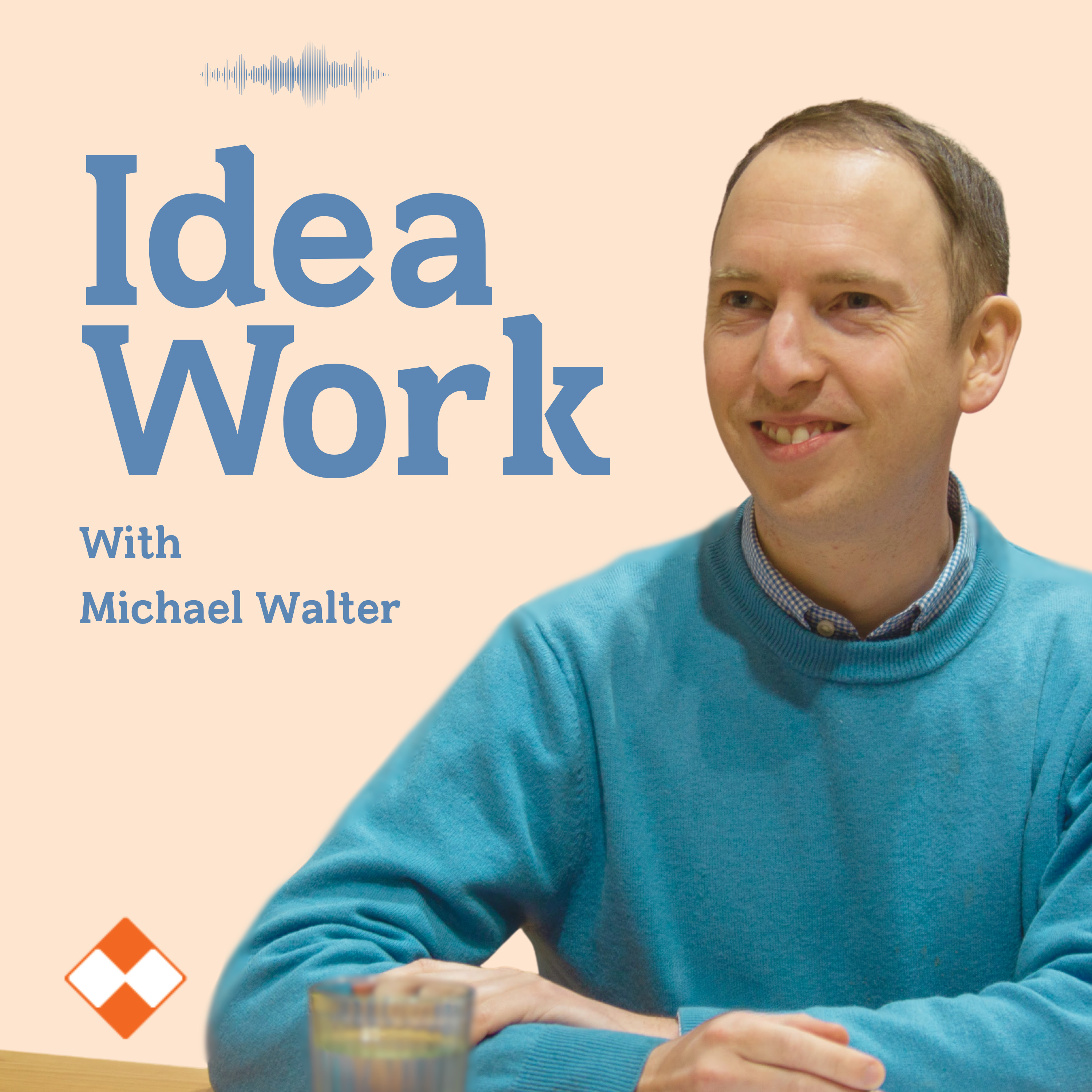
Idea Work - The podcast about innovation careers, design mindsets, and the work behind new ideas
by Michael Walter
Idea Work is a podcast about building a career in innovation, design, and strategy. Hosted by Michael Walter, innovation lecturer, PhD researcher, and facilitator, it explores the skills, mindsets, and real-life stories behind innovation careers. Hear from designers, strategists, and change-makers as they navigate career paths and drive impact. Whether you're starting out or shifting into innovation, this podcast helps you discover what makes ideas work.
-
10
Ep 1.9: Season wrap: where to next, and what I learned making the show
Check out the episode guide.A season wrap with a simple plan to keep your design thinking practice moving. Pick a lane for a month, master two methods per phase, keep ethics in view, and remember the first pancake idea. Listen on Spotify | Apple Podcasts | Amazon Music | Castbox | Goodpods | iHeart | Pocket CastsResources MentionedAcumen Academy - Human-Centred DesignIDEO Design Kitd.school Bootcamp BootlegUniversal Methods of Design (book)This is Service Design DoingAcademy Xi — Service DesignTelstra Foundation (Imaginarium programme, archived) Design Factory Melbourne (Swinburne University)Global Service Jam Timestamps0:02 – IntroductionWelcome to Idea Work. I set up the season finale and who it’s for, then restate the core question behind the show.0:41 – Season wrap and where to from hereQuick recap of the double diamond via our international-students case. I outline what to do next: choose a lane for a month and keep learning.2:29 – Build your toolkit and your peopleGet fluent with two methods per phase, then expand your toolbox. Find community, try short courses, and keep ethics front of mind when you start using interviews and research at work.5:18 – Making the show: learning in publicWhat I learned making this podcast: done beats perfect, prep beats polish, and natural voice over heavy editing. A few honest production lessons and why “cringe” is proof of growth.10:56 – Wrap up and sign offFail fast, maybe even fail first, and keep curiosity high as design and tech evolve together. Season 2 plans, an invite to subscribe and comment, plus a note about the closing song “Autumn.”Michael Walter is an educator, writer, academic, founder, improviser, and musician. He explores the intersections of creativity, technology, innovation, and social justice, always with a deep curiosity about how humans grow and connect.
-
9
Ep 1.8: Deliver, prototyping, testing and making it real
Check out the episode guide.We’ve reached deliver in the double diamond. In this episode I share how to align with your client, build rough prototypes, test without leading, iterate with intent, and package the work with roadmaps and stakeholder maps.Listen on Spotify | Apple Podcasts | Amazon Music | Castbox | Goodpods | iHeart | Pocket CastsResources MentionedIDEO: Medtech prototypingFigma (for clickable high‑fidelity mockups)Wizard of Oz prototyping (what it is and when to use it)Service blueprints (visualising frontstage and backstage)Journey maps (mapping experience across time)Wireframes (low‑fidelity UI sketches)Eventbrite (quick demand testing for events)Business Model Canvas (Strategyzer)Timestamps0:02 – IntroductionMichael welcomes listeners to the Deliver phase, recapping the journey from problem discovery through to ideation.0:40 – Deliver phase overview and client check-inSelect 2–3 promising ideas, share them with the client, gather feedback, and align on which concept to take forward based on time and budget.3:06 – Prototyping mindset: converge and keep it roughMove from broad options to a focused solution. Build low-fidelity prototypes that invite critique rather than praise, including simple wireframes or Wizard-of-Oz clickthroughs.5:20 – Prototyping across contextsUse service blueprints, role plays and storyboards for services; cardboard mock-ups for products (IDEO-style); and low-cost event tests such as a basic Eventbrite listing or a mock invitation.8:02 – Testing with people: show, don’t tellPut the prototype in users’ hands, ask them to think aloud, and avoid leading questions. Michael shares a failed video prototype and the lesson to make feedback targets and artefacts tangible.12:30 – Iterate and packageSynthesise feedback (affinity map what you hear), prioritise changes, run 2–3 cycles, then assemble clear artefacts: summaries, visuals, walkthroughs and ready-to-use assets.13:38 – Implementation and handoverProvide a practical roadmap (now/next/later), stakeholder and influence maps, suggested engagement tactics (e.g. student committee), and a business model canvas, plus notes on other ideas for future phases.15:13 – Design is a loopDelivery often starts the next round of discovery and learning. The process is non-linear, evolving with every project.16:22–16:34 – Wrap up and sign offThanks to listeners and an invitation to subscribe and continue exploring design thinking in practice.Michael Walter is an educator, writer, academic, founder, improviser, and musician. He explores the intersections of creativity, technology, innovation, and social justice, always with a deep curiosity about how humans grow and connect.
-
8
Ep 1.7: Developing ideas in the double diamond
Check out the episode guide.In the develop phase of the double diamond, ideas finally take flight. This episode shares the simple conditions that unlock creativity, the 7 rules of brainstorming, and fast methods like brainwriting, Crazy Eights, Newsflash, and Lotus Blossom. We finish by shortlisting ideas using dot voting and the desirability–feasibility–viability lens so you know what to prototype next.Listen on Spotify | Apple Podcasts | Amazon Music | Castbox | Goodpods | iHeart | Pocket CastsResources MentionedDesign Kit — 7 rules for brainstormingDesign Kit – methods library (filter by ideation)MiroMuralTimestamps0:02 – IntroductionWelcome back to Idea Work. Michael sets up today’s focus on the Develop phase and moving from a clear HMW question to creative solutions.0:41 – Enter the Develop phaseRecaps the journey so far and positions ideation as the next step after defining a focused problem.1:00 – Pivoting the problem holderExplains why the HMW targets university staff marketing health services, not students, based on research insights.1:52 – Setting the scene for creativityMake ideas visible, avoid boardroom-style critique, and create psychological safety so everyone can contribute.4:14 – Seven rules of brainstormingDefer judgement, encourage wild ideas, build on others, stay on topic, one conversation at a time, be visual, and go for quantity.8:11 – Rapid ideation methodsBrainwriting for volume, Newsflash for quick visuals, Crazy Eights to sketch variations, and Lotus Blossom to expand promising concepts.14:07 – Evaluate and select ideasUse dot voting to spot energy, then map options with desirability, feasibility, and viability to find strong candidates.16:22 – Example direction: social eventsA low-stakes on-campus events concept helps students meet clinic staff, build trust, and learn what services exist.17:47 – What’s next: Deliver and MVPOutline the next phase of testing, iterating, and shaping a minimum viable product to validate the chosen idea.18:27–18:39 – Wrap up and sign offBrief recap and invitation to continue into the Deliver phase.Michael Walter is an educator, writer, academic, founder, improviser, and musician. He explores the intersections of creativity, technology, innovation, and social justice, always with a deep curiosity about how humans grow and connect.
-
7
Ep 1.6: Understanding the define phase of design thinking
Check out the episode guide.The define phase is where design thinking shifts from collecting information to making it usable. In this episode of Idea Work, we explore how to synthesise research, identify themes, and create actionable insights. Learn practical techniques like affinity mapping, digital and in-person tools, and ways to ensure your findings survive past the workshop.Listen on Spotify | Apple Podcasts | Amazon Music | Castbox | Goodpods | iHeart | Pocket CastsResources MentionedDesign Kit – methods library (filter by ideation)MiroMuralTimestamps0:02 – IntroductionWelcome back to Idea Work. Michael sets up today’s focus on the Define phase and why synthesis is the bridge from research to action.0:41 – What the Define phase doesClarifies that the Double Diamond isn’t linear, and explains moving from messy research to usable insights that guide ideas.2:40 – Affinity mapping: turning data into themesTeam captures quotes, stats and observations as full-sentence Post-its, then clusters them into themes to surface patterns and insights.4:10 – Working digitally and capturing insightsUsing Miro/Mural to co-synthesise, label themes, and photograph boards. Emphasis on giving this stage time and avoiding a rush to shiny solutions.6:54 – Personas (done responsibly)How to build data-informed personas without stereotyping. What to include (demographics, needs, quotes, behaviours) and how they guide decisions.8:39 – Keep a critical mindsetFrameworks are abstractions with flaws. Learn them, use them, critique them, and evolve an approach that fits your context.9:30 – Crafting “How might we” questionsPurpose of HMW, with Tom and David Kelley’s framing of “how,” “might,” and “we.” Aim for an open, optimistic prompt for ideation.11:34 – Calibrating scope: bad vs good HMWExamples of questions that are too similar, too narrow or too broad, and a “just right” version that enables multiple solution paths.15:01 – Choosing the problem holder and refining HMWSometimes the focus shifts (e.g., supporting university staff to market services). Allow time to iterate the question and draw from research.16:47–16:54 – Wrap up and sign offRecap of the Define phase and a handover to the next episode on ideation.Michael Walter is an educator, writer, academic, founder, improviser, and musician. He explores the intersections of creativity, technology, innovation, and social justice, always with a deep curiosity about how humans grow and connect.
-
6
Ep 1.5: Understanding the discover phase of design thinking
Check out the episode guide! In this episode of Idea Work, we explore the discover phase of design thinking, the stage where you dive deep into the problem space, challenge assumptions, and gather insights that shape effective solutions. Learn how to “rip the brief”, plan meaningful research, navigate ethics, and know when to stop gathering data.Resources mentionedDesign Kit – methods library (filter by inspiration)Listen on Spotify | Apple Podcasts | Amazon Music | Castbox | Goodpods | iHeart | Pocket CastsTimestamps0:02 – IntroductionWelcome to Idea Work. Michael sets up the episode’s focus on the Discover phase of the Double Diamond and why deep research matters before jumping to solutions.0:42 – Moving from client brief to discoveryExplains the reverse brief process, aligning expectations, and starting team research to understand the problem space without bias.1:34 – Ripping the brief and mapping key termsBreaks down broad terms like “health” and “international students” into subtopics using mind mapping and Post-it notes to reveal hidden assumptions.3:58 – Developing a research planCovers blending qualitative and quantitative methods, choosing what’s realistic, and crafting clear research questions.5:14 – Building a stakeholder mapIdentifies key interviewees, emphasises diversity, and offers the principle that any research is better than none.6:15 – Ethics, consent, and sensitive topicsOutlines how to create information statements, consent processes, and securely store de-identified data.8:08 – Crafting and testing interview questionsShares tips for semi-structured interviews, active listening, adapting questions, and using silence effectively.11:24 – Selecting tools for researchRecommends recording, transcription, survey, and collaboration platforms, with advice on managing online tools like Miro.14:01 – Secondary research and team coordinationHighlights reputable sources for background data, and how to divide research tasks effectively across a team.16:09 – Knowing when to stop researchingExplains data saturation, project deadlines, and the natural blend between the Discover and Define phases.18:24 – Wrap up and sign offReinforces the importance of deep discovery work and previews the upcoming episode on the Define phase.Michael Walter is an educator, writer, academic, founder, improviser, and musician. He explores the intersections of creativity, technology, innovation, and social justice, always with a deep curiosity about how humans grow and connect.
-
5
Ep 1.4: Before you start: setting up for a successful design thinking project
Check out the episode guide! In this episode of Idea Work, I explore the preparation phase of a design thinking project, the often-overlooked stage that sets everything up for success. Learn how to run your first team meeting, set expectations, prepare for client conversations, and use tools to keep everyone aligned. We’ll also look at the value of reverse briefs and why client engagement is part of your product. Whether you’re leading a project or joining one, these tips will help you start strong. Resources mentionedMiroMuralSlackTrelloAsanaNotionClickupListen on Spotify | Apple Podcasts | Amazon Music | Castbox | Goodpods | iHeart | Pocket CastsTimestamps0:02 – IntroductionWelcome to Idea Work. What the show covers and who it’s for.0:39 – Episode aimWhat to do before starting a design thinking project. Why strong setup matters for any complex project.1:28 – Case study setupHypothetical brief: a small design team helps a university improve international students’ access to on‑campus health services.2:37 – Team foundationsRoles, responsibilities, communication norms, and when to seek external support. Setting expectations early to avoid problems later.4:33 – Tools and platformsChoosing collaboration and project tools (e.g. digital whiteboards, comms, and task managers) so the team can work smoothly.5:20 – Preparing for the client meetingDo background research on the organisation and problem space. Map stakeholders. Arrive with thoughtful questions rather than a sales pitch.9:00 – Scoping and expectationsClarify deliverables, feedback points, timelines and budget. Manage expectations, especially if outcomes are exploratory.13:08 – Reverse brief and approvalTurn the discussion into a clear plan with scope, responsibilities and schedule. Share for sign‑off.14:01 – Client engagement is part of the productProfessional, transparent process builds trust and referrals. From approval to action and next steps.17:07–17:14 – Wrap up and sign offInvitation for comments, subscribe reminder, and thanks to listeners.Michael Walter is an educator, writer, academic, founder, improviser, and musician. He explores the intersections of creativity, technology, innovation, and social justice, always with a deep curiosity about how humans grow and connect.
-
4
Ep 1.3: Design layers explained: from graphic to service to strategy
Check out the episode guide.Design has layers, from communication and product design to UX/UI, service, strategic and systemic design. In this episode, I use a music analogy and a fast‑food case study to show how these disciplines connect, where architecture and interior design fit, and why the goal isn’t hierarchy but fit for the problem. You’ll learn the focus of each layer, how skills transfer across them, and how to spot the right level of design for your challenge. Perfect if you’re new to design or explaining your work to colleagues.Listen on Spotify | Apple Podcasts | Amazon Music | Castbox | Goodpods | iHeart | Pocket CastsResources MentionedRichard Buchanan – Four Orders of DesignRhino 3DFigmaInteraction Design Foundation – UX vs UIService Design ToolsIDEO Design KitEllen MacArthur Foundation – Circular DesignTimestamps0:02 – IntroductionShow open and what the series explores: the people, skills, and mindsets behind innovation.0:42 – Why “design layers” matterSetting up the episode goal: clarifying what different designers do, and why the same core skills can scale from pages to experiences.1:40 – Design is like musicA relatable analogy for disciplines and craft: shared foundations across “genres,” but different depths of skill and craftsmanship.4:34 – From print to productsCommunication design (layout, branding, making the complex simple) and the evolution to product/industrial design (ergonomics, tools, 3D modeling/printing).7:12 – UX vs UI, then service designHow user experience and interface design differ—and how service design stitches channels, spaces, and touchpoints into an end-to-end journey.9:36 – Strategy, systems, and the built environmentDesign at policy/organizational scale (strategic/systemic design), alongside architecture/spatial design as a parallel domain.11:19 – McDonald’s walkthrough: one experience, many layersA concrete case study following a customer from app notification to kiosk, seating, packaging, and store flow—showing how multiple design layers work together.17:01 – Beyond the store: co-design, circularity, strategyDesigning training and inclusion with stakeholders, thinking circular for materials, and using systemic/strategic lenses to steer complex programs.20:07 – How layers collaborate (and careers move)Why no layer is “higher”—they’re different scopes that interlock, and skills can transfer between them over a career.21:02 – 21:09 – Wrap up and sign offClosing thanks and subscribe reminder.Michael Walter is an educator, writer, academic, founder, improviser, and musician. He explores the intersections of creativity, technology, innovation, and social justice, always with a deep curiosity about how humans grow and connect.
-
3
Ep 1.2: Understanding design thinking and the double diamond
Check out the episode guide.In this episode, I break down design thinking and the Double Diamond, a powerful framework for tackling complex problems. Learn the four stages, practical tools, and how to start applying them in any role.Listen on Spotify | Apple Podcasts | Amazon Music | Castbox | Goodpods | iHeart | Pocket CastsResources mentionedNatasha Jen — “Design Thinking is BS” talkIDEO Design KitTimestamps0:02 – IntroductionWelcome to Idea Work and overview of the show’s purpose — exploring what innovation professionals and designers do, and how they create change.1:26 – Why design thinking?Clarifying the method’s purpose, where it applies, and how it differs from solving simple, well-defined problems.4:00 – Critiques and philosophyAcknowledging criticisms of design thinking and viewing it as both a flexible process and a mindset.5:56 – The Double Diamond frameworkOrigin, four stages (Discover, Define, Develop, Deliver), and the importance of iteration rather than a rigid sequence.8:01 – Discover and DefineResearch methods, affinity mapping, personas, and reframing challenges into “how might we” questions.11:07 – Develop and DeliverBrainstorming and brainwriting, evaluating ideas for viability, feasibility, and desirability, prototyping, and iterative testing.15:49 – Real-world exampleHypothetical university case study showing the process from research to funded, ongoing programme.16:59 – Iterating and applyingWhen and why to return to earlier stages, and tips for trying parts of the process in everyday work.17:49 – 18:08 - Wrap up and sign offMichael Walter is an educator, writer, academic, founder, improviser, and musician. He explores the intersections of creativity, technology, innovation, and social justice, always with a deep curiosity about how humans grow and connect.
-
2
Ep 1.1: Finding my way into design and innovation
Check out the episode guide! In this first episode of Idea Work, I share the vision for the podcast and why I started it. I talk about my own journey from teaching and the not-for-profit sector into design and innovation, the experiences that shaped me, and what listeners can expect from the show. Whether you’re new to design or a seasoned practitioner, Idea Work is about the people, skills, and mindsets behind innovation – told through stories, interviews, and practical insights.Resources mentionedIdea Work on SubstackAcumen Academy — Human‑Centred Design Academy Xi — Service DesignTelstra Foundation (Imaginarium program, archived)Design Factory Melbourne (Swinburne University)Global Service JamListen on Spotify | Apple Podcasts | Amazon Music | Castbox | Goodpods | iHeart | Pocket CastsTimestamps0:02 – IntroductionIntroduction to Idea Work and who it’s for, people starting in innovation, shifting careers, or simply curious.0:40 – Episode purposeExploring the vision for the show and what listeners can expect.1:26 – Michael’s backgroundFrom teaching and not-for-profits into a PhD in design and innovation at Swinburne University.2:34 – Early spark for collaboration researchWhy cross-sector collaboration between not-for-profits and research institutions became a focus.2:39 – Discovery of design thinkingFirst encounters, service design jam, Acumen Plus human-centred design course.3:29 – Telstra ImaginariumLearning the design thinking process deeply with other not-for-profits.4:09 – Applying design thinking in the workplaceUsing strategic/service design skills in a not-for-profit role.4:42 – Service design course at Academy XiIntensive learning experience and what service design looks like in practice (bank example).5:51 – Ongoing journey into designCompleting a Master’s, teaching design thinking and design strategy.6:22 – Encouragement for newcomersReassurance that people from non-design backgrounds can succeed in design.7:05 – Expanding into innovationTeaching at Swinburne’s Design Factory and exploring overlap between innovation and design thinking.7:46 – Purpose of the showHighlighting both the ideas and the people who do “idea work”.8:25 – Show formatInterviews, explainers, solo episodes — open to listener suggestions.8:53 – Accessibility and jargonMaking design conversations more approachable, avoiding elitism and intimidating aesthetic culture.9:54 – ClosingInvitation for ideas, and thanks to listeners.Michael Walter is an educator, writer, academic, founder, improviser, and musician. He explores the intersections of creativity, technology, innovation, and social justice, always with a deep curiosity about how humans grow and connect.
-
1
Idea Work - Coming soon!
Welcome to Idea Work, a podcast about building a career in innovation, design, and strategy. In this short teaser, host Michael Walter shares why this podcast exists, who it’s for, and what you can expect in upcoming episodes.If you're curious about how people land innovation roles, build creative careers, and make new ideas work, this one’s for you.New episodes launch soon. Hit follow so you don’t miss a thing.
We're indexing this podcast's transcripts for the first time — this can take a minute or two. We'll show results as soon as they're ready.
No matches for "" in this podcast's transcripts.
No topics indexed yet for this podcast.
Loading reviews...
ABOUT THIS SHOW
Idea Work is a podcast about building a career in innovation, design, and strategy. Hosted by Michael Walter, innovation lecturer, PhD researcher, and facilitator, it explores the skills, mindsets, and real-life stories behind innovation careers. Hear from designers, strategists, and change-makers as they navigate career paths and drive impact. Whether you're starting out or shifting into innovation, this podcast helps you discover what makes ideas work.
HOSTED BY
Michael Walter
Loading similar podcasts...
Frequently Asked Questions
How many episodes does Idea Work - The podcast about innovation careers, design mindsets, and the work behind new ideas have?
Idea Work - The podcast about innovation careers, design mindsets, and the work behind new ideas currently has 10 episodes available on PodParley. New episodes are automatically indexed when they're published to the podcast feed.
What is Idea Work - The podcast about innovation careers, design mindsets, and the work behind new ideas about?
Idea Work is a podcast about building a career in innovation, design, and strategy. Hosted by Michael Walter, innovation lecturer, PhD researcher, and facilitator, it explores the skills, mindsets, and real-life stories behind innovation careers. Hear from designers, strategists, and change-makers...
How often does Idea Work - The podcast about innovation careers, design mindsets, and the work behind new ideas release new episodes?
Idea Work - The podcast about innovation careers, design mindsets, and the work behind new ideas has 10 episodes. Check the episode list to see recent publication dates and frequency.
Where can I listen to Idea Work - The podcast about innovation careers, design mindsets, and the work behind new ideas?
You can listen to Idea Work - The podcast about innovation careers, design mindsets, and the work behind new ideas on PodParley by clicking any episode. We provide an embedded audio player for direct listening, and you can also subscribe via your preferred podcast app using the RSS feed.
Who hosts Idea Work - The podcast about innovation careers, design mindsets, and the work behind new ideas?
Idea Work - The podcast about innovation careers, design mindsets, and the work behind new ideas is created and hosted by Michael Walter.
URL copied to clipboard!