
PODCAST · health
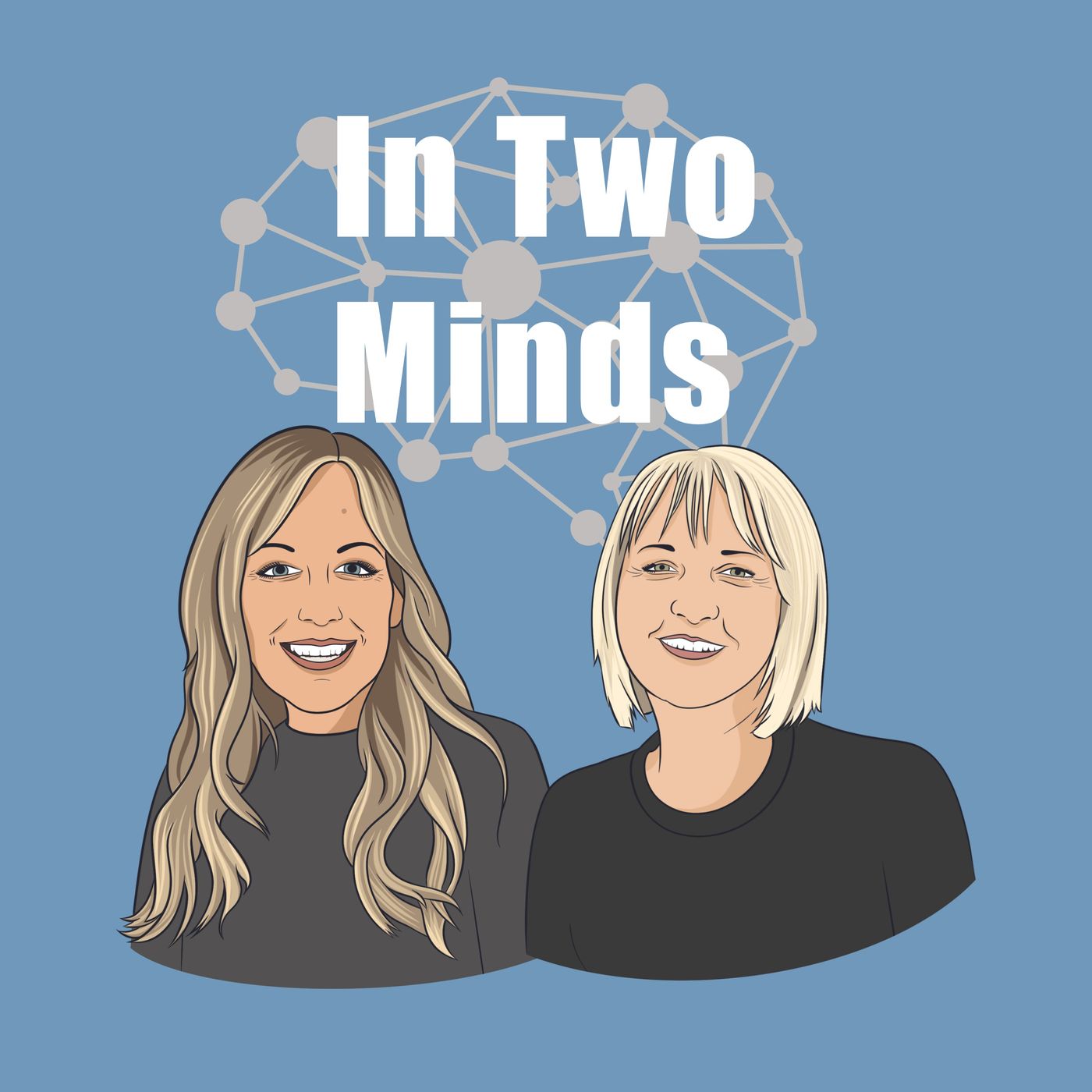
In Two Minds
by Justine Pickering and Professor Julie Williams
This is a podcast that will help you navigate the complexities of dementia. It’s presented by two friends who come at the subject from two very different perspectives. Professor Julie Williams has spent most of her working life trying to understand Alzheimer's disease and other forms of dementia. Meanwhile, Justine Pickering understands the colossal human cost all too well. She lost her mum to a rare form of young-onset dementia before founding a unique respite project for families coping with the emotional toll of the disease. In Two Minds brings you the highs and lows of the shared experiences of dementia. We’ll hear inspiring special guests and all about current research and future treatments.Together, we’ll explore the challenges of coping with this disease and how to live well following diagnosis.
-
25
In Conversation with Ruth Jones Part 2: Annie’s Legacy
In part 2 of the conversation with her friend Ruth Jones, Justine speaks with raw honesty about the heartbreak of slowly losing her mum, the realities of caring and the overwhelming guilt that so often follows. She reflects on the moments she wishes she could relive, the memories she clings to, and the pain of a Christmas Eve goodbye. Driven by love and necessity, Justine created a respite project that transformed the lives of families living with dementia - a beautiful, dignified space where joy, music, kindness, and humanity come first, and where carers are finally given permission to rest. This episode is about more than loss. It’s about making moments matter. It’s about finding light in the darkest places and about the profound impact one woman’s life can have long after she’s gone. If you have any questions for Justine and Prof Julie, email us [email protected]. For further help and advice, please visit https://www.alzheimers.org.uk
-
24
In Conversation with Ruth Jones Part 1: When a Mother Needs Her Daughter
The one and only Ruth Jones joins the podcast for the next two weeks as co-host of In Two Minds. As Julie takes a little break, Justine shares with Ruth the story she never thought she could tell — the story of her mum, Annie, and their family’s journey through young-onset dementia. Justine reflects on who Annie was before the diagnosis: a glamorous, funny, fiercely loving woman — a young mum and a devoted grandmother. Together, they explore the slow, bewildering onset of dementia, the thousand small moments that didn’t make sense at the time, and the heartbreak of watching independence, dignity, and language gradually slip away. This episode speaks honestly about the realities of caring: the humiliation dementia can bring, the exhaustion of “orchestrated fun,” and the painful question of who normality is really for. A tribute to Annie, and to all families living with dementia, this episode is about love in its rawest form — and why better understanding, support, and respite matter so deeply. If you have any questions for Justine and Prof Julie, email us [email protected]. For further help and advice, please visit https://www.alzheimers.org.uk
-
23
Decoding Dementia: Dr. Emma Mead on the Future of Alzheimer’s Therapies
Dr. Emma Mead is the Chief Scientific Officer at the Oxford Drug Discovery Institute. In this episode, we explore with her the cutting-edge science behind Alzheimer’s and other neurodegenerative diseases.Dr. Mead takes us through the journey from groundbreaking genetic discoveries to the development of potential therapies, explaining how tiny brain cells called microglia could hold the key to preventing and slowing dementia. We dive into the complexities of Alzheimer’s beyond amyloid plaques, the promise of targeting genes like PLCG2, and the innovative approaches to drug discovery—from identifying molecular “hits” in the lab to partnering with pharmaceutical companies for clinical trials. Emma also shares her vision for a future where patients benefit from a toolbox of personalised treatments, early diagnosis, and improved quality of life. This episode offers hope, insight, and a human perspective on a disease that affects one in two of us, directly or indirectly. Whether you’re a researcher, carer, or someone interested in the future of neuroscience, this conversation highlights why the next decade could transform dementia care. If you have any questions for Justine and Prof Julie. Email us [email protected]. For further help and advice please visit https://www.alzheimers.org.uk.
-
22
Finding Purpose and the Right Environment: Supporting People with Young Onset Dementia at Ty Hapus
Ty Hapus is a unique South Wales-based respite project for people living with young-onset dementia. Tess Thomas, the manager of Ty Hapus, shares her passion for supporting the dementia community and how the service creates a sense of purpose, connection, and joy for both guests and their carers. We discuss the importance of tailored activities, routines, and communication strategies, as well as the vital role of respite in supporting carers’ mental health. From music sessions to creative projects, Tess illustrates how Ty Hapus transforms respite into meaningful experiences and fosters a vibrant, home-from-home environment. Whether you’re a carer, a health professional, or simply interested in dementia care, this conversation is full of practical advice, heartfelt stories, and insights into creating spaces where people living with dementia can thrive. If you have any questions for Justine and Prof Julie. Email us [email protected]. For further help and advice please visit https://www.alzheimers.org.uk
-
21
Navigating the Next Step - Understanding Care Options with Clive Bowman
When someone you love is living with dementia, the future can feel frightening, confusing, and full of impossible choices. In this episode, Clive Bowman - formerly a leading physician and Medical Director at Bupa - demystifies what good care really looks like and how families can prepare before crisis forces their hand. Drawing on decades spent at both the bedside and the boardroom, Clive explains why early planning matters, how to spot a high-quality care home, and why transparency with professionals is essential. He shares extraordinary real-world stories about medication, sedatives, and the difference the right environment can make for quality of life, dignity, and connection. If you want to know when to start looking at care options, why transitions into care can improve a person’s wellbeing, and what truly distinguishes a compassionate care home, then this is a must-listen-to episode. If you have any questions for Justine and Prof Julie. Email us [email protected]. For further help and advice please visit https://www.alzheimers.org.uk
-
20
ARCHIVE: Music and Memory with soprano Rebecca Evans CBE
We wish you well during this festival period and look forward to being back with you in the New Year. In the meantime, we're revisiting a highlight from our first series with the brilliant Rebecca Evans CBE. The Grammy award-winning soprano talks about her career and how important supporting the dementia community is to her. We also explore the power of music to unlock memories and provide comfort to those living with dementia. Prof Julie explains the neurological basis for why music memory persists even as other cognitive functions decline. Rebecca talks about witnessing Alzheimer’s for the first time as a nurse and shares her experiences as an ambassador of the Forget Me Nots Chorus, which uses music to support individuals with dementia and their caregivers. We are aware that the Christmas and New Year period can be a difficult time for those living with or caring for someone with Dementia. Please remember you can always reach out for any help or advice at https://www.alzheimers.org.uk
-
19
Turning Pain into Power: Jen’s Story of Love, Loss & Resilience
This week we sit down with Jen, who reflects on her mother’s PCA diagnosis, the sudden loss of her father, and the challenges of caring for young children while holding her world together. Her honesty resonates profoundly with Justine’s own journey caring for her mum. Together, they talk about the confusion, the fear, and the emotional weight of watching someone you love change. Jen goes on to explain her newfound ability to “turn pain into power”. There are tears, moments of laughter and a shared appreciation for the small acts of self-care — yoga, music, a walk, five guilt-free minutes — that help carers survive the hardest days. This episode is a tender reminder that none of us are alone in the complexity of caring for someone with dementia, and that strength often shows up in the quietest, most human ways. We'd love to hear your stories and your advice for anyone living with dementia - or if you have any questions for Justine and Prof Julie. Email us [email protected]. For further help and advice, please visit https://www.alzheimers.org.uk
-
18
From Big Data to Big Breakthroughs: Caleb Webber on Parkinson’s
In this powerful and hopeful episode of In Two Minds, Professor Caleb Webber explains how vast new datasets and AI-driven pattern-spotting are transforming our understanding of conditions like Parkinson’s and Alzheimer’s.Caleb is the Director of Informatics at the UK Dementia Research Institute and a leading voice in decoding the complexities of neurodegenerative disease. He reveals groundbreaking findings from his team’s work: surprising overlaps between Parkinson’s and diabetes, the discovery that existing hypertension medications may halve the risk of developing Parkinson’s, and a major new study exploring whether combining blood-pressure drugs with GLP-1 therapies (like Ozempic-type medications) could slow or even prevent the disease. Caleb offers real reasons for optimism: that prevention may be within reach, that repurposed medications could help people sooner than expected, and that the next decade of brain-health research looks more promising than any before. This is an episode filled with science, humanity, and genuine hope — for people living with Parkinson’s today, for those caring for them, and for anyone navigating life touched by neurodegenerative disease. We'd love to hear your stories and your advice for anyone living with dementia - or if you have any questions for Justine and Prof Julie. Email us [email protected]. For further help and advice please visit https://www.alzheimers.org.uk
-
17
Katie Williams - Growing Up As My Dad’s Young Carer.
In season one, we heard the story of Gareth and his battle with early-onset dementia as told by his wife Carrie. In this episode, we hear the story from a different perspective - this time from his daughter, Katie. Katie was in Year 8 in school when she learned about her dad’s condition. In the years that followed, she experienced the overwhelming challenges of being a young carer. Katie courageously shares her journey of watching her young, vibrant, and athletic dad slowly fade as his illness progressed, and she talks us through how she navigated the immense emotional toll while still trying to be a teenager. She reflects on the profound love and bond she shared with her dad, the heartbreaking moments of caring for him, and how the isolation of being a young carer affected her life.Through Katie’s story, we gain a deeper understanding of the ripple effect a diagnosis like this can have on families, especially the young people who are often left to navigate a world of care and loss at an early age. She also offers invaluable insight into the importance of counselling. Katie shares how she’s now channelling her experience into a career path in social work, determined to help families like hers. She’s also running a half-marathon to raise awareness and funds for Parkinson's disease, continuing to honour her dad’s legacy in a beautiful and impactful way. Katie’s bravery in sharing her journey will no doubt resonate with anyone who has faced similar challenges and provide much-needed comfort to those who feel alone in their struggles. We'd love to hear your stories and your advice for anyone living with dementia - or if you have any questions for Justine and Prof Julie. Email us [email protected]. For further help and advice, please visit https://www.alzheimers.org.uk
-
16
Breakthrough in Gene Therapy: Dr Tom Massey on the Fight Against Huntington's
In a remarkable conversation, clinical neurologist and researcher Dr Tom Massey takes us inside the world of Huntington's Disease (HD) research, sharing the latest breakthroughs that have brought the scientific community closer than ever to a cure.Just weeks after this interview was recorded, news broke that clinical trials Dr Massey mentions - involving complex brain surgery to deliver gene therapy - were a success, slowing HD progression by up to 75%. Tom explains the science behind this advance, focusing on the role of DNA repair mechanisms.We talk about the big ethical issues around pre-symptomatic testing and hear Dr Massey’s reflection on the "awe-inspiring" families and patients who volunteer for invasive trials, driven by hope for their children and grandchildren. Tom talks about how his research is motivated by his relationships with his patients and how witnessing their decline has only driven him further in his search for new treatments.This is an essential listen for anyone connected to HD or interested in the future of neurodegenerative disease treatment.If you have any questions for Justine and Prof Julie. Email us [email protected] further help and advice please visit https://www.alzheimers.org.uk
-
15
Actress Lucy Briers (Part 2): Treat the Person, Not the Illness
In this second part of our conversation with Lucy Briers, she talks candidly about the last few months of her Mum, Ann’s life and the coping strategies she used to help her.Lucy talks about how her mum looked ten years younger in her final days and seemed to remember her late husband, Richard, again. She also talks about the glimpses of affection shown by her mum and how important they were to her. We also hear about Ann’s days at the Liverpool Playhouse and how Lucy discovered her mum’s diary from the time and found out all about her pre-marriage dating life.It’s the culmination of a beautiful, revealing interview where Lucy offers words of advice for others going through a similar situation. We hope you find some inspiration from it. We'd love to hear your stories and your advice for anyone living with dementia - or if you have any questions for Justine and Prof Julie. Email us [email protected]. For further help and advice, please visit https://www.alzheimers.org.uk
-
14
Actress Lucy Briers on dealing with her mum’s dementia (Part 1)
Lucy Briers is part of acting royalty. Her dad Richard was in The Good Life. Her mum Ann Davies was in Doctor Who. Lucy herself is an accomplished actress and starred in the classic 1995 BBC adaptation of Pride and Prejudice. Over the next two episodes, Lucy talks to us about how she and her sister dealt with her mum’s dementia. When Richard died in 2013, the family mistook the early symptoms of Ann's dementia for grief. They then struggled to get her to come to terms with the disease in the lead-up to diagnosis.Lucy talks about adjusting to life with dementia and how she learned to stop caring about social niceties and began to find patience, understanding and strategies to help Ann day to day. We'd love to hear your stories and your advice for anyone living with dementia - or if you have any questions for Justine and Prof Julie. Email us [email protected] further help and advice please visit https://www.alzheimers.org.uk
-
13
Memory Box: Justine Pickering
Between our main episodes, we're opening up our Memory Box, asking simple, nostalgia-driven questions to our guests and ourselves. These questions prompt memory and can help start a dialogue with someone with dementia. This time it's the turn of our presenter Justine to pick her favourite book, piece of music and a memory she'll treasure forever. We'd love to hear your stories and advice for anyone with dementia - or if you have any questions for Justine and Prof Julie. Email us [email protected].
-
12
Memory Box: Professor Vincent Dion
Between our main episodes, we're opening up our Memory Box, asking simple, nostalgia-driven questions to our guests and ourselves. These questions prompt memory and can help start a dialogue with someone with dementia. This week, it's the turn of Professor Vincent Dion of the UK Dementia Research Institute who talked to us at length in Episode 9. We'd love to hear your stories and advice for anyone with dementia - or if you have any questions for Justine and Prof Julie. Email us [email protected].
-
11
Memory Box: Rebecca Evans
Between our main episodes, we're opening up our Memory Box, asking simple, nostalgia-driven questions to our guests and ourselves. These questions prompt memory and can help start a dialogue with someone with dementia. This week, it's the turn of Grammy-winning soprano, Rebecca Evans who talked to us at length in Episode 7. We'd love to hear your stories and your advice for anyone living with dementia - or if you have any questions for Justine and Prof Julie. Email us [email protected].
-
10
Huntington's Disease: Professor Vincent Dion on The Promise of a Cure
Vincent Dion is a professor at Cardiff University’s UK Dementia Research Institute. In this episode, Justine and Julie talk to Professor Dion about the latest advancements in research into Huntington's disease which could provide significant hope for the future. Professor Dion’s work centres on using technology to target and correct the genetic mutation that causes Huntington’s. While the signs are positive, the challenge now lies in transitioning from the labs to clinical trials which requires substantial investment and navigating regulatory hurdles. We also talk about the broader implications of genetic therapies for other diseases caused by similar genetic mutations and their potential impact on the wider field of dementia research.Key Moments: Vincent Dion’s journey into research (02:12)Understanding Huntington's Disease (05:35)Innovative approaches in genetic therapy (09:20)Challenges in advancing research to clinical trials (12:15)The future of Huntington's Disease treatment (16:29)Optimism and future directions in research (26:32) We'd love to hear your stories and advice for anyone with dementia - or if you have any questions for Justine and Prof Julie. Email us [email protected].
-
9
Memory Box: Carrie Williams
Between our main episodes, we're opening up our Memory Box, asking simple, nostalgia-driven questions to our guests and ourselves. These questions prompt memory and can help start a dialogue with someone with dementia. This week, it's the turn of Carrie Williams, who told us the story of her husband's early onset dementia earlier in the series We'd love to hear your stories and your advice for anyone living with dementia - or if you have any questions for Justine and Prof Julie. Email us [email protected].
-
8
Music and Memory with soprano Rebecca Evans CBE
Grammy award-winning soprano Rebecca Evans talks about her career and how important supporting the dementia community is to her. We also explore the power of music to unlock memories and provide comfort to those living with dementia. Prof Julie explains the neurological basis for why music memory persists even as other cognitive functions decline. Rebecca talks about witnessing Alzheimer’s for the first time as a nurse and shares her experiences as an ambassador of the Forget Me Nots Chorus, which uses music to support individuals with dementia and their caregivers. Key Moments: Rebecca’s road to becoming an opera singer (02:16)Understanding dementia and Rebeeca’s commitment to the dementia community (18:02)The science behind remembering musical lyrics (24:34)The Grammy experience and future plans (30:02)Reflecting the lasting impact of music on memory (34:55) We'd love to hear your stories and your advice for anyone living with dementia - or if you have any questions for Justine and Prof Julie. Email us [email protected].
-
7
Memory Box: Warren and Trudi Gatland
Between our main episodes, we're opening up our Memory Box, asking simple, nostalgia-driven questions to our guests and ourselves. These questions prompt memory and can help start a dialogue with someone with dementia. This week, it's the turn of Wales rugby coach Warren Gatland and his wife Trudi. We'd love to hear your stories and your advice for anyone living with dementia - or if you have any questions for Justine and Prof Julie. Email us [email protected].
-
6
Understanding Alzheimer’s Disease
Our very own Professor Julie Williams provides insight into the current state of Alzheimer’s research, focusing on the role of genetics and the work being done to tackle the disease.It is projected that the number of people with Alzheimer’s will rise to 1.4 million by 2040 - primarily due to increased life expectancy - so the importance of understanding the disease has never been so crucial.Julie expresses optimism about where we are right now and the incredible work being done towards developing therapies that could help manage and slow the progression of Alzheimer’s in the future.Key Moments:The genetics of Alzheimer's (02:07)How Alzheimer's develops (05:57)The development of Dananibab (09:48)Finding the missing pieces of the jigsaw puzzle (12:09)Looking ahead and being able to predict the disease (23:53) We'd love to hear your stories and your advice for anyone living with dementia - or if you have any questions for Justine and Prof Julie. Email us [email protected].
-
5
Memory Box: Professor Julie Williams
In between our main episodes, we're going to open our Memory Box and ask simple, nostalgia-driven questions to our guests and ourselves. These questions prompt memory and can help start a dialogue with someone who has dementia. In this first Memory Box episode, Justine quizzes Prof Julie about her favourite childhood book, meal and favourite piece of music. We'd love to hear your stories and your advice for anyone living with dementia - or if you have any questions for Justine and Prof Julie. Email us [email protected].
-
4
Caring for someone with young-onset dementia - Carrie’s Story
Carrie Williams talks to us about her 28-year love story with her husband Gareth who was diagnosed with Parkinson's disease and later frontotemporal dementia in his 50s.Carrie and Gareth were both police officers when they met at a convalescent home where they were recovering from injuries. They fell in love, got married and had two children together. In 2013, Carrie started noticing Gareth was struggling to find his words. After an initial misdiagnosis of depression, they discovered that Gareth had Parkinson’s disease and had had it for 12 years. In this heartbreaking episode, Carrie talks to us about the impact of Gareth’s diagnosis on the family, the challenges of caregiving and the resilience they demonstrated in the lead-up to Gareth’s death in the middle of the Covid pandemic and subsequently. How Carrie and Gareth met and fell in love (02:30)The early signs of dementia (08:06)Receiving the diagnosis (12:30)Coping with Gareth’s condition (17:46)The role of family and support (22:32) Gareth’s final days (26:54)Life after losing Gareth (32:40) Reflections on resilience (37:04)We'd love to hear your stories and your advice for anyone living with dementia - or if you have any questions for Justine and Prof Julie. Email us [email protected].
-
3
Warren & Trudi Gatland - Part 2: Trudi on her dad's Alzheimer’s
In this, the second of a two-part episode with Warren and Trudi Gatland, Trudi talks about the practicalities of her dad, Terry’s Alzheimer’s and vascular dementia diagnosis and the emotional toll it’s having on the family.Terry developed dementia in his 80s and experiences significant short-term memory loss. Trudi openly discusses the emotional challenges of watching her father change and the strain it places on the family and her mother in particular. Trudi talks about how the family work together to help and support Terry. We also learn about some of the coping strategies they use, including maintaining Terry’s independence where possible, staying in his frame of reference and answering repetitive questions with the same courtesy as the first time they were asked. Key Moments:Terry’s story (02:38)How Trudi’s mum deals with her husband’s dementia (06:37) The support of the wider family (08:37)Dealing with short-term memory loss and repetitive questions (10:46)The importance of researching the condition (16:36)Considering and planning for future care (19:03)Julie and Justine reflect on what they’ve learned from both Warren and Trudi (21:59) We'd love to hear your stories and your advice for anyone living with dementia - or if you have any questions for Justine and Prof Julie. Email us [email protected].
-
2
Warren & Trudi Gatland - Part 1: Warren on resilience and the importance of family
This is part one of a two-part episode with Wales rugby coach Warren Gatland and his wife Trudi where we explore dementia, mental health, and the importance of family support. In an interview recorded just after the Autumn Internationals, which saw the Welsh rugby side at one of its lowest ebbs, he talks about the coping strategies needed for dealing with the pressures of elite sport. He reflects on the effect of negative media and social media on himself and his players and talks about the significance of positivity and language in overcoming adversity. Warren talks openly about the importance of family as a fundamental source of strength, comfort, and support for him and Trudi: "The only people that really matter in your life”, he says, “are your family and your friends and your teammates." We learn about the concept of “Big Much”, the family's unique saying which represents their unconditional love and support for each other. The episode also discusses the advancements in safety protocols, medical support and research in an attempt to reduce head injuries and make rugby safer. We also discuss the ethical considerations of genetic testing young athletes to discover if they have a predisposition for dementia.Key Moments:Warren on coping with adversity (04:16)The importance of positivity and language (05:44)Dealing with media negativity during the 2017 Lions tour of New Zealand (10:15)The importance of family support (12:59)How Trudi and Warren support each other (14:01)The concept of “Big Much” (16:49)Head injuries in rugby (18:36)Research on dementia and sport safety and the ethics involved (23:38) We'd love to hear your stories and your advice for anyone living with dementia - or if you have any questions for Justine and Prof Julie. Email us [email protected].
-
1
Welcome to In Two Minds
Whether you’re living with dementia, supporting someone, or simply seeking to understand the disease, this is a podcast series for you.In Two Minds is a podcast that will help you navigate the complexities of dementia. It’s presented by two friends who come at the subject from two very different perspectives. Professor Julie Williams has spent most of her working life trying to understand Alzheimer's disease and other forms of dementia. Meanwhile, Justine Pickering understands the colossal human cost all too well. She lost her mum to a rare form of young-onset dementia before founding a unique respite project for families coping with the emotional toll of the disease. In Two Minds brings you the highs and lows of the shared experiences of dementia. We’ll hear inspiring special guests and all about current research and future treatments. Together, we’ll explore the challenges of coping with this disease and how to live well following diagnosis.Key moments in this episode:Prof Julie on the science behind dementia: understanding causes and treatments (03:07)Justine’s story and the need for a greater understanding of dementia (04:42)How a podcast like In Two Minds can help people living with or affected by dementia (06:37)How Justine and Julie became friends (08:50)What’s to come in Series 1 of In Two Minds (12:10)We'd love to hear your stories and your advice for anyone living with dementia - or if you have any questions for Justine and Prof Julie. Email us [email protected].
We're indexing this podcast's transcripts for the first time — this can take a minute or two. We'll show results as soon as they're ready.
No matches for "" in this podcast's transcripts.
No topics indexed yet for this podcast.
Loading reviews...
ABOUT THIS SHOW
This is a podcast that will help you navigate the complexities of dementia. It’s presented by two friends who come at the subject from two very different perspectives. Professor Julie Williams has spent most of her working life trying to understand Alzheimer's disease and other forms of dementia. Meanwhile, Justine Pickering understands the colossal human cost all too well. She lost her mum to a rare form of young-onset dementia before founding a unique respite project for families coping with the emotional toll of the disease. In Two Minds brings you the highs and lows of the shared experiences of dementia. We’ll hear inspiring special guests and all about current research and future treatments.Together, we’ll explore the challenges of coping with this disease and how to live well following diagnosis.
HOSTED BY
Justine Pickering and Professor Julie Williams
Loading similar podcasts...
Frequently Asked Questions
How many episodes does In Two Minds have?
In Two Minds currently has 25 episodes available on PodParley. New episodes are automatically indexed when they're published to the podcast feed.
What is In Two Minds about?
This is a podcast that will help you navigate the complexities of dementia. It’s presented by two friends who come at the subject from two very different perspectives. Professor Julie Williams has spent most of her working life trying to understand Alzheimer's disease and other forms of dementia....
How often does In Two Minds release new episodes?
In Two Minds has 25 episodes. Check the episode list to see recent publication dates and frequency.
Where can I listen to In Two Minds?
You can listen to In Two Minds on PodParley by clicking any episode. We provide an embedded audio player for direct listening, and you can also subscribe via your preferred podcast app using the RSS feed.
Who hosts In Two Minds?
In Two Minds is created and hosted by Justine Pickering and Professor Julie Williams.
URL copied to clipboard!