
PODCAST · news
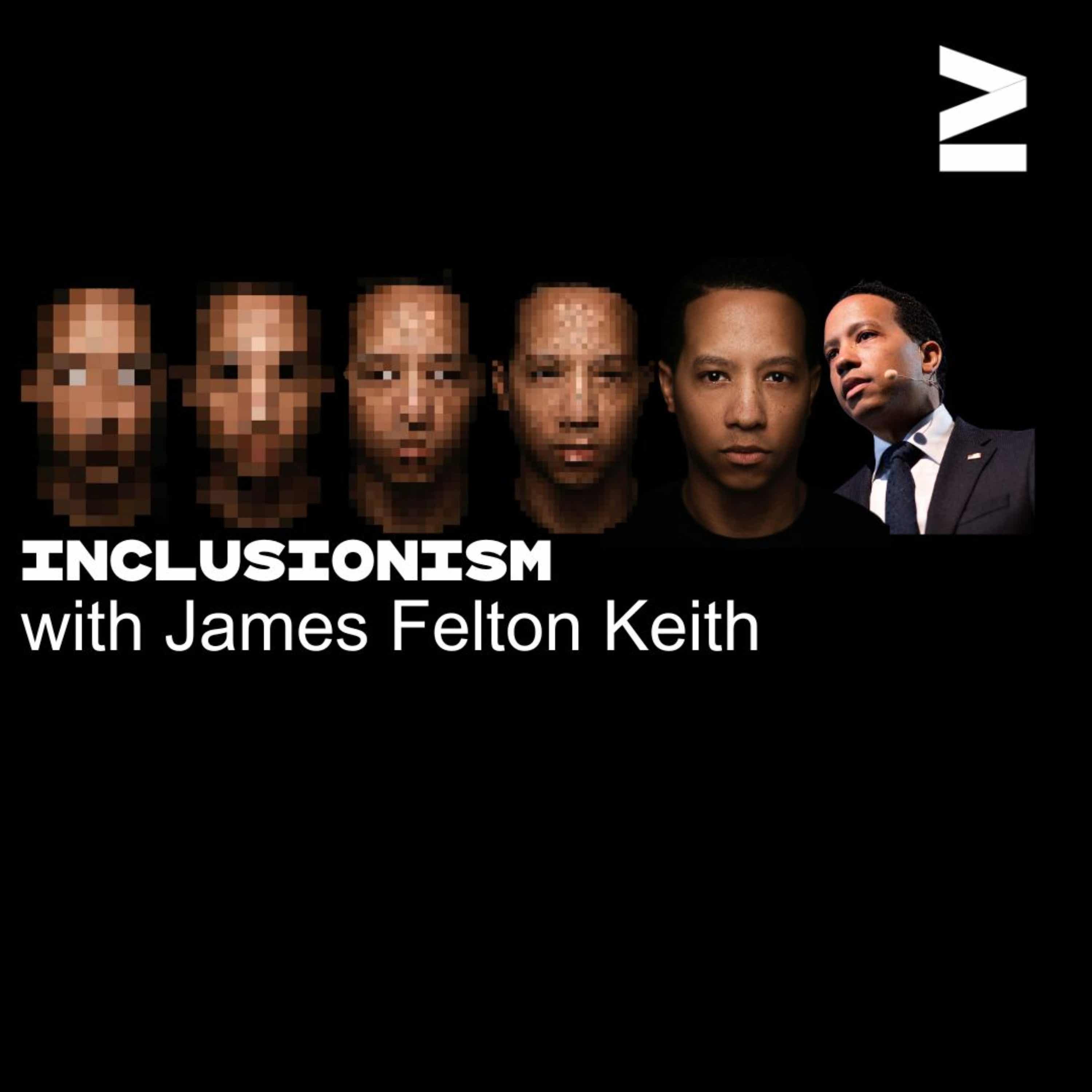
Inclusionism
by James Felton Keith
James Felton Keith explores the tenets of inclusionism . As always, JFK is joined by Peter Willumsen and friends. His ethic of inclusionism is at the core of his work on global diversity equity inclusion and belonging. JFK is the Founder of Techstars Venture Backed, InclusionScore Companies and a lecturer at the University of Georgia's Terry College of Business. In 2017 he became the first Black LGBT person to run for federal office in the United States during his bid for Congress to represent Harlem. jamesfeltonkeith.substack.com
-
28
Now on Spotify: Your Data, Their Wealth
This book makes a plain argument: your data is not incidental to the AI economy. It is an input. It helps train systems, shape products, reduce risk, increase efficiency, and create enormous enterprise value. Yet the people whose lives, behaviors, language, preferences, and patterns make that value possible are rarely recognized, credited, or paid.I wrote this book to name that imbalance clearly and to push the conversation forward. If data functions like labor, capital, or any other productive input, then it should be measured differently, governed differently, and valued differently.If you have been following my work on data, value, ownership, AI, and economic justice, this is the book that brings those arguments together in one place.You can listen now on Spotify. The hard cover comes out on Juneteenth (June 19)Your data built this economy. It is time to talk about what that is worth. This is a public episode. If you would like to discuss this with other subscribers or get access to bonus episodes, visit jamesfeltonkeith.substack.com
-
27
The White House is Sacrificing People for Cold War AI “Dominance”.
The White House has now made its position on artificial intelligence much clearer.It sees the harms. It sees the scams, the deepfakes, the threats to children, the pressure on the electric grid, the fights over copyright, and the disruption coming for workers. It is not blind to the damage.But it is still committed to the same old framework of power: sacrifice the public, protect the market, and call it national strength.That is the deeper problem with this AI policy framework. It talks about the visible harms of AI, but it refuses to confront the extraction model underneath it. It wants to regulate the symptoms while preserving the structure. It wants America to dominate AI, but it never really asks who pays for that dominance and who gets left behind to make it possible.That idea of “dominance” is not neutral. It comes out of a Cold War mindset. It assumes that the nation must race ahead at all costs, that scale itself is victory, and that any serious constraint on industry is a strategic weakness. In that worldview, people are not partners in development. They are fuel. Workers are a labor supply problem. Families are a safety issue. Communities are an infrastructure problem. States are obstacles. The public is something to manage while the machine expands.That is exactly what this framework sounds like.It offers protections at the margins. It talks about guarding children, fighting fraud, and limiting some of the most obvious abuses of synthetic identity. Fine. Those are real problems. But those protections do not change the central fact that AI systems are being built on human expression, human behavior, human culture, and human decision-making without creating meaningful economic rights for the people whose lives are being turned into inputs.That is the scandal.The White House is willing to admit that AI can harm people. It is not willing to admit that AI is profitable because it extracts value from people.So the framework treats the public as something to defend, not something to pay. It treats workers as people who need retraining, not as contributors who deserve bargaining power. It treats communities as places that should be protected from higher electric bills, not as stakeholders who should have a claim on the wealth being generated around them. It treats creators as possible rights-holders, but ordinary people remain economically invisible even though their data, patterns, preferences, and behavior are part of what makes these systems useful.That is not reform. That is damage control.And it is noticeably behind the rest of the world.The European Union has already done what Washington still seems afraid to do: pass an actual AI law. Europe may not have solved everything, but it at least recognized that artificial intelligence is important enough to govern in binding terms. It built a legal structure. It imposed obligations. It drew lines.The United States is still talking like a superpower in decline: obsessed with beating rivals, terrified of slowing industry, and unwilling to discipline capital even when the public cost is obvious.That is what makes this framework feel so dated. Its language is modern, but its politics are old. Beneath the talk of safety and innovation is a very familiar national logic: centralize power, protect incumbents, preempt local resistance, and tell the public that sacrifice is necessary for the greater good.We have heard that story before.We heard it in the name of industrial supremacy. We heard it in the name of military necessity. We heard it in the name of global competition. And ordinary people were almost always told to wait, adapt, trust the experts, and accept the tradeoffs.Now they are being told the same thing again in the language of AI.The public should not accept it.If artificial intelligence is built from society, then society must have rights in what it produces. Not just warnings. Not just safety promises. Not just technical standards written by the same firms racing to dominate the field. Rights. Compensation. Bargaining power. Ownership.Anything less leaves the basic arrangement untouched: the people generate the value, the companies capture the upside, and the government manages the fallout.That is why this framework is not bold. It is cautious where it should be transformative. It is aggressive where it should be democratic. It is protective only at the edges, while the center of the system remains deeply extractive.America does not need a Cold War theory of AI dominance.It needs an AI policy built around human ownership, human dignity, and human leverage.Otherwise “dominance” will mean what it usually means: a small number of institutions gaining power by treating the rest of the country as expendable. This is a public episode. If you would like to discuss this with other subscribers or get access to bonus episodes, visit jamesfeltonkeith.substack.com
-
26
Property Rights Make AI Equitable
Everybody is talking about whether AI will be fair, safe, or inclusive, but most of that conversation misses the real issue: ownership. AI will not become equitable just because companies promise better ethics. It becomes equitable when the people whose lives, behavior, culture, and data make these systems valuable actually have property rights in what they are producing. That is the missing piece. For centuries, property rights have been the mechanism that turned people from subjects into stakeholders. They created claims, contracts, and economic leverage. AI should be no different. If our data trains systems, improves products, reduces uncertainty, and drives profits, then our contribution cannot be treated as a free raw material. It has to be recognized as an owned input to the economy. That is how you move beyond empty talk about fairness and toward a real structure for participation, compensation, and power. AI is only equitable when the people feeding it are no longer invisible, but treated as owners.AI does not become equitable through promises. It becomes equitable when people own the value they create. This is a public episode. If you would like to discuss this with other subscribers or get access to bonus episodes, visit jamesfeltonkeith.substack.com
-
25
The $1,000,000 DEI Insurance Problem
For International Women's Day I sat down with Kit Chaskin and Lauren Golanty from Third to First for a conversation on the Inclusionism podcast about a novel insurance solution to an work place conflict problem that we have quietly lived with for decades: learn how we disincentivize workplace conflict.At first the discussion sounded like a conversation about HR systems. But the more we talked, the clearer it became that the real issue is much deeper than HR.It is about how the insurance system itself is structured.And once you see the structure, it becomes obvious why so many workplace problems end up costing companies hundreds of thousands—or even millions—of dollars.Because the system is built to respond after the damage is done.Most workplace lawsuits do not begin dramatically. They begin with moments that seem small at the time. An employee raises a concern. A manager brushes it aside. HR logs the complaint but decides the issue does not require escalation.Weeks pass. Sometimes months.Then a lawyer’s letter arrives.By the time that happens, the problem has already become expensive.To understand why, it helps to understand one of the most basic concepts in insurance: the difference between first parties, second parties, and third parties.In any insurance policy, the first party is the one who buys the coverage. In Employment Practices Liability Insurance—often called EPLI—that first party is the employer.The second party is the insurance company providing the coverage.The third party is someone who claims they were harmed. In workplace liability cases, that third party is typically an employee alleging discrimination, harassment, retaliation, or wrongful termination.EPLI is designed as third-party liability insurance. That means the policy activates only when the third party—the employee—files a legal claim against the first party—the employer.In other words, the insurance system only turns on once the workplace conflict becomes a legal dispute.Which is precisely the moment when the problem has become the most expensive.Most executives think employment lawsuits are rare events. But insurers know something different. Across large workforces, employment complaints are statistically predictable.Insurance underwriters often estimate that roughly half a percent to one percent of employees will file some form of workplace complaint each year. It sounds like a small number until you apply it to a real company.A firm with 1,000 employees can expect somewhere around five to ten complaints annually. A company with 5,000 employees might see twenty-five to fifty complaints each year. For organizations employing 10,000 people or more, the number can exceed fifty or even a hundred workplace complaints in a single year.Most of those issues never become lawsuits. Many are resolved internally, and some move through regulatory channels like the EEOC, which receives roughly 70,000 employment discrimination charges every year in the United States. That was before Trump destroyed the agency. But a small percentage escalate.And when they do, the cost curve changes dramatically.Legal defense costs alone often exceed $200,000, even when the company ultimately wins the case. Settlements frequently average between $75,000 and $125,000, while jury verdicts can climb into the $500,000 to $1 million range.Large verdicts—sometimes called “nuclear verdicts”—can exceed $5 million, and occasionally much more.Once you factor in turnover, leadership distraction, lost productivity, and reputational damage, the real cost of a serious workplace dispute often lands somewhere between one and two million dollars.The strange part is that many of those cases begin with problems that could have been addressed much earlier—and much more cheaply.This is where the idea behind Third to First becomes interesting.When Kit and Lauren described their approach, they framed it as a simple shift in perspective. Instead of waiting for employees to become third-party legal claimants, organizations should treat workplace conflict as a first-party operational risk.That may sound like subtle insurance language, but the financial difference is enormous.If a workplace issue is addressed early—through mediation, investigation, or corrective action—the cost might fall somewhere between $10,000 and $50,000, depending on the size of the organization and the complexity of the situation.If that same issue escalates into litigation, the cost can quickly reach $300,000 to $1 million or more.Preventing even one lawsuit can save hundreds of thousands of dollars. Preventing several per year can save millions.The deeper reason this matters today is that companies themselves have changed. Fifty years ago, most corporate value came from physical assets: factories, equipment, inventory.Today, more than ninety percent of the value of companies in the S&P 500 comes from intangible assets—human capital, intellectual property, brand trust, and organizational culture. See my previous article on the 90% valuation of people.When workplace systems fail, companies do not just face legal exposure. They damage the very assets that create long-term value.For decades the insurance industry has quietly paid for the consequences of workplace failures. Employment Practices Liability Insurance exists because organizations sometimes fail to manage people risk effectively.But what the conversation with Kit and Lauren made clear is that the real opportunity may not lie in paying those claims.It may lie in preventing them.If workplace conflicts can be addressed before employees become legal adversaries, insurance stops functioning purely as a financial backstop. It becomes part of a system that encourages organizations to fix problems before they turn into million-dollar disputes.And once you see the math behind workplace risk, the logic becomes hard to ignore.Most million-dollar lawsuits begin as ten-thousand-dollar problems.The real question is whether companies choose to solve them early—or wait until the insurance policy activates. This is a public episode. If you would like to discuss this with other subscribers or get access to bonus episodes, visit jamesfeltonkeith.substack.com
-
24
Brittany Kaiser & JFK on Data as Property
Own Your Data: From Scandal to StructureA fireside conversation between James Felton Keith and Brittany KaiserWhen Joel Telpner opened the evening by jokingly asking the audience to hand over their driver’s licenses and Social Security numbers, the room laughed. It was a sharp reminder of how casually we’ve surrendered personal information for years.But beneath the humor was a serious premise: data has moved from the margins of business and politics to the center of both. And the question is no longer whether it is valuable. The question is who owns it—and who gets paid.This conversation was not about personalities or partisan politics. It was about structure. The goal was to go deeper than headlines and public relations and push into the mechanics of ownership itself.From Ad Tech to Political ShockWhen Brittany and I first met in November 2016 at the Cambridge Analytica office, the conversation was about business models and the ad-tech ecosystem. At the time, data targeting was standard practice. Advertising had long operated on behavioral insights. Politics was simply catching up.Outrage only surfaced when data use became visibly political—even though corporations had been exploiting personal data for years. That asymmetry revealed something deeper: the public didn’t object to data extraction itself. They objected when they saw its power.Her departure from Cambridge Analytica wasn’t rooted in naïveté about data. She had worked in political campaigns since 2007–2008, including the Obama campaign, where social media data first became a serious political tool. Data wasn’t new. What was new was the scale, opacity, and consolidation of control.The “walled garden” model—where platforms closed APIs not to protect users but to centralize monetization—made that consolidation explicit.The model is simple:Users generate the value.Platforms capture the revenue.Institutions sell access to audiences.And individuals receive “free” services in exchange.Data as Property, Not Just a ByproductThe response was the hashtag #OwnYourData. But slogans aren’t solutions. The real shift comes when the idea is grounded in property rights.The argument is pragmatic: in American law, nothing is more protected than property. If personal data is treated as property, then established legal frameworks—transparency, consent, licensing, compensation—can apply.A simple analogy makes it clear: Airbnb. Before someone uses your house, they disclose who they are, what they’ll do, how long they’ll stay, and how much they’ll pay. You consent, and you’re compensated.Why shouldn’t data operate the same way?Who wants it?What will they do with it?For how long?What is the compensation?This reframes data from a passive byproduct into an asset.Data as Labor and Economic ParticipationMy position intersects with—but also extends beyond—property rights. I treat data not only as property, but as productive input.I approach problems as an engineer. Most problems are distribution problems. And the current economy has a distribution issue: productivity has increased dramatically, but wages have not scaled with it.If individuals are generating data constantly—through work, consumption, communication, and engagement—then they are participating in production. Yet they are not compensated for that participation.Universal Basic Income attempts redistribution from the top down. I have argued instead for what I call Universal Basic Ownership.Ownership scales. Welfare programs do not.If individuals own their data—both data they generate and data derived about them—they gain an economic stake in the systems they fuel.That changes participation from passive extraction to active transaction.The Literacy GapA recurring theme in the conversation was disclosure versus comprehension.Terms and conditions technically represent “informed consent.” But no one reads them. And even fewer understand them.Even legislators questioning tech executives often lack fundamental data literacy. If lawmakers don’t grasp the mechanics, how can consumers?The problem is not merely transparency. It is intelligibility.Without data literacy, consent becomes procedural rather than meaningful.Licensing in ReverseOne of the more practical ideas raised was reversing the licensing model.Instead of users accepting platform terms, platforms would license data from users under clearly defined conditions.That would mean:Limited purposeTime-bound useExplicit compensationEnforceable constraintsBlockchain and smart contracts were discussed as technical mechanisms to encode such agreements. Whether blockchain is the ultimate solution is secondary. The core idea is contractual symmetry.Right now, contracts are one-directional. That imbalance is structural.Inequality and ValuationA fair concern was raised: if data is monetized, will some people’s data be worth more than others’?The answer is uncomfortable: yes, in some markets it already is.But transparency cuts both ways. If value disparities exist, surfacing them allows for legal and policy remedies. Hidden extraction prevents accountability.Ownership does not automatically produce equality. But opacity guarantees inequity.From Awareness to Market ShiftFive years ago, cybersecurity products were difficult to sell because people didn’t perceive risk. Today, breaches are common knowledge.Language shapes markets.Once “data ownership” enters the public lexicon, business models adapt.The question for executives is not whether change is coming. It is whether they will build systems that:Share value, orContinue extracting until regulation forces recalibration.The Core ShiftData has been described as:The new oilThe new currencyThe new asset classAll are partially correct.But the more precise framing may be this:Data is productive human output in a digital economy.If it is productive, it generates value.If it generates value, ownership matters.This was not a call for privacy panic. It was a call for structural clarity.We are no longer debating whether data is powerful. We are debating whether individuals will remain raw material—or become economic participants.That is not a technical question. It is a political and legal one.And it is now part of the lexicon. This is a public episode. If you would like to discuss this with other subscribers or get access to bonus episodes, visit jamesfeltonkeith.substack.com
-
23
Data Theft: Diversity Photos vs Adobe Inc.
Gerald Carter states on the podcast that his company, Diversity Photos, filed claims against Adobe Inc. after alleging that Adobe used their licensed images to train its generative AI model, Firefly, beyond the scope of their agreement.The dispute centers on three core allegations described in the episode:* Breach of contractCarter argues the license granted to Adobe was for promoting and distributing their work — not for AI model training. Adobe reportedly relied on language allowing “new features and services” to justify use in Firefly.* Copyright-related claimsIncluding direct and contributory copyright infringement, particularly around AI training use.* Negligence / metadata strippingCarter claims images were made available online without watermark or copyright metadata, enabling downstream AI systems (e.g., third-party models) to ingest them.The case did not proceed in court in the traditional sense. The contract required arbitration, and according to Carter:* Most claims were dismissed in arbitration.* One negligence claim survived initially.* The process became cost-prohibitive (projected ~$100K).* The matter concluded without prejudice due to inability to continue funding arbitration.* Adobe allegedly attempted a discretionary “bonus” payment (~$1,100) for dataset usage, which Carter rejected.A Forbes article by Jasmine Browley. That piece frames the broader tension between creators who built digital businesses under one set of platform norms and the shift toward AI systems trained on that content. This is a public episode. If you would like to discuss this with other subscribers or get access to bonus episodes, visit jamesfeltonkeith.substack.com
-
22
DEI = AI
We are proud to announce IncluionScore.AI which is the result of about 40,000 and 45 years of DEI&B know-how. Inclusion Score is the tech arm of the ISO-30415 Certifying Body and our Chair, James Felton Keith is expanding on the original certification course from University of Georgia to train everyone on how to implement DEI with rigor while filling in all of their knowledge gaps. ---The ISO-30415 AI Has ArrivedFor years, I’ve traveled the world — from Denmark to Durban to Detroit — speaking on panels about Diversity, Equity, Inclusion, and Belonging.And everywhere I go, I hear the same thing:But that’s not true.The problem isn’t that DEI hasn’t been defined.The problem is that the people who helped define it can’t be everywhere at once.So we built something that can.For years, when organizations wanted to align with ISO-30415 — the International Standard for Diversity & Inclusion — we would run diagnostics. We would audit. We would walk companies step-by-step through governance, HR, product delivery, and supplier diversity.It worked. But it didn’t scale.So we took our ISO-30415 manual.We took the standard itself.And we built an AI trained on more than 44,000 incidents, methodologies, workbooks, court dockets, depositions, and case studies spanning over 45 years — from late 1980 through today.From Title VII challenges…To supplier diversity frameworks…To global governance models…To implementation playbooks.We trained the system on it all.And now it lives at:InclusionScore.aiThe biggest gap in the DEI profession isn’t passion. It isn’t intent. It isn’t even resistance.It’s communication.In 2021, global consensus was reached around ISO-30415. That consensus clarified what DEI is and what it is not.DEI is not:Just HRJust supplier diversityJust governanceJust product strategyIt is the integration of all four:GovernanceHuman ResourcesProduct & Service DeliverySupplier DiversityWhen those four systems operate together under a structured maturity model — that’s Diversity & Inclusion Service Management.That’s ISO-30415. This is a public episode. If you would like to discuss this with other subscribers or get access to bonus episodes, visit jamesfeltonkeith.substack.com
-
21
Starbucks DEI beats Missouri Attorney General
Missouri Attorney General versus Starbucks’ diversity, equity, and inclusion efforts This is a public episode. If you would like to discuss this with other subscribers or get access to bonus episodes, visit jamesfeltonkeith.substack.com
-
20
New York's DEI Constitution
Thank you to everyone who tuned into my live video! Join me for my next live video in the app. This is a public episode. If you would like to discuss this with other subscribers or get access to bonus episodes, visit jamesfeltonkeith.substack.com
-
19
100th Black History Month
Black History Isn’t a Month. It’s a Practice.This year marks 100 years of Black History Month. A century since Carter G. Woodson pushed America to confront what it preferred to ignore: Black history is American history. Not an add-on. Not a seasonal elective. A permanent record of labor, resistance, invention, faith, art, and citizenship.And yet here we are—still compressing that record into 28 days.That’s not enough. It never was.If Black history is about anything, it’s about movement: people moving north and south, ideas moving underground and then into daylight, bodies moving through streets when institutions refused to move at all. Progress did not arrive politely. It was walked into, marched into, run into—again and again.That’s why Juneteenth matters. Not as a symbolic endpoint, but as proof that freedom is often delayed, contested, and only made real when people show up to claim it. Juneteenth reminds us that emancipation wasn’t a single act—it was a process that required notice, presence, and persistence.So here’s the plain truth:If we say we honor Black history, we should move with it.On June 19, people will gather in Central Park for the Juneteenth March 4 Miler. Four miles. No spectacle. No abstraction. Just forward motion—together. It’s not about winning. It’s about showing up with intention, putting your body behind your values, and refusing to let Black history sit quietly on a calendar page.This is Black History 365.Not panels without action.Not hashtags without follow-through.Not praise without participation.Running—or walking—four miles is a modest ask compared to what Black Americans have carried for generations. But it’s meaningful because it’s real. It’s public. And it says: I don’t just commemorate history. I continue it.Registering a bib is simple. But the meaning isn’t. When you register, you’re affirming that remembrance should be active. That health, visibility, and community are part of liberation. That Black history didn’t end—it handed us the responsibility to keep moving.If the last 100 years of Black History Month taught us anything, it’s this:Progress doesn’t come from standing still.So don’t just observe. Participate.Register for the Juneteenth March 4 Miler at:https://juneteenthmarch.orgCelebrate Black history the way it’s always advanced—step by step, mile by mile, 365 days a year. This is a public episode. If you would like to discuss this with other subscribers or get access to bonus episodes, visit jamesfeltonkeith.substack.com
-
18
Data Bill Of Rights
The Data Bill of Rights was first written by James Felton Keith in 2015 before the founding of The Data Union and explained on stage at the RadicalXChange conference in 2019. Here is a clip of that explanation from the RadX panel. These ideas which were once considered radical are not anymore, after the scaling of Artificial Intelligence to the every day user.Panelists James Felton Keith, Tawana Petty, Timnit Gebru, Paul Tang, Kim-Mai Cutler This is a public episode. If you would like to discuss this with other subscribers or get access to bonus episodes, visit jamesfeltonkeith.substack.com
-
17
Data Unions at Internet Identity Workshop
James Felton Keith presenting on Data Unions & Labor Law with Kaliya Young, Author of The Domains of Identity at the 41st Internet Identity Workshop in Silicon Valley California. He covers the new Data Ownership policies in Europe and new uses of math inspired by Oped AI whistleblower Suchir Balaji, as he recruits the crowd to engage organized labor with the concept that Data Is Labor.Get the Data Is Labor book at https://www.amazon.com/Data-Labor-Essays-Distributing-People/dp/B0DDKMXW6C/And join the JFK for Congress campaign at VoteJFK.org This is a public episode. If you would like to discuss this with other subscribers or get access to bonus episodes, visit jamesfeltonkeith.substack.com
-
16
Louie Sosa on The NYC Housing Crisis
Managing Director of the Langston Hughes House joins me to discuss the critical importance of affordable housing and its impact on communities, particularly in Harlem. The video emphasizes the need for respect and value in building spaces for everyone, and how this issue affects other areas.He asks how does someone with a history like Bruce Teitelbaum get ti guy up Harlem land https://archive.is/h5pMDThis is a continuation of the protests against Project One45 on 145th Street in Harlem and the broader NYC Housing Equity Crisis. Here is more from NY YIMBY (yes ion my back yard) movement https://newyorkyimby.com/2025/07/one45-three-building-affordable-housing-complex-gains-approval-in-harlem-manhattan.html This is a public episode. If you would like to discuss this with other subscribers or get access to bonus episodes, visit jamesfeltonkeith.substack.com
-
15
Kai Cogsville on Housing Equity
Housing activists and organizers are still deeply unhappy with the affordability level in the One45 development on 145th Street and Malcolm X BLVD. A group gathered at the Adam Clayton Powell Jr. State Office Building on West 125th Street last Friday, July 11, to protest at Councilman Salaam’s office, led by Kai Cogsville and other activists in the "Defend Harlem" coalition. More on them at https://defendharlem.org/This touches on a broad affordability issue pitting progressives against progressives with the Housing Justice advocates on one side and the YIMBY (yes in my back yard) advocates on another, but it doesn't have to be. In 2022/23 we negotiated a 50% deeply affordability plan with the developers of One45 and in 2025 the city council adopted a 30% plan. We don't know exactly what changed. This is happening all over New York City. This is a public episode. If you would like to discuss this with other subscribers or get access to bonus episodes, visit jamesfeltonkeith.substack.com
-
14
Mark Levine For NYC Comptroller
Mark Levine has been at the forefront of advocating for more affordable, equitable and healthy communities for nearly 25 years. He’s a former bilingual math and science teacher in the South Bronx, and he founded the Neighborhood Trust Federal Credit Union, which today has made over $100 million of loans to local families and businesses in Northern Manhattan and the South Bronx. He served on the New York City Council for 8 years, including as Chair of the Committee on Parks, Chair of the Jewish Caucus, and Chair of the Committee on Health, where he brought his science-based and data driven approach to helping to lead the city out of the worst public health crisis in a century. He introduced and passed transformative tenants rights protections, including the first-in-the-nation Right to Counsel, which guarantees tenants at risk of eviction with legal representation if they cannot afford a lawyer. In 2022, Mark was elected Manhattan Borough President, where he led the fight to end our affordability crisis. He identified opportunities for tens of thousands of new units of housing, advocated for new policies that will help create badly needed affordable housing, and fought to protect tenants so they can stay in their homes. He has launched campaigns to plant a million more trees and deliver millions of dollars of low-interest loans to small businesses, and has pushed the city to improve our mental health system, ensure New Yorkers can travel quickly and safely on our streets, and prepare for climate change. Mark lives in Upper Manhattan with his wife and two kids, who are studying to be a nurse and EMT. In his free time, Mark spends time with his family and likes to study languages. He speaks Spanish and Hebrew fluently, and is studying Greek and French. Mark graduated from Haverford College with a B.A. in physics and from Harvard University's Kennedy School with a master's in public policy.https://www.votemarklevine.com/about This is a public episode. If you would like to discuss this with other subscribers or get access to bonus episodes, visit jamesfeltonkeith.substack.com
-
13
Michael Blake NYC Mayoral Candidate
I'm endorsing Michael Blake for NYC Mayor and here is a little bit about theFormer, NY Assemblyman and Vice Chair of the Democratic National Committee. https://blakefornyc.com/about/ This is a public episode. If you would like to discuss this with other subscribers or get access to bonus episodes, visit jamesfeltonkeith.substack.com
-
12
Financial Impact of the SCOTUS 'Reverse Discrimination' Ruling
Supreme Court sides with straight woman in 'reverse discrimination' caseThe court said members of a majority group don't face an extra hurdle when alleging 'reverse discrimination' in the workplace.More at inclusionscore.org This is a public episode. If you would like to discuss this with other subscribers or get access to bonus episodes, visit jamesfeltonkeith.substack.com
-
11
New York’s New DEI Constitution
While much of the country was focused on the presidential race during the 2024 election, New Yorkers voted on something I see as equally transformative: Proposal 1. Known as the Equal Rights Amendment (ERA), this ballot initiative amended the state constitution to explicitly prohibit discrimination based on ethnicity, national origin, age, disability, sex, sexual orientation, gender identity and expression, pregnancy and reproductive healthcare access. This isn’t just symbolic. It’s law—and it carries real teeth.More at https://www.keithinstitute.org/single-post/the-business-impact-of-new-york-s-new-dei-constitution-compliance This is a public episode. If you would like to discuss this with other subscribers or get access to bonus episodes, visit jamesfeltonkeith.substack.com
-
10
Data Is Labor with Dr. Kyra Greene
JFK & The Guys are joined by Dr. Kyra Greene of the Center on Policy Initiatives in San Diego to do a deep dive into the the concept that Data is evidence of Our Labor or "Data Is Labor" and how we tie to the broader labor movement. This is a continuation of the original conversation with Dr Greene. Get the Data Is Labor book at dataislabor.com This is a public episode. If you would like to discuss this with other subscribers or get access to bonus episodes, visit jamesfeltonkeith.substack.com
-
9
JFK Values via Forbes.com on Code Switching & Gender Pay Gap
Code-Switching And Other Strategies Leaders Can Use To Support Gender EquityPreviously published at Forbeshttps://www.keithinstitute.org/single-post/code-switching-and-other-strategies-leaders-can-use-to-support-gender-equityThis is another #Inclusionism #Podcast with reflections on my experience working in #DEI with #ISO30415 This is a public episode. If you would like to discuss this with other subscribers or get access to bonus episodes, visit jamesfeltonkeith.substack.com
-
8
Dr. Kyra Greene of Center for Policy Initiatives
Wage Theft and the next labor movement #DataIsLabor with Dr. Kyra Greene of the Center for Policy Initiatives, San Diego. Read their latest white paper: Unpaid & Unaware - Wage theft and labor rights enforcement in San Diego City and County https://cpisandiego.org/unpaid-and-unaware-2024/Dr. Kyra R. Greene joined the Center on Policy Initiatives’ staff in 2014 and became the Executive Director in June 2017.Dr. Greene earned her M.A. and Ph.D. in Sociology from Stanford University. She also holds a B.A. in Social Sciences from Bard College at Simon’s Rock. Her past research has focused on social movement messaging/framing, legislative processes, and public policies affecting the lives of people of color and people with disabilities.Before joining CPI, Dr. Greene was an Assistant Professor of Sociology at San Diego State University. She served as an instructor in sociological courses on public policy at both Rider University and Stanford University.Presently, Dr. Greene serves on numerous boards. She is the Chair of the Engage San Diego Action Fund and Board Chair of PowerSwitch Action.#collectivebargaining #LaborMovement #ValueCreationDataProductivity #EngagingConversations #WorkplaceCulture #OrganizationalStrategy #HumorInDiscussion #KyraGreene #SocialDialogue #DEI #Labor #Data #DataDividend #Inclusionism This is a public episode. If you would like to discuss this with other subscribers or get access to bonus episodes, visit jamesfeltonkeith.substack.com
-
7
JFK Values with Jackie Garrick, CEO of Whistleblowers Of America
James Felton Keith is joined by Jackie Garrick and Paul Pearson of the www.whistleblowersofamerica.orgMs. Garrick founded Whistleblowers of America (WoA) as a nonprofit in 2017, which provides voluntary peer support to those suffering the impacts of Workplace Traumatic Stress. She developed the Whistleblower Retaliation Checklist© (WRC) to identify negative psychosocial impacts on victimized employees and provides forensic testimony. She is on the Board of Directors for Brighton Marine, a homeless program in Boston. Over the last few years, Professor Garrick, has taught for the University of Southern California, School of Social Work and has supervised interns from the University of West Florida. She is also founder of the Workplace Promise Institute opened in Pensacola, FL in 2021, which is also the title of the annual conference WoA hosts. This is a public episode. If you would like to discuss this with other subscribers or get access to bonus episodes, visit jamesfeltonkeith.substack.com
-
6
JFK Values with Judges Amber Givens and DaSean Jones
Black Texas Judges are under fire for doing their jobs. Join James Felton Keith and the guys as they do a deep dive on what types of political and legal attacks come with the tsk of administering justice in 2025 America. Judge Amber GivensWebsite - https://www.judgeambergivens.com/ Instagram - https://www.instagram.com/judgeambergivens/Texas Rangers Investigation Sheds Light on Amber Givens - https://archive.is/4G9aCJudge DaSean JonesWikipedia Page - https://en.wikipedia.org/wiki/Dasean_JonesHarris County judge whose electoral win was deemed invalid will remain on bench as legal battle continues. Political experts say court order for new election could spur more challenges to narrow wins.https://www.texastribune.org/2024/05/23/harris-county-judge-election-dasean-jones-tami-pierce/ This is a public episode. If you would like to discuss this with other subscribers or get access to bonus episodes, visit jamesfeltonkeith.substack.com
-
5
JFK Values on NFL Super Bowl Sunday
I have to tell the story of how we started LGBT Pride Nights in the NFL and across America on this Super Bowl Sunday, after a misinterpretation of Roger Goodell's comments on #DEI "not going anywhere". I now realize that he meant that the NFL will keep its efforts. More at jamesfeltonkeith.com This is a public episode. If you would like to discuss this with other subscribers or get access to bonus episodes, visit jamesfeltonkeith.substack.com
-
4
JFK Values with Amazon Labor Union Founder Chris Smalls
Christian Smalls is the founder of the Amazon Labor Union, the first independent, democratic, worker-led labor union in American History for Amazon in Staten Island. He is also the founder of The Congress of Essential Workers (TCOEW), a nationwide collective of essential workers and allies fighting for better working conditions, better wages, and a better world. Smalls was formerly an Amazon warehouse supervisor, helping open three major warehouses in New York, New Jersey, and Connecticut during his five years with the company, but he was fired in 2020 after organizing a protest against the company’s unsafe pandemic conditions. Smalls has been profiled by media outlets worldwide, including The New York Times, USA Today, BBC,The Guardian, 60 Minutes,CNN,Political,Washington Post, NYMag, The Wall Street Journal, CNBC, CBC Radio, Salon, and Jacobin. Times 100 most influential in the World 2022 and 2023.Link to The Labor Party https://www.thelaborpartyus.com/Link to Amazon Union's latest activism in North Carolina https://amazoncause.com/Follow Chris Smalls on IG & X IG: https://www.instagram.com/chris.smalls_/X: https://x.com/Shut_downAmazonYou can find this recording wherever you get podcasts or at JamesFeltonKeith.com This is a public episode. If you would like to discuss this with other subscribers or get access to bonus episodes, visit jamesfeltonkeith.substack.com
-
3
JFK Values with Reginald "Reg" Greene Esq
Discussing Values, Unions, & Equity with Reginald "Reg" Greene.More on Reg at https://www.linkedin.com/in/reggreene/ When Reginald joined Teach for America in 2004 his goal was to gain further insight into the intractable problems in the public education system that marginalize students, particularly children of color. Reg’s belief in justice empowered him to gain invaluable experience as a change agent by participating in the service of others. By his 20’s, Reg found himself at the center of the charter school reform movement - first, as a teacher and later as a founding school leader of KIPP Philosophers Academy and Vice President and Superintendent of Schools for Para Los Niños. After a successful career as a school leader and accomplished non-profit executive, law school was the natural next step in Reg's pursuit to gain greater skills to solve larger problems. During law school, Reginald honed the experience and skills he gained in education to become an advocate outside the classroom and in the process became a stronger leader in service to the People. In law school Reginald served as Cardozo's Student Bar Association President for two consecutive terms and as a Senior Editor of the Arbitration and Dispute Resolution (ADR) Competition Honor Society. Reg is a Peace Institute trained mediator, a successful Manhattan Assistant District Attorney and served the Alvin L. Bragg administration as Deputy Chief of Legislation and Policy. Reg Greene is versatile and dedicated to finding a middle way. Reg has been committed to solving every day problems as an educator and prosecutor to settling the most complex commercial disputes as a mediator. This is a public episode. If you would like to discuss this with other subscribers or get access to bonus episodes, visit jamesfeltonkeith.substack.com
-
2
JFK Values - Solving for Resentment
Peter is still convincing James to to this podcast and take it back to radio, and towards the end he stumbles on the problem that exploring values can help with: resentment. More at JamesFeltonKeith.comAs always James Felton Keith and Peter Willumsen explore our values that prevent other people from gaining access the value that they deserve. JFK Values is supported by the Keith Institute and is another show exploring the ethic of Inclsuionism and how it plays on modern diversity equity inclusion and belonging. This is a public episode. If you would like to discuss this with other subscribers or get access to bonus episodes, visit jamesfeltonkeith.substack.com
-
1
JFK Values with Reginald "Reg" Greene
Guest: Attorney & Educator Reginald "Reg" GreeneJFK & Peter discuss the current state of education, journalism, and communications in this increasingly fractured American political environment. This is a public episode. If you would like to discuss this with other subscribers or get access to bonus episodes, visit jamesfeltonkeith.substack.com
We're indexing this podcast's transcripts for the first time — this can take a minute or two. We'll show results as soon as they're ready.
No matches for "" in this podcast's transcripts.
No topics indexed yet for this podcast.
Loading reviews...
ABOUT THIS SHOW
James Felton Keith explores the tenets of inclusionism . As always, JFK is joined by Peter Willumsen and friends. His ethic of inclusionism is at the core of his work on global diversity equity inclusion and belonging. JFK is the Founder of Techstars Venture Backed, InclusionScore Companies and a lecturer at the University of Georgia's Terry College of Business. In 2017 he became the first Black LGBT person to run for federal office in the United States during his bid for Congress to represent Harlem. jamesfeltonkeith.substack.com
HOSTED BY
James Felton Keith
Loading similar podcasts...
URL copied to clipboard!