
PODCAST · education
Investment Friday
by Hannah Chapman
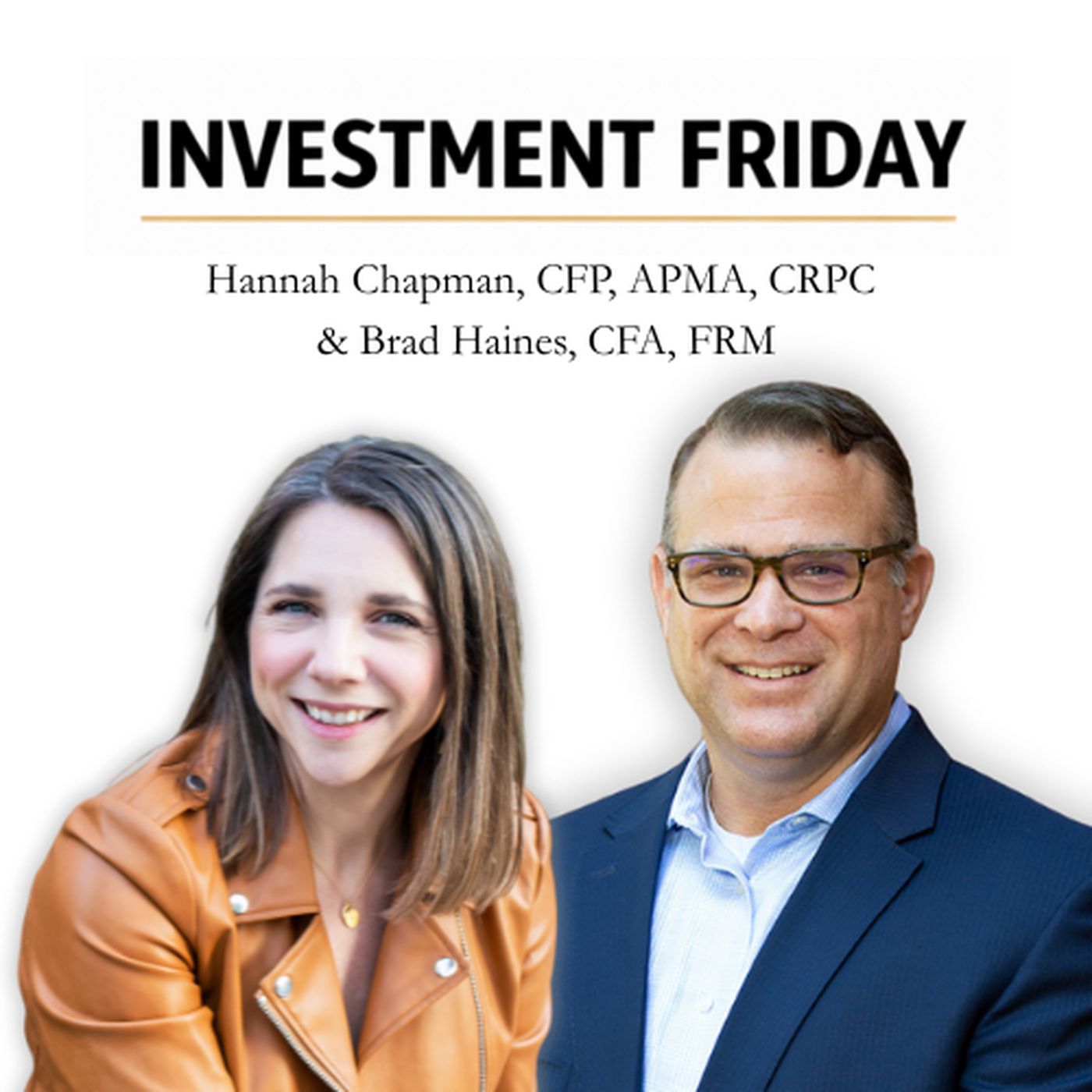
Investment Friday® is a weekly podcast offering clear, fiduciary-led insight into investing, financial markets, and the global economy. Designed for investors, business owners, and professionals, Investment Friday® moves beyond headlines and hype to provide context, clarity, and disciplined thinking.Each week Hannah Chapman, CFP®, APMA®, CRPC®, Founder of X² Wealth Planning, and Brad Haines, CFA®, FRM, Chief Investment Officer of Juncture Wealth Strategies, break down what's happening in the markets and why it matters for long-term investors.Each episode explores:Market volatility and economic cyclesInterest rates, inflation, and Federal Reserve policyGlobal economic trends and geopolitical riskInvestor behavior and decision-makingEvidence-based investment strategy and risk managementNo stock tips. No speculation. Just thoughtful conversation to help you invest with confidence.
-
20
Market Update & Selling Your Business? What Most Founders Get Wrong (Before It’s Too Late)
This week is a powerful reminder that markets don't always move the way we expect them to. Despite geopolitical tension, a U.S. naval blockade impacting global oil flow, and rising uncertainty heading into midterm elections, markets are pushing toward all-time highs. In this episode, Hannah and Brad break down why that's happening—and what investors should actually be paying attention to right now. They also dive into one of the most important (and often overlooked) financial planning moments: what to do when you sell your business—and how to prepare before that moment arrives. Learn: Why markets can rise during geopolitical conflict How strong earnings are driving current market performance The real impact of the Strait of Hormuz disruption on inflation Why interest rates are likely staying higher for longer What's happening with AI, private markets, and massive tech growth Why IPOs are happening less frequently—and what that means How to plan for a business sale (before it's too late) The importance of timing and tax strategy in exit planning Why midterm elections increase volatility (and fear-based messaging) How to stay grounded when media narratives intensify Connect with Hannah at [email protected] and online at https://x2wealthplanning.com Connect with Brad at [email protected] and online at https://www.juncturewealth.com
-
19
All-Time Highs, Rising Inflation, and No Rate Cuts? What Investors Need to Know
This week was a perfect example of how markets can feel chaotic while still quietly reaching new highs. Despite ongoing geopolitical tension, rising inflation, and uncertainty around interest rates, both the S&P 500 and NASDAQ hit intraday all-time highs—a powerful reminder that volatility doesn't just happen on the downside. In this solo episode, Hannah breaks down what's actually driving markets right now, why inflation is complicating the outlook for rate cuts, and—most importantly—how to stay grounded in your financial plan when the world feels uncertain. Why markets can hit all-time highs during global conflict The role of earnings in driving stock market performance How rising oil prices are pushing inflation back up Why the Fed may delay interest rate cuts The real impact of tariffs on businesses vs. consumers How to avoid fear-based financial decisions Why financial planning creates emotional and financial stability How tools like Monte Carlo analysis help you stay on track Connect with Hannah at [email protected] and online at https://x2wealthplanning.com Connect with Brad at [email protected] and online at https://www.juncturewealth.com
-
18
Why the Market Is Rising (Even When Everything Feels Wrong)
This week was a powerful reminder that markets don't always move in sync with the headlines. While geopolitical tension, oil disruptions, and rising costs dominate the news cycle, the market has quietly pushed higher—driven not by fear, but by something far more fundamental: earnings growth. In this episode, Hannah Chapman, CFP®, APMA®, CRPC®, and Brad Haines, CFA®, FRM®, Chief Investment Officer at Juncture Wealth Strategies break down why volatility and strong market performance can coexist—and what investors often misunderstand in moments like these. They also discuss one of the most important (and overlooked) financial transitions: how to responsibly navigate a major windfall or inheritance without letting emotion derail your long-term future. What You'll Learn Why markets can rise even when the news feels negative The real driver behind stock market performance: earnings How oil shocks and geopolitical conflict impact inflation (short-term vs long-term) The difference between speculation and fundamentals in the AI boom Why emotional decisions—not market downturns—pose the biggest financial risk The #1 rule after receiving a large inheritance or windfall How to think about stewardship, legacy, and intentional wealth use A practical framework for structuring wealth: emergency, income, legacy, and philanthropy Connect with Hannah at [email protected] and online at https://x2wealthplanning.com Connect with Brad at [email protected] and online at https://www.juncturewealth.com
-
17
Don’t Miss This: The Cost of Missing the Market’s Best Days
This week was a powerful reminder of how fast markets can move—and how dangerous it can be to step out at the wrong time. One single day erased weeks of losses, highlighting why staying invested matters more than trying to time the market. In this solo episode, Hannah Chapman breaks down the recent surge in market volatility following geopolitical tensions and a sudden market rebound. She walks through why the best and worst market days tend to cluster together—and how missing just a handful of those best days can dramatically impact long-term returns. Key Themes & Takeaways Why market rebounds happen quickly (and often unexpectedly) The data behind missing the best days in the market How emotional decisions impact long-term returns When volatility management strategies actually make sense Why downturns can be an opportunity—not just a risk How to think long-term, even when short-term news feels overwhelming Connect with Hannah at [email protected] and online at https://x2wealthplanning.com Connect with Brad at [email protected] and online at https://www.juncturewealth.com
-
16
Day Trading vs Investing: What Actually Builds Wealth
Markets have been volatile this week—but does that actually mean something is wrong? In this episode of Investment Friday, Hannah Chapman and Brad Haines break down what's really driving recent market swings—from geopolitical tension and rising oil prices to shifting investor sentiment—and why short-term noise doesn't always reflect long-term reality. They also dive into one of the most important conversations happening right now: the rise of day trading. With more influencers, courses, and online platforms promoting day trading as a path to wealth, it's critical to understand the difference between trading and investing—and the risks most people don't see coming. If you've ever wondered whether you should be trading, investing, or doing both, this episode will give you clarity and a grounded strategy. In this episode, we cover: What's causing recent market volatility (and how to interpret it) The real impact of oil prices, inflation, and global conflict on your portfolio Why markets can feel chaotic while staying in a long-term range The difference between day trading vs long-term investing Why most day traders lose money—and what to watch out for How emotional decision-making impacts financial outcomes The power of compounding and starting early Why a financial advisor can help you make better long-term decisions Connect with Hannah at [email protected] and online at https://x2wealthplanning.com Connect with Brad at [email protected] and online at https://www.juncturewealth.com
-
15
Is the U.S. Actually insolvent? (+Tax Deadline Opportunities)
This week was a powerful reminder of how quickly markets can move on headlines—and how easy it is for fear to take over when volatility lingers. But not all headlines deserve action—and reacting emotionally can often do more harm than good. In this episode, Hannah Chapman and Brad Haines walk through what's actually happening in the markets, how to interpret alarming economic narratives, and why long-term investors should stay grounded in strategy—not fear. They also cover key tax deadlines and last-minute opportunities before April 15, along with practical planning insights to help you stay proactive and in control. What You'll Learn • Why markets have been volatile—and what's driving recent swings• How geopolitical headlines (like Iran tensions) impact oil, inflation, and investor sentiment• What “U.S. insolvency” actually means (and what it doesn't)• Why pulling out of the market is one of the biggest long-term mistakes• The real risk investors face over time: inflation, not short-term volatility• How consistent investing during downturns can accelerate long-term growth• What you can still do before the April 15 tax deadline• IRA and SEP contribution opportunities you don't want to miss• Why focusing on your personal financial plan matters more than macro fear Connect with Hannah at [email protected] and online at https://x2wealthplanning.com Connect with Brad at [email protected] and online at https://www.juncturewealth.com
-
14
Noise vs. Signal — What Actually Matters in Markets Right Now?
This week on Investment Friday, Hannah Chapman and Brad Haines tackle one of the most important investor skills of all: learning how to separate noise from true signal. With oil prices elevated, war headlines dominating the news cycle, and inflation fears still lingering in people's minds, it's easy to assume the economy is in trouble. But are these developments actually changing the long-term outlook — or are they simply creating short-term emotional reactions? Hannah and Brad walk through what's really happening beneath the headlines, why interest rates and the AI revolution may matter far more than geopolitical noise, and how good planning helps clients actually use their money without fear. Key Takeaways: How to tell the difference between market noise and real economic signals Why rising gas prices feel intense even when the broader economy is still stable What the Fed is really watching with inflation, interest rates, and jobs Why today's environment is very different from true 1970s stagflation How AI and productivity may matter more than war headlines over time Why tax-loss harvesting can create value even in a year with strong returns Why your portfolio is meant to support your life — not make you afraid to use your money Connect with Hannah at [email protected] and online at https://x2wealthplanning.com Connect with Brad at [email protected] and online at https://www.juncturewealth.com
-
13
Oil Spikes, Jobs Misses, and Last-Minute Tax Moves Before April 15
This week brought another dose of market volatility, and this time the pressure is coming from multiple directions at once. Escalating conflict in Iran, oil pushing above $100 per barrel, and a weaker-than-expected jobs report all added to the uncertainty investors are feeling right now. In this solo episode, Hannah Chapman, CFP®, APMA®, CRPC®, breaks down what's happening in the markets, why short-term volatility doesn't change a long-term strategy, and what you can still do before April 15 if you want to make smart tax moves for 2025. What rising oil prices are telling us about the current conflict and why markets don't like the uncertainty Why inflation can feel much worse in real life than the official numbers suggest What the February jobs report is signaling about the economy right now Why this is a time to stay steady, not panic or chase speculative plays How continuing to invest during down markets can actually work in your favor Which tax moves are still available before April 15 Why Roth and IRA strategies can be powerful, but only when they fit your full financial picture Connect with Hannah at [email protected] and online at https://x2wealthplanning.com Connect with Brad at [email protected] and online at https://www.juncturewealth.com
-
12
Navigating Global Conflict, Market Resilience, and the AI Investment Cycle
This week brought headlines that could make any investor uneasy. Military conflict in the Middle East, leadership changes in Washington, rising oil prices, and constant speculation about artificial intelligence all contributed to a wave of uncertainty across financial markets. But while the headlines feel intense, the markets themselves have been surprisingly resilient. In this episode of Investment Friday, Hannah Chapman, CFP®, and Brad Haines, CFA®, FRM®, walk through what's actually happening beneath the noise—and why long-term investors should stay focused on strategy instead of reacting emotionally to short-term events. What's actually happening in the markets as conflict in the Middle East escalates Why U.S. stocks have historically been more resilient during war than most people expect How to stay grounded instead of making fear-based investment decisions What rising oil prices could mean — and why the impact may be more limited than it sounds Why the most extreme AI predictions are probably missing the middle ground How AI is more likely to support human work than replace people outright Where the AI investment opportunity is really showing up right now, from chips to private company valuations Connect with Hannah at [email protected] and online at https://x2wealthplanning.com Connect with Brad at [email protected].
-
11
AI Shakeouts & Estate Planning in Blended Families
Markets are choppy again — and headlines are driving sharp reactions. Despite strong earnings from Nvidia, stocks pulled back. Intel sold off on AI disruption fears. Meanwhile, major indices remain stuck in a range, searching for leadership as volatility picks up. In this episode, we break down what's behind the movement, and why diversification matters during technological revolutions. We also close out February's relationship theme with an important conversation about second marriages, estate planning, and how proactive planning preserves family relationships long after you're gone. Learn more about: • Why markets feel volatile — even though we've mostly been stuck in a sideways range • Why Nvidia dropped despite strong earnings, and how AI headlines are driving knee-jerk reactions • The difference between building AI infrastructure today and who actually benefits long term • How portfolio concentration (especially in tech or company stock) can quietly increase risk • Why diversification acts like “ballast” when markets get choppy • What second marriages and blended families change about estate planning — and why clear communication protects relationships Connect with Hannah at [email protected] and online at https://x2wealthplanning.com Connect with Brad at [email protected].
-
10
Navigating Money Together, Volatility, and the Fed
This week was a reminder that markets don't need a crisis to move — sometimes they just need uncertainty. Between sector rotation, renewed inflation concerns, and rising geopolitical tension in the Middle East, volatility picked up after months of relatively steady gains. In this episode of Investment Friday, we break down what's actually happening beneath the headlines. Then, in the spirit of February's focus on relationships, they turn toward money inside partnerships — how couples combine (or don't combine) finances, the emotional realities behind spending differences, and practical structures that can reduce conflict while increasing connection. Learn more about: • Why markets have stalled since October • What “sector rotation” actually means • AI buildout timelines and why data centers take time • Oil prices, inflation data, and shifting Fed expectations • Growth vs. value — and why the lines are blurrier than ever • How different risk tolerances impact portfolio allocation • Yours, mine, and ours: structuring money in relationships • Why financial conversations feel vulnerable (and how to navigate them) • Proportional contributions vs. fully combined finances • Why communication — not account structure — is the real foundation Reminder: Follow Investment Friday and subscribe on YouTube. This show now lives fully in its own podcast feed and channel. Connect with Hannah at [email protected] and online at https://x2wealthplanning.com Connect with Brad at [email protected].
-
9
Markets Shifting and Investing for Two: Building a Plan That Works for Everyone
This week was a reminder that markets don't just move on “good” or “bad” news — they move on changing expectations. Stronger jobs data, persistent inflation, and shifting Fed commentary are forcing investors to re-price what they thought was coming next, especially around interest rate cuts. That kind of recalibration often shows up as short-term volatility, even when the underlying economy isn't suddenly “broken.” And because it's February, we're widening the lens beyond the market tape. In today's episode, Hannah and Brad talk about what really creates financial stability over time: making decisions inside a relationship where both people feel safe, informed, and included — especially when partners have different risk tolerances. Because the best financial plan isn't just one that works on paper…it's one that both partners can actually live with. Why did markets feel volatile this week? Why does a stronger jobs report matter? Why were jobs revisions significant? Why are some economists mentioning stagflation? Why is AI leadership shifting in the market? Why are investors rotating out of mega-cap stocks? Why can active management matter in transitional markets? Why use conservative return assumptions in financial plans? Why does time horizon change investment strategy? Why do couples often have different risk tolerances? Why use a four-bucket portfolio structure? Why must both partners be involved in planning? Why is financial continuity part of fiduciary care? Why are women increasingly central in household financial leadership? Connect with Hannah at [email protected] and online at https://x2wealthplanning.com Connect with Brad at [email protected].
-
8
Market Volatility + Money in Relationships: How to Plan So Both Partners Feel Safe
Markets can feel intense when the numbers are red—but a 2% down week is not a crisis. The bigger question is: are you making decisions from your plan… or from your nervous system? In this episode, Hannah Chapman, CFP®, APMA®, CRPC®, expands that question into relationships: how do you build a plan that works for two humans, not just one spreadsheet? Why a small pullback after all-time highs is normal How profit-taking and rebalancing drive short-term volatility Why AI infrastructure spending can pressure profits short-term How to plan through volatility without making emotional decisions Why money is a relationship skill—not just math How to make sure both partners feel heard in the financial process Why “couple goals” can hide misalignment How money stories shape spending conflict How to stop the spender vs saver teeter-totter Connect with Hannah at [email protected] and online at https://x2wealthplanning.com Connect with Brad at [email protected].
-
7
The New Fed Chair and a Smarter Way to Give
This week was a reminder that markets can experience meaningful movement even when the underlying fundamentals haven't changed. We saw volatility driven by rotation, rebalancing, and shifting investor expectations — not panic, and not systemic risk. In this episode of Investment Friday, Hannah Chapman, CFP®, is joined by Brad Haines, CFA®, FRM®, CIO of Juncture Wealth Strategies, to break down what's actually happening beneath the headlines. Together, they explore why markets are becoming more selective, how to interpret recent layoff announcements, what a new Fed chair nomination could mean for monetary policy, and why understanding tax-efficient strategies like Qualified Charitable Distributions (QCDs) matters more than ever. Learn more about: What's driving market volatility right now — and what isn't Sector rotation, profit-taking, and why differentiation matters AI, tech, and how markets are starting to separate winners from the theme Layoff headlines vs. labor market reality The Fed chair nomination and why Federal Reserve independence matters Qualified Charitable Distributions (QCDs): how to give more and pay less in taxes Using required minimum distributions strategically Why context matters more than headlines for long-term investors Reminder: Follow Investment Friday and subscribe on YouTube. The show now lives fully in its own podcast feed and YouTube channel. Connect with Hannah at [email protected] and online at https://x2wealthplanning.com Connect with Brad at [email protected].
-
6
How Much Do You Really Need to Retire? Rethinking the 4% Rule
This week was a great reminder of how quickly markets can move on headlines alone—without anything fundamentally changing underneath. We saw volatility driven by political rhetoric, followed by an equally fast recovery once that noise settled back down. In this episode, Hannah Chapman, CFP®, APMA®, CRPC®, helps you understand why this kind of movement doesn't mean something is “wrong” with the economy or your plan. Additionally, she walks you through one of the most important retirement questions there is: how much money do you actually need to retire—and where the 4% rule helps, and where it falls short. Learn more: What moved markets this week (and why it matters) Investor behavior: Stop checking so often Retirement planning: “How much do I need?” The “forward math” Hannah recommends Retirement spending isn't flat: “Go-go / slow-go / no-go” Different investor life stages Reminder: Follow Investment Friday and subscribe on YouTube—this show will live fully in its own feed/channel starting in February. Connect with Hannah at [email protected] and online at https://x2wealthplanning.com
-
5
Signal vs Noise, Powell, and Why Fed Independence Matters (Plus 2026 Market Positioning)
There's a lot of noise right now—and it can hijack investor decision-making. In this episode, Hannah Chapman, CFP® and Brad Haines, CFA, FRM zoom out to separate signal from headlines, discuss early-year market context, and share what they're watching for 2026. You'll hear why recency bias leads people to panic-sell, why earnings and innovation may matter more than day-to-day politics over a 5-year horizon, and why rebalancing at the start of the year can support both portfolio discipline and tax planning. Then, they break down a major story involving Jerome Powell and discuss why Federal Reserve independence is a cornerstone of long-term economic stability. What's covered: “Noise vs. signal” and how to stay grounded as an investor Earnings trends: broadening beyond mega-cap tech The AI buildout: data centers, compute capacity, and the next wave of applications Why rebalancing early in the year can be strategically helpful Emerging markets explained (developed vs emerging vs frontier) Why Fed independence matters and what happens when central banks aren't independent Inflation, wage catch-up, and why it can feel hard even when data improves Reminder: Follow Investment Friday and subscribe on YouTube—this show will live fully in its own feed/channel starting in February. Connect with Hannah at [email protected] and online at https://x2wealthplanning.com Connect with Brad at [email protected] and online at https://www.juncturewealth.com
-
4
2026 Market Outlook, Interest Rates, Venezuela & the Future of the U.S. Dollar
Investment Friday is entering an exciting new chapter! In this episode, Hannah Chapman, CFP®, APMA®, CRPC® and Brad Haines, CFA®, FRM®, Chief Investment Officer at Juncture Wealth Strategies, share why Investment Friday is officially becoming its own podcast — launching February 2026 — and what that means for listeners who want grounded, historically informed financial insight without fear-based headlines. Together, they unpack: What really happened in markets in 2025 What the early data is telling us about 2026 Why “bad news can be good news” for markets Labor market trends and interest rate expectations The Venezuela situation and its global implications The U.S. dollar's role as the world's reserve currency — and what happens if that changes Why entrepreneurship, innovation, and equity markets endure through every cycle This episode is a reminder that you don't need to live in financial fight-or-flight. With the right context, history, and perspective, you can stay invested, informed, and grounded — even in uncertain times. Connect with Hannah at [email protected] and online at https://x2wealthplanning.com Connect with Brad at [email protected] and online at https://www.juncturewealth.com
We're indexing this podcast's transcripts for the first time — this can take a minute or two. We'll show results as soon as they're ready.
No matches for "" in this podcast's transcripts.
No topics indexed yet for this podcast.
Loading reviews...
ABOUT THIS SHOW
Investment Friday® is a weekly podcast offering clear, fiduciary-led insight into investing, financial markets, and the global economy. Designed for investors, business owners, and professionals, Investment Friday® moves beyond headlines and hype to provide context, clarity, and disciplined thinking.Each week Hannah Chapman, CFP®, APMA®, CRPC®, Founder of X² Wealth Planning, and Brad Haines, CFA®, FRM, Chief Investment Officer of Juncture Wealth Strategies, break down what's happening in the markets and why it matters for long-term investors.Each episode explores:Market volatility and economic cyclesInterest rates, inflation, and Federal Reserve policyGlobal economic trends and geopolitical riskInvestor behavior and decision-makingEvidence-based investment strategy and risk managementNo stock tips. No speculation. Just thoughtful conversation to help you invest with confidence.
HOSTED BY
Hannah Chapman
CATEGORIES
Loading similar podcasts...
Frequently Asked Questions
How many episodes does Investment Friday have?
Investment Friday currently has 17 episodes available on PodParley. New episodes are automatically indexed when they're published to the podcast feed.
What is Investment Friday about?
Investment Friday® is a weekly podcast offering clear, fiduciary-led insight into investing, financial markets, and the global economy. Designed for investors, business owners, and professionals, Investment Friday® moves beyond headlines and hype to provide context, clarity, and disciplined...
How often does Investment Friday release new episodes?
Investment Friday has 17 episodes. Check the episode list to see recent publication dates and frequency.
Where can I listen to Investment Friday?
You can listen to Investment Friday on PodParley by clicking any episode. We provide an embedded audio player for direct listening, and you can also subscribe via your preferred podcast app using the RSS feed.
Who hosts Investment Friday?
Investment Friday is created and hosted by Hannah Chapman.
URL copied to clipboard!