
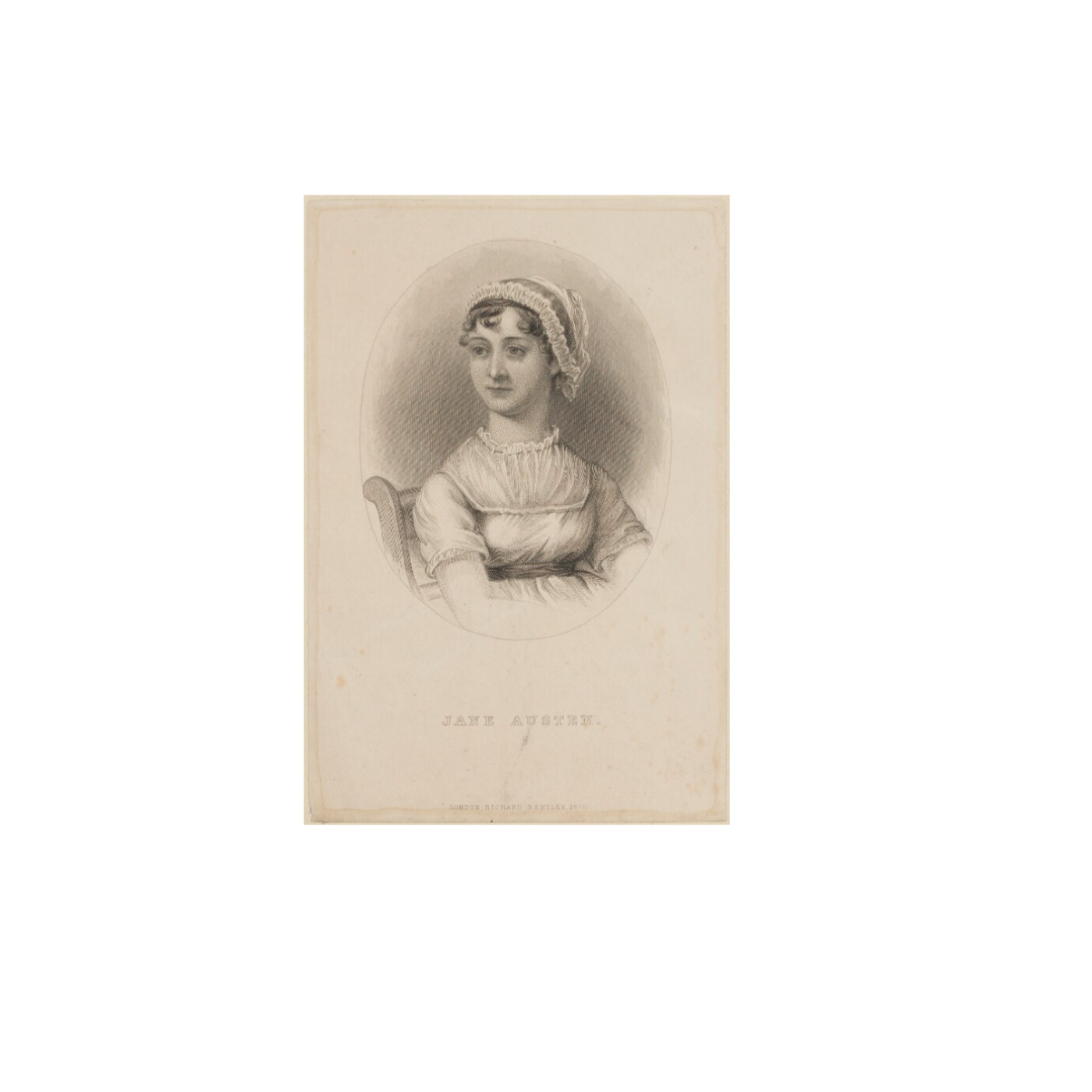
PODCAST · arts
Jane Austen and the Future of the Humanities
by Michael Kramp
How might the stories and ideas of Jane Austen inform the current condition and future possibilities of the humanities? Michael Kramp, a faculty member at Lehigh University who has published numerous books on Jane Austen, addresses the critical state of the humanities and considers how Austen's stories might offer creative ways for communicating the value and efficacy of humanities experiences for various public audiences. [email protected]://wordpress.lehigh.edu/dmk209/jane-austen-and-the-future-of-the-humanities/https://www.youtube.com/@JaneAustenandtheFutureofth-s8y
-
8
Emma and the Challenges of Living in Community
Of all Austen’s writings, Emma is the most concerned with the practice and difficulties of living in community. The novel is set in Highbury, “the large and populous village, almost amounting to a town,” and the heroine, whose perspective we follow throughout the narrative, lives both a privileged life and a rather static life. The community of Highbury can appear small, contained, and content, but it’s also a community marked by challenges, changes, and even a few disruptions. In this episode, we consider a vital humanities experience that Austen's Emma helps us to appreciate: the challenges of living in community.Episode 7 features parts of my interviews with various writers, scholars, and artists, including (in order of appearance):Dr. John Mullan, University College, LondonDr. Janet Todd, Newnham and Lucy Canvedish Colleges, Cambridge Mahesh Rao, award-winning author of Polite SocietyDr. Claudia L. Johnson, Princeton UniversitySam Brooks, Journalist and Playwright, Auckland, NZDr. Jennie Batchelor, University of YorkDr. Julia Romeu, Brazilian scholar and translator of EmmaLaura Rocklyn, historical interpreter, playwright, actor, and scholarDr. Devoney Looser, Arizona State UniversityDr. Patricia A. Matthew, The Race and Regency Lab, Montclair State UniversityVanessa Kelly, best-selling author of The Emma Knightley MysteriesDr. Vivek Sachdeva, Guru Gobind Singh Indraprastha University
-
7
Jane Austen, Community, and Sisterhood: Three Generations of the Moore Family
In this special episode of Jane Austen and the Future of the Humanities, Samantha Holland speaks about the Moore family, an Australia family with a longstanding affinity for Jane Austen. Frances, Natalie, Hannah, and Teresa are four women across three generations, who share a special relationship with Austen, her works, and her legacy. Through their conversations about characters like Mrs. Bennet and Charlotte Lucas, the Moore women share how their perspectives on Austen’s novels have evolved through re-readings and meaningful family discussions. They discuss how they built a supportive and loving community with and through their engagement with Austen, including sewing dresses for the Jane Austen Society of Australia conference. Their experiences reveal how Austen brings women together across generations and serves as a resource for female relationships and sisterhood.
-
6
Mansfield Park and Resilience
Resiliency has become one of the most popular concepts within academic circles over the past decade or so. Scholars from various disciplines, including Engineering, Health, Politics, Religion, Biology, and Education have adopted the ideas of resilience and resiliency to explain the ways in which institutions, technologies, communities, and individuals might rebound from hardship, recover from stress or overuse, and regain an original shape and condition. In our diverse conversations about resilience, we almost always assume that resilience is positive--i.e. that we should feel good or emboldened about the very experiences or processes of resiliency. But some of the most resilient systems, structures, and institutions in our world have been massively disturbing, including patriarchy, militaristic violence, religious fanaticism, and white male supremacy. Jane Austen's Mansfield Park helps us observe a fundamental humanities experience: resilience can be disturbing. In this episode, I reflect on how Austen's Mansfield Park demonstrates the disturbing resilience of the Bertram family. I specifically explore how the Bertram family employs specific strategies that have proven successful for ensuring the resilience of patriarchy. Resiliency can sometimes be disturbing, and Austen invites us to observe this vital humanities experience.
-
5
Pride and Prejudice and the Challenge of Change
Jane Austen's Pride and Prejudice is one of the most beloved novels in the English language--and one of the most popular love stories in the world. It is also a great story of change in which Austen details prominent cultural changes, characters discuss important changes, and the hero and heroine learn to change their minds. Change can be hard, transformative, and frustrating; it can also usher in new opportunities, including new kinds of relationships. Austen shows us characters and communities learning to deal with change, engaging in challenging conversations, and even modeling forms of civil discourse. Austen's novel demonstrates a vital humanities experience from which we must learn in an age of cultural extremism: how to embrace, discuss, and negotiate the challenges of inevitable change through civil discourse.
-
4
Sense and Sensibility and the Messiness of Human Relationships
In Episode IV of Jane Austen and the Future of the Humanities, I talk with writers, scholars, and artists as we discuss how Jane Austen’s Sense and Sensibility models a vital humanities experience: the messiness of human relationships. We think through how Austen’s first published novel helps us to ask questions about, build connections between, and precisely observe the various messes of our lives, including our family relations, our sexual relations, and the processes of engaging with new relations.Guests include Soniah Kamal, Dr. Claudia L. Johnson, Francine Mathews, Dr. Olivia Murphy, Maan Jalal, Dr. Mandakini Dubey, and Dr. Meenakshi Bharat.
-
3
Northanger Abbey and the Integral Role of Ignorance in Knowledge Processes
In this episode, I discuss the first of what I am treating as a series of humanities experiences that Jane Austen’s novels and ideas helps us understand and appreciate: the integral role of ignorance in the knowledge-acquisition process.I consider Northanger Abbey and explore how Austen’s first completed novel dramatizes various ways in which we learn, come to knowledge, and recognize the limitations of our knowledge. In all these processes, I think through how Austen details ignorance as an important component of our learning processes—i.e. how we come to know if different ways and through different experiences, including painful and shameful experiences. I examine the integral link between knowledge and ignorance, the precarity and danger of knowledge, and some of the ways in which the humanities model this larger and enduring experience that Austen documents.
-
2
Special Episode: Jane Austen Wrecked My Life Director, Laura Piani
In this brief podcast episode, Laura Piani and I discuss her new film Jane Austen Wrecked My Life, Piani's feature debut as a writer and director. We discuss the various ways in which Austen's life and works have inspired Piani, the urgency of writing and literature, and the need to return to our ruins.
-
1
The Distinctive Cultural Status and Functions of Jane Austen
In this second episode of Jane Austen and the Future of the Humanities, I consider the distinctive cultural status of Jane Austen and reflect on how this distinctive status has allowed Austen to function, operate, and be used in diverse ways and in diverse public communities around the world. I speak with various scholars, writers, and artists, including the first person who taught Austen to me: Dr. Claudia L. Johnson, the Murray Professor of English at Princeton University. I am extremely grateful to all my collaborators who have taught me so very much, including Dr. Patricia A. Matthew (Montclair State University and the Race and Regency Lab), Dr. Jennifer Kloester, author of Jane Austen's Ghost, Laaleen Sukhera, editor of and contributor to Austenistan, Dr. Usha Mudiganti (Ambedkar University), Dr. Mandakini Dubey (Ashoka University), Mahesh Rao, author of Polite Society, Nikki Payne, author of Pride and Protest and Sex, Lies, and Sensibility, Uzma Jalaluddin, author of Ayesha at Last and Much ado About Nada, Dr. Meenakshi Bharat (Sri Venkateswara College, University of Delhi), and Dr. Javaria Farooqui (COMSTATS University Islamabad, Lahore Campus). You can see portions of the interviews I conducted with these individuals and others who have collaborated with me here.Throughout our discussions, we identify three features of Austen’s distinct cultural status that will be specifically important for my attempt to leverage her stories and ideas to communicate the value of the humanities to diverse public audiences: (1) her versatility, (2) her accessibility, and (3) her ostensible safety. As we consider these features of Austen’s cultural status and deployment, we pay careful attention to how these qualities have been used and how we might re-use them to communicate impactful humanities experiences.
-
0
Jane Austen and the Future of the Humanities
The conditions of the humanities in institutions of higher learning seem to be dire and critical. Why is this so? What has happened? And why do we keep talking about a "crisis" in or of the humanities. And what in the world does the beloved author, Jane Austen, have to do with any of this. Michael Kramp, professor of English at Lehigh University in Bethlehem, PA, considers these questions and many with numerous guests, including Dr. Stephanie Shonekan, Dean of the College of Arts and Humanities at the University of Maryland, Dr. Robert Newman, former President at the National Humanities Center, Dr. Robert Townsend of the American Academy of Arts and Sciences, and Dr. Heather Hewett, former Program Officer at the American Council of Learned Societies. You can learn more about Michael and his project on his website.
-
-1
Preview: Jane Austen and the Future of the Humanities
Two of the universal truths of the past fifty years are the enduring popularity of Jane Austen and the persistent refrain of a "crisis of the humanities." In this preview episode, Prof. Michael Kramp ([email protected]) discusses how the popularity, versatility, and malleable authority of Austen can serve as a valuable tool for discussing the importance of the humanities with diverse public audiences. This preview episode points to a new podcast that will correspond with the 250th anniversary of Austen's birth in 2025.
We're indexing this podcast's transcripts for the first time — this can take a minute or two. We'll show results as soon as they're ready.
No matches for "" in this podcast's transcripts.
No topics indexed yet for this podcast.
Loading reviews...
ABOUT THIS SHOW
How might the stories and ideas of Jane Austen inform the current condition and future possibilities of the humanities? Michael Kramp, a faculty member at Lehigh University who has published numerous books on Jane Austen, addresses the critical state of the humanities and considers how Austen's stories might offer creative ways for communicating the value and efficacy of humanities experiences for various public audiences. [email protected]://wordpress.lehigh.edu/dmk209/jane-austen-and-the-future-of-the-humanities/https://www.youtube.com/@JaneAustenandtheFutureofth-s8y
HOSTED BY
Michael Kramp
Loading similar podcasts...
Frequently Asked Questions
How many episodes does Jane Austen and the Future of the Humanities have?
Jane Austen and the Future of the Humanities currently has 10 episodes available on PodParley. New episodes are automatically indexed when they're published to the podcast feed.
What is Jane Austen and the Future of the Humanities about?
How might the stories and ideas of Jane Austen inform the current condition and future possibilities of the humanities? Michael Kramp, a faculty member at Lehigh University who has published numerous books on Jane Austen, addresses the critical state of the humanities and considers how Austen's...
How often does Jane Austen and the Future of the Humanities release new episodes?
Jane Austen and the Future of the Humanities has 10 episodes. Check the episode list to see recent publication dates and frequency.
Where can I listen to Jane Austen and the Future of the Humanities?
You can listen to Jane Austen and the Future of the Humanities on PodParley by clicking any episode. We provide an embedded audio player for direct listening, and you can also subscribe via your preferred podcast app using the RSS feed.
Who hosts Jane Austen and the Future of the Humanities?
Jane Austen and the Future of the Humanities is created and hosted by Michael Kramp.
URL copied to clipboard!