
PODCAST · education
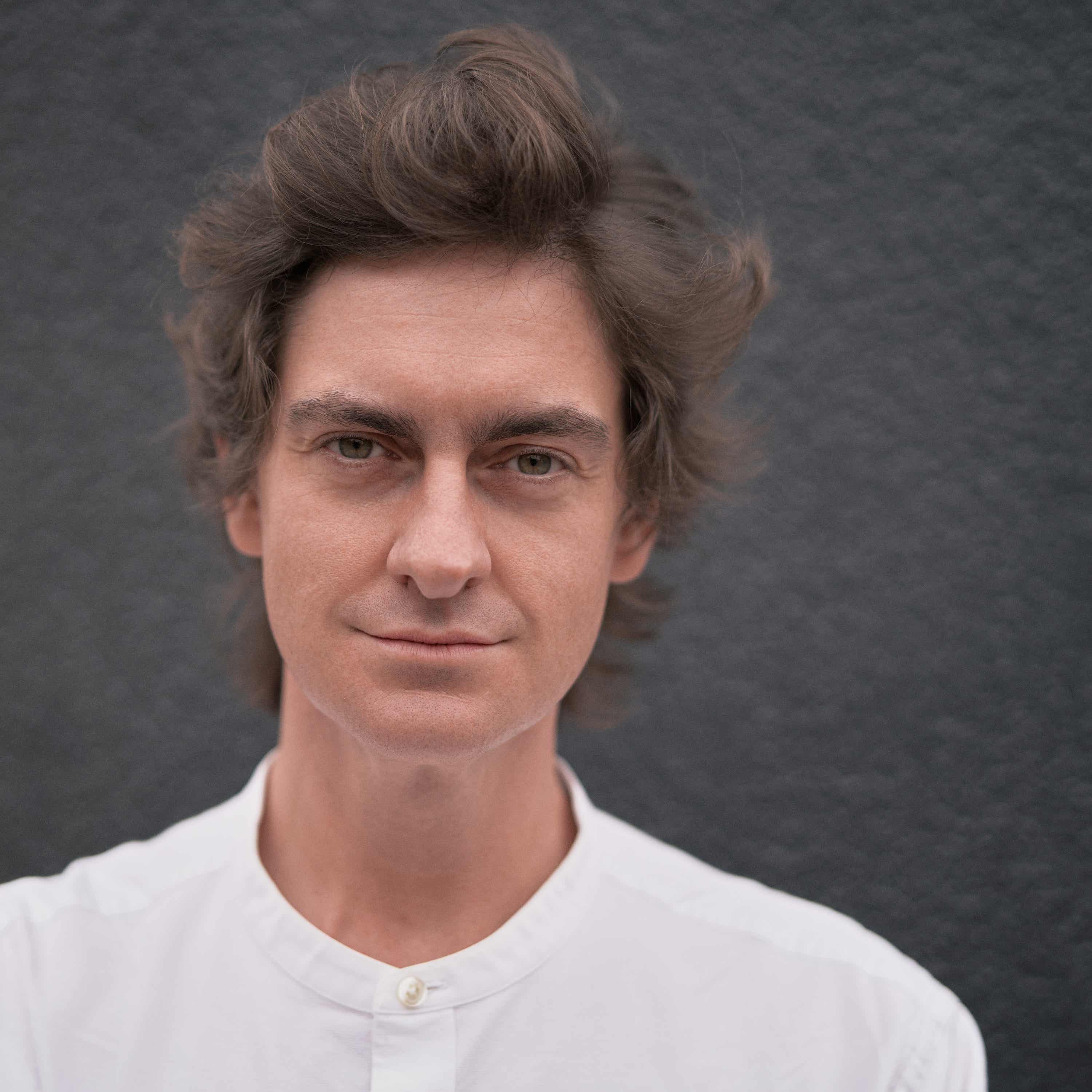
Johannes A. Niederhauser
by Johannes A. Niederhauser
Philomythical musings halkyon.substack.com
-
84
Goethe's Faust: The Founding Myth of Modernity
And when you’re ready to understand your time, join this course. This is a public episode. If you would like to discuss this with other subscribers or get access to bonus episodes, visit halkyon.substack.com
-
83
Why You Must Read Goethe's Faust
If you happen to be one of the truly inquisitive minds who long to understand themselves and this age, this wondrous period we thoughtlessly refer to as modernity, then you must by all means read Goethe's second Faust. It is this is his true Faust, for here the Faustian spirit interwoven with Mephisto comes into its own and births modernity. This is a text not for the faint of heart and only the true aristocrat of the mind will be able to appreciate this allegorical masterpiece.It is in the second part of the Tragedy of Modernity that Goethe no longer holds back. All pretence at residue Christianity is out the window. Mephistopheles now is the entirely released principle of negation, while Faust cleansed of his scholasticism seeks beauty in the newly emerging world. The second Faust thus tells of the birth of modernity, a process through which we are still living, and which is by far not yet decided. It is an open occurrence, not a deterministic doom-loop as reactionary readings like Spengler's suggest. Faust and Mephisto, as two principles, invent the abstraction of paper money, by which the greatest land developments become possible; Faust's disciple produces an artificial human being who by the help of the first philosopher Thales aims to become fully human; Faust finds within his soul the profound memory of the Ancient world buried underneath the confusion of the Christian dream and seeks to reconnect and appropriate its beauty in the form of Helen; Faust ultimately becomes the first full man of planetary organisation, falling for the siren call of triumph over nature, an allegory for his denial of memory and all-too worldly pursuits. This, however, is by no means a deterministic view of history, but one possibility of technological modernity. So I'd like to invite you to join my course on this masterpiece of world literature, where we shall trace the explosion that is modernity.The course begins Saturday, April 4, 2026 (6-8pm CET/12-2pm EST).I will personally teach this course. And just by way of introduction my name is Johannes A. Niederhauser, I have a PhD in philosophy on Heidegger from Warwick, and my areas of thought are in Ancient and post-Kantian German philosophy. I am also the founder and spiritus rector of Halkyon Academy. I look forward to leading this 11-week live course and learn with you. Through close, act-by-act reading and discussion, we'll explore:* The birth of paper/fiat money and the political economy of modernity (Act I)* Alchemy, the creation of the homunculus, and the Classical Walpurgis Night (Act II)* Faust's encounter with Helen and the fusion of classical antiquity with modern consciousness (Act III)* Visionary land-reclamation projects, environmental engineering, the dark side of progress (Act IV–V)* How court politics connects to modern monetary policy, seductive bargains to leadership ethics, and technology to nation-building* Faust's ascension to HeavenBy the end, you'll gain fluency in reading a difficult, multi-layered text like this, as well as a keen eye for how the modern world actually operates. AndStudy options include:Seminars (standard active/live participation tier) Full access to 11 live lectures + seminars (weekly on Saturdays). All recordings available afterward. Submit 3 short writing assignments (due in weeks 3, 6, and 9). Eligible to present your final work at the Symposium on June 20, 2026. Core option for those wanting live discussion, feedback on writing, and the chance to present.Private Tutorials (premium/most intensive tier) Includes everything in Seminars (live sessions, recordings, Symposium eligibility). Additional private 1-on-1 meetings with Dr. Johannes A. Niederhauser in weeks 3, 6, and 9 for in-depth discussion of your thoughts and work. Submit up to 6 writing assignments (more extensive feedback and guidance). Best for those seeking personalized, deeper engagement.Self-Study (flexible/recordings-only tier) Access to all course materials (recorded lectures/seminars + readings). No live session attendance required. Submit only 1 essay during the course period. Ideal if you prefer to go at your own pace without live commitment.There are payment plans available for all study tiers. And if you are a currently enrolled university student you may submit proof of enrolment to this email to get a student discount.All live sessions (lectures + seminars) are recorded and available to participants. You'll receive links to the core text and relevant further readings.This is a rare opportunity for patient, dialogical thinking in the classical spirit of Bildung—forming soul, spirit, and character.Follow this link to enrol now.Again, spaces are limited for the live cohort—don't miss the chance to witness what Goethe saw as our destiny.See you inside!Johannes This is a public episode. If you would like to discuss this with other subscribers or get access to bonus episodes, visit halkyon.substack.com
-
82
"Thinking is a Way of Life": On Robert Musil's "The Man Without Qualities"
Robert Musil’s The Man Without Qualities“Without doubt the greatest writing, ranking with the finest our epoch has to offer.” — Thomas MannUlrich, the protagonist of The Man Without Qualities, is a figure we are all familiar with. A man of means and extraordinary talent living in Vienna on the eve of the First World War, he has already been successful as a soldier, a mathematician and an engineer. Women find him irresistible. Society opens every door. Yet none of it seems like it adds up to anything. He decides to “take a year’s leave from his life” and step back from all the things he could become to figure out if there’s anything he actually wants to be.But he quickly discovers the problem is bigger than him. All around him sense of direction is dissolving. Something is ending — or has already ended. People still go to the opera, and raise toasts to progress, but a whole way of life is on the verge of collapse, and nobody seems to notice or to know what to do.Sound familiar? We’re not studying a quirky character from Vienna of 1913, but rather you in 2026. Gumbrecht is teaching a live online course on The Man Without Qualities this April! Very limited places remaining. You can apply here. This is a public episode. If you would like to discuss this with other subscribers or get access to bonus episodes, visit halkyon.substack.com
-
81
Goethe's Scathing Critique of Neoplatonism
This is a public episode. If you would like to discuss this with other subscribers or get access to bonus episodes, visit halkyon.substack.com
-
80
The Greeks on Chronological and Kairological Time
I’m reading again from Onians’ excellent work “The Origins of European Thought.”Also, for a limited time Offer (pun intended!) you may use coupon KAIROS for 25% off all my philosophy courses here. This is a public episode. If you would like to discuss this with other subscribers or get access to bonus episodes, visit halkyon.substack.com
-
79
You're Killing Your Inner Voice!
Cultivate your attention this year This is a public episode. If you would like to discuss this with other subscribers or get access to bonus episodes, visit halkyon.substack.com
-
78
Goethe’s Hostility toward the Imagination | Faust, Elective Affinities, Italian Journey
Here is a link to my Faust course. This is a public episode. If you would like to discuss this with other subscribers or get access to bonus episodes, visit halkyon.substack.com
-
77
The Monetary Logic of Analytic Philosophy and its Eternal Divide from Continental Philosophy
Analytic philosopher Peter Unger in 2014 declared that analytic philosophy is mostly if not entirely devoted to empty ideas that have no bearing on reality whatsoever. Not only are they empty in this regard however. They are also empty in themselves. This, in turn, makes them sort of monetary. Like money, analytic formal logic can randomly be applied to any given context (thereby destroying the context and content). Here is the piece by Ellie referred to in the video. This is a public episode. If you would like to discuss this with other subscribers or get access to bonus episodes, visit halkyon.substack.com
-
76
The Ideology of Frictionless Design and the Obliteration of Memory
Frictionless design is everywhere around us, drawing us into its interfaces, silently habituating us into relinquishing our attention for optimal user engagement. Not only the digital spaces we inhabit also the analogue is increasingly subjected to be frictionless. This denial of being, of the negativity inherent in being obliterates memory, history, time. How can we think and act to escape this?Philosophy of Health CoursePlato on Beauty Course This is a public episode. If you would like to discuss this with other subscribers or get access to bonus episodes, visit halkyon.substack.com
-
75
The Opening of Hegel's "Science of Logic", with Stephen Houlgate
Houlgate’s scholarly approach to Hegel can be described as a “revised-metaphysical” interpretation of Hegel, which underscores the immanent, presuppositionless development of speculative thought in Hegel’s system. This reading challenges influential critiques by thinkers like Martin Heidegger, Jacques Derrida, and Gilles Deleuze, who accuse Hegel of adhering to a predetermined conception of being. Houlgate argues instead that Hegel’s logic unfolds dynamically, free from foundational assumptions, and he extends this analysis to connections between Hegel, Heidegger, and Derrida on the deconstruction of “essence” or “ground.”At his new online course at my Halkyon Academy across two lecture seminars Professor Stephen Houlgate will provide a profound introduction into the opening of Hegel’s Science of Logic. Where thought begins with pure being, passes through nothing, and unfolds into becoming. We shall see why this “presuppositionless” start matters, how the “dialectical method” really works, and what follows from this for ontology, logic, and metaphysics. Along the way, you’ll also be able to situate the passages within the legacies of Kant, Parmenides, and Heraclitus while practicing line-by-line interpretation.Follow this link to enrol in the course. Live seminar lectures will take place on November 25 & December 9. This is a public episode. If you would like to discuss this with other subscribers or get access to bonus episodes, visit halkyon.substack.com
-
74
Hölderin "What is Bildung?"
In a letter to his mother from October 1798 Friedrich Hölderlin explains his reasons for having left his position as a private tutor with a wealthy family in Frankfurt. According to the young poet the degradation of tutors to mere servants and the transactional relationship that results from this view diminishes severely the possibility of genuine Bildung. Learn more about Hölderlin’s Poetic Idealism and his idea of leisurely being at my German Idealism course. This is a public episode. If you would like to discuss this with other subscribers or get access to bonus episodes, visit halkyon.substack.com
-
73
Nick Land vs. Aleksandr Dugin Debate | Philosophical Commentary
Are they still trying to philosophise or are they just shilling their overlords ideologies? This is a public episode. If you would like to discuss this with other subscribers or get access to bonus episodes, visit halkyon.substack.com
-
72
Course on Heidegger’s Philosophy of Technology
This is a public episode. If you would like to discuss this with other subscribers or get access to bonus episodes, visit halkyon.substack.com
-
71
Heidegger: Enframing as The "Essence" of Technology
In light of the advent of “AI” slop taking over the virtual space, hyperfinancialisation driving the simulacrum, and all out schizophrenic ideologised insanity it is high time we begin to grasp what technology really is. Download the syllabus for my new course on Heidegger’s philosophy of technology here This is a public episode. If you would like to discuss this with other subscribers or get access to bonus episodes, visit halkyon.substack.com
-
70
The Immortalisation Commission: Tracing Transhumanism
In this video I read from John Gray’s “The Immortalisation Commission”. The book is an important document to help us trace the transhumanist worldview which seems as old as modernity itself. As old as modern science and modernity. Beginning with Francis Bacon's fever dream of building a new temple of Salomon in The New Atlantis, to Victorian England, Marxism, and Bolshevism — The order of the Unnatural goes back centuries. This worldview stems from latent Christianity and its promise of salvation as well as from revealed Abrahamic religion more generally, the apocalypse as a necessary event to establish the New Jerusalem (utopia) must also occur. This is a public episode. If you would like to discuss this with other subscribers or get access to bonus episodes, visit halkyon.substack.com
-
69
Aristotle on the Relationship of Health and Virtue
In this video lecture I’m reading from my book on Eudaimonia in Aristotle. If yYou can purchase my book here. You may also be interested in our new course on “Health & Virtue: A Journey to Well-Being with Plato and Aristotle”. You find the course enrolment page here. This is a public episode. If you would like to discuss this with other subscribers or get access to bonus episodes, visit halkyon.substack.com
-
68
They're Killing the Humanities On Purpose!
A recent article in the Chronicle of Higher Education argues that university administrators and their 19th century social-Darwinian ideology are to blame for the destruction of Humanities degrees at American colleges. I present here a critical reading of the article and outline what I see is really the driving force behind the destruction of the Humanities and why the Planetary University is a lost cause anyways. While universities are slashing philosophy and literature degrees, philosophia is alive and well at my Halkyon Academy. This is a public episode. If you would like to discuss this with other subscribers or get access to bonus episodes, visit halkyon.substack.com
-
67
On Health and Virtue: A Journey to Wellness with Plato and Aristotle
Thank you for listening! Here is a link to join Thomas’ unique course on Health and Virtue: https://halkyonacademy.teachable.com/p/philosophy-of-health-ancient-wisdom Use the coupon code HEALTH at the checkout to take 20% off any tier.May you flourish. This is a public episode. If you would like to discuss this with other subscribers or get access to bonus episodes, visit halkyon.substack.com
-
66
Introducing my New Book: Aristotle's Eudaimonia
The book is available via Amazon:USA UK GermanyI taly France This is a public episode. If you would like to discuss this with other subscribers or get access to bonus episodes, visit halkyon.substack.com
-
65
Goethe's Faust Enrolment Closing
Save your soul: https://halkyonacademy.teachable.com/p/goethe-faust This is a public episode. If you would like to discuss this with other subscribers or get access to bonus episodes, visit halkyon.substack.com
-
64
Goethe's Faust Part One: An Introduction
Join my Faust Course: https://halkyonacademy.teachable.com/p/goethe-faust Live seminars begin Sunday, April 13th. Use Coupon Code WAGER to take £50 off the seminar tier or £25 off the self-study tier. Only ten coupons available! This is a public episode. If you would like to discuss this with other subscribers or get access to bonus episodes, visit halkyon.substack.com
-
63
Five Years Young: My Online Philosophy Academy
Join us today: https://halkyonacademy.teachable.com/ This is a public episode. If you would like to discuss this with other subscribers or get access to bonus episodes, visit halkyon.substack.com
-
62
John Vervaeke: God and the Between
If you find yourself lost because of the decadent dichotomies of modernity, and the hermeneutics of suspicion from postmodernity, "God and the Between" will offer you insights into life's deep connections and ways out from the (post-)modern predicament.In this 8-week course, John Vervaeke will bring together Desmond’s central ideas about the fourfold sense of Being which will lead us into a discussion of transcendence and God.John’s new course begins Wednesday, April 2nd. You can join the course by following this link. Through live lectures, discussions with John and other participants, and guided readings we will explore how William Desmond’s philosophy can show us paths to strong transcendence and the sacred in a secular age and how transformation is possible. This is a public episode. If you would like to discuss this with other subscribers or get access to bonus episodes, visit halkyon.substack.com
-
61
Fighting the Transhumanist Agenda with Humour
Ewan’s new novel “For Emma” is out on the 28th of March. Website: ewanmorrison.comX: @mrewanmorrisonNovel: For Emma.Amazon UK edition pre-order: https://tinyurl.com/4fdmeha2Waterstones UK edition pre-order: https://tinyurl.com/3z8vahppUS edition: https://tinyurl.com/2n2mn4at This is a public episode. If you would like to discuss this with other subscribers or get access to bonus episodes, visit halkyon.substack.com
-
60
Italian Futurism Weekend Seminar
Join my Italian Futurism seminar today: https://halkyonacademy.teachable.com/p/italian-futurism March 29&30 , 5-8pm UK time"We want to sing the love of danger! We want to glorify war - the only cure for the world!"Examine the most underrated but most far-reaching an avantgarde art movement of the 20th century — that made your world!Futurism revolutionised aesthetics and culture, exploring its radical approach to speed, technology, and modernity, and its enduring influence on contemporary art and design.The Italian Futurists envisioned a world of wireless telephones, hard drives that can hold hundreds of thousands of pages, and glorified speed. But most importantly: They wanted to end the stasis of the European spirit and finally give artistic form to modernity.This electrifying movement, born after the 19th century, which some hoped would never end, championed speed, technology, war, and youth. The Futurists wanted to burn down museums and libraries goodbye to the old and ushering in a new era of aesthetics. You'll get to explore the bold manifestos and avant-garde works by Marinetti on Futurism and the future of language. We will also read the Futurist Women's Manifesto.Moreover, we will discuss some of the most important artworks produced Futurist painters and sculptors, such as Balla's "Lampada ad arco", Julius Evola's involvement, its origins in Divisionism, its distaste for Impressionism and much more.Grasping the relevance of this historical, but forgotten vanguard movement will give you a new perspective on our world. This is a public episode. If you would like to discuss this with other subscribers or get access to bonus episodes, visit halkyon.substack.com
-
59
God and the Between | with John Vervaeke
In his 8-week course, John Vervaeke will bring together William Desmond’s central ideas about the fourfold sense of Being which will lead us into a discussion of transcendence, Platonism, and God. Many thinkers will be addressed such as Charles Taylor, John Caputo, Plato, William Desmond.If you find yourself lost because of the decadent dichotomies of modernity, and the hermeneutics of suspicion from postmodernity, "God and the Between" will offer you insights into life's deep connections and ways out from the (post-)modern predicament.Follow this link to enrol. This is a public episode. If you would like to discuss this with other subscribers or get access to bonus episodes, visit halkyon.substack.com
-
58
Futurist Stream
Join me for my next live video in the app This is a public episode. If you would like to discuss this with other subscribers or get access to bonus episodes, visit halkyon.substack.com
-
57
Italian Futurism vs. Feeble Accelerationism
On one of the most neglected but most impactful movements of the 20th century. This is a public episode. If you would like to discuss this with other subscribers or get access to bonus episodes, visit halkyon.substack.com
-
56
How to write on the great philosophers
Here is a link to my Intellectual Life Course which addresses these and other issues: https://halkyonacademy.teachable.com/p/the-intellectual-life This is a public episode. If you would like to discuss this with other subscribers or get access to bonus episodes, visit halkyon.substack.com
-
55
Building a Philosophical Life Online
This is a free preview of a paid episode. To hear more, visit halkyon.substack.comIn this wide-ranging conversation Mahmoud and I discuss our experiences thus far in building online philosophy schools and more generally what it means to read philosophy slowly in an age of acceleration. Follow Mahmoud on formerly Twitter. Here is a link to Mahmoud’s book.
-
54
Is Donald Trump Spengler's Caesar? On the Decline of the West
Is Trump the Caesarian figure Spengler predicted? The man who breaks the rule of Money and its form of government, democracy? My analysis. Just so there is no confusion: The Ceasarian figure arises in the time of decline, is a symptom of decline rather than an antidote or even reversal. Enrol in our course on Spengler’s The Decline of the West here. This is a public episode. If you would like to discuss this with other subscribers or get access to bonus episodes, visit halkyon.substack.com
-
53
Aristotle's Nicomachean Ethics, How to reach Eudaimonia
In this lecture I introduce Aristotle’s definition of eudaimonia, usually translated as happiness or the good life, and also his distinction between action and production. How we can reach eudaimonia in ethical life is the focus of this lecture and also of my upcoming course on Aristotle’s Nicomachean Ethics, which you may enrol in now. Here is the link to my new Aristotle course. Live seminars start October 12th. You find all details on seminar dates and enrolment options on the course page. The main video and audio lectures have already been uploaded so you can start straight away. This is a public episode. If you would like to discuss this with other subscribers or get access to bonus episodes, visit halkyon.substack.com
-
52
Nietzsche: Nihilism, Death of Christianity, and the Need for Myth | with Ken Gemes
This is a free preview of a paid episode. To hear more, visit halkyon.substack.comIt was my distinct honour to be able to sit down with Prof Ken Gemes at his abode for a dialogue on the interweaving manias that is modernity, of which there is perhaps no sharper a diagnostician than Nietzsche. Nietzsche tried, perhaps unsuccessfully thus far, to get his readers, posthumously born as we are, to shed ourselves from Christianity, which t…
-
51
Introducing Aristotle's Nicomachean Ethics
Aristotle’s Nicomachean Ethics is usually read as the foundational text of so-called Virtue Ethics. That is fair enough. However, the text itself also harbours deeper layers that have been with us in the European trajectory, the main one being the distinction between theoria and praxis, which I address here and in my course on the Nicomachean Ethics. This is a public episode. If you would like to discuss this with other subscribers or get access to bonus episodes, visit halkyon.substack.com
-
50
Stephen Houlgate: A Hegelian Life
In this wide-ranging dialogue Professor Stephen Houlgate and Johannes Niederhauser discuss what it means to lead a Hegelian life — a practice which Houlgate has been enacting for the past forty years of his life. Houlgate was initially drawn more towards Nietzsche but found that with Nietzsche’s philosophy there are severe shortcomings when it comes to precise and clear vision of what institutions and the state are supposed to look like. With Hegel we find such a clear vision spelled out. Even and especially Hegel’s magnum opus the Science of Logic forms part of this vision insofar as here the modern demand of freedom is exercised on the highest level in thought and being. The inherent dialectic in “pure Being” as it unfolds and self-complexifies and depurifies, since it cannot hold on to itself, itself reveals precisely the dialectic of reason. We consider throughout this dialogue what it means to lead a Hegelian ethical life, what proper institutions based on mutual recognition should look like, and how we have not yet truly arrived at Hegel’s philosophy and presuppositionless thought. It is the achievement of Stephen Houlgate of having not only translated the letter but also and especially the spirit of Hegel’s thought into English and the English spirit. Houlgate has furthermore also as one of the first and few about taken seriously and shown why we must take seriously Hegel’s claim to presuppositionless thought after Kant. Halkyon is a reader-supported publication. To receive new posts and support my work, consider becoming a free or paid subscriber. This is a public episode. If you would like to discuss this with other subscribers or get access to bonus episodes, visit halkyon.substack.com
-
49
Introduction to Hegel's Science of Logic
One hour freestyle lecture on the most important philosophy book of the past two centuries. If you have never heard of the Science of Logic — you are an in for a wild ride. Nietzsche is an altar boy compared to what Hegel here does with NOTHINGNESS. This is a public episode. If you would like to discuss this with other subscribers or get access to bonus episodes, visit halkyon.substack.com
-
48
Will Beauty save the World? On Mass Tourism and Urban Life
Spoiler: No, it won’t. Beauty will destroy the world, if anything. The Venetian Hotel in Las Vegas. Even better than the real thing? This is a public episode. If you would like to discuss this with other subscribers or get access to bonus episodes, visit halkyon.substack.com
-
47
Why read Plato
Thomas was recently asked by one of his students at his Plato course why read Plato at all. It’s a fair question. Why read an old thinker if his “theories” are already obvious and known to everyone anyways. Well, precisely because in reading we engage in the hermeneutic exercise of disclosing the world, of establishing a relationship with the past which may open up the future for us differently. This is a public episode. If you would like to discuss this with other subscribers or get access to bonus episodes, visit halkyon.substack.com
-
46
On Plato, Beauty, and the Future of Higher Education
What is the main difference between legacy institutions of higher learning and the newly emerging online first digital schools? In this dialogue Thomas Jockin and Johannes Niederhauser try and show how the so-called planetary university is increasingly a stifling environment and, evoking Plato and Aristotle, they try to provide possible ways of truly enriching education that ultimately aims at the full formation of the soul. This is a public episode. If you would like to discuss this with other subscribers or get access to bonus episodes, visit halkyon.substack.com
-
45
With Plato against Postmodern Nihilism
We tend to think of beauty today as primarily if not exclusively aesthetic. In fact, we consider beauty as subjective, as a matter of personal taste, in the eye of the beholder. But for Plato beauty is ontological and integral to his entire philosophy. Without beauty we cannot see the Idea of the Good — and vice versa. Thus, for Plato beauty is also intimately related to virtue and the Good Life. We invite you to deepen your understanding of beauty, to remember in the sense of anamnesis what beauty in a primal sense means so as to learn how to find beauty in your life. Thomas hat put together a wonderful course for us on beauty. Enrol in our Plato on Beauty course here. Seminars begin July 27th, 2024. This is a public episode. If you would like to discuss this with other subscribers or get access to bonus episodes, visit halkyon.substack.com
-
44
Plato: Seeing the Forms through Beauty
In this wide-ranging conversation Thomas Jockin and yours truly converse around the importance of beauty in Plato’s philosophy. We bring in Aristotle’s nous and potentiality to make us see that yes it is possible to see the forms, to see the ideas in the medium of the Beautiful. We also emphasise that studying the Beautiful in Plato is one of the best ways to be introduced to Plato and thus philosophy more broadly. So we hope to see you at our upcoming course on Plato on Beauty and Virtue. Here is the link to enrol. This is a public episode. If you would like to discuss this with other subscribers or get access to bonus episodes, visit halkyon.substack.com
-
43
Plato on Beauty
Our new Plato course is now officially open for enrolment! Join our summer school today and rethink what you thought you knew about beauty. We tend to think of beauty today as primarily if not exclusively aesthetic.In fact, we consider beauty as subjective, as a matter of personal taste, in the eye of the beholder. But for Plato beauty is ontological and integral to his entire philosophy. Without beauty we cannot see the Idea of the Good — and vice versa. Thus, for Plato beauty is also intimately related to virtue and the Good Life.We invite you to deepen your understanding of beauty, to remember in the sense of anamnesis what beauty in a primal sense means so as to learn how to find beauty in your life. Thomas hat put together a wonderful course for us on beauty. This is the link to enrol. We have seen a lot of interest in this course so we hope that you can enrol soon to make sure you get a spot in the seminars. A careful reading of Plato’s work reveals that beauty plays a crucial role in Plato's metaphysics, ontology, epistemology, and ethics. In this lecture series we will read six Platonic dialogues oriented around the topic of The Beautiful. So together we will read sections from Greater Hippias, Symposium, Phaedrus, Meno, Cratylus, and Parmenides.There will be a selection of short readings for each session. (And a selection of longer readings for those who have the time). This is a public episode. If you would like to discuss this with other subscribers or get access to bonus episodes, visit halkyon.substack.com
-
42
Plato on Beauty and Virtue
We tend to think of beauty today as primarily if not exclusively aesthetic. In fact, we consider beauty as subjective, as a matter of personal taste, in the eye of the beholder. But for Plato beauty is ontological and integral to his entire philosophy. Without beauty we cannot see the Idea of the Good — and vice versa. Thus, for Plato beauty is also intimately related to virtue and the Good Life. We invite you to deepen your understanding of beauty, to remember in the sense of anamnesis what beauty in a primal sense means so as to learn how to find beauty in your life. Thomas hat put together a wonderful course for us on beauty. More on that here. This is a public episode. If you would like to discuss this with other subscribers or get access to bonus episodes, visit halkyon.substack.com
-
41
Studying Philosophy at a Time of Automated Thinking
I’m here reading an essay by my friend Max Gottschlich, an Austrian philosopher teaching in Linz.Here is a link to the essay. This is a public episode. If you would like to discuss this with other subscribers or get access to bonus episodes, visit halkyon.substack.com
-
40
Tod und Technik in der Spätphilosophie Martin Heideggers
Auf Einladung von Max Gottschlich hielt ich am 25.4.2024 an der Katholischen Privatuniversität Linz einen Vortrag zu Tod und Technik in der Spätphilosophie Martin Heideggers. Sie finden hier weitere Aufnahmen aus der Vortragsreihe Zeit zu Denken: https://ku-linz.at/philosophie/veranstaltungen_am_fachbereich_philosophie/veranstaltungen/vortragsreihe_zeit_zu_denken This is a public episode. If you would like to discuss this with other subscribers or get access to bonus episodes, visit halkyon.substack.com
-
39
Darkness by Lord Byron
In honour of Lord Byron's bicentenary I read his masterful vision of the future, "Darkness". He knew, Byron knew. May you rest in Peace, Lord Byron. This is a public episode. If you would like to discuss this with other subscribers or get access to bonus episodes, visit halkyon.substack.com
-
38
Why Kant Matters
If there’s ever been one most important philosopher in modernity it is Immanuel Kant. Whatever your interests in modern philosophy — be it Hegel, Schelling, Fichte, Hegel, Marx, Schopenhauer, Heidegger, even Nietzsche and Baudrillard and especially Accelerationism — you will not understand the full scope of their respective philosophies without having before grasped Kant! This is because Kant revolutionises the very form of thought itself with his transcendental logic. So without understanding Kant on this level, for example, by assuming that Kant wrote a harmless epistemology, there is little chance to begin to see the thought-movement of modernity from Kant (and before him) to our day. Be that the ideological battlegrounds, the metaphysical collapse, the attempt of phenomenology to return to the things themselves, capitalist reproduction of objects without resistance — Kant is at the heart or start of it all. In fact, I would go as far as saying that if you want to understand the natural sciences and its models Kant is indispensable.So I invite you most cordially to take on the challenge to read Kant this Spring. In honour of his 300th birthday no less! My course begins this Saturday at 6pm UK time. Here is the link to join.I see you on the Critical Path towards the transcendental revolution. This is a public episode. If you would like to discuss this with other subscribers or get access to bonus episodes, visit halkyon.substack.com
-
37
Kant and the Domination of Nature
In this lecture I address the true scope of the Copernican Turn and why it is that with Kant we lose access to nature. We will discuss all this and more at my upcoming Kant course. This is a public episode. If you would like to discuss this with other subscribers or get access to bonus episodes, visit halkyon.substack.com
-
36
The True project of Kant's Critique of Pure Reason
The common misconceptions about Kant’s First Critique are 1) that it is an epistemology and 2) that Kant combines rationalism and empiricism. But he does neither. In fact, Kant refutes both empiricism and rationalism — and had he written something as benign as an epistemology he would not have achieved the revolution of thought. I hope you can join me at my upcoming Kant course. This is a public episode. If you would like to discuss this with other subscribers or get access to bonus episodes, visit halkyon.substack.com
-
35
Kant's First Critique
The publication of Kant’s Critique of Pure Reason was an earth-shattering moment. Not only was reason and its presuppositions seriously critiqued for the first time. The Kantian revolution also firmly placed the human mind in the centre of cognition ensuring the validity of formal logic and scientific findings before any experience. If you wish to gain an understanding of our age, Kant’s critical philosophy is indispensable. For it is precisely by transcendental logic that flying airplanes becomes possible. In honour of Immanuel Kant’s 300th birthday in April 2024 we are offering a 9 week Masterclass on his Critical Philosophy. Focusing largely on the First Critique and themes such as time and space; logic; the categories; refutation of idealisms; the antinomies of reason; phainomena and noumena; we will also devote a lecture each on his second and third critique. Here we will focus on freedom and on the genius in art as well as the sublime. In this way we gain an insight into the entirety of the Kantian project. This is a public episode. If you would like to discuss this with other subscribers or get access to bonus episodes, visit halkyon.substack.com
We're indexing this podcast's transcripts for the first time — this can take a minute or two. We'll show results as soon as they're ready.
No matches for "" in this podcast's transcripts.
No topics indexed yet for this podcast.
Loading reviews...
ABOUT THIS SHOW
Philomythical musings halkyon.substack.com
HOSTED BY
Johannes A. Niederhauser
CATEGORIES
Loading similar podcasts...
Frequently Asked Questions
How many episodes does Johannes A. Niederhauser have?
Johannes A. Niederhauser currently has 50 episodes available on PodParley. New episodes are automatically indexed when they're published to the podcast feed.
What is Johannes A. Niederhauser about?
Philomythical musings halkyon.substack.com
How often does Johannes A. Niederhauser release new episodes?
Johannes A. Niederhauser has 50 episodes. Check the episode list to see recent publication dates and frequency.
Where can I listen to Johannes A. Niederhauser?
You can listen to Johannes A. Niederhauser on PodParley by clicking any episode. We provide an embedded audio player for direct listening, and you can also subscribe via your preferred podcast app using the RSS feed.
Who hosts Johannes A. Niederhauser?
Johannes A. Niederhauser is created and hosted by Johannes A. Niederhauser.
URL copied to clipboard!