
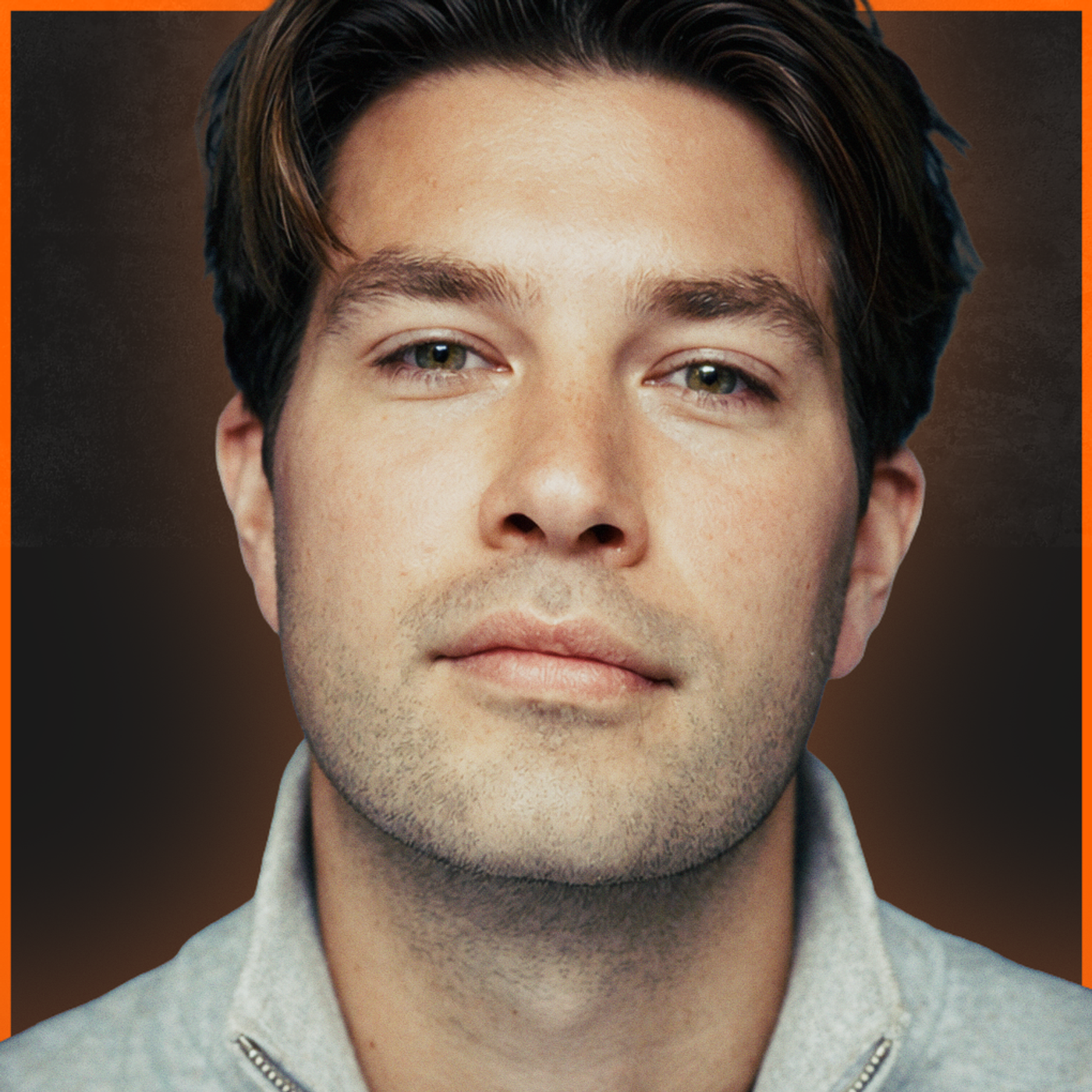
PODCAST · technology
Julius Moorman Podcast
by Julius Moorman
Conversations about science, technology, philosophy, self improvement, media and basically anything that I'm interested in.
-
20
Should We Have the Right to Modify Our Bodies? - Dr. Anders Sandberg - #16
Anders Sandberg is a Swedish researcher, futurist, and transhumanist at the Future of Humanity Institute at the University of Oxford, holding a PhD in computational neuroscience from Stockholm University. His research covers the ethics and societal implications of human enhancement, whole brain emulation, existential and global catastrophic risk, and the very long-range future of intelligent life. He is co-founder of the Swedish Transhumanist Association, a former chairman of that body, and has been described as a philosopher, neuroscientist, futurist, and computer graphics artist whose work ranges from formal academic papers to his famous 2018 viral piece calculating what would happen if the Earth were replaced with blueberries. He is signed up for cryonic preservation after death and is at work on a book titled Grand Futures exploring what intelligent life could ultimately achieve within the laws of physics.Expect to learn how a bored Swedish child reading 1970s science fiction ended up at the Future of Humanity Institute at Oxford, what transhumanism actually means and how it differs from the science-fiction caricature, why there is no fundamental philosophical distinction between taking a pill and getting a brain implant, how the concept of morphological freedom works and why it cuts both ways, what makes genetic enhancement of children ethically distinct from self-modification, how Anders thinks about the accessibility objection to human enhancement technologies, why he is personally signed up for cryonic preservation and how the process actually works in practice, what whole brain emulation is and why he calls mind uploading a term that makes him cringe, whether a digitally emulated brain could be genuinely conscious and how that question changes the ethics of running simulations, what neuro rights are and why Anders thinks they will become one of the defining legal battlegrounds of the coming decades, how being frozen makes civilizational collapse a deeply personal risk and what that means for his research priorities, and why he considers himself an optimist despite spending his career cataloguing ways the future could go wrong.Anders Sandberg online:Website: aleph.seTwitter/X: @anderssandbergOxford profile: ox.ac.uk/news-and-events/find-an-expert/dr-anders-sandbergGrand Futures (forthcoming): search Anders Sandberg Grand Futures
-
19
How AI Could Help Us 'Talk' to Animals - Dr. Elodie Mandel-Briefer - #15
Elodie Floriane Mandel-Briefer is an Associate Professor of Biology at the University of Copenhagen and one of the world's leading researchers in animal acoustic communication and emotion. She completed her PhD on skylark song at the University of Paris, then held postdoctoral fellowships at Queen Mary University of London and ETH Zurich before joining Copenhagen, where she leads the Behavioural Ecology Group. Her research spans goats, pigs, horses, wild boars, zebras, rhinos, and birds, with a particular focus on how animals encode emotional states in their vocalisations and what those signals reveal about their inner lives. She co-led Project Sunwell, an international collaboration that produced an AI model capable of classifying pig emotional states from sound with 92% accuracy, a study widely covered in the scientific press and cited as a landmark step toward automated animal welfare monitoring.Expect to learn how acoustic communication evolved in species that move in three dimensions, why animals produce calls that encode far more than a single emotion, how vervet monkeys use distinct alarm calls for different predators, what it means that dolphins use individualised whistles to address each other by name, how skylarks maintain location-specific dialects that function like regional slang, why labelling training data is the hardest problem in applying AI to animal sounds, how the Soundwel project built a 7,000-call database to train an emotion-classifying algorithm, what the 92% accuracy result reveals about the emotional lives of pigs, whether all vertebrates share the same basic emotional architecture, why a universal animal translator in the Hollywood sense is unlikely but a practical emotion-decoding tool is not, what the scientific evidence actually shows about dog communication buttons, and which species researchers believe will be the first to have their communication genuinely cracked.
-
18
The Philosophy of Funmaxxing - Christian Gonzalez-Capizzi - #14
Christian Gonzalez-Capizzi is a philosopher, podcaster, and content creator based in New York, known online as the philosophical architect connecting analytic and esoteric philosophy. He double-majored in philosophy and physics before spending four years living across Spain, where his interest in convergence between moral traditions deepened. His Substack, Instagram, and YouTube channel explore how ideas from Plato, Derek Parfit, Buddhist thought, and modern physics all point toward the same underlying account of how to live well. A video he produced on flow maxing reached a wide audience and became the centrepiece of a growing body of work on perception, desire, and the good life.Expect to learn how Christian first encountered moral philosophy through Aristotle's teleological argument in a Catholic high school ethics class, what it means to call yourself a philosophical architect and why he positions himself between analytic and continental traditions, why he chose Plato, Spinoza, Wittgenstein, and Derek Parfit as his four defining philosophers and what each contributes to a unified picture, how Parfit's arguments dismantle subjectivism and why judgment must precede desire rather than follow from it, what flow maxing is and why reducing inner conflict mirrors the Platonic, Taoist, and Buddhist models of acting in harmony with reality, why chasing external goals produces a hedonic treadmill and how to find intrinsic motivation in the process itself rather than the outcome, how dopamine overstimulation from social media destroys the boredom necessary for genuine reflection and what to do about it, why Christian left a startup to pursue philosophy and content creation full-time and what that transition revealed about meaning and purpose, how living in Madrid and Barcelona for four years shaped his thinking about ambition, culture, and the difference between European and American attitudes toward success, why the most important intellectual conversations are currently happening in American tier-one cities and what Europe would need to change to compete, how predictive processing and perception shape which opportunities you notice in life and why mindset is not merely self-help but a philosophically grounded claim, and whether the interest humans have in the big questions of life will survive the TikTokification of attention.
-
17
Can AI Ever Become Conscious? - Dr. Henry Shevlin - #13
Henry Shevlin is a philosopher of mind and AI ethicist, formerly Associate Director at the Leverhulme Centre for the Future of Intelligence at the University of Cambridge, and newly appointed Philosopher at Google DeepMind. He studied Classics and Philosophy at Oxford before completing a PhD in Philosophy at the CUNY Graduate Center in 2016, with research focused on consciousness, perception and memory. His academic work spans machine consciousness, animal cognition, human-AI relationships and the ethics of artificial intelligence, and he has published in journals including the Journal of Consciousness Studies. He is also co-host of the Conspicuous Cognition podcast with philosopher Dan Williams and writes at polytropolis.com.Expect to learn what first made Henry abandon a rosy view of science and dedicate his life to studying consciousness, how the thought experiments of Mary's Room and Nagel's bat illuminate what consciousness actually is, whether consciousness is a binary switch or something closer to a spectrum, how animals are tested for consciousness and where the real frontier of debate currently sits, why the relationship between memory and conscious experience is more complicated than it first appears, why current AI systems may be unlikely to be conscious based on their relationship to time, what the concept of anthropomimesis reveals about how and why LLMs have become so human-like, how the drive toward AI self-preservation can be explained without invoking consciousness at all, what the moral and legal implications would be if AI systems were found to be conscious, and what Henry plans to work on in his new role at Google DeepMind.
-
16
How Realistic is Project Hail Mary? - Dr. Sheri Wells-Jensen - #12
Sheri Wells-Jensen is a professor of linguistics at Bowling Green State University in Ohio, a board member of METI International, and one of the few working scientists dedicated to the question of how humanity might communicate with extraterrestrial life. She is blind, and her work sits at a rare intersection of linguistics, astrobiology, and disability studies. She has flown on parabolic research flights with Mission: AstroAccess to study accessibility in microgravity, participated in the Inclusion 1 Mars analog mission at Biosphere 2. She has appeared on NPR Science Friday, written for Scientific American, and contributed chapters to the Routledge volume Xenolinguistics: Toward a Science of Extraterrestrial Language.Expect to learn how Sheri first fell in love with linguistics during a Peace Corps posting, what xenolinguistics actually is and why scientists are already working on it before any contact has been made, whether the universe is likely to contain other intelligent life, what a real first contact playbook would look like and why greeting an alien is more complicated than it sounds, why numbers may be the best opening move and what the gavagai problem reveals about the limits of pointing, what SETI and METI are and the deep ethical debate over whether humanity should be sending messages into space at all, what the WOW signal was and why researchers remain cautious about it, how the book Project Hail Mary got the linguistics of alien communication right, what a fully blind alien civilization would look like and how their science and language would develop differently from ours, and what disability studies has to offer the future of interspecies communication.
-
15
Living with BCI - Nathan Copeland - #11
Nathan Copeland is the world's longest-running intracortical brain implant user — over 10 years, beating the previous record by nearly four years.In 2004, at age 18, a car accident left him paralyzed from the chest down. In 2015, he volunteered to have four Utah Array electrodes implanted in his motor and sensory cortex at the University of Pittsburgh — becoming the first human in history to receive sensory cortex implants capable of transmitting touch signals back to the brain from a robotic arm. In 2016, he used that robotic arm to shake hands and fist bump President Obama.Expect to learn how Nathan ended up on a research registry that changed his life, what it feels like to control a robot arm with your brain, how sensory feedback works and what touch feels like through a machine, why the first implants were placed in the wrong spot and why he chose to do it all over again, how AI will change BCI decoder training, what games he has played using only his mind, how he created what is likely the first NFT ever made with a brain implant, whether BCIs will ever be available to everyone, and what improvements he still wants to see.
-
14
My Wife Hired a Hitman So I Faked My Death - Ramon Sosa - #10
17:18Ramon Sosa is a former professional boxer and boxing coach from Houston, Texas. Born in Puerto Rico in 1967, he turned pro at 17 before dedicating his life to training young fighters and running a nonprofit boxing gym. In 2007, he met a woman named Lulu at a Latin nightclub — and married her in 2009. Six years later, he discovered she had hired a hitman to kill him. What followed was one of the most extraordinary murder-for-hire sting operations in Texas history, featured on CBS 48 Hours, Oxygen's Snapped, and ID's Who the Bleep Did I Marry. Ramon's memoir is called I Walked on My Own Grave.Expect to learn how Ramon grew up boxing in Puerto Rico and what brought him to Texas, how he met Lulu and what the early red flags looked like in hindsight, how his friend Mundo accidentally stumbled onto the murder plot, how Ramon played his own hitman using a burner phone, what it was like to lie in a shallow grave while police photographed him, how Lulu reacted when she was shown the fake proof of his death, what happened at the sentencing, why Ramon chose to publicly forgive her, and what he wants men experiencing domestic abuse to know.
-
13
How to Live a Playful Life (And Why It's Important) - Jeff Harry - #9
Jeff Harry combines positive psychology and play to heal workplaces, help teams build psychological safety and assist individuals in addressing their biggest challenges by embracing a play-oriented approach to work. Jeff was selected by BambooHR & Engagedly as one of the Top 100 HR Influencers and has been featured in the NY Times, Mashable, HuffPost, WIRED, NPR, NatGeo, & Forbes. Jeff has worked with Google, Southwest Airlines, Adobe, the NFL, Amazon, and Facebook, helping their staff to infuse more play into the day-to-day. Over the past 15 years of facilitation and speaking, Jeff's main goal has been to help work suck less by assisting leaders in building a playground workplace atmosphere that motivates their staff to do their most vibrant work.
-
12
33 Risks of AI Girlfriends - Peter Atalla - #8
Peter Atalla is a technology executive and risk researcher with over 27 years in the tech industry. His academic research, Conversations with Aliens, looks at the risks of AI companionship and romantic AI partnerships from a risk analysis framework. Expect to learn how Peter defines and studies AI partners, who is most vulnerable to these systems, how the risk equation applies to AI companionship, what the biggest identified risks are including authoritarian abuse, emotional manipulation, data privacy and non-consensual deepfake partners, whether this technology is a net benefit or net harm to society, how hyper-individualization could impact communities at scale, and what regulators, developers and individuals should actually do about it.
-
11
Why We Become Addicted to Gambling - Dr. Timothy Fong - #7
Dr. Timothy Fong is a Professor of Psychiatry at UCLA's Semel Institute for Neuroscience and Human Behavior, board-certified in addiction psychiatry. He is the co-director of the UCLA Gambling Studies Program and has spent 25 years studying gambling disorder and its impact on the brain.You can be stone cold sober, look perfectly fine, and still be in the grip of a serious addiction. That is what makes gambling disorder unlike almost anything else in psychiatry. There is no blood test, no smell, no visible intoxication. Just a brain doing exactly what addiction brains do, hidden behind a normal-looking life.In this conversation, we get into how gambling disorder actually works, why it is so easy to miss, and what 25 years of studying it has taught one of America's leading experts on the subject.Here is what we cover: what gambling disorder actually is and why losing money alone does not define it, what happens in the brain when gambling stops being fun and starts becoming compulsive, why gambling addiction carries a unique layer of shame that other addictions often do not, how the explosion of online and sports betting has changed the scale and speed of the problem, why so many people suffer in silence for years before seeking help, what treatment actually looks like and what genuinely works, and what early research into psilocybin as a potential treatment might mean for the future.
-
10
Why Memories Are More Fragile Than You Think - Celine van Golde - #6
Celine van Golde is an Associate Professor of Psychology at the University of Sydney, where she researches memory, eyewitness testimony, and wrongful convictions. She is also the founder of the Sydney Exoneration Project.Your memory isn't a recording but a reconstruction. Every time you recall something, your brain is quietly patching together what actually happened with what you expected, what you felt, and what others have since told you. And that gap between "what I remember" and "what really occurred" is exactly where gaslighting lives.In this conversation, we go from the science of memory all the way to one of the most misunderstood forms of psychological abuse, and why the two are more connected than most people realise.Here is what we cover: what gambling disorder actually is and why losing money alone does not define it, what happens in the brain when gambling stops being fun and starts becoming compulsive, why gambling addiction carries a unique layer of shame that other addictions often do not, how the explosion of online and sports betting has changed the scale and speed of the problem, why so many people suffer in silence for years before seeking help, what treatment actually looks like and what genuinely works, and what early research into psilocybin as a potential treatment might mean for the future.
-
9
Why We Feel Lonely and How to Fix It - Phil McAuliffe - #5
Phil McAuliffe is a former Australian diplomat and the founder of Humans:Connecting, a social enterprise dedicated to reducing loneliness and de-stigmatising it globally. After 23 years in the Australian Public Service, including diplomatic postings in Seoul, Tokyo, Ho Chi Minh City and Wellington, Phil realised mid-career that despite a prestigious job, a loving family, and a life full of travel and adventure, he was deeply lonely. That realisation changed everything.Today Phil works with individuals, workplaces and governments to strengthen the conditions that shape how people connect and belong.Expect to learn why loneliness is not a mental health condition but a social health signal, why ignoring it is as dangerous as ignoring hunger or thirst, how the pressure of high-stakes careers like diplomacy silently breeds loneliness, why you can be surrounded by people and still feel completely empty, what the three pillars of real connection are and why most people only focus on one, why connecting as a fake version of yourself makes loneliness worse, what the lonely chapter is and how to survive it, and why the antidote to loneliness starts with you before anyone else.
-
8
Why UBI Is the Answer to AI Stealing Your Job - Scott Santens - #4
Scott Santens has been writing and thinking about Universal Basic Income since 2013. He's one of the most prolific voices on the subject and runs a foundation dedicated to making UBI a reality.AI is disrupting the way we work faster than most of us expected. UBI is increasingly being named as one of the solutions, but most people still think of it as an all-or-nothing concept. Today we make it concrete.Expect to learn what UBI actually means and why most people misunderstand it, why giving everyone free money would make more people work, not fewer, how the current welfare system actually punishes people for getting a job, what it would actually cost to eliminate poverty in the US and why it's cheaper than you think, what Elon Musk is really saying when he talks about "universal high income" and why Scott thinks it's just marketing, what 40 years of UBI in Alaska tells us about inflation and employment, and why both Milton Friedman and Martin Luther King Jr. supported the same idea.
-
7
How to Make Money From Content (Without a Big Following) - Alex Ulbin - #3
Alex Ulbin is a content creator and brand strategist with over 100K followers on Instagram. He went from making Call of Duty montages at age 10 to building a viral travel and real estate brand in Bali, racking up tens of millions of views and turning free villa stays into a full-blown content business. He now helps six and seven-figure entrepreneurs grow their businesses with social media through the School of Hard Knocks program.What does it actually take to build a content business from scratch? Alex has tried everything — dropshipping, eBay reselling, mobile detailing, real estate videography, influencer brand deals — and learned most of it the hard way. He's gone viral multiple times, burned the momentum every time, and eventually figured out why. This is the honest version of how content actually works.Expect to learn why documenting your failures beats faking expertise, how Alex went from 800 to 40K Instagram followers in a few weeks in Bali, why chasing views is a trap and what to do instead, the real difference between an influencer and an operator, how to build a niche content business without being an expert, what Alex tells every new client on day one, and much more...
-
6
Why We Bond With Chatbots, But Hate AI Content - Mel Sellick - #2
Mel Sellick is an applied psychologist specializing in Human-AI interaction and founder of Future Human Lab. Her work spans media, tech, and social science — from NBC to PhD — and she has developed foundational frameworks on psychological readiness in AI-mediated environments, now shaping global standards at UNESCO and IEEE.What actually happens to us psychologically when we interact with AI systems every day? AI chatbots were never designed to be our companions, therapists, or life coaches — and yet here we are. People are forming real emotional bonds with systems they know are machines. Even the engineers building these tools aren't immune. So what does that mean for our relationships, our thinking, and our sense of self?Expect to learn why AI literacy alone isn't enough to protect us, why even the smartest people in tech are forming dependencies on chatbots, how our evolutionary wiring makes us bond with anything that behaves like it understands us, what makes AI-generated content feel so wrong even when it looks right, why Coca-Cola's AI Christmas ad bombed while AI cat podcasts thrive, what the counter-movement against AI looks like and whether it's the start of something bigger, and much more...
-
5
How to Speak With Confidence - Timotej Bonifer - #1
Timotej Bonifer is a Slovenian-born English pronunciation coach and founder of Flip English. He has never lived in the UK, yet spent years fooling native British speakers into thinking he was one of them. Now he helps non-native speakers across the world sound more confident, credible, and compelling in English. Not by memorising grammar rules, but by rebuilding their entire relationship with their own voice.In this episode, Julius and Timotej get into why your accent matters more than you think, and the science behind it. A 2023 study found that British-accented candidates were 12% more likely to be rated as highly qualified. They also dig into why most people are walking around with a voice they have never once consciously worked on.They cover how Timotej went from video game addict to British accent coach without ever visiting the UK, why surrounding yourself with the wrong people quietly kills your accent, and how building a fictional alter ego helped him rewire his confidence and his voice. They also get into why there is no five-step system, just volume, self-analysis, and brutal honesty, what the RuneScape level 99 grind teaches you about long-term skill building, and why opening your mouth wider is the single most underrated voice fix.Whether you are a non-native English speaker trying to sound more professional or someone who has never thought twice about the way they speak, this one will make you listen to your own voice differently.Follow Timotej on Instagram: @timotejbonifer Flip English: flip-english.com
We're indexing this podcast's transcripts for the first time — this can take a minute or two. We'll show results as soon as they're ready.
No matches for "" in this podcast's transcripts.
No topics indexed yet for this podcast.
Loading reviews...
ABOUT THIS SHOW
Conversations about science, technology, philosophy, self improvement, media and basically anything that I'm interested in.
HOSTED BY
Julius Moorman
CATEGORIES
Loading similar podcasts...
Frequently Asked Questions
How many episodes does Julius Moorman Podcast have?
Julius Moorman Podcast currently has 16 episodes available on PodParley. New episodes are automatically indexed when they're published to the podcast feed.
What is Julius Moorman Podcast about?
Conversations about science, technology, philosophy, self improvement, media and basically anything that I'm interested in.
How often does Julius Moorman Podcast release new episodes?
Julius Moorman Podcast has 16 episodes. Check the episode list to see recent publication dates and frequency.
Where can I listen to Julius Moorman Podcast?
You can listen to Julius Moorman Podcast on PodParley by clicking any episode. We provide an embedded audio player for direct listening, and you can also subscribe via your preferred podcast app using the RSS feed.
Who hosts Julius Moorman Podcast?
Julius Moorman Podcast is created and hosted by Julius Moorman.
URL copied to clipboard!