
PODCAST · education
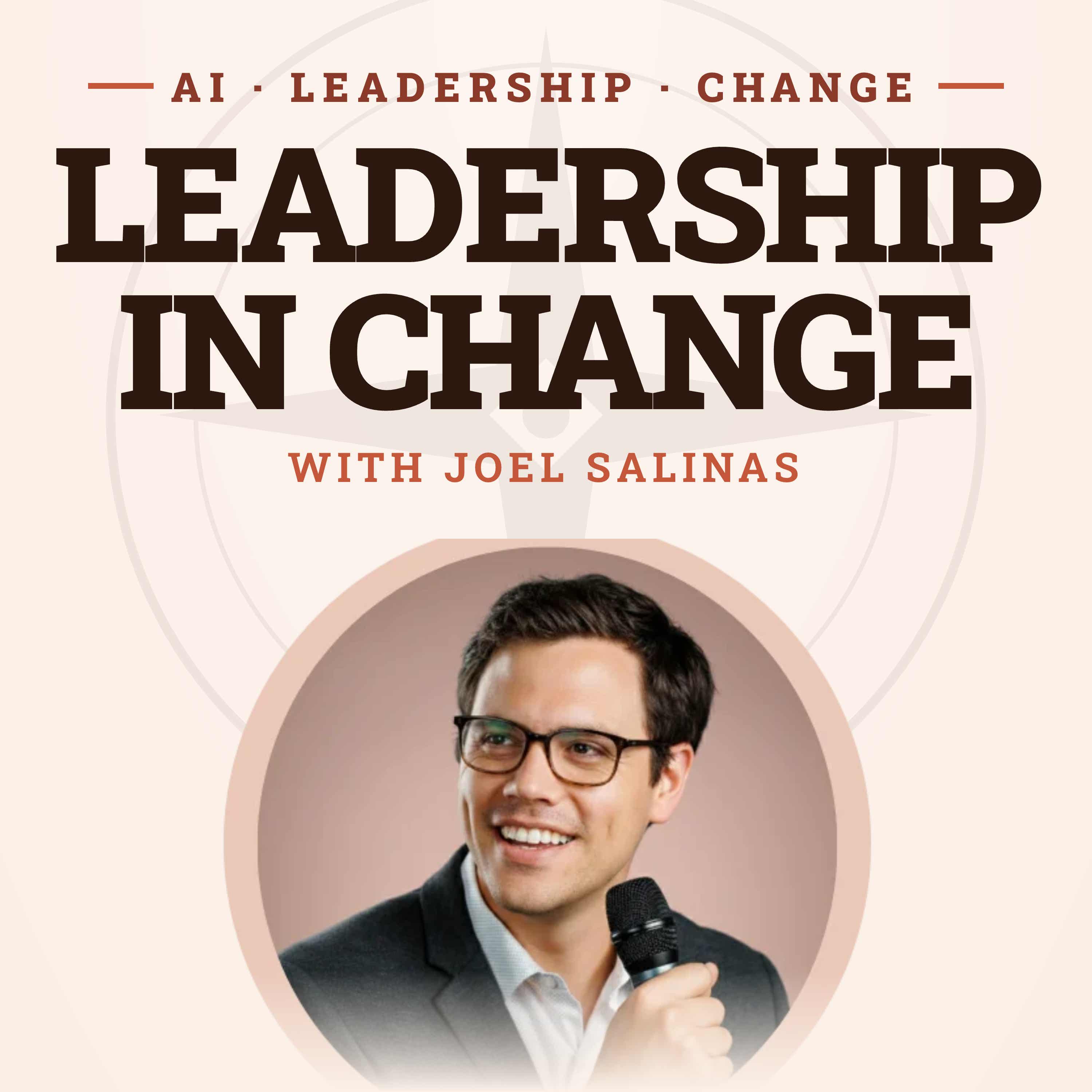
Leadership in Change with AI - Podcast
by Joel Salinas
Don’t just read about AI, lead it. Get the weekly playbook for leaders who want to supercharge their expertise and multiply their impact. leadershipinchange.com
-
19
How "Compound With AI" Cut Stock Research to 60 Minutes
TL;DR — Compound With AI is a Substack newsletter teaching 50,000 long-term investors how to compress six hours of stock research into about sixty minutes using AI prompts, Claude skills, and deep research workflows. We sat down on Substack Live this week and unpacked the actual mechanics, the prompt library, the multi-agent setup, the break-my-thesis move, the way he turns deep-research reports into NotebookLM podcasts to listen to while he’s training. Outline(00:00) – Welcome and how I found Compound With AI(02:30) – The deep research “cheat code”: six hours becomes sixty minutes(06:30) – Index funds for 99% of people, individual stocks for the rest(08:50) – Why retail investors now have the same tools as the best hedge funds(12:30) – The multi-agent setup: industry, earnings, risk, stock analyst(14:00) – The coffee shop walkthrough: thinking like an owner, not a buyer(17:30) – Reading ten years of management track record in minutes(22:00) – The professional learner edge(24:50) – Pen and paper before the prompt: why one prompt takes an hour(29:30) – Walking through Exxon from zero(32:30) – Turning deep research into a training-podcast with NotebookLM(34:00) – The “break my thesis” agent(43:30) – Where AI in investing is heading nextA Few Things That Stuck With MeThe deep research cheat code. So Compound With AI said something I want every leader to hear, because it lines up with what I’ve been seeing across coaching engagements all year. He said deep research changed everything for him about a year ago. Before that, getting to a real understanding of a new business took five or six hours of reading reports, and getting to a new industry from zero could take weeks. Now he runs the right prompt against deep research in Gemini or Claude or ChatGPT, walks away, and comes back to a structured ten-page report he can actually act on. “When this started working for me, I said, okay, this is a game changer. I used to do this and it would take five, six hours. And if you don’t know the industry, it would take weeks because you’re starting from zero.” The leaders I keep watching get unstuck are the ones who finally let AI do the part of the work that was burning their hours, the part that was always research disguised as judgment.The coffee shop walkthrough. This was the cleanest explanation of what real stock analysis is that I’ve heard live. He said, look, if you and I were going to open a coffee shop together, the first thing we’d do is walk down the street and count how many other coffee shops are already there. Then we’d think about what makes people walk into one shop instead of another, branding, margins, location, the way the staff smiles. He treats every stock the same way, and his prompts force AI to do the exact same exercise. “When people buy Starbucks the stock, they say, ‘Starbucks is a big brand, let’s buy it.’ They don’t do all the work because it’s kind of virtual money. And that’s the big issue for me.” This is the single most useful frame in the conversation. If you can explain out loud how a business actually makes money, you can prompt AI to dig into it, and if you can’t, no prompt in the world is going to rescue you, which is why I keep telling the leaders I coach that AI literacy starts with business literacy.Pen and paper before the prompt. Here’s the moment I most wanted to slow the conversation down on. He builds his prompts on paper first, by hand. He sits with a question, writes ten or fifteen sub-questions a smart human analyst would actually ask, and only then translates that to a typed prompt. One prompt takes him about an hour. Then he tests it on five or six stocks he already knows cold, so he can spot what the AI is missing. “To build one prompt I take one hour. I write pen and paper. Not everybody is willing to do the work.” Honestly, that admission was worth the whole hour for me. The hype industry sells AI as effortless, and the people I see getting real results are doing the slowest, boring part of the work, the part nobody puts in the demo videos: writing down the questions a smart human would ask before they ever touch the tool.The “break my thesis” agent. Here’s the move that landed hardest for me. Once Compound With AI has built a real reason to invest in a stock, instead of running another agent to confirm the thesis, he runs one specifically built to argue against him, hands it the bull case, points it at his own frameworks, and tells it to break the thesis. “Tell me what are the problems. And sometimes, honestly, AI will point to things you didn’t think about. And that’s very interesting.” I love this move because it flips the default way most leaders touch AI. Most people are quietly using AI to confirm what they already think, which is the fastest way to get a worse decision than if you’d just asked nobody at all. The investors who actually outperform are pointing AI at their own conclusions and asking it to break them, which is closer to how Buffett and Munger have always operated together, with Charlie’s whole job being to find the holes in Warren’s reasoning.(If you’re a leader thinking about where AI actually belongs in your own work and you’d like another set of eyes on it, this is the kind of thinking I do every week with the leaders I coach. You can start here if it would help to talk one through together.)One Question to Sit WithWhat’s one domain in your own work where you’ve been prompting AI generically, when you could be sitting down for an hour and building a prompt library you’d use for the next ten years?Honestly, the floor is rising for everyone with AI in their hands now, the ceiling moved up with it, and the only thing left to decide is whether you choose to be a professional learner.Look, if you invest your own money, watch the full conversation above. And honestly, go subscribe to Compound With AI. Fifty thousand long-term investors are already inside, and the prompt library and weekly workflows are some of the most rigorous AI-for-investing material I’ve found anywhere on Substack.About meJoel Salinas is a Fractional Chief AI Officer for small and mid-sized businesses and nonprofits. Strategy, hands-on builds, and change management. He writes Leadership in Change and offers 1:1 coaching for individual leaders. If you want help thinking through your own AI strategy or online presence, start here.Written by a human, for humans. This is a public episode. If you'd like to discuss this with other subscribers or get access to bonus episodes, visit leadershipinchange.com/subscribe
-
18
The Trust Premium: What Philip Hofmacher Taught Me About Building in the Age of AI
TL;DR — AI made content production almost free, which means producing it is no longer what separates the creators who grow from the ones who stall. Trust, voice, and the depth of your actual expertise are. Call it the trust premium. In a Substack Live with Philip Hofmacher, cofounder of Write × Build × Scale, we walked through the litmus test that tells you whether AI is amplifying you or quietly replacing you, and why the creators winning the next 12 months are the ones loading their context, not their prompts.Outline(00:00) – Welcome and how I found Write × Build × Scale(02:00) – Building a business and a marriage with your cofounder(03:35) – From tennis to Skillshare to Substack: the platform-pivot lesson(09:30) – The value of community and masterminds(13:34) – How AI changed content creation in two years(17:25) – The sameness problem and the trust premium(22:00) – Lazy AI vs. strategic AI(24:54) – The litmus test: are you more of an expert than a year ago?(28:54) – Philip’s ChatGPT workflow and my Claude workflow(32:18) – Personal brand: stories beat lists(39:42) – Advice for creators stuck at 200-500 subscribers(45:46) – Philip’s billboard: AI amplifies you, or replaces youA Few Things That Stuck With MeThe trust premium. So Philip Hofmacher said something on the live that just landed for me. “It got so easy to create products compared to how hard it is to sell something.” Ten years ago, when he was selling Skillshare courses on Instagram growth, the work was eighty percent making the course and twenty percent selling it. Now he says it’s the inverse. Building the product is the cheap part. Earning the trust to get somebody to actually consume it, that’s the expensive part. Honestly, the whole conversation lives in that one sentence. Call it the trust premium. When AI made production almost free, trust became the thing people are actually paying for.The research-assistant analogy. I used this on the live because it’s the analogy I keep coming back to with the leaders I coach. Look, if you hire a research assistant and you tell them, “find me information on Write × Build × Scale,” they’re going to go out and pull whatever’s public. They don’t know your angle. They don’t know what you’re actually trying to do, who your readers are, or what your point of view is on the topic. So they bring back the most generic version of what’s out there. That’s not on the research assistant though, that’s on you, because you sent them out empty-handed. AI is the exact same thing. The creators who use AI well aren’t smarter than everybody else. They figured out one boring thing earlier than most people, which is that AI on its own gives you the same average answer it gives everybody, and unless you take the time to load up the context first, the version you publish is going to look exactly like the version everybody else publishes.The litmus test. Here’s the question I tell every leader I coach to ask themselves, and I asked it on the live. Look at yourself a year ago. Are you more of an expert at what you do than you were twelve months ago? If yes, you’re using AI right. It’s compounding you, freeing the time you used to spend on grunt work and routing it back into the work that actually grows your craft, and you can feel it because you’re sharper than you were. If no, AI isn’t actually amplifying you, even if it feels like it is. What’s happening is slower and quieter than that. It’s doing the thinking that used to make you better, and the longer that goes on, the more your expertise quietly hollows out, until one day somebody notices you don’t actually know more than the model does. Philip closed the loop on the live, after I floated the idea. He said, “Basically using AI to become a better version of yourself, a better operator, a better business owner.” Same thing.Stories beat lists. Here’s the part of the conversation I keep coming back to. Philip mentioned his cofounder Jari’s dog, who apparently shows up in their community so often that when they announced an in-person event, the first question people asked was whether the dog would be there. He talked about his wife Sinem, who’s also his cofounder. I mentioned my seven-year-old, who’s been campaigning for a dog all month. None of that was strategy talk or monetization advice, just two real people talking shop on a Monday morning, occasionally laughing about their kids and their dogs. That’s the part AI can’t reproduce yet, and honestly probably never will. That’s the moat.I work with leaders on exactly this, executives, marketing VPs, nonprofit CEOs trying to figure out how to show up in the AI era without sounding like every other person on Substack. If it would help to talk this through, here’s my calendar.Let us know in the comments…Are you better at your craft than you were a year ago? If the answer’s no, what’s AI actually doing for you?Look, if you write or build anything online, watch the full conversation above. And honestly, go subscribe to Write × Build × Scale. Philip Hofmacher, Sinem Günel, and Jari Roomer are running the most useful creator-economy publication I’ve found, and most of what I’ve actually figured out about Substack in the last six months traces back to their work.Joel Salinas is a Fractional Chief AI Officer for small and mid-sized businesses and nonprofits. Strategy, hands-on builds, and change management. He writes Leadership in Change and offers 1:1 coaching for individual leaders. If you want help thinking through your own AI strategy or online presence, start here.Written by a human, for humans. This is a public episode. If you'd like to discuss this with other subscribers or get access to bonus episodes, visit leadershipinchange.com/subscribe
-
17
The LinkedIn + Substack Flywheel: 3 Moves From Mel Goodman (After Her 12-Week Ban)
TL;DR - LinkedIn locked Melanie Goodman out of the platform she had built a business on for ten years. She got back in, but the 12-week gap taught her something most leaders still refuse to learn: every social platform is rented land. In the AI era, where feeds are flooded with auto-generated content, the leaders who win are the ones who own their audience, sound unmistakably human, and run LinkedIn and Substack together as one system instead of betting on either alone.Outline(00:00) – Introduction and Mel’s background(02:48) – The LinkedIn ban story(08:49) – The LinkedIn + Substack flywheel(10:48) – AI and the death of the generic post(13:36) – Start your posts with “I”(14:45) – The LinkedIn Services page(18:58) – Lazy AI vs. strategic AI(21:05) – The research stack(27:25) – The headline problem(31:33) – Using AI without losing your voice(37:01) – The 6-to-12-month forecast(39:07) – Where to startA Few Things That Stuck With MeThe “rented land” frame. LinkedIn can ban you with no warning and no explanation. Mel went through it for 12 weeks after a decade on the platform. If your entire professional presence lives on someone else’s servers, one notification can wipe it out. Mel’s line on this is the one I keep repeating: “On LinkedIn, you’re on rented land.”The 360 Brew test. LinkedIn’s current algorithm samples every post against a small audience before pushing it wider. The single biggest signal it looks for in that first round: does this sound like a real person writing about real experience? Mel’s tactical fix is so specific it borders on mechanical. Start your first two lines with the word “I.” Not “Here are 5 tips.” Not “As a leader...” Just “I.” Then move to the informative content. The word changes your reach.The Services page nobody sets up. Five minutes. One-time. Mel’s words: “If you don’t do anything else, please do that, because you will immediately rank above everybody else.” Almost no senior leader I know has done this. The broader case for search discoverability is in How to Be Seen in the AI Search Era.Lazy AI versus strategic AI. I used this frame on the live and it landed the way it tends to. Lazy AI replaces your thinking. Strategic AI amplifies it. In a feed flooded with auto-generated content, the premium on lived experience goes up, not down. Mel put it this way: “It’s these lived experiences that will propel your content above the next thought leaders or make somebody hire you and not the next person.” I wrote the full case for the strategic side in Stop Delegating Your Brain to AI.(I work with leaders on exactly this, health CEOs, marketing VPs, founders rebuilding how they show up online in the AI era. If it would help to talk it through, my calendar is here.)One Question to Sit WithIf your LinkedIn account disappeared tomorrow, what would you still have?If the answer is “not much,” watch the full conversation above. Mel’s 12-week gap is everyone else’s warning, and the three fixes she walks through take minutes, not months.About Mel GoodmanMel Goodman is the founder of The Link Tank and one of the most sought-after LinkedIn consultants working with senior leaders today. A former real estate lawyer, she has spent more than a decade helping executives turn LinkedIn connections into clients and now teaches the LinkedIn + Substack flywheel to her Substack audience. Subscribe to her work at melaniegoodmanlinkedinconsultant.substack.com.About meJoel Salinas is a Fractional Chief AI Officer for small and mid-sized businesses and nonprofits. Strategy, hands-on builds, and change management. He writes Leadership in Change and also offers 1:1 coaching for individual leaders. If you want help thinking through your own AI strategy or online presence, start here.Written by a human, for humans. This is a public episode. If you'd like to discuss this with other subscribers or get access to bonus episodes, visit leadershipinchange.com/subscribe
-
16
Craftsmanship Over Automation: The Doxa Watches Story (VIDEO)
What happens when a 136-year-old Swiss watch brand meets the age of AI?I sat down with Jacque O., executive at Doxa USA & Caribbean, to talk about one of the hardest questions leaders face right now: how do you stay true to your craft when everyone around you is automating everything?Jacqueline brought 16 years of luxury retail experience and some of the sharpest thinking I’ve heard on balancing heritage with innovation. Here are the highlights:Key Moments* 1:21 — Jacqueline’s background: 16 years in luxury retail, PADI-certified diver, built an aquaculture business* 3:57 — Doxa’s origin: founded in 1889 by George Ducamon, who started watchmaking at age 12* 5:16 — How watch movements work and why Doxa keeps prices at 1/4 to 1/5 of competitors with the same quality movements* 7:05 — Why Doxa dug in on heritage: no AI in the watches, staying about watchmaking* 8:48 — The leadership tension: how do you meet a new generation’s demand for efficiency without losing what makes you valuable?* 11:02 — The stat: maybe 5% of Doxa watches actually make it to the ocean for scuba diving. Most buyers choose it for the craft, not the function* 11:56 — What Doxa clients actually love about AI: making their own content, building community, not automating the product* 13:05 — “There’s no replacement for what is real and tangible and human”* 14:55 — “It loses its magic” — what happens when you automate the thing people love about you* 15:53 — The Navy SEAL story: how Jacqueline used ChatGPT as a collaborator (not a replacement) to craft deeper interview questions* 18:28 — The grocery store self-checkout example: voting with your money* 22:08 — AI isn’t the Bible: the dangers of trusting AI output without critical thinking* 23:20 — How to use AI smart so it complements you instead of replacing you* 24:22 — The prediction: we’ll soon see a “100% human-made” seal on content and products, and people will pay a premium for it* 32:04 — The “Missed Sales List”: the report that changed an entire company’s strategy by tracking what didn’t sell* 33:49 — Why your KPIs might be lying to you: measuring what sold vs. what you missed* 34:34 — Retail psychology debunked: how Jacqueline proved the conventional wisdom wrong by testing rack placement* 37:50 — “I’m not a salesperson. I’m a human first.” Why 4-hour conversations outsell pressure tactics* 39:26 — Telling a customer to buy the competitor’s watch instead, and why that builds loyalty* 41:58 — The core takeaway: focus on the people you want to serve, not their wallets. The sales will come.* 45:15 — Book recommendations: Mind Hacking by Sir John Hargrave + The Body Ecology DietThe Big Takeaways* Know what to protect. Your craft is your craft. Automate the things around it, not the thing itself.* AI is a collaborator, not a replacement. Use it to push your thinking deeper, then rewrite in your own voice.* AI isn’t always right. It’s a prediction engine built largely on Reddit. Verify everything.* Measure what you’re missing, not just what you’re hitting. The biggest opportunities hide in what you never tracked.* We’re still people dealing with people. That hasn’t changed and won’t. This is a public episode. If you'd like to discuss this with other subscribers or get access to bonus episodes, visit leadershipinchange.com/subscribe
-
15
Are You AI-Ready? A Leadership Literacy Check with "Paul the Human"
Thank you Karo (Product with Attitude), Tina Williams, Jón Sveinsson, and many others for tuning into my live video with Paul the Human! Join me for my next live video in the app. This is a public episode. If you'd like to discuss this with other subscribers or get access to bonus episodes, visit leadershipinchange.com/subscribe
-
14
Strategic Automation in the Age of AI
This is a public episode. If you'd like to discuss this with other subscribers or get access to bonus episodes, visit leadershipinchange.com/subscribe
-
13
Founder's Mindset: Leading through Disruption in the Age of AI with Daniel Ionescu
This is a public episode. If you'd like to discuss this with other subscribers or get access to bonus episodes, visit leadershipinchange.com/subscribe
-
12
Intro to Claude Cowork - Beginner Workshop (Premium Members Only))
This is a public episode. If you'd like to discuss this with other subscribers or get access to bonus episodes, visit leadershipinchange.com/subscribe
-
11
Parenting & AI - the LEAD framework - W/ Manisha
This is a public episode. If you'd like to discuss this with other subscribers or get access to bonus episodes, visit leadershipinchange.com/subscribe
-
10
Claude Projects Masterclass - Live
This is a free preview of a paid episode. To hear more, visit leadershipinchange.comA live walkthrough of the full Claude Projects workflow — from NotebookLM research to branded thumbnails. See how I build every newsletter in 12 steps. For content creators and leaders using AI.
-
9
AI and Brain Health with Dr. Jenny Churchill
This is a public episode. If you'd like to discuss this with other subscribers or get access to bonus episodes, visit leadershipinchange.com/subscribe
-
8
Non-Coder to Builder: AI as Your Dev Partner (with Kamil Blanc)
This is a public episode. If you'd like to discuss this with other subscribers or get access to bonus episodes, visit leadershipinchange.com/subscribe
-
7
Marketing in an AI world - with Peter Benei
This is a public episode. If you'd like to discuss this with other subscribers or get access to bonus episodes, visit leadershipinchange.com/subscribe
-
6
AI and the importance of Community
What a fun chat with Exploring ChatGPT! We touched on…* Leor’s journey into Substack and leading a publication with tens of thousands of subscribers* AI in 2026 and our outlook as AI Explorers* Our AI tech stack* What we worry about and what we get excited about with AI use in 2026* AI and the importance of communityImportant links:Our AI Community - CozoraMy one indispensable tool - Wispr FlorThank you Kevin E Beasley, Juan Salas-Romer, Rodney Daut, Jag Alexeyev, Paul k, and many others for tuning into my live video with Exploring ChatGPT! Join me for my next live video in the app. This is a public episode. If you'd like to discuss this with other subscribers or get access to bonus episodes, visit leadershipinchange.com/subscribe
-
5
2025 AI Leadership Lessons + 2026 Predictions
This is a public episode. If you'd like to discuss this with other subscribers or get access to bonus episodes, visit leadershipinchange.com/subscribe
-
4
Not sure where to start with AI? We're building something for you ✨
The most common question I get from leaders: “Joel, how do I actually keep up with AI?”It’s a fair question. AI is moving fast, information is everywhere, and even those of us working on this full-time struggle to stay current. You can spend hours every week trying different tools, watching tutorials, reading articles—and still feel like you’re getting nowhere.That’s exactly why my cofounders Michael Simmons and Claudia Faith and I built Cozora.Subscribe for free and get 30% off Cozora - Holiday offerWhat Cozora Actually IsCozora is a live AI show-and-tell community. Instead of reading about how someone uses AI, you watch them do it, live, on their screen, with the actual prompts they use.Every session runs 60-90 minutes. You can ask questions, pause the creator, and walk away with prompts you can use Monday morning. No theory. No generic tips. Just real workflows from people who’ve spent thousands of hours perfecting specific AI skills.Why We’re Doing This DifferentlyMost AI education treats every tool the same way. You try ChatGPT for five minutes, Claude for ten, then move to the next shiny thing. It’s like going to a gym and doing one rep on every machine… you never actually build strength anywhere.Cozora focuses on depth over breadth. We’re building specialized cohorts around specific use cases: AI for marketing, AI for content creation, AI for strategy, AI for sales. You pick your area, go deep with experts in that niche, and actually master the skills that matter for your work.The AI landscape is moving toward specialization. Skills like prompt engineering and context engineering are getting more complex. You need focused learning, not endless surface-level exposure.The Collaboration AdvantageHere’s what surprised us most: AI rewards collaboration more than any technology we’ve seen before.Someone great at writing can partner with someone great at image generation. A subject matter expert can team up with a prompt engineer. Right now, while AI is still new, industry experts are unusually open to collaboration. That window won’t last forever.Your Discount OfferBecause you’re part of this community, you get early access with significant savings:Free Subscribers: 30% off Cozora for 12 months (Offer ends Jan 15)Premium Members: 50% off Cozora (save $360 annually) Subscribe for free and get 30% off Cozora - Holiday offerWatch the video above to hear directly from the three of us about why we built this and what makes it different. Then, if it resonates, grab your discount before the deadline.Thank you Exploring ChatGPT, Corie Feiner, The Black Line, Hodman Murad, ila Dawn, and many others for tuning into my live video with Michael Simmons and Claudia Faith!Ready to go deeper? Sign up at Cozora.org and use your Leadership in Change discount at checkout.Have questions about Cozora or how it fits your specific leadership context? Drop them in the comments—I’ll answer every one. This is a public episode. If you'd like to discuss this with other subscribers or get access to bonus episodes, visit leadershipinchange.com/subscribe
We're indexing this podcast's transcripts for the first time — this can take a minute or two. We'll show results as soon as they're ready.
No matches for "" in this podcast's transcripts.
No topics indexed yet for this podcast.
Loading reviews...
Loading similar podcasts...
Frequently Asked Questions
How many episodes does Leadership in Change with AI - Podcast have?
Leadership in Change with AI - Podcast currently has 16 episodes available on PodParley. New episodes are automatically indexed when they're published to the podcast feed.
What is Leadership in Change with AI - Podcast about?
Don’t just read about AI, lead it. Get the weekly playbook for leaders who want to supercharge their expertise and multiply their impact. leadershipinchange.com
How often does Leadership in Change with AI - Podcast release new episodes?
Leadership in Change with AI - Podcast has 16 episodes. Check the episode list to see recent publication dates and frequency.
Where can I listen to Leadership in Change with AI - Podcast?
You can listen to Leadership in Change with AI - Podcast on PodParley by clicking any episode. We provide an embedded audio player for direct listening, and you can also subscribe via your preferred podcast app using the RSS feed.
Who hosts Leadership in Change with AI - Podcast?
Leadership in Change with AI - Podcast is created and hosted by Joel Salinas.
URL copied to clipboard!