
PODCAST · education
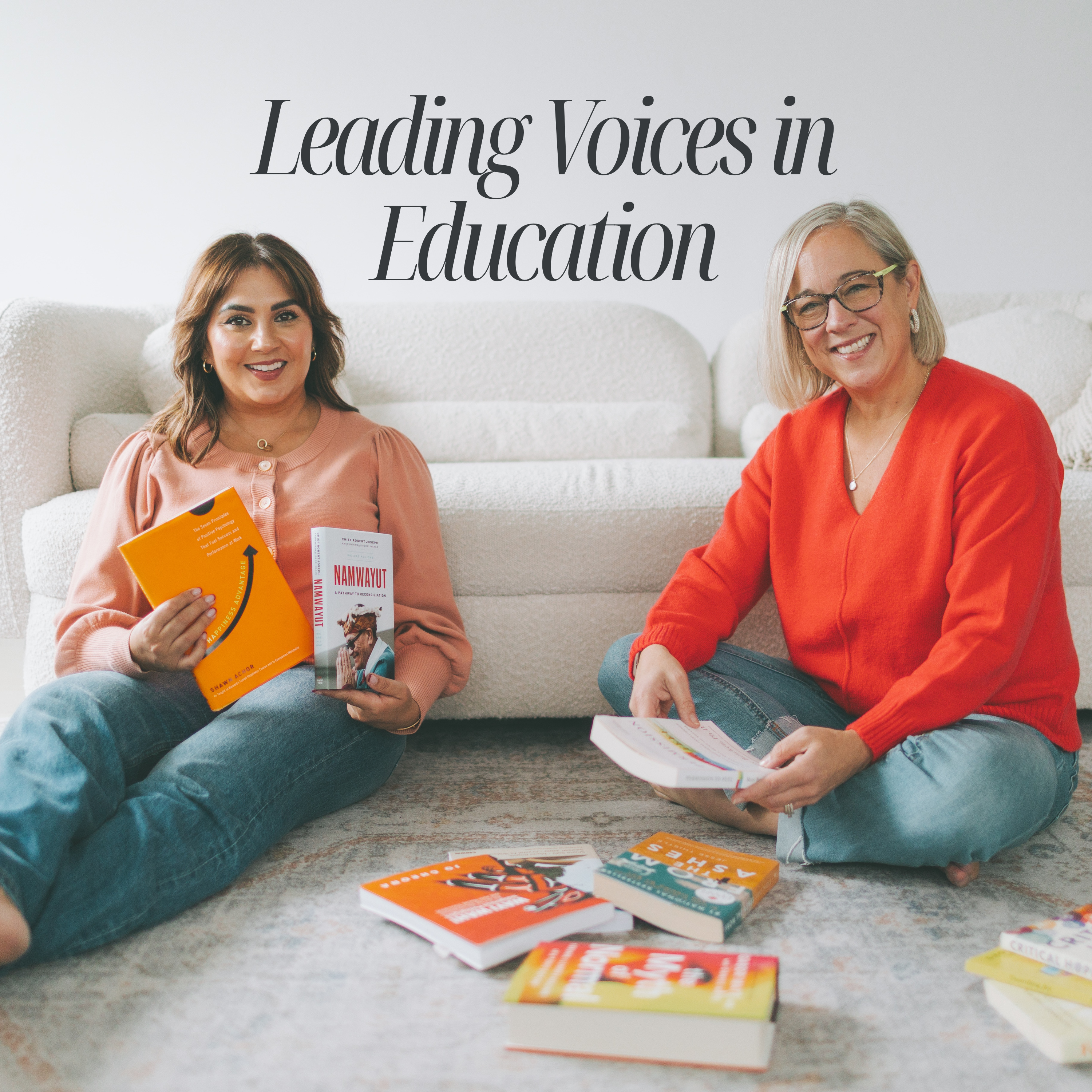
Leading Voices in Education
by Sundeep Chohan and Kristi Blakeway
"Leading Voices in Education" is a Surrey Schools podcast that brings together educators, principals, and vice-principals to explore key topics in leadership and education. Focused on creating compassionate systems, promoting diversity, and driving inclusive practices, this podcast provides valuable insights and discussions for those shaping the future of education. Tune in for thoughtful conversations aimed at fostering leadership that truly supports and uplifts all students and communities.
-
38
S2E29: Nicholas Ferroni - Compassion, Connection and the Heart of Teaching
In this discussion, Nicholas Ferroni shares his journey as a passionate educator, emphasizing the importance of building relationships, fostering empathy, and maintaining well-being in teaching. Discover practical strategies for new teachers, the power of positive communication, and the irreplaceable human element in education.
-
37
S2E28: Surrey SEL Teachers - Creating Conditions for Students to Flourish
In this conversation, social emotional learning advocates Sarah Dekerf and Jennifer Boudreau share their journeys from classroom teachers to leaders in social emotional learning (SEL) within Surrey Schools. They discuss the importance of building relationships, defining SEL, and the resources available for educators. The conversation also highlights exemplary practices in schools, strategies for teachers on call (TOCs), and the significance of self-care for educators.
-
36
S2E27: Dr. Dan Siegel - From Me to MWe: Rethinking Mind, Brain and Relationships in the Classroom
In this conversation, Dr. Dan Siegel discusses the intersection of neuroscience, mindfulness, and education. He introduces the Wheel of Awareness, a tool designed to enhance mindfulness and emotional intelligence in both educators and students. The discussion delves into the importance of integration in mental health, the dynamics of the upstairs and downstairs brain, and practical strategies for teachers to connect with their students. Dr. Siegel emphasizes the concept of Mindsight, which encompasses insight into one's own mental processes, empathy for others, and the integration of self with the relational world. He concludes with personal practices that promote well-being, highlighting the significance of connection in fostering a healthy mind.
-
35
S2E26: Dr. Sabre Cherkowski - Flourishing in Education
In this episode of Leading Voices in Education, we sit down with Dr. Sabre Cherkowski to explore what it truly means for educators and school communities to move from simply surviving to genuinely flourishing.Grounded in her research on teacher well-being and positive organizational practices, Sabre invites us to rethink how we approach well-being in schools—not as something extra to add on, but as something already present that we can notice, nurture, and grow. She introduces the idea that flourishing is not about ignoring challenges, but about holding space for both struggle and possibility at the same time.Through practical examples and powerful stories, we explore how small, intentional shifts—like pausing to notice moments of connection, sharing stories of success, or creating space for reflection—can transform school culture. Sabre emphasizes that well-being is deeply relational, shaped by how we show up for one another, and built through everyday interactions that foster belonging, trust, and care.This conversation is a reminder that flourishing isn’t a destination—it’s something we cultivate together, one small step at a time.
-
34
S2E25: Dr. Brad Johnson - Leading Through Relational Intelligence
In this engaging conversation, Dr. Brad Johnson shares his insights on effective leadership in education, emphasizing the importance of relational intelligence, trust-building, and the need for a supportive school culture. He discusses the challenges faced by new leaders, the significance of storytelling in professional development, and the necessity of shifting from a survival mindset to one that fosters thriving educational environments. Dr. Johnson also introduces the concept of EduFables, a narrative-driven approach to professional learning, and highlights the critical role of appreciation and recognition in enhancing staff engagement and combating burnout.
-
33
S2E24: Dr. Rachel Tidd - Embracing Outdoor Learning
In today's fast-paced and increasingly digital world, educators are constantly seeking innovative ways to engage their students. One powerful approach gaining traction is outdoor learning, which integrates nature into the curriculum to enhance literacy and math instruction. In this podcast episode, Dr. Rachel Tidd shared her insights on the significance of place-based education and how it can transform the learning experience for students of all ages. As the author of "Wild Learning, Practical Ideas for Bringing Teaching Outdoors," she explores how outdoor environments can enrich traditional academic subjects, particularly literacy and math. Her journey into outdoor education began when her own children thrived in a Forest Preschool setting, which inspired her to rethink the conventional classroom model.One of the key takeaways from Dr. Tidd's discussion is the idea that outdoor learning can significantly support students with diverse needs, especially those who are sensory seekers. By taking lessons outside, teachers can create a more inclusive environment where students can move freely and engage with their surroundings. For example, teaching multiplication using natural elements like leaves or stones can make abstract concepts more tangible and relatable.Many educators hesitate to incorporate outdoor learning due to concerns about logistics and planning. Dr. Tidd reassures teachers that they don't need elaborate setups to begin. Simple modifications, such as using plastic manipulatives outside or taking a class walk with learning objectives, can pave the way for outdoor education. She encourages teachers to start small, gradually building their outdoor practice as they gain confidence and experience.
-
32
S2E23: Lauren MacLean - The Power of Outdoor Learning in Education
SummaryIn this engaging conversation, Lauren MacLean Douglas shares her journey into outdoor learning, emphasizing the importance of sit spots and nature-based education. She discusses practical strategies for implementing outdoor learning in the classroom, overcoming barriers, and the intersection of literacy and outdoor experiences. The conversation highlights the benefits of outdoor learning for all students, including those with diverse needs, and provides valuable resources for educators looking to enhance their teaching practices.
-
31
S2E22: Trevor MacKenzie - Unlocking the Power of Inquiry in Education
In this engaging conversation, Trevor MacKenzie discusses his journey in education, emphasizing the importance of inquiry-based learning and the role of curiosity in fostering student engagement. He shares personal anecdotes about his experiences with students, particularly focusing on a student named Garrison, whose journey inspired a shift in MacKenzie's teaching approach. The discussion covers practical strategies for implementing inquiry in the classroom, the significance of scaffolding, and the need for a supportive community of learners. MacKenzie also addresses the challenges educators face in balancing curriculum demands with fostering student agency and offers insights into maintaining well-being as an educator.
-
30
S2E21: Simon Breakspear - Navigating the Complexities of Educational Leadership
In this conversation, Simon Breakspear discusses the evolving landscape of educational leadership, emphasizing the importance of human connection, the challenges of frenzied stagnation, and the need for subtractive decision-making in schools. He introduces the concept of 'pruning' as a strategy for effective leadership, advocating for a focus on impactful actions rather than adding more tasks. The discussion also touches on the significance of well-being for leaders and practical strategies for managing time and priorities in the educational context.
-
29
S2E20: Kari Grain - Navigating Critical Hope in Education
In this conversation, Dr. Kari Grain discusses her book 'Critical Hope' and her journey as an educator and leader. She explores the concept of critical hope, the importance of professional development, and how educators can navigate emotional tensions while fostering a hopeful environment. Through personal anecdotes and insights, she emphasizes the need for vulnerability, understanding privilege, and the role of systems in education. The discussion culminates in a hopeful vision for the future of education and the importance of daily practices for well-being.
-
28
S2E19: Perry Smith - Leading with Relevance: Rethinking Education for Today's Learners
In this conversation, Dr. Perry Smith shares his insights on education, leadership, and the integration of Indigenous perspectives in teaching. He emphasizes the importance of storytelling in education, the need for relevance in learning, and the role of adaptive leadership in today's educational landscape. Perry also discusses the challenges and opportunities of hybrid learning and the importance of professional development for educators. His reflections on personal experiences and the future of education provide a comprehensive view of the evolving educational environment.
-
27
S2E18: Kuljinder Kaur Brar - Seeing Ourselves in Stories: Diversity, Identity, and Belonging in Schools
In this conversation, Kuljinder Kaur Brar reflects on how children’s books can be powerful spaces of belonging, shaping identity and affirming culture. She shares why seeing names, faces, and family experiences reflected on the page matters deeply for children and their communities, and how stories can help young readers feel known, valued, and at home in the world. Drawing from her own journey, Kuljinder speaks to the role of authors, illustrators, and educators in building more inclusive bookshelves that honour diverse lived experiences.
-
26
S2E17: JB Mahli - Transforming Education Through Equity and Compassion
In this powerful and reflective conversation, JB Mahli, Director of Instruction for the Surrey School district’s Racial Equity Department, shares his transformative journey in education and what it truly means to lead with equity and compassion. JB explores the role of listening circles in building trust and deepening understanding within school communities, and speaks candidly about the responsibility of allyship in meaningful anti-racism work. He challenges educators to examine and dismantle systemic racism in schools while remaining anchored in relationship and care. The conversation also highlights the importance of wellness habits for educators, reminding us that personal well-being is not separate from the work—but essential to sustaining courageous, equity-centered leadership.
-
25
S2E16: Hannah Beach - Reclaiming Our Students: The Power of Connection in Classrooms
In this conversation, Hannah Beach, an award-winning educator and emotional health consultant, discusses the pressing issues in education today, particularly the emotional health of students. She emphasizes the importance of building relationships with students, the need for play and connection, and the role of hope in fostering resilience. Hannah shares practical strategies for educators to collect their students and create a nurturing environment, while also addressing the delicate balance of consequences and warmth in the classroom. Her insights provide a hopeful perspective on the challenges faced by educators and the potential for positive change.
-
24
S2E15: Lori Desautels - Decoding Student Behaviour: Understanding the Nervous System
This conversation delves into the neurobiological understanding of children's behavior, emphasizing the importance of recognizing that behaviors often stem from a nervous system response to perceived threats or overwhelm. Lori Desautels highlights how caregivers can better support children by understanding these underlying mechanisms rather than labeling them as simply oppositional or depressed.
-
23
S2E14: Gordon Neufeld - Why Attachment Matters in Schools | Supporting Learning Through Relationship
In this conversation, Dr. Gordon Neufeld discusses the critical role of parent-child attachment in emotional and social development. He emphasizes that strong attachments foster resilience and confidence in children, and that vulnerability is essential for emotional growth. Neufeld highlights the challenges posed by modern society, including the impact of screens and peer relationships, and advocates for nurturing connections between children and caring adults. He encourages educators to foster these relationships and reclaim their roles in child development, ultimately providing hope for future generations through strong, supportive connections.
-
22
S2E13: Gabor Maté - Trauma, Behaviour, and Belonging: What Schools Need to Understand
In this conversation, Dr. Gabor Maté shares his insights on trauma, child development, and the importance of relationships in education. He emphasizes that trauma is not just about past events but the unhealed wounds that affect individuals today. The discussion covers the role of environment, the impact of adverse childhood experiences, and the necessity of play in learning. Dr. Gabor Maté advocates for trauma-informed classrooms that prioritize understanding and compassion over punitive measures.
-
21
S2E12: Dean Shareski - Teaching in the Age of AI
In this episode of Leading Voices in Education, we sit down with educator, author, and digital learning leader Dean Shareski to explore one of the biggest shifts facing schools today: the rapid rise of artificial intelligence. Drawing on decades of experience as a classroom teacher, district consultant, and global thought leader in digital learning, Dean shares how his deep commitment to joy, humanity, and curiosity shapes the way he approaches AI in education. Dean reflects on his journey from teaching grade one to supporting districts across North America, and how his early love of technology has evolved into a nuanced, sometimes uneasy, but ultimately hopeful stance on AI. Together, we dig into the tensions educators are wrestling with—loss of human connection, new skill development, ethical concerns—and the powerful possibilities AI offers when used to amplify creativity, reduce workload, and give teachers more time for what really matters. We also explore the essential role of school leaders in building cultures of transparency, critical thinking, and responsible innovation. Dean shares practical insights about conversations teachers need to have with students, the importance of guided use over avoidance, and the value of embracing uncertainty as we navigate this unprecedented shift.
-
20
S2E11: Compassionate Systems in Action — Douglas Elementary Teachers Share Their Journey
In this episode of Leading Voices in Education, Sundeep and Kristi sit down with three educators from Douglas Elementary in the Surrey School District — Angela Thiessen, Jacqueline Robinson, and Caitlyn Worth — who have spent the past four years teaching side-by-side and strengthening their practice through shared learning, reflection, and collaboration.Together, they explore what Compassionate Systems Thinking looks like in the real world of elementary classrooms, from grade one to grade six. The teachers share how this framework has reshaped their understanding of self-awareness, connection, and classroom systems — and how it’s transforming their students’ wellbeing, relationships, communication, and sense of belonging.
-
19
S2E10: Dr. Mette Miriam Boell - Redesigning Education for Compassionate Systems
In this enlightening conversation, Meta Miriam Boll, co-founder of the Center for Systems Awareness at MIT, discusses the transformative potential of compassionate systems in education. She emphasizes the need for a redesign of the educational framework to foster genuine human connection, awareness, and emotional well-being among students and educators. The dialogue explores the importance of integrating social emotional learning with systems thinking, the challenges of changing entrenched educational structures, and practical strategies for educators to cultivate a more compassionate and effective learning environment.
-
18
S2E9: Dr. Kimberly Schonert-Reichl - The Heart of Education: Embracing SEL
In this engaging podcast episode, Dr. Kimberly Schonert-Reichl discusses the vital role of social emotional learning (SEL) in education, emphasizing its foundational importance for both students and teachers. She shares personal experiences that shaped her passion for SEL, the impact of teacher well-being on student outcomes, and the integration of mindfulness practices in the classroom. The conversation highlights the necessity of creating a positive classroom environment, addressing student behavior with empathy, and the influence of compassionate leadership. Dr. Kimberly Schonert-Reichl also reflects on her work with the Dalai Lama and offers practical advice for educators to foster well-being in their schools.
-
17
S2E8: Pedagogies of Voice - Empowering Student Voices in Education
Authors Shane Safir, Marlo Bagsik, and Dr. Sawsan Jaber join us to discuss Pedagogies of Voice — a powerful call to reimagine classrooms where students don’t just participate but lead. Together, they unpack the barriers that silence young people, the ten toxins that block learning, and four domains that cultivate agency: identity, belonging, inquiry, and efficacy. They close with reflections on community, well-being, and the courage it takes to teach vulnerably.
-
16
S2E7: Jacinda Ardern – A Different Kind of Power: Kindness as a Strength
In this enlightening conversation, Right Honourable Dame Jacinda Ardern, former Prime Minister of New Zealand, discusses her leadership philosophy centered on empathy and kindness. She shares insights from her experiences, including the importance of school visits, the need to give students a voice, and the impact of influential teachers. Ardern also addresses the challenges young people face in making a difference and the significance of teaching history for nation-building. Her reflections on imposter syndrome and the importance of well-being in education provide valuable lessons for educators and leaders alike.TakeawaysEmpathy and kindness are essential qualities in leadership.School visits provide grounding experiences for leaders.Students want to be heard and supported in their needs.Young people can make a difference, no matter how small.Teachers have a profound impact on their students' lives.Imposter syndrome can be a strength in leadership.Books can inspire and empower young minds.Well-being is crucial for both educators and students.Teaching history is vital for understanding and nation-building.Leadership requires authenticity and the ability to acknowledge mistakes.
-
15
S2E6: Dr. Gholdy Muhammad - The Power of Joy & Culturally Responsive Teaching in Education
In this enlightening conversation, Dr. Gholdy Muhammad shares her journey into culturally responsive education, emphasizing the importance of identity, joy, and the five pursuits of education. She discusses practical strategies for teachers to explore and affirm student identities while fostering a joyful learning environment. Gholdy highlights the need for educators to reconnect with their own histories and the histories of their students to create a more inclusive and empowering educational experience.
-
14
S2E5: Jo Chrona: "Unlearning, Relearning – A Path Toward Truth and Reconciliation"
In this powerful conversation, Jo Chrona shares her personal and professional journey into Indigenous education and anti-racism. She emphasizes the importance of relationships in learning, the need to unlearn biases, and the misconceptions surrounding Indigenous education. Jo discusses culturally responsive teaching strategies, the impact of privilege and low expectations, and the significance of high expectations based on relationships. The conversation concludes with a hopeful outlook on the future of education, highlighting the need for commitment to learning and doing differently.
-
13
S2E4: Dr. Michael Fullan - Transforming Education
In this episode of Leading Voices in Education, Michael Fullan discusses the need for a transformative approach to education, emphasizing the importance of student agency, social intelligence, and collaborative cultures within schools. He critiques the existing educational systems and highlights the role of principals in fostering environments where instructional leadership can thrive. Fullan also addresses the implications of AI in education and the necessity of critical thinking and creativity in preparing students for the future. Takeaways:The existing educational system is ineffective and needs transformation.Students and teachers should be co-developers of the educational system.Testing and top-down accountability are wrong drivers in education.Social intelligence is crucial for effective learning environments.Connected autonomy balances individual teacher autonomy with collaboration.Principals should protect their schools from ineffective hierarchical structures.Education has the power to either harm or benefit society.Critical thinking and creativity are essential skills for students.AI poses risks of superficial learning if not integrated thoughtfully.Elevating student voice and partnership is vital for educational reform
-
12
S2E3: Dr. Shelley Moore - "Every Learner Belongs: A Conversation on Inclusive Education"
In this conversation, Dr. Shelley Moore shares her journey in inclusive education, emphasizing the importance of creating environments where all students, including those with disabilities, can thrive. She introduces the Five P's framework for inclusion, discusses the barriers educators face, and highlights the need for purposeful Individual Education Plans (IEPs). Dr. Moore advocates for community reflection and data-driven decisions to ensure educational equity, and she provides innovative teaching strategies that support diverse learners. TakeawaysInclusion is about creating a sense of belonging for all students.The Five P's framework is essential for effective inclusive education.Mindset shifts are crucial for overcoming barriers to inclusion.Individual Education Plans should focus on student strengths and community needs.Community reflection is vital for understanding the needs of diverse learners.Data-driven decisions can enhance educational equity.Innovative teaching strategies can support all learners effectively.Supports should be viewed as tools for empowerment, not as stigmas.Educators must advocate for inclusive practices that reflect community diversity.Balancing personal well-being with professional responsibilities is essential for educators.
-
11
S2E2: Jody Carrington - Wired for Connection: Reframing Behaviour in Education
In this conversation, Jody discusses the critical importance of connection in education, emphasizing that both educators and students are wired for connection. She highlights the impact of trauma on learning and behavior, advocating for a shift in perspective from seeing students as attention-seeking to understanding their need for connection. Jody also addresses the significance of creating safe and inclusive environments in schools, the role of privilege and representation, and the necessity for educators to maintain their passion and purpose amidst challenges. The conversation underscores the need for emotional regulation and empathy in educational settings, ultimately aiming to foster a supportive community for both students and educators.
-
10
S2E1: Mark Pearmain - Navigating Leadership in Education
Summary: In this conversation, Mark Pearmain, the superintendent of Surrey Schools, shares his extensive journey in education, discussing the importance of authenticity in leadership, the challenges of navigating change, and the role of technology in modern education. He emphasizes the need for trust-building in new leadership roles and the significance of maintaining emotional well-being as a leader. Mark also expresses his hopes for the upcoming school year, focusing on the importance of kindness and community support in overcoming challenges.Takeaways:Mark Pearmain has 30 years of experience in education.Authenticity is crucial for effective leadership.New leaders should build trust within their communities.Change is inherently difficult for individuals and organizations.Transparency in leadership fosters trust and understanding.Students need to develop collaboration and communication skills.Technology should enhance, not replace, learning experiences.Leaders must empower their teams to share the workload.Emotional well-being is essential for effective leadership.Kindness and grace are vital in challenging times.
-
9
Dr. Michael Ungar: Resilience - Helping Kids Grow Through Challenge, Not Overprotection
In this compelling episode of Leading Voices in Education, Dr. Michael Ungar—a renowned family therapist and resilience expert—offers a nuanced, research-backed perspective on what it truly means to help children thrive. Moving beyond the simplistic "bounce back" definition of resilience, Dr. Ungar emphasizes that resilience is not solely an internal trait but a dynamic process shaped by supportive environments, relationships, and equitable systems. Through engaging stories and practical strategies, he highlights the importance of age-appropriate challenges, natural consequences, and strong adult connections in building resilience. He critiques the overextension of trauma-informed practices that may unintentionally promote fragility, underscores the developmental value of failure, and warns against overprotective parenting. Crucially, he stresses that resilience requires different supports for different kids—what works for one child with a strong safety net might not work for another without it. Dr. Ungar invites educators and parents to act as thoughtful coaches, helping children navigate life transitions with growing independence. The episode ultimately calls on listeners to embrace resilience as a collective responsibility—rooted in context, equity, and intentional care—offering both inspiration and concrete tools for supporting the well-being of all youth.
-
8
Jessica Kruger - Redefining Resilience: Challenging Limits and Perceptions
In this powerful episode of Leading Voices in Education, we sit down with Jessica Kruger — athlete, artist, entrepreneur, and advocate — whose story of resilience challenges assumptions and redefines what’s possible. From sailing the world as a child to navigating life after a spinal cord injury at age 15, Jessica shares her remarkable journey of reclaiming independence, pushing boundaries, and changing perceptions of disability. She opens up about her experiences breaking barriers in modeling, wheelchair rugby, and culinary school — including facing exclusion from programs and ultimately becoming the first wheelchair user to complete VCC’s pastry arts program. Alongside her accomplishments, Jessica speaks candidly about the mental health struggles that accompanied them, and how therapy and community support helped her reshape her expectations and self-worth. Through it all, Jessica embodies the spirit of her former business name — The Stubborn Baker — showing us how grit, humour, and heart can turn obstacles into stepping stones.
-
7
Lamis Sabra: Cultivating Creativity
In this episode of Leading Voices in Education, hosts Sundeep Chohan and Kristi Blakeway engage in a compelling conversation with Lamis Sabra, an esteemed educator and advocate for creative learning. The discussion delves into the pivotal role of creativity in education, examining how it fosters student engagement and nurtures innovation. Sabra shares her insights on integrating creative practices into the classroom, emphasizing the importance of cultivating an environment where students feel empowered to express themselves and think critically. The episode also explores strategies for educators to overcome challenges in implementing creative curricula and highlights the transformative impact of embracing creativity in teaching methodologies. Listeners will gain valuable perspectives on fostering a culture of creativity that not only enhances learning outcomes but also prepares students to navigate an ever-evolving world.
-
6
Chief Robert Joseph: Namwayut - We Are All One
This powerful episode of Leading Voices in Education features Chief Dr. Robert Joseph, a hereditary chief and one of Canada’s most respected voices for reconciliation. In a heartfelt conversation, Chief Joseph shares his personal journey from the trauma of residential schools to becoming a national and global advocate for healing, love, and unity. Drawing from his book Namwayut: We Are All One, he speaks with wisdom and compassion about the meaning of reconciliation, the role of education in restoring identity and belonging, and how simple acts of kindness can lead to profound transformation. This episode invites educators and listeners alike to embrace the power of story, connection, and hope in their own communities.
-
5
Dan Pontefract: Work-Life Bloom
On this episode of Leading Voices in Education, we talk with Dan Pontefract, author of Work Life Bloom. We dive into the unrealistic pursuit of work-life balance and explore how educators, especially, can blend their professional and personal lives by embracing the concept of "blooming" rather than striving for perfection. Dan discusses how perfectionism, often fuelled by the multiple roles educators play, can hinder growth, and he encourages leaders to prioritize authenticity and value in their teams. The conversation also touches on key leadership qualities such as trust, norms, and how leaders can help their teams feel valued and supported, ultimately fostering a thriving work environment.
-
4
Lisa Baylis: Self-Compassion for Educators
In this episode, we sit down with Lisa Baylis, author of Self-Compassion for Educators, to explore how mindfulness and self-compassion can transform the way educators navigate stress, burnout, and exhaustion. Lisa shares powerful insights on cultivating resilience both inside and outside the classroom, offering practical strategies to foster sustainable well-being. Together, we discuss the unprecedented challenges educators face today and how mindful practices can help reduce feelings of guilt, insecurity, and self-judgment. Tune in to discover how embracing self-compassion can empower you to show up for yourself and your students with renewed energy and purpose.
-
3
Nicola Wilson : Compassion in Practice and Reflective Learning
A dedicated and experienced educator committed to fostering a culture of inquiry, collaboration, and deep learning through an integrated curriculum in Singapore. Passionate about student-led, skills-based education, Nicola empowers young people to become thoughtful, responsible global citizens.She shares her insights on compassionate systems, journaling, and reflective learning—both with her students and fellow educators. Emphasizing the power of vulnerability, she explores concepts like the Ladder of Inference, a model that helps us understand how we interpret situations and make decisions. By encouraging metacognition and shared thinking, Nicola equips learners with the tools to navigate complexity with clarity and compassion.
-
2
Peter Senge: Compassionate Systems Awareness
In this episode of Leading Voices in Education, we are joined by renowned systems thinker Peter Senge, who shares insights from his influential work, The Fifth Discipline. Peter discusses how principles of learning organizations and Schools That Learn can be applied to transform educational systems, with a particular emphasis on integrating compassionate systems awareness. He offers practical advice on how educators, leaders, and communities can confront the complex challenges of today’s schools, emphasizing the importance of compassion and empathy in system-wide change. With a focus on creating more adaptive, resilient, and collaborative learning environments, Peter provides actionable strategies to foster a more compassionate and effective approach to education.
We're indexing this podcast's transcripts for the first time — this can take a minute or two. We'll show results as soon as they're ready.
No matches for "" in this podcast's transcripts.
No topics indexed yet for this podcast.
Loading reviews...
ABOUT THIS SHOW
"Leading Voices in Education" is a Surrey Schools podcast that brings together educators, principals, and vice-principals to explore key topics in leadership and education. Focused on creating compassionate systems, promoting diversity, and driving inclusive practices, this podcast provides valuable insights and discussions for those shaping the future of education. Tune in for thoughtful conversations aimed at fostering leadership that truly supports and uplifts all students and communities.
HOSTED BY
Sundeep Chohan and Kristi Blakeway
CATEGORIES
Loading similar podcasts...
Frequently Asked Questions
How many episodes does Leading Voices in Education have?
Leading Voices in Education currently has 37 episodes available on PodParley. New episodes are automatically indexed when they're published to the podcast feed.
What is Leading Voices in Education about?
"Leading Voices in Education" is a Surrey Schools podcast that brings together educators, principals, and vice-principals to explore key topics in leadership and education. Focused on creating compassionate systems, promoting diversity, and driving inclusive practices, this podcast provides...
How often does Leading Voices in Education release new episodes?
Leading Voices in Education has 37 episodes. Check the episode list to see recent publication dates and frequency.
Where can I listen to Leading Voices in Education?
You can listen to Leading Voices in Education on PodParley by clicking any episode. We provide an embedded audio player for direct listening, and you can also subscribe via your preferred podcast app using the RSS feed.
Who hosts Leading Voices in Education?
Leading Voices in Education is created and hosted by Sundeep Chohan and Kristi Blakeway.
URL copied to clipboard!