
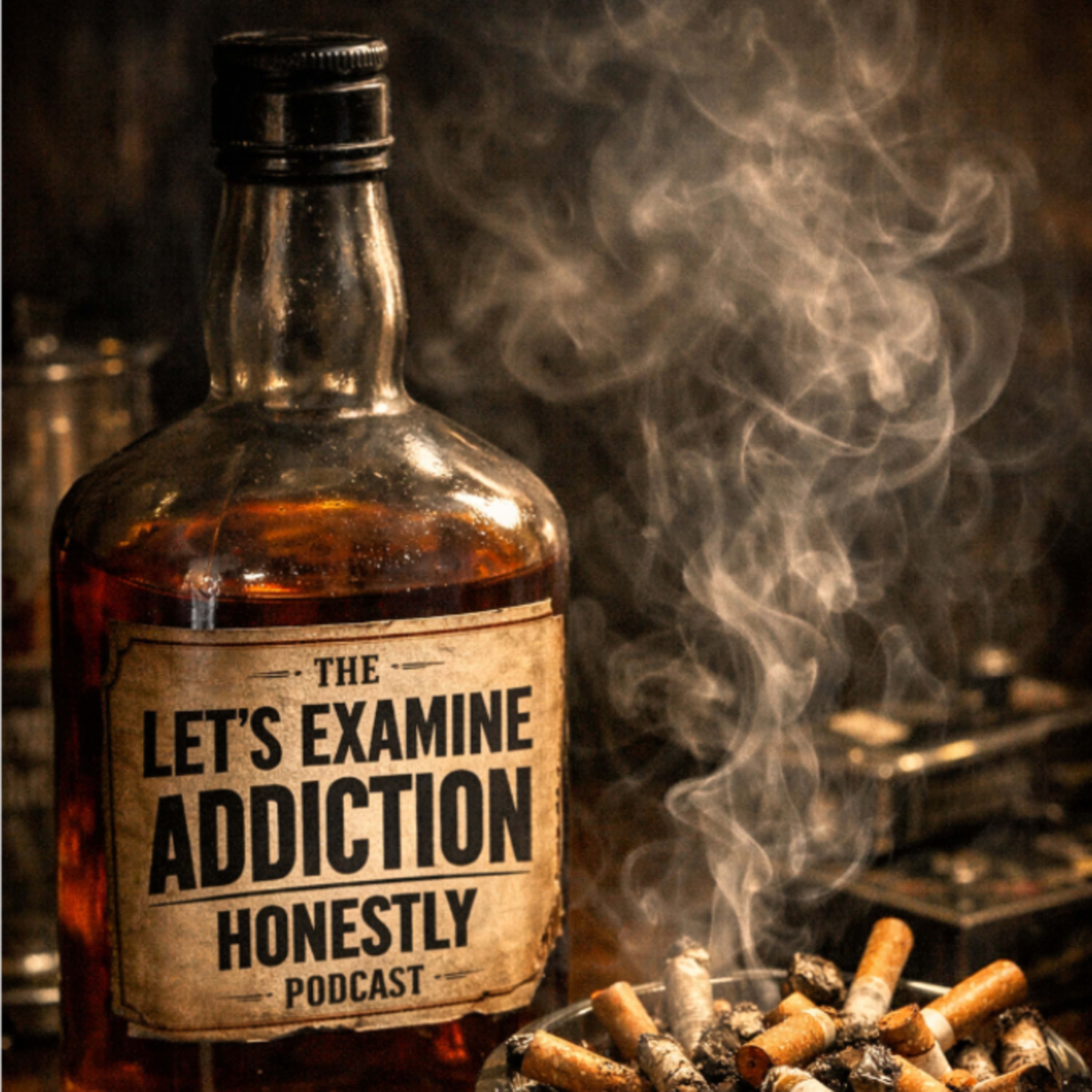
PODCAST · education
Let's Examine Addiction Honestly
by Charles Daily
A podcast that is going to start with my stories about alcohol and nicotine addiction before hopefully becoming a community based around helping others.
-
24
Starting to Stream on Twitch and Kick
Crisis Lifeline: Call/Text 988National Helpline 1-800-662-4357Veterans Crisis Line (dial 988 then press 1) National Domestic Violence Hotline (1-800-799-SAFE)[email protected][email protected] this announcement episode, I share that I’m expanding the podcast by starting live streams on Kik and Twitch to make the show more interactive and consistent. I explain that I’m still figuring out the best schedule, especially with camping season coming up and weekends becoming busy, so I’m asking regular listeners to reach out with times that work best for them. My goal is to create a space where listeners can suggest topics in real time, participate through chat, and join Q&A sessions after recordings, even if they’re not comfortable appearing as guests themselves. I also mention that these streaming channels will connect with my older Veteran Gaming brand, which already has a larger following than my podcasts.I also talk about why this shift matters to me personally. Streaming gives me a chance to connect directly with listeners, gather fresh ideas, and make the podcast feel less one-sided. I want the show to evolve into something more flexible and enjoyable rather than feeling like a second unpaid job, because if it stops being fun, it loses its purpose for me. While I’m still learning how to balance streaming and talking live, I see this as a way to improve both the podcast and my public speaking skills. Above all, I thank everyone who has been listening and supporting the podcast so far, because knowing people are tuning in is what keeps me motivated to continue creating new episodes.00:00 – Streaming Announcement00:20 – Scheduling Listener Input00:40 – Platform Details and Username Info01:03 – Interactive Topic Suggestions and Q&A01:30 – Improving Podcast Consistency01:49 – Future Stream Possibilities02:11 – Streaming Experience and Growth02:38 – Evolving the Podcast Format03:12 – Appreciation for Loyal Listeners03:35 – Closing Thanks and Feedback InvitationMy Podcast Serverhttps://discord.gg/9MSPwRG4pMy Patreonhttps://patreon.com/TheFosterDadDirective?utm_medium=unknown&utm_source=join_link&utm_campaign=creatorshare_creator&utm_content=copyLinkSocial MediaThe new episode is live! #addiction #addictionawareness #addictiontreatment #addictionhelp #leahpodcast
-
23
Veterans Affairs and Addiction
Crisis Lifeline: Call/Text 988National Helpline 1-800-662-4357Veterans Crisis Line (dial 988 then press 1) National Domestic Violence Hotline (1-800-799-SAFE)[email protected][email protected]In this episode, I talk about my personal experiences with the Veterans Affairs and how it relates to addiction, especially my attempts to get help for drinking before my DUI. Going in, I already had low expectations based on past experiences with anxiety treatment, being bounced between medications, and dealing with what I felt was poor care and dismissive attitudes. When I finally sought help for drinking, I did find some value in the group setting with other veterans, but that was short-lived. What really stuck with me was receiving paperwork asking me to essentially label myself as an alcoholic, which didn’t sit right and pushed me further away from trusting the system. Overall, my experiences felt inconsistent and frustrating, and I struggled to get meaningful support despite actively trying to improve my situation.I also reflect on how these experiences shaped my approach to managing addiction and mental health outside of the VA system. I share that I’ve had to look elsewhere for support, whether that’s through groups like Alcoholics Anonymous, connecting with other veterans in places like the American Legion, or just figuring things out on my own. While I acknowledge that my experience may not reflect every VA facility, it left me feeling like I needed to take responsibility for finding what actually works for me. I encourage others to do the same—whether that means trying different therapists, exploring alternative support systems, or simply refusing to settle when it comes to mental health and addiction recovery.00:00 – Introduction to VA Experience and Addiction00:45 – Early Frustrations with Anxiety Treatment01:30 – Seeking Help for Drinking Before DUI02:15 – Group Therapy with Other Veterans03:00 – Discomfort with “Alcoholic” Labeling04:00 – Loss of Trust in the VA System05:00 – Inconsistent Care and Lack of Support06:15 – Turning to Outside Support Systems07:15 – Personal Responsibility in Recovery08:15 – Encouragement to Find What Works IndividuallyMy Podcast Serverhttps://discord.gg/9MSPwRG4pMy Patreonhttps://patreon.com/TheFosterDadDirective?utm_medium=unknown&utm_source=join_link&utm_campaign=creatorshare_creator&utm_content=copyLinkSocial MediaThe new episode is live! #addiction #addictionawareness #addictiontreatment #addictionhelp #leahpodcast
-
22
AI, Chatbots, and Addiction
Crisis Lifeline: Call/Text 988National Helpline 1-800-662-4357Veterans Crisis Line (dial 988 then press 1) National Domestic Violence Hotline (1-800-799-SAFE)[email protected][email protected]In this episode, I explore the growing connection between AI chatbots and addiction, prompted by experiences I have had with foster children who became overly attached to chatbot interactions. I explain how I personally use AI in my podcasting process, emphasizing that I only rely on it for clerical tasks like thumbnails, summaries, timestamps, and transcriptions—not for research or informational content. I share my concerns about how AI is being integrated into nearly every platform and how easily it can create unhealthy emotional attachments, especially for vulnerable individuals or children who may not fully understand the difference between human relationships and artificial interaction. Drawing from articles and examples I have encountered, I discuss how chatbots can reinforce harmful behaviors, validate dangerous thought patterns, and reduce critical thinking when people begin depending on them too heavily.I also examine the warning signs of AI addiction, including excessive time spent interacting with chatbots, neglect of real-world responsibilities, emotional distress when unable to access AI, and withdrawal from family or hobbies. I reflect on how technology addiction already affects my own life, particularly with social media, and compare AI dependency to other addictive behaviors that exploit the brain’s reward systems. I warn about dangerous uses of AI such as deepfake sexual content, inappropriate avatar generation, and emotionally manipulative chatbot relationships that can distort reality and intensify mental health struggles. Throughout the episode, I encourage listeners to self-reflect, set boundaries like app limits, seek real human connection, and pursue professional help when needed, reminding them that addiction is not limited to substances and that meaningful change is always possible.00:01 – Introduction to AI Chatbots and Addiction00:50 – Disclaimer and Importance of Professional Help01:37 – How AI Is Used in Podcast Production04:41 – Warning Signs of AI and Chatbot Addiction05:47 – Emotional Attachment and False Reality Risks07:21 – Why Companies Push AI Into Everyday Platforms10:03 – Mental Health Dangers and Validation Loops12:10 – Behavioral Symptoms of AI Dependency14:40 – Deepfake Abuse and Ethical Dangers of AI Misuse16:30 – Steps to Reduce AI Dependence and Seek RecoveryMy Podcast Serverhttps://discord.gg/9MSPwRG4pMy Patreonhttps://patreon.com/TheFosterDadDirective?utm_medium=unknown&utm_source=join_link&utm_campaign=creatorshare_creator&utm_content=copyLink
-
21
Podcasting Consistency
Crisis Lifeline: Call/Text 988National Helpline 1-800-662-4357Veterans Crisis Line (dial 988 then press 1) National Domestic Violence Hotline (1-800-799-SAFE)[email protected][email protected]In this episode, I open up about my struggles with consistency in recording the podcast and how a lot of that comes from getting in my own head. I worry about whether the topics I’m covering are actually helpful or reaching anyone, which has caused me to take breaks at times. I talk about shifting the focus of the podcast a bit—moving from strictly foster parenting topics to more general fatherhood content—while still including my experiences as a foster dad. I also mention wanting to branch into other areas like recipes, practical parenting ideas, and even discussions around addiction, especially technology, which is something I personally deal with.I also explain my plan to improve consistency by recording episodes ahead of time, especially with upcoming camping trips and a busy schedule. I’m hoping to set more structured recording and streaming times with platforms like Twitch and Kick to hold myself accountable. At the end of the day, I emphasize that life and family come first, but I still want the podcast to be a helpful resource for both myself and others. I encourage listeners to reach out with feedback, ideas, or suggestions to help me stay on track and make the content more useful.00:00 — Intro & addressing listeners00:15 — Struggles with consistency & self-doubt00:35 — Expanding focus beyond foster dads00:55 — Learning parenting & sharing experiences01:05 — Covering addiction & technology topics01:15 — Planning ahead & recording in batches01:32 — Streaming plans (Twitch/Kick)01:53 — Balancing life vs. podcast priorities02:00 — Goal: helping others & sharing resources02:12 — Call for feedback & topic ideasMy Podcast Serverhttps://discord.gg/9MSPwRG4pMy Patreonhttps://patreon.com/TheFosterDadDirective?utm_medium=unknown&utm_source=join_link&utm_campaign=creatorshare_creator&utm_content=copyLink
-
20
Are Mocktails Safe For Alcoholics
Crisis Lifeline: Call/Text 988National Helpline 1-800-662-4357Veterans Crisis Line (dial 988 then press 1) National Domestic Violence Hotline (1-800-799-SAFE)[email protected][email protected]In this episode, I explore the question of whether mocktails and non-alcoholic alternatives are safe for people struggling with alcoholism. I talk about my own experiences with cutting back on drinking and why I started looking into non-alcoholic versions of drinks like Moscow Mules and Bloody Marys. I discuss the pros and cons of mocktails, non-alcoholic beer, and alcohol-free wine, and why some of these options might work for certain people but could also trigger cravings for others.I also go over what addiction specialists and recovery resources generally say about these alternatives, especially the risks of recreating drinking rituals or triggering old habits. From what I found, there’s no universal answer—it really depends on the person, their stage of sobriety, and their triggers. Ultimately, I share my perspective on staying cautious, focusing on healthier habits, and remembering that recovery and personal growth are always possible.00:00 — Intro: Are mocktails safe for alcoholics?00:24 — Disclaimer and putting safety first00:48 — My personal experience with alcohol and drinking limits01:28 — Why I started questioning mocktails and NA alternatives02:11 — Why nonalcoholic beer and wine do not appeal to me03:15 — Mocktails I actually use: Moscow Mules and Bloody Mary alternatives05:52 — Major risks: cravings, rituals, and relapse triggers08:00 — Social pressure, drinking culture, and feeling included10:31 — What most articles and recovery advice seem to say13:29 — Final thoughts: caution, self-awareness, and choosing what is safestMy Podcast Serverhttps://discord.gg/9MSPwRG4pMy Patreonhttps://patreon.com/TheFosterDadDirective?utm_medium=unknown&utm_source=join_link&utm_campaign=creatorshare_creator&utm_content=copyLink
-
19
Parenting and Addiction
Crisis Lifeline: Call/Text 988National Helpline 1-800-662-4357Veterans Crisis Line (dial 988 then press 1) National Domestic Violence Hotline (1-800-799-SAFE)[email protected][email protected]In this episode, I talk about parenting and addiction from both sides of the issue, as a foster parent and as the child of an alcoholic. I share some of my earliest memories of growing up with my dad’s drinking, the chaos that came with it, and why I’ve always tried to make sure kids come before alcohol in my own life. I also talk about how addiction affects children, not just emotionally, but through instability, neglect, and the kind of stress they carry for years.I also reflect on how addiction has impacted families I know personally, including children living in unsafe situations because of a parent’s substance use. I share why I’ve been trying to put more of my time into parenting, reading, and building better habits instead of drinking, and why I believe it’s never too late for a parent to start changing. My hope with this episode is to be honest about the damage addiction can do, while also encouraging people that growth, accountability, and becoming a better parent are still possible.00:00 — Introduction: Parenting and Addiction00:26 — Disclaimer: Personal Experiences, Not Professional Advice00:49 — Growing Up With an Alcoholic Parent01:42 — How My Childhood Shaped My Parenting Choices02:35 — Addiction’s Impact on Children03:25 — Frustrations With CPS and Family Enabling Addiction04:42 — Why Kids Often Pay the Price for Addiction05:01 — Reducing Alcohol and Focusing on Parenting06:20 — Limiting Technology and Social Media Use09:01 — Redemption: It’s Never Too Late to ChangeMy Podcast Serverhttps://discord.gg/9MSPwRG4pMy Patreonhttps://patreon.com/TheFosterDadDirective?utm_medium=unknown&utm_source=join_link&utm_campaign=creatorshare_creator&utm_content=copyLink
-
18
Addiction, Alcohol, and Consent
Crisis Lifeline: Call/Text 988National Helpline 1-800-662-4357Veterans Crisis Line (dial 988 then press 1) National Domestic Violence Hotline (1-800-799-SAFE)[email protected][email protected] this episode, I talk about the complicated topic of alcohol and consent and how intoxication affects a person’s ability to truly give consent. The discussion was sparked by a story I heard on another podcast where someone described being intentionally over-served alcohol by another person who wanted to hook up with them. It raised the question of when someone is actually able to consent and whether situations like that cross the line into taking advantage of someone.I share my thoughts on how consent becomes much more complex when alcohol or drugs are involved, why it’s always safer to assume someone who is heavily intoxicated cannot consent, and how the same standards should apply regardless of gender. I also touch on how addiction can complicate consent even further and why it’s important to approach situations like this with empathy, responsibility, and caution.00:00 — Intro: Alcohol, Addiction & Consent00:13 — Listener Story That Sparked the Topic01:11 — Video Recording, Editing & Podcast Format01:51 — Disclaimer & Importance of Speaking Up02:16 — What Consent Means & Why It’s Contextual03:03 — Signs Someone May Be Too Intoxicated to Consent03:31 — Prior Relationships Don’t Equal Consent04:16 — Personal Experiences With Intoxication & Boundaries05:18 — Addiction, Power Dynamics & Exploitation07:15 — Why It’s Always Safer to Assume No ConsentMy Podcast Serverhttps://discord.gg/9MSPwRG4pMy Patreonhttps://patreon.com/TheFosterDadDirective?utm_medium=unknown&utm_source=join_link&utm_campaign=creatorshare_creator&utm_content=copyLink
-
17
Alcohol, Memory Issues, and Alcohol Related Dementia
Crisis Lifeline: Call/Text 988National Helpline 1-800-662-4357Veterans Crisis Line (dial 988 then press 1) National Domestic Violence Hotline (1-800-799-SAFE)[email protected][email protected] this episode, I talk about the connection between alcohol use, memory problems, and alcohol-related dementia. This topic became personal for me after my grandfather passed away and my family believed he had alcohol-related dementia. It made me start looking into how alcohol affects memory, brain health, and long-term cognitive function, especially since I’ve noticed my own struggles with memory over the years.I explore how heavy alcohol use can lead to vitamin deficiencies, cognitive impairment, and conditions like Wernicke-Korsakoff syndrome. I also talk about why learning about these risks has been one of the biggest motivators for me to cut back on drinking and take better care of my health. Finally, I share a few things I’ve learned about how to support someone living with dementia and why patience and understanding matter so much when someone you love begins losing parts of themselves to the disease.00:00 — Intro: Alcohol, Memory Loss & Dementia00:21 — Disclaimer (Not Medical Advice)00:42 — Personal Motivation: Grandfather & Family History01:25 — Alcohol, Cognitive Function & Memory Loss02:23 — Alcohol-Related Dementia Explained03:28 — Symptoms & Real-World Impact of Dementia05:16 — Why Alcohol Became More of a Burden Than Enjoyment07:00 — Family Experiences With Alcohol & Aging09:13 — Wernicke-Korsakoff Syndrome & Risk Factors11:24 — Supporting Someone With Dementia & Final ThoughtsMy Podcast Serverhttps://discord.gg/9MSPwRG4pMy Patreonhttps://patreon.com/TheFosterDadDirective?utm_medium=unknown&utm_source=join_link&utm_campaign=creatorshare_creator&utm_content=copyLink
-
16
Alcohol Related Hunting Incident
Crisis Lifeline: Call/Text 988National Helpline 1-800-662-4357Veterans Crisis Line (dial 988 then press 1) National Domestic Violence Hotline (1-800-799-SAFE)[email protected][email protected] this episode, I share a story from my past about a hunting incident that happened while I was drinking during my early twenties while stationed at Fort Drum. What started as a reckless idea—mixing alcohol, firearms, and poor judgment—quickly turned into a serious situation involving law enforcement, fines, and license suspensions. Thankfully no one was hurt, but it remains one of the dumbest decisions I’ve ever made and a moment that still makes me reflect on the consequences of alcohol-fueled choices.I talk about what happened that day, the legal aftermath, and the lessons I took from it years later. Looking back, it’s one of many examples of how binge drinking shaped some of my worst decisions when I was younger. Even though it didn’t immediately change my behavior at the time, it eventually became one of those experiences that helped push me toward reevaluating my relationship with alcohol and the choices I make today.00:00 — Intro: Alcohol, Firearms & a Hunting Incident00:20 — Disclaimer (Not Professional Advice)00:42 — Army Life, Barracks Drinking & Tequila01:33 — The Bad Idea: Hunting From a Pickup Truck01:56 — Getting Pulled Over by Police & DNR02:43 — Court, Fines & Hunting License Ban03:59 — Reflecting on the Decision & Responsibility05:18 — Binge Drinking in My 20s & Regrets06:02 — Replacing Drinking With Healthier Habits07:15 — Lessons Learned & Listener StoriesMy Podcast Serverhttps://discord.gg/9MSPwRG4pMy Patreonhttps://patreon.com/TheFosterDadDirective?utm_medium=unknown&utm_source=join_link&utm_campaign=creatorshare_creator&utm_content=copyLink
-
15
Attempting to Re-Add Videos
Crisis Lifeline: Call/Text 988National Helpline 1-800-662-4357Veterans Crisis Line (dial 988 then press 1) National Domestic Violence Hotline (1-800-799-SAFE)[email protected][email protected]In this episode, I talk about experimenting with bringing video back into the podcast. For a long time I stuck to audio because I felt self-conscious recording when people were around or worrying about background noise, but I’m starting to feel more comfortable with the idea. I explain some of the differences between the audio and video versions, including why the audio tends to be more edited while the video will likely be more natural and uncut.I also share how video could help me show things visually—like books, devices, apps, or other resources I talk about on the podcast. It won’t be heavily edited, so it may not be for everyone, but if you enjoy that more authentic format I’d love to hear your feedback as I try expanding the podcast into video.00:00 — Intro: Recording for Both Podcasts00:21 — Editing Style & Breathing / Rhinitis Explanation00:44 — Why Audio Is More Edited Than Video01:01 — Benefits of Video: Showing Books, Phones & Screens01:32 — Raw Video Format & Limited Editing01:40 — Request for Feedback From Listeners01:45 — Appreciation for Listener Support & ClosingMy Podcast Serverhttps://discord.gg/9MSPwRG4pMy Patreonhttps://patreon.com/TheFosterDadDirective?utm_medium=unknown&utm_source=join_link&utm_campaign=creatorshare_creator&utm_content=copyLink
-
14
Dad's Child Custody Action Plan by David Pisarra Book Review
Crisis Lifeline: Call/Text 988National Helpline 1-800-662-4357Veterans Crisis Line (dial 988 then press 1) National Domestic Violence Hotline (1-800-799-SAFE)[email protected][email protected]:00 — Intro & Book Overview00:30 — Growing Up Around Custody Battles01:00 — Disclaimer (Legal & Medical Advice)01:23 — Author Background: David Pisarra02:06 — Reviews & Cost of Court System02:49 — Proving You’re a Good Parent03:30 — Judges, Courtroom Conduct & Lawyers04:14 — Evidence, Witnesses & Documentation05:24 — Overall Book Review07:18 — Final Thoughts & Listener FeedbackMy Podcast Serverhttps://discord.gg/9MSPwRG4pMy Patreonhttps://patreon.com/TheFosterDadDirective?utm_medium=unknown&utm_source=join_link&utm_campaign=creatorshare_creator&utm_content=copyLink
-
13
Patreon Episode
Crisis Lifeline: Call/Text 988National Helpline 1-800-662-4357Veterans Crisis Line (dial 988 then press 1) National Domestic Violence Hotline (1-800-799-SAFE)[email protected][email protected]My Podcast Serverhttps://discord.gg/9MSPwRG4pIn this episode, I explain the Patreon I’ve set up for the podcast and why it exists. There’s absolutely no obligation to sign up—this isn’t a money grab. I mainly created it as a place to store extra resources and audio files for both of my podcasts, and to keep things organized as they grow.If someone does choose to support it, the funds go directly back into the podcasts through things like audio software, equipment upgrades, books, training, and guest-related costs. My goal is simply to improve the quality of the show and make it a better resource, not to profit from it. As always, I appreciate you listening, and I’m grateful for any feedback you’re willing to share.00:00 — Intro + Why This Patreon Exists00:20 — Pricing Options ($5 each / $8 both) + No Obligation00:38 — What Support Goes Toward (Adobe Audition, Guests, Resources)00:56 — Books, Classes, Speech Improvement, Training01:17 — Not a Money Grab + Ad-Free / Resource Storage Intent01:27 — Feedback Invite + ClosingMy Patreonhttps://patreon.com/TheFosterDadDirective?utm_medium=unknown&utm_source=join_link&utm_campaign=creatorshare_creator&utm_content=copyLink
-
12
Grief and Bereavement Resources and Services
Crisis Lifeline: Call/Text 988National Helpline 1-800-662-4357Veterans Crisis Line (dial 988 then press 1) National Domestic Violence Hotline (1-800-799-SAFE)[email protected][email protected]My Podcast Serverhttps://discord.gg/9MSPwRG4pIn this episode, I share additional resources to go along with Episode 10, Losing Friends Through Sobriety. I highlight the Michigan-based website mi211.org/grief, which offers a wide range of grief and bereavement resources that can be especially helpful when you’re dealing with loss while trying to stay sober. The site covers everything from counseling and support groups to veteran services, substance use resources, crisis lines, and other life disruptions that often overlap with addiction and recovery.I also talk about the importance of exploring different kinds of support, including therapy, group settings, and alternative approaches like EMDR, art therapy, or music therapy. I know how overwhelming it can feel to search for help and not know where to start, which is why I wanted to share a resource that gathers many options in one place. This episode is about reminding you that you’re not alone, that help exists beyond substances, and that even during loss, there are healthier paths forward—and people who want to walk them with you.00:00 — What This Is: Episode 10 Resources Add-On + Where to Put It00:21 — Michigan Resource: mi211.org/grief (Grief + Bereavement Services)00:57 — What the Site Covers: Hospice, Burial, Veterans, Groups, Crisis Help01:23 — Therapy Plug: In-Person vs Virtual + Privacy Concerns01:39 — Support Groups Idea: Starting One at the American Legion01:59 — Why Groups Help: Better Fit Than 1-on-1 for You Sometimes02:20 — Mixed Therapy Experiences: What Worked / What Didn’t02:39 — “Try Different Kinds”: EMDR, CBT, Art/Music Therapy, Groups03:17 — Ask Listeners for More Resources + Use This as a Roadmap03:53 — Avoiding Google Overload: Why This Site Helps + Closing MessageMy Patreonhttps://patreon.com/TheFosterDadDirective?utm_medium=unknown&utm_source=join_link&utm_campaign=creatorshare_creator&utm_content=copyLink
-
11
Podcast Description Episode
Crisis Lifeline: Call/Text 988National Helpline 1-800-662-4357Veterans Crisis Line (dial 988 then press 1) National Domestic Violence Hotline (1-800-799-SAFE)[email protected][email protected]My Podcast Serverhttps://discord.gg/9MSPwRG4pIn this episode, I walk through how the description is structured and why I put crisis and support resources first, including national and veteran hotlines. Seeking help isn’t a weakness, and I want anyone who’s struggling to know that support is available and that reaching out matters.I also talk about the rest of the description layout, including how to contact the podcast, share feedback, use timestamps, and access additional resources. I explain the purpose of the Patreon as a low-pressure storage and resource hub rather than a requirement, where I hope to eventually organize books, links, and helpful programs in one place. My goal with both podcasts is to create a supportive, honest space that prioritizes mental health, resources, and real human connection.00:00 — Why This Episode Description Is Crafted The Way It Is00:19 — Personal Struggles & Consistency With The Show00:36 — Resources First: Crisis & Support Hotlines00:55 — Seeking Help Is Not Weak01:28 — Military & Law Enforcement Mental Health Stigma01:49 — The World Is Hard, Reach Out Anyway02:10 — Community Support, Email & Personal Outreach02:35 — Discord, Feedback & Listener Interaction03:10 — Episode Descriptions, Timestamps & Navigation03:36 — Patreon Purpose, Resources & Closing ThanksMy Patreonhttps://patreon.com/TheFosterDadDirective?utm_medium=unknown&utm_source=join_link&utm_campaign=creatorshare_creator&utm_content=copyLink
-
10
Losing friends through sobriety
Crisis Lifeline: Call/Text 988National Helpline 1-800-662-4357Veterans Crisis Line (dial 988 then press 1) National Domestic Violence Hotline (1-800-799-SAFE)[email protected][email protected]My Podcast Serverhttps://discord.gg/9MSPwRG4pIn this episode, I talk about how changing my relationship with alcohol—and moving toward sobriety—quietly cost me a lot of friendships. Even without being fully sober, drinking less and stepping away from partying exposed which relationships were real and which were built around convenience, alcohol, or using me. Using an article from DitchTheDrink.com as a guide, I reflect on several friendships that ended painfully, including one long-term friend who took advantage of me financially and emotionally. Losing those people hurt, but it also forced me to confront how unhealthy those relationships really were.I also share how watching friends fall deeper into addiction, especially when children were involved, pushed me toward fostering and toward a more purposeful life. While some friendships faded, others became stronger—particularly the few people who have always shown up for me without alcohol being involved. I talk honestly about how hard it is to make new sober friends, how volunteering has helped give me a sense of belonging, and how regret and guilt continue to shape my choices. This episode is messy and emotional, but it’s about accepting loss, protecting your growth, and believing that healthier connections are still possible—even if they come later.00:00 — Topic Setup: Losing Friends as You Change Your Life00:43 — Why You’re Using Articles Right Now + Disclaimer01:27 — Article: “What Nobody Tells You About Friends in Sobriety”02:11 — Friendship #1 (“Demon”): Old Friend, Addiction, Moving In03:18 — Being Used: Money, Alcohol, Games, Eviction, Insurance Threats07:52 — Friendship #2 (“Sam & Kay”): Drinking Days → Wreck → Harder Drugs10:08 — Loyalty vs Drinking Friends: Your Core Friends + Dad’s Losses14:13 — Their Kids + Why This Pushed You Toward Fostering15:03 — Isolation After Cutting Back: Missing the “People Who Get It”21:15 — New Sober Connections + AA Thoughts + Closing My Patreonhttps://patreon.com/TheFosterDadDirective?utm_medium=unknown&utm_source=join_link&utm_campaign=creatorshare_creator&utm_content=copyLink
-
9
Signs of Addiction
Crisis Lifeline: Call/Text 988National Helpline 1-800-662-4357Veterans Crisis Line (dial 988 then press 1)National Domestic Violence Hotline (1-800-799-SAFE)[email protected][email protected]In this episode, I talk about signs of addiction using an article focused on alcohol, while applying those same warning signs to other struggles I’ve dealt with, including nicotine and technology. I reflect on how addiction doesn’t always look like losing your job or falling apart—it can show up as using substances or screens to cope during downtime, stress, boredom, or emotional exhaustion. I share personal experiences from my time in the military and working in corrections, where drinking became routine, and how patterns like drinking to cope, spending more time recovering than living, and continuing despite consequences slowly wore me down.I also discuss how addiction impacts family, relationships, and self-respect, including missed time, guilt, unhealthy role modeling, and long-term regret—especially after my DUI. I walk through common red flags, the stages of recovery, and where I currently stand in that process, while being honest about my hesitation with medication and my desire to return to therapy. This episode isn’t about labels or shame—it’s about recognizing patterns early, being honest with yourself, and remembering that change is always possible, even one small step at a time.00:00 — Intro: Signs of Addiction & Why This Topic Matters00:29 — Technology, Phone Use & Modern Addiction01:27 — Disclaimer, Articles & Why I Use Them01:59 — Personal Reflection: Drinking, Presence & Regret02:23 — Functioning While Addicted & Daily Escape Habits03:26 — My Relationship With Alcohol & Ritual Drinking05:22 — Drinking, Recovery Time & Physical Consequences06:22 — Coping With Stress, Boredom & Emotions08:10 — DUI, Risk, Guilt & Turning Points13:43 — How Addiction Affects Family, Recovery Stages & Closing MessageMy Patreonhttps://patreon.com/TheFosterDadDirective?utm_medium=unknown&utm_source=join_link&utm_campaign=creatorshare_creator&utm_content=copyLink
-
8
Addiction and Grief
Crisis Lifeline: Call/Text 988National Helpline 1-800-662-4357Veterans Crisis Line (dial 988 then press 1)National Domestic Violence Hotline (1-800-799-SAFE)[email protected]@gmail.comIn this episode, I talk openly about the deep connection between grief and addiction, drawing from my own life experiences with loss and substance use. I share how my relationship with alcohol began after my great grandmother passed away in 2011, and how drinking became my way of avoiding the pain and regret of not being there when she died. I also reflect on the recent loss of my grandfather, the difficult decision not to visit him due to illness and logistics, and how—thankfully—I did not turn to alcohol this time. I discuss losing my dogs, the emotional weight of those losses, and how grief shows up in many forms, not just death. This episode is a raw look at how grief shaped my past drinking and how I’m trying to respond differently today.I also break down key insights from two major resources—the Hazelden Betty Ford Institute and The Addiction Center—about how grief can lead to addiction through avoidance, substance-based coping, replacing relationships with alcohol, and lacking healthy coping skills. I connect these concepts directly to my own struggles with alcohol, nicotine, impulsive behaviors, and emotional suppression learned from family and military culture. I explain how therapy, fitness, and creative outlets like podcasting have helped me build healthier coping skills, and why this podcast exists in the first place—to remind people that they are not alone and that change is possible. My goal isn’t fame or money, but to help even one person choose healing over self-destruction and to show that we are never obligated to stay the same person we were yesterday.00:00 — Intro, Addiction, Grief & Great Grandma’s Passing00:28 — Drinking Through Loss & Deep Regret01:56 — Grandpa’s Passing, Choosing Not to Drink03:36 — Family Drinking History & Health Decline04:57 — Stages of Grief & Loss of Dogs05:52 — Hazelden Betty Ford: Complicated Grief Defined07:02 — Why I Started the Podcast & Healthier Outlets08:09 — Nicotine Sobriety & Addictive Tendencies12:03 — Four Ways Grief Leads to Addiction16:27 — Learning Coping Skills, Recovery Goals & Closing MessageMy Patreonhttps://patreon.com/TheFosterDadDirective?utm_medium=unknown&utm_source=join_link&utm_campaign=creatorshare_creator&utm_content=copyLink
-
7
My Addiction To Alcohol
Crisis Lifeline: Call/Text 988National Helpline 1-800-662-4357Veterans Crisis Line (dial 988 then press 1) National Domestic Violence Hotline (1-800-799-SAFE)[email protected]@gmail.comIn this episode of Let’s Examine Addiction Honestly, I open up about my lifelong struggle with alcohol and how deeply it has shaped who I am. I talk about my first experiences drinking at 17, the influence of my friends and family, and how alcohol quickly became woven into my social life and identity.I share what it was like entering the Army, where drinking wasn’t just common—it was expected. I discuss the risky situations I put myself in, the embarrassing moments, the injuries, and the arrests that happened along the way. Looking back, I can clearly see how alcohol fueled so many of my bad decisions and strained relationships.After the military, my drinking only increased. I was frustrated with my career path, angry at myself, and disappointed in the person I felt I’d become. I also talk about the impact addiction had on my relationships, including the pain of losing a child because of someone else’s substance use—an experience that still affects me deeply.I also address my DUI, the consequences that followed, and the counseling that forced me to confront the truth about my behavior. For a long time, I didn’t like who I was, and alcohol was at the center of that.Now, I’m working to slow down my drinking and move toward a life without alcohol. This podcast is part of that journey. I want to be honest about my past, take responsibility for my choices, and create a space where others can feel safe sharing their own experiences.I end the episode reminding listeners that even if your past is messy or painful, you’re not alone. Change is real, and it’s possible—even if you have to rebuild your life piece by piece.00:00 — Introduction & PurposePodcast intro, disclaimer, and first memories of drinking/smoking.00:23 — First Experiences With AlcoholGraduation party, Army training, early drinking patterns.01:10 — Influence of Friends & FamilyHow friend groups and family drinking shaped early habits.02:13 — Siblings & Different PathsComparing drinking habits among siblings; early exposure.03:29 — Early Adult Drinking & RelationshipsFirst sexual experience, Army years, early relationship issues.04:33 — Alcohol-Related IncidentsInjuries, arrests, dangerous situations, and regrets.05:24 — Post-Military Drinking & DUITransition home, becoming dependent, self-resentment, career struggles.06:16 — Addiction, Parenting, and LossRelationship with addicted partner, DUI restrictions, losing a child.07:04 — Acknowledgment & AccountabilityOwning choices, recognizing alcohol’s role, shifting mindset.07:51 — Recovery Goals & ClosingSlowing down, desire to quit fully, invitations for listener engagement.
-
6
History of Alcohol, Crime, and Punishment
Crisis Lifeline: Call/Text 988National Helpline 1-800-662-4357letsexamineaddictionhonestly@[email protected] this episode of Let’s Examine Addiction Honestly, I explore both my personal relationship with alcohol and the broader history behind it. I talk about how addiction has followed me throughout my life—drinking, smoking, technology—and how this podcast serves as an honest audio journal while I try to understand why I’ve relied on these habits for so long. I trace alcohol’s origins from ancient civilizations to the development of stronger distilled spirits, and I discuss how cultures have used it for religion, medicine, trade, and daily life. Along the way, I reflect on how alcohol shaped early America, the rise of distillation, why some religions ban alcohol, and how inconsistent historical sources make it hard to pin down a single truth. I also share how psychedelics helped reduce my drinking and why I don’t recommend that path for everyone.From there, I shift into the connection between alcohol and crime, especially drunk driving. I cover the evolution of DUI laws, early breath-testing devices, and how groups like Mothers Against Drunk Driving pushed for safer roads after preventable tragedies. I share statistics about alcohol-related violence and crime, talk about how DUI punishments have become harsher over time, and reflect on my own DUI—what I regret, what I learned, and how the system often feels more like punishment than treatment. Ultimately, I end the episode by encouraging listeners to reach out, share their stories, and remember that recovery isn’t about perfection. Even one sober day is something to be proud of, and none of us have to stay the person we were five minutes ago.00:00 – Intro & PurposeOpening the episode and explaining the podcast’s focus on addiction and personal reflection.00:12 – Personal Addiction BackgroundTechnology, drinking, smoking, and the feeling of isolation.01:27 – Episode Theme: Alcohol, Crime & HistorySetting up the discussion and goals for the episode.01:54 – Origins of AlcoholAncient fermentation, accidental discovery, early cultural use.03:34 – Rise of Stronger AlcoholDistillation, freezing methods, increased potency, and risks.06:15 – Alcohol’s Social RoleMedicine, sanitation, naval use, and everyday drinking.09:48 – Religion & AlcoholHow major religions restrict or incorporate alcohol.10:47 – Drinking in Early AmericaEarly habits, stigma, and personal reflections on drinking as social lubrication.12:08 – Prohibition & CrimeIllicit alcohol, dangerous manufacturing, and unintended consequences.17:02 – Alcohol & Modern CrimeDUI history, statistics, MADD/SADD, and evolving legal penalties.
-
5
My Addiction To Nicotine
Crisis Lifeline: Call/Text 988National Helpline [email protected][email protected] this episode of Let’s Examine Addiction Honestly, I open up about my 15-year struggle with nicotine—from the first cigarette I accepted after Army training to the years of smoking, dipping, and eventually vaping that followed. I talk about how smoking became a social habit in the military, fueled by stress, downtime, camaraderie, and drinking. I share the embarrassing and funny moments, the long drives where cigarettes kept me company, and how deeply nicotine wove itself into every part of my daily life. Even after countless attempts to quit for my health, family, or finances, I always slipped back into the habit, especially when alcohol or other smokers were around.I then explain how I eventually quit—not through traditional methods, but surprisingly through a mix of vaping and carefully guided psychedelic experiences in Ann Arbor, which helped me rethink my habits, confront emotions, and detach from cravings. I describe the physical recovery process, the mucus and breathing issues, and how life slowly improved once I finally stopped. I encourage listeners to share their stories, reach out for support, and remember that relapse doesn’t erase progress. Quitting nicotine freed up my life and gave me hope that I can tackle other addictions too, and I want others to know they aren’t alone, they deserve second chances, and they’re capable of change one day at a time.00:00 — Introduction & DisclaimerOpening the episode, explaining the focus on nicotine addiction.00:13 — My First CigaretteFirst experience after Army training and how it began.01:11 — Smoking in the MilitaryLearning to inhale, smoke pits, bonding, and deployment habits.02:47 — Smoking as Social & Emotional CopingHow smoking paired with talking, drinking, and stress relief.03:41 — Alcohol & Nicotine ConnectionWhy drinking fueled cravings and relapse concerns.05:57 — Years of Trying to QuitFailed attempts, switching between smoking and dipping.07:24 — Vaping & Psychedelics as Turning PointsQuitting cigarettes, exploring psychedelics, mental breakthroughs.09:25 — The Moment I Finally QuitThrowing out the vape, reduced cravings, emotional clarity.11:00 — Health Improvements After QuittingLung recovery, mucus clearing, increased energy, lifestyle changes.13:42 — Encouragement, Support & Closing MessageReaching out, community support, second chances, and self-compassion.
-
4
Tobacco, Nicotine, and Addiction
Crisis Lifeline: Call/Text 988National Helpline 1-800-662-4357letsexamineaddictionhonestly@[email protected] this episode of Let’s Examine Addiction Honestly, I dive into the basics of tobacco and nicotine addiction—from cigarettes to vapes—and what I found while researching what’s actually inside these products. I talk about the hundreds of chemicals in cigarettes, many of them toxic or carcinogenic, and how nicotine affects the body in both the short and long term. I explore tobacco’s history, from sacred Native American rituals to European misuse to wartime normalization, and how its cultural presence changed once health risks became impossible to ignore. I also break down the physical dangers of nicotine, from increased heart rate and nausea to cancer, emphysema, COPD, stroke, and fertility issues. Even vapes, which many see as “safer,” can drastically increase addiction because of how easy and continuous they are to use.I also share how smoking becomes tied to daily life—through social habits, stress relief, family exposure, media influence, and drinking—and why quitting is so incredibly difficult. I discuss the many methods people try, from cold turkey to patches to vapes to hypnotherapy, and how withdrawal brings irritability, cravings, anxiety, and sugar rushes. I encourage listeners to share the strangest, best, or worst quitting strategies they’ve tried and remind anyone considering smoking not to start. Even though I regret the 16 years I spent addicted, I focus on staying smoke-free today and helping others feel less alone in their struggles. The next episode dives deeper into my personal connection to nicotine, but here I simply want to inform, support, and remind everyone that the person you are today doesn’t have to be the person you are tomorrow.00:00 — Introduction & Episode OverviewIntroducing the topic: tobacco, nicotine, vapes, and research findings.00:27 — Disclaimer & My Smoking BackgroundMedical disclaimer; smoking for 16 years and its link to drinking.01:21 — Why Nicotine Is So AddictiveAvailability, variety, and cultural normalization (coffee + cigarettes).01:51 — What’s Actually in Cigarettes600 ingredients, 4,000+ chemicals, carcinogens, toxins, radioactive elements.03:12 — Tobacco’s Cultural & Historical RootsNative American traditions, European spread, “curative” uses, wartime normalization.04:55 — Decline in Smoking & Media RestrictionsSurgeon General warnings, ad bans, cultural shift away from smoking imagery.06:25 — Short- & Long-Term Health EffectsImmediate effects (BP, heart rate, nausea); long-term risks (cancer, COPD, stroke).09:10 — Early Exposure & Smoking CultureFamily influence, candy cigarettes, smoking bans, casinos, media portrayals.11:48 — Quitting Attempts & WithdrawalCold turkey, vapes, patches; irritability, cravings, anxiety, sugar rushes.14:29 — Final Thoughts, Warnings & Listener EngagementWhy not to start smoking, regrets, staying vigilant, inviting listener stories.
-
3
What is Addiction?
Crisis Lifeline: Call/Text 988National Helpline 1-800-662-4357letsexamineaddictionhonestly@[email protected] this introductory episode of Let’s Examine Addiction Honestly, I set the stage for the entire podcast by exploring what addiction actually is, how it develops, and how it has shaped my own life. I talk about researching reputable sources like the American Addiction Centers and the National Institute on Drug Abuse, and how eye-opening it was to learn that addiction is a chronic, relapsing brain disorder that rewires the systems responsible for reward, stress, and self-control. Even though these definitions seem obvious once you read them, they weren’t obvious while I was actively drinking or smoking. I explain how behaviors like drinking alone, smoking socially, or reaching for a substance without thought are tied to deep biological and environmental factors—genetics, stress, trauma, peer pressure, and early exposure. I also discuss how addiction affects judgment, maturity, and decision-making, helping me understand many of the bad choices I made in my teens and twenties.I also outline my goals for this podcast: to explore different addictions such as nicotine, alcohol, caffeine, technology, and more; to be open about the mistakes I’ve made; and to connect with others who have struggled. I share my desire to examine not only the scientific side of addiction but also the emotional and social side—how addiction impacts families, friendships, identity, and self-worth. I invite listeners to send in their stories, ideas, and experiences so this podcast can become a supportive community where people learn from one another and feel less alone. Ultimately, I close by reminding myself and others that no matter how far we’ve fallen, we are not defined by our past. We can repair what we’ve broken, grow from our worst moments, and choose to be a better version of ourselves—because, as I quote at the end, we are under no obligation to remain the person we were five minutes ago.00:00 — Opening & Podcast IntroductionIntroducing the show and setting up the topic of addiction.00:13 — Overview of Upcoming EpisodesExplaining the structure: informational episodes followed by personal stories.01:06 — Disclaimer & Purpose of the PodcastClarifying that you're not a professional and the podcast is for connection and information.01:30 — Defining Addiction (What It Really Is)Reading definitions from medical sources and relating them to your own experiences.02:32 — How Addiction Shows Up in Daily LifeDiscussing compulsive behaviors like drinking during gaming or social discomfort.03:24 — Addiction as a Brain DisorderExploring how addiction affects brain circuits, risk, reward, and self-control.04:32 — Preventable, Treatable, Not CurableTalking about relapse risks, triggers, and lifelong management.05:38 — Causes of Addiction (Biology & Environment)Genetics, family history, social influences, stress, early exposure.09:22 — Why People Use (Feel Good, Feel Better, Do Better, Belong)Breaking down motivations like dopamine, anxiety relief, curiosity, peer pressure.12:51 — Future Podcast Goals & Final ThoughtsOutlining topics you'll cover, inviting listener stories, and closing with encouragement.
-
2
Host Introduction
Crisis Lifeline: Call/Text 988National Helpline 1-800-662-4357letsexamineaddictionhonestly@[email protected] this introductory episode of Let’s Examine Addiction Honestly, I share my personal history with addiction and the experiences that shaped who I am today. I talk about growing up in a family with a strong history of alcoholism, my first drink at 17, and how drinking truly took hold when I joined the Army. I explain how I never developed an “off switch” with alcohol — how even early on I drank until I was sick, and how drinking became a major part of military life, from barracks parties to reckless moments during deployments. I also discuss my long struggle with nicotine, smoking from age 18 until recently, cycling through cigarettes, dipping, and vaping before finally quitting for myself and not for others. I share how the environments I worked in, like the military and later the prison system, were deeply tied to stress and alcohol culture, and how those pressures shaped my choices, my habits, and in some cases, my deepest regrets.I also open up about the legal trouble I’ve faced, including a hunting-related alcohol incident in the military and a DUI in 2017 that forced me to confront my drinking more seriously. I talk about the challenges I’ve had seeking help through the VA and mental health facilities, especially when treatment felt like prescriptions rather than real support. While I’m not fully sober today, I explain how far I’ve come, how much my drinking has decreased, and how determined I am not to fall back into old patterns — for my safety, my future, and the people I love. Finally, I invite listeners to join me on this journey, share their stories, and help create a judgment-free community where people at any stage of recovery can feel supported. I remind anyone struggling that setbacks don’t erase progress, change is always possible, and we are never obligated to remain the same person we were five minutes ago.00:00 — Introduction & Purpose of the EpisodeWelcoming listeners and explaining that this episode covers your personal history and what future podcasts will explore.00:25 — Family Background & First Experiences With AlcoholGrowing up around alcohol, first drink at 17, and early attitudes toward drinking.00:43 — Early Drinking Habits & Lack of an “Off Switch”Entering the Army, drinking heavily, and recognizing lifelong issues with binge patterns.01:55 — Smoking History & Struggles With NicotineStarting at 18, 16 years of addiction, switching methods, and eventually quitting.03:05 — Life in the Army & Alcohol CultureDeployments, drinking traditions, barracks culture, irresponsible behavior, and biggest regrets.05:21 — Post-Military Life & High-Stress CareersWorking in corrections, heavy drinking culture, grief, burnout, and losing coworkers.09:11 — Legal Troubles & ConsequencesThe 2010 hunting incident, 2017 DUI, treatment attempts, and issues with medication-based help.11:20 — Current State of Sobriety & Ongoing ChallengesReduced drinking, fears of relapse, memory issues, and the difficulty of balancing progress with pressure.12:32 — Building Community & The Purpose of This PodcastWelcoming listeners at any stage of sobriety, rejecting shame, and inviting shared stories.13:46 — Final Encouragement & Closing MessageReminding listeners of self-worth, resilience, and the power of small steps; Alan Watts quote.
-
1
Podcast Introduction
Crisis Lifeline: Call/Text 988National Helpline 1-800-662-4357letsexamineaddictionhonestly@[email protected] this episode of Let’s Examine Addiction Honestly, I share my vision for what I hope this podcast will grow into—a supportive, judgment-free space where people can learn about addiction, connect through shared experiences, and access helpful resources. I explain that I want the show to become a hub for information and personal stories, not just from my life but from listeners who have faced addiction themselves or watched someone they love struggle. I talk about creating episodes that cover both the research side of addiction and the emotional, lived-experience side. As the podcast evolves, I hope to welcome guests, explore different perspectives, improve the show’s format, and possibly find a co-host to help bring new conversations, ideas, and resources to the community.I also outline the topics I’ll be discussing in upcoming episodes, beginning with my own struggles with nicotine, alcohol, and technology, along with the tools and insights that helped me make progress—even if I’m not fully sober today. I talk about offering brief histories of substances, the harmful effects they cause, and then pairing those episodes with personal stories of relapse, growth, and hard-won victories. Above all, I emphasize that this podcast is meant to be inclusive: whether someone is actively using, newly sober, or years into recovery, they will always be welcome here without judgment. I close by reminding listeners that small victories deserve celebration, that setbacks don’t erase progress, and that—as Alan Watts said—we are never obligated to remain the same person we were five minutes ago.00:00 — Introduction & PurposeWelcome message, goals for the podcast, and standard medical disclaimer.00:21 — Hopes for the PodcastCreating a hub for resources, shared stories, connections, and community support.00:52 — Evolving the Podcast FormatAdapting the structure, gathering feedback, considering guests and a potential co-host.01:28 — Addiction Topics You’ll Cover (Smoking)Beginning with your nicotine history, struggles quitting, and over a year smoke-free.02:10 — Addiction Topics You’ll Cover (Alcohol)Sharing your alcohol journey, functioning alcoholism, reduction in drinking, and support for listeners in any stage.03:03 — Addiction Topics You’ll Cover (Technology)Discussing phone and social media addiction and strategies you're exploring to manage it.03:20 — Structure of Upcoming EpisodesOverview episodes on substances followed by personal stories, relapses, and attempts to stay sober.03:58 — Sharing Family History & Personal StoriesAlcoholism in your family, lessons learned, and celebrating progress rather than shame.04:35 — Emphasizing Community & InclusivityEveryone is welcome regardless of addiction type, sobriety length, or setbacks—small victories matter.05:16 — Final Thoughts & Listener InvitationInviting feedback, stories, and potential co-hosts; encouraging listeners with Alan Watts’ quote.
We're indexing this podcast's transcripts for the first time — this can take a minute or two. We'll show results as soon as they're ready.
No matches for "" in this podcast's transcripts.
No topics indexed yet for this podcast.
Loading reviews...
ABOUT THIS SHOW
A podcast that is going to start with my stories about alcohol and nicotine addiction before hopefully becoming a community based around helping others.
HOSTED BY
Charles Daily
CATEGORIES
Loading similar podcasts...
Frequently Asked Questions
How many episodes does Let's Examine Addiction Honestly have?
Let's Examine Addiction Honestly currently has 24 episodes available on PodParley. New episodes are automatically indexed when they're published to the podcast feed.
What is Let's Examine Addiction Honestly about?
A podcast that is going to start with my stories about alcohol and nicotine addiction before hopefully becoming a community based around helping others.
How often does Let's Examine Addiction Honestly release new episodes?
Let's Examine Addiction Honestly has 24 episodes. Check the episode list to see recent publication dates and frequency.
Where can I listen to Let's Examine Addiction Honestly?
You can listen to Let's Examine Addiction Honestly on PodParley by clicking any episode. We provide an embedded audio player for direct listening, and you can also subscribe via your preferred podcast app using the RSS feed.
Who hosts Let's Examine Addiction Honestly?
Let's Examine Addiction Honestly is created and hosted by Charles Daily.
URL copied to clipboard!