
PODCAST · business
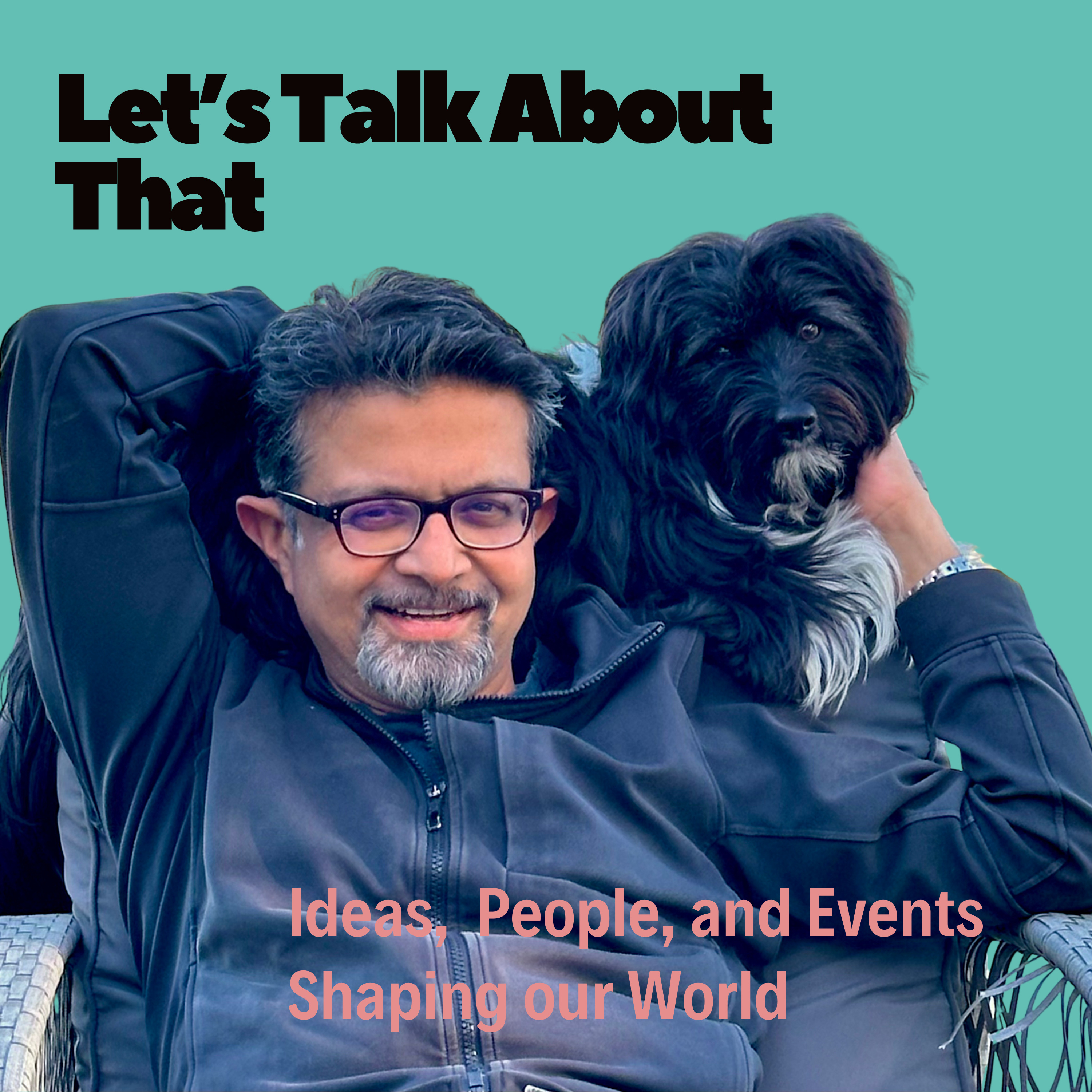
Let’s Talk About That
by Anirvan Ghosh
Let’s Talk About That is a podcast about the ideas, discoveries, and people shaping our world.Hosted by neuroscientist and biotech leader Anirvan Ghosh, the show features thoughtful, wide-ranging conversations with scientists, entrepreneurs, artists, and changemakers. Each episode goes beyond titles and headlines to explore the curiosity, setbacks, and convictions that drive meaningful work and discovery. Let’s Talk About That invites guests to step outside their comfort zones and engage in candid, curious dialogue.Join us for engaging conversations about science, society, and purpose.
-
30
S2E14 Mariam Khayretdinova: Decoding Depression – From Trial-and-Error to Precision Treatments
In this episode of Let’s Talk About That, Anirvan Ghosh speaks with Mariam Khayretdinova, - neuroscientist, data scientist, founder of Brainify.AI, and author of ‘Decoding Despair: How AI Is Reshaping Psychiatry’ - about rethinking how we understand and treat depression—one of the most widespread and complex illnesses of our time.Mariam’s journey into mental health began with her own lived experience. Growing up with undiagnosed depression in a culture where mental illness was stigmatized and poorly understood, she spent years navigating symptoms without a framework for what she was experiencing or how to seek help. That experience now informs her work at the intersection of neuroscience, data science, and artificial intelligence. In the conversation, Mariam explains why psychiatry still relies heavily on subjective, symptom-based diagnoses, and why current treatments often follow a trial-and-error approach that can take months—or years—to find something that works.She outlines a new vision: using large-scale biological, behavioral, and digital data to uncover objective biomarkers of mental illness and move toward truly personalized care. From EEG-based models to AI-driven early detection tools, Mariam explores how advances in data and computation could transform psychiatry into a more precise and predictive discipline, leading to better outcomes for patients.
-
29
S2E13 Aaron Roodman: Dark Matter, Dark Energy, and Mapping the Cosmos
In this episode of Let’s Talk About That, Anirvan Ghosh speaks with Stanford Professor Aaron Roodman, about some of the deepest mysteries in the universe: dark matter, dark energy, and the architecture of the cosmos.The conversation begins with a deceptively simple question: what is matter? From there, Aaron walks through the fundamental particles that make up the visible universe before stepping into the far stranger territory of dark matter—an invisible form of mass that shapes galaxies and outweighs ordinary matter by roughly five to one—and dark energy, the mysterious property of space that appears to be driving the accelerating expansion of the universe. A major focus of the episode is the Vera C. Rubin Observatory, one of the most ambitious scientific instruments ever built. Aaron describes how the Rubin Observatory and its extraordinary LSST camera will map billions of galaxies over a decade, offering an unprecedented window into the visible and invisible structure and evolution of the cosmos (Aaron led the team that built the LSST, largest digital camera ever constructed for astronomy) . Supporting links of interest:https://rubinobservatory.orghttps://rubinobservatory.org/news/rubin-first-lookhttps://rubinobservatory.org/gallery
-
28
S2E12 Dennis Selkoe: Changing the Course of Alzheimer’s Disease
In this episode of Let’s Talk About That, Anirvan Ghosh speaks with Dennis Selkoe, one of the scientists whose work helped define the modern understanding of Alzheimer’s disease—and laid the foundation for the first treatments that can alter its course.For decades, Alzheimer’s was viewed as an inexorable disease with no meaningful way to intervene. Dennis helped change that. The conversation traces the arc from the earliest pathological clues—amyloid plaques and tau tangles—to the molecular discoveries that transformed Alzheimer’s from a mysterious clinical syndrome into a biologically tractable disease. Dennis also brings the perspective of a practicing neurologist, describing what it is like to diagnose and care for patients as memory, reasoning, and identity begin to slip away. From biomarkers and early detection to anti-amyloid antibodies, tau targeted therapies, and the possibility of prevention, this conversation explores how far the field has come—and what may lie just ahead. It is remarkable that we now have two FDA approveddisease-modifying anti-amyloid therapies for Alzheimer's Disease on the market — Leqembi (lecanemab) and Kisunla (donanemab) — and it is only the beginning of new medicines that will be available to us in the coming decade.
-
27
S2E11 Gabriela Ochoa: Saving Sharks, Protecting Reefs, and Sustaining Coastal Communities
In this episode of Let’s Talk About That, Anirvan Ghosh speaks with Gabriela “Gaby” Ochoa, an energetic and passionate marine conservation leader and founder of Ilili, about what it really takes to protect sharks—and the coastal communities whose lives are intertwined with them.Gaby’s path began far from the ocean, growing up in Honduras with a love of animals and biology. What followed was an unexpected journey through turtle conservation, coral reef restoration, and eventually into one of the most complex conservation challenges in Central America: shark and ray protection in La Mosquitia, where marine ecosystems, indigenous communities, and local livelihoods are deeply connected. The conversation explores why sharks matter ecologically, why their populations are in steep decline, and why conservation cannot succeed without understanding the people behind the fishery. Gaby shares how Ilili combines field science, fisheries monitoring, policy advocacy, public education, and trust-building with local communities to create a more durable model for conservation. An engaging conversation about sharks, systems, and the kind of leadership required to protect both biodiversity and human dignity.
-
26
S2E10 Sam Blackman: The Quest to Develop Medicines for Children with Brain Cancer
In this episode of Let’s Talk About That, Anirvan Ghosh speaks with Sam Blackman—pediatric neuro-oncologist, biotech founder, and storyteller—about the patients who shaped his life’s work and his search for a cure for children with brain cancer.As a physician caring for children with brain tumors, Sam witnessed firsthand the limits of existing treatments—and the urgency felt by families facing devastating diagnoses. That experience became a driving force behind his decision to help build a different kind of biotech company: one focused not on adapting adult drugs for children, but on developing therapies specifically for them.That vision led to the creation of Day One Biopharmaceuticals and ultimately to the development of tovorafenib, a targeted therapy approved in 2024 for children with low-grade glioma, the most common form of pediatric brain cancer.This is a conversation about compassion as a catalyst for innovation—and how one doctor’s commitment to his patients helped turn unmet need into a new medicine.
-
25
S2E9 Tracy Dixon-Salazar: A Mother’s Journey to Reveal the Science of her Daughter’s Epilepsy
In this episode of Let’s Talk About That, Anirvan Ghosh speaks with Tracy Dixon-Salazar—neuroscientist, geneticist, and one of the most powerful advocates working to transform how we understand severe childhood epilepsy.Tracy’s journey began as a mother. When her daughter Savannah was two and a half, she began having unexplained seizures that eventually developed into Lennox-Gastaut syndrome (LGS)—a rare and devastating form of childhood epilepsy marked by multiple seizure types, developmental challenges, and a high risk of premature death. Determined to understand what was happening to her child, Tracy returned to school, eventually earning a PhD in neuroscience. Her scientific training helped uncover the genetic mechanisms underlying Savannah’s epilepsy and led to a precision-medicine insight that dramatically reduced her daughter’s seizures—giving Tracy a decade in which she could truly reconnect with her child.Today, Tracy serves as Executive Director of the Lennox-Gastaut Syndrome Foundation, where she is pushing the field to move beyond symptom control toward treating epilepsy at its biological roots.This conversation explores the intersection of science and lived experience—and how one mother’s determination is reshaping the future of rare disease research.
-
24
S2E8 Arya Singh: The Human Story Behind a Medical Breakthrough
In this episode of Let’s Talk About That, Anirvan Ghosh speaks with Arya Singh, a rare disease advocate, researcher, and policy leader whose life story intersects with one of the most remarkable transformations in modern genetic medicine.Arya was diagnosed at 18 months with spinal muscular atrophy (SMA)—a devastating neuromuscular disease that, until recently, was the leading genetic cause of death in infants. At the time, there were no treatments and little hope. What followed was a race against time: Arya’s parents helped launch the SMA Foundation, building the scientific collaborations that ultimately enabled the development of multiple life-changing therapies. Arya herself became one of the earliest participants in the clinical trials that led to those breakthroughs—receiving the first antisense therapy for SMA and later transitioning to an oral treatment that transformed her strength, stamina, and independence. In this conversation, Arya reflects on growing up inside a revolution in medicine, the courage required to participate in experimental trials as a child, and how scientific progress reshaped her future.Now pursuing a PhD in population health sciences at Weill Cornell, Arya is working to ensure that the lessons of SMA—about science, advocacy, and policy—continue to drive progress for patients with rare diseases around the world.
-
23
S2E7 Rafi Silver: Mindfulness in Performance and in Life
In this episode of Let’s Talk About That, Anirvan Ghosh sits down with Rafi Silver—actor, writer, and mindfulness teacher—for a wide-ranging conversation about performance, presence, and what it truly means to be “in the moment.”Many will recognize Rafi from Amazon’s Fallout and roles in shows such as Law & Order: Organized Crime and FBI: Most Wanted. But beyond being an actor, he is the founder of Peak Mind Performance and a faculty member at Columbia University’s MFA Acting Program, where he integrates mindfulness, neuroscience, and performance psychology.The conversation begins with a formative childhood moment on Broadway that ignited his love of acting—and unfolds into a deeper exploration of flow, self-consciousness, and the discipline of attention. Rafi explains mindfulness not as a retreat from life, but as a practice of bringing attention to the present moment without bias or judgment. He connects Buddhist philosophy to acting craft, elite athletics, and everyday life challenging the idea that performance is about control, and suggesting instead that it is about being fully present at the moment and allowing the self to disappear. Additional information on Rafi's Mindfulness Performance Training at https://www.peakmindperformance.com/
-
22
S2E6 Frank Bennett: Turning RNA Targeting into Lifesaving Medicines
In this episode of Let’s Talk About That, Anirvan Ghosh speaks with Frank Bennett, Executive Vice President and Chief Scientific Officer at Ionis Pharmaceuticals, and a founding architect of antisense oligonucleotide (ASO) therapeutics—one of the technologies that launched modern genetic medicine.For more than three decades, Frank has worked to turn the idea of targeting RNA into real medicines. At the center of the discussion is the discovery and development of nusinersen (Spinraza), the first approved therapy for spinal muscular atrophy (SMA)—a devastating genetic disease that destroys motor neurons, leads to progressive paralysis, and in its most severe form often claims the lives of infants before age two. For decades, there were no disease-modifying treatments.Frank explains how understanding RNA splicing unlocked a strategy to restore SMN protein production—and how early clinical data revealed something extraordinary: children gaining motor function once thought permanently lost.The episode also explores other diseases that can be targeted by ASOs and why Frank believes we are just at the beginning of what RNA-targeted medicines can achieve.
-
21
S2E5 Garen Staglin: Changing the Course of Mental Illness through Philanthropy and Partnerships
In this episode of Let’s Talk About That, Anirvan Ghosh speaks with Garen Staglin, a leader who has brought together personal experience, philanthropy, and investment to fundamentally change how we approach mental health.Garen’s journey into brain health advocacy began in 1990, after his son Brandon experienced a psychotic break and was diagnosed with schizophrenia. What followed was not withdrawal or silence, but action. Together with his wife Shari, Garen chose to confront stigma head-on—transforming their family’s experience into a sustained effort to accelerate research, improve early diagnosis, and build systems that help people live full, productive lives.The conversation explores the creation and evolution of One Mind, which has raised more than $700 million to support collaborative neuroscience research, early-career scientists, and large-scale initiatives focused on schizophrenia, PTSD, and traumatic brain injury. Garen explains how early detection can dramatically alter outcomes in schizophrenia, why collaboration and data-sharing are essential for progress, and how philanthropy can catalyze NIH funding and industry engagement.We also discuss the intersection of mental health and biotech—why investment has lagged despite enormous unmet need, how One Mind’s accelerator has helped launch dozens of companies, and why Garen believes brain health represents the largest untapped opportunity in medicine today.
-
20
S2E4 Jason Coloma: Focus and Conviction in Building a Modern Biotech
In this episode of Let’sTalk About That, Anirvan Ghosh speaks with Jason Coloma, CEO of Maze Therapeutics, about what it really takes to build a biotech company at the intersection of human genetics, precision medicine, and long-term value creation.Jason brings a rare end-to-end perspective—spanning big pharma, venture creation, and public company leadership. The conversation traces how Maze was conceived at Third Rock Ventures around a simple but powerful idea: move beyond statistical genetic associations and use human genetics to deeply understand disease biology, identify protective variants, and design medicines that mimic nature’s own experiments.Using kidney disease as a central case study, Jason explains how Maze translates genetic risk and protective variants into concrete drug targets—and why this approach may finally unlock progress in complex, common diseases that have resisted traditional drug discovery. The discussion also explores the realities of company building: choosing focus over breadth, making hard portfolio decisions in capital-constrained markets, partnering and spinning out programs, and navigating board and investor dynamics.Jason reflects candidly on leadership under uncertainty, the challenges of going public in a volatile biotech market, and why clarity of vision matters more than consensus in leading a new company.
-
19
S2E3 Monica Coenraads: The Fight to Cure Rett Syndrome
In this episode of Let’s Talk About That, Anirvan Ghosh speaks with Monica Coenraads, a transformative leader in the raredisease community whose work has reshaped the field of Rett syndrome, a severe neurodevelopmental disorder.Monica’s journey began as a parent, after her daughter Chelsea was diagnosed with Rett syndrome at a time when little was known about the disease and the causative gene, MECP2,had not yet been identified. Faced with limited answers and no treatments, Monica set out to understand the science—and soon recognized the need for a new, research-driven model.She went on to found the Rett Syndrome Research Trust (RSRT),raising more than $125 million to accelerate rigorous, collaborative science. A pivotal moment came in 2007, when research funded by RSRT demonstrated that restoring MECP2 in animal models could reverse Rett symptoms—even later in life—fundamentally changing how the disease was understood.In this conversation, Monica describes how RSRT built globalresearch consortia, catalyzed gene therapy programs now in the clinic, and is advancing next-generation approaches to cure Rett Syndrome. It is a powerful story about resilience, scientific focus, and how determined leadership can turn a devastating diagnosis into a credible path toward cures.
-
18
S2E2 Gilmore O'Neill: Rethinking Medicine in the Age of Gene Editing
In this episode of Let’s Talk About That, Anirvan Ghosh is joined by Gilmore O’Neill, President and CEO of Editas Medicine, for an in-depth conversation at the frontier of genetic medicine, neuroscience, and biotech leadership.Gilmore traces his journey from clinical neurology at Mass General to a career in biopharma driven by frustration with the lack of effective treatments for devastating neurological diseases. He reflects on formative years at Biogen, where first-principles thinking—deep attention to human biology, PK/PD, and disease pathology—helped enable breakthroughs such as Spinraza for spinal muscular atrophy and transformative therapies in multiple sclerosis.The discussion then turns to the rise of genetic medicines, from antisense oligonucleotides to gene therapy and, ultimately, gene editing. Gilmore offers a clear, accessible explanation of how CRISPR-based in vivo gene editing differs from traditional gene delivery—and why Editas is focused on single-dose, durable therapies that can be delivered with minimal healthcare infrastructure.A major focus is Editas’s lead program targeting LDL cholesterol, where in vivo gene editing has shown unprecedented reductions in LDL levels in preclinical models. Gilmore outlines the scientific rationale, the public health implications of treating common diseases with genetic medicines, and what it will take to translate this technology safely into humans.A thoughtful conversation on innovation, rigor, and reimagining medicine beyond chronic treatment.
-
17
S2E1 Andreas Wallnoefer: Why Most Drugs Fail—and What It Takes to Beat the Odds
In this episode of Let’s Talk About That, Anirvan Ghosh speaks with Andreas Wallnoefer, whose career spans the full arc of drug development—from early clinical research to senior R&D leadership at Roche, and later to venture investing and biotech board roles.Andreas reflects on more than 25 years in big pharma, where he helped shape early translational medicine and confronted one of the field’s enduring challenges: why clinical success rates remain low despite enormous advances in science, biomarkers, and technology. He shares lessons from pioneering early human pharmacology, the importance of truly understanding mechanism of action, and why many drugs fail when commercial priorities override biology.The conversation then turns to Andreas’s transition from Roche to venture capital and company building, including insights from launching and scaling early-stage biotechs. Using the EyeBio story as a case study, he explains why small, focused teams with strong leadership, disciplined decision-making, and aligned investors can often move faster—and succeed more often—than large organizations.Looking ahead, Andreas discusses the types of companies and technologies that excite him today, from gene therapy and neurology to immunology and ophthalmology. Throughout the discussion, a clear theme emerges: breakthrough medicines require not just great science, but courage, persistence, and leaders willing to challenge conventional wisdom.
-
16
S1E16 Anirvan Ghosh: Season 1 wrap-up
Host Anirvan Ghosh reflects on Season 1 of 'Let's Talk About That', highlighting themes around leadership, science and society, and our shared experiences as a nation of immigrants
-
15
S1E15 Dr. Carla Shatz: Brain Waves and Brain Wiring
Dr. Carla Shatz is one of the most influential neuroscientists of our time, whose work has fundamentally shaped our understanding of brain development and plasticity. She is the Sapp Family Provostial Professor of Biology and Neurobiology at Stanford University, a member of the National Academy of Sciences, and recipient of the Kavli Prize in Neuroscience.In this episode, Carla sits down with Anirvan (who worked with her as a graduate student) to talk about her scientific journey, the work from her lab that revealed how early patterns of neural activity sculpt brain circuits during critical periods of development, and the surprising discovery that the developing brain uses spontaneous waves of activity—even before birth—to refine its wiring. She also discusses how that investigation revealed an unexpected connection between the immune and nervous systems, and how an immune protein, PirB, plays a role in sculpting developing neural circuits. Remarkably, PirB can bind to beta-amyloid in an adult brain, suggesting an unexpected link with Alzheimer's disease and potential therapeutic strategies.
-
14
S1E14 Scott Illingworth: Borders and Belonging - The American Immigrant Experience
Scott Illingworth is a director, educator, and creative force who bridges theatre and social engagement. Much of his work focuses on new and adapted works that bring urgent human stories to the stage. In this conversation, Scott sits down with Anirvan to discuss his work in capturing immigrant stories through the Verbatim Salon, a monthly event in New York City where actors perform real stories from people navigating the U.S. immigration system. He shares insights into the collaborative process of theater-making, the importance of storytelling in understanding the immigrant experience, and the emotional depth of the narratives presented. The stories we hear of immigrants speaking of their experiences - an muslim woman who escaped conflict in Afghanistan, a central American man who came over as a young child, and a Ukrainian woman who came to the U.S. after the Russian invasion, highlight the complexities of identity and belonging, emphasizing the need for empathy and understanding in addressing immigration issues in America.
-
13
S1E13 Dr. Arshad Khanani: Pioneering New Treatments for Retinal Disease and Vision Loss
In this episode, Dr. Arshad Khanani sits down with Anirvan Ghosh to talk about vision loss and what we can do to slow or alter the course of disease. Dr. Khanani, is one of the world’s leading innovators in retinal disease research and treatment. He is Managing Partner and Director of Clinical Research at Sierra Eye Associates, as well as a Clinical Professor at the University of Nevada, Reno School of Medicine. He has served as principal investigator in over 150 clinical trials and has pioneered first-in-human surgical procedures for sustained drug delivery and gene therapy.In this wide-ranging conversation Dr. Khanani discusses eye diseases that lead to progressive vision loss, the importance of early detection in diseases that affect the retina such as age-related macular degeneration (AMD), diabetic eye disease, and Geographic Atrophy, and treatment options that can alter disease trajectory. He also discusses recent advances in the field, such as gene therapy, that could fundamentally change the way retinal diseases are treated in the future.
-
12
S1E12 Liz Terrazas: Being Mexican-American at a Time of Immigration Enforcement
Liz Terrazas is teacher who has recently become engaged in issues of community safety, immigrant rights, and grassroots activism. She grew up in a Mexican-American family in Colorado—her father is from Chihuahua, Mexico, and her mother from Durango, Colorado. After earning her BA in Criminology and Criminal Justice with a minor in Anthropology from Northern Arizona University in 2015, Liz returned to work as a teacher in the Four Corners region of Colorado and New Mexico.In recent months the Immigration and Customs Enforcement, or ICE—an agency responsible for enforcing immigration laws, conducting deportations, and investigating cross-border crimes, has been particularly active. In response to questions around immigration enforcement, Liz started a grassroots effort to educate community members about their rights, legal protections, and available resources. In this podcast Liz talks to Anirvan about growing up in a Mexican-American community, how immigration enforcement is shaping life in small-town America, and the ways communities are organizing to stay informed and safe.
-
11
S1E11 Dr. Elora Lopez-Nandam: Restoring Coral Reefs Through Science and Conservation
Dr. Elora López-Nandam is a young evolutionary biologist and a Forbes 30 under 30 honoree, whose work spans the ecology, evolution, and conservation of marine ecosystems. Her work has ranged from studying the sustainability of sea cucumber fisheries in Fiji, to the mysteries of coral bleaching in American Samoa, and how we can restore coral populations. Now, at the California Academy of Sciences, she combines cutting-edge genomics with hands-on aquarium husbandry to guide how we can better steward and reintroduce vulnerable marine life. In this conversation with Anirvan Ghosh, she talks about the biology and diversity of corals, their role in sustaining marine ecosystems, and how they are being decimated by rising ocean temperatures. She also discusses the fascinating and groundbreaking work she and her colleagues are doing to grow coral in labs and reintroducing them into the oceans to restore coral populations
-
10
S1E10 Dr. Randy Schekman: Making Fundamental Discoveries in Science and Medicine
Dr. Randy Schekman is a Nobel Laureate and Professor of Molecular and Cell Biology at the University of California, Berkeley, as well as an Investigator of the Howard Hughes Medical Institute. Dr. Schekman's discoveries on the mechanisms by which proteins are trafficked to different parts of the cell are in every cell and molecular biology textbook and earned him the Nobel Prize in Physiology or Medicine in 2013, which he shared withJames Rothman and Thomas Südhof. Beyond his laboratory research, he has been passionate about access to scientific research —serving as Editor-in-Chief of PNAS and founding editor of eLife, helping to redefine peer review and scientific publishing. In this episode Dr. Schekman discusses the fundamental discoveries in his lab that have shaped our understanding of how cells work, the importance of making research openly and freely available, and recent insights from Parkinson's Disease research on how risk mutations can lead to the death of neurons and disease progression.
-
9
S1E9 Dr. D. Sangeeta: Optimizing Talent Development for Individual and Organizational Success
Dr. D. Sangeeta is the founder and CEO of Gotara, a global business and leadership accelerator that is redefining how individuals in corporate settings can increase their impact and transform their careers. Her platform now serves more than 33,000 members across the globe, offering confidential,24/7 guidance from experienced leaders—and is helping companies understand the value of talent development and close the persistent gender gap in science and technology. In this conversation, Sangeeta sits down with Anirvan to discuss her professional journey from starting out as a bench scientist, and going on to executive roles at GE, Amazon, and Nielsen and what she has learned about unlocking individual potential. We learn how her experiences shaped her mission to eliminate the structural and everyday hurdles that hold back talented individuals in corporate settings, and how her company Gotara is working with individuals and companies to enable that transformation.
-
8
S1E8 Dr. Sophie Kornowski: Leadership and Partnerships in Bringing New Medicines to Patients
Dr. Sophie Kornowski is a BioPharma leader, strategist, and global dealmaker whose career spans senior leadership positions at Merck and Roche, a healthcare investor with Gurnet PointCapital, and CEO at Boston Pharmaceuticals. She has helped shape the partnerships behind some of the most successful therapies in recent years. Here she sits down with Anirvan Ghosh to discuss her leadership journey and how science, business, and partnerships converge to enable the development of new and transformative medicines.
-
7
S1E7 Dr. Bob Datta: New Discoveries in Alzheimer's Disease Biology and the Risks we Face
Dr. Sandeep “Bob” Datta is a Professor of Neurobiology at Harvard Medical School whose work blends neuroscience, behavior, and machine learning to decode how the brain controls behavior. Here he sits down with Anirvan Ghosh to discuss the fascinating series of discoveries that led to the identification of MS4A6D as a critical protein that regulates the spread of Tau pathology, a major driver of Alzheimer's disease. He goes on to candidly discuss how recent decisions on federal research funding at Harvard led to a sudden termination of his research grants, and how that is threatening promising research on a devastating disease that affects millions of people around the globe.
-
6
S1E6 Remy Reya: Navigating Social Justice with Empathy
Remy Reya is a young Jewish-Indian-American leader who is passionate about social justice. Here he sits down with Anirvan to talk about his Jewish and Indian ancestry and how that has informed his identity and sense of belonging. Remy shares his views on the importance of approaching disparate complex challenges such as the Israeli-Palestinian conflict and homelessness in American cities with empathy to create a more just and caring society. He also touches on his recent work on how the emergence of AI can be a force of positive change in the world.
-
5
S1E5 Dr. Katie Travis: Nurturing Brain Development
Dr. Katie Travis is a developmental cognitive neuroscientist whose research focuses on improving outcomes for some of the most vulnerable among us: children born preterm. Here she sits down with Anirvan Ghosh to discuss how early life experiences—everything from a baby’s first sensory encounters to complex medical interventions—shape the developing brain and influence long-term outcomes. She also discusses the critical importance of sustained federal funding and being able to recruit the best people from around the world to drive this work forward, and the threat it is facing today.
-
4
S1E4 Mike Robbins: Building Engaged, High Performing Teams
Mike Robbins is a leadership coach and the author of five books, including Bring Your Whole Self to Work and We’re All inThis Together. He’s an expert on team performance andcompany culture, and his keynotes and seminars have inspired audiences around the world. Here he sits down with Anirvan to discuss teams as being the foundational units of organizations, and what makes a great team. Mike draws on his experiences working with companies like Google and Microsoft to highlight the importance of creating an environment of psychological safety and fostering healthy debate in getting teams to click, be engaged, and deliver great results.
-
3
S1E3 Dr. Chris Mihos: Galaxies, Gravity, and the Birth of Stars
Dr. Chris Mihos sits down with Anirvan Ghosh to discuss his work exploring the mysteries of the universe from galaxy evolution to the birth of stars, and how astronomical observations driven by curiosity were foundational to Newton's insights into gravity and the laws of motion. These discoveries in turn have been critical for the success of our space program and inform the rockets we are designing today to travel to Mars some day.
-
2
S1E2 Dr. Craig Montell: The Unexpected Path to Studying Sex and Drugs in Mosquitoes
Distinguished scientist and UCSB professor Dr. Craig Montell sits down with Anirvan Ghosh to discuss his journey from growing up poor in New York and then in a Bay Area commune to becoming a successful microbiologist and geneticist. They discuss how research on fruit flies revolutionized genetics, and the work Dr. Montell is doing to engineer sterile mosquitoes to reduce the prevalence of pathogenic mosquitoes that lead to millions of deaths each year. They also discuss the cuts to federal research grants that threaten America's scientific leadership.
-
1
S1E1 Joanna Kirke: Leading with Positive Intelligence
Joanna Kirke is an executive coach and thought leader who blends neuroscience, design thinking, and emotional intelligence to help leaders lead with courage and authenticity. Here she sits down with Anirvan to share her own leadership journey and discusses how leaning into positive intelligence can elevate our growth as leaders.
We're indexing this podcast's transcripts for the first time — this can take a minute or two. We'll show results as soon as they're ready.
No matches for "" in this podcast's transcripts.
No topics indexed yet for this podcast.
Loading reviews...
ABOUT THIS SHOW
Let’s Talk About That is a podcast about the ideas, discoveries, and people shaping our world.Hosted by neuroscientist and biotech leader Anirvan Ghosh, the show features thoughtful, wide-ranging conversations with scientists, entrepreneurs, artists, and changemakers. Each episode goes beyond titles and headlines to explore the curiosity, setbacks, and convictions that drive meaningful work and discovery. Let’s Talk About That invites guests to step outside their comfort zones and engage in candid, curious dialogue.Join us for engaging conversations about science, society, and purpose.
HOSTED BY
Anirvan Ghosh
CATEGORIES
Loading similar podcasts...
URL copied to clipboard!