
PODCAST · technology
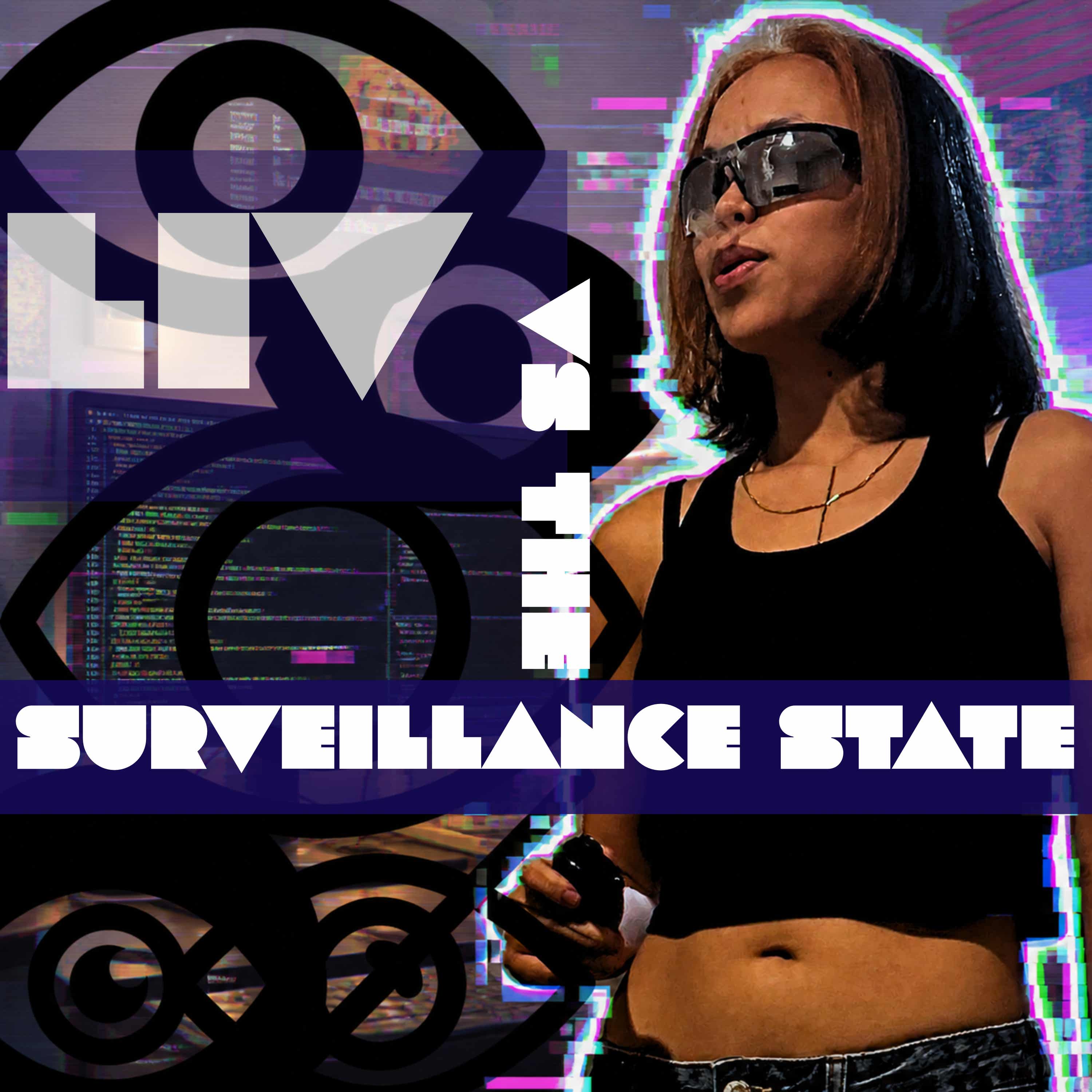
Liv vs. the Surveillance State
The audio diary of a madwoman living inside the social surveillance state. thesurveillancestate.substack.com
-
7
The future of my surveillance state documentation
After four episodes of exploration, it's time for me to reflect on how I’m going to keep doing this moving forward. Plus: mapping out future topics on AI, opting out of digital systems, and public transport surveillance.What even is this podcast?Welcome back if you've been here since episode one. It's been a couple weeks since I uploaded anything because I've been really busy with strategising for the career and job hunting and all that. I thought I'd put more focus on that than this since I've already got a few episodes out. But I'm back now and I wanted to do this meta-episode about what this podcast actually is.Before I get into it, graceThis is the part of the episode where I say one thing I’m grateful for about technology or digital life before I start complaining about it. It’s a new ritual to ground myself and remember that it’s not all bad, even though I’m about to spend the next 20 or so minutes talking about how it kind of is.So today I’m really grateful for the fact that our phones have audio recordings. Voice memos on the iPhone and stuff. Mobile phones, just this audio recording feature. I know it’s a feature that’s been on our phones for years now but I feel it’s just one of those things that we sometimes take for granted because it’s always been there. I forget that we can do this. I don’t really use it as much or optimise it. I use it just for ideas but that’s it.I remember when I was younger in the 90s we had cassettes, cassette tapes, audio tape recorders if anyone else remembers them. I would use them to record some of the music, the songs I’ve written to remember them. One time I used mine for an assignment at school and I interviewed a teacher for some kind of report or something. And the way you would use it is you have to rewind the tape back manually and pause and rewind, and you have to find the exact spot you want it to be in just so you can then either record over it or manually transcribe the speech in it. Obviously back then we didn’t have automatic speech detection yet or the function to just automatically listen to it and all of a sudden it transcribes it.And it’s funny, I didn’t realise until last week when I was looking at some of the old voice recordings on my phone that the iPhone voice memo already automatically transcribes it. You don’t even have to press transcribe or anything and I was holy crap that’s actually so handy. I’m gonna use that from now on. Even just a few years ago when I was working in research, we would pay someone hundreds of dollars just to transcribe focus group audio. And now we can just input it in any software or website and a lot of them are free and it would just generate the transcription within a couple minutes. The thing with that is that at least a human can hear when there’s different voices in a focus group. A human transcriber can hear it and say oh that’s speaker one and that’s speaker two. A lot of the software and stuff we have now don’t have that function. They just kind of transcribe it in a flat manner. But yeah that used to be the workflow. It’s flat for now but I bet it’s gonna get better in the next few years.And while you’re doing the repetitive play, pause, rewind, play, pause, fast forward, pause, play, stop, the whole shebang, you’re also hoping and praying that the tape inside doesn’t get damaged with all that movement. Especially when you’re trying to pause and rewind really quickly. That happens a lot actually. I fucked up one of my Spice Girls cassette tapes because I was just rewinding and playing the same songs over and over again. It would do it in a lot of the mixtapes I would do when I was trying to record at a very specific point after a specific song to remix it and stuff. It would make the tape fully unplayable after that and it just sounded like one of those songs that are played backwards. It sounds like satanic chanting messages. That Hotel California played backwards or Beyoncé played backwards. Illuminati as fuck. That whole music industry conspiracy theory era that we millennials lived through in the 2010s.The tape mechanism was really prone to damage which is one of the reasons why I’m not so fond of physical media these days. I know it’s really popular these days. Everyone’s trying to be analogue and quirky and shit. But I feel people who say that don’t really know the struggle. If you say you’re into it, it means you don’t actually know the logistics and the functions around it. Because if you did, then you wouldn’t be into it.So having these audio recorders and voice memo apps is something that’s been really handy and that I’m grateful for. I just hit record with any 30 second song or lyric idea I have. I would just sing it or play it out loud and then I can just open up any other device on either my phone or my laptop or whatever and it’s just there. So I’m really grateful for this little invention that’s just this expected convenience that we have these days now that we often overlook.What I want this podcast to look likeAfter a few weeks and posting four episodes out initially, it was a good time to step back and just kind of do an episode that’s meta. I haven’t figured out everything that I want to do yet but I know that this is going to be a podcast where I talk through my days in my life through the lens of tech and the surveillance state and digital life. In the way that people vlog their lives through fashion, what they wore in a day, or some people document their life online through their fitness journey. They’ll talk about the movies they went to see and the parties and the travel, but it always circles around their workout for the day or what they ate in a day or what they wore in a day. I think my one will be that but through the lens of technology I guess.Quick thing before I get into all of that. You can find this podcast on Apple Podcasts on the channel 54. And the written versions of these are on the Substack. It’s not per word transcription. I try to convert it into a bloggable type thing where I take out bits and pieces and just get into the topic. So if you are listening from Apple Podcasts or another podcast app, you can find me on the Substack. Just two spots. Very simple. Podcast, blog. Apple Podcasts, Substack. That’s it. You don’t have to follow me anywhere else. I’m not asking you to find me on seven different platforms.So if you are also struggling with this whole digital ambivalence thing and you can’t quite quit social media and you just want to scale back or you don’t really have anyone to talk to about that, you can just hear me talk about it.What this is notThis is more of a documented podcast thing. It’s not going to be educational content. I’m not a tech expert. I don’t work in tech. I don’t have a computer science degree. I did my master’s in political science on necropolitics which is about death and power and politics I guess, and not about digital privacy or surveillance technology. So I’m not qualified to teach anyone anything about how to protect your privacy online or how encryption works or whatever. If you want that there are much better resources out there from people who actually know what they’re talking about.I am coming at this podcast not as a tutorial series. I can’t give you step-by-step guides on how to delete your Facebook or how to set up a VPN. I don’t think I’m at a point where I’m gonna do an episode like five ways to achieve digital minimalism or whatever. This is not going to be that kind of audio series podcast type thing.But in saying that, even though I say I want to document things, this is also not journalism. When I say things like in the last episode I was talking about the Bunnings biometric data collection thing or people having to make their social media public for visa applications, I’m not saying breaking news. I’m not going to do investigative reporting. Unless it goes that way, I don’t know. This is an audio series where I just process things for myself that I’ve experienced. I’m not here to research things. Oh you know what, actually I love researching just for a hobby so maybe I do. Maybe I do find some things out and I just repeat it on here.What this actually isThis is going to be an audio diary. It’s going to be me processing my thoughts out loud about digital life and social media and the surveillance state and all the things that come with existing in the modern world as someone who didn’t grow up with smartphones. Well do you count growing up without smartphones when smartphones came out after I was a teenager. I think I got my first smartphone when I was 20 or 21. Does that count. But anyway I can’t imagine life without them now obviously.I would like to use this series as a platform to work things out in my head. And so I’m using journal prompts in the first few episodes to structure my rambles, just like the Two Truths and a Lie game. And that was from a Pinterest infographic about journal prompts and it helped me organise my thoughts without making them too rigid. And the grace ritual at the beginning of each episode where I say one thing I’m grateful for before I start complaining, that is also a grounding practice to remind myself that it’s not all bad. It’s not all completely bad. It’s just that there are trade-offs now in this modern world that we have to, we don’t really have a choice in opting out of or opting in of because we want to be here. We want to be present. Unless I am going to decide that I’m going to go off grid and live in the bushes which is not really me, which is not really my life.I have a lot more questions than I do answers. And I don't know if any one sector will have answers to the questions I ask.When I’m curious about why do we stalk people on social media, why do we stalk our exes or our old high school teacher and stuff like that, a tech expert will not be able to completely answer that. Maybe a psychologist could but then a psychologist could also not completely answer that. So this is just millennial ambivalence in real time.If you are like me, you also have a lot more questions than answers. And you want to hear someone go through this as well. And you’re also not on social media but you also want to somewhat keep in touch. You can just listen to this audio series that I’ve got going on. Because I feel this is content that I wish existed. Is there another show like this already that I’m missing out on that’s not on social media or YouTube. Anyway, I feel there’s not enough real people, real voices, real non-experts voices on processing this stuff.You might have noticed that everything out there is either tech tutorials for people who want to go completely off-grid or academic think pieces or tech bros about surveillance capitalism or influencer content about digital wellness routines. And there’s not, in the audio space, I’m not talking about TikTok and stuff, there’s not a lot of spaces for just regular people documenting their life, working through things. I feel like as soon as you jump in the podcast world, you better know what you’re talking about. You better know your life as an expert of whatever you’re going through. Whereas if you’re on TikTok or Instagram or Facebook, you can document your journey towards doing something, but there’s not really enough of this in the audio space.And on some level this is building a record of this era. In 20 years what are we going to think about how we lived in 2025 and 2026. What are we going to think about the fact that we have just all accepted having devices in our pockets that track our every movement and conversations. So this audio series is a documentation of what it feels like, what it felt like to be me right now, 34 year old living through the surveillance state. Even if no one’s listening as of this moment, maybe someone will stumble across this in a hundred years. Or maybe just in a few months. But yeah. If you are listening from a hundred years from now, this is what people were thinking back then.Branching out beyond surveillanceI’ve been thinking about where this series is going. And I think it’s going to branch out from just the surveillance thing. I know that’s the main seed of it, the surveillance state, because that’s what triggered this whole thing in me for years. But it has a lot of overlaps and intersections with just general technology and technological infrastructure we have in this world. So I’m going to think about all the other things that overlap with that which is not just going to be social media surveillance. It’s a whole technological ecosystem we exist within.And I’ve been trying to map out some topic ideas for future episodes so I thought I’d share those with you now. These are just seeds of thoughts right now, just my little ideas. Each of these probably deserves its own full episodes with full R&D but for now I just want to plant them and think about them in my head for a little bit.Topic seed one: AI in creative industriesThis is my one boundary with AI. This is my one thing. I don’t really care if you use AI to write a super fucking boring report on Excel. That’s fine. I don’t care about your spreadsheet. Use AI for God’s sake. Don’t use the precious human hours for that. But for me, AI, the boundary is with art and human ethical decisions. And that’s where I draw the line.And I’ve been thinking about that quite a bit and how the blur is happening with the digitisation of the whole processes and methods of creating art and music. Because all the software we use now to edit and work on our art, unless you’re a physical painter I guess, I’m talking about video editing and music editing and stuff like that, they will eventually all be integrated with some kind of AI function. Even if it’s not actually AI, they will call it AI. You know how my friend has a rice cooker that says it’s AI. It’s not AI. All it does is weigh the thing and then check the temperature. But because there’s no regulation on what you can label AI or not, they called it AI so it can sell more.So whatever software or tools we use to create things digitally, because there is no regulation on what they can call AI or not, even if it’s not and it’s still labelled that, we then have to give a disclaimer saying oh this was, AI was used in this even if we fucking didn’t use it. Even if the whole thing, the words and the music and the notes and the everything and the musicality, the instrumentation is all ours, as soon as we put it on the software that claims it has AI or it does actually have AI and that’s just how it edits things, we now have to claim that there is. Anyway that’s a whole thing that I’m worried about. I don’t know. That’s far into the future. Or the future of music is just live music so you can physically see and hear people playing music. I don’t know. Anyway that’s a whole thing that I’ve been thinking about. I can go on about that for ages so I’m going to marinate my thoughts on that and organise my thoughts on that.Topic seed two: Can’t opt out of digitisationThe second topic seed I was thinking about is how none of us are really able to opt out of the digitisation of things. I think I mentioned this just a little bit before. And I want to use banking for an example. Can you imagine, I don’t know if this was a hundred years ago actually, but when people were just banking manually. Going to physical banks, putting the physical cash and money in that piece of paper for a check. And all of a sudden online banking and digital banking started becoming a thing. And some people would be really against it or really sceptical of it. Even if you were morally, ethically against the centralisation of the financial system in your country or the whole world or whatever that is. You have no option really unless you go and live in the bushes.If you want to have a job, they are not going to give you a check to cash. They’re not going to give you cash. They will ask for your banking information and digitally transfer your money and that’s that. And you can’t opt out of that. And so you have to give your whole life’s information to a bank and now the bank knows fucking everything about you and that’s that. You can’t opt out of it. This is the world we’re living in.Topic seed three: Public transport as surveillance and controlThe third topic I was thinking about, which is honestly a little bit random but I just thought about it, is public transport. Public transport as surveillance and control. And I guess I was thinking about this because I was a little bit reflecting on my time, my experience working in local government. And I was one of the governors and the decision makers for an area of 100,000 residents, 100,000 people. And one of the things I would think about is how the people in the decision making seats are able to surveil and control the way human populations move.Whether it’s a small area of just a little hundred thousand people or less or a huge city, anyone who controls the public transport system or any mobility system, human mobility system controls the way their human population goes about and does things and moves. And there’s this paradox where some people say cars give us independence. But then when there’s a journey you can’t use cars for, you’re no longer independent. You’re dependent on public transport. And others say public transport offers independence for people who cannot or do not wish to drive. But then when public transport can’t go somewhere, cars are the way.And then there’s the surveillance aspect of it. The Myki cards. In Auckland we called them Hop Cards. I don’t know, the names keep changing on these cards. Anyway, these track people where they go. Your Melbourne Myki card and your Auckland Hop Card or whatever it is in London or New York or Manila, whatever the digital card thing is, it tracks you where you go. That’s mobility data. All of that. It’s urban planning meets surveillance. Yeah I do want to develop this thought further with my own experiences and some, I don’t know, look into the literature on it. But that was something I was thinking about as well. There’s probably heaps of different examples of it.What’s nextSo format wise, this is still really going to stay very loose and exploratory. I don’t think I’m going to make a content calendar. I’m not going to go okay, these couple of weeks I’m going to talk about governance and surveillance state and urban planning and CCTV. I’m not going to do that. I think I’ll just talk as my life goes through. Like I said, this is going to be an online documentation of my life through the lens of digitisation, technology, surveillance state.And you know what I was thinking, because this is wishful thinking, I was thinking maybe in the future how cool would it be to have guests on and I can ask these experts or people who work in different industries why things are the way they are. Because even if I ask about bus cards, the cards that we tap on in the train, I don’t have answers for that. Do they actually track, yes they do they actually track you, but I want to, how cool would it be to talk to someone who works on that side of things. I think guests would be really cool and I can just inundate them and annoy them with my questions.Closing thoughtsI will probably have so many other topic seeds. I’ll call them seeds because it’s cute, it’s like little plants. It’s not that I’m going to tackle a topic in an episode and that whole topic will be covered, because maybe in an episode it’s just a little leaf and I’m talking about it. I’m just gonna call them topic seeds for now. I’ll think about heaps more and each of those topic seeds will need a lot more thinking, need a lot more organising my thoughts.The other thing I was thinking about is that these episodes I just kind of go with my mind, go with what my mind thinks. So I’m thinking in some episodes instead of doing this exactly what I’m doing now I should probably organise my thoughts and have some kind of structure to this. So if you hear in a future episode suddenly I’m talking very professionally, it’s probably because I organised my thoughts. And then in some other episodes I’m talking very loosely like this, it’s probably because I didn’t. Maybe I’ll give a disclaimer at the beginning of an episode. Like okay, this one, I really thought about this one. So I’m going to stick to my notes and not ramble on. And in some episodes I’m going to be like, this is going to be loosey-goosey.That's all the information on me for now, Surveillance State. You should be so happy. That was so much information, so much data, you little data freaky freaks. Thanks for listening. This is a public episode. If you would like to discuss this with other subscribers or get access to bonus episodes, visit thesurveillancestate.substack.com
We're indexing this podcast's transcripts for the first time — this can take a minute or two. We'll show results as soon as they're ready.
No matches for "" in this podcast's transcripts.
No topics indexed yet for this podcast.
Loading reviews...
ABOUT THIS SHOW
The audio diary of a madwoman living inside the social surveillance state. thesurveillancestate.substack.com
CATEGORIES
Loading similar podcasts...
Frequently Asked Questions
How many episodes does Liv vs. the Surveillance State have?
Liv vs. the Surveillance State currently has 1 episodes available on PodParley. New episodes are automatically indexed when they're published to the podcast feed.
What is Liv vs. the Surveillance State about?
The audio diary of a madwoman living inside the social surveillance state. thesurveillancestate.substack.com
How often does Liv vs. the Surveillance State release new episodes?
Liv vs. the Surveillance State has 1 episodes. Check the episode list to see recent publication dates and frequency.
Where can I listen to Liv vs. the Surveillance State?
You can listen to Liv vs. the Surveillance State on PodParley by clicking any episode. We provide an embedded audio player for direct listening, and you can also subscribe via your preferred podcast app using the RSS feed.
URL copied to clipboard!