
PODCAST · music
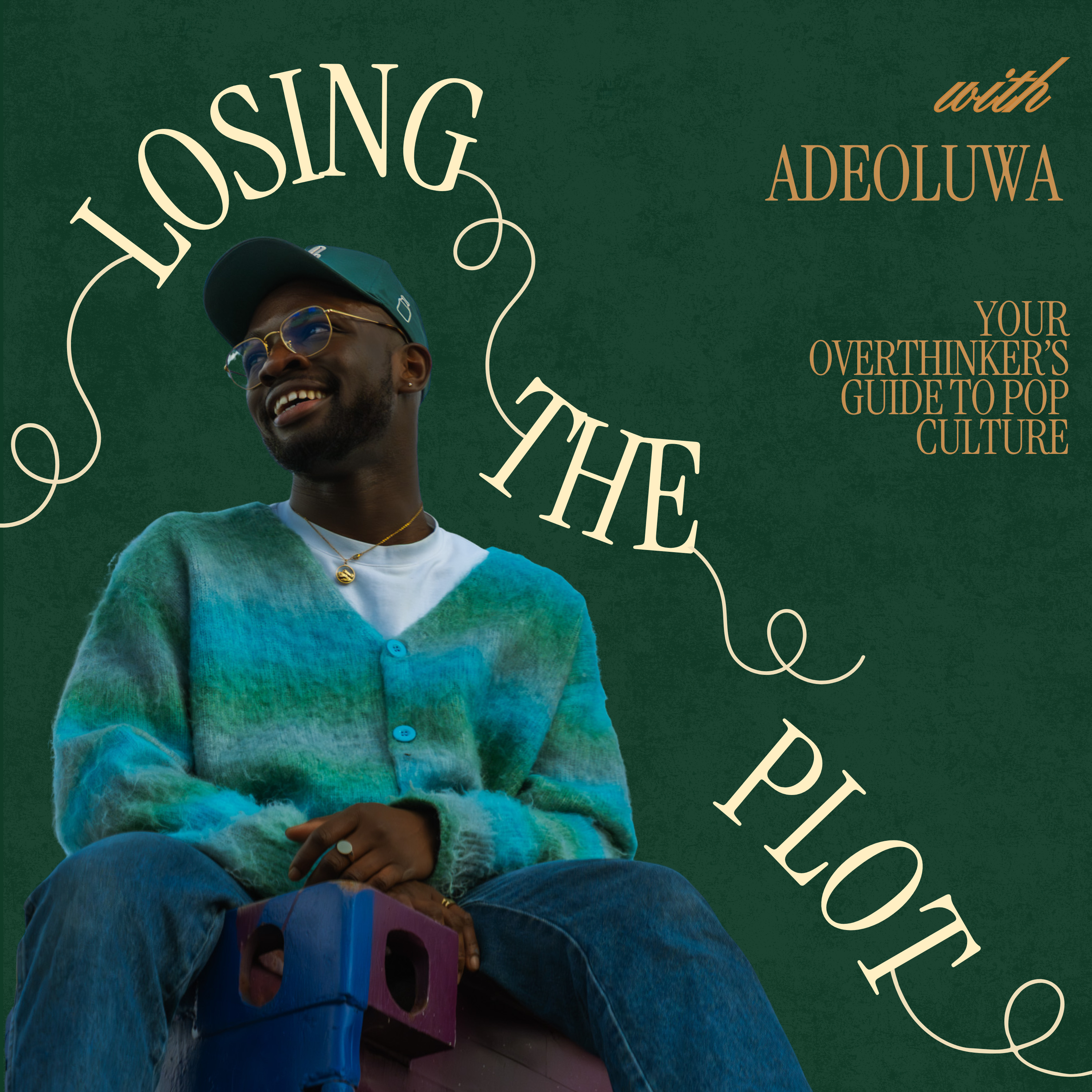
Losing The Plot with ADEOLUWA
by Stay Crowned Creations
Losing The Plot with ADEOLUWA is your overthinker’s guide to pop culture. Your host, ADEOLUWA, goes beyond the hot takes for deep dives into the why behind the trends. Each episode unpacks the hidden mechanics: the years-long sample clearances, strategic rollouts, and artistic evolution that shape the music and stories you love. Subscribe to decode pop culture with us every Thursday!
-
21
The Sound Factories: What Motown, Mo’Hits, and Mavin Teach Us About Cultural Movements
Music movements rarely emerge from isolated artists. They are often built by institutions.This episode compares three labels that helped define entire eras of popular music. Motown Records in the United States, Mo’Hits Records in Nigeria, and Mavin Records in the modern streaming era. Each of these labels did more than release successful songs. They constructed sonic identities that shaped the sound of their generations.Motown built one of the most organized production systems in music history and transformed Detroit into a global center of Black popular music. Mo’Hits created one of the first unmistakable sonic identities in modern Nigerian pop. Mavin later adapted that model for a globalized digital industry.By tracing the rise of artists from Stevie Wonder and The Supremes to D’banj, Wande Coal, Rema, and Ayra Starr the episode explores how producers, songwriters, and label infrastructure transform individual talent into cultural movement
-
20
When the Voice Is the Culture: Why Asake and Bad Bunny Changed Global Pop
For decades mainstream pop culture measured great singing through Western standards of technical precision.But global music history tells a different story.This episode examines how Asake and Bad Bunny became two of the most influential artists of their generation by rejecting those expectations. Instead of chasing traditional vocal perfection both artists leaned fully into the natural textures of their voices and the cultural traditions behind them.Asake’s chant like delivery echoes the communal energy of Fuji music and Yoruba call and response traditions. Bad Bunny’s relaxed melodic phrasing draws from the conversational rhythms of reggaeton and Caribbean street music. Neither voice fits neatly into the classical model of pop singing yet both artists have reshaped the sound of global popular music.The episode explores the parallels between their careers and asks whether the global music industry is finally expanding its definition of what a great voice sounds like.
-
19
Afrobeats Slowed Down: Why the Sound of Nigerian Pop Changed
Afrobeats did not always sound the way it does today.In the late 2000s and early 2010s Nigerian pop music was defined by speed, density, and percussion. Songs by artists like D’banj, Wizkid, Davido, and P Square were built around bright synthesizers, layered drum patterns, and explosive rhythms designed for clubs, street parties, and high energy performance.Over the last decade however the genre has gradually transformed. Afrobeats began absorbing elements from 1990s R and B, neo soul, and alternative pop. The music slowed down. Space replaced density. Mood replaced urgency.This episode traces how artists like Wizkid, Burna Boy, Tems, and Rema reshaped the sonic palette of Nigerian pop. It examines how global streaming audiences encouraged producers to emphasize atmosphere, emotional intimacy, and vocal tone over pure rhythmic intensity, and asks whether Afrobeats is evolving naturally or quietly becoming something new.
-
18
The King of Boys Effect Part II: Power, Politics, and the Illusion of Control
King of Boys was never just a film.This episode moves beyond visual ambition and into meaning, examining how King of Boys functions as social commentary on power in Nigeria. Where the first film established a new cinematic language, this conversation explores what that language is actually saying.We break down how the film presents power not as individual success, but as a system of control shaped by invisible structures. Using the concept of “the Table” as a lens, the episode unpacks how political influence operates behind the scenes, and why the film feels less like fiction and more like recognition.At the center of this analysis is Eniola Salami, whose rise exposes the gendered dynamics of power. The episode explores how the film portrays corruption not as the problem, but as a condition of the system, and how access to power is often determined by who is allowed to participate in it.The conversation also examines the film’s portrayal of wealth, violence, and spectacle, arguing that King of Boys does not glamorize power, but reveals its cost. Through its depiction of Lagos as a living, interconnected system, the film blurs the line between politics, crime, and society.This episode asks a deeper question.When a film stops reflecting reality and starts explaining it, is it still entertainment, or has it become something else entirely?
-
17
The King of Boys Effect: How Kemi Adetiba Changed Nollywood’s Power Aesthetic
When King of Boys premiered in 2018 it did more than become a hit film. It fundamentally shifted the visual ambition and narrative scale of mainstream Nollywood.This episode explores how Kemi Adetiba introduced a new cinematic language into Nigerian filmmaking. Through deliberate lighting choices, operatic color palettes, carefully constructed costume design, and political storytelling that embraced complexity, King of Boys reframed how power could be portrayed on screen. The film presented politics, crime, and ambition not as background context but as grand theatrical spectacle.At the center of this transformation stands Sola Sobowale’s towering performance as Eniola Salami, a character that challenged long standing assumptions about who gets to lead a blockbuster in Nigerian cinema. The success of the film also proved that female led narratives centered around older women could command both critical attention and mass audience appeal.The episode examines how King of Boys helped usher in a new wave of darker political dramas and prestige storytelling in Nollywood, and asks whether the film permanently raised expectations for production value and artistic direction across the industry.
-
16
The Tour Is the Product: How Live Music Became the Real Music Industry
For most of music history, touring promoted the album. Today the album often promotes the tour.This episode traces how live performance evolved from chaotic vaudeville circuits and segregated Chitlin Circuit routes into billion dollar global stadium machines. We explore how artists like Elvis Presley, The Beatles, The Rolling Stones, Michael Jackson, Madonna, U2, Beyoncé, Taylor Swift, and Bad Bunny transformed touring from promotional obligation into cultural infrastructure.
-
15
Why ADELE’s 25 Was Misunderstood: Recalibration, Restraint, and the Sound of Moving On
A revisit, not a review.ADELE’s 25 is often framed as the safe follow up to 21, but that reading misses the point. This episode revisits 25 as a study in restraint, adulthood, and emotional recalibration. We explore why the album felt muted to audiences expecting heartbreak theatrics, how its songwriting reflects emotional closure rather than devastation, and why growing up is rarely celebrated in pop music.Was 25 a creative retreat, or was Adele quietly redefining what longevity looks like in pop?
-
14
The Soft Voice Era: How Quiet Singing Took Over Pop
This episode connects the dots from Brandy to Rihanna to Billie Eilish, SZA, and Tems.We explore how intimacy replaced power, how technology reshaped vocal expectations, and why whispering can sometimes feel louder than belting. We also ask whether the dominance of softness has flattened emotional range, or expanded it.
-
13
Who Gets to Grow Up in Public: Age, Gender, and Forgiveness in Pop Culture
Not every artist is allowed to evolve.This episode examines how age, gender, and race shape who receives grace in pop culture. Why are women punished for maturity? Why are men celebrated for the same behavior? And why does reinvention feel riskier for some artists than others?This is the human cost of the pop star archetype.
-
12
What Broadway Can Teach Pop Music: Why Musical Songwriting Is a Cheat Code
Musical theatre songwriting is one of the hardest disciplines in music.This episode explores how pop has quietly borrowed from Broadway for decades. We break down character voice, emotional pacing, narrative arcs, and payoff, explaining why some pop songs linger while others disappear.If pop is about moments, musicals are about meaning. This episode shows why both matter.
-
11
Pop Is Not About Vocals: Why Presence Matters More Than Power
This episode makes an uncomfortable argument.Great pop stars are not defined by vocal ability alone. Using Madonna and Taylor Swift as anchors, we examine how pop measures success through timing, narrative control, emotional clarity, and cultural intuition.We ask whether not singing like Whitney, Mariah, or Beyoncé disqualifies an artist from greatness, or whether pop has always followed a different logic.
-
10
The 80s Built the Pop Star: Five Phases That Still Control Fame Today
The modern pop star was engineered in the 1980s.This episode breaks the era into five defining phases using Michael Jackson, Madonna, Prince, Whitney Houston, and Janet Jackson as lenses. We explore how spectacle, image control, authenticity, perfection, and branding became requirements, and why pop stars today are still negotiating expectations born decades ago.This is not nostalgia. It is a rulebook we have not escaped.
-
9
Country and Hip Hop Are Cousins: Race, Rhythm, and the Politics of Genre
Country and hip hop are more similar than we are taught to believe.This episode explores how both genres share Black roots, narrative songwriting, and rhythmic evolution, and how racism shapes who is accepted when genres evolve. Using Lil Nas X, Beyoncé, Miley Cyrus, and Taylor Swift as case studies, we unpack why some crossovers are celebrated while others are resisted.This episode is less about music and more about power.
-
8
The Vocal Bible: Brandy's Quiet Revolution in How We Sing
Forget the big notes. The most influential vocal shift in modern R&B and pop wasn't about power: it was about feel. This episode makes the case for Brandy as the "Vocal Bible." We'll trace how her signature style: a lower register, intricate melisma, and a conversational, "cursive" way of singing, fundamentally rewired our taste. Her technique created a blueprint that made space for the understated cool of Rihanna, the intimate confessions of SZA, and the textured delivery of Tems. We explore her divisive legacy: Did she pioneer a style-over-substance vibe, or did she teach a generation that emotion is the ultimate technique?
-
7
The Singularity of Taylor Swift: Why We Can't Stop Talking About Her
Taylor Swift's career is a singularity in pop culture: a path so unique it cannot be replicated. How did the "not-so-cool kid" become the world's biggest pop star and a billionaire based solely on music? This episode explores why her story is a perpetual conversation: one that's as much about us, our fandoms, and our cultural moments as it is about her. We'll dissect the alchemy of artistry, narrative, and cultural timing that made her career, and make the case for why there will never be another Taylor Swift.
-
6
The Year the Playbook Burned: How 2013 Broke the Music Industry
In 2013, the extravagant, year-long album rollout spectacularly imploded. Beyoncé's seismic surprise drop redefined the rules, while high-profile campaigns for Lady Gaga's ARTPOP and Katy Perry's Prism faced unexpected turbulence. Meanwhile, Kanye West's Yeezus challenged everything. This episode argues that 2013 was the breaking point: the moment audiences grew tired of the overexposed spectacle. We'll trace how this single year killed the old promotional model, accelerated the industry's pivot toward streaming, and forced a complete rewrite of the rules for how pop music reaches the world.
-
5
The Blueprint of a Blockbuster: Dissecting the Legendary Pop Album
What is the secret formula for an album that defines a generation? We're losing the plot on the mechanics behind three era-defining records: Sam Smith's "In The Lonely Hour", Ed Sheeran's "X", and Taylor Swift's "1989". This episode isn't just a celebration; it's a forensic analysis. We'll explore how these albums were meticulously crafted for critical and commercial dominance, and more importantly, how each one became the pivotal turning point that forever altered its artist's career trajectory. What do these masterclasses in pop construction teach us about making music that lasts?
-
4
The Calculated Creation of Fuji by Adekunle Gold
Ever listen to an album and feel like you're only hearing half the story? What if the real plot isn't just in the lyrics, but in the years of strategy, legal hurdles, and artistic evolution that happened long before the first note hit streaming? For our very first episode, we’re losing the plot entirely on Adekunle Gold's "Fuji."This isn't a simple album review. "Fuji" is Adekunle Gold's most sample-heavy project by far, and that's no accident. We'll explore how this directly connects to the very heart of the Fuji, where reworking classic melodies is a traditional form of homage and innovation. From the echoes of Lefty Salami in "Big Fish" to the spiritual nod to Yinka Ayefele, we'll trace how AG uses sampling not as a shortcut, but as a deep conversation with musical heritage.This episode is also the story of an artist’s meticulous growth. We’ll connect the dots back to his debut album "Gold," examining how his vision has refined over a near-decade career. But the real clue to his premeditated evolution? The hidden pattern in his own discography: a song on each album that secretly previews the sound of the next. "Fuji" is the culmination of a long game, showing that artistic reinvention is a skill to be honed, not a switch to be flipped.Then, we pull back the curtain on the rollout. We'll map the timeline from the initial singles to the October release, explaining why that specific window was a power play to own the cultural conversation. We’ll break down the "Beyoncé-style" surprise of the hidden features, a move designed to make the music the headline, and analyze how every element: from the vibrant "Owambe" chair on the cover to the personalized email marketing: was a brick in building a complete, immersive world. He didn't just make a Fuji-sounding album; he architected a "Fuji" universe.Most importantly, we ask the big, overthinker questions: When an Afropop star names an album after a foundational genre, is it cultural appreciation or appropriation? Is this a genuine homecoming or a calculated reinvention? Does the "Finding Uncharted Journeys Inside" acronym reflect deep artistry or brilliant branding?Subscribe to "Losing The Plot" wherever you get your podcasts. Our debut episode drops soon. Get ready to hear pop culture differently.
We're indexing this podcast's transcripts for the first time — this can take a minute or two. We'll show results as soon as they're ready.
No matches for "" in this podcast's transcripts.
No topics indexed yet for this podcast.
Loading reviews...
ABOUT THIS SHOW
Losing The Plot with ADEOLUWA is your overthinker’s guide to pop culture. Your host, ADEOLUWA, goes beyond the hot takes for deep dives into the why behind the trends. Each episode unpacks the hidden mechanics: the years-long sample clearances, strategic rollouts, and artistic evolution that shape the music and stories you love. Subscribe to decode pop culture with us every Thursday!
HOSTED BY
Stay Crowned Creations
CATEGORIES
Loading similar podcasts...
URL copied to clipboard!