
PODCAST · education
Lost in AI
by UNIPD Team
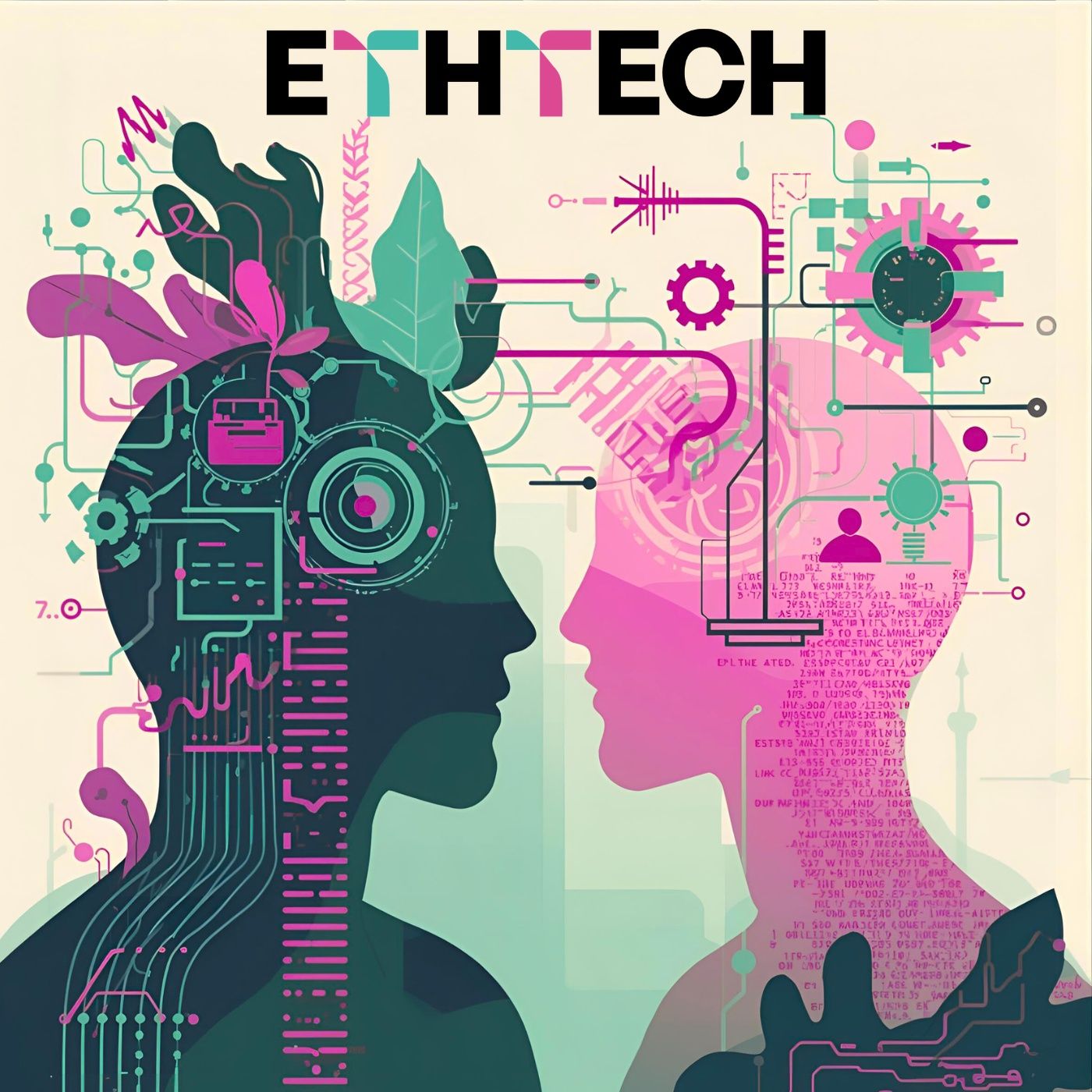
How can educators resist getting lost in AI when its promise of simplicity masks deep shifts in power, meaning and agency? And how can they decipher what these tools truly allow, constrain and quietly reshape in the everyday life of teaching and learning.Like being “lost in translation”, navigating AI in education often means missing what lies beneath the surface. This podcast offers short episodes, sharp insights and honest reflections on what we can and should/should not do with AI in teaching and learning. We explore how ethics grounds practice, showing that “using AI for good” is always shaped by politics, culture and institutions. In concrete terms, we will move behind the scenes of the ETH-TECH project, centred on ethical practice and critical reflection on AI and data in education. In a nutshell, for us, ethical reflection becomes the compass that helps us avoid getting los
-
6
At the Midpoint: Between Progress and Possibility, Partners in Cluj-Napoca
This episode is based on the second partners’ meeting in Cluj-Napoca, marking a pivotal midpoint in the project’s journey. At this stage, partners reflect on progress to date and consider upcoming challenges and opportunities, combining critical reflection with a forward-looking perspective that offers a rich snapshot of the project in motion.Framed by an introduction and conclusion from Bogdan Glăvan (BBU Team), the episode weaves together a series of interviews with key project partners. Prof. Juliana E. Raffaghelli (University of Padua, Italy) opens the discussion by addressing the tension between rapid technological advancement and society’s capacity to adapt, thereby setting the project’s broader goals. Prof. Oana Negru-Subțirică (Babeș-Bolyai University, Romania) explores the impact of AI on educators, raising critical ethical questions around issues such as data ownership. Building on this, Prof. Pablo Rivera-Vargas (University of Barcelona, Spain) highlights the importance of reflection and considers how the project is reshaping academic practices. Finally, Prof. Sigrid Hartong (Helmut Schmidt University, Germany) turns to the practical dimension, focusing on the development of Open Educational Resources (OERs) and looking ahead to the next phase of the project, culminating in the upcoming meeting in Hamburg.Episode conducted by the BBU team and produced by the University of Padua (UNIPD).
-
5
Exploring the ETH-TECH OER concept: Approach, Development, Goals & Next Steps
In this episode, the focus turns to the Open Educational Resources (OERs), under development within the ETH-TECH project. Through the idea of critical co-design, these materials fully embrace an approach to ethics as a collective practice: a process of exploring dilemmas, acknowledging uncertainty, and reflecting together on how technologies shape teaching and learning. In this episode, MED team (Gabriele Biagini), in charge of the project's dissemination and the external testing of the OER, conducted an interview with the HSU team (Sigrid Hartong and Ina Sander), the OER leaders. The episode explores how the OERs were developed through collaboration across four European contexts (UNIPD, Italy; BBU, Rumania; UB, Spain and HSU, Germany), involving students, educators, and researchers in an iterative process of experimentation and feedback. The result is a set of flexible resources designed to open spaces for dialogue, critical reflection, and shared responsibility in times of AI.Episode conducted by the MED team and produced by the University of Padua (UNIPD).
-
4
Voices on Ethics and AI
Beyond official frameworks and formal research outputs, this episode turns to the voices that engage with ETH-TECH from its margins. These are not core designers or lead researchers, but educators, researchers, and practitioners who have taken ETH-TECH into their own contexts, classrooms, and lines of inquiry. Their perspectives matter precisely because they emerge from use, tension, and reinterpretation. In this episode, ethics is not treated as a checklist or a solution, but as a shared, unfinished question that unfolds where technology meets education, power, and responsibility.Guest speakers: Mariana Ferrarelli, Sergio Carvajal‑Leoni, Stephanie Martinic Caneo.Produced within the ETH-TECH Erasmus+ project. Episode produced by the University of Padua (UNIPD).
-
3
A critical perspective on DigComp 3.0
The publication of DigComp 3.0, the European Digital Competence Framework, offers a timely occasion to pause and reflect. In this episode, the conversation starts from the release of DigComp 3.0, the European Digital Competence Framework, and uses it as an entry point to reflect more broadly on how ethics, AI, and data are currently framed within European education policy.References:ETH-TECH project (Anchoring Ethical Technology – AI and data in education)Raffaghelli & Negru-Subtirica, 2025Negru-Subtirica, Raffaghelli & Marinica, 2025For the critical tradition in educational technology: Collective CSET - https://digitalchild.org.au/wp-content/uploads/2025/06/What-hope-is-there-for-CSET-report.pdfhttps://webcast.ec.europa.eu/presenting-the-european-digital-competence-framework-digcomp-30-25-12-12Produced within the ETH-TECH Erasmus+ project. Episode produced by the University of Padua (UNIPD).
-
2
The ethics of AI and data in education: universal guidelines, local perspectives
AI promises clarity while often generating new opacity. This podcast traces that tension by exploring how global ethical principles collide with the everyday realities of educational practice. Through sharp, accessible episodes grounded in the ETH-TECH project, we examine how European guidelines on AI and data translate into local dilemmas, cultural expectations and institutional constraints. Educators, researchers and students unpack what “responsible” really means when technology mediates learning, decision-making and power. The result is a grounded, critical and practical lens on the digital transformations reshaping education.Produced within the ETH-TECH Erasmus+ project. Episode produced by the University of Padua (UNIPD).This episode includes AI-generated content.
We're indexing this podcast's transcripts for the first time — this can take a minute or two. We'll show results as soon as they're ready.
No matches for "" in this podcast's transcripts.
No topics indexed yet for this podcast.
Loading reviews...
ABOUT THIS SHOW
How can educators resist getting lost in AI when its promise of simplicity masks deep shifts in power, meaning and agency? And how can they decipher what these tools truly allow, constrain and quietly reshape in the everyday life of teaching and learning.Like being “lost in translation”, navigating AI in education often means missing what lies beneath the surface. This podcast offers short episodes, sharp insights and honest reflections on what we can and should/should not do with AI in teaching and learning. We explore how ethics grounds practice, showing that “using AI for good” is always shaped by politics, culture and institutions. In concrete terms, we will move behind the scenes of the ETH-TECH project, centred on ethical practice and critical reflection on AI and data in education. In a nutshell, for us, ethical reflection becomes the compass that helps us avoid getting los
HOSTED BY
UNIPD Team
CATEGORIES
Loading similar podcasts...
URL copied to clipboard!