
PODCAST · society
Lyn Goffaux
by Lyn Goffaux | Edward Goffaux
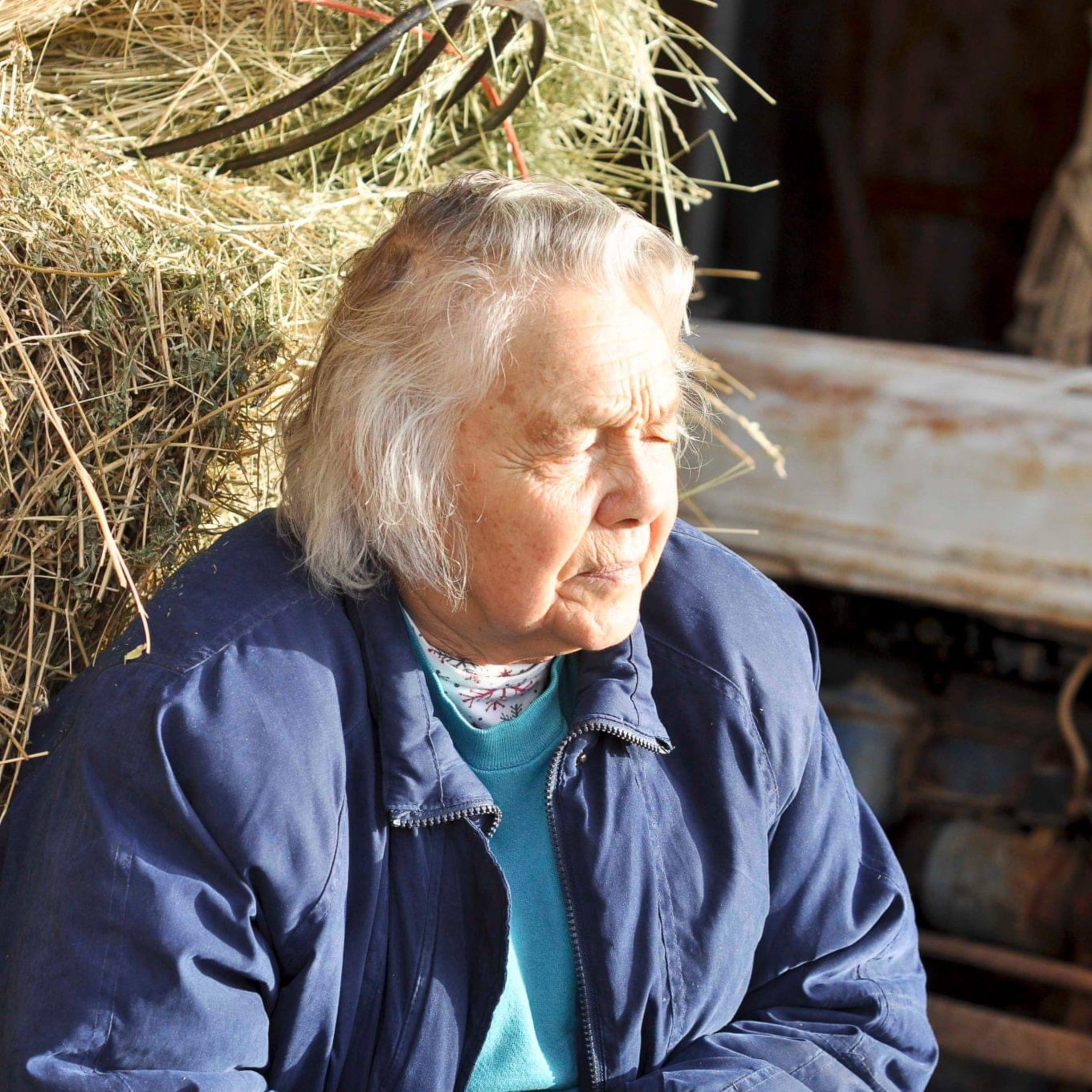
Lyn Goffaux dives into healing, hope, her family history, her past along with the present, and hard questions with raw honesty and spiritual insight, helping you grow through life’s challenges and discover deeper faith, purpose, and emotional freedom in every season.
-
24
October 21, 2020 – Julie, Leadership, and the Square Dance Promise
In this storytelling‑rich episode, Lyn Goffaux remembers a season of illness when she had to leave the ranch for town, and a frightening drive where drowsiness at the wheel nearly led to disaster. From there, she shifts into vivid memories of life on the ranch and how a young Julie stepped up as a capable, respected leader while Lyn was away. Lyn recalls how ranch hand Henry Strong treated Julie like the boss, and how visiting “dudes” and long‑time guest Jenny fit into the rhythm of ranch life. A powerful thread in this conversation is Jenny’s warning never to smoke, a moment Lyn took deeply to heart and credits with her lifelong choice to avoid cigarettes. The heart of the story is a promised square dance: Ally resists hosting it because of all the work involved, but Julie, still just a teenager, insists on keeping the promise, organizes the caller, and collaborates with the guests, who joyfully clean and wax the floors themselves after the dance. Lyn’s pride in Julie’s courage, resolve, and gentle authority shines through as she reflects on how that same strength shows up later in Julie’s own home and family life.
-
23
October 21, 2020 – Morning Reflections and Everyday Blessings
In this gentle, intimate recording, Lyn Goffaux shares a cozy morning moment as she looks out at fresh snow and talks about the change of seasons and growing older. She chats about her handy voice assistant that tells her the date, time, and weather, and jokes about not quite knowing how all the technology works but appreciating what it does for her. A check‑in phone call from Sherry becomes part of the story, giving listeners a glimpse into the loving network of care that surrounds Lyn in her daily life. Lyn talks about simple, comforting things like breakfast, errands, and the small embarrassments and graces of needing help with everyday tasks. Throughout the episode, you can hear her warmth, humor, and vulnerability as she admits she had something important she wanted to share but just can’t quite remember what it was, inviting listeners into the honest, unscripted flow of her thoughts.
-
22
August 25, 2020 – Goose Dinners, Harsh Winters, And A Father’s Love For Animals
In this heartfelt episode, Lyn Goffaux reaches back into her childhood to share vivid memories from life on the ranch, beginning with her mother’s determination to raise geese and the unlikely hen who hatched and mothered them. Lyn describes the comic yet painful moments when the once-cuddly goslings grew up and started nipping the backs of her knees, teaching her an early lesson about how quickly animals can change as they grow. Her story then turns to her mother’s long-standing wish for a goose dinner, and the humorous misadventures of Paul, who keeps putting off the task of butchering a goose and instead returns home one day with guinea hens from a neighbor so the family ends up eating those instead. When her mother finally takes matters into her own hands, Lyn paints a striking picture of her mother hiding behind a post with a gun, the frantic flopping of the goose she shoots, and the heartbreaking sight of the remaining geese running to her for protection, signaling the last goose her parents would ever kill.From there, Lyn moves into the story of a brutal winter around the time her sister was born, when deep snow and bitter cold made survival a daily struggle for both people and animals. She recalls how her father coped with starving cattle and horses by cutting down trees to strip the bark for feed, eventually supplementing with cotton cake made from cottonseed, which proved to be a lifesaver for the livestock. Lyn shares practical details of that season—like planting large, inedible beets just to chop and feed to the animals, and hanging one in the henhouse so the chickens had to fly up to peck it for much-needed exercise, resulting in eggs all winter long despite the terrible weather. She also remembers traveling through the range as a child, seeing dead cows and horses everywhere, a haunting image that captures the severity of that winter and the cost it exacted on the herd.The episode also explores her father’s near-serious injury while cutting a ham, the doctor’s insistence that milking the cows actually preserved his hand, and what this reveals about the unrelenting demands of ranch life—there was no option to stop working, even in pain. Lyn highlights her father’s deep affection and respect for animals, especially his geese and horses, recounting how the geese would quietly conspire while he milked: one goose would sneak over to untie his shoelaces, prompting him to make a big show of retieing them while the geese honked and flapped with delight. She reflects on his careful ethics with old horses—preferring to send them as bear bait rather than risk selling them to someone who might overwork or mistreat them—because once a horse left his hands, he could no longer ensure its well-being.In the closing portion of the recording, Lyn shifts from stories of animals to the complexities of family and motherhood, touching briefly on her daughter Francy’s stubborn nature as a child and how that spirit may have been necessary in a family where more children were not supposed to arrive. She candidly shares her own mixed feelings about having more children, describing a season when she felt like “nothing but a baby machine” and would have welcomed a rest rather than an absolute end to childbearing. Lyn then moves to the next generation, telling how her daughter Julie went on to have ten children, including a baby who died after just nine hours due to an undiagnosed blood issue. The story follows Julie’s journey through repeated medical challenges, the eventual discovery and treatment of her blood incompatibility with a full transfusion for another premature baby, and, later, the role of herbal remedies that seemed to resolve the problem so that the next child arrived a little late and completely healthy.
-
21
August 22, 2020 – Francie, Sibling Jealousy, and a Mother’s Heart
In this concluding segment, Lyn Goffaux returns to the subject of Francie and reflects on their close relationship in the present, affirming that “she is with us” and emphasizing how bonded they are now. Lyn then revisits the moment she announced another pregnancy to Celeste, a story that reveals the complexity of sibling emotions when a new baby is on the way. Lyn now believes she made a mistake in how she phrased the news, telling Celeste that she was “going to have another baby to love” instead of simply saying, “we’re going to have another baby,” unintentionally implying that love might be a limited resource.Celeste’s reaction was one of disappointment and distress, and when Lyn tried to reassure her by saying that they could not “give Paul away,” Celeste actually suggested they do just that, a child’s blunt response that nevertheless exposed her fear of losing her place in the family. Lyn gently points out that “you just don’t do things like that,” reflecting both the innocence of children and the deep responsibility parents carry when balancing attention and affection among siblings. This brief but powerful recording ties together themes of jealousy, reassurance, and learning as a mother, rounding out the day’s reflections on her children with honesty and hard-earned wisdom.
-
20
August 22, 2020 – Motherhood, Four Children, and Lessons Learned
In this central and most detailed recording, Lyn Goffaux shares intimate, vivid memories of raising her four children—Julie, Celeste, Paul, and Francie—and the people and small moments that shaped those years. She begins with Julie’s birth and the surprise of recognizing a nurse, Eva Franco, who had also been present when Lyn herself was born in Cody, tying together two generations through one caregiver’s steady presence. Lyn recalls visiting Eva’s home as a child, eating cereal with canned milk, and how those sensory details stayed with her across the decades.She then paints a tender picture of coming home with newborn Julie, whose father, Ed, was initially afraid to hold the baby until Lyn gently coaxed him into it, a moment once captured in a now-lost photograph she wishes she still had. From there, Lyn reflects on how easy it is to take many photos of a first baby, and how busyness meant far fewer pictures of Celeste, Paul, and especially Francie, something she deeply regrets in hindsight.Lyn describes Julie as a fiery, emotional child who would scream so loudly when angry that neighbors worried she might be hurt, yet as an adult Julie learned to maintain impressive self-control even when inner emotions still ran strong. Celeste, by contrast, is remembered as a homebody who disliked being left with others, preferring the comfort of her own house. As she grew, Celeste became the reliable older sister Lyn trusted to watch over Paul and Francie—keeping them off the street, away from the stairs, and generally safe—though Celeste had a mischievous side when it came to raiding the cookie supply.The episode also explores their adult lives: Julie became a mother of ten children, nine living and one lost, a loss that brought deep, enduring grief. Lyn shares how Julie feels spiritually connected to the child she lost, sensing her presence in the temple and believing that this daughter continues to watch over her. Celeste, meanwhile, happily raised three children after originally feeling content with just one boy and one girl, and Lyn lovingly describes her third as a particularly handsome and charming son who became a favorite of Lyn’s own mother.Lyn talks about Paul as a very small boy who jokingly reports that he is “up to 4 feet 11,” almost five feet, matching the petite stature of Julie and Celeste, both just around five feet tall, while Lyn herself has shrunk from about 5′ 3½″ to 5′2″ with age. She then turns to Francie, who cried constantly as a baby, partly, Lyn believes, because of strict medical instructions she now regrets following. A doctor insisted Francie be awakened at 2 a.m. to eat and demanded that each feeding, burping, and settling be completed within 20 minutes, leaving no time for the slower, more nurturing rhythm Lyn had used with her other children. Lyn feels that obeying those rules made both her and Francie unhappy, and she now wishes she had trusted her own instincts instead.Francie also faced a physical challenge: one of her feet was pressed up against her shin, and Lyn had to repeatedly work it down, a process that caused Francie pain and more crying but was medically necessary. Lyn remembers Francie as stubborn and dependent during feedings, refusing to hold her own bottle for months. At six months old, Lyn began laying Francie on a blanket with the bottle in her hands, stepping away to force the baby to learn; after many cycles of crying, dropped bottles, and returning to help, Francie finally decided that if she wanted the bottle, she would have to hold it herself. Through these stories, Lyn offers a raw, compassionate look at motherhood, guilt, resilience, and the bittersweet growth of both children and parents over time.
-
19
August 22, 2020 – Memories of Julie’s Birth and Coming Home
In this opening segment, Lyn Goffaux reflects on the season of life when her first child, Julie, was born in Cody, Wyoming, while the family was staying with Lyn’s parents in their first-ever brand-new home. She begins to move “forward to children,” situating listeners in the early days of motherhood and family transition. Lyn’s narration is warm and candid, including a lighthearted disruption when she accidentally spills water, which briefly interrupts her recording and adds a very human, behind-the-scenes feel to the conversation. This part serves as the gateway into a much deeper, more detailed storytelling in the next recording, hinting at the rich family memories and parenting lessons Lyn is about to share.
-
18
August 14, 2020 – Getting Lost, Algebra Nightmares, And A Fiercely Loyal Dog With Lyn Goffaux
In this heartfelt episode recorded on August 14, 2020, Lyn Goffaux invites you back into her teenage world as she navigates the shocks of leaving home for life in a big city. She shares the decision that took her from a familiar small town into bustling Baltimore, where she, her family, and their dogs settled into a house with a big backyard, a tiny cabin, and new possibilities around every corner.Lyn paints a vivid picture of that Baltimore neighborhood, from hardwood trees glowing in the fall to flowering trees in spring that seemed magical enough for fairies to dance beneath. Her memories of white and pink blossoms reaching from top to bottom of the branches capture the wonder of a girl watching a new world bloom.School, however, brought its own kind of drama. Lyn recalls starting at Western High, feeling overwhelmed and confused, only to be abruptly told she had to transfer to Eastern High after just a few days. A simple instruction—“look for the water tower”—was supposed to guide her ride home.Instead, that vague direction turned into an unexpected adventure. Lyn boarded a random bus without checking its route, rode for what felt like forever, and realized she had no idea where she was. With only one dime left, she tried to call for help from a phone booth, misdialed, and had to accept that her last coin was gone.What followed was a long, lonely walk down what she calls a cow-path kind of street, carried by uncertainty and stubborn determination. When she finally encountered two women in a yard, their kindness changed everything; the younger woman decided on the spot to drive Lyn home, likely saving her from wandering endlessly in the wrong direction.From that day, Lyn learned a practical and symbolic life lesson: never get on a bus until you know where it is going. The next morning, she started fresh at Eastern High, this time on the right bus, and discovered a school that was less confusing but still full of challenges. One of the biggest was her Algebra II class and its notoriously unstable teacher.Lyn recounts how this teacher, rumored to throw wooden chalkboard tools across the room in frustration, turned a difficult subject into something she dreaded all day long. A mix-up with two textbooks led Lyn to do the wrong assignment, and she was publicly shamed in front of the class and called lazy. Her surprising reply—thanking the teacher for pointing out her supposed laziness—left the teacher stunned and Lyn deeply embarrassed yet quietly defiant.She also describes a painful moment when her mind wandered after the teacher said something that sparked another thought, forcing her to admit she had not heard a word of the lesson. That honest confession helped push her to finally give up Algebra II, a decision she both regrets and understands. Outside of math class, Lyn faced pressure to change herself in other ways, including a push to straighten her teeth so she could become an airline stewardess, a future she absolutely did not want.Over time, Baltimore’s bus routes became familiar instead of frightening, and Lyn began choosing to walk home simply because she could. Some of her sweetest memories center on simple pleasures, like visiting an ice cream shop that served chocolate topping made just like her own fudge, rich and comforting. Running home afterward with her dog Doc leaping playfully at her, she startled a bystander who feared Lyn might be attacked, but Lyn knew he was her devoted protector.
-
17
August 14, 2020 – Mucher the Gentle Gelding and the Eighth-Grade Teacher
On August 14, 2020, Lyn Goffaux recorded this focused, affectionate episode about a single horse who quietly trotted into her life and stayed: a big, gentle gelding named Mucher. She explains how Mucher first appeared of his own accord, drifting in with their horses and bearing Jelly’s brand, marking him as belonging to another man. After the horse simply kept hanging around, Lyn’s father finally called Jelly to report they had his gelding, only to be told, “Oh, give him to Lyn”—and just like that, Mucher became Lyn’s horse by gift rather than purchase.Lyn describes Mucher as perfectly gentle, likely used more for packing than riding before he came to her, but already broke and calm enough to carry inexperienced riders. She talks about trying him out, finding him steady and reliable, and then putting “dudes” on him—paying guests who needed safe mounts for trail rides—confident that Mucher would take care of them. In time, when the ranch horses were eventually sold, Mucher went with them, but Lyn’s goal in this recording is simply to keep his memory from disappearing, to make sure his quiet service gets spoken aloud at least once.One of her favorite memories involves the local eighth-grade teacher, a young woman named Lucy who loved to ride and often accompanied Lyn. Lyn recalls placing Lucy on Mucher again and again, knowing that he was gentle enough to carry a schoolteacher who wanted adventure but perhaps not the unpredictability of a more spirited horse. She admits she cannot say much more about him—no dramatic wrecks, no flashy stories—but that, in its own way, is the point: Mucher stayed with their horses, did his job without fuss, and quietly became part of the fabric of her ranch life.By the end of this short, tender episode, listeners feel they’ve met one more member of Lyn’s four-legged family, a horse who might otherwise have vanished into anonymity. Through her voice, Mucher is remembered as a steadfast, uncomplaining partner, entrusted with guests and teachers and absorbed into the long, living chain of horses who carried Lyn, her friends, and her stories across the mountains.
-
16
August 13, 2020 — High School Dances, Roller Skates, and Finding My Own Way
In this nostalgic episode, Lyn Goffaux looks back on her teenage years, sharing honest and often humorous memories of high school, shyness, and learning to stand on her own two feet. She begins with the last winter she spent in her childhood town before starting high school in Cody, describing how strange it felt to leave a tiny school and step into hallways crowded with new faces and social rules she didn’t yet understand.Lyn recalls a church dance that felt both exciting and terrifying to a shy girl afraid of boys. She describes turning down a date because his mother would have to drive them, not admitting that what really scared her was the expectation that came with a “proper” date. Her stories reveal a young woman who wants to be kind and liked but is afraid her eagerness to please might override her ability to say no, a fear that quietly shapes many of her choices.High school brings a mix of playful fun and emotional growing pains. Lyn remembers a school tradition where boys gather in the building and girls race around trying to “catch” a boy by looping a string with their name around his neck. One boy runs home and hides under his bed while his mother refuses to let the girls in, turning the chase into a scene straight out of a comedy. Later, a boy she nearly caught calls to ask if she still wants him, and Lyn simply steps outside, puts her name around his neck, and suddenly has a date for the dance.At the dance, another boy asks her to dance while her date is getting punch, and Lyn is pulled between them, feeling more anxious than flattered. A casual remark about a brother who “had to get married” makes the risks of romance feel very real, and she realizes how frightened she is of situations where she might not be able to protect her boundaries. Her reflections offer a tender look at how fear, insecurity, and inexperience shape a young woman’s path long before she has words for concepts like consent and self-advocacy.Lyn also paints a warm picture of life at the Green Gables, the big old house that becomes the backdrop for gatherings and small-town adventures. She remembers her friend Ellie renting a tiny place behind an undertaker’s home, complete with a walk-in freezer that sparks wild rumors, and hosting parties where line dances wind up and down all three floors. Though she is loosely included in a group of girls, Lyn often walks between classes alone, realizing over time that she prefers honesty to fitting in and that solitude can feel more truthful than forced conversation.The episode closes with stories of her son Paul and his love of roller skating. As a teenager he walks across town every week just to skate, once getting a late-night ride home from a concerned police officer. Now he pours himself into work instead of hobbies, and Lyn wonders whether he still feels the same quiet joy he once found at the rink. Through these intertwined memories of dances, friendships, fears, and family, this episode becomes a gentle meditation on belonging and the long journey of learning how to be yourself.
-
15
July 10, 2020 - Ranch Girls, Rough stock Years: Lyn Goffaux Remembers 1950’s Canyon Roundup Life
In this vivid continuation of her life story, Lyn Goffaux invites listeners back to the year 1950, a season she remembers as one of the busiest and most unforgettable on the ranch. She recalls how, after the quiet war years, the dude ranch filled up again with guests, survey crews, and bus tours from Chicago, all converging on the wide open country around Sunlight and Yellowstone.Lyn paints a rich picture of long days and late nights as her family scrambled to keep up with the crowd: men hired to survey land for a future lake, sheep wagons parked across the river, new gas pumps going in, and a big shed built so bus tours could stop for a panoramic view and a hot meal. Her father adds a second bathroom—an unimaginable luxury—and tent houses go up for the young survey crew, while her grandmother settles in and quietly holds her own amid the chaos.Horses are at the center of everything. Lyn shares intimate stories from the saddle: riding a mare named Gypsy who loved to buck her off whenever the kids begged to go faster, the relief of switching to steady Shoepick on a friend’s advice, and the careful way a seasoned horse named Goldie took care of inexperienced riders. Summer days are filled with taking “dudes” out, watching younger kids push the limits, and learning, at just thirteen or fourteen, what it means to be trusted with real responsibility on a working ranch.The human relationships are just as compelling. Lyn remembers Jane returning as a teenager suddenly interested in boys, the easy companionship of her friends Claudette, Pokey, and Francis, and the visiting schoolteacher who became part of the family. She describes the thrill of evenings with live music when young men from the survey camp came back, bringing fiddles and guitars for square dances that left the floor scuffed and her mother protesting about all the extra mopping and waxing.In one of the episode’s most charming threads, Lyn tells of the Canyon Roundup, her grandmother’s chosen name for the viewing spot where bus tourists were treated to horseback demonstrations, sweeping views, and meals served at long tables. Young Lyn leads riders through the gate, galloping up and down the pasture as little Pokey scrambles up on her horse, then stands behind Lyn on a galloping mount, clinging to her shoulders in a display that never failed to delight onlookers. Inside the shed, they serve hot rolls with honey—never jam, as one short‑lived experiment proved when guests insisted on what they had been promised.Yet the story is not all romance and nostalgia. Lyn also steps into the tension of life after the “big year,” when money is tight and help is scarce. She recalls being left in charge of the ranch’s small hydroelectric plant, carefully oiling the brushes and scrambling for replacements when the lights flicker. She recounts a conflict with a hired man who imagines himself the foreman and nearly sends a cow, Jenny, to town—until Claudette’s sharp eye notices that the cow’s bag is filling. When Jenny finally calves, Lyn names the dark brown, white‑faced calf “Claud” in honor of her observant friend.A simple act—Lyn offering the calf water without asking permission—pushes the proud hired man to quit, furious at the idea of being “bossed” by a 14‑year‑old girl. Lyn’s matter‑of‑fact telling reveals both the absurdity of the situation and her growing sense of competence, as she takes on milking cows and more of the hard work without complaint.Threaded through these ranch memories are hints of later trials and enduring loyalty: her mother Ally’s long absence for surgery back East, letters written from school that pull Ally home again, and Lyn’s own health struggles with a stroke and a broken elbow that affected her speech and memory. She speaks honestly about recovery and about lifelong friendships with Claudette, Pokey, and Francis that have endured across decades and miles.
-
14
July 9, 2020 – Summer Snippet from the Ranch with Lyn
On July 9, 2020, Lyn sat down for a very short recording that feels like a quick postcard from summer rather than a full-length story. While this mini-episode is brief and fragmentary, it still contains Lyn’s unmistakable presence and the sense that you’ve just stepped into the ranch kitchen or out by the corrals for a few passing moments. This is an easy listen when you want a taste of Lyn’s voice and atmosphere without committing to a full story session, a tiny slice of time that bridges her deeper, more detailed narratives.
-
13
May 17, 2020 – A Brief Spring Check-In with Lyn
Recorded on May 17, 2020, this short episode captures a brief, candid moment with Lyn Goffaux during a quiet pause in her storytelling year. Though much more compact than her usual detailed reminiscences, the recording still carries the gentle tone and reflective presence listeners have come to love. Think of this as a small window into Lyn’s world in the middle of 2020—a simple touchpoint that keeps you connected to her voice, her cadence, and the ongoing rhythm of life that surrounds her longer, more elaborate episodes.
-
12
January 7, 2020 – Shadows, Shaving Soap, and Goldie: Lyn’s Warmest Ranch Memories from Childhood
In this gentle episode from January 7, 2020, Lyn Goffaux looks back on some of her warmest childhood memories from a remote mountain ranch. She begins with her father’s small rituals: the straight razor, the shaving soap brushed into a thick lather, and the sudden playful leap from the bathroom to dab foam on her face while she watched and giggled by the door. In winter, the walk to the corral became a “shadow game” on the snow, the two of them jumping on each other’s shadows and laughing as everyday chores turned into a shared adventure. Lyn also remembers how seriously she took the riding rules her father taught her, and how that seriousness once cost her a moment of joy. Mounting on a slope, she turned her horse so she stood on the uphill side for safety, only to have a companion spin the horse and tease her for “cheating.” Focused on doing things right, she grew angry instead of laughing with him, and he rode away hurt. Years later, she still wishes she had recognized the difference between careless risk and harmless fun, and she speaks honestly about how easy it is to wound someone when you cling too tightly to rules. The story then widens to the people who briefly shared their home. Lyn tells of ranger Mashlack, his wife, and their adopted daughter Leticia, a little girl with very thick dark hair and a tender scalp that made daily braiding an ordeal of tears. Every morning, Lyn’s mother Ellie patiently combed and braided Leticia’s hair while Lyn got ready for school and the younger girls, Pokey and Leticia, played with a box of smooth hardwood blocks Paul had made. Almost every day, Pokey would tap Leticia on the head with a block, and Lyn still wonders what pressures that isolated life placed on the adults, even as she remembers loving the wild country around them. From there, Lyn turns to Ellie’s thrift and creativity. Determined not to waste extra milk, Ellie sent away for government pamphlets on cheese making and followed their instructions step by step. Lyn recalls Paul digging deep and pouring a solid base for a new fireplace exactly as another booklet described, so frost could not shift it the way it did a neighbor’s less carefully built hearth. She then sketches how Ellie warmed milk, cut curds, pressed them in coffee cans under weighted boards, and aged the rounds in a cool cupboard until they turned into firm, flavorful cheeses. Ellie’s artistry went far beyond food. She painted the log house a peach color whenever it began to look tired, sculpted, painted pictures, made dolls, and constantly created beauty out of everyday materials. Yet she was never fully at ease on horseback, preferring slow, cautious rides on the gentlest mounts while Lyn spent every free moment outside with the animals. That contrast between a studio-centered mother and a horse-centered daughter runs quietly underneath the whole episode. At the heart of the story is Goldie, the mare Lyn calls her “babysitter horse.” After a wreck on a young horse left Lyn’s knee badly damaged and her leg in a cast through high school finals, she was determined to ride again even though simply bending the joint was painful. Goldie, narrow and sure-footed, carried her gently, refusing to go faster than a brisk walk at first and keeping that injured leg from knocking against anything. Later, when a group of horses bunched up in a lane and Lyn feared her weak leg would be crushed, Goldie swung away from the crowd on her own, shielding her without any cue. Lyn admits she did not fully appreciate Goldie at the time because the mare did not seek affection or fuss, but now she sees how faithfully Goldie adjusted to each rider and, especially, how carefully she guarded Lyn in her most vulnerable season.
-
11
January 5, 2020 - A Radioactive Atomic Brat, An English General, and Dreaming Beyond This Life – Lyn Goffaux Remembers Dude Ranch Characters
Recorded on January 5, 2020, this episode finds storyteller Lyn Goffaux offering a late holiday greeting and reflecting on stepping into a new decade that faintly echoes the “roaring 20s” of a century before. She soon shifts from the present to vivid memories of her Arizona childhood in the 1940s, when she was nine years old and growing up on horseback among a lively stream of dude ranch guests. Lyn recalls a family her father knew well, tied to a frightening moment years earlier when a baby swallowed ant poison and her parents rushed to help. By the time of this story, that baby has grown, and the family has welcomed another child—a brilliant 6 year old boy whose curiosity and love of science make him unforgettable. This boy, always carrying a scientific magazine written for real scientists, bursts into the room again and again with his trademark question, “Do you know…?” before launching into excited explanations of atoms and new discoveries. Lyn and the others affectionately nickname him the “radioactive atomic brat,” a label that captures both his intelligence and the way he slightly annoys guests with his constant lectures. His father, Tucker, is a gifted pianist who once told Lyn’s father that, with proper training, he too might have been a pianist. That musical legacy seems to touch the boy as well. Years later, Lyn hears that he auditions for his church choir by boldly singing “There Is Nothing Like a Dame,” performing every part himself and being accepted on the spot. She wonders whether he became a scientist, a musician, or something else entirely—one of many life stories she never gets to see completed. As her memories unwind, Lyn turns gently toward her own mortality. She admits it is hard to believe she will one day die, yet she speaks without fear, imagining a future where every physical limitation is gone. In that life beyond this one, she pictures herself walking, floating, and moving anywhere she wishes without ever falling, perhaps watching over children, great-great-great-grandchildren, or other souls still making their way through this world. Lyn reflects that she has “whizzed through” life on horseback and missed many of the smaller, fascinating moments in between. That realization opens into another favorite memory: the arrival of “the General,” one of the most unforgettable dude ranch guests of her youth. The General, a large, imposing Englishman with a monocle and a booming voice, looks every bit the officer he once was. Lyn remembers how he loved to sing “Little Brown Jug,” belting out the lines with a hearty “ha ha ha” that she can still hear. His wife appears every inch the classic general’s lady—genteel, feminine, and gracious—while their son is preparing to serve as one of the silent guards who must stand immovable at a royal castle. Lyn recalls staging a mock “hold up” of the General’s car, one of her father’s favorite dude ranch entertainments. He plays his part with flair, even keeping his wallet in his breast pocket for dramatic effect. The General loves the whole adventure so much that he insists on joining the next hold up—this time as the leader. Lyn paints the scene of horses galloping down a hill, riders charging together, and her father stopping the car right on cue. These memories spark Lyn’s playful imagination as she jokes that someone should invent a back-pocket wallet zipper that screams “zing” when touched, maybe even delivering a tiny electric shock to startle would-be thieves. It is a light, humorous idea tucked inside a deeper meditation on time, aging, and the way certain people never fade from our minds. Throughout the episode, Lyn’s voice moves between humor and longing, childhood mischief and spiritual hope. She honors the “radioactive atomic brat,” the dignified General, and her father’s theatrical flair, while acknowledging that many of those people are now gone—and that she is, as she says, “headed that way too,” still riding into one more story.
-
10
October 11, 2019 — Relieved by Rejection: Lyn Goffaux on Staying Home, Sharing Her Possessions, and Trusting God
Recorded on October 11, 2019, this heartfelt audio journal from Lyn Goffaux captures how an ordinary phone call becomes a turning point filled with relief, gratitude, and renewed trust in God. Lyn shares the story of finally finding her little recording device and her eagerness to tell what happened “sometime last week,” setting the stage for a memory that changed how she saw her future. She remembers answering the phone and hearing from “the Heartland,” the care facility she thought she might be moving into, only to learn she has been rejected because she is considered too weak in her transfers and they are not prepared to support her celiac needs. Instead of crumbling, Lyn feels a surprising sense of freedom, as if a heavy weight has been lifted from her shoulders, and she responds with a grateful, even playful spirit.She explains that, at first, she believed she had to go because those around her wanted what they thought was best. Her girls encouraged the move, and even though she was told it was her decision, she still felt pulled to please them and to consider their worries about her safety and care. Talking with Paul becomes a key moment; he admits that he feels better with her staying close by, and that simple honesty helps her recognize that remaining at home may genuinely be the healthiest, most peaceful option for both of them. Knowing that she does not have to go to “an institution for old people” allows Lyn to embrace the life she already has, right where she is.From there, Lyn moves into the very practical questions that come with staying at home. She considers signing up for Meals on Wheels and weighs her deep love of her own cooking against the convenience of having reliable meals delivered for three dollars a day. She talks about the helper who visits her, struggles to recall her name for a moment, then happily remembers it is Tammy, and laughs at herself for the lapse. Lyn explains how important it is to have someone who can walk with her, especially when Paul is sick and unable to help, and she wishes she could have Tammy come every day just to support her safely. At the same time, she is honest about the cost of paying for an hour each day and wonders whether there might be someone closer who could offer help without straining anyone’s finances.The reflection deepens as Lyn turns toward her house, her possessions, and her relationship with God. She admits how much she loves her home and the things she has collected, yet she does not want to hold on to them more tightly than she holds on to the Lord. In prayer, she imagines Jesus asking whether she is clinging to her possessions and friendships in a way that keeps her from fully trusting Him. After wrestling with that question, she reaches a place where she feels truly willing to “give it all away,” even though her heart still feels pulled in two directions. Lyn talks about Lisa needing furniture and how she has pieces that could bless her, while Paul and Sherry also would like certain meaningful items, even though their house is already small and full. She mentions a clock and a cupboard her dad made, along with a special cabinet for displaying pretty things that needs fixing and that Paul could repair once he feels better.By the end of this October 11, 2019 recording, Lyn is thinking about how to function better in her space, how to keep track of small but important objects, and how to simplify without losing what matters most. Her gentle, candid storytelling offers a window into the emotional landscape of aging, health challenges, family expectations, and the spiritual work of letting go. This episode invites you to sit with Lyn as she discovers that even an unexpected “no” can be a loving protection, opening the door for her to stay rooted at home, share what she has with her family, and rest in the quiet assurance that God is guiding each step.
-
9
October 1, 2019 — Coming Home Weaker: Lyn Reflects on Rehab, Nursing Homes, and Hope
In this intimate October 1, 2019 reflection, Lyn Goffaux shares the raw, unpolished truth of coming home after a difficult stay in a nursing facility. She begins simply: “I’m home,” repeating it like a mantra as she tries to make peace with how fragile her body now feels after a stroke and weeks away. Lyn talks about the shock of realizing she is weaker than she expected, describing how walking with a rollator and even being pushed in a wheelchair at church left her exhausted and dependent on others in ways she never imagined. Lyn reflects on her time in the nursing home with gratitude for the kindness of the staff, yet with sadness and discomfort about the condition of many residents around her. She notices how some people seem to be in a “second childhood,” and she marvels at the patience of the aides and nurses who care for them day after day. At the same time, she is deeply frustrated by the so-called “restorative” therapy program: a room full of “terrible equipment,” chronically short-staffed, with only one or two workers trying to serve everyone who might want or need rehabilitation. She explains how no one came to get her for therapy, how easy it was to just not go, and how that decision left her struggling to walk when she finally returned home. Back in her own space on this October day, Lyn takes stock of her life and responsibilities. She talks candidly about money returning to her bank account, the reality of a twelve-thousand-dollar nursing home bill, and the need to call Julie to settle what she owes and even to figure out how to handle her tithing. There is a sense of sorting and prioritizing—of putting financial, spiritual, and practical matters in order—before she moves on to the next chapter at a place she calls Heartland. She doesn’t know exactly when she will go, but she knows there will be tests ahead, including proving that she can safely transfer from bed to chair to toilet on her own. Lyn also turns to the people who give her life color. She mentions Lolo, neighbors like Jen and Sue, and Sue’s handwritten work on seventeen generations of genealogy. These small community connections and projects inspire her, even as her own body slows her down. Lyn talks about art—her pastels, which others call chalk—and about trying to create again in a group setting. The first day goes “fairly well,” but afterward her energy and ability falter. Still, she looks forward to bringing her beloved pastels, many inherited from Ally, into this next season of life, even as she plans to give some away. She paints a vivid picture of the rooms she expects at Heartland: two long, narrow spaces with tall skinny windows, a little refrigerator that she hopes has a tiny freezer for ice cream, and just enough room for the furniture that really matters to her. She wrestles with what to bring and what to release—couches, rugs, plants—wanting comfort but also freedom to move her wheelchair. One bright spot is learning that the doctor’s office will give her cherished plants a new home, a small but meaningful answer to prayer. Throughout this diary-like episode, Lyn weaves in family: a deeply personal update about Mary, who traveled to Spain for serious surgery after seizures and passing out, and who now faces a seven-year nerve healing journey and the end of her childbearing years. Lyn honors Mary’s three “handsome” children and rejoices that the youngest is talking clearly and potty trained at two. She dreams about a future summer when Mary and Jared might visit, mentally arranging beds, couches, and blow-up mattresses to make room for everyone in her home. “Coming Home Weaker” is a tender, candid audio snapshot of aging, disability, faith, art, family, and the hard work of beginning again after illness. Lyn’s voice offers honesty without self-pity, gratitude without glossing over the pain, and hope that, little by little, she can grow stronger even as life keeps changing around her.
-
8
September 19, 2019 — Coming Home: Lyn’s Last Day in the Nursing Home
On September 19, 2019, Lyn Goffaux speaks into her recorder on what she knows will be her final day in the nursing home, capturing the fragile, hopeful space between dependence and returning to the familiar rhythms of home. Her words carry the quiet weight of someone who has waited a long time to reclaim her own space, her own routines, and her own decisions, even as she acknowledges that she will still need help to make that possible. She repeats to herself that tomorrow she goes home—back to her home—as if the phrase is both a promise and a grounding mantra amid all the logistics and uncertainties of this transition.In this intimate reflection, Lyn lets us into the practical worries that ride alongside her anticipation: arranging caregivers, realizing that one person cannot be expected to work seven days a week, and accepting that she will have to discover, day by day, exactly how much support she truly needs once she is back in her own house. She mentions Sherry, the woman who will come over to help, and muses about how to pay her fairly, picturing Sherry mostly sleeping and watching TV during the quieter hours of her shift, an almost domestic, lived-in image of shared space and overlapping lives.Finances form another thread, as Lyn visits the financial department and learns the facility is owed around fourteen thousand dollars, a daunting sum softened by her calm assurance: she has the money. She untangles confusion about a large investment with the help of Julie, then personally goes to clarify the details with the financial staff. Her visit makes a follow-up from Paul unnecessary, and she confirms what she already knew: she does not qualify for Medicaid. Rather than sounding defeated, Lyn comes across as an engaged decision-maker who understands her own situation and insists on being clearly heard.Amid logistics, small human moments shine through: a staff member who thinks she recognizes Lyn from church, the quiet comfort of being seen as part of a community and not only as a patient. Lyn also describes her visitor, Jen Muller, who is blind and walks quickly when guided, and the two women’s intersecting limitations—one in a wheelchair, one unable to see—create a poignant image of mutual vulnerability and care.As Lyn looks around her room, she narrates the simple work of closing out this chapter: emptying three drawers and a closet, clearing the little bedside piece, and slowly transforming what has been her makeshift office into a space she will soon leave behind. She sounds almost satisfied, as if each cleared drawer brings her one step closer to the door. Throughout, the refrain “tomorrow I go home” returns with both hope and realism. She does not promise to keep recording; instead, she leaves us with an honest, open-ended farewell and the powerful image of a woman reclaiming her home, her choices, and her sense of self at the threshold between institutional care and hard-won independence.
-
7
September 14, 2019 – “Going Home, Looking Ahead”
Recorded on Saturday September 14, 2019. Lyn mentions it's her friend Lola’s birthday. This entry finds Lyn Goffaux thoughtfully weighing her options as she prepares to leave the nursing home. After mentioning supper with Lola and a call to Julie to help calculate how much tithing she owes on recent funds, she turns to the practical question of where and how she will live next. She describes an assisted living facility connected to a hospital complex, just “not much over 2,000 dollars” a month, which would provide an unfurnished apartment, three meals a day, weekly laundry, and housekeeping. At the same time, she carefully compares those costs to returning to her own apartment, where she pays 735 dollars in rent, over 100 dollars for Wi‑Fi, and 16 dollars an hour for in‑home help, all while still wanting someone to cook for her and walk with her every day. Her assessment of the current facility’s therapy is blunt and honest: the therapist is kind but ineffective, staffing is thin, and she feels they cannot properly help her or even take her walking without neglecting others. She looks ahead to arranging better therapy once she is home, confident she can manage her care more effectively on her own terms if she is careful not to “spend all her money” or get “boiled over.” Near the end, she hints at stories from earlier chapters of her life in Powell, Midway, and Bondurant—places she remembers as good and fun, even when money was tight—before returning to the present and quietly insisting that she does not really need to be in the nursing home anymore, only to be allowed to go home and move into the next phase of life with dignity.
-
6
September 9, 2019 – “Nursing Home Prayers”
Recorded on September 9, 2019, this intimate spoken journal follows Lyn Goffaux as she reflects on life in a nursing home, her physical therapy, and her faith‑guided decisions about money and Medicaid. She describes being evaluated by physical therapists, explaining why a walker feels unsafe and how she has learned to rely on her wheelchair and her own methods of moving after a broken elbow. From there, she opens up about the high daily cost of staying in the facility, the rent she continues to pay on her apartment, and the tension she feels between needing care and wanting to go home. Turning to prayer “in her office,” which she affectionately calls her bathroom, she shares how a sudden bad feeling in her stomach after praying about Medicaid convinced her it was not the right path. An unexpected financial blessing from a long‑term investment allows her to cover her expenses, pay tithing, and settle existing bills, which she carefully talks through in detail. Her son Paul appears as a loving advocate who tries to enroll her in Medicaid, then willingly stops when she explains the spiritual prompting she received, leaving her relieved and grateful for his support. The recording closes with a burst of family humor as she tells a vivid story from a trip to the Beartooth, where relatives caught above timberline with no trees for privacy end up facing traffic and hiding their faces with their hands, capturing her wry, enduring sense of humor even in a hard season.
-
5
September 2, 2019
On September 2, 2019, the speaker recalls a childhood trip from the ranch to Cody, rerouted through Yellowstone when the main road was closed, forcing a long detour up through Cooke City and around the park. She vividly remembers a doe on a hillside above the road, yawning so contagiously that everyone in the vehicle kept yawning for the rest of the drive. She reflects on the direction of travel, trying to decide if this was the outbound or return trip, and notes that a family member named Pokey is absent from her memory of the scene, leaving her unsure whether Pokey had been born yet. Shifting to the present in the Powell Nursing Home, she describes struggling with severe restless legs the previous day, especially during lunch and again in the evening while watching the movie “Pride and Prejudice” with Lola, forcing her to wiggle constantly even though she wanted to sit still and enjoy the film. She explains that she took two pills for restless legs without confirming the dosage, after previously experimenting with two and then one-and-a-half pills, and concludes that the extra medication left her extremely sleepy the following day. Later, after a nap, she wandered out not knowing what to do, and a staff member brought her what looked like crayons and a coloring book, prompting her to wrestle with feeling “too good” for coloring, then gently chiding herself, deciding she might try it or pass the supplies to Sherry or Marina if the pages were not to her taste.
-
4
August 28, 2019
She reflects on her past and present experiences. Lyn shares a lot about her son Paul Goffaux’s life back in 2019. She mentions how he landed a new job at Murdoch’s, which used to be called Linton’s Big R, and how Paul is a man of faith. She also talks about how some people weren’t so supportive of her being there for him for 1 1/2 years. She reflects her life at the ranch and family visitations while in the nursing home.
-
3
August 10, 2019
On August 10, 2019, Lyn Goffaux sat in a small glassed‑in corner of a nursing home in Powell, Wyoming, listening to one of the wettest summers she could remember pour down outside, and decided that her time there still had to mean something. In this intimate, reflective recording, she talks through the sound of thunder and heavy rain about what it feels like to spend three long months—essentially an entire summer—in a place that is meant to be temporary but often feels endless.Lyn describes how the unusually rainy year has upended life for local farmers who could not get their crops in, noting with characteristic practicality that at least irrigation would have been easy if only the fields had been planted. She contrasts those worries with her own reality: this year she did not have to plant anything, and instead she is navigating life in a nursing home, away from her apartment and the routines that once defined her independence. Determined not to waste the season, Lyn decides that one of the most productive things she can do is talk—capture her thoughts, memories, and stories, even when it feels hard to find the right words.She paints a vivid picture of the nursing home environment in mid‑2019: aides and nurses rushing from task to task without much time to “shoot the breeze,” residents who often say little or whose words do not always make sense, and a few familiar faces who remain quietly busy with their own meaningful projects. One woman, for example, is painstakingly writing out a 15‑generation family chart by hand as a future gift for her grandchildren, a project Lyn admires even as she wonders whether she has that many generations of her own to trace. Sitting in the glassed‑in area, watching the rain and refusing to step outside to get wet, she captures the mix of isolation, observation, and gentle humor that colors her days from August through her planned stay until the end of October 2019.As the date‑stamped reflection of August 10, 2019 unfolds, Lyn repeatedly circles back to a story she both wants and hesitates to tell: the life of her father, Paul E. Ritter Brown (later Paul E. Ritterbrown), born in South Fork many decades before. She talks about the “daddy” she knew—a deeply loving father who, together with her equally loving mother, created a home filled with affection for both children and animals. Lyn mentions that she has probably told much of this family history before in earlier recordings, yet she wrestles with the tension between not wanting to repeat herself and not wanting to leave anything important out. That struggle becomes part of the episode’s emotional core, revealing how memory, aging, and storytelling intertwine in late 2019 as she tries to decide how to honor her parents’ legacy.Lyn also touches tenderly on the long‑ago anticipation of her sister “Pokey.” As a child, she had desperately hoped for a sister when her mother became pregnant, while she imagines her father quietly wishing for a son instead. The baby turned out to be the sister Lyn had longed for, a simple family fact that still carries emotional weight decades later as she speaks in August 2019 from a nursing‑home chair with rain drumming on the windows. By the end of the recording, Lyn openly admits she is “not doing very well at talking today” and considers turning the recorder off until she can think more clearly about what to say about her father, her sister, and the loving home that shaped her.This August 10, 2019 episode preserves a single rainy day in Powell as a window into Lyn Goffaux’s inner world—her observations about the 2019 growing season, her three‑month stay in a nursing home from summer into late October 2019, and her unresolved yet heartfelt desire to keep telling the family stories that matter most.
-
2
August 8, 2019
Lyn recounts life events while staying in the Powell Wyoming Nursing home.
-
1
August 2, 2019
In this intimate audio diary recorded on August 2, 2019, Lyn Goffaux invites listeners into a candid moment of her recovery as she transitions from the hospital to a nursing home for a required 30‑day stay to qualify for in‑home support. With gentle humor and clear-eyed honesty, she reflects on the maze of Medicare, the uncertainty of Medicaid eligibility, and the very real cost of being in rehab care for several weeks. Lyn shares the small, sensory details that define her days: a roommate who keeps the room dark and the TV on all night, sleeplessness and lingering fatigue, and meals that simply don’t compare to the home cooking and personal rhythm she dearly misses.As she talks through her lunch of tapioca pudding and unsatisfying drinks, Lyn reveals how appetite, routine, and comfort shift when you are living on someone else’s schedule. Yet woven through her complaints is a deep sense of gratitude and self-awareness; she acknowledges how well the staff treats her and jokes about being “spoiled rotten,” even as she longs for her own table and timetable. Her reflections move easily from the practical to the philosophical, turning everyday frustrations into insights about patience, aging, and what it means to surrender control without losing dignity.Lyn also looks back to her earlier years working in a nursing home in the 1990s, now seeing life from the other side of the caregiver–patient relationship. A simple encounter with a man pushing a carpet cleaner becomes a moment of affirmation as she reminds herself—and us—that patients are “important people,” the very reason the facility exists. She delights in having her name written on her walker, talks about taking it to the gym, and muses on the challenge of “being patient” while you are, quite literally, a patient.Throughout the episode, her storytelling is warm, conversational, and unpolished in the best way, as if you were sitting at her bedside hearing “a little piece” of her life in real time. She mentions the sling for her recently broken arm, contrasting the memory of a once strong arm with its current limitations, and captures the clutter—physical and emotional—that comes with recovery. This episode is a tender snapshot of resilience, dependence, and identity in late life, offering comfort and companionship to anyone who has navigated rehab, cared for an elder, or wondered how to hold on to themselves in an institutional setting.
We're indexing this podcast's transcripts for the first time — this can take a minute or two. We'll show results as soon as they're ready.
No matches for "" in this podcast's transcripts.
No topics indexed yet for this podcast.
Loading reviews...
ABOUT THIS SHOW
Lyn Goffaux dives into healing, hope, her family history, her past along with the present, and hard questions with raw honesty and spiritual insight, helping you grow through life’s challenges and discover deeper faith, purpose, and emotional freedom in every season.
HOSTED BY
Lyn Goffaux | Edward Goffaux
Loading similar podcasts...
URL copied to clipboard!