
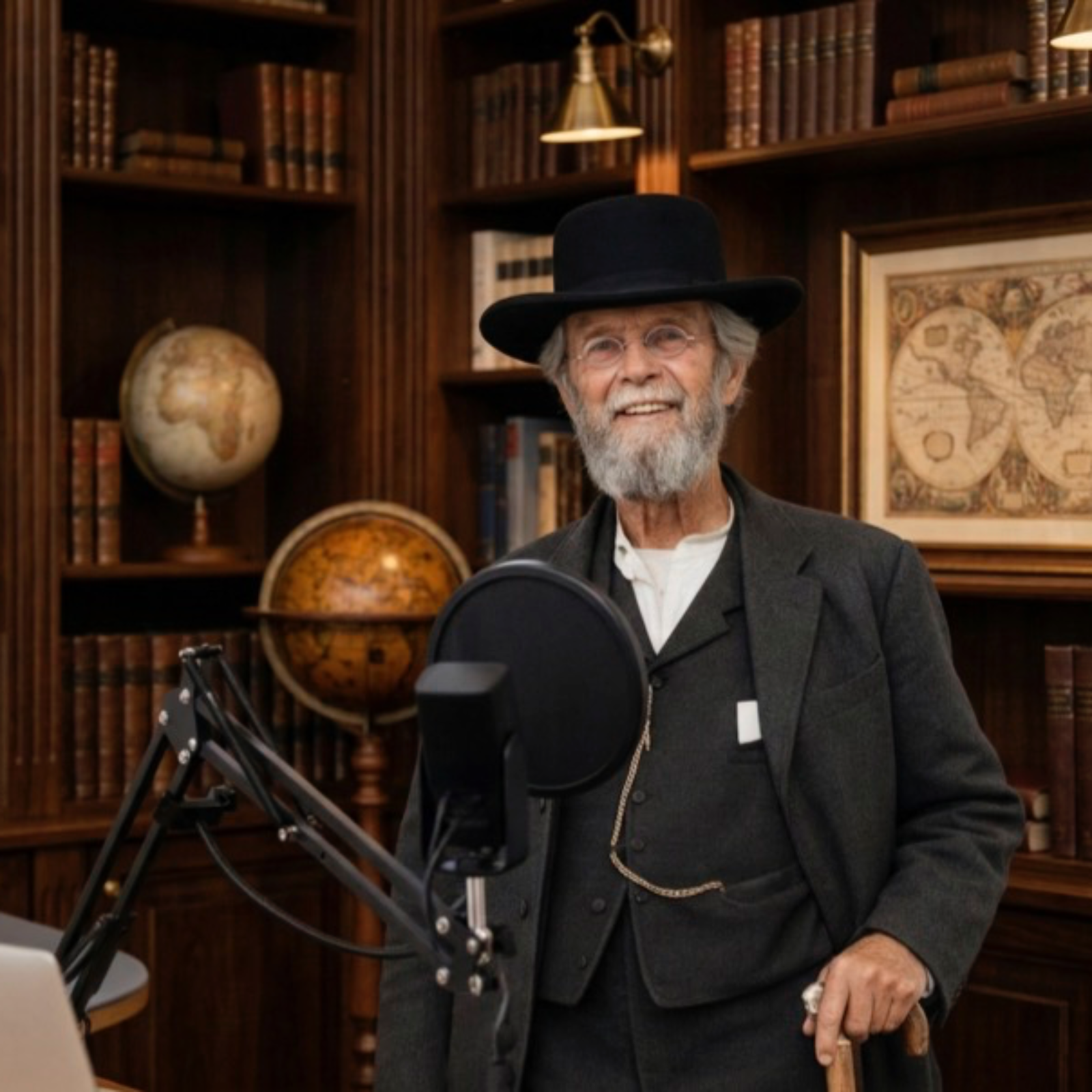
PODCAST · health
Medicine’s Rebel Child - Osteopathy through the ages
by Ed Paget
The history of medicine is written by the victors, but the story of osteopathy is found in the margins. Join us as we peel back the layers of a profession often dismissed, misunderstood, or mislabeled by the medical establishment. From its radical origins on the American frontier to its struggle for legal legitimacy, this podcast explores the tension between Andrew Taylor Still’s holistic vision and the rigid biomedical model that sought to contain it. We dive into the lost philosophy, the eccentric metaphors, and the "sanitized" history of a practice that has always insisted: there is more to health than the absence of disease.
-
1
Early Osteopathy, Native American Traditions, and Neuroscience
This podcast is based on the article by Zegarra-Parodi et al (2019) The Native American heritage of the body-mind-spirit paradigm in osteopathic principles and practices. https://www.sciencedirect.com/science/article/pii/S1746068919300793We explore the deep, often overlooked connections between Native American traditional healing and the foundations of osteopathic medicine. We discuss how A.T. Still, the founder of osteopathy, was influenced by the body-mind-spirit paradigm used by Native American Medicine Men to develop a holistic approach to health while living among the Shawnee people.The conversation examines the Medicine Wheel as a conceptual framework for achieving balance across physical, mental, and spiritual factors. We also investigate the transition between monophasic and polyphasic brain functioning—moving beyond Western-centric labels to understand how spiritual experiences and different realities are now being interpreted through modern neuroscience and predictive processing models. Ultimately, we highlight how the osteopathic profession is uniquely positioned to bridge its traditional heritage with a scientific model of truly holistic care.
-
0
How Osteopathy Erased It's Soul
This podcast highlights an academic review published in the journal Healthcare, 2024, that compares the 1897 and 1908 editions of Andrew Taylor Still’s autobiography to track the early evolution of osteopathy in America. The authors argue that revisions made to the second edition reflects a deliberate attempt to standardize the profession and gain legal recognition within a rapidly formalizing biomedical healthcare system. To avoid charges of sectarianism, reviewers sanitized the text by removing references to spiritualism, Native American influences, and eccentric metaphors. These findings highlight an early shift from Still's holistic, person-centered origins toward a more restricted, science-oriented medical model. Ultimately, the study encourages modern practitioners to reconsider how non-physical components of health might be reintegrated into contemporary patient care.
We're indexing this podcast's transcripts for the first time — this can take a minute or two. We'll show results as soon as they're ready.
No matches for "" in this podcast's transcripts.
No topics indexed yet for this podcast.
Loading reviews...
ABOUT THIS SHOW
The history of medicine is written by the victors, but the story of osteopathy is found in the margins. Join us as we peel back the layers of a profession often dismissed, misunderstood, or mislabeled by the medical establishment. From its radical origins on the American frontier to its struggle for legal legitimacy, this podcast explores the tension between Andrew Taylor Still’s holistic vision and the rigid biomedical model that sought to contain it. We dive into the lost philosophy, the eccentric metaphors, and the "sanitized" history of a practice that has always insisted: there is more to health than the absence of disease.
HOSTED BY
Ed Paget
Loading similar podcasts...
Frequently Asked Questions
How many episodes does Medicine’s Rebel Child - Osteopathy through the ages have?
Medicine’s Rebel Child - Osteopathy through the ages currently has 2 episodes available on PodParley. New episodes are automatically indexed when they're published to the podcast feed.
What is Medicine’s Rebel Child - Osteopathy through the ages about?
The history of medicine is written by the victors, but the story of osteopathy is found in the margins. Join us as we peel back the layers of a profession often dismissed, misunderstood, or mislabeled by the medical establishment. From its radical origins on the American frontier to its struggle...
How often does Medicine’s Rebel Child - Osteopathy through the ages release new episodes?
Medicine’s Rebel Child - Osteopathy through the ages has 2 episodes. Check the episode list to see recent publication dates and frequency.
Where can I listen to Medicine’s Rebel Child - Osteopathy through the ages?
You can listen to Medicine’s Rebel Child - Osteopathy through the ages on PodParley by clicking any episode. We provide an embedded audio player for direct listening, and you can also subscribe via your preferred podcast app using the RSS feed.
Who hosts Medicine’s Rebel Child - Osteopathy through the ages?
Medicine’s Rebel Child - Osteopathy through the ages is created and hosted by Ed Paget.
URL copied to clipboard!