
PODCAST · news
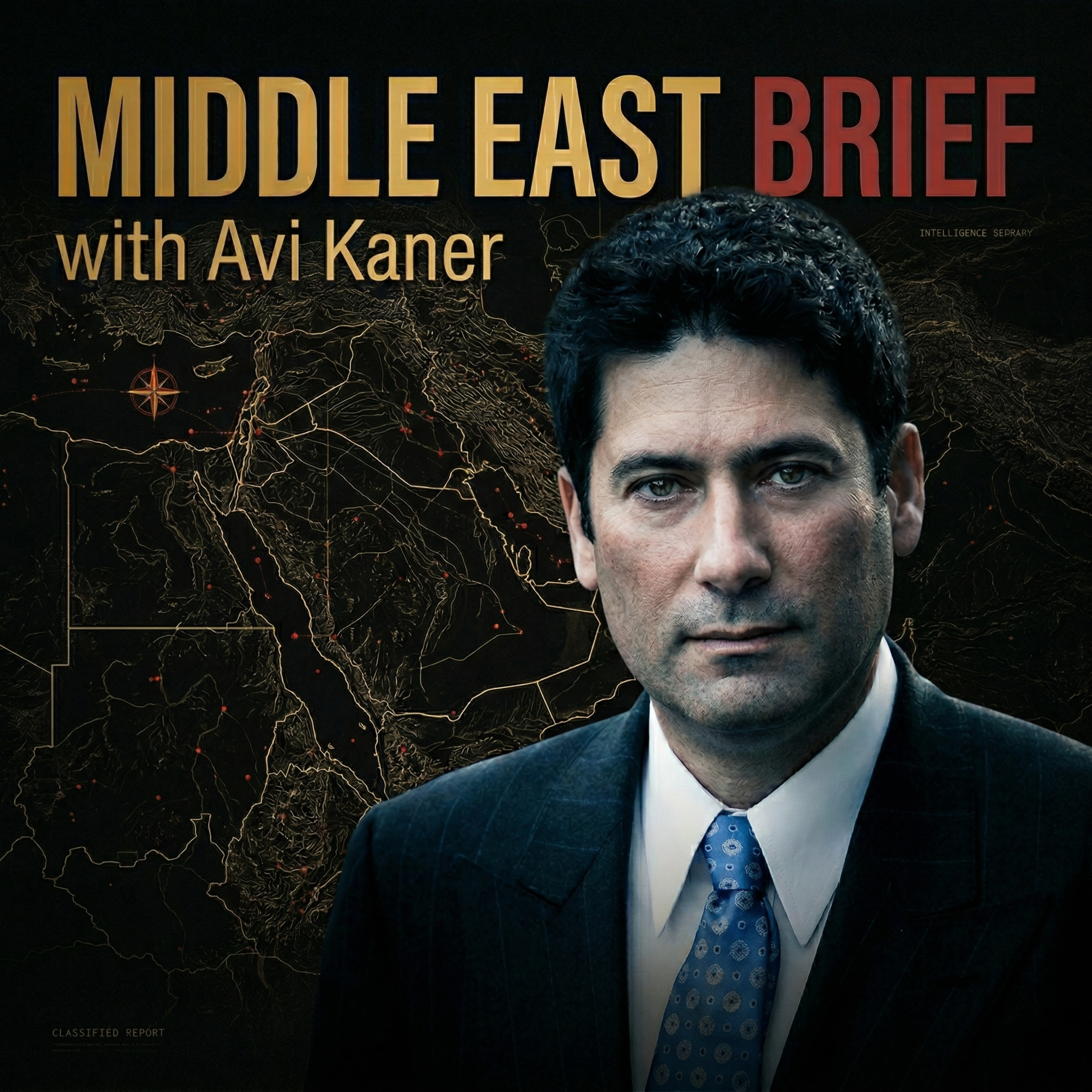
Middle East Brief with Avi Kaner
by Avi Kaner
A daily 5-minute intelligence briefing on the Middle East, focusing on what actually matters.Clear analysis, no noise.
-
43
Lag BaOmer: From Roman Rebellion to Modern Israel
Bonfires light up the skies tonight across Israel and Jewish communities worldwide.Lag BaOmer is more than a holiday.It is a story of survival that stretches back nearly 2,000 years.In today’s episode:The Bar Kokhba revolt against RomeRabbi Shimon bar Yochai and the meaning behind the dayWhy Safed became the spiritual center of Jewish lifeThe powerful connection felt walking through its ancient cemeteryThe massive gathering in Meron each yearHow modern Israel reflects that same resilienceThreats today from the Iranian regime and its proxiesAnd a new chapter: alliances between Israel and the UAEFrom exile to sovereignty.From isolation to partnership.
-
42
Israel’s F-35: The Most Advanced Fighter in Combat Today
Today’s episode explores why Israel’s F-35I Adir is one of the most advanced and battle-tested fighter jets in the world.Israel is the only country in the Middle East operating the F-35, and the only one that has used it in real combat.In this episode, Avi Kaner explains:What makes Israel’s customized F-35I uniqueWhy it acts as a “quarterback” directing other aircraftHow it penetrates advanced air defense systemsIsrael’s expanding fleet and recent additional ordersHow Israeli pilots trained alongside the UAE in GreeceHow the Israeli Air Force achieved air superiority in operations tied to IranThe rapid destruction of Iranian air defense systems early in the campaignWhy hundreds of missions were carried out without aircraft lossesAnd how this reshapes deterrence across the regionThis is not just a fighter jet.It is a strategic advantage.
-
41
Qatar, the Muslim Brotherhood, and the Power of Narrative
Qatar has roughly 300,000 citizens. Yet its reach spans continents through media, money, and political networks.In this episode, Avi Kaner explains:The central role of the Muslim Brotherhood in Qatar’s regional strategyHow Qatar provided safe haven and amplification for Brotherhood-linked figuresThe global reach of Al Jazeera across hundreds of millions of householdsHow narratives during the Gaza war were shaped and debatedQatar’s financial footprint across Western universitiesIts media partnerships and global visibilityThe 2017 GCC crisis and the demands Qatar never fulfilledThe long-term impact of sustained narrative influence on younger generationsAnd what transparency, accountability, and competition can do in response
-
40
Iron Beam Laser: Israel’s Next-Generation Defense
Today’s episode explores one of the most advanced military technologies in the world: Israel’s Iron Beam laser defense system.How does it work, and why could it change the future of warfare?In this episode, Avi Kaner explains:How Iron Beam uses high-energy lasers instead of interceptor missilesWhy it dramatically lowers the cost of defending against rockets and dronesWhy Israel is currently the only country with a high-power laser air defense system used in real-world scenariosHow the system is now being deployed in northern Israel to counter Hezbollah threatsWhy reports suggest it may have been deployed to the UAE to defend against Iranian regime attacksHow the technology relies as much on advanced computing as it does on lasersWhy it has even been tested on fighter jets for potential offensive useAnd how this fits into the future of global warfareThis is not just a defense upgrade.It is a transformation in how wars are fought.
-
39
BRICS and the Illusion of Unity
Today’s episode takes a hard look at BRICS and asks a simple question: is it really a global challenger, or just a collection of competing interests?In this episode, Avi Kaner explains:Why BRICS presents itself as an alternative global orderThe internal contradictions among membersWhy the group failed to respond when Iran attacked fellow members UAE and Saudi ArabiaWhy expansion has created more division, not more strengthWhy there is still no BRICS currency or unified financial systemWhy major economies have stayed outAnd why BRICS now risks losing members instead of gaining influenceBRICS talks big.But when tested, it struggles to act.
-
38
UAE Leaves OPEC: A Win for the UAE and the World
Today’s episode explores a major global energy story: the United Arab Emirates leaving OPEC effective May 1.Why would one of the world’s most sophisticated producers choose independence, and why could this benefit global markets?In this episode, Avi Kaner explains:Why the UAE says it is ready to chart its own pathHow years of investment expanded production capacityWhy more flexibility can help global supply and price stabilityHow markets reacted positively after the announcementWhy analysts expect faster UAE supply growth aheadHow Fujairah gives the UAE strategic export advantagesWhy the UAE is now much bigger than oilHow leadership transformed the country into a hub for aviation, tourism, finance, ports, AI, and innovationWhy this move is about more than energy policyAnd what it says about ambitious nations shaping their own futureThis is not just an oil story.It is a leadership story.
-
37
Israel and Somaliland: A Strategic Opportunity
Today’s episode explores one of the most overlooked geopolitical developments in the world: Israel’s recognition of Somaliland.Why did it happen, and what could come next?In this episode, Avi Kaner explains:Why Israel became the first country to recognize SomalilandHow people in Somaliland celebrated in the streets waving Israeli flagsWhy Israel’s appointment of an ambassador mattersWhy Senator Ted Cruz says the United States should recognize Somaliland tooWhy Somalia’s objections look contradictory given it does not recognize IsraelHow Somaliland built stability, institutions, and elections since 1991Why its 460 miles of coastline make it strategically valuableHow the UAE, through DP World, transformed Berbera PortWhy the Berbera Corridor to Ethiopia is economically significantHow Israeli innovation, Emirati capital, and Somaliland geography could become a powerful combinationA relationship few were watching may become one of the most interesting stories in the region.
-
36
Israel’s New Political Moment: Bennett and Lapid Unite
Today’s episode explores a major political development in Israel: former prime ministers Naftali Bennett and Yair Lapid joining forces under a new alliance called Together.What does it mean, and why does it matter?In this episode, Avi Kaner explains:How Israel’s parliamentary system worksWhy 61 seats in the 120-member Knesset is the magic numberWhy fragmented opposition politics helped Netanyahu for yearsHow Bennett and Lapid differ ideologically, yet complement each other politicallyWhy Bennett’s official visits to the UAE and Bahrain were historicHow the Bennett-Lapid government included an Arab party for the first timeWhat issues may define the next electionAnd why this race may be about more than left versus rightIsrael’s next election has not been held yet.But with yesterday's announcement, the campaign entered a very different phase.
-
35
Israel’s Druze: Loyalty, Sacrifice, and a Shared Future
Today’s episode highlights one of the most remarkable communities in the Middle East: the Druze citizens of Israel.During the holiday period of Ziyarat al-Nabi Shuʿayb, centered at the shrine near Tiberias, Avi Kaner explores the history, loyalty, and sacrifice of the Druze community.In this episode:Who the Druze are and where they liveWhy their bond with Israel became historicHow their service record has been outsized for such a small communityExamples of Druze generals, officers, diplomats, and politiciansThe story of fallen heroes like Mahmoud Kheir al-Din and Zidan SaifHow Druze shaped the IDF, police, and public lifeThe distinct story of the Golan Heights DruzeWhy younger generations there are increasingly integrating into Israeli societyAnd what the Druze example says about shared citizenship in the Middle EastA small community.A profound legacy.A bond written in sacrifice.
-
34
From Taboo to the Oval Office: Israel-Lebanon Talks
Today’s episode explores how something once unthinkable is now being discussed openly: high-level talks involving Israel and Lebanon.For decades, contact was taboo and often illegal.Movies were banned.Books were censored.Even the perception of contact could carry consequences.In this episode, Avi Kaner explains:How Lebanese anti-normalization laws shaped public lifeExamples of banned films and booksHow millions in the Lebanese diaspora can travel to Israel visa-freeWhy Israelis, Jews, and Lebanese often build friendships abroadHow Hezbollah’s weakening changed the regional landscapeWhy sovereignty and a stronger Lebanese state are now central themesAnd why these talks would have been unimaginable just a short time agoFrom taboo to dialogue.From the shadows to the Oval Office.
-
33
Iran’s Fragile Economy: From Revolution to Collapse
Today’s episode explores how a country rich in oil, talent, and history reached economic fragility.Poverty has spread.The currency has collapsed to an all-time low.And the risks may be growing.In this episode, Avi Kaner explains:How Iran’s economy changed after 1979The impact of war, sanctions, and state controlWhy the IRGC became an economic power centerHow the rial collapsed from around 70 per dollar to roughly 1.5 millionWhat ordinary wages buy today versus the pastWhy many young people feel opportunity is closed to themHow corruption and mismanagement helped fuel water and infrastructure crisesWhy economic pain repeatedly sparked uprisingsHow a sustained blockade could deepen the crisisAnd whether financial pressure could eventually threaten regime survivalA country with enormous potential now faces a defining question:When does the economic fragility become the breaking point?
-
32
The Indefinite Ceasefire Strategy
Today’s episode explains why an indefinite ceasefire is a powerful strategy.In this episode, Avi Kaner breaks down a hybrid approach to dealing with the Iranian regime:Why extending a ceasefire while maintaining a blockade can increase pressureHow time itself can become a strategic weaponWhy no U.S. ground war may be the smarter pathHow economic pressure can weaken the regime faster than headlines suggestWhat today’s seizure of commercial ships reveals about regime behaviorHow precision strikes can complement economic pressureAnd why a ceasefire can become the most efficient form of pressureNo bullets fired unnecessarily.No American lives lost.And the regime still bleeding.
-
31
From Remembrance to Rebirth: Israel’s Two Most Powerful Days
Today’s episode explores one of the most emotional transitions in the world:Israel’s Memorial Day, followed immediately by Independence Day.Two national days.Opposite emotions.Connected forever.In this episode, Avi Kaner explains:The meaning of Yom HaZikaronWhy sirens stop traffic across IsraelHow the nation remembers fallen soldiers and terror victimsWhy every celebration carries the memory of sacrificeWhy Independence Day begins as Memorial Day endsHow grief and gratitude are linked in Israel’s national storyAnd why remembrance and rebirth define the country’s identityMany nations celebrate independence.Few move from silence to song in a single evening.From remembrance to rebirth.From sacrifice to sovereignty.That is Israel’s story.
-
30
Saudi Arabia Behind the Scenes
Today’s episode explores why Saudi Arabia may be the most important quiet force shaping the Middle East right now.Not through headlines.Through influence.In this episode, Avi Kaner explains:Why Saudi Arabia pressed for the Israel-Lebanon ceasefireHow billions will be invested to strengthen Lebanon’s armyThe quiet strategic overlap between Saudi Arabia and Israel against IranHow the Abraham Accords required Saudi approval behind the scenesWhy Donald Trump chose Saudi Arabia first in both termsHow Crown Prince Mohammed bin Salman is reshaping Saudi strategyAnd why Riyadh matters more than the loudest voices in the regionThe old Middle East rewarded the loudest actor.The new Middle East may reward the most constructive one.
-
29
Argentina's Javier Milei in Israel: Why This Visit Matters
Today’s episode explores why Argentina's President Javier Milei’s visit to Israel matters far beyond protocol.This is not just a state visit.It is a statement of values, alignment, and historic friendship.In this episode, Avi Kaner explains:Why Milei’s first stop at the Western Wall was so symbolicThe deep history between Argentina and IsraelArgentina’s large and historic Jewish communityWhy visiting during wartime sends a powerful messageThe significance of Milei’s strong anti-Iranian regime stanceWhy Israel matters in Milei’s worldviewThe economic opportunities between the two countriesAnd why being chosen to light a torch at Israel’s Independence Day ceremony is historicThe torch-lighting ceremony is one of Israel’s most emotional national traditions.Usually, the honor goes to Israelis who embody courage, service, innovation, and national contribution.For the first time, a foreign leader is being included.That says everything.And it signifies that in an age of ambiguity, some leaders still choose clarity.
-
28
The Israel-Lebanon Ceasefire: What It Really Signifies
Today’s episode breaks down the new Israel-Lebanon ceasefire agreement and why it means more than a temporary halt in fighting.This is not just about ten days.It is about the future of Lebanon.In this episode, Avi Kaner explains:The key terms of the 10-day ceasefireWhy the Lebanese state is central to enforcementWhat “one state, one army” could mean in practiceIsrael’s retained right of self-defenseWhy U.S.-brokered direct talks matterHow this could weaken the old militia modelWhy both Israel and Lebanon may now want the same outcomeAnd why public talks like this were almost unimaginable just a year agoThis may be a ceasefire.But it could also be the start of something larger.
-
27
Israel's Shekel at Record Highs
Israel’s currency is reaching record highs.And it’s happening during war.In this episode, Avi Kaner explains why the shekel’s strength matters, what it signals, and the remarkable history behind Israel’s modern currency.How the ancient word “shekel” returned in modern IsraelIsrael’s first post-independence currency: the Israeli liraThe launch of the New Israeli Shekel in 1985Why currencies usually weaken during conflictWhy the shekel is strengthening insteadHow markets measure confidence beyond headlinesWhat Israel’s innovation economy means for investorsAnd why this may reflect a bigger regional opportunity storyThis is more than a currency move.It is a signal of resilience, confidence, and long-term value.
-
26
A sovereign Lebanon, led by its institutions and protected by a strong national army
Yesterday’s Israel-Lebanon talks in Washington were about more than diplomacy.They were about whether Lebanon can fully reclaim its sovereignty.In this episode, Avi Kaner explains why both Israel and Lebanon now have an interest in the same outcome:A sovereign Lebanon led by its institutions and protected by a strong national army.Why public talks would have been unimaginable a year agoHow Iran’s grip over Lebanon has weakenedWhy a state cannot coexist with a stronger militiaWhy the Lebanese Armed Forces matter now more than everHow Saudi Arabia, the UAE, and the U.S. all have a stake in successAnd why this could become a genuine win-win for both sidesLebanon’s sovereignty is not just a slogan.It requires strength, legitimacy, and one army under one state.
-
25
The Saudi Pipeline That Changes the Gulf Game
Everyone talks about the Strait of Hormuz.But Saudi Arabia built an alternative.In this episode, Avi Kaner explains the East-West Pipeline, also known as Petroline, and why it changes the strategic map of the Middle East.How the pipeline moves oil from the Gulf to the Red SeaWhy it was built during the Iran-Iraq WarIts estimated capacity todayRecent Iranian regime attacks and rapid repairsWhy chokepoints matter less when backups existHow Crown Prince Mohammed bin Salman’s broader vision fits into the storyAnd why future routes to the Mediterranean, including Haifa, may now be closer than many thinkThis is not just a pipeline.It is strategy, resilience, and optionality.
-
24
Why the Blockade of Iranian Ports Matters More Than Headlines
The United States has announced a blockade starting today.But not of the Strait of Hormuz.Only of ships going to and from Iranian ports.That distinction changes everything.In this episode, Avi Kaner explains why targeting Iranian ports is more effective than other options.Why this is targeted pressure, not global disruptionThe key ports that drive Iran’s economyHow the regime and IRGC depend on cash flowWhy export losses could reach hundreds of millions per dayHow storage limits create a second wave of pressureWhy economic leverage can be stronger than spectacleThis is not about headlines.It’s about money, pressure, and control.
-
23
France’s Iraq Embassy in a Seized Jewish House
A Jewish family built a grand home in Baghdad, Iraq in 1937.France rented it.Today, it still occupies that same home as its embassy.But not by paying the family that built it.By paying the Iraqi government that seized it.In this episode, Avi Kaner tells the story of Beit Lawee, and the much larger story it represents:Who the Lawee family wereJewish life in Iraq before its collapseThe Farhud pogrom of 1941The mass exodus of Iraqi JewsThe confiscation of Jewish property after 1967And why, decades later, none of it has been restoredThis is not just one house.It’s an entire lost world.
-
22
Why Peace Between Israel and Lebanon Is Possible
There was a time when Jewish tourists traveled to Lebanon.Beirut was a destination.Hotels, restaurants, nightlife.A Mediterranean city that drew people in.This isn’t ancient history.It’s within living memory.In this episode, Avi Kaner looks back at a very different reality between Israel and Lebanon—and what changed.The history of the Jewish community in LebanonPersonal roots in the Becca ValleyThe Lebanese Jewish diasporaHow conflict replaced connectionAnd why recent shifts may be opening a narrow window for something differentIsrael is not fighting Lebanon.It’s fighting Hezbollah.And today, that dynamic may be changing.This is not just a story of conflict.It’s a story of what once was, and what could be again.
-
21
Hezbollah Explained: Power, Money, and Control
Before we can understand what’s happening between Israel and Lebanon, we need to understand Hezbollah.Because Hezbollah is not just a militia.It’s a system.Part military.Part political.Part economic.And it sits at the center of power inside Lebanon.In this episode, Avi Kaner breaks down:What Hezbollah is and how it was formedHow it grew from a militant group into a dominant forceIts financial networks and global reachIts backing from the Iranian regimeWhat it is doing in Lebanon todayAnd why, without Hezbollah, Lebanon and Israel might look very different.Shared geography.Shared economic interests.Even shared people, including a historic Lebanese Jewish community and diaspora.This is not just a conflict story.It’s a power structure.
-
20
The Strait of Hormuz Opened. Iranian Regime Fragmented.
At 8 PM, the United States set a clear deadline: reopen the Strait of Hormuz or face consequences.The Iranian regime complied.Oil dropped. Markets rallied.But attacks continued.So what actually happened?In this episode, Avi Kaner breaks down why the Strait reopening was real, but the system behind it did not fully align.Who is actually calling the shots inside the Iranian regimeWhy compliance didn’t cost much but revealed a limit.Why attacks continue even after agreement.What markets are telling us about risk.
-
19
The 8 PM Deadline: Who Is the U.S. Really Negotiating With?
A clock is now part of the conflict.At 8 PM Eastern, a public deadline set by the United States expires. Make a deal or face targeted strikes within hours.But a deeper question is emerging:Who is the United States actually negotiating with?This episode breaks down:Why deadlines compress decisionsWhy they increase riskWhy power inside the Iranian regime may not sit with its public leadersAnd how that changes what happens nextThis is not just about the deadline.It’s about who controls the response.
-
18
The Iran War on X: What Leaders Are Really Signaling
Everyone is watching missiles.Fewer are watching the signals.On X, world leaders are communicating in real time. Not just to inform, but to signal.In this episode, Avi Kaner breaks down how the United States, Israel, and the Iranian regime use public messaging to shape perception, influence adversaries, and manage escalation.Why U.S. signals are fragmentedWhy the Iranian regime is speaking to the outside world, not its own peopleWhy Israel projects consistency despite internal political divisionThis is not about what is said.It’s about what it means.
-
17
The IRGC: Iran’s Real Power - Military, Money, and Control
To understand how power works in Iran, you have to look beyond the government.You have to look at the Islamic Revolutionary Guard Corps, or IRGC.Created after the 1979 revolution, its purpose was not to defend the country. It was to defend the system.Today, it operates across multiple layers: internal security, regional operations, and a vast economic network spanning construction, energy, telecommunications, and infrastructure.Estimates suggest the IRGC controls or influences tens of billions of dollars in economic activity, with some placing that number well over $100 billion.Ownership on paper may be distributed across state companies, religious foundations, and private firms.But control is concentrated.Those closest to the system benefit most.And that structure shapes how power and money flow throughout the country.This is not just a military force.It is a core pillar of the system.
-
16
The Basij Militia: How Iranian Regime Maintains Control - And Where It Can Break
To understand how the Iranian regime maintains control, you have to understand the Basij militia.Created after the 1979 revolution, the Basij is not just a security force. It is embedded inside society, operating in neighborhoods, universities, and workplaces to monitor, enforce, and deter dissent.But what makes it different is visibility.In many cases, Iranians know exactly who the Basij are. They are not anonymous. They are neighbors, classmates, and colleagues.And the Basij know this.That creates a unique dynamic. One that reinforces control in the short term, but introduces pressure over time.History shows that systems built on internal control can be highly effective - until they are not.From East Germany to Iraq to the Soviet Union, similar structures maintained power for years. But under sustained internal and external pressure, they can weaken quickly as fear erodes, loyalty shifts, and compliance becomes less predictable.Recent developments suggest that pressure on Iran’s internal control systems may be increasing.This is not just about how the regime maintains control.It is about where that control can begin to break.
-
15
The Iranian Diaspora and the Push for Regime Change
A significant portion of the calls for regime change in Iran are coming from outside the country.From the Iranian diaspora.There are roughly 4–5 million Iranians living abroad, with even larger numbers when including the second generation. Many left after the 1979 revolution, while others followed during periods of war, repression, and economic decline.Today, parts of this global community are among the most vocal advocates for regime change. They organize protests, shape narratives, and influence political conversations across the United States and Europe.Overnight, continued crackdowns inside Iran, including arrests of dissidents and expanded internal security presence by the IRGC and the Basij militia, highlight why this sentiment is intensifying.This is not just a story inside Iran.It is being amplified globally.
-
14
Trump’s Iran Speech: What Many Missed
Most of the pre-speech predictions were wrong.Trump’s address on Iran wasn’t about a headline. It was about signaling.While early coverage focused on what was said or not said, the real takeaway was the structure of the message: pressure, optionality, and ongoing action.Overnight reactions followed predictable lines, but something else happened as well. Unsubstantiated claims spread rapidly online, showing how the information battlefield continues to shape perception in real time.This is not a moment of resolution.It is a moment of shaping.
-
13
Disinformation Warfare and the Iran Narrative Machine
Disinformation is now a central battlefield in the Middle East.These campaigns shape perception in real time, influence public opinion, and impact policy decisions.At the same time, major platforms like Al Jazeera, backed by the Qatari regime, amplify and reinforce these narratives at global scale.This is not just a media problem.It is a strategic weapon.
-
12
Kharg Island and the Pressure Point on Iran’s Economy
Kharg Island sits at the center of the Iranian regime’s economic lifeline.Oil revenues flowing through this single point fund the army, the IRGC, the Basij, and a network of regional proxies including Hezbollah in Lebanon.As U.S. Marines and other forces move into position, pressure is building.At the same time, the regime is signaling broader escalation while trying to outlast the United States and Israel.The question is no longer whether Kharg Island matters.It is how far different actors are willing to go to disrupt it.
-
11
Hezbollah Escalation and Iran’s Endurance Strategy
Hezbollah escalates from Lebanon.The mullah regime is not trying to win quickly - it is trying to outlast Israel and the United States.Israel signals it will not accept a prolonged war of attrition.What this actually means for the Middle East.
We're indexing this podcast's transcripts for the first time — this can take a minute or two. We'll show results as soon as they're ready.
No matches for "" in this podcast's transcripts.
No topics indexed yet for this podcast.
Loading reviews...
Loading similar podcasts...
Frequently Asked Questions
How many episodes does Middle East Brief with Avi Kaner have?
Middle East Brief with Avi Kaner currently has 33 episodes available on PodParley. New episodes are automatically indexed when they're published to the podcast feed.
What is Middle East Brief with Avi Kaner about?
A daily 5-minute intelligence briefing on the Middle East, focusing on what actually matters.Clear analysis, no noise.
How often does Middle East Brief with Avi Kaner release new episodes?
Middle East Brief with Avi Kaner has 33 episodes. Check the episode list to see recent publication dates and frequency.
Where can I listen to Middle East Brief with Avi Kaner?
You can listen to Middle East Brief with Avi Kaner on PodParley by clicking any episode. We provide an embedded audio player for direct listening, and you can also subscribe via your preferred podcast app using the RSS feed.
Who hosts Middle East Brief with Avi Kaner?
Middle East Brief with Avi Kaner is created and hosted by Avi Kaner.
URL copied to clipboard!