
PODCAST · history
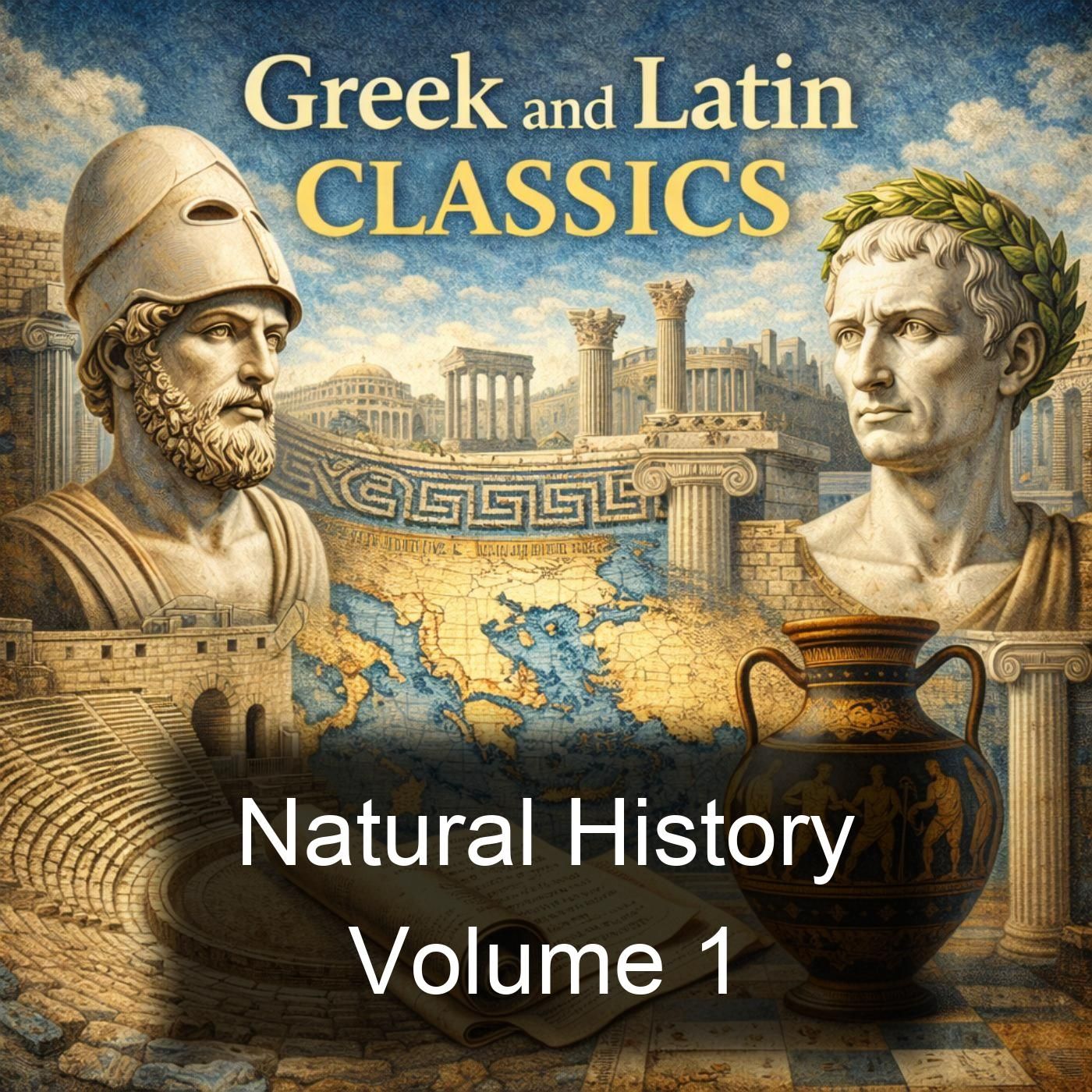
Natural History Volume 1
by Pliny the Elder
Delve into the marvels of the ancient world with Naturalis Historia, an encyclopedia masterfully crafted by Pliny the Elder around AD 77-79. This monumental work is one of the Roman Empires most significant legacies, offering a rich tapestry of knowledge that explores every facet of nature and humanitys relationship with it. Pliny meticulously cites original authors and organizes his discoveries into a comprehensive index, setting a benchmark for future encyclopedias. The text spans the organic—plants and animals—and the inorganic, featuring captivating digressions throughout. Plinys keen observations not only catalog diverse species but also examine their exploitation, especially in Roman society. His extensive accounts of metals and minerals provide invaluable insights into the history of science, making this volume a treasure trove of ancient wisdom. This first volume includes the initial five books, covering vital topics such as the dedication, an overview of the world and its elem
-
35
035 - Book 5 Chapters 40-44 and SummaryThe Hellespont and Mysia Phrygia Galatia and the adjoining nations
Delve into the marvels of the ancient world with Naturalis Historia, an encyclopedia masterfully crafted by Pliny the Elder around AD 77-79. This monumental work is one of the Roman Empires most significant legacies, offering a rich tapestry of knowledge that explores every facet of nature and humanitys relationship with it. Pliny meticulously cites original authors and organizes his discoveries into a comprehensive index, setting a benchmark for future encyclopedias. The text spans the organic—plants and animals—and the inorganic, featuring captivating digressions throughout. Plinys keen observations not only catalog diverse species but also examine their exploitation, especially in Roman society. His extensive accounts of metals and minerals provide invaluable insights into the history of science, making this volume a treasure trove of ancient wisdom. This first volume includes the initial five books, covering vital topics such as the dedication, an overview of the world and its elements, and detailed accounts of countries, nations, seas, towns, and peoples, both past and present.
-
34
034 - Book 5 Chapters 33-39Troas and the adjoining nations The islands which lie in front of Asia Cyprus R
Delve into the marvels of the ancient world with Naturalis Historia, an encyclopedia masterfully crafted by Pliny the Elder around AD 77-79. This monumental work is one of the Roman Empires most significant legacies, offering a rich tapestry of knowledge that explores every facet of nature and humanitys relationship with it. Pliny meticulously cites original authors and organizes his discoveries into a comprehensive index, setting a benchmark for future encyclopedias. The text spans the organic—plants and animals—and the inorganic, featuring captivating digressions throughout. Plinys keen observations not only catalog diverse species but also examine their exploitation, especially in Roman society. His extensive accounts of metals and minerals provide invaluable insights into the history of science, making this volume a treasure trove of ancient wisdom. This first volume includes the initial five books, covering vital topics such as the dedication, an overview of the world and its elements, and detailed accounts of countries, nations, seas, towns, and peoples, both past and present.
-
33
033 - Book 5 Chapters 29-32Caria Lydia Ionia Aeolis
Delve into the marvels of the ancient world with Naturalis Historia, an encyclopedia masterfully crafted by Pliny the Elder around AD 77-79. This monumental work is one of the Roman Empires most significant legacies, offering a rich tapestry of knowledge that explores every facet of nature and humanitys relationship with it. Pliny meticulously cites original authors and organizes his discoveries into a comprehensive index, setting a benchmark for future encyclopedias. The text spans the organic—plants and animals—and the inorganic, featuring captivating digressions throughout. Plinys keen observations not only catalog diverse species but also examine their exploitation, especially in Roman society. His extensive accounts of metals and minerals provide invaluable insights into the history of science, making this volume a treasure trove of ancient wisdom. This first volume includes the initial five books, covering vital topics such as the dedication, an overview of the world and its elements, and detailed accounts of countries, nations, seas, towns, and peoples, both past and present.
-
32
032 - Book 5 Chapters 20-28The Euphrates Syria upon the Euphrates Cilicia and the adjoining nations Isauri
Delve into the marvels of the ancient world with Naturalis Historia, an encyclopedia masterfully crafted by Pliny the Elder around AD 77-79. This monumental work is one of the Roman Empires most significant legacies, offering a rich tapestry of knowledge that explores every facet of nature and humanitys relationship with it. Pliny meticulously cites original authors and organizes his discoveries into a comprehensive index, setting a benchmark for future encyclopedias. The text spans the organic—plants and animals—and the inorganic, featuring captivating digressions throughout. Plinys keen observations not only catalog diverse species but also examine their exploitation, especially in Roman society. His extensive accounts of metals and minerals provide invaluable insights into the history of science, making this volume a treasure trove of ancient wisdom. This first volume includes the initial five books, covering vital topics such as the dedication, an overview of the world and its elements, and detailed accounts of countries, nations, seas, towns, and peoples, both past and present.
-
31
031 - Book 5 Chapters 14-19Idumaea Palaestina and Samaria Judaea Decapolis Phoenice Syria Antiochia The re
Delve into the marvels of the ancient world with Naturalis Historia, an encyclopedia masterfully crafted by Pliny the Elder around AD 77-79. This monumental work is one of the Roman Empires most significant legacies, offering a rich tapestry of knowledge that explores every facet of nature and humanitys relationship with it. Pliny meticulously cites original authors and organizes his discoveries into a comprehensive index, setting a benchmark for future encyclopedias. The text spans the organic—plants and animals—and the inorganic, featuring captivating digressions throughout. Plinys keen observations not only catalog diverse species but also examine their exploitation, especially in Roman society. His extensive accounts of metals and minerals provide invaluable insights into the history of science, making this volume a treasure trove of ancient wisdom. This first volume includes the initial five books, covering vital topics such as the dedication, an overview of the world and its elements, and detailed accounts of countries, nations, seas, towns, and peoples, both past and present.
-
30
030 - Book 5 Chapters 9-13Egypt and Thebais The River Nile The cities of Egypt The coasts of Arabia situat
Delve into the marvels of the ancient world with Naturalis Historia, an encyclopedia masterfully crafted by Pliny the Elder around AD 77-79. This monumental work is one of the Roman Empires most significant legacies, offering a rich tapestry of knowledge that explores every facet of nature and humanitys relationship with it. Pliny meticulously cites original authors and organizes his discoveries into a comprehensive index, setting a benchmark for future encyclopedias. The text spans the organic—plants and animals—and the inorganic, featuring captivating digressions throughout. Plinys keen observations not only catalog diverse species but also examine their exploitation, especially in Roman society. His extensive accounts of metals and minerals provide invaluable insights into the history of science, making this volume a treasure trove of ancient wisdom. This first volume includes the initial five books, covering vital topics such as the dedication, an overview of the world and its elements, and detailed accounts of countries, nations, seas, towns, and peoples, both past and present.
-
29
029 - Book 5 Chapters 4-8The Syrtes Cyrenaica Libya Mareotis the islands in the vicinity of Africa Countri
Delve into the marvels of the ancient world with Naturalis Historia, an encyclopedia masterfully crafted by Pliny the Elder around AD 77-79. This monumental work is one of the Roman Empires most significant legacies, offering a rich tapestry of knowledge that explores every facet of nature and humanitys relationship with it. Pliny meticulously cites original authors and organizes his discoveries into a comprehensive index, setting a benchmark for future encyclopedias. The text spans the organic—plants and animals—and the inorganic, featuring captivating digressions throughout. Plinys keen observations not only catalog diverse species but also examine their exploitation, especially in Roman society. His extensive accounts of metals and minerals provide invaluable insights into the history of science, making this volume a treasure trove of ancient wisdom. This first volume includes the initial five books, covering vital topics such as the dedication, an overview of the world and its elements, and detailed accounts of countries, nations, seas, towns, and peoples, both past and present.
-
28
028 - Book 5 Chapters 1-3The two Mauritanias Numidia Africa
Delve into the marvels of the ancient world with Naturalis Historia, an encyclopedia masterfully crafted by Pliny the Elder around AD 77-79. This monumental work is one of the Roman Empires most significant legacies, offering a rich tapestry of knowledge that explores every facet of nature and humanitys relationship with it. Pliny meticulously cites original authors and organizes his discoveries into a comprehensive index, setting a benchmark for future encyclopedias. The text spans the organic—plants and animals—and the inorganic, featuring captivating digressions throughout. Plinys keen observations not only catalog diverse species but also examine their exploitation, especially in Roman society. His extensive accounts of metals and minerals provide invaluable insights into the history of science, making this volume a treasure trove of ancient wisdom. This first volume includes the initial five books, covering vital topics such as the dedication, an overview of the world and its elements, and detailed accounts of countries, nations, seas, towns, and peoples, both past and present.
-
27
027 - Books 4 Chapters 31-37 and SummaryGallia Belgica Gallia Lugdunensis Gallia Aquitanica Nearer Spain i
Delve into the marvels of the ancient world with Naturalis Historia, an encyclopedia masterfully crafted by Pliny the Elder around AD 77-79. This monumental work is one of the Roman Empires most significant legacies, offering a rich tapestry of knowledge that explores every facet of nature and humanitys relationship with it. Pliny meticulously cites original authors and organizes his discoveries into a comprehensive index, setting a benchmark for future encyclopedias. The text spans the organic—plants and animals—and the inorganic, featuring captivating digressions throughout. Plinys keen observations not only catalog diverse species but also examine their exploitation, especially in Roman society. His extensive accounts of metals and minerals provide invaluable insights into the history of science, making this volume a treasure trove of ancient wisdom. This first volume includes the initial five books, covering vital topics such as the dedication, an overview of the world and its elements, and detailed accounts of countries, nations, seas, towns, and peoples, both past and present.
-
26
026 - Book 4 Chapters 26-30Scythia The islands of the Euxine The islands of the northern ocean Germany Nin
Delve into the marvels of the ancient world with Naturalis Historia, an encyclopedia masterfully crafted by Pliny the Elder around AD 77-79. This monumental work is one of the Roman Empires most significant legacies, offering a rich tapestry of knowledge that explores every facet of nature and humanitys relationship with it. Pliny meticulously cites original authors and organizes his discoveries into a comprehensive index, setting a benchmark for future encyclopedias. The text spans the organic—plants and animals—and the inorganic, featuring captivating digressions throughout. Plinys keen observations not only catalog diverse species but also examine their exploitation, especially in Roman society. His extensive accounts of metals and minerals provide invaluable insights into the history of science, making this volume a treasure trove of ancient wisdom. This first volume includes the initial five books, covering vital topics such as the dedication, an overview of the world and its elements, and detailed accounts of countries, nations, seas, towns, and peoples, both past and present.
-
25
025 - Book 4 Chapters 19-25The islands which lie before the lands already mentioned Crete Euboeia The Cycl
Delve into the marvels of the ancient world with Naturalis Historia, an encyclopedia masterfully crafted by Pliny the Elder around AD 77-79. This monumental work is one of the Roman Empires most significant legacies, offering a rich tapestry of knowledge that explores every facet of nature and humanitys relationship with it. Pliny meticulously cites original authors and organizes his discoveries into a comprehensive index, setting a benchmark for future encyclopedias. The text spans the organic—plants and animals—and the inorganic, featuring captivating digressions throughout. Plinys keen observations not only catalog diverse species but also examine their exploitation, especially in Roman society. His extensive accounts of metals and minerals provide invaluable insights into the history of science, making this volume a treasure trove of ancient wisdom. This first volume includes the initial five books, covering vital topics such as the dedication, an overview of the world and its elements, and detailed accounts of countries, nations, seas, towns, and peoples, both past and present.
-
24
024 - Book 4 Chapters 11-18Attica Boeotia Doris Phthiotis Thessaly Proper Magnesia Macedonia Thrace The Ae
Delve into the marvels of the ancient world with Naturalis Historia, an encyclopedia masterfully crafted by Pliny the Elder around AD 77-79. This monumental work is one of the Roman Empires most significant legacies, offering a rich tapestry of knowledge that explores every facet of nature and humanitys relationship with it. Pliny meticulously cites original authors and organizes his discoveries into a comprehensive index, setting a benchmark for future encyclopedias. The text spans the organic—plants and animals—and the inorganic, featuring captivating digressions throughout. Plinys keen observations not only catalog diverse species but also examine their exploitation, especially in Roman society. His extensive accounts of metals and minerals provide invaluable insights into the history of science, making this volume a treasure trove of ancient wisdom. This first volume includes the initial five books, covering vital topics such as the dedication, an overview of the world and its elements, and detailed accounts of countries, nations, seas, towns, and peoples, both past and present.
-
23
023 - Book 4 Chapters 1-10Epirus Acarnania Aetolia Locris and Phocis The Peloponnesus Achaia Messenia Laco
Delve into the marvels of the ancient world with Naturalis Historia, an encyclopedia masterfully crafted by Pliny the Elder around AD 77-79. This monumental work is one of the Roman Empires most significant legacies, offering a rich tapestry of knowledge that explores every facet of nature and humanitys relationship with it. Pliny meticulously cites original authors and organizes his discoveries into a comprehensive index, setting a benchmark for future encyclopedias. The text spans the organic—plants and animals—and the inorganic, featuring captivating digressions throughout. Plinys keen observations not only catalog diverse species but also examine their exploitation, especially in Roman society. His extensive accounts of metals and minerals provide invaluable insights into the history of science, making this volume a treasure trove of ancient wisdom. This first volume includes the initial five books, covering vital topics such as the dedication, an overview of the world and its elements, and detailed accounts of countries, nations, seas, towns, and peoples, both past and present.
-
22
022 - Book 3 Chapters 23-30 and SummaryIstria its people and locality The Alps and the Alpine nations Libu
Delve into the marvels of the ancient world with Naturalis Historia, an encyclopedia masterfully crafted by Pliny the Elder around AD 77-79. This monumental work is one of the Roman Empires most significant legacies, offering a rich tapestry of knowledge that explores every facet of nature and humanitys relationship with it. Pliny meticulously cites original authors and organizes his discoveries into a comprehensive index, setting a benchmark for future encyclopedias. The text spans the organic—plants and animals—and the inorganic, featuring captivating digressions throughout. Plinys keen observations not only catalog diverse species but also examine their exploitation, especially in Roman society. His extensive accounts of metals and minerals provide invaluable insights into the history of science, making this volume a treasure trove of ancient wisdom. This first volume includes the initial five books, covering vital topics such as the dedication, an overview of the world and its elements, and detailed accounts of countries, nations, seas, towns, and peoples, both past and present.
-
21
021 - Book 3 Chapters 18-22The fifth region of Italy The sixth region of ItalyThe eighth region of Italy T
Delve into the marvels of the ancient world with Naturalis Historia, an encyclopedia masterfully crafted by Pliny the Elder around AD 77-79. This monumental work is one of the Roman Empires most significant legacies, offering a rich tapestry of knowledge that explores every facet of nature and humanitys relationship with it. Pliny meticulously cites original authors and organizes his discoveries into a comprehensive index, setting a benchmark for future encyclopedias. The text spans the organic—plants and animals—and the inorganic, featuring captivating digressions throughout. Plinys keen observations not only catalog diverse species but also examine their exploitation, especially in Roman society. His extensive accounts of metals and minerals provide invaluable insights into the history of science, making this volume a treasure trove of ancient wisdom. This first volume includes the initial five books, covering vital topics such as the dedication, an overview of the world and its elements, and detailed accounts of countries, nations, seas, towns, and peoples, both past and present.
-
20
020 - Book 3 Chapters 15-17Magna Graecia beginning at Locri The second region of Italy The fourth region o
Delve into the marvels of the ancient world with Naturalis Historia, an encyclopedia masterfully crafted by Pliny the Elder around AD 77-79. This monumental work is one of the Roman Empires most significant legacies, offering a rich tapestry of knowledge that explores every facet of nature and humanitys relationship with it. Pliny meticulously cites original authors and organizes his discoveries into a comprehensive index, setting a benchmark for future encyclopedias. The text spans the organic—plants and animals—and the inorganic, featuring captivating digressions throughout. Plinys keen observations not only catalog diverse species but also examine their exploitation, especially in Roman society. His extensive accounts of metals and minerals provide invaluable insights into the history of science, making this volume a treasure trove of ancient wisdom. This first volume includes the initial five books, covering vital topics such as the dedication, an overview of the world and its elements, and detailed accounts of countries, nations, seas, towns, and peoples, both past and present.
-
19
019 - Book 3 Chapters 10-14The third region of Italy Sixty-four islands among which are the Baleares Corsi
Delve into the marvels of the ancient world with Naturalis Historia, an encyclopedia masterfully crafted by Pliny the Elder around AD 77-79. This monumental work is one of the Roman Empires most significant legacies, offering a rich tapestry of knowledge that explores every facet of nature and humanitys relationship with it. Pliny meticulously cites original authors and organizes his discoveries into a comprehensive index, setting a benchmark for future encyclopedias. The text spans the organic—plants and animals—and the inorganic, featuring captivating digressions throughout. Plinys keen observations not only catalog diverse species but also examine their exploitation, especially in Roman society. His extensive accounts of metals and minerals provide invaluable insights into the history of science, making this volume a treasure trove of ancient wisdom. This first volume includes the initial five books, covering vital topics such as the dedication, an overview of the world and its elements, and detailed accounts of countries, nations, seas, towns, and peoples, both past and present.
-
18
018 - Book 3 Chapters 8-9The seventh region of Italy The first region of Italy The Tiber Rome
Delve into the marvels of the ancient world with Naturalis Historia, an encyclopedia masterfully crafted by Pliny the Elder around AD 77-79. This monumental work is one of the Roman Empires most significant legacies, offering a rich tapestry of knowledge that explores every facet of nature and humanitys relationship with it. Pliny meticulously cites original authors and organizes his discoveries into a comprehensive index, setting a benchmark for future encyclopedias. The text spans the organic—plants and animals—and the inorganic, featuring captivating digressions throughout. Plinys keen observations not only catalog diverse species but also examine their exploitation, especially in Roman society. His extensive accounts of metals and minerals provide invaluable insights into the history of science, making this volume a treasure trove of ancient wisdom. This first volume includes the initial five books, covering vital topics such as the dedication, an overview of the world and its elements, and detailed accounts of countries, nations, seas, towns, and peoples, both past and present.
-
17
017 - Book 3 Chapters 5-7Of the province of Gallia Narbonensis Of Italy Of the ninth region of Italy
Delve into the marvels of the ancient world with Naturalis Historia, an encyclopedia masterfully crafted by Pliny the Elder around AD 77-79. This monumental work is one of the Roman Empires most significant legacies, offering a rich tapestry of knowledge that explores every facet of nature and humanitys relationship with it. Pliny meticulously cites original authors and organizes his discoveries into a comprehensive index, setting a benchmark for future encyclopedias. The text spans the organic—plants and animals—and the inorganic, featuring captivating digressions throughout. Plinys keen observations not only catalog diverse species but also examine their exploitation, especially in Roman society. His extensive accounts of metals and minerals provide invaluable insights into the history of science, making this volume a treasure trove of ancient wisdom. This first volume includes the initial five books, covering vital topics such as the dedication, an overview of the world and its elements, and detailed accounts of countries, nations, seas, towns, and peoples, both past and present.
-
16
016 - Book 3 Chapter 4Of Nearer Spain
Delve into the marvels of the ancient world with Naturalis Historia, an encyclopedia masterfully crafted by Pliny the Elder around AD 77-79. This monumental work is one of the Roman Empires most significant legacies, offering a rich tapestry of knowledge that explores every facet of nature and humanitys relationship with it. Pliny meticulously cites original authors and organizes his discoveries into a comprehensive index, setting a benchmark for future encyclopedias. The text spans the organic—plants and animals—and the inorganic, featuring captivating digressions throughout. Plinys keen observations not only catalog diverse species but also examine their exploitation, especially in Roman society. His extensive accounts of metals and minerals provide invaluable insights into the history of science, making this volume a treasure trove of ancient wisdom. This first volume includes the initial five books, covering vital topics such as the dedication, an overview of the world and its elements, and detailed accounts of countries, nations, seas, towns, and peoples, both past and present.
-
15
015 - Book 3 Introduction and Chapters 1-3Introduction The boundaries and gulfs of Europe first set forth
Delve into the marvels of the ancient world with Naturalis Historia, an encyclopedia masterfully crafted by Pliny the Elder around AD 77-79. This monumental work is one of the Roman Empires most significant legacies, offering a rich tapestry of knowledge that explores every facet of nature and humanitys relationship with it. Pliny meticulously cites original authors and organizes his discoveries into a comprehensive index, setting a benchmark for future encyclopedias. The text spans the organic—plants and animals—and the inorganic, featuring captivating digressions throughout. Plinys keen observations not only catalog diverse species but also examine their exploitation, especially in Roman society. His extensive accounts of metals and minerals provide invaluable insights into the history of science, making this volume a treasure trove of ancient wisdom. This first volume includes the initial five books, covering vital topics such as the dedication, an overview of the world and its elements, and detailed accounts of countries, nations, seas, towns, and peoples, both past and present.
-
14
014 - Book 2 Chapters 107-113 SummaryThe wonders of fire and water united Of Maltha Of naphtha Places whic
Delve into the marvels of the ancient world with Naturalis Historia, an encyclopedia masterfully crafted by Pliny the Elder around AD 77-79. This monumental work is one of the Roman Empires most significant legacies, offering a rich tapestry of knowledge that explores every facet of nature and humanitys relationship with it. Pliny meticulously cites original authors and organizes his discoveries into a comprehensive index, setting a benchmark for future encyclopedias. The text spans the organic—plants and animals—and the inorganic, featuring captivating digressions throughout. Plinys keen observations not only catalog diverse species but also examine their exploitation, especially in Roman society. His extensive accounts of metals and minerals provide invaluable insights into the history of science, making this volume a treasure trove of ancient wisdom. This first volume includes the initial five books, covering vital topics such as the dedication, an overview of the world and its elements, and detailed accounts of countries, nations, seas, towns, and peoples, both past and present.
-
13
013 - Book 2 Chapters 97-106Places in which it never rains The wonders of various countries collected toge
Delve into the marvels of the ancient world with Naturalis Historia, an encyclopedia masterfully crafted by Pliny the Elder around AD 77-79. This monumental work is one of the Roman Empires most significant legacies, offering a rich tapestry of knowledge that explores every facet of nature and humanitys relationship with it. Pliny meticulously cites original authors and organizes his discoveries into a comprehensive index, setting a benchmark for future encyclopedias. The text spans the organic—plants and animals—and the inorganic, featuring captivating digressions throughout. Plinys keen observations not only catalog diverse species but also examine their exploitation, especially in Roman society. His extensive accounts of metals and minerals provide invaluable insights into the history of science, making this volume a treasure trove of ancient wisdom. This first volume includes the initial five books, covering vital topics such as the dedication, an overview of the world and its elements, and detailed accounts of countries, nations, seas, towns, and peoples, both past and present.
-
12
012 - Book 2 Chapters 78-96Of the first dial Of the mode in which the days are computed Of the difference
Delve into the marvels of the ancient world with Naturalis Historia, an encyclopedia masterfully crafted by Pliny the Elder around AD 77-79. This monumental work is one of the Roman Empires most significant legacies, offering a rich tapestry of knowledge that explores every facet of nature and humanitys relationship with it. Pliny meticulously cites original authors and organizes his discoveries into a comprehensive index, setting a benchmark for future encyclopedias. The text spans the organic—plants and animals—and the inorganic, featuring captivating digressions throughout. Plinys keen observations not only catalog diverse species but also examine their exploitation, especially in Roman society. His extensive accounts of metals and minerals provide invaluable insights into the history of science, making this volume a treasure trove of ancient wisdom. This first volume includes the initial five books, covering vital topics such as the dedication, an overview of the world and its elements, and detailed accounts of countries, nations, seas, towns, and peoples, both past and present.
-
11
011 - Book 2 Chapters 67-77Whether the ocean surrounds the earth What part of the world is inhabited That
Delve into the marvels of the ancient world with Naturalis Historia, an encyclopedia masterfully crafted by Pliny the Elder around AD 77-79. This monumental work is one of the Roman Empires most significant legacies, offering a rich tapestry of knowledge that explores every facet of nature and humanitys relationship with it. Pliny meticulously cites original authors and organizes his discoveries into a comprehensive index, setting a benchmark for future encyclopedias. The text spans the organic—plants and animals—and the inorganic, featuring captivating digressions throughout. Plinys keen observations not only catalog diverse species but also examine their exploitation, especially in Roman society. His extensive accounts of metals and minerals provide invaluable insights into the history of science, making this volume a treasure trove of ancient wisdom. This first volume includes the initial five books, covering vital topics such as the dedication, an overview of the world and its elements, and detailed accounts of countries, nations, seas, towns, and peoples, both past and present.
-
10
010 - Book 2 Chapters 56-66Objects which are never struck Showers of milk blood flesh iron wool and baked
Delve into the marvels of the ancient world with Naturalis Historia, an encyclopedia masterfully crafted by Pliny the Elder around AD 77-79. This monumental work is one of the Roman Empires most significant legacies, offering a rich tapestry of knowledge that explores every facet of nature and humanitys relationship with it. Pliny meticulously cites original authors and organizes his discoveries into a comprehensive index, setting a benchmark for future encyclopedias. The text spans the organic—plants and animals—and the inorganic, featuring captivating digressions throughout. Plinys keen observations not only catalog diverse species but also examine their exploitation, especially in Roman society. His extensive accounts of metals and minerals provide invaluable insights into the history of science, making this volume a treasure trove of ancient wisdom. This first volume includes the initial five books, covering vital topics such as the dedication, an overview of the world and its elements, and detailed accounts of countries, nations, seas, towns, and peoples, both past and present.
-
9
009 - Book 2 Chapters 46-55The different kinds of winds The periods of the winds Nature of the winds Ecnep
Delve into the marvels of the ancient world with Naturalis Historia, an encyclopedia masterfully crafted by Pliny the Elder around AD 77-79. This monumental work is one of the Roman Empires most significant legacies, offering a rich tapestry of knowledge that explores every facet of nature and humanitys relationship with it. Pliny meticulously cites original authors and organizes his discoveries into a comprehensive index, setting a benchmark for future encyclopedias. The text spans the organic—plants and animals—and the inorganic, featuring captivating digressions throughout. Plinys keen observations not only catalog diverse species but also examine their exploitation, especially in Roman society. His extensive accounts of metals and minerals provide invaluable insights into the history of science, making this volume a treasure trove of ancient wisdom. This first volume includes the initial five books, covering vital topics such as the dedication, an overview of the world and its elements, and detailed accounts of countries, nations, seas, towns, and peoples, both past and present.
-
8
008 - Book 2 Chapters 24-45The doctrine of Hipparchus about the stars Examples from history of celestial p
Delve into the marvels of the ancient world with Naturalis Historia, an encyclopedia masterfully crafted by Pliny the Elder around AD 77-79. This monumental work is one of the Roman Empires most significant legacies, offering a rich tapestry of knowledge that explores every facet of nature and humanitys relationship with it. Pliny meticulously cites original authors and organizes his discoveries into a comprehensive index, setting a benchmark for future encyclopedias. The text spans the organic—plants and animals—and the inorganic, featuring captivating digressions throughout. Plinys keen observations not only catalog diverse species but also examine their exploitation, especially in Roman society. His extensive accounts of metals and minerals provide invaluable insights into the history of science, making this volume a treasure trove of ancient wisdom. This first volume includes the initial five books, covering vital topics such as the dedication, an overview of the world and its elements, and detailed accounts of countries, nations, seas, towns, and peoples, both past and present.
-
7
007 - Book 2 Chapters 14-23Why the same stars have different motions General laws of the planets The reaso
Delve into the marvels of the ancient world with Naturalis Historia, an encyclopedia masterfully crafted by Pliny the Elder around AD 77-79. This monumental work is one of the Roman Empires most significant legacies, offering a rich tapestry of knowledge that explores every facet of nature and humanitys relationship with it. Pliny meticulously cites original authors and organizes his discoveries into a comprehensive index, setting a benchmark for future encyclopedias. The text spans the organic—plants and animals—and the inorganic, featuring captivating digressions throughout. Plinys keen observations not only catalog diverse species but also examine their exploitation, especially in Roman society. His extensive accounts of metals and minerals provide invaluable insights into the history of science, making this volume a treasure trove of ancient wisdom. This first volume includes the initial five books, covering vital topics such as the dedication, an overview of the world and its elements, and detailed accounts of countries, nations, seas, towns, and peoples, both past and present.
-
6
006 - Book 2 Chapters 9-13 -An account of the observations that have been made on the heavens by many indi
Delve into the marvels of the ancient world with Naturalis Historia, an encyclopedia masterfully crafted by Pliny the Elder around AD 77-79. This monumental work is one of the Roman Empires most significant legacies, offering a rich tapestry of knowledge that explores every facet of nature and humanitys relationship with it. Pliny meticulously cites original authors and organizes his discoveries into a comprehensive index, setting a benchmark for future encyclopedias. The text spans the organic—plants and animals—and the inorganic, featuring captivating digressions throughout. Plinys keen observations not only catalog diverse species but also examine their exploitation, especially in Roman society. His extensive accounts of metals and minerals provide invaluable insights into the history of science, making this volume a treasure trove of ancient wisdom. This first volume includes the initial five books, covering vital topics such as the dedication, an overview of the world and its elements, and detailed accounts of countries, nations, seas, towns, and peoples, both past and present.
-
5
005 - Book 2 Chapters 6-8 -Of the nature of the stars Of the motion of the planets Of the eclipses of the
Delve into the marvels of the ancient world with Naturalis Historia, an encyclopedia masterfully crafted by Pliny the Elder around AD 77-79. This monumental work is one of the Roman Empires most significant legacies, offering a rich tapestry of knowledge that explores every facet of nature and humanitys relationship with it. Pliny meticulously cites original authors and organizes his discoveries into a comprehensive index, setting a benchmark for future encyclopedias. The text spans the organic—plants and animals—and the inorganic, featuring captivating digressions throughout. Plinys keen observations not only catalog diverse species but also examine their exploitation, especially in Roman society. His extensive accounts of metals and minerals provide invaluable insights into the history of science, making this volume a treasure trove of ancient wisdom. This first volume includes the initial five books, covering vital topics such as the dedication, an overview of the world and its elements, and detailed accounts of countries, nations, seas, towns, and peoples, both past and present.
-
4
004 - Book 2 Chapters 1-5 -Whether the world be finite Of the form of the world Of its nature whence the n
Delve into the marvels of the ancient world with Naturalis Historia, an encyclopedia masterfully crafted by Pliny the Elder around AD 77-79. This monumental work is one of the Roman Empires most significant legacies, offering a rich tapestry of knowledge that explores every facet of nature and humanitys relationship with it. Pliny meticulously cites original authors and organizes his discoveries into a comprehensive index, setting a benchmark for future encyclopedias. The text spans the organic—plants and animals—and the inorganic, featuring captivating digressions throughout. Plinys keen observations not only catalog diverse species but also examine their exploitation, especially in Roman society. His extensive accounts of metals and minerals provide invaluable insights into the history of science, making this volume a treasure trove of ancient wisdom. This first volume includes the initial five books, covering vital topics such as the dedication, an overview of the world and its elements, and detailed accounts of countries, nations, seas, towns, and peoples, both past and present.
-
3
003 - Book 1 Dedication -C Plinius Secundus to his friend Titus Vespasian
Delve into the marvels of the ancient world with Naturalis Historia, an encyclopedia masterfully crafted by Pliny the Elder around AD 77-79. This monumental work is one of the Roman Empires most significant legacies, offering a rich tapestry of knowledge that explores every facet of nature and humanitys relationship with it. Pliny meticulously cites original authors and organizes his discoveries into a comprehensive index, setting a benchmark for future encyclopedias. The text spans the organic—plants and animals—and the inorganic, featuring captivating digressions throughout. Plinys keen observations not only catalog diverse species but also examine their exploitation, especially in Roman society. His extensive accounts of metals and minerals provide invaluable insights into the history of science, making this volume a treasure trove of ancient wisdom. This first volume includes the initial five books, covering vital topics such as the dedication, an overview of the world and its elements, and detailed accounts of countries, nations, seas, towns, and peoples, both past and present.
-
2
002 - The Life and Writings of Pliny part 2
Delve into the marvels of the ancient world with Naturalis Historia, an encyclopedia masterfully crafted by Pliny the Elder around AD 77-79. This monumental work is one of the Roman Empires most significant legacies, offering a rich tapestry of knowledge that explores every facet of nature and humanitys relationship with it. Pliny meticulously cites original authors and organizes his discoveries into a comprehensive index, setting a benchmark for future encyclopedias. The text spans the organic—plants and animals—and the inorganic, featuring captivating digressions throughout. Plinys keen observations not only catalog diverse species but also examine their exploitation, especially in Roman society. His extensive accounts of metals and minerals provide invaluable insights into the history of science, making this volume a treasure trove of ancient wisdom. This first volume includes the initial five books, covering vital topics such as the dedication, an overview of the world and its elements, and detailed accounts of countries, nations, seas, towns, and peoples, both past and present.
-
1
001 - Preface and The Life and Writings of Pliny part 1
Delve into the marvels of the ancient world with Naturalis Historia, an encyclopedia masterfully crafted by Pliny the Elder around AD 77-79. This monumental work is one of the Roman Empires most significant legacies, offering a rich tapestry of knowledge that explores every facet of nature and humanitys relationship with it. Pliny meticulously cites original authors and organizes his discoveries into a comprehensive index, setting a benchmark for future encyclopedias. The text spans the organic—plants and animals—and the inorganic, featuring captivating digressions throughout. Plinys keen observations not only catalog diverse species but also examine their exploitation, especially in Roman society. His extensive accounts of metals and minerals provide invaluable insights into the history of science, making this volume a treasure trove of ancient wisdom. This first volume includes the initial five books, covering vital topics such as the dedication, an overview of the world and its elements, and detailed accounts of countries, nations, seas, towns, and peoples, both past and present.
We're indexing this podcast's transcripts for the first time — this can take a minute or two. We'll show results as soon as they're ready.
No matches for "" in this podcast's transcripts.
No topics indexed yet for this podcast.
Loading reviews...
ABOUT THIS SHOW
Delve into the marvels of the ancient world with Naturalis Historia, an encyclopedia masterfully crafted by Pliny the Elder around AD 77-79. This monumental work is one of the Roman Empires most significant legacies, offering a rich tapestry of knowledge that explores every facet of nature and humanitys relationship with it. Pliny meticulously cites original authors and organizes his discoveries into a comprehensive index, setting a benchmark for future encyclopedias. The text spans the organic—plants and animals—and the inorganic, featuring captivating digressions throughout. Plinys keen observations not only catalog diverse species but also examine their exploitation, especially in Roman society. His extensive accounts of metals and minerals provide invaluable insights into the history of science, making this volume a treasure trove of ancient wisdom. This first volume includes the initial five books, covering vital topics such as the dedication, an overview of the world and its elem
HOSTED BY
Pliny the Elder
Loading similar podcasts...
Frequently Asked Questions
How many episodes does Natural History Volume 1 have?
Natural History Volume 1 currently has 35 episodes available on PodParley. New episodes are automatically indexed when they're published to the podcast feed.
What is Natural History Volume 1 about?
Delve into the marvels of the ancient world with Naturalis Historia, an encyclopedia masterfully crafted by Pliny the Elder around AD 77-79. This monumental work is one of the Roman Empires most significant legacies, offering a rich tapestry of knowledge that explores every facet of nature and...
How often does Natural History Volume 1 release new episodes?
Natural History Volume 1 has 35 episodes. Check the episode list to see recent publication dates and frequency.
Where can I listen to Natural History Volume 1?
You can listen to Natural History Volume 1 on PodParley by clicking any episode. We provide an embedded audio player for direct listening, and you can also subscribe via your preferred podcast app using the RSS feed.
Who hosts Natural History Volume 1?
Natural History Volume 1 is created and hosted by Pliny the Elder.
URL copied to clipboard!