
PODCAST · history
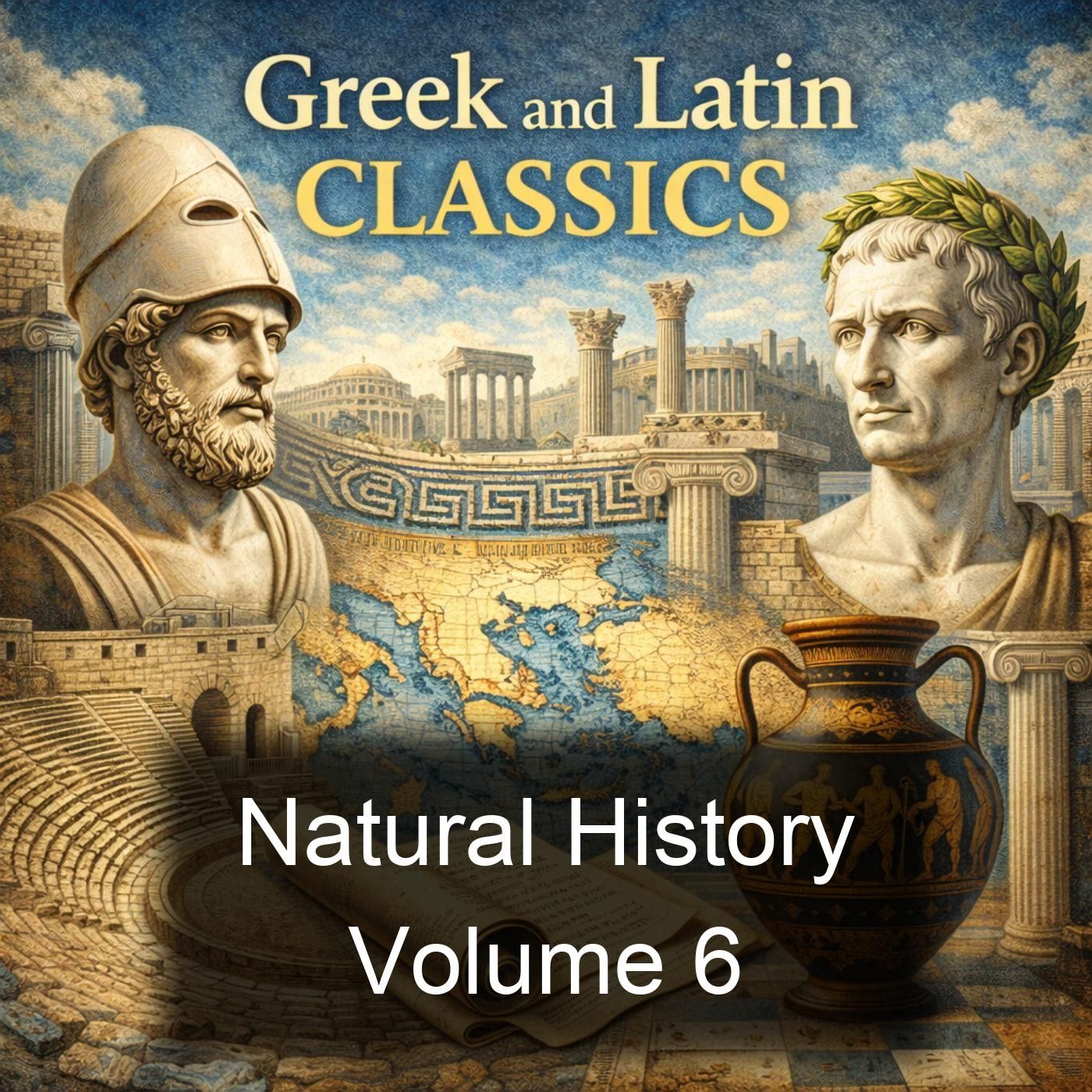
Natural History Volume 6
by Pliny the Elder
Dive into the captivating world of *Naturalis Historia*, an extraordinary encyclopedia crafted by Pliny the Elder around AD 77-79. This monumental work is one of the largest surviving texts from the Roman Empire, offering a remarkable glimpse into ancient knowledge. Pliny meticulously gathers insights from various authorities, setting a benchmark for future encyclopedias with its vast subject matter and comprehensive indexing. His ambitious project covers both the organic and inorganic realms, interspersed with engaging digressions. Plinys exploration goes beyond simple descriptions; he investigates the relationship between nature and humanity, particularly how Romans exploited natural resources. In this sixth volume, we delve into books twenty-six to thirty, highlighting plant-based remedies for various ailments, the healing properties of specific plants, and remedies derived from living beings. Join us as we uncover this invaluable treasure of ancient wisdom, summarized by Leni.
-
21
021 - Book 30 Chapters 42 to 53 Methods of extracting foreign substances from the body Remedies for female
Dive into the captivating world of *Naturalis Historia*, an extraordinary encyclopedia crafted by Pliny the Elder around AD 77-79. This monumental work is one of the largest surviving texts from the Roman Empire, offering a remarkable glimpse into ancient knowledge. Pliny meticulously gathers insights from various authorities, setting a benchmark for future encyclopedias with its vast subject matter and comprehensive indexing. His ambitious project covers both the organic and inorganic realms, interspersed with engaging digressions. Plinys exploration goes beyond simple descriptions; he investigates the relationship between nature and humanity, particularly how Romans exploited natural resources. In this sixth volume, we delve into books twenty-six to thirty, highlighting plant-based remedies for various ailments, the healing properties of specific plants, and remedies derived from living beings. Join us as we uncover this invaluable treasure of ancient wisdom, summarized by Leni.
-
20
020 - Book 30 Chapters 26 to 41 Remedies for paralysis Remedies for epilepsy Remedies for jaundice Remedie
Dive into the captivating world of *Naturalis Historia*, an extraordinary encyclopedia crafted by Pliny the Elder around AD 77-79. This monumental work is one of the largest surviving texts from the Roman Empire, offering a remarkable glimpse into ancient knowledge. Pliny meticulously gathers insights from various authorities, setting a benchmark for future encyclopedias with its vast subject matter and comprehensive indexing. His ambitious project covers both the organic and inorganic realms, interspersed with engaging digressions. Plinys exploration goes beyond simple descriptions; he investigates the relationship between nature and humanity, particularly how Romans exploited natural resources. In this sixth volume, we delve into books twenty-six to thirty, highlighting plant-based remedies for various ailments, the healing properties of specific plants, and remedies derived from living beings. Join us as we uncover this invaluable treasure of ancient wisdom, summarized by Leni.
-
19
019 - Book 30 Chapters 13 to 25 Remedies for diseases of the shoulders Remedies for pains in the viscera R
Dive into the captivating world of *Naturalis Historia*, an extraordinary encyclopedia crafted by Pliny the Elder around AD 77-79. This monumental work is one of the largest surviving texts from the Roman Empire, offering a remarkable glimpse into ancient knowledge. Pliny meticulously gathers insights from various authorities, setting a benchmark for future encyclopedias with its vast subject matter and comprehensive indexing. His ambitious project covers both the organic and inorganic realms, interspersed with engaging digressions. Plinys exploration goes beyond simple descriptions; he investigates the relationship between nature and humanity, particularly how Romans exploited natural resources. In this sixth volume, we delve into books twenty-six to thirty, highlighting plant-based remedies for various ailments, the healing properties of specific plants, and remedies derived from living beings. Join us as we uncover this invaluable treasure of ancient wisdom, summarized by Leni.
-
18
018 - Book 30 Chapters 1 to 12 The origin of the magic art When and where the art of magic originated by w
Dive into the captivating world of *Naturalis Historia*, an extraordinary encyclopedia crafted by Pliny the Elder around AD 77-79. This monumental work is one of the largest surviving texts from the Roman Empire, offering a remarkable glimpse into ancient knowledge. Pliny meticulously gathers insights from various authorities, setting a benchmark for future encyclopedias with its vast subject matter and comprehensive indexing. His ambitious project covers both the organic and inorganic realms, interspersed with engaging digressions. Plinys exploration goes beyond simple descriptions; he investigates the relationship between nature and humanity, particularly how Romans exploited natural resources. In this sixth volume, we delve into books twenty-six to thirty, highlighting plant-based remedies for various ailments, the healing properties of specific plants, and remedies derived from living beings. Join us as we uncover this invaluable treasure of ancient wisdom, summarized by Leni.
-
17
017 - Book 29 Chapters 26 to 39 Remedies derived from other birds Remedies derived from various insects Va
Dive into the captivating world of *Naturalis Historia*, an extraordinary encyclopedia crafted by Pliny the Elder around AD 77-79. This monumental work is one of the largest surviving texts from the Roman Empire, offering a remarkable glimpse into ancient knowledge. Pliny meticulously gathers insights from various authorities, setting a benchmark for future encyclopedias with its vast subject matter and comprehensive indexing. His ambitious project covers both the organic and inorganic realms, interspersed with engaging digressions. Plinys exploration goes beyond simple descriptions; he investigates the relationship between nature and humanity, particularly how Romans exploited natural resources. In this sixth volume, we delve into books twenty-six to thirty, highlighting plant-based remedies for various ailments, the healing properties of specific plants, and remedies derived from living beings. Join us as we uncover this invaluable treasure of ancient wisdom, summarized by Leni.
-
16
016 - Book 29 Chapters 11 to 25 Twenty-two remedies derived from eggs Remedies derived from the dog Remedi
Dive into the captivating world of *Naturalis Historia*, an extraordinary encyclopedia crafted by Pliny the Elder around AD 77-79. This monumental work is one of the largest surviving texts from the Roman Empire, offering a remarkable glimpse into ancient knowledge. Pliny meticulously gathers insights from various authorities, setting a benchmark for future encyclopedias with its vast subject matter and comprehensive indexing. His ambitious project covers both the organic and inorganic realms, interspersed with engaging digressions. Plinys exploration goes beyond simple descriptions; he investigates the relationship between nature and humanity, particularly how Romans exploited natural resources. In this sixth volume, we delve into books twenty-six to thirty, highlighting plant-based remedies for various ailments, the healing properties of specific plants, and remedies derived from living beings. Join us as we uncover this invaluable treasure of ancient wisdom, summarized by Leni.
-
15
015 - Book 29 Chapters 1 to 10 The origin of the medical art Particulars relative to Hippocrates Date of t
Dive into the captivating world of *Naturalis Historia*, an extraordinary encyclopedia crafted by Pliny the Elder around AD 77-79. This monumental work is one of the largest surviving texts from the Roman Empire, offering a remarkable glimpse into ancient knowledge. Pliny meticulously gathers insights from various authorities, setting a benchmark for future encyclopedias with its vast subject matter and comprehensive indexing. His ambitious project covers both the organic and inorganic realms, interspersed with engaging digressions. Plinys exploration goes beyond simple descriptions; he investigates the relationship between nature and humanity, particularly how Romans exploited natural resources. In this sixth volume, we delve into books twenty-six to thirty, highlighting plant-based remedies for various ailments, the healing properties of specific plants, and remedies derived from living beings. Join us as we uncover this invaluable treasure of ancient wisdom, summarized by Leni.
-
14
014 - Book 28 Chapters 62 to 81 Remedies for gout and for diseases of the feet Remedies for epilepsy Remed
Dive into the captivating world of *Naturalis Historia*, an extraordinary encyclopedia crafted by Pliny the Elder around AD 77-79. This monumental work is one of the largest surviving texts from the Roman Empire, offering a remarkable glimpse into ancient knowledge. Pliny meticulously gathers insights from various authorities, setting a benchmark for future encyclopedias with its vast subject matter and comprehensive indexing. His ambitious project covers both the organic and inorganic realms, interspersed with engaging digressions. Plinys exploration goes beyond simple descriptions; he investigates the relationship between nature and humanity, particularly how Romans exploited natural resources. In this sixth volume, we delve into books twenty-six to thirty, highlighting plant-based remedies for various ailments, the healing properties of specific plants, and remedies derived from living beings. Join us as we uncover this invaluable treasure of ancient wisdom, summarized by Leni.
-
13
013 - Book 28 Chapters 46 to 61 Remedies for diseases of the head Remedies for affections of the eyes Reme
Dive into the captivating world of *Naturalis Historia*, an extraordinary encyclopedia crafted by Pliny the Elder around AD 77-79. This monumental work is one of the largest surviving texts from the Roman Empire, offering a remarkable glimpse into ancient knowledge. Pliny meticulously gathers insights from various authorities, setting a benchmark for future encyclopedias with its vast subject matter and comprehensive indexing. His ambitious project covers both the organic and inorganic realms, interspersed with engaging digressions. Plinys exploration goes beyond simple descriptions; he investigates the relationship between nature and humanity, particularly how Romans exploited natural resources. In this sixth volume, we delve into books twenty-six to thirty, highlighting plant-based remedies for various ailments, the healing properties of specific plants, and remedies derived from living beings. Join us as we uncover this invaluable treasure of ancient wisdom, summarized by Leni.
-
12
012 - Book 28 Chapters 34 to 45 Twelve remedies derived from cheese Twenty remedies derived from butter Th
Dive into the captivating world of *Naturalis Historia*, an extraordinary encyclopedia crafted by Pliny the Elder around AD 77-79. This monumental work is one of the largest surviving texts from the Roman Empire, offering a remarkable glimpse into ancient knowledge. Pliny meticulously gathers insights from various authorities, setting a benchmark for future encyclopedias with its vast subject matter and comprehensive indexing. His ambitious project covers both the organic and inorganic realms, interspersed with engaging digressions. Plinys exploration goes beyond simple descriptions; he investigates the relationship between nature and humanity, particularly how Romans exploited natural resources. In this sixth volume, we delve into books twenty-six to thirty, highlighting plant-based remedies for various ailments, the healing properties of specific plants, and remedies derived from living beings. Join us as we uncover this invaluable treasure of ancient wisdom, summarized by Leni.
-
11
011 - Book 28 Chapters 24 to 33 Remedies derived from foreign animals the elephant Ten remedies derived fr
Dive into the captivating world of *Naturalis Historia*, an extraordinary encyclopedia crafted by Pliny the Elder around AD 77-79. This monumental work is one of the largest surviving texts from the Roman Empire, offering a remarkable glimpse into ancient knowledge. Pliny meticulously gathers insights from various authorities, setting a benchmark for future encyclopedias with its vast subject matter and comprehensive indexing. His ambitious project covers both the organic and inorganic realms, interspersed with engaging digressions. Plinys exploration goes beyond simple descriptions; he investigates the relationship between nature and humanity, particularly how Romans exploited natural resources. In this sixth volume, we delve into books twenty-six to thirty, highlighting plant-based remedies for various ailments, the healing properties of specific plants, and remedies derived from living beings. Join us as we uncover this invaluable treasure of ancient wisdom, summarized by Leni.
-
10
010 - Book 28 Chapters 8 to 23 Remedies derived from the wax of the human ear Remedies derived from the hu
Dive into the captivating world of *Naturalis Historia*, an extraordinary encyclopedia crafted by Pliny the Elder around AD 77-79. This monumental work is one of the largest surviving texts from the Roman Empire, offering a remarkable glimpse into ancient knowledge. Pliny meticulously gathers insights from various authorities, setting a benchmark for future encyclopedias with its vast subject matter and comprehensive indexing. His ambitious project covers both the organic and inorganic realms, interspersed with engaging digressions. Plinys exploration goes beyond simple descriptions; he investigates the relationship between nature and humanity, particularly how Romans exploited natural resources. In this sixth volume, we delve into books twenty-six to thirty, highlighting plant-based remedies for various ailments, the healing properties of specific plants, and remedies derived from living beings. Join us as we uncover this invaluable treasure of ancient wisdom, summarized by Leni.
-
9
009 - Book 28 Chapters 1 to 7 Introduction Remedies derived from man Whether words are possessed of any he
Dive into the captivating world of *Naturalis Historia*, an extraordinary encyclopedia crafted by Pliny the Elder around AD 77-79. This monumental work is one of the largest surviving texts from the Roman Empire, offering a remarkable glimpse into ancient knowledge. Pliny meticulously gathers insights from various authorities, setting a benchmark for future encyclopedias with its vast subject matter and comprehensive indexing. His ambitious project covers both the organic and inorganic realms, interspersed with engaging digressions. Plinys exploration goes beyond simple descriptions; he investigates the relationship between nature and humanity, particularly how Romans exploited natural resources. In this sixth volume, we delve into books twenty-six to thirty, highlighting plant-based remedies for various ailments, the healing properties of specific plants, and remedies derived from living beings. Join us as we uncover this invaluable treasure of ancient wisdom, summarized by Leni.
-
8
008 - Book 27 Chapters 93 to 120 The peplis The periclymenos The phalangitis The phellandrion The proserpi
Dive into the captivating world of *Naturalis Historia*, an extraordinary encyclopedia crafted by Pliny the Elder around AD 77-79. This monumental work is one of the largest surviving texts from the Roman Empire, offering a remarkable glimpse into ancient knowledge. Pliny meticulously gathers insights from various authorities, setting a benchmark for future encyclopedias with its vast subject matter and comprehensive indexing. His ambitious project covers both the organic and inorganic realms, interspersed with engaging digressions. Plinys exploration goes beyond simple descriptions; he investigates the relationship between nature and humanity, particularly how Romans exploited natural resources. In this sixth volume, we delve into books twenty-six to thirty, highlighting plant-based remedies for various ailments, the healing properties of specific plants, and remedies derived from living beings. Join us as we uncover this invaluable treasure of ancient wisdom, summarized by Leni.
-
7
007 - Book 27 Chapters 57 to 92 Galeopsis The glaux Glaucion The gallidraga Holcus or aristis The plant of
Dive into the captivating world of *Naturalis Historia*, an extraordinary encyclopedia crafted by Pliny the Elder around AD 77-79. This monumental work is one of the largest surviving texts from the Roman Empire, offering a remarkable glimpse into ancient knowledge. Pliny meticulously gathers insights from various authorities, setting a benchmark for future encyclopedias with its vast subject matter and comprehensive indexing. His ambitious project covers both the organic and inorganic realms, interspersed with engaging digressions. Plinys exploration goes beyond simple descriptions; he investigates the relationship between nature and humanity, particularly how Romans exploited natural resources. In this sixth volume, we delve into books twenty-six to thirty, highlighting plant-based remedies for various ailments, the healing properties of specific plants, and remedies derived from living beings. Join us as we uncover this invaluable treasure of ancient wisdom, summarized by Leni.
-
6
006 - Book 27 Chapters 24 to 56 Alum Red sea-weed Absinthium or wormwood Black leek The calyx The crocodil
Dive into the captivating world of *Naturalis Historia*, an extraordinary encyclopedia crafted by Pliny the Elder around AD 77-79. This monumental work is one of the largest surviving texts from the Roman Empire, offering a remarkable glimpse into ancient knowledge. Pliny meticulously gathers insights from various authorities, setting a benchmark for future encyclopedias with its vast subject matter and comprehensive indexing. His ambitious project covers both the organic and inorganic realms, interspersed with engaging digressions. Plinys exploration goes beyond simple descriptions; he investigates the relationship between nature and humanity, particularly how Romans exploited natural resources. In this sixth volume, we delve into books twenty-six to thirty, highlighting plant-based remedies for various ailments, the healing properties of specific plants, and remedies derived from living beings. Join us as we uncover this invaluable treasure of ancient wisdom, summarized by Leni.
-
5
005 - Book 27 Chapters 1 to 23 Researches of the ancients upon this subject Aconite Ageraton The aloe Alce
Dive into the captivating world of *Naturalis Historia*, an extraordinary encyclopedia crafted by Pliny the Elder around AD 77-79. This monumental work is one of the largest surviving texts from the Roman Empire, offering a remarkable glimpse into ancient knowledge. Pliny meticulously gathers insights from various authorities, setting a benchmark for future encyclopedias with its vast subject matter and comprehensive indexing. His ambitious project covers both the organic and inorganic realms, interspersed with engaging digressions. Plinys exploration goes beyond simple descriptions; he investigates the relationship between nature and humanity, particularly how Romans exploited natural resources. In this sixth volume, we delve into books twenty-six to thirty, highlighting plant-based remedies for various ailments, the healing properties of specific plants, and remedies derived from living beings. Join us as we uncover this invaluable treasure of ancient wisdom, summarized by Leni.
-
4
004 - Book 26 Chapters 71 to 93 Remedies for fevers Remedies for phrenitis lethargy and carbuncles Remedie
Dive into the captivating world of *Naturalis Historia*, an extraordinary encyclopedia crafted by Pliny the Elder around AD 77-79. This monumental work is one of the largest surviving texts from the Roman Empire, offering a remarkable glimpse into ancient knowledge. Pliny meticulously gathers insights from various authorities, setting a benchmark for future encyclopedias with its vast subject matter and comprehensive indexing. His ambitious project covers both the organic and inorganic realms, interspersed with engaging digressions. Plinys exploration goes beyond simple descriptions; he investigates the relationship between nature and humanity, particularly how Romans exploited natural resources. In this sixth volume, we delve into books twenty-six to thirty, highlighting plant-based remedies for various ailments, the healing properties of specific plants, and remedies derived from living beings. Join us as we uncover this invaluable treasure of ancient wisdom, summarized by Leni.
-
3
003 - Book 26 Chapters 49 to 70 Remedies for calculi and diseases of the bladder Crethmos The anthyllion C
Dive into the captivating world of *Naturalis Historia*, an extraordinary encyclopedia crafted by Pliny the Elder around AD 77-79. This monumental work is one of the largest surviving texts from the Roman Empire, offering a remarkable glimpse into ancient knowledge. Pliny meticulously gathers insights from various authorities, setting a benchmark for future encyclopedias with its vast subject matter and comprehensive indexing. His ambitious project covers both the organic and inorganic realms, interspersed with engaging digressions. Plinys exploration goes beyond simple descriptions; he investigates the relationship between nature and humanity, particularly how Romans exploited natural resources. In this sixth volume, we delve into books twenty-six to thirty, highlighting plant-based remedies for various ailments, the healing properties of specific plants, and remedies derived from living beings. Join us as we uncover this invaluable treasure of ancient wisdom, summarized by Leni.
-
2
002 - Book 26 Chapters 22 to 48 Tripolium The gromphaena The malundrum Chalcetum Molemonium Halus or coton
Dive into the captivating world of *Naturalis Historia*, an extraordinary encyclopedia crafted by Pliny the Elder around AD 77-79. This monumental work is one of the largest surviving texts from the Roman Empire, offering a remarkable glimpse into ancient knowledge. Pliny meticulously gathers insights from various authorities, setting a benchmark for future encyclopedias with its vast subject matter and comprehensive indexing. His ambitious project covers both the organic and inorganic realms, interspersed with engaging digressions. Plinys exploration goes beyond simple descriptions; he investigates the relationship between nature and humanity, particularly how Romans exploited natural resources. In this sixth volume, we delve into books twenty-six to thirty, highlighting plant-based remedies for various ailments, the healing properties of specific plants, and remedies derived from living beings. Join us as we uncover this invaluable treasure of ancient wisdom, summarized by Leni.
-
1
001 - Book 26 Chapters 1 to 21 New forms of disease The nature of lichen Carbuncle Elephantiasis Colic The
Dive into the captivating world of *Naturalis Historia*, an extraordinary encyclopedia crafted by Pliny the Elder around AD 77-79. This monumental work is one of the largest surviving texts from the Roman Empire, offering a remarkable glimpse into ancient knowledge. Pliny meticulously gathers insights from various authorities, setting a benchmark for future encyclopedias with its vast subject matter and comprehensive indexing. His ambitious project covers both the organic and inorganic realms, interspersed with engaging digressions. Plinys exploration goes beyond simple descriptions; he investigates the relationship between nature and humanity, particularly how Romans exploited natural resources. In this sixth volume, we delve into books twenty-six to thirty, highlighting plant-based remedies for various ailments, the healing properties of specific plants, and remedies derived from living beings. Join us as we uncover this invaluable treasure of ancient wisdom, summarized by Leni.
We're indexing this podcast's transcripts for the first time — this can take a minute or two. We'll show results as soon as they're ready.
No matches for "" in this podcast's transcripts.
No topics indexed yet for this podcast.
Loading reviews...
ABOUT THIS SHOW
Dive into the captivating world of *Naturalis Historia*, an extraordinary encyclopedia crafted by Pliny the Elder around AD 77-79. This monumental work is one of the largest surviving texts from the Roman Empire, offering a remarkable glimpse into ancient knowledge. Pliny meticulously gathers insights from various authorities, setting a benchmark for future encyclopedias with its vast subject matter and comprehensive indexing. His ambitious project covers both the organic and inorganic realms, interspersed with engaging digressions. Plinys exploration goes beyond simple descriptions; he investigates the relationship between nature and humanity, particularly how Romans exploited natural resources. In this sixth volume, we delve into books twenty-six to thirty, highlighting plant-based remedies for various ailments, the healing properties of specific plants, and remedies derived from living beings. Join us as we uncover this invaluable treasure of ancient wisdom, summarized by Leni.
HOSTED BY
Pliny the Elder
CATEGORIES
Loading similar podcasts...
Frequently Asked Questions
How many episodes does Natural History Volume 6 have?
Natural History Volume 6 currently has 21 episodes available on PodParley. New episodes are automatically indexed when they're published to the podcast feed.
What is Natural History Volume 6 about?
Dive into the captivating world of *Naturalis Historia*, an extraordinary encyclopedia crafted by Pliny the Elder around AD 77-79. This monumental work is one of the largest surviving texts from the Roman Empire, offering a remarkable glimpse into ancient knowledge. Pliny meticulously gathers...
How often does Natural History Volume 6 release new episodes?
Natural History Volume 6 has 21 episodes. Check the episode list to see recent publication dates and frequency.
Where can I listen to Natural History Volume 6?
You can listen to Natural History Volume 6 on PodParley by clicking any episode. We provide an embedded audio player for direct listening, and you can also subscribe via your preferred podcast app using the RSS feed.
Who hosts Natural History Volume 6?
Natural History Volume 6 is created and hosted by Pliny the Elder.
URL copied to clipboard!