
PODCAST · society
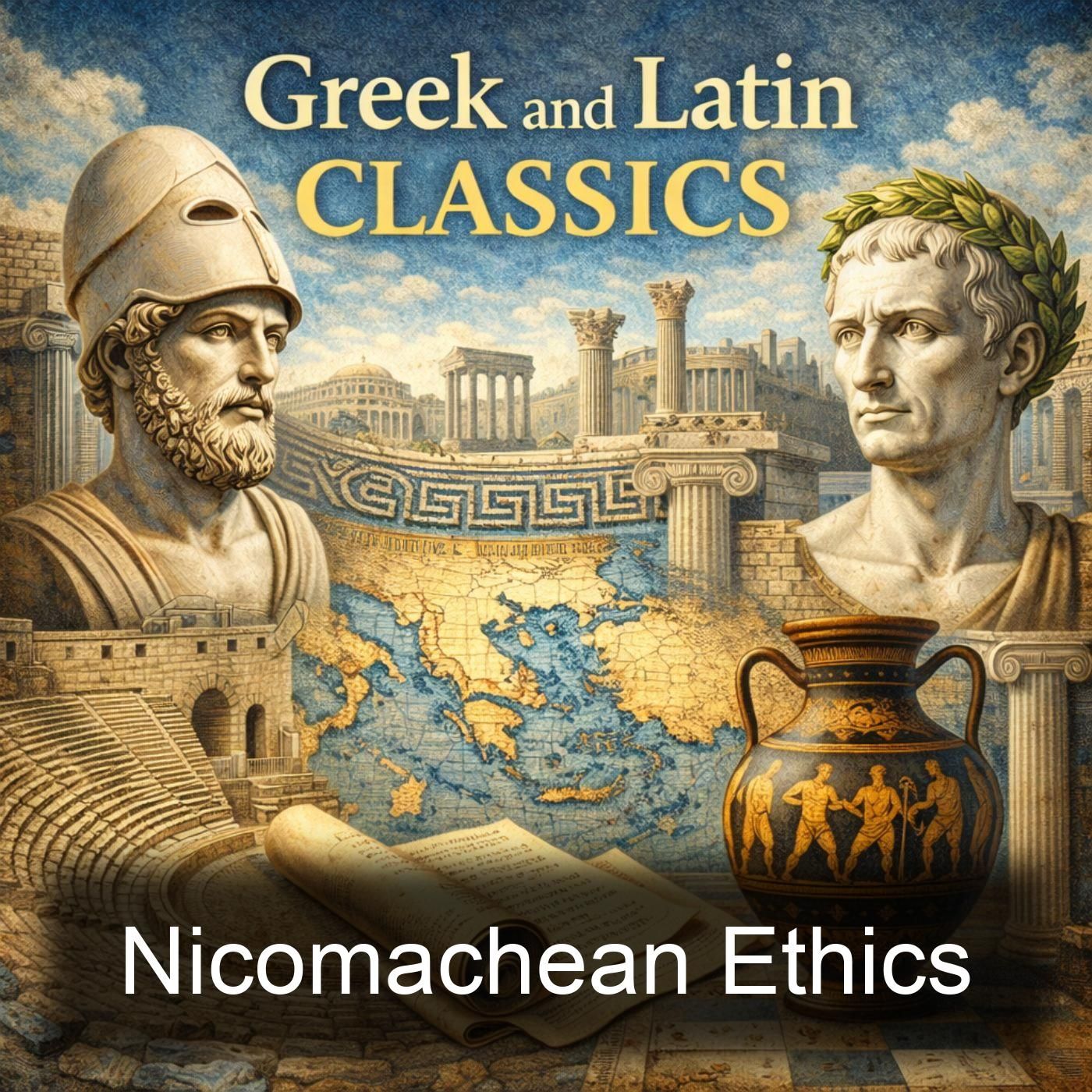
Nicomachean Ethics
by Aristotle
The Nicomachean Ethics is a profound journey into moral philosophy, structured into ten books that were originally crafted as separate scrolls. This seminal work is thought to stem from Aristotles lectures at the Lyceum, likely organized for his son, Nicomachus. It draws intriguing parallels with the Eudemian Ethics, which consists of eight books, fostering a rich comparative analysis. Notably, Books V, VI, and VII of the Nicomachean Ethics correspond with Books IV, V, and VI of the Eudemian Ethics, sparking ongoing debates about their chronological order and shared themes. Aristotle emphasizes that his ethical inquiry is not merely an intellectual exercise but a call to embody goodness in our daily lives. This work transcends theoretical discourse, offering practical guidance on the pursuit of virtue. (Summary from Wikipedia)
-
10
010 - Book X
The Nicomachean Ethics is a profound journey into moral philosophy, structured into ten books that were originally crafted as separate scrolls. This seminal work is thought to stem from Aristotles lectures at the Lyceum, likely organized for his son, Nicomachus. It draws intriguing parallels with the Eudemian Ethics, which consists of eight books, fostering a rich comparative analysis. Notably, Books V, VI, and VII of the Nicomachean Ethics correspond with Books IV, V, and VI of the Eudemian Ethics, sparking ongoing debates about their chronological order and shared themes. Aristotle emphasizes that his ethical inquiry is not merely an intellectual exercise but a call to embody goodness in our daily lives. This work transcends theoretical discourse, offering practical guidance on the pursuit of virtue. (Summary from Wikipedia)
-
9
009 - Book IX
The Nicomachean Ethics is a profound journey into moral philosophy, structured into ten books that were originally crafted as separate scrolls. This seminal work is thought to stem from Aristotles lectures at the Lyceum, likely organized for his son, Nicomachus. It draws intriguing parallels with the Eudemian Ethics, which consists of eight books, fostering a rich comparative analysis. Notably, Books V, VI, and VII of the Nicomachean Ethics correspond with Books IV, V, and VI of the Eudemian Ethics, sparking ongoing debates about their chronological order and shared themes. Aristotle emphasizes that his ethical inquiry is not merely an intellectual exercise but a call to embody goodness in our daily lives. This work transcends theoretical discourse, offering practical guidance on the pursuit of virtue. (Summary from Wikipedia)
-
8
008 - Book VIII
The Nicomachean Ethics is a profound journey into moral philosophy, structured into ten books that were originally crafted as separate scrolls. This seminal work is thought to stem from Aristotles lectures at the Lyceum, likely organized for his son, Nicomachus. It draws intriguing parallels with the Eudemian Ethics, which consists of eight books, fostering a rich comparative analysis. Notably, Books V, VI, and VII of the Nicomachean Ethics correspond with Books IV, V, and VI of the Eudemian Ethics, sparking ongoing debates about their chronological order and shared themes. Aristotle emphasizes that his ethical inquiry is not merely an intellectual exercise but a call to embody goodness in our daily lives. This work transcends theoretical discourse, offering practical guidance on the pursuit of virtue. (Summary from Wikipedia)
-
7
007 - Book VII
The Nicomachean Ethics is a profound journey into moral philosophy, structured into ten books that were originally crafted as separate scrolls. This seminal work is thought to stem from Aristotles lectures at the Lyceum, likely organized for his son, Nicomachus. It draws intriguing parallels with the Eudemian Ethics, which consists of eight books, fostering a rich comparative analysis. Notably, Books V, VI, and VII of the Nicomachean Ethics correspond with Books IV, V, and VI of the Eudemian Ethics, sparking ongoing debates about their chronological order and shared themes. Aristotle emphasizes that his ethical inquiry is not merely an intellectual exercise but a call to embody goodness in our daily lives. This work transcends theoretical discourse, offering practical guidance on the pursuit of virtue. (Summary from Wikipedia)
-
6
006 - Book VI
The Nicomachean Ethics is a profound journey into moral philosophy, structured into ten books that were originally crafted as separate scrolls. This seminal work is thought to stem from Aristotles lectures at the Lyceum, likely organized for his son, Nicomachus. It draws intriguing parallels with the Eudemian Ethics, which consists of eight books, fostering a rich comparative analysis. Notably, Books V, VI, and VII of the Nicomachean Ethics correspond with Books IV, V, and VI of the Eudemian Ethics, sparking ongoing debates about their chronological order and shared themes. Aristotle emphasizes that his ethical inquiry is not merely an intellectual exercise but a call to embody goodness in our daily lives. This work transcends theoretical discourse, offering practical guidance on the pursuit of virtue. (Summary from Wikipedia)
-
5
005 - Book V
The Nicomachean Ethics is a profound journey into moral philosophy, structured into ten books that were originally crafted as separate scrolls. This seminal work is thought to stem from Aristotles lectures at the Lyceum, likely organized for his son, Nicomachus. It draws intriguing parallels with the Eudemian Ethics, which consists of eight books, fostering a rich comparative analysis. Notably, Books V, VI, and VII of the Nicomachean Ethics correspond with Books IV, V, and VI of the Eudemian Ethics, sparking ongoing debates about their chronological order and shared themes. Aristotle emphasizes that his ethical inquiry is not merely an intellectual exercise but a call to embody goodness in our daily lives. This work transcends theoretical discourse, offering practical guidance on the pursuit of virtue. (Summary from Wikipedia)
-
4
004 - Book IV
The Nicomachean Ethics is a profound journey into moral philosophy, structured into ten books that were originally crafted as separate scrolls. This seminal work is thought to stem from Aristotles lectures at the Lyceum, likely organized for his son, Nicomachus. It draws intriguing parallels with the Eudemian Ethics, which consists of eight books, fostering a rich comparative analysis. Notably, Books V, VI, and VII of the Nicomachean Ethics correspond with Books IV, V, and VI of the Eudemian Ethics, sparking ongoing debates about their chronological order and shared themes. Aristotle emphasizes that his ethical inquiry is not merely an intellectual exercise but a call to embody goodness in our daily lives. This work transcends theoretical discourse, offering practical guidance on the pursuit of virtue. (Summary from Wikipedia)
-
3
003 - Book III
The Nicomachean Ethics is a profound journey into moral philosophy, structured into ten books that were originally crafted as separate scrolls. This seminal work is thought to stem from Aristotles lectures at the Lyceum, likely organized for his son, Nicomachus. It draws intriguing parallels with the Eudemian Ethics, which consists of eight books, fostering a rich comparative analysis. Notably, Books V, VI, and VII of the Nicomachean Ethics correspond with Books IV, V, and VI of the Eudemian Ethics, sparking ongoing debates about their chronological order and shared themes. Aristotle emphasizes that his ethical inquiry is not merely an intellectual exercise but a call to embody goodness in our daily lives. This work transcends theoretical discourse, offering practical guidance on the pursuit of virtue. (Summary from Wikipedia)
-
2
002 - Book II
The Nicomachean Ethics is a profound journey into moral philosophy, structured into ten books that were originally crafted as separate scrolls. This seminal work is thought to stem from Aristotles lectures at the Lyceum, likely organized for his son, Nicomachus. It draws intriguing parallels with the Eudemian Ethics, which consists of eight books, fostering a rich comparative analysis. Notably, Books V, VI, and VII of the Nicomachean Ethics correspond with Books IV, V, and VI of the Eudemian Ethics, sparking ongoing debates about their chronological order and shared themes. Aristotle emphasizes that his ethical inquiry is not merely an intellectual exercise but a call to embody goodness in our daily lives. This work transcends theoretical discourse, offering practical guidance on the pursuit of virtue. (Summary from Wikipedia)
-
1
001 - Book I
The Nicomachean Ethics is a profound journey into moral philosophy, structured into ten books that were originally crafted as separate scrolls. This seminal work is thought to stem from Aristotles lectures at the Lyceum, likely organized for his son, Nicomachus. It draws intriguing parallels with the Eudemian Ethics, which consists of eight books, fostering a rich comparative analysis. Notably, Books V, VI, and VII of the Nicomachean Ethics correspond with Books IV, V, and VI of the Eudemian Ethics, sparking ongoing debates about their chronological order and shared themes. Aristotle emphasizes that his ethical inquiry is not merely an intellectual exercise but a call to embody goodness in our daily lives. This work transcends theoretical discourse, offering practical guidance on the pursuit of virtue. (Summary from Wikipedia)
We're indexing this podcast's transcripts for the first time — this can take a minute or two. We'll show results as soon as they're ready.
No matches for "" in this podcast's transcripts.
No topics indexed yet for this podcast.
Loading reviews...
ABOUT THIS SHOW
The Nicomachean Ethics is a profound journey into moral philosophy, structured into ten books that were originally crafted as separate scrolls. This seminal work is thought to stem from Aristotles lectures at the Lyceum, likely organized for his son, Nicomachus. It draws intriguing parallels with the Eudemian Ethics, which consists of eight books, fostering a rich comparative analysis. Notably, Books V, VI, and VII of the Nicomachean Ethics correspond with Books IV, V, and VI of the Eudemian Ethics, sparking ongoing debates about their chronological order and shared themes. Aristotle emphasizes that his ethical inquiry is not merely an intellectual exercise but a call to embody goodness in our daily lives. This work transcends theoretical discourse, offering practical guidance on the pursuit of virtue. (Summary from Wikipedia)
HOSTED BY
Aristotle
Loading similar podcasts...
URL copied to clipboard!