
PODCAST · health
NooS Podcast
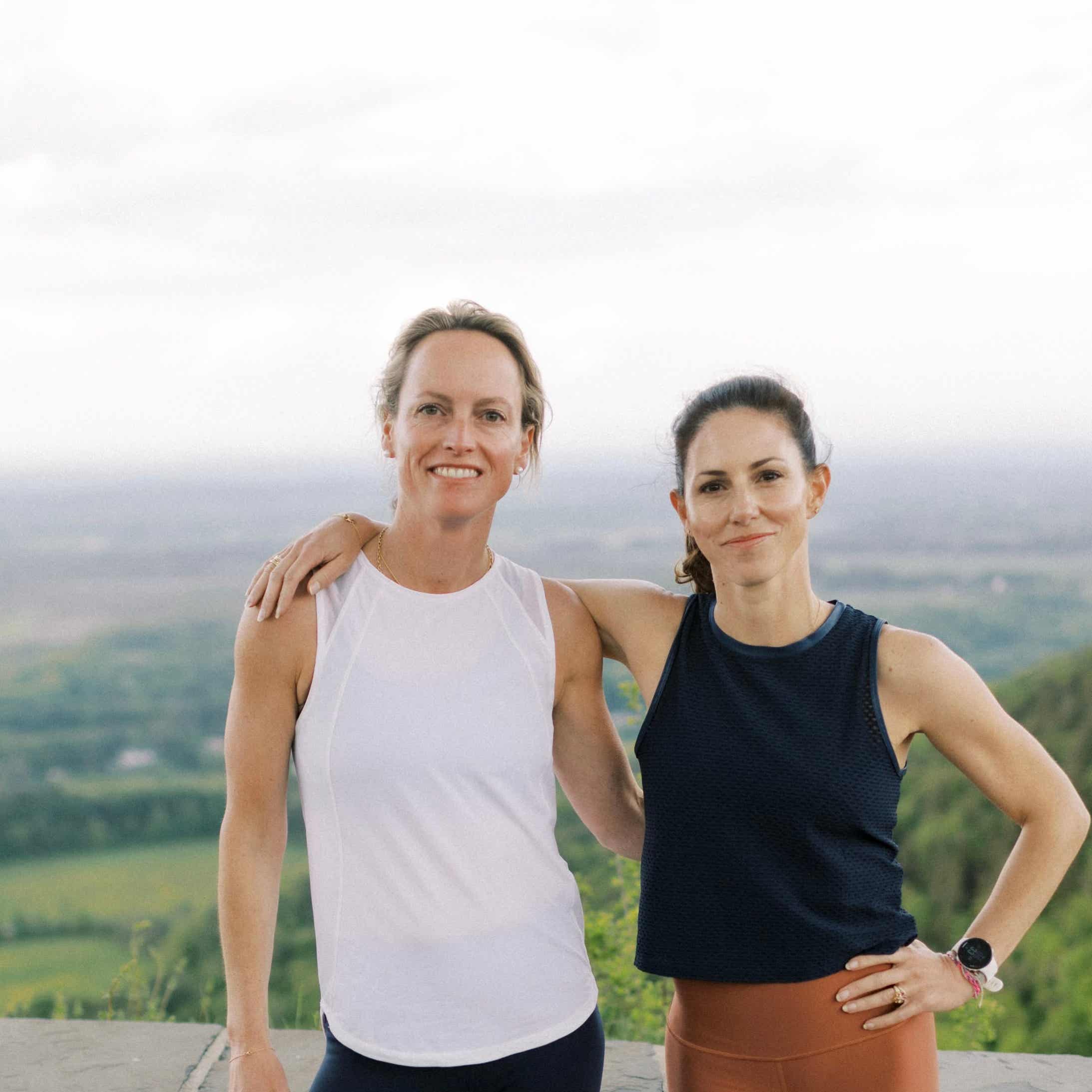
by Anne, RD & Avery, CHC
Created by Anne, RD & Avery, CHC. Two moms making eating whole foods, regular exercise and healthy habits cool. noosworthy.substack.com
-
36
small decisions, big shifts
Happy Monday, Noosers! We are marching into a new month (get it?!), and with daylight saving and the promise of spring weather looking quite literally like the light at the end of the tunnel, we thought it might be a good time for a reframe, a new way to think about what we are thinking about. Today’s Noosletter will give some practical and motivational tips to reframe your thoughts. We’re coming with a spring reframe from two angles, because we’ve found it really does take both. Anne is in your corner on the food side: the small, quiet, upstream decisions that make the hard moments easier before they arrive. Avery is tackling the mindset piece, because your environment can only take you so far. What happens between your ears matters just as much. One of our favorite quotes (that really kicked this whole Noos thing off a couple years ago) is Napoleon Hill’s: “Every person is who they are because of the dominating thoughts which they allow to occupy their mind.” While our environment makes a huge impact on our decisions, we need to give credit to the power of our thoughts. Read along for some tips to help you navigate the daily struggles our environment presents — you know, when the pantry beckons you at 9pm and the bed feels way too cozy to work out when that early alarm goes off! NooS Substack is a reader-supported publication. To receive new posts and support my work, consider becoming a free or paid subscriber.If you like what you read, click the ❤️ at the top or bottom of this post, or leave us a comment. We love hearing from you! March!Coming home from one of my morning runs last week, I heard it, quiet chirping, a single bird, the kind of sound you forget exists after a long winter. And tomorrow night we have the full Worm Moon, March’s full moon named for the earthworms that begin surfacing as the frozen ground starts to thaw, a sure sign the earth is waking back up. The dawn is approaching earlier, morning light creeping in a little more each day. And then of course, daylight saving comes along next week to snatch it right back. Oh well. More light on the back end, I’ll take it!There’s something about a new month, a new season, even a Monday that carries a little momentum with it. A breath of fresh air. A sense of possibility. (Read more about fresh starts here!) Avery and I want to piggyback on that feeling this March and offer something we’ve been calling a spring reframe.One of the biggest barriers I hear from patients is: “I start the day with the best intentions and somewhere between lunch and dinner it all falls apart.” Decision fatigue. It’s not just a daily thing. Zoom out and the same pattern shows up on a bigger scale: I started the week great, then the weekend hit. I was doing so well, then vacation, then stress, then sickness. You insert whatever life throws at you.The hardest part for most people starts around 4pm and doesn’t let up until 9. You get home from work and your brain is done making good decisions, it wants a reward. You’re unpacking the kids’ lunches, so hungry you’ve inhaled the leftovers before you even realized it. And then later, instead of midnight striking and the fear of turning into a pumpkin, it’s 8pm, a quiet house, and a raccoon-like figure takes hold, not ravaging the trash can, but absolutely ravaging the pantry!We tend to blame the real world for all of it. And it does feel like the problem. But the real world has always been there. It was there last spring. It was there three years ago. It will be there next fall. The chip aisle isn’t going anywhere. The work stress isn’t either. Neither are the exhausted weeknights spent schlepping your children to their sports and activities. So if the real world is a constant, and it is, it can’t actually be the variable that’s shaping your relationship with food.Something else is. Drum roll please….Your decisions. The small, quiet, invisible ones you made before the moment arrived. Whatever's tempting is on the counter because that's just where it lands when you unpack groceries. The eggs weren’t hard boiled Sunday because it didn’t feel urgent. You put off planning out the week’s meals because Netflix was calling…None of those felt like choices. But they were. And made over and over, quietly, they built the food environment you’re now standing in at 8pm when the raccoon takes over.Here’s what I’ve learned from sitting across from patients—most of them don’t need more information. They need fewer decisions in the hard moments. And the only way to have fewer decisions at 8pm is to make better ones at 10am on a Sunday when you’re not depleted, not starving, not stressed.Most of my patients don’t walk in the door because they woke up one day feeling inspired to eat more vegetables. They come in after a scary lab result or because their jeans stopped fitting. Hey, whatever gets you to the moment of “I want something to change” is valid. The question is just what you do next. You don’t need a new plan. You just need one thing. One small intentional decision today that makes tomorrow easier (or maybe choosing to work with us!).Hard boil the eggs on Sunday, it takes 12 minutes, or buy them already made! Have something waiting for yourself when you walk in the door at 4pm instead of your children’s stale, soggy goldfish. Close the pantry before the raccoon takes over.Pick one thing today that sets tomorrow-you up for a better day.The worm doesn't wait for perfect conditions. It just surfaces. Anne’s right. It’s so easy to give in to challenges that real world “adulting” present on a daily basis. We are all one long day at work or one bad night’s sleep away from saying “Jesus take the wheel, I can’t possibly workout today.” We have all been there: making deals with ourselves that we will workout tomorrow, or start monday, or find a new program that will finally be the right one, then kick the can down the road a bit longer. Exercising on a regular basis can be a struggle — whether it’s where you live, access to gym equipment, or managing the daily list of responsibilities between family and work. On top of that, the workout itself can be a STRUGGLE. But what if we changed our mindset around exercise? What if we embraced the struggle instead of resisting it?If you think we are springing out of bed, foaming at the mouth for a killer workout, you are mistaken. I engage in the daily ritual of “hmm-ing and ha-ing” when that alarm goes off. But most days, I’m open to the idea of starting the day with a little struggle, a little…. resistance (see what I did there, ahem, resistance training). Because once I have one struggle under my belt, the others don’t usually feel so bad. There’s a quiet whisper, knowingness, from somewhere deep within: I’ve been here before and I can do it again, that nudges me out from under the covers. And then as I'm brushing my teeth and still thinking about hopping back in bed, the whisper returns: I'm gonna do this because I know I'll feel at least 1% better after. That’s usually enough to get me through the first mile or rep. When the environment is my comfy bed, especially after a less than perfect night’s sleep, my thoughts are what get me moving.And in case you thought we were done with the Olympics, it ain’t over yet. The clip of Alysa Liu on 60 minutes, saying she “loves the struggle, actually” with a big grin, really stuck. She goes on to say, that the struggle makes her feel alive. Her words made me think of exercise, that it is a struggle, but it always makes me feel alive. It’s the kind that gives, rather than takes. That kind of struggle builds strength. When the workout feels clunky, the weights feel heavy, the miles feel slow or literally all uphill, rather than feel defeated, remind yourself that you love this kind of struggle — even if you don’t always believe it in the moment. You love the struggle, not just because it makes you physically stronger, but because it builds the mental toughness that stretches well beyond the workout itself. The strength that will find you when your baby wakes up for the 50th time from teething, your dishwasher breaks, or your flight gets delayed. Every workout you push through is digging the well you'll draw from when the real world gets hard. You’ve done it before and you’ll do it again, whether or not you’re excited about it in the moment, because you love this kind of struggle and you know what’s on the other side. So when the dreaded early alarm goes off or the weather looks too shi*tty for a walk? Remind yourself that you love a struggle. Maybe even say it with a grin like Alysa Liu (or fake one, because sometimes you do have to fake it til you make it). And know that the more you embrace the struggle, the more you might just love it. Perhaps not the middle of it, but the end, and the accomplishment you feel from overcoming whatever tried to convince you that the workout was not worth doing in the first place.With more wins under your belt, the more wisdom you gain, and that whisper might just get a little louder. I’ve been here before and I can do it again — and I’m gonna feel better after it. So next time you’re negotiating with yourself to get started or keep going, let Alysa Liu inspire you. Love the struggle, it will make you feel alive. Until next time..NooS Substack is a reader-supported publication. To receive new posts and support my work, consider becoming a free or paid subscriber. This is a public episode. If you'd like to discuss this with other subscribers or get access to bonus episodes, visit noosworthy.substack.com/subscribe
-
35
Noos Nugget Ep. 13
Hi Noosers! Join us as we laugh and chat about our breakfast journeys — from our college days of canisters of Special K and weekly “Hashbrown Wednesday’s,” to eating our toddler’s leftovers, to what we are eating now. All the different phases of breakfasts serve as experiments, the key is to reflect: What feels good? What sets your day up right? At the end of the day, it matters what works for you, but in order to figure that out, you have to try some different approaches. Today’s post gives a little peek into our mornings, what’s been working lately, and how it’s changed over the years. Give a listen and let us know what you think! If you like what you heard today, click the ❤️ at top or bottom of the page so more listeners like you can find us. This is a public episode. If you'd like to discuss this with other subscribers or get access to bonus episodes, visit noosworthy.substack.com/subscribe
-
34
our quick tips for this time of year
Hey Noosers! We know this is a really, really busy time of year. If you’re anything like us, sitting down with a cup of coffee on Monday morning to read a newsletter sounds ideal—but it’s probably not happening. So, we recorded this week’s edition for you from the car (complete with the rain pitter-patter) so you can listen while you’re wrapping presents, working out, or just trying to survive the holiday haze. You can listen or read — they are the same and you won’t miss anything, since we used our transcript to create the Noosletter this week. Yay for technology when you’re pinched for time. If you like what you read today, click the ❤️ at the top or bottom of this post so more readers like you can find us on Substack!two quick tips we tell ourselves and our clientsLast week, we talked about being mentally and metabolically flexible to enjoy the fun this time of year. Those year-long habits really support you during the holidays. But if you just need a couple of quick tips to get you through the next couple of weeks — we’re on it.At the end of the day, it’s usually just a meal or two. And if you believe that, and know that you can get right back on track after—it helps avoid the “snowball” effect. You know, when one bad decision rolls into a nasty streak. These next two weeks are so unique, where we’re all asking “what day is it?” and “what is happening?” You’re going to have food around that you normally don’t, whether you’re cooking, going somewhere, or buying that festive eggnog at Stewart’s.So here are a few tips that might really be helpful.Tip #1: Be a Food Snob (The Good Kind!)We’ve written about this before, and yes, this is a good snob to be.There are going to be so many temptations out there—holiday parties, cocktail parties, food getting passed around, everyone bringing something to be helpful at family gatherings. It’s hard to be decisive about what you’re actually going to eat.Here’s the trick: We eat with all of our senses. Our eyes see things that look appetizing, we smell delicious aromas. But sensory appeal doesn’t always equal genuine desire. When you pause to ask yourself what you truly want, you can be more intentional.If you don’t genuinely want it, don’t eat it. It’s not worth wasting calories on things that don’t actually satisfy you or leave you too full to enjoy what you really wanted.Don’t just eat things because they’re there. Be a little picky. Love the cheese puffs? Great! Have them. But skip the sweaty cheese and crackers that don’t look that great just because you’re standing there talking to someone.The worst thing is leaving full from random foods you didn’t even enjoy.Pro tip: Take a few bites of something. Try it. But if you don’t love it, do not continue eating it. You can wrap it in a napkin, shift it around on your plate—however you need to be stealth about it. If it doesn’t taste absolutely delicious, don’t settle.We know it’s hard when you’re around food pushers—whether it’s grandma or that one friend. When they say “that’s all you’re eating?” you can say “I’m good, thanks!” or “I’m saving room for dessert” or just “Mm, so delicious, thank you!”Bottom line: Be a food snob and really enjoy the things you love. Don’t waste time, effort, or calories on things you don’t.Tip #2: Sensory Specific Satiety (Try Saying That Five Times Fast!)We’ve written about this one before, too. Here’s what it means: there’s a decrease in pleasure while consuming a particular food. Those first two bites tend to always be 10/10. But we rarely take time to notice that. A lot of the time we’re eating fast or talking to someone, but those first few bites are always the best.A real-life example: Last weekend at Bromley, we got French fries. They were lit—probably the best French fries ever. Hot, crispy, fresh off the ski mountain. We were a little cold, a little hungry, and paired them with an Aperol spritz. Heaven.That first French fry? Brain going crazy. Amazing. Electric.The sixth French fry compared to the first French fry? They don’t hit the same.Treat it like an experiment: Have that first bite of pizza, burger, cheese puff, whatever. Feel your brain literally going bonkers— “This is just as good as I thought it was going to be!” (If not, be a food snob and don’t eat it!) Then check back in with yourself after the first three bites and ask “where are we at?” It’s definitely muted.Taste satisfaction is often achieved with just a few bites. You have to be aware. That’s the really big takeaway here: awareness and self-reflection.If you’ve sworn off certain things or think “once I start, I can’t stop,” this awareness helps you confidently stop when you’ve had enough.This isn’t about deprivation or making rigid rules. Sometimes you’ll be really hungry and that fifth bite will still be fabulous— and that’s wonderful! We really encourage you to try this experiment. Pick something a little indulgent and notice what you think from the first bite to the middle to the last bite. It’s fascinating when you actually pay attention.”Bonus TipsFor Christmas morning (or whatever morning you’re celebrating): Whether it’s Cinnabons, bacon, fresh-squeezed orange juice—eat slow. Embrace the morning. Enjoy.Food just tastes different when you’re aware and you slow down.Chew a lot. We know, we know—we’re guilty of wolfing down our food, too. But when you remember to chew and slow it down just a tiny bit (it’s not a race!), it’s amazing. Plus, digestion starts in your mouth, salivary amylase is an enzyme in saliva that begins breaking down starches into simpler sugars in the mouth. When we totally skip that part, it’s not good digestion-wise either.Which brings us to that post-holiday feeling. You know the one—”oof, I’m so stuffed, I feel sluggish and heavy?” The way to minimize that is supporting your digestion by chewing thoroughly, eating at a reasonable pace, and checking in with how you’re actually feeling instead of just plowing through.The Bottom LineWe hope these couple tips will help you, Noosers! We’ll be thinking about them too!Try to find what works for you. Experiment with different approaches and pay attention to what actually helps you feel better. And if you don’t nail it every time? We won’t either—that’s just being human. The power is in the next choice. At your next meal, drink some water, move around a little bit, and get back to what makes you feel good.It’s all gonna be fine. You’re not going to get it perfect, and that’s completely okay. The sun will rise tomorrow, and we’ll be here on Monday ready to support you through it all.Merry Christmas and Happy Holidays! Enjoy this beautiful, chaotic, delicious time.Until next time…Like what you read? Show your support by clicking the ❤️ at the top or bottom of this Noosletter. This is a public episode. If you'd like to discuss this with other subscribers or get access to bonus episodes, visit noosworthy.substack.com/subscribe
-
33
Noos Nugget Ep.12
Hi Noosers! Happy Wednesday. Listen in as we chat about gift guides. We recorded this little nugget right before Thanksgiving — before the gift guides really took over our inboxes. If you’re like my sister who is done with her holiday shopping, then good for you (I promise that’s not snarky 😆)! But, if you’re like us and just starting your shopping, listen along for some good laughs as you fill those shopping carts! We give our take and offer a couple things we think most gift guides are missing. Keeping it light and easy with this week’s nugget, we hope you enjoy! If you like what you heard today, click the ❤️ at top or bottom of the page so more listeners like you can find us. This is a public episode. If you'd like to discuss this with other subscribers or get access to bonus episodes, visit noosworthy.substack.com/subscribe
-
32
How Runners Should Eat (Especially Around the Holidays)
Thank you to everyone who tuned in today! We had to much fun chatting with Terrell Johnson, author of The Half Marathoner about nutrition, running and how to approach the holidays and maintain healthy habits (let’s feel good and have fun!). We talked about supplements (specifically protein). If you’re curious about seeing if your supplements are third party tested, check out consumerlab.com or NSF Certified Dietary Supplements. When asked about recipes, we suggested checking out therealfooddietitians.com — we use it all the time! We also mentioned two books, the first was Food Intelligence by Kevin Hall — we are reading it now and find it fascinating to read how impactful the environment truly is when it comes to food choices. The second book is Rise & Run — one of our faves (and the sequel to Run Fast, Eat Slow, both by Shalane Flanagan and Elyse Kopecky) — they offer delicious, easy recipes for fueling for running and also feeding our families. Thank you all for listening in, let us know if you have more questions in the comments, we love hearing from you! And thank you to Terrell for having us, it was really fun to meet “in real life!" and talk!! Until next time… This is a public episode. If you'd like to discuss this with other subscribers or get access to bonus episodes, visit noosworthy.substack.com/subscribe
-
31
Noos Nugget Ep. 11
Hi Noosers! Listen in as we chat about Thanksgiving — we laugh (mostly at each other, and Anne’s affinity for ginger snaps, she may be keeping those in business 😆). At the end of the day, it’s not all about the food and at the same time, it’s all about the food. The holiday season offers so much to celebrate, but it can also be a time to overthink, overindulge, and then overcompensate. Tune in to this week’s Nugget for some practical tips on how to approach the holiday season the Noos way, and still have fun (and lots of laughs!). We hope you have as much fun listening as we did recording!**During the episode, we referred to a study that concluded that weight gain during the holidays is not as much as people assume. However, the twist is that the minor holiday gain is not typically reversed during the spring/summer months and contributes to compounding weight gain in adulthood**If you like what you heard today, click the ❤️ at top or bottom of the page so more listeners like you can find us. This is a public episode. If you'd like to discuss this with other subscribers or get access to bonus episodes, visit noosworthy.substack.com/subscribe
-
30
Noos Nugget Ep. 10
Hey Noosers! Happy Wednesday. Anne and I were enjoying a beautiful, cool September morning walk last week, just chatting, when we realized we had a Noosletter idea. That’s how it usually goes, we will be mid-conversation on the phone, mid run or walk, and think, oh that could be a good Noosletter! So we hit record. Today’s nugget is all about the biometrics our bodies provide us with — because when it comes to our health, the most accurate information is the feedback our bodies give us every day. If you are curious to work with us, and talk specifics when it comes to your health, book a free 15 minute discovery call by clicking the button below.If you like what you hear, give us a “like” by clicking the ❤️ at the top or bottom of this post, and if there is something on your mind you’d us to write about or discuss, leave a comment or send us a DM (or simply respond to this email, don’t worry, it won’t reply all) — we love hearing from you! This is a public episode. If you'd like to discuss this with other subscribers or get access to bonus episodes, visit noosworthy.substack.com/subscribe
-
29
Noos Nugget Ep. 9
Hey Noosers! Kids are back to school and we are back to recording! We took a walk on a beautiful September morning this week and chatted about where our Noosletters have been, and where they are going (also gave you our take on weighted vests!). As always, we had a lot of fun chatting and covered quite a bit in this quick 12-minute episode! Listen along, we hope you enjoy! If you are curious to work with us, and talk specifics when it comes to your health, book a free 15 minute discovery call by clicking the button below.If you like what you hear, give us a “like” by clicking the ❤️ at the top or bottom of this post, and if there is something on your mind you’d us to write about or discuss, leave a comment or send us a DM (or simply respond to this email, don’t worry, it won’t reply all) — we love hearing from you! This is a public episode. If you'd like to discuss this with other subscribers or get access to bonus episodes, visit noosworthy.substack.com/subscribe
-
28
reflections on the week
Hey Noosers! Today’s post is a recording we made together at the end of our Cape Cod trip/vacation. We gave ourselves a little “time off” from writing this week, but we were so happy to record a little reflection for you! We strayed from our routine and the week gave us time to practice what we write about — being present, finding balance, and enjoying the moments with our kids that felt like a true vacation. Traveling with kids is a delicate balance: on one hand we are enjoying their youth and know these days are fleeting, and on the other, we are considering a babysitter… and somehow we found some middle ground. It turns out, it's not about the food, but it's also absolutely about the food. Eating the tin foil-wrapped sandwiches sandy-handed on the beach, sharing steamers on the deck as the sun sets, and enjoying cold rosé with cheese in the late afternoon while the kids catch minnows — foods taste extraordinary not because of what they are, but because of the setting, the company, and the moment they’re part of.So many of our most treasured vacation memories center around food: the dinners out at favorite spots, the cinnamon buns from the pie shop, and the candy store visits with kids clutching paper penny candy bags like precious treasure. But here's what we've learned — when we let ourselves truly enjoy these experiences without guilt, when we're present rather than anxious about our choices, that's where the real gift lies. The magic isn't in restricting or overindulging; it's in showing up fully for these fleeting food moments that weave themselves into the fabric of family memories.We hope this reflection resonates with your own summer experiences, whether you're still in vacation mode or settling back into routine. Listen in to hear more about our vacation/trip week and how it reinforced everything we believe about balance, presence, and finding joy in the everyday — even when the everyday happens to include a lot more ice cream than usual!Until next time…If you like what you hear, give us a “like” by clicking the ❤️ at the top or bottom of this post, and if there is something on your mind you’d like us to write about or discuss, leave a comment or send us a DM (or simply respond to this email, don’t worry, it won’t reply all) — we love hearing from you! This is a public episode. If you'd like to discuss this with other subscribers or get access to bonus episodes, visit noosworthy.substack.com/subscribe
-
27
Noos Nugget Ep. 8
Hey Noosers! Back at it — we had a window while the kids were at camp to record a Noos Nugget, so we chatted about why we love the plant challenge! Since we posted our plant challenge in Monday’s Noosletter, we have heard some great feedback from our readers. We hope today’s episode inspires you to check it out and maybe even makes you laugh a little. Enjoy!If you like what you hear, give us a “like” by clicking the ❤️ at the top or bottom of this post, and if there is something on your mind you’d us to write about or discuss, leave a comment or send us a DM (or simply respond to this email, don’t worry, it won’t reply all) — we love hearing from you! This is a public episode. If you'd like to discuss this with other subscribers or get access to bonus episodes, visit noosworthy.substack.com/subscribe
-
26
Noos Nugget Ep. 7
Hey Noosers! Back at it — join us as we catch up on this week's Noosletter. We managed to sneak in another recording and had such a good time discussing resolutions... or our complete lack of them! We kept coming back to one big question: how can we stick to that straight line this summer while living in that magical gray area — the one that is fun and feels good? It got us thinking about our factory settings: why do we keep defaulting to choices that don't make us feel great, and how can we reprogram ourselves to naturally choose what actually serves us? Listen along to this quick podcast episode, and let us know what you think!If you like what you hear, give us a “like” by clicking the ❤️ at the top or bottom of this post, and if there is something on your mind you’d us to write about or discuss, leave a comment or send us a DM (or simply respond to this email, don’t worry, it won’t reply all) — we love hearing from you! This is a public episode. If you'd like to discuss this with other subscribers or get access to bonus episodes, visit noosworthy.substack.com/subscribe
-
25
standards > resolutions
Happy Monday, Noosers! We hope you had an awesome 4th of July weekend 🇺🇸. The 4th is kind of a *sneaky* big holiday weekend and that means you might be dragging a little bit today (we certainly are!). Not only does the 4th of July really feel like the kick off for summer, it’s also the midpoint of the year. Yep, six months behind us, six more to go. And, because we love reflecting, six months into the year can be a great time to think back to some of the resolutions, goals, or habits you thought about and implemented wayyyy back in January. How’s it going? Any shifts? We know, kind of tough to think back to January on the Monday morning after the 4th. But what if we let go of those resolutions and instead, did some reflecting and created our own standards? Rather than the strict rules that are hard to abide by, what if we thought about what standards we could live within that would serve us year round?Yes, it’s great to shift with the seasons — we aren’t robots — but if we stray too far from habits that serve us, it can feel overwhelming when we try to put it all back together when we decide it’s time for a change. What if we just stayed within some loose guidelines so that we can enjoy those margaritas and the fresh produce and a little exercise (it’s called balance, baby!), rather than feeling like we need a full reset every September AND January?Today, consider creating your own standards — guidelines you can take with you on all your summer adventures, back to school, and through the holidays. Standards are a year round thing, so we can enjoy the good stuff and avoid the massive overhauls that just aren’t that fun. Read today’s post and join us for the second half of the year, with your own standards!Hi Noosers! Anne & Avery, here. Our view on health is simple: small daily actions add up. The basics are the priority: real food, movement you enjoy, and habits that support you. Anne (Registered Dietitian) and Avery (Health Coach) write Monday Noosletters based on research and our experiences — because at the end of the day, we all want to know what everyone else is doing, perhaps due to our innate curiosity around human behavior. We are mothers, friends, and athletes who want to share our knowledge and empower our readers to take their health into their own hands. Every first Monday of the month is free, but if you’d like to upgrade to a paid subscription to receive weekly Noosletters, we’d be thrilled!standards > new year’s resolutionsTechnically, Anne and I didn’t make resolutions this year. The upside to not making a resolution is that you don’t have that guilty feeling that haunts you intermittently throughout the year — whispering a little reminder: oh, I still have to work on that. Or even worse, left behind three weeks into the year. Then, when December 31st rolls around again, you think — ok, better luck this time! And around we go. Yes, fresh starts are a great opportunity to work on some healthy habits, but making a huge overhaul a few times a year sounds exhausting. We aren’t saying resolutions are bad — they can be great! They give direction and they give purpose. But the value of a resolution diminishes if all we can think about is the finish line. Then what?! Resolutions and goals are meant to have an end in sight — check the box and move on — but that might not be totally realistic nor sustainable. Hitting a certain number on the scale, reading more books, or lifting/running a certain amount might give you a momentary sense of accomplishment (or a second to quietly whisper yesss to yourself that you have finally done it), but then the hard part starts… is this the new you? Are you going to do this…forever?!Maybe that's the wrong question entirely. Instead of asking “who do I want to become?” what if we asked “who am I when I strip away all the shoulds and supposed-to’s?” What are my bare minimum standards? Once you find eating patterns, exercise routines, or healthy habits that stick, you have found your standards — loose guidelines that you can live by so you can enjoy your life and also support yourself with actions that serve you. We like to call these standards your factory settings.What if instead of trying to upgrade ourselves into someone completely different, we just focused on what our factory settings are? Strip it all down and figure out what works for you. This takes some reflecting and awareness (our favorites!). The hardest part about standards is finding what works for you — how do your meals feel, what kind of energy did you gain from that workout, how do certain habits support or challenge our overall well-being? Like we said above, we aren’t robots, and we do choose the french fries over the side salad, or skip the workout to lay by the pool, or have one more glass of wine — but how far we stray from our standards is the important part. Making the next best choice that serves you is how you can stay within your standards. These days, it’s nearly impossible to rely on external forces to maintain a healthy lifestyle. We are surrounded by temptation and convenience — it’s hard to leave healthy choices up to chance. Yes, it’s fun to go with the flow, but completely winging it in a world where it can be easier to find an obscure flavor of Doritos than it is to find a healthy snack, might not serve you. And summer, with its slower pace and less rigid schedules, might be the perfect time to tune back into what those factory settings actually are. Like we wrote about a few weeks ago, in the great summer paradox, the different seasons, particularly summer, have their challenges as a parent (or just as a human in general). But they also have opportunities. Let this season be your opportunity to find your factory settings. Enjoy that Sancerre, keep your movement routine loosely in place (or try something new and fun!), and fill your plate with as many fresh fruits and veggies as you can (can you hit 30 in a week?) — but most importantly, don’t let us tell you what your standards are — do what works for you so that you can enjoy the season, without the overwhelm of having to pull everything up by the roots and start over when you feel it’s all gone too far. We are here to make invitations and suggestions, but it’s your job to find what works for you.So here's your challenge for the second half of the year: spend the next few weeks paying attention. Notice what makes you feel energized versus drained. What habits stick without feeling like work? What boundaries actually serve you? These observations will become your personal standards — your non-negotiable guidelines that travel with you through summer barbecues, busy fall schedules, and holiday chaos. Remember, standards aren't about perfection; they're about having a home base to return to when life keeps on life-ing. Until next time… This is a public episode. If you'd like to discuss this with other subscribers or get access to bonus episodes, visit noosworthy.substack.com/subscribe
-
24
Noos Nugget Ep. 6
Settling into summer - chatting about bars (the snacks), the lack of routine, surviving as moms and keeping in mind that prioritizing ourselves in one way or another will serve us in the long run, so we don't have to overhaul our lives when we feel the need to get back on track! This is a public episode. If you'd like to discuss this with other subscribers or get access to bonus episodes, visit noosworthy.substack.com/subscribe
-
23
Noos Nugget Ep. 5
Hey Noosers! Back at it — join us as we catch up on the last few Noosletters. We recorded outside in the beautiful weather (finally) on Monday afternoon. We had a lot of fun recapping the last few posts and exploring the concepts of the “right” foods to eat or the “best” type of workouts. Throw it on in the car after your school drop, play it on your earbuds while you fold laundry, or listen if you have a quick break to kick your feet up. If you like what you hear, give us a “like” by clicking the ❤️ at the top or bottom of this post, and if there is something on your mind you’d us to write about or discuss, leave a comment or send us a DM (or simply respond to this email, don’t worry, it won’t reply all) — we love hearing from you! This is a public episode. If you'd like to discuss this with other subscribers or get access to bonus episodes, visit noosworthy.substack.com/subscribe
-
22
Noos & Kyle Shepard of “Resilient Mental State”
Hey Noosers! For our first “live” substack we caught up with Kyle Shepard, author of Substack “Resilient Mental State.” We actually have some things in common with Kyle, despite our different backgrounds. Kyle is a Naval Audiologist specializing in auditory performance research, hearing conservation, leadership, resilience, stress management, and functional fitness. He is a husband and father of 3 (almost 4!). He’s a busy guy to say the least! However, he made time for us last night to chat all things Noos and some bigger picture stuff, too — the big takeaways? Reflection is a great first step when trying to make positive change, and awareness is key, not only to create healthy habits but to find enjoyment in your every day. Check out the recording and let us know what you think! This is a public episode. If you'd like to discuss this with other subscribers or get access to bonus episodes, visit noosworthy.substack.com/subscribe
-
21
Noos Nugget Ep. 4
Hey Noosers! Back at it — join us as we chat and laugh about this week’s post theme: Our 1 Year Noosiversary. We recorded this episode in Avery’s sunroom last night, where we reflected on what it’s been like working together this past year and what’s to come in year 2 of Noos! Thank you all for your support! This is a public episode. If you'd like to discuss this with other subscribers or get access to bonus episodes, visit noosworthy.substack.com/subscribe
-
20
nutrition in modern life
Hi Noosers! Anne & Avery, here. Our view on health is simple: small daily actions add up. The basics are the priority: real food, movement you enjoy, and habits that support you. Anne (Registered Dietitian) and Avery (Health Coach) write Monday Noosletters based on research and our experiences — because at the end of the day, we all want to know what everyone else is doing, perhaps due to our innate curiosity around human behavior. We are mothers, friends, and athletes who want to share our knowledge and empower our readers to take their health into their own hands. Every first Monday of the month is free, but if you’d like to upgrade to a paid subscription to receive weekly Noosletters, we’d be thrilled!Happy Cinco De Mayo, Noosers! This is the first Monday of the month, so today’s Noosletter is a freebie! We are pumped that farm stands and farmers markets are starting to open, and that fresh, local produce is in our future! We realize that few may be as excited about fresh vegetables as we are, which makes today’s Noosletter theme so timely. What better time than now to address the TikTok trends like “dinosaur time” and “people kibble?!” While these trends encourage more vegetable consumption (yay!), they point to a larger conversation worth having about how we approach nutrition in modern life and what they reveal about our relationship with food. Read along and let us know what you think in the comments, we love to hear from you! Mother’s Day is around the corner! Did you know you can gift an annual Noos subscription? Annual subscriptions are $35 (like buying two books!), and include weekly Noosletters and all of our archived content. Founding Memberships are $100 and include all of the above and a ZOOM session with us to address all your personal health questions ❤️We thought we’d invite you into a conversation we had with each other this week. We have many phone conversations about Noos themes throughout the week, and if you could see the amount of scribbled Post-It notes in my car, you might appreciate this attempt at getting our thoughts on paper. We did our best to recreate our thoughts and conversations in today’s essay. We hope you enjoy! Anne: When I opened up my weekly Nutrition and Dietetics Smartbrief, I saw an article highlighting the latest TikTok trend called "Dinosaur Time." I was intrigued. I am not on TikTok, so maybe, for some of you this is old news. I was a little (or a lot!) skeptical before viewing the video, especially after reading in the summary that the girl who started it encourages people to “consume handfuls of leafy greens like kale and spinach directly from the bag to increase nutrient intake with minimal effort.” After watching the video my first thought was “what is going on?!” I work daily with patients to try and increase their consumption of whole foods including vegetables and this “method” had never crossed my mind. And why would it — it’s so barbaric! I immediately sent it to Avery and wrote, is this what nutrition in modern life looks like? I felt discouraged as it highlights the not-so-stellar relationship we have with food.Avery: When Anne sent me the link, I wasn’t exactly surprised — there are so many trends that sweep the internet to make healthy eating easier, so I guess eating like a dinosaur tracks. It made me think of the scene from “A Christmas Story,” when little Randy doesn’t want to eat his dinner, and the mom so cleverly invites him to “show me how the piggies eat!” With a grin, Randy gobbles up his once unappetizing meatloaf!Last week we wrote about having childlike curiosity, so maaaaybe this is in the same idea? Maybe if we make consuming veggies fun and easy (no prep, no dressing, just hunched with the fridge door open, munching on spinach leaves!), we will eat more?! I was curious what Anne thought about the trend, on one hand, it’s another “trend” that will come and go, but on the other hand, it could encourage people to consume more veggies! I hadn’t thought about what it might insinuate about our relationship with food these days. Anne: The article featuring the trend noted that just 1 in 10 of Americans meet the daily recommendations for veggies, which is 2-4 cups a day, and mentioned that for some, the barrier is time — the time it takes to make a salad or roast some veggies — and that this “dinosaur trend” aims to make eating your greens super simple. So, we know what’s healthy, but it seems like finding the time to prepare it in appetizing ways is the challenge for most these days. Is it true that we just don’t have an extra 20 minutes to throw together a salad? Or is it that the time it takes isn’t worth it? I guess another question I have is, so we wolf down the plain spinach and “get it out of the way,” then what are we rushing to do next? Get to better tasting things?It makes me think of a quote by Stephen Dubner that we featured in last August’s Noosletter, The Devil is in the Dose, “Food is probably the single most important input we control in terms of helping our bodies and mind function, so of course we should try and optimize its contribution to that end.” Followed with an interview he had with cookbook author Kenji López-Alt asking him: “…But then there’s a school of thought, small but growing, that says that one reason we’ve gotten into such nutritional trouble is because we have had the luxury to eat for taste and that we stopped eating for nutrition.” Is this trend gaining popularity because we have this belief that the food that's “good” for us doesn’t taste good, and we should just plug our nose and wolf it down? I can remember so clearly, as a child, sitting at the dinner table and pushing around the waxy beans and eating them as a means to an end, not because of enjoyment. Fast forward 30 years, and with a more diverse palate and better understanding of how food affects me, I've discovered that eating can be both nourishing and enjoyable. “Healthy” foods don't present an either/or choice—they can be both good for us and delicious.Avery: Totally agree — my mom used to make us eat our vegetables for breakfast the next day if we refused them the night before, and most nights we would eat them just to have a shot at dessert. However, after years of experimenting with what feels good and what doesn’t, I realized that vegetables and other healthy foods can actually be delicious, feel good, and nourish me (triple threat!). Perhaps it’s a learned mindset (maybe my mom was right from the start?!). Perhaps it’s just eating like an adult — at some point or another, you just have to get over the “ick” factor you may have experienced as a child when you look at a plate of vegetables. Or maybe some people need to be dinosaurs to do that.Anne: Another trend that was brought to my attention last week was from yet another TikTok video called people kibble. It’s a way to help with meal prep and to get vegetables, grains and proteins all in one finely chopped meal. Yep, read that again, people kibble as in people dog food. What?! Listen, if these “methods” will help you consume more vegetables, have at it. Perhaps this is a way for people intimidated by cooking or for those who dislike vegetables to consume more. And I get it, it’s TikTok—it actually makes me laugh a little now saying the name Dinosaur Time out loud and picturing the video, but these trends are merely the visible tip of a much larger iceberg, reflecting a troubling disconnect between nourishment and enjoyment. The practice reduces eating to a purely functional activity—a chore to be completed with “minimal effort.” This mechanistic approach to nutrition mirrors our broader tendency to optimize and hack our way through wellness, prioritizing efficiency over experience. As we navigate busy lives where time feels increasingly scarce (do you have children in youth sports?!), we've begun treating eating as an obstacle to overcome rather than something to appreciate. I understand eating can’t always be a leisurely, mindful experience—yes, sometimes it will be grabbing a protein bar between meetings or a sandwich in the car, that’s life! But when this rushed eating becomes our everyday normal, that's when we start to lose something important. We start turning one of life's fundamental joys into just another checkbox on our productivity list. We also risk teaching our children that meals are just obligations to power through quickly, rather than chances to nourish our bodies and actually connect with each other over stories and conversation. Avery: What insight, Anne!! So good. Perhaps we should consider stepping out of a feral dinosaur stance, and find some pleasure in a new salad dressing recipe or roasted veggies that will help our vegetable consumption last longer than the next TikTok trend. I get it, if you need to be a dino to get a foot in the door (fridge!) then go for it, but for long term enjoyment, consider shifting your mindframe to make eating vegetables enjoyable and find something you like! Just like when we talk about exercise — the best workout is the one you will do consistently — the same can be applied for a balanced diet. Anne: The irony is that by attempting to simplify our relationship with healthy foods through shortcuts like “Dinosaur Time,” we may actually be reinforcing the very problem: the misguided idea that nutritious foods can’t also be delicious and worthy of our time and attention. I think until we truly understand that food can be both delicious and nutritious we will continue to have a divided relationship with food. Also, it’s interesting that these trends are happening now, during an era when we have more convenience and time than ever. We have so many meal delivery services, grocery delivery, and countless time-saving kitchen gadgets at our fingertips, why are we still reducing food to something to be quickly consumed without enjoyment? Perhaps most tellingly, these trends reflect our culture's growing tendency to quantify everything—including our bodies and health—into metrics to be optimized. So I guess the question isn't really if we have enough time to cook—it's whether we think that time spent preparing food is actually worth it in a world that's constantly telling us to optimize every single minute of our day. By turning food into just another productivity tool, we're probably feeding (pun intended!) the very anxiety that made us feel rushed in the first place.Look, not everyone loves to cook—and that's totally okay! Some of us would rather do almost anything than chop vegetables for 20 minutes. But maybe there's a middle ground between pretending to be a dinosaur and preparing elaborate three-course meals every night. Perhaps it's about finding small moments of pleasure or connection in the process—a five-minute meal prep ritual while listening to our Noos Nugget (or your second favorite podcast 😆), or saving a fun recipe for the weekend when you have more time and maybe even get the kids involved. Even if cooking isn't your thing, there's something valuable about occasionally slowing down and engaging with our food beyond just shoveling it in. After all, finding a little joy in life’s simple tasks might be the real life hack we're all searching for.So what do you think? Any T-Rexers our there? Is “dinosaur time” or “people kibble” something you will or have tried? Let us know in the comments, we love to hear from you! Next week we are celebrating our ONE YEAR ANNIVERSARY of writing our Noosletters with another free Monday Noosletter! Can’t wait to share what the last year of writing has been like — have a great week, Noosers!Until next time, This is a public episode. If you'd like to discuss this with other subscribers or get access to bonus episodes, visit noosworthy.substack.com/subscribe
-
19
Noos Nugget Episode 3
Hey Noosers! Back at it — join us as we chat and laugh about this week’s post theme: the “spring awakening.” We recorded this episode in Anne’s backyard, enjoy the ambient sounds of spring’s symphony! This is a public episode. If you'd like to discuss this with other subscribers or get access to bonus episodes, visit noosworthy.substack.com/subscribe
-
18
Noos Nugget Ep. 2
Hey Noosers! Back at it — join us as we chat and laugh about this week’s post theme: finding the “best” diet. Maybe next time we will add video so you can witness our diverse facial expressions, we have so much fun recording! See below for the links mentioned!New York Times’ recent article about Dr. Marion NestleCaro Chambers “What to Cook When You Don’t Feel Like Cooking” This is a public episode. If you'd like to discuss this with other subscribers or get access to bonus episodes, visit noosworthy.substack.com/subscribe
-
17
the BEST diet
Hi Noosers! Anne & Avery, here. Our view on health is simple: small daily actions add up. The basics are the priority: real food, movement you enjoy, and habits that support you. Anne (Registered Dietitian) and Avery (Health Coach) write Monday Noosletters based on research and our experiences — because at the end of the day, we all want to know what everyone else is doing, perhaps due to our innate curiosity around human behavior. We are mothers, friends, and athletes who want to share our knowledge and empower our readers to take their health into their own hands. Every first Monday of the month is free, but if you’d like to upgrade to a paid subscription to receive weekly Noosletters, we’d be thrilled!Happy Monday, Noosers! With the first Monday of the month comes a free Noosletter, and we wanted to make it a good one (but don’t we always?!). Between the presentation we gave a few weeks ago, feedback from patients and clients, and what we are constantly seeing and reading in our research, there seems to always be a search for the “best” diet. And when we say diet, we mean general eating pattern, not a restrictive/structured short term food plan. In fact, the word “diet” comes from the Greek word, diaita, meaning “way of life” — a far cry from what we tend to associate with that word. Way of life seems much more comprehensive than just nutritional choices, including exercise, habits, and overall well-being — I’m sure if the ancient Greeks were still around they would also include what we watch, listen to and the company we surround ourselves with. “Tell me what to eat to be ‘healthy’ and I’ll do it” is something we hear all the time from clients, friends and patients. They want to know what the best diet is and it almost feels that they hope for a magician’s wand, to make what they know to be true more enticing. If someone asked you: what is a healthy diet? You likely could respond quickly and accurately, fruits, vegetables, and lean meats or fish. Many of us know that eating more produce and less processed/fried foods will lead to healthy outcomes, but what holds us back? Access? Price? Taste? Emotions? Today we identify the “best” diets and what they all have in common. when it feels like the “limit does not exist” for fad dietsI am sure you’ve all thought about your intake at one point or another, maybe not, but chances are if you’re reading this essay, you most likely have. Perhaps you’ve even plugged the question, “what’s the best diet for X age female looking to [fill in the blank]” into AI. Like Matt Damon in Good Will Hunting, you're hoping to discover that perfect formula—the precise equation that unlocks a previously unsolvable problem.Have you had any luck? Perhaps your friend shared a diet that’s worked for her or your favorite influencer shared what they do. We all seem to want to know, what is the “best” diet?! I (Anne) recently read a newsletter from a popular 40-year-old female influencer, who commented: “but what gets my panties in a bunch these days is the “dire” messaging around everything we need to be doing in order to save our future selves.” It stuck with me because it’s true, there is SO MUCH content/language/messaging on all the things we SHOULD/MUST/HAVE to be doing in order to live longer, appear more youthful and so on.The wellness anxiety is real and intensifying with every scroll. What begins as helpful information quickly morphs into an overwhelming list of health mandates that feels impossible to fulfill. As I turned the corner to 40, my instagram feed went from vacation photos to what feels like a relentless wellness boot camp! I am sure many of you can relate — endless clips on how to use cottage cheese a million different ways.It seems as if this greater attention on improving our health has led to a compulsion around analyzing and obsessing over our intakes. Sound bites from studies touting “prunes may prevent bone loss,” or “eating pistachios enhances sleep, improves performance, and supports weight management (like taking GLP-1 drugs),” have us racing to the grocery store to buy the new “miracle” food. But here's what I've learned after analyzing the research and working with patients: we're overcomplicating nutrition to the point of paralysis. While we're busy obsessing over the perfect protein-to-fiber ratio or whether we've had enough obscure superfoods today, we're missing the fundamental truth that's been consistently backed by research for decades. I am going to let you in on a little secret, the one thing you can and should be doing every day is simply eating more whole foods — particularly fruits and vegetables.Working daily with patients, I have the opportunity to analyze their diets, and I get to make evidence based recommendations based on a whole host of factors including their health history, current diagnosis, medication interactions, and personal preferences. My experience spans a wide spectrum of conditions where nutrition plays a crucial role: from managing cardiovascular disease and helping patients navigate life with type 2 diabetes, to slowing the progression of chronic kidney disease, reversing non-alcoholic fatty liver disease (NAFLD), supporting cognitive function in those with dementia, and addressing various autoimmune conditions. Through all these diverse cases, one nutritional principle consistently stands out in improving patient outcomes: increasing the intake of whole foods.what do the most impactful diets have in common?When we compare the top three most recommended evidence based diets, we can see the similarities clearly. Take a look at the following diets and compare the recommendations below: * Mediterranean Diet * The DASH Diet (Dietary Approaches to Stop Hypertension) * The MIND Diet (Mediterranean-DASH Intervention for Neurodegenerative Delay).All three diets share common elements: they emphasize plant-based foods, limit processed foods and saturated fats, and promote whole, natural ingredients. They're also considered among the most sustainable dietary approaches because they're flexible, balanced, and enjoyable rather than severely restrictive.The sentiment we've noted before: “it's simple, not easy” rings true. Could it be any simpler than “eat whole foods, lots of fruit and vegetables?”And so while we tend to joke and eye roll at “everything we need to be doing in order to save our future selves,” it's a rather simple notion. Amid the endless flood of wellness content, supplement recommendations, and specialized diets crowding our social feeds, the fundamental truth gets buried: whole foods, particularly plants, are the cornerstone of health.What many influencers don't realize, though, is the sad reality of what happens after years and years of a neglectful diet. The consequences aren't theoretical or far-off concerns. The Mediterranean, DASH, and MIND diets don't top expert rankings year after year because they're trendy—they consistently prove effective against our most devastating diseases.Oftentimes we wait until we feel the clinical symptoms of these diseases to make changes to our diet. But many of the diseases we suffer from (Alzheimer's and heart disease) develop over time, long before symptoms appear. I see patients who've had that heart attack, received a bad diagnosis, or saw concerning lab results before their doctors make a referral. By then, we're not preventing disease — we're managing it, which can be more challenging and less effective. We don’t mean to ring the alarm and send you into a frantic google spiral, but rather, we hope to empower you, because you have more agency than you might be aware of, and as we’ve always believed, awareness is the first step of preventative health care: awareness is key. you have more control than you might thinkI wish many of us understood that the things within our control (diet+lifestyle) can make all the difference in the quantity and quality of the years ahead. The scientific evidence conclusively demonstrates that diet is both a primary cause of and solution to our modern epidemic of chronic diseases.I love this reflection from Substack writer, Mikala Jamison: “I’ve written how I used to eat tons of junk food all the time as a habitual binge eater. I also ate it frequently even if I wasn’t full-scale binging. Until I stopped eating so much of it, I didn’t know how bad it was making me feel, or how much better I could feel. As I worked through my disordered eating and changed my habits, I saw that my intuition around hunger, and what I craved—what I thought I wanted—had been totally distorted by hyperpalatable foods.”Our taste preferences aren't fixed—they're trainable. Science shows that our 'hedonic system' (which we wrote about last summer) governs what foods we find rewarding, but it's heavily influenced by what we regularly consume. When we consistently eat ultra-processed foods designed to hit maximum flavor intensity, our taste buds become desensitized to the more subtle flavors of whole foods. But when you give your palate a chance to reset by eating whole foods that aren't pumped with sugar, salt, and fat, something remarkable happens — your sense of taste recalibrates. You'll begin to discover the complex sweetness of a ripe pear, the crisp brightness of a sweet red pepper, or the rich nuttiness of walnuts or quinoa.So, as we navigate this wellness-saturated landscape, let's strip away the complexity and return to what research has consistently shown: the power of whole foods. Rather than chasing the latest wellness fad, invest in the foundations that have stood the test of scientific scrutiny. Fill half your plate with colorful produce. Choose whole grains over refined ones. Incorporate legumes and nuts. Limit processed foods. These simple actions, practiced consistently, outperform any algorithm-fed wellness advice in your social media feed. Because ultimately, good nutrition isn't about perfection or complexity—it's about nourishing choices repeated daily that accumulate into a lifetime of better health. The best diet isn't the most complicated or restrictive; it's the one centered on whole foods that you can actually maintain for the long journey ahead. We hope you found this post inspiring and empowering! The next time you are confronted with the noise of the latest fad diet or trend, consider going back to basics — travel along the perimeter of the grocery store and you will find the commonality among the most impactful diets: whole foods that will nourish and sustain you.Until next time.. This is a public episode. If you'd like to discuss this with other subscribers or get access to bonus episodes, visit noosworthy.substack.com/subscribe
-
16
Noos Nugget Ep. 1
Hey Noosers! We love getting feedback from our subscribers and the biggest one we get is that people love to listen — so, we took a quick 10 minutes to record a follow up to our Monday Noosletter on eustress. In this ep, we give you a peek into what we chat (and laugh) about and hopefully will give you a little boost going into the weekend. What kind of eustress do you experience? Can you reframe stress in a way that serves you?This episode is available on the Substack App, Spotify, and Apple Podcasts. We hope you enjoy, let us know what you think ❤️!Until next time… This is a public episode. If you'd like to discuss this with other subscribers or get access to bonus episodes, visit noosworthy.substack.com/subscribe
-
15
setting the stage for success: why your environment matters
Happy February, Noosers! First of all, thank you so much for your support with our subscription changes, we love doing what we do. Noos has become our weekly ritual of reflecting, writing and being creative and we love this outlet on Substack! February is heart health month, so a good opportunity to tune into what’s going on inside your body and experiment with some healthy habits that serve you. If you’ve been working on some new habits in 2025 and wondering if they are “working” or worth sticking with, that’s a common sentiment! When meeting with patients, we have realized that a major contributor to success or failure when implementing positive change is their environment. For instance, if you’re trying to shift your eating pattern, but constantly have work dinners — that’s tricky! Or if you’re trying to implement a workout routine, but you have a baby or toddler who won’t sleep, that will impact your ability to commit to exercise. The first step to making your environment work with you and not against you is to become aware of it. Today’s post is aimed to help you to do just that! We hope you enjoy ✨ ICYMI - Check last Friday’s Noos Alert 🚨 to see our updated subscription options! This Noosletter is free for all (first of the month will always be!), but the next three Mondays will be for paid subscribers. Thank you for your support ❤️Nutrition Something caught my attention last week. As my son studied for an exam at the kitchen table, I noticed how his gaze followed my daughter darting in and out of the kitchen, and watched his hands fidget with the salt and pepper. I noted his frequent trips to open the fridge and then finally to the cupboard for a glass of water. With the timer beeping, the faucet running, and the noise of my daughter chatting and rustling papers in her backpack, it was clear the kitchen was NOT a conducive environment for studying. Robert is a kid who loves to always be in on the action. After the groaning of “can’t I just study down here,” I quickly asked him: “what’s a better environment to help you study — the quiet of your room where you can focus on the material, OR the loud, distracting kitchen?” No argument there. I did offer him the option to help me with dinner, he double timed it up to his room to study.Our environment shapes many parts of our lives. You might be unaware of how much it impacts your choices and actions. You know how they say, “you are what you eat?” Well, it's more like, you are where you live, work, and play! From the fast food restaurants clustered near your office that make lunch choices tricky, to that cookie jar sitting on your counter that’s practically whispering your name every time you walk by — our environment is pulling the strings. On the other hand, when you've got a quiet, clutter-free space to study in, it suddenly seems a bit more manageable (hint hint, Robert). It's fascinating how our surroundings — whether at home, work, or school — quietly guide our choices without us even noticing. The foods we pick, the habits we form, and even our ability to focus — they're all taking cues from the world we've built around ourselves.Have you ever wondered why you reach for certain foods throughout the day? Sure, hunger plays a role, but there's something bigger at work: your environment. Think of your environment as your personal food GPS. It's constantly directing your eating choices, whether you realize it or not! When that bag of chips is sitting on your counter, it's like having a billboard in your home advertising "eat me!" Try flipping the script. Put a bowl of colorful fruit there instead, and suddenly your snack GPS recalculates to a healthier route.Here's what's fascinating: making healthy choices isn't just about willpower. It's about setting up your space to work for you, not against you. Since we all can’t live at Canyon Ranch (the thought!), we can strategically position things to help us make better choices more easily. Investing a little time (prep!) and organization goes a long way.Quick tips to enhance your environment:* Kitchen Layout: Having fruits/vegetables at eye level in your fridge vs. hidden in drawers increases consumption. A study found that visible food placement in homes significantly impacts consumption and that homes with fruits/vegetables on counters vs. snack foods showed lower BMI in residents. When we can visibly see healthy snacks, it has the power to guide us to make a better choice. I’ve been putting nuts and dried fruit out on the counter as an experiment the past week (as opposed to inside the cabinet where they usually sit), and both bags are almost gone. My kids are more apt to grab what’s sitting out, than open the drawers and grab something.* Plate size: Using smaller plates naturally reduces portion sizes * Keep trigger foods out of the house or in hard-to-reach places* Pack lunch to avoid fast food temptations* Create a designated eating space (avoid eating at desk/couch where it can be hard to focus on your meal)* Use clear containers for prepared foods like veggies and fruit. You will be more likely to pick a nutritious snack when it’s in your line of vision.The cool part? Once you start noticing how your environment pushes and pulls your food choices, you can become the architect of your own healthy habits. Small tweaks to your surroundings can lead to big changes in your health. It's not about having iron willpower — it's about making your environment do the heavy lifting for you!MovementAnne wrote about how your surroundings affect your food choices. When it comes to movement, your environment matters, too. Every weekday morning for the last few months, my alarm goes off at 5am. My workout doesn’t get me out of bed (though I know I will feel better after it), but what does get me out of bed, is the coffee machine, that’s been preset to brew at 5am. I hear it beep to signal the coffee is ready from my bed, so I get up — I will wake for coffee without a problem!My workout clothes are in the bathroom by the sink, because when I lay them out the night before, I don’t fret about where my sports bra is or my favorite socks and fumble around in the dark. I get changed, and head to the kitchen to froth my protein coffee — yum! The house is quiet and I have a moment to collect my thoughts while I fill my water bottle. I head down to the basement to lift and walk or run around 5:20.Don’t get me wrong. I don’t jump out of bed every morning. Sometimes I hum and haw, but mostly I can get moving when my environment supports me. I head down to the basement, and turn on my cheap red light I got on amazon and start warming up. I don’t know if this red light is actually doing anything, but it makes the start of my workout feel gentle and inviting. As I warm up, I close my eyes and imagine I am somewhere warm. The environment allows me to ease into things and creates a welcoming start to my workout.I love making playlists to accompany my workouts, so there is usually a song or two I’m excited to hear. If you have children that are old enough to request songs, you will understand that this is a reaaaal delight to listen to the songs I want, at the volume I want, without any push back.5am feels early, but it gives me enough time to myself. I require some solitude every day to keep my wits about me — I have four boys who need my help, ask me impossible questions as if I were google, and are generally awake around 6am. By getting my “me” time in first thing, I have a better chance at being a patient, caring mother who can handle breakfast requests, tying 8 shoes (we need to work on that), and the inevitable scuffles the boys get into on our way to school. By setting up my environment ahead of time (set the alarm clock the night before, make the coffee, layout the clothes), my routine flows more easily — there’s less resistance to slow me down. As Anne wrote in Nutrition, it’s about making your environment work for you, not against you. How can you make your environment supportive of your goals? Everyone is different and has different needs. Feel free to take my routine and make it your own, or come up with something totally different that works for you. Creating an environment that welcomes movement and brings you back for more feeds consistency. Prioritize your health by making movement part of your morning ritual. You wont regret it.Behavior If you started a new habit this year, you may be thinking, “wow, January lasted forever, I should be seeing results by now!” Many of our patients can get discouraged when results don’t appear quickly enough, or they catch a glimmer of a result, but then back track. It’s easy to get bummed out if the scale isn’t dropping, or it’s harder than you thought to hit nutritional goals (more fiber? protein? plants?), or you can’t keep your new exercise routine going. It’s hard to make new habits stick, especially when progress is hard to see. This visual is a great reminder that success isn’t linear. Here is your reminder that change takes time and consistency (usually more than 21 days).Remember when you learned how to ride a bike. You didn't just hop on and cruise away, right? There were wobbles, falls, and probably a few scrapes along the way. The same goes for building healthy habits. Research from University College London found that it actually takes anywhere from 18 to 254 days for a new behavior to become automatic — with an average of 66 days. That's a far cry from the "21 days to form a habit" myth we've all heard!Let's get real. Maybe you aimed to cook more at home, but ordered takeout three times this week. Or perhaps your goal of morning walks got derailed by cold temps or a busy work schedule. Instead of seeing these as failures, think of them as data points. Each "setback" is actually teaching you something valuable about your habits, your triggers, and what you might need to adjust. Remember, even professional athletes have off days, and they've been training for years!We rarely see the middle challenging parts on the way to success. We see the new book in its glossy book jacket, or the winning touchdown, or the mom next to you in workout class looking like she’s got it all together. We don’t see the process — the ups and downs, the daily commitment, the setbacks or the small wins. We shared this quote by James Clear this week. It’s a nice reminder that we can’t just fixate on the results. We have to embrace the process in all of its phases:"It doesn't make sense to continue to want something if you're not willing to do what it takes to get it. If you don't want to live the lifestyle, then release yourself from the desire. To crave the result but not the process, is to guarantee disappointment."The trick isn't to aim for perfection — it's to build resilience. Every small win counts, every setback teaches, and most importantly, you're still showing up for yourself, even if it doesn't look exactly like you planned. Make your environment work with you, not against you, trust the process, and the results will come with time. Until next time…NooS Substack is a reader-supported publication. To receive Monday Noosletters consider upgrading to a paid subscription ❤️ This is a public episode. If you'd like to discuss this with other subscribers or get access to bonus episodes, visit noosworthy.substack.com/subscribe
-
14
serve yourself
Happy Monday, Noosers! It’s the last monday in January…We imagine some are breathing a sigh of relief and others are surprised we are here already. Wherever this finds you, it’s a nice time to think about how your month went and look ahead to what February will bring. I (Avery) have been having a lot of fun skiing with my family in VT on the weekends — spending the days outside in the cold moving my body has been a real treat. Watching my sons ski for hours on end in the frigid temperatures is fun and extremely satisfying; I love seeing them being active, learning a skill and fostering independence while having fun with each other. I also love knowing they will fall asleep early and sleep so very soundly from all the activity 🤣! It made me think about movement and how we lose touch with its playful side as we age — more on that in the movement section. We hope you enjoy today’s Noosletter. We have been giving a lot of thought about “serving sizes” on nutritional labels and are exploring how that shapes our mindset while eating, as well as seeing exercise as play rather than punishment, and how cognitive dissonance plays a role in our decision making — read along as we dive in! Enjoy! If you missed Anne’s birthday post last week, check it out — it was one of our most viewed posts and a really helpful guide if you are curious about what to expect in perimenopause and menopause. As always, if you like what you read please give a ❤️ at the top or bottom of this post — thank you for your support!! ** Noos Alert **We have been reflecting (per usual 🤣) on where Noos stands 9 months in (kind of like our baby, lol), and figured we would invite you into our conversations. We have always wanted to bring you the most helpful, reflective health content possible and we hope you agree that our Monday Noosletters do just that! We are working on reframing our subscription plan to honor the Noosletters with the value we feel they deserve. Q&A and Noos Necessities are great, but Monday Noosletters require the most time and thought, and also receive the most positive feedback (yay!). Nothing crazy, Noosers, don’t worry, just a lil shakeup to help us pay the babysitters while we meet and write, buy books (we love reading and researching) and hopefully be able to invest in Noos the way we want to. Stay tuned for a subscription announcement soon. Nutrition The other day while out on a walk, Avery and I got talking about the serving sizes that are listed on the back of food labels (the things we walk and talk about 🤣). This didn’t just randomly come up, we were discussing the updated 2025-2030 Dietary Guidelines for Americans, due to come out later this year. Every five years updated guidelines are released. You can read more about the process here, if you so fancy.Getting back to our conversation, Avery asked what determines the serving size on a Nutrition Facts label. I realized, I actually don't know. In all my studying, teaching and reviewing of the Nutrition Facts label, I don’t know if I’ve ever really thought about the determining factors that set the serving size. I am sure I was taught it at one point, but clearly don’t remember. I thought, hmmm, maybe it’s based on overall consumption? Or was there a special calculation done based on ingredients? Perhaps many of you are thinking — who cares?When was the last time you ate out of a bag, box or container and looked at the serving size on the back? When educating patients to read a Nutrition Facts label, I draw their attention to the serving size. Learning about portion sizes and how to read food labels can help increase awareness about the nutritional content of food.I, myself, recently skimmed the label of some tasty new seed crackers (they’re freaking delish), and when reading the serving size, I realized it’s given in grams. This question made me read almost every serving size we had — thanks, Avery!* A whopping 55 pieces for 1 serving of goldfish! Damn!!* 6 crackers per serving of Triscuits.* 2 Tbsp for half & half (what I use in my coffee)* ¼ cup raisins* ¼ cup peanuts* 28 pieces french fries (frozen)* 2oz of pasta* O’Dough’s gluten free everything bagels, 2 bagels per serving sizeThe list goes on.I started to wonder… Does a serving size dictate how much of an item I eat? Yes and no. I drizzle the half & half in my empty cup in the morning and then pour the coffee over. I take handfuls of snacks, scoop out yogurt, and grab nuts without looking at serving sizes.When I looked at the goldfish I definitely thought, wow that's a lot — nice! Would seeing a larger number nudge me to consume more? Maybe. Or if the serving size stated two bagels instead of one, would I be inclined to eat what was “suggested”? Again, maybe.The serving sizes listed on the Nutrition Facts labels are not recommended serving sizes. By law, serving sizes must be based on how much food people actually consume, and not on what they should eat. When the FDA established the Nutrition Facts label in 1993, they determined serving sizes using the Reference Amounts Customarily Consumed (RACCs), which were primarily derived from food consumption surveys conducted in 1977-1978 and 1987-1988. Manufacturers relied on these 1993 RACCs to calculate product serving sizes for more than two decades!In 2016, the FDA updated the Nutrition Facts label regulations, requiring manufacturers to use more recent data from the 2003-2006 and 2007-2010 National Health and Nutrition Examination Survey (NHANES) to determine serving sizes. These updated serving sizes reflect current eating habits, which have changed significantly since the original 1970s and 1980s surveys.For food packages containing between two and three times the standard reference serving amount, manufacturers must now display nutrition information in a dual-column format. This allows consumers to easily view nutritional details for both a single serving and the entire package, accommodating varying consumption habits and appetites.Where do serving sizes stand today in comparison with earlier ones? Yup, you guessed it — they’ve generally gone up.The most recent serving sizes reflect actual eating habits, aiming to provide more transparent nutritional information.This is important. The serving size is not what’s recommended. Instead, it's based on surveys of current eating habits.These serving sizes listed may be really helpful. You may want to think twice before downing the entire ice cream container or bag of chips, but on the flip side, perhaps you’re being nudged to consume more.Your body possesses the biological wisdom that far surpasses any arbitrary measurement printed on a package. Listening to your body's hunger signals—recognizing true physical hunger versus emotional or habitual eating—allows you to consume what’s best for your body. While nutrition labels provide helpful nutritional information, they should not be a rigid script for consumption, but rather a guide. Whole foods—unprocessed, nutrient-dense ingredients from nature—inherently communicate their nutritional value more effectively than any printed label. Processed foods often disrupt these natural signals through added sugars, refined carbohydrates, and artificial ingredients that override your body's natural hunger regulation.Your internal hunger cues, which communicate energy needs (if we’re able to listen!) are infinitely more sophisticated than a one-size-fits-all serving recommendation. Trusting your body's innate intelligence means eating mindfully, and stopping when you feel satisfied, not when a label suggests you should.MovementAs we enter the final week of January, I’m sure some people’s well- lit resolution fires are dwindling into some smoldering embers that need to be stoked! So here is a way I reframe exercise when it feels like a drag. Remember when you were younger and a game of tag or red rover sounded fun? When swinging on the monkey bars or climbing a tree sounded like a great way to spend recess or the afternoon? What’s changed?Sure, we have adult responsibilities, like work and making dinner etc, that keep us busy, but the interest in doing those types of activities naturally wanes with age. In fact, have you tried swinging on the monkey bars recently? That sh*t is hard!!!But, rather than putting my nose up at “playing” I thought, what if I took that attitude towards my workouts? What if I focused on playing rather than what workouts can be labeled as — dreaded, rigid, or a form of punishment. So often, we think of exercise as an obligation, something we have to do because it supports our health. We begrudgingly get on the treadmill or elliptical and try to zone out and hope that time passes so we can collect our burned calories and move on with the day. But rather than seeing exercise as something we should “check the box” for our body, what if we saw it as something that could enhance our overall well-being? We should celebrate what our bodies can do. Next time you dread a workout, consider a walk with a friend, or a game of pickleball or paddle tennis — that kind of exercise (playing) helps your body and your mind. Playing is important, because it gives us levity. As adults, we are considered “in charge” and burdened with a rolling list of responsibilities (both serious and dull ones). Exercise can be something we look forward to. So next time you’re dreading a workout, channel your inner child and think of it as play — see what your body can do physically and remember that exercise can be fun if you have the right mindset. You won’t regret it! Behavior This week I’ve had the pleasure of meeting with some new patients. I’ve noticed there is a common theme: I know what I should do, but I have a hard time doing it! So many of us face that knowing vs doing dilemma. For instance, one might want to improve their diet, but consistently choose convenience over health, or think “I know I need to move more,” but spends hours sitting in front of the TV. Another example might be: "I want to get good grades," but scroll social media instead of studying, or you might tell yourself "I need to save money," but then jump at the first instagram ad of your favorite brand (guilty 🙋♀️). These internal struggles affect all parts of our lives.There is something called cognitive dissonance. It’s the mental discomfort experienced when a person holds two or more contradictory beliefs, ideas, or values simultaneously. For instance, a smoker probably knows that smoking is harmful, but continues to smoke. Cognitive dissonance helps explain why people make excuses for their behavior, and resist changing their beliefs despite contradictory evidence.How can we overcome cognitive dissonance? I am laughing as an image pops into my head, “the more you know” NBC’s long-running PSA’s from the late 80s and early 90s (I actually thought it was from Reading Rainbow 🤣).The more you know, by having honest awareness of what’s going on and recognizing the internal resistance to change, is a great place to start.It all comes back to your mindset. Try and reframe exercise as self-care, not punishment. View healthy eating as nourishment, rather than restriction. Start small with micro-commitments: ten-minute daily walks, add one vegetable to each meal, or stand or do a plank during TV commercials.Nothing happens overnight. There's no universal timeline or one-size-fits-all approach; some people experience sudden insights that spark immediate change, while others require gradual, incremental shifts in perspective and behavior. The process demands patience, self-compassion, and an understanding that personal growth is rarely linear—moments of resistance, backsliding, and breakthrough are all natural parts of transforming deeply ingrained thought patterns and behaviors.What works for one person may completely fail for another. Approaching personal change with curiosity, flexibility, and a willingness to experiment with different strategies, while honoring your own pace and learning style, is crucial. So this week, pick one tiny health habit and commit to it like it's the last slice of pizza at a midnight buffet — with unwavering, passionate devotion.Until next time…We hope you enjoyed this post! To receive Monday Noosletters consider subscribing ❤️ This is a public episode. If you'd like to discuss this with other subscribers or get access to bonus episodes, visit noosworthy.substack.com/subscribe
-
13
What I Wish Every Woman Knew
Happy Monday and MLK day, Noosers! Some of us have the day off, but for others it’s a work day — either way it’s a Monday so here we are! One of us (you’ll see who down below 😉) celebrated a birthday last week and the other got some maintenance gel and PRP injections — getting older, one way or another. As we settle into the quiet days of January, we’ve been enjoying ski weekends, hand warmers, and the way the sun hits just a bit differently in the afternoons — and savoring the fact that the days are creeping a touch longer each day. Take some time this week to just be. I overheard a conversation at school drop off — “I can’t believe it’s the middle of January, time is flying, it will be spring before we know it.” Have you ever noticed that we’re always on to the next, thinking about what’s to come, playing out weekends and events down the line? Use this “slower” time to just be. As Dr Paddy Barrett quoted in his recent post:“I often feel that life is about to begin, only to realize it is almost over” - Oliver SacksThis week’s Noosletter is a little different. We love experimenting to see what resonates and what’s helpful to our readers, while also writing about what we are passionate about: all things health. This week, Anne took the wheel, writing a little post birthday reflection. We hope you enjoy the essay and that it offers some insight into a phase all of us women will go through (and if you’re a male reader, check it out — it might be helpful insight to your wife/girlfriend/sister, etc!). Let us know what you think and as always, comment or like the post if it resonates with you! Thanks, Noosers, Enjoy ❤️#41Every birthday (mine was last week), I take some time to reflect and take stock of the year. Although isn’t that what we’ve all been doing these last few weeks since new year’s?! Yeah, yeah more reflection, my goodness! The past few birthdays, I’ve noticed a shift. Instead of looking forward to celebrating with indulgent foods and drinks, I find myself looking forward to movement and connection (ok and also not cooking dinner!). One year my husband and I played hooky and went skiing for the day in VT. Another year my mom and I snowshoed at our local nature preserve. Last year, Avery and I completed our first misogi, running 20 miles. This year I awoke at 430am for my morning run with my dad AND I took a mid-day walk in the sun with Avery. What a gift to be outside when the sun is up AND out! Noos has been a gift in itself—as Avery put it recently, “building something creative that helps others.” Everyday I get to be reflective and challenge my thought process on a magnitude of levels.Every year brings new challenges and gifts. With my most recent birthday, I find myself thinking about a lingering “challenge.” Damn it, another year closer to menopause! Ha! Who else out there has that same sentiment? No matter what age you are, as a female, you will go through menopause. Now, before I lose all the male readers, while you won’t experience this, someone you may know will — be it your wife, girlfriend, sister, cousin, aunt, or friend. It can be really helpful to understand what they are going through, or perhaps you could send this to someone who may find it insightful!For decades women's health (particularly surrounding menopause and perimenopause) was severely understudied in medical research. This created a significant knowledge gap in understanding how these natural transitions affect women's bodies, mental health, and overall well-being. Historically, menopause was often dismissed as just "something women go through," with minimal attention paid to the complex hormonal changes and their wide-ranging effects. Until recently, most medical research focused predominantly on male subjects, assuming findings would apply equally to women.However, there's been a recent shift. Growing awareness and advocacy have led to increased attention on menopause research. Dr. Marie Claire Haver has led this charge, writing books, The New Menopause and The Galveston Diet, while also having a very active presence on social media. Menopause had always seemed like something that happened when you were “really old,” and not something I’d need to think or worry about anytime soon. But all of the sudden, patients of a certain age (mid-late 40s-50s) started popping up with reports and evidence of stubborn abdominal weight gain, high cholesterol, feeling “inflamed” and other symptoms.Knowing perimenopause is knocking on the door I thought, “OK, I want to be in the best place I can as I approach this stage.” Is abdominal weight gain inevitable? Will I automatically lose muscle and develop osteoporosis? These are just a few health risks of menopause that have been on my mind.I’ve heard so many women say, “I wish I had known.” I feel really lucky that in 10 years there will be even more information out there. I want to be able to visit this post every 6-12 months and check-in. How am I feeling? Heading into perimenopause at a healthy weight, with a good relationship with food (lots of fiber!), and a focus on building skeletal muscle (an area I need to work on) — how will this set me up for a phase of life during which so many women struggle?Despite recent progress, there is still so much to learn. The field is finally acknowledging that menopause isn't just about hot flashes. It's a complex transition affecting multiple body systems, deserving of comprehensive research and understanding. My hope for you is know better, do better. I’ve provided some information on both perimenopause and menopause — what it is, when it happens, and what to expect. These are some things I’ve heard patients and friends wish they had known sooner, so I’m hoping this can serve you at whatever stage you’re in. Perimenopause6-10 year transitional period before menopause (~40-50 y/o, but can be as early as late 30s)* Stage 1: cycles start to change by 7 days* Stage 2: cycles changing by 16 days, skip cycles, hormones start to shift significantlyHormonal changes: Hormone fluctuations all start when your ovaries begin to run out of eggs. Estrogen and progesterone remain low as your ovarian function is declining. Dramatic drops in estrogen bring on hot flashes and skipped ovulations and other unpredictable symptoms tend to arise. Progesterone levels decline.Perimenopausal transition is associated with leaky gut, less microbial diversity, increased systemic inflammation, increased depression, and brain changes. MenopauseMenopause (average age 51) is officially marked when a woman has gone 12 consecutive months without a menstrual period. This transition has been referred to as “inflammopause” largely because of the decline in estrogen levels and the resulting shift in the balance of pro-inflammatory and anti-inflammatory cytokines.Common Physical Symptoms:* Hot flashes and night sweats* Sleep disruption* Visceral fat gain* Sarcopenia (Muscle loss)* Bone density decrease* Vaginal dryness* Changes in skin elasticity* Joint painPostmenopause: 12 consecutive months without a menstrual cycle. On the 13th cycle free month, you are considered postmenopausal even if you’re still symptomatic.An area I focus on with patients (and myself!) is supporting our microbiome, specifically short chain fatty acids (SCFAs). See the visual below. Whether you're years away from perimenopause, in the thick of it, or have already navigated these waters, understanding this natural transition is crucial for all of us. It's encouraging to see the conversation shifting from whispered symptoms to open discussions about hormone changes, weight management, muscle maintenance, and overall wellbeing during this phase of life.As I approach these changes myself, I'm grateful for the growing resources and research available to us. But more importantly, I'm thankful for the community of women sharing their experiences, making it easier for others to recognize, prepare for, and navigate these changes! I’ve noticed some small changes myself and am beginning to see that what may have worked in the past, no longer works now.By staying informed, maintaining healthy habits, and being proactive about my health, I hope to approach this transition with confidence rather than concern. Let's keep this conversation going because understanding our bodies better helps us care for them better, at every stage of life.So, aren’t you glad I had a birthday?! Here's to being prepared, staying strong, and supporting each other through life's transitions. After all, knowledge really is power, especially when it comes to our health!Until next time… This is a public episode. If you'd like to discuss this with other subscribers or get access to bonus episodes, visit noosworthy.substack.com/subscribe
-
12
Changing how we think can change everything
Happy Monday, Noosers! If you made a 2025 resolution and you’re still going strong, congrats! You’ve surpassed about a third of goal setters who typically throw in the towel on the second friday of January, known as National Quitter’s Day. On the other hand, if you’ve decided to pivot away from your resolution, maybe that resolution wasn’t right for you. Maybe a modification is more helpful to keep your goal alive. If there are things about it that aren’t sustainable in your lifestyle, but you still want the results, this is a good time to reflect on what changes you can make to hang on or decide what’s really driving your goals. Like we said last week, as we settle into 2025, remember that creating lasting change isn't about dramatic resolutions or complete lifestyle overhauls. It's about getting curious, staying reflective, and finding what truly works for you. At Noos, we believe the path to better health starts with small, intentional changes that eventually become part of your identity.The winner of the “December with Intention” challenge has been selected! Subscriber ML will receive the merch of her choice, based on her reflection after the challenge. She felt that the daily checklist helped her focus and be mindful of what she was doing and why she was doing it. We love to hear it!! The challenge doesn’t have to be over. If you’re looking for daily reminders, refer to our checklist — with enough practice it might become your Noos habit!Thank you, again, for all of your likes and engagement here on Substack. By hitting the ❤️ at the top or bottom of this post, you are helping us get Noos in front of more readers via the substack algorithm! Thank you for your support, we are so appreciative. NutritionAnyone else feeling the post-holiday reset? Last week marked a return to routine in our house — back to school, earlier bedtimes, and home cooking. Avery and I reflected that we feel content and are in solid places when it comes to our health. BUT, that doesn’t mean we didn’t indulge (wine+sweets+takeout, oh my!) and stray from our usual routines. Now I'm craving more veggies and fewer treats, but not because I need to "fix" anything — it's just that natural desire to return to normal after vacation mode. There's something comforting about getting back to our usual rhythms, isn't it?This natural pull back to our usual eating patterns reveals a lot about our relationship with food. The more neutral our approach to eating, the less likely we are to swing to extremes during holidays or special occasions. When we're at peace with food, we can enjoy celebrations without feeling the need to go overboard or overcorrect afterward. That's why examining our relationship with food matters. It shapes not just our daily choices, but how we handle those "outlier" moments in life.Your relationship with food is important. It shapes your eating pattern more than you probably realize. Ultimately, in order to have an eating pattern you’re at ease with, you have to have a healthy relationship with food. Your relationship with food is deeply personal, shaped by years of experiences, cultural influences, and emotional connections. Think back to your childhood. Perhaps you grew up in a household where finishing your plate was mandatory, or where certain foods were labeled as "bad" or "good." These early experiences help form the foundation of your food ideology, the lens through which you view every meal and snack.Many of us carry unexamined rules about eating: no carbs after 6 PM, dessert only on weekends, or labeling certain foods as "guilty pleasures." But when was the last time you paused to question these rules? Where did they come from? More importantly, how do they serve you?Your relationship with food matters because it affects not just what you eat, but how you feel about eating. A strained relationship with food can turn every meal into a mental battleground of calculations and judgments. In contrast, a healthy relationship allows you to tune into your body's signals, enjoy your food mindfully, and make choices from a place of neutrality rather than restriction or guilt.Consider how your current eating patterns reflect your deeper beliefs. Maybe you avoid foods your parents once labeled as "unhealthy," without considering whether those labels still make sense for you. Or perhaps you find yourself stress-eating in ways that mirror coping mechanisms you learned years ago.The path to a healthy eating pattern isn't just about knowing what foods to eat. It's about understanding and healing your relationship with food itself. This may mean questioning inherited beliefs, challenging unnecessary rules, and learning to trust your body's wisdom about what, when, and how much to eat.Take a moment to reflect: when you sit down to eat, are you present with your food, or are you carrying the weight of food rules and judgments? Your relationship with food shapes every bite you take. Making peace with food might be the most important dietary change you can make this year. MovementMaking a resolution or working towards a long term goal can seem daunting, especially when results don’t come quickly (these things can take time, but who has time for that lol?!). Results usually feed motivation, and when we don’t see results, we can get impatient and throw in the towel.But, have you ever looked back at a process you went through and thought, “wow, I didn’t think I could do that” — but here you are at the finish line?Sometimes goals take weeks, months or even years to accomplish. There are a few physical goals I have floating around in my head that will take years. Running another marathon, specifically Boston, may never happen, due to my physical limitations, or maybe they will just take a lot longer than I thought.The realization that some things will just take a really long time gives me hope that I can eventually get there.As a health coach, when talking to clients about their personal goals, I often ask them to tell me about a time they previously experienced success in that area. No matter the goal, when they remember a time they felt successful, they remind themselves that they can do it again.On January 1st of 2023 (somehow two years ago!), I had a couple of resolutions in mind. One of which was to be able to do an unassisted handstand. My friends and family know that I am NOT a gymnast, lol. I can’t do a somersault or a cartwheel (never have). But I thought, if I just kept trying, I might figure it out.^I recorded this in March of 2023 bc I thought I might stick it and wanted to capture it 🤣. It took years and most importantly, consistency. I kicked my legs up against the wall and fell down SO many times. I’m sure my kids heard me yelp many times as I crashed down in a heap. I scraped my shins on the siding of my in-laws house practicing in their yard in the summer. I kicked the treadmill falling multiple times in the basement (see video above).But I told myself I would try once a day for as long as it took. The handstand turned into a headstand. I felt more in control that way. My core and shoulders got stronger and I was able to move my legs around and hold the pose longer. It’s still a daily practice. If I skip it one day, I do it the next.I figure if I keep doing it, I won’t forget how.The point is not to show off my headstand (I don’t even know if the form is right, I’m no yogi!), but to give an example of how some things take a long time. Consistency is key. Knowing I found success, despite it taking so long, gives me hope I can do other difficult things with time on my side.A little bit of time, each day, can get you to where you want to be. It might look a little different than it did at the beginning (headstand > handstand for me). It might take longer than you think. If there’s something that seems out of your comfort zone or physical capabilities, work your way up. Be patient. What you put your attention to matters. Even if it’s just a little bit, it will add up with daily practice and lead you to accomplish goals you never thought possible. BehaviorPerception is how we interpret and process sensory information in the moment, based on our current experience and senses. Our perceptions dramatically influence us in more ways than we realize. Wine tastes "better" when we believe it's expensive, a 65-degree day feels warm in winter but cool in summer, and a 30-minute walk feels longer on a treadmill than outdoors.Take a study done with MIT students and beer. Researchers served students two different beers — one regular and one with a few drops of balsamic vinegar. When students weren't told about the vinegar beforehand, many actually preferred the vinegar-laced beer. However, when informed before tasting, their perception shifted dramatically, and they rated it poorly.This isn't just about beer preferences. It's a window into how our minds work. Knowledge and preconceptions color every experience, from the food we eat to the challenges we face. If your older son tells your younger daughter not to eat the dinner because it tastes disgusting (before she tries it), chances are she, too, will dislike the dinner (thanks, Robert 🤣). It’s amazing how quickly a delicious dish can turn disgusting when revealed the marinara sauce contains carrots and onions. Just as students' awareness of the balsamic vinegar changed their taste experience, our mindset (whether fixed or growth-oriented) influences how we approach life's opportunities and obstacles.Think about how this plays out in daily life. When we approach a task believing we can improve (growth mindset), we're more likely to persist and learn from setbacks. Think back to the headstand resolution — a growth mindset is trying a headstand and continuing to show up no matter how many falls. Conversely, a fixed mindset can limit our potential before we even begin. “I am so clumsy, there is no way I could ever do a headstand.” The power of perception extends beyond individual moments — it shapes our habits, decisions, and ultimately, our success.Understanding this influence of perception can be transformative. Just as being informed about how ingredients might change our food preferences, being aware of our mindset patterns allows us to make more conscious choices. It's not about ignoring our preconceptions, but rather acknowledging them and choosing whether or not to let them guide our decisions.The key isn't just what we know, but how we use that knowledge to inform our choices and shape our experiences. Sometimes, like those MIT students, we might find that less information leads to more genuine experiences. Other times, deeper understanding enables better decisions. The art lies in knowing when each approach serves us best.Thank you again for reading, we are going to be sending out our January Q&A next week — we have some great questions! It is a paid feature, so if you’re curious about what our monthly Q&A looks like or want to ask a question, consider upgrading your subscription!Until next time… This is a public episode. If you'd like to discuss this with other subscribers or get access to bonus episodes, visit noosworthy.substack.com/subscribe
-
11
Happy Noos Year!
Happy Noos Year, Noosers! How is everyone doing one week into 2025? Our kids are finally back in school and routines are back to regularly scheduled programming. Who out there misses their routine after a long break (asking for a friend)?! We are energized and ready for whatever 2025 may bring. Avery and I were talking about resolutions and what we want to focus on individually and together at Noos. We had a similar sentiment—contentment. We feel health-wise to be in good places: strong movement routines, a good nutritional base (of course we are always trying to add more veggies), and actively reflecting on our habits and why we do what we do (thanks in large part to Noos!). These foundations have taken a long time to build and we will continue to strengthen. But, zooming out, we feel steady and in good standing. Ok, end of email — good luck, friends! (snag!)Good for us, right? Stop reading and delete — lol, please don’t! Our mission here at Noos is to inspire you to get curious about your health, empower you to reframe your thoughts and find a process that is best for you.While resolutions force us to think about what we want to prioritize and why, we rarely stick to them long term. Health goals can be pretty easy to articulate: I want to eat better, I want to workout more, I want to get more sleep, I want to drink more water, or I want to handle my stress better (these may sound familiar!). But, how do we make them into a habit, something that becomes a part of us, our new “standards?”As we settle into 2025, remember that creating lasting change isn't about dramatic resolutions or complete lifestyle overhauls. It's about getting curious, staying reflective, and finding what truly works for you. At Noos, we believe the path to better health starts with small, intentional changes that eventually become part of your identity. So rather than chasing perfection, let's embrace the journey of continuous growth and discovery together. Here's to making 2025 a year of meaningful progress, one mindful choice at a time. We wrote today’s post with resolutions in mind. We will return to the usual programming of nutrition, movement and behavior next week!If you like what you’re reading, please click the ❤️ at the top or bottom of this post, it will help us get in front of readers like you! Thanks for your support, noosers!Fresh Start EffectWhat is it about January 1st that has so many of us setting new goals and thinking 2025 will be better? One aspect is the “fresh start effect.” Our brains treat new beginnings as a clean slate, creating a clear “before” and “after” in our minds. Fresh starts also trigger increased optimism — we tend to feel more capable and empowered!But, when you think of it, what is the actual difference between December 31st and January 1st? Is there a chemical change that happens when the clock strikes midnight that makes it suddenly easier to make “healthy” food choices, hit the gym more, or resist the weeknight glass of wine/take out/etc? Is there a Men in Black mind eraser gizmo that makes you forget your deeply ingrained habits?The difference between the end of 2024 and the start of 2025 is your mindset. What you put your attention to matters. It’s easy to lose focus on our goals during the holidays — it’s busy, festive and fun (and a little chaotic!). With January comes a stretch of winter weeks when you can “hunker down” on your 2025 goals and put your focus towards them without as many distractions (or so we like to think, remember, something will always come up).A fresh start is a great time to examine your behavior. Reflection has always been a cornerstone of our Noosletters and this is the perfect time to look inward. Some of us may need a challenge to jumpstart new behavior (check out ours if you need inspo). For instance, workout for 4 days a week and earn a prize, or sign up for a 6 week nutrition program to get the results you’re looking for. Or maybe a quantifiable goal (drink 64oz of water a day) can be used as a catalyst. Guidelines can be really helpful to start change. But what happens when the challenge is over? Or February 1st strikes? Ideally, you will take some of what worked/you learned, and apply it to a less rigid, more sustainable lifestyle. More commonly, we try the challenge, make it halfway or all the way through, then throw up our hands and say, “well, I tried.”As humans in this day in age, we tend to struggle with self-control, primarily due to the constant pull of immediate gratification. The allure of immediate gratification is so strong that it can wreck our best-laid plans for eating healthier, working out, reducing alcohol consumption, or saving money (you name it). In the moment, these choices are instantly gratifying, but what effect will they have long term? If there is one thing to practice this year, consider taking a pause and focusing on the long-term cumulative benefits of your choices. Before you order that next drink, hit snooze, or reach for the chips, pause and think about how these quick decisions will build up over time. It takes patience to see results and ingrain new habits, so we have to be okay with things taking time before throwing in the towel.With the right mindset, we can make better decisions that will help us in the long run (which is our sneaky hope for our readers!). our Noos Year’s focus We are looking at the “Noos” year a little differently. Rather than going all or nothing, imagine yourself twisting two volume dials: one towards “more” and the other towards “less.” We got this idea from fellow substacker, Christine Yu, and thought it was a great exercise — she stuck two post-it’s to her mirror with a more column and a less column. By quieting some habits and amplifying others, we can grow what we put our attention towards.So, what are some examples? We each came up with a few, and would love to share in case it inspires you. We want to hear what you’re focusing on, too!Of course, I (Avery) do have some more specific personal goals floating around that are important to me. I’d like to stay as injury free as possible, I’d like to increase my running volume, and I’d like to grow Noos to reach more people, hopefully double our subscriber base and explore a podcast. My hope is that by adjusting the dials on my more/less list, I will create more space for all of that!I (Anne) want to dial in on where I focus my attention. As we spoke about above, where you give your attention matters. When I am with my children I want to be present, not just a warm body detached from what’s going on, but one that is engaged. I, too, want to grow Noos and have it more readily available to anyone and everyone. I am excited about our Misogi - last year our first one gave in ways I never expected. A final thoughtAt the end of the day, the key determinant of success is whether you can make your new habits sustainable long-term. If that means you do a fixed challenge like we talked about earlier, or a more/less guideline (or something totally unique), at the end of the day, you have to do what works for you. What can you turn into a habit? What can become your new standard? If you’ve always said “this year I’ll lose weight, drink less, read more, exercise daily, etc” — but you don’t, do you even want to? Reflection is key. Examining our habits is a critical exercise. The goal that re-emerges every January 1st, but hibernates from Valentine’s Day to Christmas time might not actually be for you. This article is great for deciding whether or not your goal is worth pursuing. In short, there are two reasons to consider when contemplating your resolutions: 1. you have to love the process, not just the results 2. understand what is motivating you Again, our aim is to encourage our readers to reflect and look inwards. Awareness is key. If you are seriously considering changing your habits in 2025, think about why you’re doing it — hating the process will not give you the results you want, it will likely lead to quitting in a few weeks. Identify your motivation and consider putting it on a post-it note where you can see it regularly.We hope you found this post helpful as you look towards a great 2025. We are so happy to be here along for the ride! As always, if you liked what you read, please hit the ❤️ at the top or bottom of this post — we are here to help you stick with healthy habits, nutritious foods and regular exercise. So, read along in 2025, because every Monday brings a new dose of Noos inspiration.Until next time… This is a public episode. If you'd like to discuss this with other subscribers or get access to bonus episodes, visit noosworthy.substack.com/subscribe
-
10
why you should consider a misogi
Happy Monday, Noosers! Big week here in our houses with Christmas knocking on the door. We hope you had a great weekend, welcoming in winter with the solstice, and looking forward to longer days ahead! We thought we would bring back our video Noosletter this week, to invite you into the conversations we have been having lately about our annual misogi. What’s a misogi, you ask? Listen, watch or read the summary below to learn all about it — we hope it will give you something to think about for 2025!As always, if you’re liking what you’re reading, please hit the ❤️ at the top of the post or at the bottom — it helps us get discovered by readers like you! Thank you✨What’s a Misogi?In the ancient Shinto faith (largest religion in Japan, which focuses on living in harmony with nature), ‘misogi’ meant ‘water cleansing.’ It required standing under an icy waterfall to purify the soul and prepare one for the next 364 days of the year. Brrr!! Our version of misogi is a bit more modern. It takes the idea of the ancient misogi — a “cleansing” ritual that sets the standard for the rest of the year — and instead of requiring an icy waterfall, it can be anything you dream up that pushes the edges of your potential. We discovered the modern misogi while reading Comfort Crisis by Michael Easter last fall. The appeal of a misogi is that it’s a physical adventure out in nature that pushes the edges of your physical and mental boundaries, and really shows you what you’re made of! The upside is that even if you fail and don’t complete your misogi, you will still likely surprise yourself with your own mental and physical toughness. According to Michael Easter, there are two rules you must follow during your misogi. * the misogi must be so difficult that you only have a 50/50 chance of completing. * don’t die.Obviously, when planning your misogi you need to be sure it’s safe. For instance, if you can’t swim, don’t base your misogi around swimming. Training and preparation are also key. Other things to keep in mind when planning — a misogi should take place out in nature and, just like fight club, you don’t talk about your misogi, aka you don’t post on instagram about it. This should be a challenge for you and only you (or you and a friend!)We live in the best time to be alive — we have modern comforts that make life so easy on a daily basis. However, with so many conveniences, it’s easy to lose track of things that are actually hard. When we aren’t challenged with hard things, the easy things can become overwhelming. A misogi is an opportunity to recalibrate. You may be leaving potential on the table without even knowing it. Watch the video to hear more about our misogi last year (it was awesome!) and what we are thinking about doing this year. The end of a year brings thoughts on resolutions and new beginnings. We invite you to try something new (and different 🤣) and outside your comfort zone this year—plan a misogi for 2025! Even though it’s against the rules to post about it, we hope you let us know how it goes and how it shapes 2025 for you!Until next time…. This is a public episode. If you'd like to discuss this with other subscribers or get access to bonus episodes, visit noosworthy.substack.com/subscribe
-
9
growth mindset >
Last week we introduced “Decembering” with intention — we even started a challenge! Check it out, it’s not too late to participate (hint: this challenge is one you can take with you, beyond January 2025). Daily reflection, even if it’s just in your thoughts, or in a journal if you can manage it, is key to awareness and being intentional with your movement, nutrition and behavior. Anne and I realized, as we put together our Noos Challenge, that these are questions we ponder daily. Even when we don’t prioritize whole foods, move our bodies, or get our habits just right (we are all human after all!) — the reflection piece is what helps us stay on track. Being mindful about our choices, and how they make us feel, is how we raise awareness of our habits. Being aware leads to positive behavior change. As you think about the Noos daily challenge, let us know how it goes for you! We are sure it will make a positive impact on your month, and hopefully will be something you can take with you into 2025 and beyond.Today we explore sensory specific satiety (it’s a great time of year to think about this one!), how many workouts a week it takes to maintain your fitness, and the importance of having a growth mindset. We are here to support you and encourage you to make choices that help you feel good! We hope our Noosletters keep you company while you enjoy the holidays this year. As always, if you’re enjoying what you’re reading, please click the ❤️ at the top or bottom of the post — more ❤️’s = more readers will find us (hacking the substack algorithm!)NutritionBefore Thanksgiving, I was reading with my son who was finishing the book, My Side of the Mountain. Moments spent reading together feel fleeting, as he’s entering the “pre-teen” phase. The last time I read the story was probably when I was Robert’s age. It’s fun getting to re-read novels now with plenty more enjoyment while noticing elements I’d missed at the tender age of ten. In an effort to not lose most of you, the story is about a 12-year-old boy who goes to live alone in the woods of the Catskill mountains.There was one particular part I came across that I had to re-read a few times: “for the next week I craved liver, and ate all I could get. The tiredness ended, the bones stopped aching and I had no more nosebleeds. Hunger is a funny thing. It has a kind of intelligence all its own.” Read that last sentence again, it has a kind of intelligence all its own. I thought to myself, yes it does, but we rarely take the time to listen. Isolated in the forest, Sam spent his days in quiet solitude (with the exception of talking to the animals) and deep reflection. He spent most of his time hunting and gathering — eating for survival. I imagine his hunger was crystal clear without any of the noise we experience in today’s society. While eating is necessary for survival, our eating behaviors are strongly influenced by features independent of energy needs. What sways us/our appetite/eating patterns most these days are the characteristics of available food and the environment we live in. Over the holidays, there tends to be more food, especially foods that are more decadent and palatable. Remember, flavorful foods can override our body's natural satiety signals, causing us to eat more than necessary. During this time of year, utilizing the tool of Sensory Specific Satiety (SSS) can be helpful. We talked about it in a past Noosletter. Let’s face it, we’re going to be confronted with lots of tasty foods over the next few weeks, so trying to hone in on our hunger cues and SSS is necessary. Neurons respond strongly at the beginning of an eating episode and become less responsive as satiety for a specific food is reached. Sometimes all you need is a few bites. They are usually the most enjoyable ones after all.As interest diminishes for one food, neurons remain capable of a reward response to other foods. Having a variety of foods available may lead to increased consumption. Think of all the different options at parties, dinners, and cookie swaps (yes, they still have those!). Be present and cognitive of this — having a variety of foods available (especially highly pleasurable ones!) may lead to increased consumption.Only you can answer those questions. As humans, it’s natural to crave and seek out highly palatable and pleasurable foods. These joyous, celebratory times filled with decadent foods, drinks and merriment are a very stark contrast to Sam’s Christmas spent wrapped in nature's beauty. But, if you take the time to listen to your body, you can learn to respond to its needs. Movement Movement is typically the first thing to go during the holidays. When that slips off the priority list, and lack of exercise is paired with richer foods (and/or more drinks) and upended routines, the climb back to normalcy in January feels even steeper. Been there, done that — not fun!Prioritizing yourself and your health is key, especially when things are busier or out of the usual (I’m reminding myself, as I write!). If you don’t have time for a full 45 minute strength class or a run, or whatever your “usual programming” is, do what you can. Something is better than nothing, and if you are intentional about it, and really think about what your body is doing, you can get a lot accomplished in just a little time.Two encouraging studies come to mind. The first suggests that by imagining your muscles flexing, you will gain strength. In the study, pinky finger abductors and elbow flexors were measured, and both got stronger when participants engaged in the mind-body connection! Just by thinking about moving their finger and elbow, muscle strength increased. I would suggest doing more than imagining a workout (lol), but if you are intentional with your movements, you will feel the difference!!The second study shows that when participants just “maintained” their fitness, by only working out once a week for three months, they kept their muscle mass. So, even if you are exercising less, you can still maintain your fitness for a short period of time. This study is great to think about when your week is flying by and you haven’t moved as much as you would have liked. Instead of giving up on the week (“I’ll start again monday”/”I’ll pick this up in January when things slow down”), keep a foot in the door with a workout. Even once a week will make a difference!These studies aren’t to discourage you from working out, or let you off the hook by any means 🤣, but rather, I hope you can maintain a fitness routine during a time when it’s easy to go off the rails. Doing something is always better than nothing, and if you are intentional about it, even better. You won’t regret it.Behavior While rereading the nutrition piece, I couldn't help but think about my son and his reading journey. At this point, he really doesn’t love it and at times, struggles. We've explored numerous genres and had heart-to-heart talks about the importance of reading, but books still feel like a chore to him, making the whole experience far from enjoyable.However, there is a central theme that recurs in these discussions — it’s that his effort is what counts the most. Failure is inevitable. Our strengths are all different, but we learn the most when faced with challenges. I try to reframe it with enthusiasm: “how lucky are you to be challenged with such an important life skill — more opportunity to learn and grow!!” Usually with an exaggerated eye roll (and the likelihood of my speech going right over his head), he’ll huff and puff out of the room. To reassure myself I am using “the right approach” (because that’s what we do as parents, is second guess every decision we make!), I find comfort by trying to instill in him a growth mindset. In my previous work as a teacher, we explored different ways to nurture young minds, which inevitably led me to the work and studies of Carol Dweck. Dweck’s research on growth mindset really resonated – she found that students’ mindsets—how they perceive their abilities—played a key role in their motivation and achievement. Teaching them that failure isn’t permanent, that the brain changes and grows in response to challenge, and encouraging them to persevere when faced with failure, instills a “growth mindset” and resiliency to learn and get better. As the name suggests, a growth mindset encourages growth when faced with a challenge, rather than shutting down or quitting. The opposite is a fixed mindset, or the belief that one’s skills are innate and cannot be improved with effort. A fixed mindset leads a person to avoid challenges, or give up quickly — typically with an “all or nothing” approach. Ok great, Anne, that’s a wonderful tool to use when working with kids, but how does this relate to me?! Stick with me…this time of year there is plenty of encouragement and optimistic sentiments. But, there are just as many (or even more) feelings of defeat, discouragement, and even failure. Time and time again, I hear patients say “what’s the point, I already blew it” or “ it’s too hard (sticking to their plan) this time of year with all the temptations” or “ I can’t get back on track after I mess up.” Here is where the growth mindset comes into play.You now know that challenges are good — that your brain will actually grow in response to challenges! It makes me think of a quote we shared recently: “The place where your greatest discomfort lies is also the spot where your largest opportunity lives.”Continue to “December with intention” using a growth mindset. When faced with challenges, rather than throwing in the towel, reflect on what you can do differently next time (tomorrow, next meal, next workout, next opportunity). Focusing on what you can learn, rather than what you have messed up will help keep you on track. A growth mindset will keep you feeling positive as you face the inevitable challenges this holiday season (and beyond!). This week we will be sending out the December Q&A! We received so many great questions from you all and can’t wait to share our answers. Q&A’s are a paid subscriber feature, so if you are curious about checking it out, consider upgrading to paid. As always, if you’re enjoying what you’re reading, please click the ❤️ at the top or bottom of the post — more ❤️’s = more readers will find us (hacking the substack algorithm!)Until next time… This is a public episode. If you'd like to discuss this with other subscribers or get access to bonus episodes, visit noosworthy.substack.com/subscribe
-
8
"December" with intention
Happy December, Noosers! We hope everyone had a wonderful Thanksgiving, hopefully unplugging a bit, relaxing, reflecting, and feeling recharged, ready for December. We both had a nice few days filled with family and enjoying the snow! As much as we tried to “unplug” and focus on the present, we noticed it was hard to turn away from our inboxes, which are a mile long with retailers shouting the sales, countdowns and making us feel frazzled. The elf! The gifts! The decorations! Deep breath, I usually love the beginning of December (my wedding anniversary), but this year feels extra “busy.” December is the last month of the year and with it comes the winter solstice. In the darkest days there can be so much light, if we draw our awareness to life’s greatest joys. We challenge you to “December” differently this year; focus on the simple things that bring joy: a walk outside, a lebkuchen cookie (a delicious German cookie-highly recommend trying), or sitting by the fire with a book. It seems like we have to cram so much into these 31 days, and I bet it doesn’t ever involve prioritizing your health—you wait until January for that. We tend to push aside our good habits and routines and get absorbed in the busyness of it all. In the coming weeks, we're here for you, supporting you through the holiday season. “December” with intention. Our goal is to provide awareness and practical insights that help you navigate this potentially challenging time, ultimately preventing you from feeling like you’ve been run over by a plow come January 4th — setting you up for a healthier start to the new year. It is possible to enjoy the holidays while keeping your wellness (and sanity!) intact, but it usually involves some help — whether it’s making a plan to stick with or finding a professional to help you with accountability. We are here for you in the form of our Monday Noosletters, but if you’d like personalized help (text support, a zoom call, we assist in a lot of different ways!), we are here for you! Reach out, we’d love to hear from you and set up a call. Nutrition How was your Thanksgiving? Were you able to savor the meal without the food noise? Were you able to be present and enjoy your food? I hope so. The next few weeks are some that many look forward to all year, but they also bring a lot of challenges when it comes to food and thoughts around holiday eating. Holiday events offer unique opportunities to enjoy foods outside our typical diet. Now, more than ever, your relationship with food matters. When you care about what you eat and why you eat, your food choices become more clear, and it’s easier to maintain the standards you’ve set for yourself — it becomes more rewarding.One of the biggest mistakes I witness my patients make is approaching the holidays with no plan. Everyone’s plan is different, but some common themes that are encouraged are: reflecting on how you want to feel in those early days of 2025, honoring your hunger and fullness cues, and prioritizing foods that give you energy and make you feel good. When we take time to be present and draw awareness to our hunger and fullness cues, it’s possible to enjoy your favorite “fun” foods and not overdo it. Building an action plan that feels doable will almost always lead to positive results.Over the past seven months, we’ve encouraged and challenged you to find an eating pattern that is right for you. I hope you’ve been able to find some foods in the right quantities that offer you energy and work with your body, not against it. If you’ve taken time over the last half of the year to build your eating pattern, going into the holiday season will be that much easier. Don’t fret, if you haven’t built a pattern that honors your health, you can still go through December and make better choices. It might be harder, but not impossible.Tell yourself this holiday season will be different. By approaching the meals/parties/cookie swaps with intentional mindfulness and challenging our usual patterns, we can create a different experience that leaves us feeling empowered and in control throughout the holiday season.MovementHaving a plan helps when things get out of whack during the holidays. Speaking from experience, movement is the first thing to get bumped when my routine gets disrupted. It doesn’t feel good, but it’s easy to cut your workout out when you think things are “too busy.”A couple of years ago, I made up a yoga challenge for myself during the month of December. It was a challenge for sure — while I started out strong, I almost didn’t complete it! The premise was, I would do 15 yoga classes in the month of December. I used the peloton app and really enjoyed Kirra Michel’s classes. She has great music and always changed my energy for the better. I chose yoga because I could do it at home when my schedule was varying, or kids were inevitably sick, and I was limited with my movement due to major knee surgery earlier that year.The plan was great. It held me accountable. Peloton kept track of my classes, so I could see where I stood as the month passed. Sometimes it’s nice to make a plan to stick to ( a challenge = plan). As I crept closer to the end of the month, I realized I wasn’t as on pace with my challenge as I thought, and I had to do a couple of days in a row of yoga classes… but what was the downside? I made a promise to myself that I wanted to keep and I never regretted making time for myself and my yoga classes. Making a plan is a way of prioritizing yourself during a busy, unpredictable time. A plan can be a challenge like my yoga one a couple years ago… or it can be as simple as looking ahead at your week and working backwards. Cocktail party on Thursday night? Maybe you move your workout class to Thursday morning instead of Friday morning, so you aren’t working against tiredness or a hangover. Family coming into town for the weekend? Carve out some time earlier in the week so you can use some rest days and relax when you have company, or plan a family hike to get out and move (“fresh air club!”). If you have goals, or want to stay consistent, planning ahead is key. For so many, movement is the first thing to be tossed aside when a routine is disrupted, but it doesn’t have to be. We emphasize the importance of prioritizing yourself at Noos, because it’s easier to feel good when you are aware of your nutrition, movement and habits. When you feel good, you can take care of others more effectively and can be present, rather than thinking about what you could have done differently (guilt and regret are the worst, woof!). Find a way to make a plan and stick with it, for yourself, this holiday season. Is it a challenge? Is it just looking ahead at your schedule and working backwards? Getting enough physical activity during the holidays isn’t always easy and takes some planning, but your body will thank you, and you won’t regret it!Behavior Sticking to a plan sounds good and easy, but without a strong enough why, your commitment will inevitably crumble. Spoiler alert: things never slow down– there will always be something competing for your attention. Your success hinges on having a motivation so powerful, so personal, that it cuts through the noise and disruptions, keeping you anchored to your goals when everything else tries to pull you off course. Truthfully, most people have an insufficient reason for action. The pain isn’t painful enough. It’s a nice-to-have, not a must-have. We often say, find your why until you cry. A few months ago, we wrote a Noosletter about the importance of finding your “why.” If you don’t have a strong enough why and things start getting in your way, it’s much easier to give up on your goals. This is a great time to nail down your why, given all the distractions and disruptions that come with the holidays. If your why is strong, then it will be easier to stay on track and stick to the plan. We all know what it feels like to negotiate with ourselves — “I will start eating more plants tomorrow, so I’ll treat myself to extra cake now,” “It’s so cold and windy out, I’ll run later this week when it warms up” — these are just a couple of things I’ve told myself to buy myself time, especially when my why isn’t super strong. The why that will keep me accountable is that I don’t want to be crawling out of a “hole” on January 1. I want to be feeling strong and ready for ski season, healthy for the winter months when my kids tend to get sick, and ready for our annual Misogi (more on that later). Your why can help you “be the straight line!” So, Noosers, what’s your why? Until next time… This is a public episode. If you'd like to discuss this with other subscribers or get access to bonus episodes, visit noosworthy.substack.com/subscribe
-
7
Give yourself the gift of health✨
Happy Monday, Noosers! We recorded another video Noosletter — you can listen, watch or read our shorter summary below, your choice! As always, we love feedback, so please comment or if you like what you read/watch/listen, or give us a like at the top or bottom of the post ❤️ . With all the gift guides coming out (tis the season!) we thought we would give you our version. However, there are no lists of things you need to buy — supplements or gadgets. Instead, we are reviewing our Noosworthy pillars and sharing them so you can give yourself the gift of health, whether it’s during this busy season or for the rest of your life, prioritizing the basics will never go out of style. These are very broad ideas, so if there is something you want to work on specifically, let us know, we’d love to work with you. Listen, watch or read along, we hope you enjoy!Pillar #1: Nutrition Big one! Without getting too granular (video has examples), we emphasize the importance of eating whole foods. This is accessible, uncomplicated and we are sure it will never go out of style. A diet rich in whole foods provides essential nutrients that support both physical and mental well-being. There are so many health benefits to eating plants (vegetables, fruits, pulses), protein (plant/vegetables), and healthy fats (oily fish, olive oil and more).While the latest diet trends and strict eating protocols may seem alluring, simply focusing on whole foods will naturally nourish your body and enhance your overall well-being.Pillar #2: MovementWe can’t say enough good things about movement. Exercise is so critical to support our bodies as they age and our mental health on a daily basis. We live in a time that makes sedentary life so easy, but regular movement is essential for maintaining our health and vitality. Movement is a great opportunity to push yourself physically (and mentally — it promotes mental toughness for sure!) and create confidence and empowerment. Find something you like that’s a little challenging and get out there. Getting a workout done out in nature is a bonus — getting outside and moving (despite the cold!) will make a world of difference in your day.Pillar #3: BehaviorBehavior is a pretty broad category, but an impactful piece of the wellness puzzle. Behavior encapsulates our daily habits — why we do the things we do. At Noos, we emphasize healthy habits that you can take with you — making your own standards to live by that aren’t too strict, but are more like guidelines that make a healthy lifestyle sustainable. Any change begins with self-reflection – understanding how your sleep patterns, mindset, stress levels, and daily habits impact your well-being. Life's constant changes, whether it's adjusting to motherhood, starting a new career, or simply flowing through different seasons, remind us that balance looks different in every chapter of our lives.The basic pillars of health create profound, lasting changes that no quick fix can match. Instead of getting lost in the endless world of supplements and wellness hacks, focus on mastering the fundamentals – quality sleep, whole foods, movement, and stress management.Having someone in your corner, whether it's a friend or health professional, can make all the difference when you're starting your wellness journey. Remember, investing in your health is one of the greatest gifts you can give yourself and your loved ones – you're worth the time and effort it takes to prioritize your wellbeing!Until next time… This is a public episode. If you'd like to discuss this with other subscribers or get access to bonus episodes, visit noosworthy.substack.com/subscribe
-
6
this little nutrient packs a huge punch
Happy Veterans Day Noosers 🇺🇸! Hope everyone is having a great long weekend and you’re enjoying this extra day to travel, rest or get ready for the week. We are getting into some nitty gritty’s in this Noosletter — if you’ve been curious about the nutrient we are almost all deficient in, read closely! Additionally, we are writing about the best workout you can do, as well as a strategy to achieve your goals. These Noosletters are meant provide education in broad strokes. If you’d like professional and personalized guidance on any of our topics, email us at [email protected] to join our client waitlist. Enjoy! Thank you for subscribing! If you’d like to support our writing or upgrade to being a paid subscriber for monthly Q&A or Noos Necessities, click below ❤️NutritionHere at Noos, we are all about elevating our awareness around our health. Learning about the health benefits of specific nutrients can motivate better food choices, naturally leading to improved well-being. So often we focus on all the things we shouldn’t be consuming; instead, let’s put our attention towards all the good stuff we should be eating! One of the nutrients at the top of the list is fiber. After reading last week’s Noosletter, were you able to reflect on what types of foods generally make up your diet? If I had to guess, I bet most of us are lacking in fiber. You are not alone if that’s the case. A 2017 analysis in the American Journal of Lifestyle Medicine concluded that 95% of adults and children don't consume the amount of fiber recommended for good health. The Dietary Guidelines for Americans have even labeled fiber a “nutrient of concern” since 2005, due to the substantial gap between typical fiber intake and recommended levels. This lack of adequate fiber consumption is a public health issue, given the well-established health benefits of getting sufficient dietary fiber.Eeek! Why aren’t we getting enough of fiber and what is so great about it anyway? The recommendations for daily fiber intake are about 14g of fiber per 1,000 calories. Ideally, we should be aiming for around 25-30g of fiber a day. Many of us think we may be getting enough, but in fact, we are averaging around 15g/fiber a day. Fiber is found in plant foods and is a type of carbohydrate that the human body cannot fully digest or absorb. Thus, it passes relatively intact through the digestive system.There are two main types of fiber:Soluble fiber - This type of fiber dissolves in water. When it reaches the large intestine, soluble fiber is fermented by the gut's microbiome. This fermentation process produces short-chain fatty acids that serve as food for the good bacteria living in our gut. It is considered the primary "prebiotic" that nourishes the good bacteria in our gut.Insoluble fiber - This fiber does not dissolve in water. It helps add bulk to stool and promotes regular bowel movements.Increasing your fiber intake has been shown to lower cholesterol, reduce the risk of developing colorectal cancer, lower your risk of developing Crohn's disease and ulcerative colitis (the two main types of IBD), help regulate blood sugar levels, and keep your hunger in check. One landmark review analyzed data from nearly 200 observational studies and dozens of clinical trials, involving over 135 million participants in total. It showed that diets higher in fiber were associated with a lower risk of developing obesity, type 2 diabetes, cardiovascular disease, and certain types of cancer. Wow!For every 8 gram increase in fiber intake per day, the researchers found:* 5% lower risk of dying from cardiovascular disease* 4% lower risk of developing coronary heart disease* 4% lower risk of stroke* 15% lower risk of type 2 diabetes* 5% lower risk of developing cancerHow does fiber work in our bodies? Fiber has several key mechanisms, but one of the most important is its role in gut microbiome support. It is the primary food source for the trillions of microbes that live in our gut (see soluble fiber above). These microbes play a critical role in so many aspects of good health. Having a diverse gut flora is associated with reduced inflammation and improved immune function. Another important role is blood sugar and insulin regulation: soluble fiber slows the absorption of sugars, helping to control blood glucose levels and insulin response. This can lower the risk of developing type 2 diabetes. When soluble fiber binds to cholesterol in the digestive system, it helps eliminate it from the body. This can lead to reductions in LDL ("bad") cholesterol and improvements in overall cholesterol ratios.Hopefully by the end of reading this you are excited to increase your consumption of fiber! So what does 25-30g of fiber look like in a day? I’ve made a little visual with some meal ideas. I am not talking about consuming just Fiber One cereal and an apple for every meal (although those are great sources!). We want variety within what we consume. If we eat the same sources of fiber it will only feed certain bacteria, and we want a diverse gut. Here is a comprehensive, printable list of food sources of dietary fiber.If a label reads “good” or “great” source of fiber, here are the classifications:* Good source: 2.5 - 4.9 grams of fiber per serving* Great source: 5 grams or more of fiber per servingSo let’s use this next week to draw awareness around our fiber intake. Record your intake and see how much you are getting. Go from there, make small additions to your meals. Try adding some beans or lentils to your taco, a tablespoon (5g) of chia seeds to your oatmeal, munch on a pear (5g), make some chili with a variety of pulses (dry peas, lentils, chickpeas and dry beans), or even add some black beans to your next batch of brownies 🤯😮. Once again, if we can be more mindful of our choices in the present, knowing they will positively impact our future, won’t the payoff be worth it? Most definitely! So take some time to prioritize fiber! Health isn't about finding the one “best” food - it's about creating a varied plate that includes plenty of fiber-rich options. Small additions can add up to big benefits over time.***If you’re going from a very low consumption of fiber to large amounts you may experience some GI discomfort. Take it slow and consult a Registered Dietitian for your specific needs. There are some cases where increased amounts of fiber are not recommended.MovementIf you are on instagram or listening to podcasts, then you have probably heard by now all the optimizers and trainers touting “the best” workout for your age or demographic. If you are 35-55, you are likely seeing messages like “weight training is key,” “lift heavy,” “mix in HIIT,” “walk 10k steps,” and “add a weighted vest.” Even we at Noos have suggested certain workouts (we are trying them all, and seeing how they feel!). However, the BEST workout you can do is…the one you will do consistently. Obviously we want to battle sarcopenia (muscle loss with age) and osteoporosis (bone density decline) and the best way to do that, according to current research, is with regular strength training (with weights!). However, if that’s not part of your repertoire right now, and you’re trying to figure out where to start, finding something you enjoy is a great first step.Moving our bodies regularly is so important, not just for physical health, but for mental health as well. Many of us, as mothers (or fathers, or any adult or caretaker, you name it!), are exhausted from keeping people alive and managing the day to day. Laundry, cooking, grocery shopping, working, planning… that’s a lot to do! It can feel like one too many things to exercise, too.However, at Noos we are trying to encourage our readers to prioritize themselves. Finding a way that you enjoy moving your body is one way to focus on yourself. IF you enjoy what you are doing, you will be much more likely to continue and be consistent, and as we’ve mentioned before, consistency is the name of the game. Sometimes it’s not what we are doing, but who you are doing it with. When you are trying to start a new movement goal, it might be helpful to bring a friend along (or sign up for a class together!). I would have ZERO chance running outside in the early morning hours last winter at 18 degrees, if Anne and I weren’t holding each other accountable. I looked forward to our runs because I enjoyed them and felt great after — it was a double whammy: a great workout and a social outing. Between the cold and a typically less than perfect night sleep (and a comfy bed tempting me to stay in) — I would have given into one of those excuses. But, knowing that Anne was counting on getting a workout out of the way, too, made me much more consistent.Take some time now, in the “lull” between holidays (let’s be real, there hasn't been a lull or down week since…I’m not even sure when lol) to prioritize yourself and move your body in a way that feels good — that might take some experimenting! Set a goal you can reach — don’t set the bar too high (going from zero workouts to 4 a week may lead to burnout or overwhelm and then quitting/feeling disappointed in yourself) — see behavior section for tips on how to set a goal! We talk a lot about “not regretting a workout.” Find something you won’t regret doing, and see if the enjoyment factor leads to consistency. Your body will thank you. BehaviorWe talked about getting enough fiber and finding consistent ways to exercise today. If now you’re thinking you’d like to add those to your routine, where should you start? Try making a SMART goal. SMART is an acronym that stands for SPECIFIC, MEASURABLE, ACHIEVABLE, RELEVANT, and TIME-BOUND when referring to setting goals. Pretty clever, right? They transform vague intentions into clear, actionable plans.If you’re like us (human!), how many times have you decided to make a change, but ended up bagging it because it was just too much, too soon/overwhelming? When you are trying to make a goal for yourself, and it’s too aggressive (“I’m going to start working out every morning before work” for example), or too broad (“I want to eat better”), you are at a higher risk to fail. Setbacks can feel discouraging when trying to make lasting changes. That's why SMART goals are so powerful – they break down big changes into achievable steps, setting you up for success. When we succeed, we see/feel results. When we see results, we may feel more motivated. However, it takes some time to see results, and we need at least a few weeks/months/consistency to get into a rhythm. So, if you are trying to start a new behavior, consider trying a SMART goal.For example, instead of "I want to eat more fiber," a SMART goal would be: "I will increase my fiber intake by adding one serving of beans to my lunch three times per week for the next month, tracking my progress in a food diary.”This example is:* Specific: Adding beans to lunch* Measurable: One serving, three times weekly* Achievable: A realistic addition to meals* Relevant: Directly relates to increasing fiber intake* Time-bound: For the next monthOur most successful clients and patients make SMART goals that are relevant to them — we can’t come up with goals for them. Just like how it’s hard to listen to someone telling you what to do — it’s hard to get attached to a goal that you didn’t come up with. As we have said in previous Noosletters, your WHY is the most important factor of your goal when determining if it will be successful. If you don’t have a strong enough why, it will be really hard to stick to your goal when you have pushback or friction as you try to change. If you’re thinking about making a change, consider making a SMART goal. Let us know how it goes! As always, thank you for reading, if you enjoyed today’s Noosletter give us a ❤️ below or leave us a comment, we love hearing from you!Until next time… This is a public episode. If you'd like to discuss this with other subscribers or get access to bonus episodes, visit noosworthy.substack.com/subscribe
-
5
we are what we eat
Hello Noosers! Happy November. How was Halloween? We had a great night, filled with lots of treats, not too many tricks, and the only tears came from the local Fire House haunted house. Perhaps some of you are already sipping coffee thanks to daylight savings. What a treat to have an extra hour, but for those who have young kids, it may feel more like a curse — our kids were up at 5am Sunday! With a little extra light in the morning, perhaps you’re more motivated to move your body first thing…Take note how much the daylight affects your habits and moods. Today we explore the impact of our food choices on our health later in life, reflect on movement as a gift rather than a chore, and map out S-R-O — a tool to interrupt unwanted habits. Enjoy today’s Noosletter, and as always, stay curious! Just a quick note, in case you missed it on instagram. We have been working with clients behind the scenes, and want to open up to subscribers. Respond to this Noosletter, email us ([email protected]), or DM us, if interested in joining the waitlist! Investing in yourself and your health will never go out of style ❤️Nutrition“Dis-moi ce que tu manges, je te dirai ce que tu es." For all of you out there that don’t speak French, this translates to “Tell me what you eat, and I will tell you what you are," written by French lawyer and politician, Anthelme Brillat-Savarin in 1826. The basic idea behind this common cliche, “you are what you eat,” is simple, but profound: the food we consume directly affects our body's composition, health, and wellbeing. When our diet is largely composed of nutritious foods, we build and maintain a healthy body. On the flip side, a diet that is less optimal and less nutritious can negatively impact our health. Over the past few years, I’ve been lucky to see patients of all ages. The ones in the “back stretch” offer a common sentiment, “I wish I had known some of this sooner.” When I hear my older patients say this, it makes me think about present bias: the tendency to favor instantly gratifying temptations over more impactful long term rewards. Why is it so challenging to make a food choice that will help us feel good in the long run, instead of a more satisfying one right now? Well, if you’ve been reading our Noosletters, you know that our food choices are based on an array of things. The health conditions I treat often result from years of accumulated dietary choices. While symptoms may first appear in a patient's 20s, they typically worsen over time when their diet consists mainly of foods that harm rather than nourish. When my patients and I discuss their health history, the connection becomes clear. While it's easy to see how years of poor eating has led to their current health challenges, making healthy choices along the way proves much more difficult. If we can be more mindful of our choices in the present, knowing they will positively impact our future, won’t the payoff be worth it? A staggering 80% of us will have a chronic health condition by the time we're 65. The number of people aged 60-79 living with chronic health conditions is expected to grow significantly. Furthermore, the amount of 80 and above, managing multiple conditions, is predicted to increase by more than twofold between 2020 and 2050. And what about all you middle aged females out there (us included!) — perimenopause may be knocking on our door. Good nutrition and an active lifestyle remain the cornerstone of a healthy menopause — more on this to come! It’s important to step back and take a look at how impactful our current decisions around nutrition and exercise are when it comes to our future. The encouraging truth is that decades of poor health aren’t inevitable. Even better, we can still take steps to prevent it, no matter what age. Of course, our health and longevity are determined by much more than just diet: genetics, exercise, stress, socialization, finding purpose and connection in life are all contributors, but our diet is a very large lever that greatly impacts the prevention or development of many chronic diseases. Take stock of your intake over the next week. I always ask my patients to do this at the beginning of working together — I guess in a way it comes back to tell me what you eat, and I will tell you what you are…a lot can be uncovered by reflecting on our intake. Think back to our plant challenge. Reflect on what types of foods generally make up your intake. Is it primarily whole foods? Is it composed of mostly refined carbohydrates? Are you hitting 30 plants a week? What’s your fiber intake like? Developing awareness around the foods we are eating, at any age, empowers us to make choices that serve our health. Next week we’ll explore a nutrient most of us are lacking. MovementWe have been writing about motivating to workout lately because this can be a hard time of year to get outside and moving (just wait, peeps in the northeast, it will get worse 🥶)! One reframe I like to use when it comes to motivating myself to exercise is showing gratitude for my body and its ability to move. If you’ve ever dealt with chronic pain, a nagging injury, or long term illness, you know how it feels to be “out of the game.” It’s the WORST when you’re sick or injured and unable to move the way you want. You think, “if only I could get out and enjoy this beautiful day” or “I’m so bummed I can’t do X,Y or Z.” As I’ve mentioned before, I’ve had injuries and illnesses that set have me back. Many have! When you can’t do what you want with your body, it’s not a fun phase to endure. My knee surgeries have left me fumbling with a brace for weeks (months?), dealing with irritating stitches, swelling and pain, not to mention other injuries as I tried to return to my favorite activities! However, I am starting to feel more like my healthy self since my last surgery in July. I am pain and swelling free (for now — I’ll take it!). What I try to do when I am healthy is appreciate being pain-free. Showing my gratitude for my healthy body helps me enjoy my workouts and be present with them, whether they are hard or easy, rough or enjoyable. I recognize that pain-free movement is a privilege. When my body is cooperating, I am thrilled, and I want to move it! I have started to slowly get back into running the last few weeks, and it might sound psychotic, but if you saw me on the bike path during my 30 minute jog the other day, you would have seen me smiling ear to ear. Yes, I was panting (it’s hard getting back into shape!), yes, I was thinking about my form, about my knee, about my cadence, and listening for any whisper of pain or discomfort that would signal me to stop (my physical therapist reads this, so I am being extra careful, lol). But I was also very present.I was listening to my music, looking at the changing leaves, feeling the sun on my face, feeling my heart beat and enjoying the freedom of moving a healthy body. I know that some may read this and not be in the same state. You may be sick, or injured or otherwise immobile. I’ve been there, in some way. It’s lousy, and it’s a season, and cannot last forever in that exact way. There are so many ways to move our bodies other than running (that’s just my favorite). Find a way to move that feels good, and thank your body. Reframing with a lens of gratitude may be just the way to enjoy your next workout. Remember, you don’t have to move, you get to move.BehaviorLast week we explored habit mapping and gave some visuals to support our theory at Noos, that if you elevate your awareness, you will elevate your health (and not eat stale popcorn). Awareness is a key factor when trying to reduce unwanted habits. As we wrote, habits can be like putting your car in cruise control — helpful when you are going in the right direction, but detrimental if they are steering you off course.Today, we are going to take it a step further with some examples of how to become more aware and disrupt unwanted behavior loops. We’ve referenced Michael Easter (author of the two percent substack and one of our fave books, Comfort Crisis) in previous Noosletters and are highlighting him again — he writes good stuff! Easter was struggling to lose a couple of unwanted pounds and couldn’t figure out why it was so tricky (he’s a very healthy, active guy!). He turned to Dr. Trevor Kashey, a friend and nutrition expert who introduced him to S-R-O (we aren’t talking about Standing Room Only), a way to become aware of unwanted behaviors by identifying three things: S=situation, R= response, O= outcome. Easter was visiting the pantry and loading up on peanut M&M’s (among other treats), and couldn’t stop or figure out why, but knew it was contributing to his inability to lose weight. By drawing awareness to his actions, Easter realized he was visiting the pantry to snack when he was stressed or procrastinating from work (situation/trigger). He was eating the M&M’s to enjoy and to distract him (response). When he realized that the outcome was contributing to his inability to lose weight and it didn’t actually help him relieve stress, he became aware of the trigger and could interrupt his unwanted behavior loop.Give it a try! Write down the unwanted behavior and play it out using S-R-O. By identifying these three key points, are you more likely to change your behavior? How about thinking about the behavior loop before it happens when you’re in the situation — does the behavior offer the outcome you want? Simply reflecting on the outcome can help you make more conscious choices in the future! Until next time… This is a public episode. If you'd like to discuss this with other subscribers or get access to bonus episodes, visit noosworthy.substack.com/subscribe
-
4
Tricks to enjoy your Halloween Treats
Another Monday, another Noosletter for you! We are entering deep fall… It’s the last Monday of October and there are three days until Halloween. Get the sardine tins, the mini salad bags and baby carrots ready to give out instead of candy — just kidding 🤣!! Being in this field, we sometimes get the side eye when candy is brought up — but we don’t have a problem with Halloween candy and indulging in some sweet treats, and will definitely be trick-or-treating on Thursday. We’ll leave handing out toothbrushes to my neighbor, who is a dentist. Today we are discussing why “saving up” for that one meal or holiday backfires, why you’ll almost never regret a workout, and how to use our awareness to understand the reward value of habits. NutritionAfter reading last week’s Noosletter about being a “food snob,” are you choosing your food more carefully/have you experimented with being pickier with foods rather than settling just because? Have you tried something and thought, “gosh I don’t love it, why would I eat this?” and stopped eating, or “damn, this is tasty, I’m going to really savor,” then go on to slowly enjoy? We hope so! I recently had a conversation with a patient where we focused on tuning into foods they enjoy, and saying no to foods they don’t actually like or that aren’t serving them, encouraging them to put their “food snob” cap on. After further discussion, we discovered that they were “holding out” for a meal they’d consume later in the day. I see this a lot with holiday eating or when there is an outlier event that involves food. We tend to severely eat less during the day, “saving up” for the event. Have you ever done this? Connecting the dots later in the conversation, my patient realized that when they were starving, it was really hard to say no to foods they didn’t like, know when to stop eating, and couldn’t identify which foods made them feel crummy. At the first opportunity to really eat, we feel an intensity that is uncontrollable, and can act desperately when faced with food choices. Any ability to stick to a “plan” is fleeting and irrelevant. We usually overeat, with binge-like tendencies. When we rigidly limit the amount of food we consume throughout the day in hopes of “saving up” for later, we set ourselves up to overeat — eating past discomfort and completely throwing aside our hunger cues. When you are underfed, you also tend to obsess about food. Instead of this restriction/deprivation-binge/guilt cycle how about shifting to consuming balanced, filling meals throughout the day? Nourishing our bodies and respecting our body's hunger cues throughout the day will help prevent intense cravings and overeating at night. Furthermore, feeling nourished will promote contentment, which is a great way to enjoy the holidays. Yes, it’s easy to write and read about, but in order to truly understand the benefits of nourishing and trusting your body, you have to experiment and experience these sensations yourself. Give it a try, you will feel nourished and centered, and ready to enjoy your company and your food. A couple of tips for Halloween…For anyone who is feeling stressed about Halloween, remember:* It’s one day* You and your children are building memories * Eat dinner before trick-or-treating* Let your children count, sort, and eat the candy!* (Oh and expect meltdowns!) Don’t forget, like adults, controlling and restricting food (in this case, candy) with children can cause them to fixate on it or become “obsessed” with the food. We all want what we can’t have (Bradley Cooper? lol am I right?!) — it’s human nature. Take away the candy, and kids can’t stop thinking about it. Don’t make it a “thing,” perhaps they pick out one piece a day for their lunch for the following week or two? Do what works best for your family, but at the end of the day, it’s only one night, try and relax and have some fun! MovementWith daylight savings around the corner and temps dipping in the northeast, we have been talking a lot about our natural decrease in movement. Last week we talked about how it affects our NEAT — we are just less likely to move when it’s not summer and we have the tendency to be more active. Have you ever visited somewhere warm (Florida/California for instance) and noticed how active everyone is? It’s such a mood/energy booster for me to see people active and outside, it’s contagious! It can be harder to be consistent with workouts in the late fall/winter — I get it! I am definitely NOT always motivated to workout…my bed feels cozy in the morning, I HATE being cold, sniffles/coughs are going around and it’s so easy to convince myself that I’ll fit a workout in later in the day as I snooze my morning alarm. So, what gets me out of bed every time, or out into the cold for an early run or walk? A reminder to myself that I have never regretted a workout.I’ve never finished a workout and thought “s**t, I really wish I didn’t do that.” Even if a workout doesn’t go according to plan (getting a cramp when I run/feeling weak when I lift/kids interrupt, etc), I still usually feel better than I did before I started. I used to workout to get in shape for sports (20 years ago, but feels like yesterday 😂), but now, I do it primarily for my mental health, and a close second for my fitness. My sister Caroline coined this phrase… working out depletes my “rage battery” — it’s a way to tire myself out mentally and physically, so I can start the day with a clean slate. I’m happier, more even keeled, and ready for the challenges that my kids (and everyone else) might throw at me. I definitely feel more energized after a workout, too, which may seem counterintuitive. You need energy to workout, but if you’re out of practice, it seems like a much bigger undertaking to make it a daily routine. Once I get into a cycle of working out 5-6 days a week — and I know this may sound crazy — it’s harder to take a day off. I feel restless and I crave the endorphin rush I get from a workout. But…that feeling takes time to get to. The first few workouts after not exercising for a while can be a shock to the system, and it’s hard to enjoy when it feels like every workout is uphill. Once momentum is in place, the results and benefits seem to come way more easily. It’s a matter of building a habit or a standard, rather than relying on motivation. So… next time it feels too dark or cold, or something is giving you a little push back when it comes to working out, remember: you won’t regret it. Our bodies are made to move, and motion is lotion — the more you incorporate regular exercise into your routine, the more you will crave it, and I promise, you won’t regret it. BehaviorWhy is it so hard to change a habit? Our brains are wired with a reward based system — that’s how we survived as cavemen and continue to be motivated today. Dr. Jud Brewer created the video above, which illustrates why habits both help and hurt us and how to interrupt behavior loops that aren’t serving us. This is pretty helpful stuff if you’re trying to figure out why you continue a certain habit even when you don’t like it! Oftentimes we rely on willpower or blame the lack of it, when it comes to breaking habits, but, according to Brewer, it doesn’t have to be a game of willpower after all.As we’ve mentioned before, habits can be really helpful — it’s nice to not have to relearn how to drive a car or wash your hair every time. However, if you have a habit of grabbing some gummy bears every time you pass the pantry and you are trying to cut down on sugar (or pour a glass of wine every night and you are trying to reduce consumption), then it’s time to change your behavior. In the video, Brewer reveals (**spoiler alert**) that awareness is key to behavior change. As we often highlight at Noos, if you elevate your awareness, you will elevate your life (and not eat stale popcorn). Habits can be like putting your car in cruise control — helpful when you are going in the right direction, but detrimental if they are steering you off course. “By paying attention to the results of the behavior in the present moment, we can jolt our brain out of habit autopilot, and see and feel exactly how rewarding or unrewarding it is for us right now.” - Jud BrewerBrewer is the director of Research and Innovation at Brown University's Mindfulness Center where he is a pioneer of how mindfulness affects the brain's habit formation patterns. He has helped many with smoking cessation. We all know that smoking cigarettes is bad for our health. Does that stop people from smoking? Typically, it takes more than health warnings to get people to stop (it is highly addictive after all). Brewer worked with a group of smokers, and instead of asking them to stop due to its negative health effects, he allowed them to continue smoking, but asked them to be really present as they lit up. How does it taste? How does it smell? When smokers became aware of the actual act of smoking (beyond the ritual of it), and were mindful, many realized they didn’t actually like it — the smoke tasted like chemicals and and smelled like “stinky cheese.” Gross! The power of our awareness is greater than we might give it credit for. Next time you are in the act of something habitual that doesn’t serve you, try elevating your awareness in the moment. That awareness serves as the essential tool for rewiring these deeply ingrained patterns.Check out the Habit Mapper below from Dr. Brewer. It’s a simple tool that will help you understand how your brain works — try using it to change your behavior and break bad habits.Until next time…NooS Substack is a reader-supported publication. To receive new posts and support my work, consider becoming a free or paid subscriber. This is a public episode. If you'd like to discuss this with other subscribers or get access to bonus episodes, visit noosworthy.substack.com/subscribe
-
3
Making healthier choices more appealing in the long run
We’re back! We recorded another video Noosletter this week so you have the option to read, listen (you can download and listen on Spotify or Apple music!) or watch. We had a lot of fun researching and recording this one, and as always, it’s a “one take wonder” — we go over our notes, hit record and let it rip (no editing… who has time for that??)! We hope you enjoyed last week’s Noosletter about supporting our immune systems with whole foods (anyone throw more red bell pepper or garlic in their meals this week?!), and not getting wrapped up in the “health optimization” that seems to be sweeping the internet. This week we talk about the placebo effect and how we can use it to make healthier choices in the long run. We hope you enjoy and even experiment with shifting your mindset around some healthy foods!What is a placebo and its effect?The placebo effect demonstrates the powerful connection between mind and body. A placebo will not shrink a tumor or reduce your cholesterol, per say, but it does contribute to dopamine release and will change your perception of pain. Let’s break it down… Placebo is a Latin word that means “I shall please” (really had to dust the cobwebs off from my Latin teaching days for this one 🤣). By definition, a placebo is an inactive substance or treatment that has no known medical benefits. It often looks identical to the real treatment being studied. Common examples include: sugar pills, saline injections, and sham surgeries (we highlighted some really cool studies in the video!). In clinical trials, pharmaceutical companies must show not only that their drug has the desired effects, but that the effects are significantly greater than those of a placebo drug.In the video, we touched on a brief history. Dr. Henry Beecher was an influential American anesthesiologist and medical researcher who made significant contributions to the understanding of the placebo effect. Working as a medic in WWII, he ran out of morphine while tending to wounded soldiers. Determined to provide the wounded soldiers with a sense of care and treatment, Dr. Beecher resorted to administering a saline solution while telling them it was morphine. To his surprise, 40% of the soldiers reported that the saline had reduced their pain. Perhaps you’ve experienced the benefits of placebo effect in a doctor’s office — Ted Kaptchuk, acupuncturist and placebo researcher/guru at Harvard, found in his studies that the placebo effect is many effects woven together: how kind the doctor is, how nice the room is, how expensive the pill is — he refers to these actions as the Ritual. The Ritual matters — the more you perceive the drug to be effective or expensive, or you believe that the physician really cares about you, the greater of a placebo response you’re going to have. On the other side of the coin, there is the Nocebo (“I shall harm”) Effect — which occurs when you take a placebo pill and you experience the side effects listed. Read that again! For example, patients took a sugar pill and listened to adverse side effects (but it’s just sugar, nothing should happen, right?!) and then experienced the side effects — like hives!!! Can you imagine? It just goes to show how powerful the brain can be. So how can we use the placebo effect when it comes to nutrition?How we perceive something may alter how we feel — if you believe your meal to be nutritious or good for you, does it taste better? Do you enjoy it more? Anne’s 6-year-old daughter came to that realization this week, after Anne had visited her classroom to give the first graders a “garden to table” lesson with vegetables from the school’s garden. Learning how certain foods can help your body encouraged Caroline to try a food she would normally shoo away. Perhaps the same can be true for you!Sometimes shifting our mindframe can help us eat foods we normally wouldn’t try or thought we didn’t like. If we know all the wonderful things foods can do for us, we may be more apt to eat them. When we reframe our perception of food, as “this is nourishing food that will support my body,” we may look at something like broccoli or [insert least favorite “healthy” food] with a different lens! Do you enjoy it more with this perspective? By changing our belief or perception of food, we can use the placebo effect to trick or prime our brains to enjoy it more. Keep in mind, though, just like placebo pills can’t change things physically, per say, we can’t change the way we digest food or how it’s used in our body with our thoughts. But, we can affect the way we enjoy them, increasing the likelihood we’ll consume them again! So, can using this mindframe encourage us to eat more healthy foods and enjoy them more?Playing devil’s advocateSome may read this and think — why would I want to trick my brain into eating a salad or boring chicken breast (again, insert you least attractive healthy food)? Life is short, I want to enjoy what I eat, I don’t want to eat that sh*t!! We get it — life is short, and we should find pleasure in our foods! We are in the camp that the food we eat should bring us both health and happiness. We wrote about this in a recent Noosletter. We find happiness in a range of foods — some are nutrient dense, some are not. We think it’s important that we find balance in the variety and frequency of foods we eat—it’s about moderation — it should be a “both, and” situation, not an “either, or.”Using the placebo effect to make healthier choices more appealing in the long run…At Noos we are trying to create more options for a healthy and sustainable lifestyle, and by shifting our mindset to “this food is going to do my body so much good,” we may be able to enjoy more foods and feel the benefits. By changing the way we perceive foods, we can move away from being motivated solely by immediate sensory pleasure, and instead develop an appreciation for the deeper benefits that different foods provide for the body.So, if you’re curious, try this experiment next time you’re eating something that doesn’t already elicit pleasure — enjoy it by thinking about all of the wonderful things it does for your body…does it taste different? Your mind can be a powerful healing tool when given the chance! Until next time… This is a public episode. If you'd like to discuss this with other subscribers or get access to bonus episodes, visit noosworthy.substack.com/subscribe
-
2
prioritizing the basics to support your immune system
Happy Monday! We are coming to you “live” again from Anne’s guest room. We had a lot of fun recording last week, and received positive feedback, so thought we’d offer it again! As always, we will offer a written version too, which covers most of our chat, and also offers some nitty gritty details and studies if you’re interested. Let us know what you think in the comments, we love hearing from you and appreciate your feedback! Today’s Noosletter is all about how to support our immune systems. This time of year is tricky, kids are back in school (germs!), the days are shorter (less sunlight! Less motivation to workout!), and there is a lot of stuff going around. We have had our fair share of illnesses (literally the worst ones you can think of 🤢) in our houses and are finally enjoying a break! Here are some immune boosting tips, both in nutrients and whole foods, to help support your body during this season. Spoiler alert: the best thing you can do to support our overall health is have a balanced diet, get some decent sleep, move your body, and create healthy, sustainable habits. Some of these extra things may help too, but at the end of the day, no food in isolation is going to make or break your health.Nutrients to work into your everyday diet that might help your immune system:Vitamin C: Vitamin C is a water-soluble vitamin (generally not stored in the body, excess amounts are typically excreted in urine). Vitamin C is widely promoted as a remedy for colds. We see Emergen-C and Airborne all over the place, but there are many excellent food sources that provide this vitamin. Incorporating some of these whole foods into your diet can be a delicious and effective way to boost your vitamin C intake! RDA (recommended daily amount) for Vitamin C: 19+ years: Male: 90mg, Female:75mg * Red Bell Pepper: 1/2 cup raw: 95mg * 1 medium orange 70mg * 1 medium kiwi 64mg * 1/2C cooked broccoli 51mg * 1/2C sliced broccoli 49mgOverall, the evidence to date suggests that regular intakes of vitamin C at doses of at least 200mg/day do not reduce the incidence of the common cold in the general population, but such intakes might be helpful for people exposed to extreme physical exercise or cold environments and those with marginal vitamin C status, such as the elderly and chronic smokers [81-83]. The use of vitamin C (200mg) supplements might shorten the duration of the common cold and ameliorate symptom severity in the general population [80,83], possibly due to the antihistamine effect of high-dose vitamin C [84]. However, taking vitamin C after the onset of cold symptoms does not appear to be beneficial. Vitamin D is a fat soluble vitamin (take with fat for best absorption!). Fat-soluble vitamins have a higher risk of toxicity if over consumed, as they can accumulate in the body. Vitamin D is unique among vitamins, because it can be synthesized by our bodies through sun exposure! But this time of year, in the northeast, we get less sun, so we need to be sure we are getting it from our food, and supplement if necessary. The RDA for ages 1-70 is 600IU, and for 70+ is 800IU. Here are some options to find vitamin D in our food:Highest Amount of Vitamin D (per 100g):* Cod liver oil: ~400 IU (D3)* Swordfish: ~566 IU (D3)* Salmon (wild): ~988 IU (D3)* Tuna (canned): ~268 IU (D3)* Sardines (canned): ~193 IU (D3)* Beef liver: ~42 IU (D3)* Egg yolk: ~37 IU (D3)* UV-exposed mushrooms: Can vary widely, up to 400 IU (D2)There's evidence suggesting vitamin D may help protect against respiratory infections, including colds, especially in people with low vitamin D levels— but not all studies have found a significant benefit. Maintaining adequate vitamin D levels is important for overall health, including immune function. You can find out your vitamin D levels by getting a blood test through your doctor.Zinc is the third and final nutrient that we cover! Zinc is also water-soluble and is great to incorporate at the onset of symptoms of a cold — or within 24 hours. Supplementing with zinc (especially zinc logenzes, but beware they may affect your taste buds!) can help shorten the length (shorten by 1-2 days) and lessen the severity of symptoms associated with the common cold. RDA for 19+ years: Women: 8 mg/day and Men 11mg/day.Sources of zinc:* Oysters cooked: 3oz: by far the highest source, with 74 mg (raw too!)* Beef chuck: 3oz: 9.7mg* Ground beef: 3oz: 5.3mg* Roasted peanuts: 1/2C: 4.7 mg* Ground turkey: 3oz: 3.2mg* Canned baked beans: 3oz: 2.9mg When it comes to zinc most studies focus on treatment rather than prevention.Some research suggests that regular zinc supplementation might reduce the incidence of colds, but results are mixed. Studies typically use doses of 75-95 mg per day, divided into several doses and most effective when started within 24 hours of symptom onset. The maximum recommended daily intake of zinc for adults, known as the tolerable upper intake level (UL), is set at 40 mg for long-term use. This limit exists because prolonged excessive zinc consumption can interfere with copper absorption, potentially leading to deficiency. Short-term zinc supplementation at higher doses, say for 5-10 days, is generally considered safe for most healthy adults. Therapeutic doses for specific conditions (like colds) can exceed the UL for short periods under appropriate circumstances. Not all of the zinc is necessarily absorbed systemically, which is partly why higher doses are used.As always, before increasing your vitamin intake or starting any new supplement regimen, it is recommended that you consult your physician. While vitamins are essential for health, individual needs can vary greatly. Excessive intake of certain vitamins can lead to adverse effects or interfere with medications. When you are sick — what are some foods that may support your body? My (Avery) fave chicken soup recipe is a fixture this time of year. It’s nourishing with protein, plenty of vegetables, and is such a cozy soup for when you aren’t feeling well, or you need an easy weeknight dinner! My friend Kit taught me how to make this recipe when I had my first baby and I didn’t know how to cook. It’s been a staple ever since. The best part is you can buy the pre-chopped mirepoix from Trader Joe’s, and pick up a rotisserie chicken — the rest is a piece of cake!Garlic, turmeric, and ginger are also great foods to cook with and consume to support your immune system. Check the video for a fun tip on how to maximize your use of these three roots! Anne is a big ginger gal (she’s been drinking ginger juice for years!) and I’m trying to be more consistent. At the end of the day, we all get sick. We are human! It’s not about avoiding getting sick, it’s about prioritizing your health with the basics. At Noos we don’t believe in “majoring in the minors” — the wellness world is a confusing place, so many ads for colostrum, AG1, red light masks, and fear mongering instagram reels about seed oils, organic vs non organic — you name it! While it's tempting to seek out quick fixes or the latest health trends, these approaches rarely address “the basics.” Without establishing solid health fundamentals, investing in trendy wellness products or following the newest fads is pretty pointless.In the video, we referenced this Substack article. It really resonated with us, in particular this quote: But what happens when wellness becomes just another performance? When the pursuit of balance turns into a rigid regimen of kale smoothies and morning meditations that feel more like punishment than practice?It's easy to get caught up in the endless cycle of health optimization and stressing over the next best improvement (it’s enough to make you sick!). However, as Anne mentions in the video (we joked it’s her mantra 🤣), no food in isolation can be solely responsible for making you healthy or sick. We can’t rely on one thing to make or break our health. Instead, it’s the overall lifestyle choices that we are focused on at Noos. This approach offers meaningful, long-term benefits over chasing after the next big thing in wellness. The foundation of good health — a diet rich in whole foods, regular exercise, and consistent healthy habits — may not be glamorous, but these are the “basics” that truly impact our wellbeing.Until next time… This is a public episode. If you'd like to discuss this with other subscribers or get access to bonus episodes, visit noosworthy.substack.com/subscribe
-
1
Coming to you "live" from Anne's Guest Room
Happy Monday to the Noos crew!! Hope everyone had a great weekend and are starting the week off well. We are psyched to be sharing a video recording with you all. We love to write, but thought we would try this out, too, in case you’re like us and like to do things while you listen (click “watch now” and it will take you to the Substack website to view the full video). Below you will find a quick synopsis of our recording, so if you prefer to read, be our guest. We have a solid group of subscribers that are friends and family, so they know who we are, but we are thrilled to have Substack followers who don’t know us yet, so here we are! We are moms, friends, and love to talk about all things nutrition, movement and behavior (why we do the things we do!). We kicked off our video talking about how September is kind of like a second new year. It’s a great opportunity to get back into a routine or try something new. I (Avery) gave an update on my protein challenge. It was a success! My muscle mass is the same (even though it briefly dipped) as it was in mid-july. The challenge definitely kept me focused on fueling my recovery with the right nutrition, during a time when I wasn’t as hungry as I might normally be (in the video I really butchered “anesthesia,” hopefully you got the gist 😂). Anne reflected on her plant challenge, which led us to the importance of building a complete meal, featuring protein, fat and fiber. When we can put a meal together that is balanced and hits each of those categories, the difference in our energy is pretty remarkable. Not only does it fuel workouts or daily activity, but a balanced meal helps our moods, our brains and our bodies function on a daily basis. Complete meals also satiate our appetites so we aren’t reaching for things we ideally don’t want to eat (that aren’t nourishing/satisfying).Finally, we give a preview for what’s to come over the next few months. Having the right mindset going into the holidays and the end of the year is critical! We are excited about the topics we will share as the year winds down. We will be discussing what immune boosting foods to work into your diet, protein/fat/fiber combos to energize you, ways to break behavior loops, the value of the placebo effect and putting a Noos spin on some of our favorite recipes! If you have any recipes you’d like us to take a look at, respond to this email and send us a link to it! We love riffing on recipes in many different ways — for ease (time, hassel, ingredients), added nutrition (more protein! more fiber!), or to make it more kid friendly! With Anne’s experience as a Registered Dietitian, and our combined experience as moms who cook for hungry kids on a daily basis, we are always looking for tasty, easy things to make. As always, we have so much fun putting these Noosletters together. We stepped out of our comfort zone a little bit today as we recorded our video post, but want to bring you in on our conversations — we hope you enjoyed! Until next time… This is a public episode. If you'd like to discuss this with other subscribers or get access to bonus episodes, visit noosworthy.substack.com/subscribe
We're indexing this podcast's transcripts for the first time — this can take a minute or two. We'll show results as soon as they're ready.
No matches for "" in this podcast's transcripts.
No topics indexed yet for this podcast.
Loading reviews...
Loading similar podcasts...
Frequently Asked Questions
How many episodes does NooS Podcast have?
NooS Podcast currently has 36 episodes available on PodParley. New episodes are automatically indexed when they're published to the podcast feed.
What is NooS Podcast about?
Created by Anne, RD & Avery, CHC. Two moms making eating whole foods, regular exercise and healthy habits cool. noosworthy.substack.com
How often does NooS Podcast release new episodes?
NooS Podcast has 36 episodes. Check the episode list to see recent publication dates and frequency.
Where can I listen to NooS Podcast?
You can listen to NooS Podcast on PodParley by clicking any episode. We provide an embedded audio player for direct listening, and you can also subscribe via your preferred podcast app using the RSS feed.
Who hosts NooS Podcast?
NooS Podcast is created and hosted by Anne, RD & Avery, CHC.
URL copied to clipboard!