
PODCAST · education
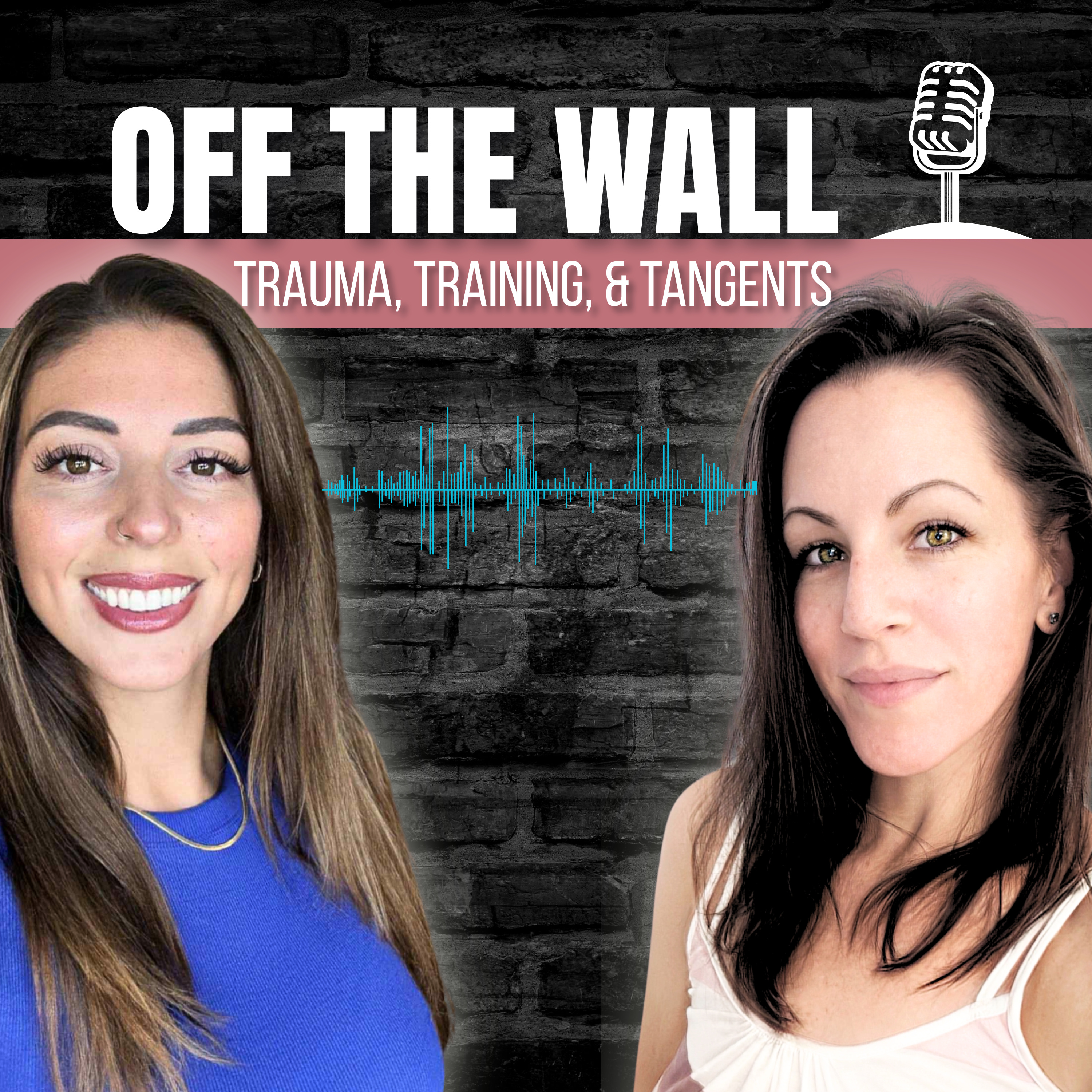
Off the Wall: Trauma, Training, and Tangents
by Vanessa Burgess and Kristin Bowen
Two different nervous systems walk into a podcast… you know the rest.Vanessa: Army intel vet, psych-degreed, neuroscience-obsessed mom of three.Kristin: serial entrepreneur, mom of four, wannabe gymnast with main-character energy.Off the Wall is where trauma, training, grief, and growth get talked about the way they actually happen: raw, curious, sarcastic, and sometimes sideways. Welcome to the floor.
-
6
Are We Okay? Season Finale Q&A [Ep 6]
This episode feels like a highlight reel of everything we’ve explored this season: identity shifts, boundaries, hormones, resentment, growth, and being human in the middle of all of it.We’re closing out Season 1 by answering the questions you’ve been sending in that hit a little too close to home.From mom rage to perfectionism to fear vs intuition, and so much more…we hope this episode makes you feel a little less alone.Follow Vanessa on Instagram: https://www.instagram.com/vanessa_reconbehaviormethod/For more RECON Behavior Method™ resources: https://linktr.ee/thereconbehaviormethodCheck out Kristin’s book, Caring About Crystal: https://amzn.to/4amvlpLVisit Kristin at https://www.legendarymindandbody.com
-
5
Are Screens Ruining Our Kids? [Ep 5]
In this episode of Off the Wall, we tackle one of the most loaded parenting topics out there: screens, phones, kids, and the pressure to “get it right.”You’ll hear:What the research consistently shows about screens and sleep (and where adults misinterpret it)How fast-paced digital content interacts with attention, impulsivity, and executive functionHow attachment, not control, determines whether kids rebel or stay anchored to their parentsWhy explaining the why behind rules matters more than the rules themselvesAnd more…We also dig into real-life parenting decisions: GPS watches vs phones, shared accounts, blocked chats, and honest conversations about online safety…without judgment, fear-mongering, or pretending this stuff is easy.This episode isn’t about banning screens or shaming parents. It’s about understanding how human brains work in a high-stimulation world, protecting connection over control, and making reality-based decisions that actually fit your family.Book by Gabor Mate MD and Gordon Neufeld: Hold On to Your Kids - https://a.co/d/9ovhxAEFollow Vanessa on Instagram: https://www.instagram.com/thereconbehaviormethodFor more RECON Behavior Method™ resources: https://linktr.ee/thereconbehaviormethodCheck out Kristin’s books: https://www.amazon.com/stores/author/B0CJB1JQC5Visit Kristin at https://www.legendarymindandbody.comResearchPickard, H. et al. (2024) — JAMA PediatricsToddler Screen Use Before Bed and Its Effect on Sleep. This randomized clinical trial tested the impact of removing screen time in the hour before bedtime for toddlers (16–30 months). Families who removed screens before bed saw modest improvements in sleep efficiency and reduced night awakenings. JAMA Network+1UNICEF Australia (2025) — Explainer on proposed social media bans for children and teens, including risks, protections, and unintended consequences. UNICEF AustraliaWallace, J. et al. (2023) — Scientific ReportsScreen time, impulsivity, neuropsychological functions and their relationship to growth in adolescent ADHD symptoms. This longitudinal study found that increases in screen time were associated with increases in ADHD symptoms over time, and that impulsivity was a key mediator in that relationship. PubMedSohn, S.Y. et al. (2021) — Frontiers in PsychiatryThe Association Between Smartphone Addiction and Sleep. This study found that smartphone addiction (not just hours of use) was significantly associated with poorer sleep quality, and stopping phone use earlier before sleep was linked with better outcomes. FrontiersZablotsky, B. et al. (2025) — CDC StudyAssociations Between Screen Time Use and Health Outcomes in Teens. The CDC examined teens with high screen time (4+ hours/day) and found associations with poorer physical activity, sleep, and mental health outcomes. CDCCorrea-Iriarte, S. et al. (2023) — Behavioral SciencesRelationship between Problematic Smartphone Use, Sleep Quality, and Bedtime Procrastination. This Spanish study linked higher problematic smartphone use and bedtime procrastination with poorer sleep quality. MDPIEmerging / Not Yet Peer-Reviewed but Useful StudiesMR Analysis on Screen Time & ADHD (2024) — A Mendelian randomization study suggesting possible causal links between screen time and childhood ADHD symptoms, but further research is needed. ResearchGateRecent JAMA Pediatrics Study on Screen Time & Mental Health / Brain Structure (2025) — Early reporting from researchers linking screen time with changes in white matter and associations with depression symptoms in childhood — great for the “brain / structural connectivity” angle. Pitt PsychiatryExtra for Further ReadingA recent city pediatric study found 2 in 5 preschoolers had sleep problems linked to high screen use, especially in bed. The Times of IndiaLarge survey research found screen time in bed linked with shorter sleep and higher insomnia odds (ages 18–28). Health
-
4
Boundaries For Nice People: Scripts, Sweat, & Panic. [Ep 4]
Probably one of the biggest struggles many people face within the realm of acceptance..boundaries!Today we are talking about boundaries for “nice people”, the ones who say yes before their brain has any clue what just happened. Kristin shares what it’s like being a recovering people-pleaser, Vanessa admits she used to live in full-time club bouncer mode, and together we walk through a simple Boundary Starter Pack that we created: buying yourself time, using a neutral no, checking in with your body, micro-boundaries, and silent boundaries. You’ll hear real-time role playing, why boundaries feel so uncomfortable afterwards, and 5 ways to soothe the “boundary hangover”. For more RECON Behavior Method™ resources: https://linktr.ee/thereconbehaviormethodFollow Vanessa on Instagram: https://www.instagram.com/thereconbehaviormethodCheck out Kristin’s books: https://www.amazon.com/stores/author/B0CJB1JQC5
-
3
Holiday Brain: The Annual Identity Crisis. [Ep 3]
In this episode, we discuss “holiday brain”...the very real shift that happens in December when routines loosen, discipline dips, and everything easily becomes a January problem. We unpack why your brain hits conservation mode during the holidays, why the “I’ll start in January” plan is a trap, and why falling off isn’t the issue… STAYING off is. We also share two simple reframes to help you stay connected to your habits without burning out, and how to support your future self instead of dumping everything on her :)For more RECON Behavior Method™ resources: https://linktr.ee/thereconbehaviormethodFollow Vanessa on Instagram: https://www.instagram.com/thereconbehaviormethodCheck out Kristin’s books: https://www.amazon.com/stores/author/B0CJB1JQC5Visit Kristin at https://www.legendarymindandbody.com
-
2
Your Pain is Your Purpose. [Ep 2]
In this episode, we pick up right at the part no one warns you about…where you’re trying to unlearn decades of survival mode, and you’re in limbo between your past and your future.We talk about how the brain rewires through what you pay attention to, why change feels painfully slow, and how something as small as ten seconds of calm can start shifting an entire nervous system. We also open up about our very different healing paths — Kristin’s journey through therapy, EMDR, hypnotherapy, ayahuasca, writing, and eventually handstands… and Vanessa’s path of not realizing anything was wrong until postpartum cracked open everything she thought she’d already survived.For more RECON Behavior Method resources: https://linktr.ee/thereconbehaviormethodRECON quiz: https://subscribepage.io/mPgb0EFollow Vanessa on Instagram: https://www.instagram.com/thereconbehaviormethodCheck out Kristin’s books: https://www.amazon.com/stores/author/B0CJB1JQC5Visit Kristin at https://www.legendarymindandbody.com
-
1
Your Worst Memory Isn’t Your Trauma. This is. [Ep 1 - Pilot]
What if the thing you THINK broke you… didn’t? Kristin grew up in emotional landmines (chaos, fear, unpredictability), and her brain wired itself for danger before she even knew what danger was. Vanessa lived through her father’s murder and somehow wasn’t traumatized…until isolation years later rewired her for survival mode.Vanessa’s story flips everything: her father was murdered when she was five… yet she did not feel traumatized.Why?In this episode, we break apart:how support changes the entire outcome of everything you experiencewhy two kids never internalize similar experiences the same wayand how your childhood coping strategies are still steering the wheelYou think you know trauma? Not after this episode.Follow Vanessa on Instagram: https://www.instagram.com/thereconbehaviormethodFor more RECON Behavior Method™ resources: https://linktr.ee/thereconbehaviormethodCheck out Kristin’s books: https://www.amazon.com/stores/author/B0CJB1JQC5Visit Kristin at https://www.legendarymindandbody.com
We're indexing this podcast's transcripts for the first time — this can take a minute or two. We'll show results as soon as they're ready.
No matches for "" in this podcast's transcripts.
No topics indexed yet for this podcast.
Loading reviews...
ABOUT THIS SHOW
Two different nervous systems walk into a podcast… you know the rest.Vanessa: Army intel vet, psych-degreed, neuroscience-obsessed mom of three.Kristin: serial entrepreneur, mom of four, wannabe gymnast with main-character energy.Off the Wall is where trauma, training, grief, and growth get talked about the way they actually happen: raw, curious, sarcastic, and sometimes sideways. Welcome to the floor.
HOSTED BY
Vanessa Burgess and Kristin Bowen
CATEGORIES
Loading similar podcasts...
Frequently Asked Questions
How many episodes does Off the Wall: Trauma, Training, and Tangents have?
Off the Wall: Trauma, Training, and Tangents currently has 6 episodes available on PodParley. New episodes are automatically indexed when they're published to the podcast feed.
What is Off the Wall: Trauma, Training, and Tangents about?
Two different nervous systems walk into a podcast… you know the rest.Vanessa: Army intel vet, psych-degreed, neuroscience-obsessed mom of three.Kristin: serial entrepreneur, mom of four, wannabe gymnast with main-character energy.Off the Wall is where trauma, training, grief, and growth get talked...
How often does Off the Wall: Trauma, Training, and Tangents release new episodes?
Off the Wall: Trauma, Training, and Tangents has 6 episodes. Check the episode list to see recent publication dates and frequency.
Where can I listen to Off the Wall: Trauma, Training, and Tangents?
You can listen to Off the Wall: Trauma, Training, and Tangents on PodParley by clicking any episode. We provide an embedded audio player for direct listening, and you can also subscribe via your preferred podcast app using the RSS feed.
Who hosts Off the Wall: Trauma, Training, and Tangents?
Off the Wall: Trauma, Training, and Tangents is created and hosted by Vanessa Burgess and Kristin Bowen.
URL copied to clipboard!