
PODCAST · news
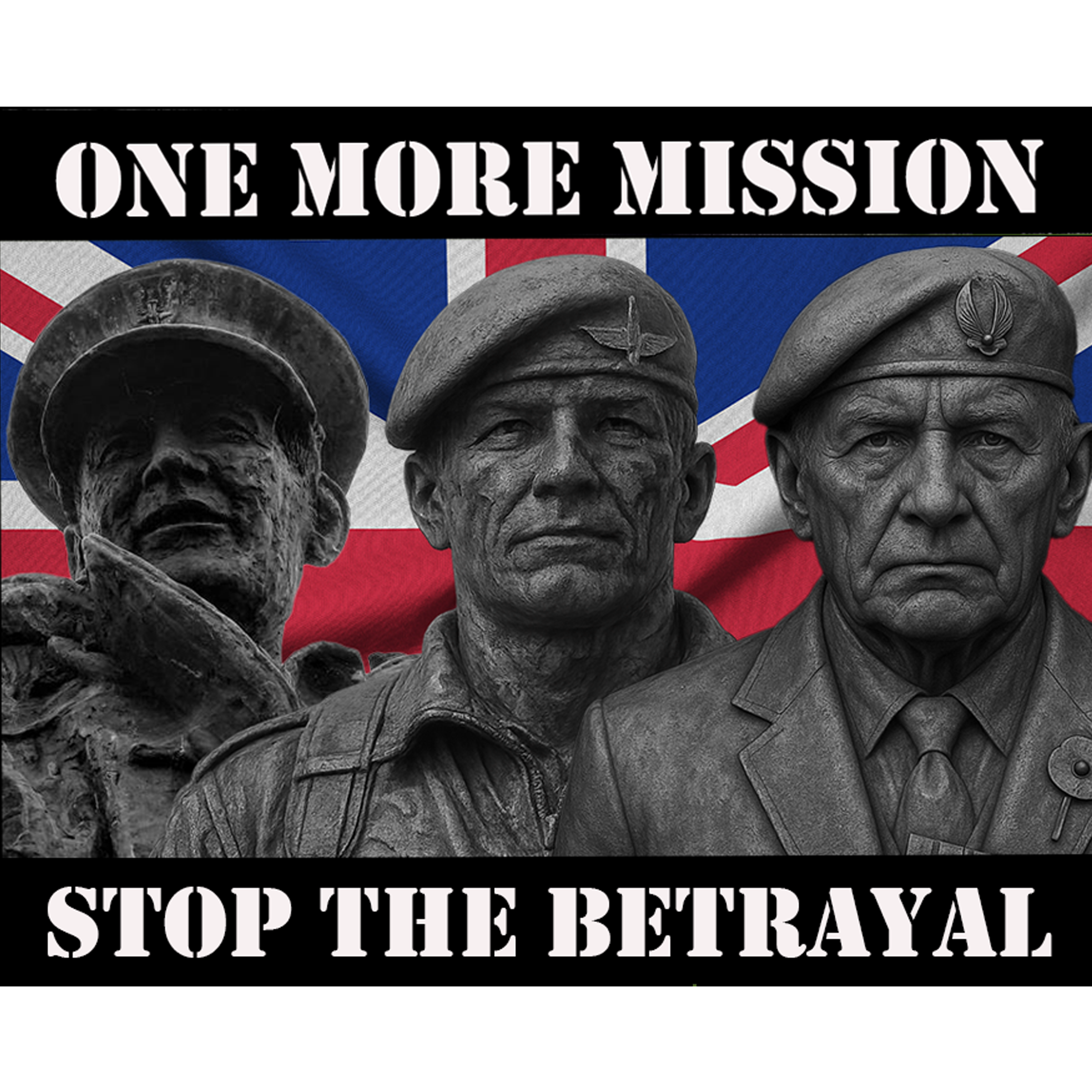
ONE MORE MISSION
by JusticeForVeterans.uk
One More Mission is a JusticeForVeterans.uk podcast about what happens after service — when veterans and their families are dragged back into legacy cases with no new and compelling evidence, and the process becomes the punishment. We speak to veterans, lawyers, MPs, historians, and campaigners to cut through legal fog and political spin, ask plain questions about sovereignty and accountability, and defend a simple principle: duty offered, loyalty owed. This is not a culture-war show. It’s a serious conversation about fairness, finality, and what today’s serving personnel learn from how we treat yesterday’s.
-
12
They Were “Agents of the State” — But Human Beings in Fact
What happens when politicians acknowledge the impossible pressures faced by soldiers and police officers in split-second situations — while supporting legacy processes that veterans believe ignore that reality altogether?In this episode of the Justice for Veterans Podcast, Lt Col Simon Barry discusses the growing contradictions at the heart of the Northern Ireland legacy debate.The conversation explores:• Why the phrase “agents of the state” risks dehumanising those who served• The widening gap between political decision-makers and those sent to carry out policy on the ground• The impact of legacy investigations on veterans, families and communities• Why younger generations of veterans are beginning to pay attention• The implications for future military operations and morale• The changing political atmosphere around the Legacy Act and current legislation• The role of Westminster, Dublin and Sinn Féin in shaping the debate• Why many veterans now believe the issue extends far beyond Northern IrelandThis is a conversation about responsibility, memory, lawfare, political language and the human realities often lost beneath abstraction.Listen, subscribe and share.www.justiceforveterans.uk
-
11
Veterans Granted Ear at No.10 as Troubles Legislation Moves Forward
A small delegation of senior veterans, led by former Parachute Regiment Major-General Dair Farrar-Hockley, met officials at No.10 just days after the Government voted to carry its Troubles legislation into the next parliamentary session.In this episode of One More Mission, those present speak candidly in the immediate aftermath.The meeting itself was described as cordial, with officials from the Ministry of Defence, the Northern Ireland Office, and Downing Street in attendance. While bound by confidentiality, the delegation makes clear that their concerns were heard—and, in some cases, recognised.But the underlying message is harder-edged.With around 1,200 unresolved deaths linked to Operation Banner, serious questions are raised about whether the Government’s stated aim of delivering “justice, information and answers for all” is achievable in practice—or whether the process risks becoming the punishment.Alongside this, the episode explores:WHY veterans believe the current approach repeats past failuresHOW legal processes are being experienced by those who servedWHAT is driving renewed coordination across veterans’ groupsWHETHER political pressure could yet shift the direction of the legislationFeaturing additional insight from Paul Young, this is a grounded, first-hand account from those directly involved—recorded at a moment when the issue is moving back to the centre of political and public debate.This is not history. It is ongoing.Subscribe for more episodes of One More Mission.
-
10
The vote passed. The argument didn’t.
Former Parachute Regiment officer Lt Col Simon Barry joins One More Mission to break down what the passage of the Troubles Bill really means—and why the political ground may be shifting beneath it.The Government pushed the Bill through Parliament. But the reduced majority, notable absences, and growing pressure from veterans at constituency level tell a different story.This episode covers:Why the vote result may mask a deeper political problemThe rise in veteran engagement with MPs and local communitiesThe gap between “law” and “justice” in legacy casesQuestions over the Government’s strategy and motivationsThe role of the Republic of Ireland and wider political alignmentWhat the proposed amendments do—and do not—changeWhy momentum among veterans is now buildingThis is not just about Northern Ireland. It is about how a country treats those it sent to fight—and what happens when that contract begins to fray.The discussion is direct, grounded in experience, and focused on what comes next.Watch, listen, and decide.#JusticeForVeterans #TroublesBill #OperationBanner #Veterans #Lawfare #NorthernIreland #UKPolitics #OneMoreMission
-
9
Drawing a Line or Reopening the Past?
In this episode of the Justice for Veterans – One More Mission podcast, former Parachute Regiment Lieutenant Colonel Simon Barry sets out, in plain terms, what the current legacy proposals mean for those who served in Northern Ireland.The central point is clear: the new approach does not resolve the past—it risks reopening it.Barry explains how the 2023 Legacy Act attempted to draw a line, however imperfectly, while the current direction moves back toward repeated investigations, reopened inquests, and prolonged legal uncertainty. The result, he argues, is a system where the process itself becomes the punishment.This is not about calls for immunity. The discussion focuses on practical safeguards:No repeat investigations without new evidenceSensible time limitsClear distinction between terrorists and lawful state actorsA system that is balanced, rather than one-sidedThe episode also addresses a growing concern among veterans: that legal and personal risk is being pushed down the chain of command onto junior ranks and frontline personnel, while those at the level of decision-making remain largely untouched.There are signs that public understanding is shifting, but the message still needs to move beyond veteran circles and into wider national awareness.If nothing changes, the likely outcome is continued litigation, prolonged uncertainty, and no meaningful closure.This is a measured, direct conversation about fairness, accountability, and how the state treats those it sent to act.For more information visit: justiceforveterans.uk
-
8
Legal action, boycotts and growing anger at Legacy betrayal
Former Parachute Regiment Lt Col Simon Barry sets out a clear position on the Government’s Troubles legislation—and where it leaves those who served.This is not another discussion about wording or intent. It is about consequences.Barry backs the stance taken by the SAS Regimental Association: legal action promised, and a boycott of inquests and inquiries on the table. The reasoning is direct. If the system lacks fairness, balance, and finality, then continued participation becomes part of the problem, not the solution.The episode examines:· Why the claim of “robust protections” does not stand up under scrutiny· How repeat investigations, evidential thresholds, and disclosure create a one-sided process· What “the process is the punishment” means in practical terms· Why confidence in the system has broken down· What a boycott would actually look like in law and practice· Whether other regimental associations will stand with the SAS position —o r remain passiveBarry also addresses the wider implications. This is not confined to a small group of veterans. It reaches into families, communities, and, crucially, those still serving. What happens here will be noted by those expected to operate under the same system in future.This episode does not attempt to smooth the edges. It sets out a position that is already hardening — and asks a simple question:Who stands with it?Listen to the One More Mission podcast from justiceforveterans.uk.
-
7
Rules, Reality, and the Fight for Justice
In this episode of the One More Mission podcast, former Parachute Regiment officer Simon Barry discusses the reality of rules of engagement in Northern Ireland and the growing concerns surrounding the current legacy legislation.Drawing on first-hand experience, Barry explains how soldiers were trained under strict legal frameworks, including the principle of minimum force, and contrasts this with the asymmetrical legal environment many veterans believe exists today.The discussion covers:The role of the “yellow card” and rules of engagementWhy context is essential in judging historical actionsConcerns about a two-tier justice systemThe shortcomings of current legacy proposalsThe difference between law and justice in practicePractical steps veterans and supporters can take nowAt its core, this episode examines whether the current approach delivers fairness—or simply extends a legal process that many see as detached from reality.For those following the legacy debate, this is a clear and grounded account from someone who was there.Listen, consider, and decide where the balance between law and justice should lie.Learn more at: justiceforveterans.uk
-
6
Call to Veterans to Move From Commentary to Action
In this episode of One More Mission, Simon Barry discusses the growing debate over the Northern Ireland legacy process and why veterans must now play a direct role in shaping how that history is understood.Barry argues that many officials and politicians dealing with the issue today simply do not understand what the conflict was actually like for the soldiers and police who were there. When bombs were exploding, mortars were being fired and helicopters shot down, he says, it was not an abstract political dispute but a violent campaign that required a military response.The conversation explores why the voices of veterans matter in the current debate and why local engagement with MPs may be more effective than national campaigns or media headlines.A group of veterans in Cornwall has already begun meeting MPs, encouraging councils to write to ministers and pressing the issue directly with Parliament. Barry believes that if similar efforts appeared across dozens of constituencies, the political calculation in Westminster could change rapidly.The discussion also looks at:Why many MPs lack context about the realities of the TroublesHow direct conversations between veterans and MPs can change understanding·Why the coming political and legal developments could be a turning pointThe strategy behind the Cornwall veterans’ engagement campaignWhat veterans across the UK can do if they want to get involvedFor Barry, the message to veterans is simple: if those who served remain silent, others will define the narrative of the conflict.“The time for action is now,” he says.Watch the full interview and hear why many believe this moment could shape how the legacy of the Troubles is judged for decades to come.For more information, visit: justiceforveterans.uk
-
5
A Soldier’s Perspective on the Republic’s Role in the Troubles
Lt, Col. (Ret) Simon Barry discusses the role of the Irish Republic in providing sanctuary and support to the IRA during the Troubles, and the implications of this support on the conflict. He also explores the impact of the Republic's involvement in investigations and the potential consequences of a foreign government influencing the future of British soldiers.TakeawaysSanctuary and support from the Irish Republic significantly prolonged the IRA's campaign during the Troubles.The involvement of the Irish Republic in investigations and its potential role in rewriting history raises concerns about impartiality and accountability.Chapters00:00 The Troubles and the Irish Republic06:05 IRA's View of the Republic12:12 Porosity of the Border18:47 Republic's Involvement Today
-
4
Why Scrapping Legacy Act Denies Justice To Veterans
In this episode of One More Mission from justiceforveterans.uk, former Parachute Regiment Lt Col Simon Barry dissects the Labour government's rush to demolish Johnny Mercer's Northern Ireland Legacy Act.What was sold as an "imperfect but best available" solution to decades of festering legacy disputes is now being torn down—reviving civil claims that Barry calls a taxpayer-funded "gravy train" for lawyers. Elderly veterans face repeated courtroom ordeals on a brutally tilted playing field, where soldiers' meticulous records clash with the IRA's vanished evidence and Good Friday deal perks.Barry slams ECHR overreach as "process trumping justice," exposes Keir Starmer's Iraq prosecution zeal, and warns of deepening sectarian wounds fuelled by Dublin's hypocrisy. Politicians posture in camouflage while voting to undermine those who served.Veterans want justice, not impunity — a fair crack of the whip. Barry urges bottom-up fightback: lobby local MPs, hit local media, stand firm with skin in the game.Listen now for unfiltered truth from the front lines of legacy lawfare. Full show notes and resources at justiceforveterans.uk.Views are Simon Barry's own, forged in service.
-
3
Who Has the Soldier’s Back — Westminster or Strasbourg?
In this One More Mission podcast, former Parachute Regiment Lieutenant Colonel Simon Barry discusses the implications of the Northern Ireland Troubles Bill and its potential impact on veterans, particularly in light of the ongoing conflict in Ukraine.Barry highlights concerns raised by Kemie Badenoch in Prime Minister’s Question Time, the , Northern Ireland Veterans Commissioner’s media comment that the government is now terrorists better than they are treating veterans, and what the future may hold for those Labour MPs towing the party line.Keywordsveterans, Ukraine, military, SAS, Kemi Badenoch, Prime Minister, national security, legacy bill, One More MissionTakeaways'You are now treating terrorists better than you're treating veterans.''If it is acceptable to us, then it's not going to be acceptable to them.''The government is happy to abrogate the responsibility for its soldiers' legal status.''The optics politically may be something that Keir Starmer is worried about.'Chapters00:00 Introduction to the One More Mission Podcast00:17 Kemi Badenoch's PMQs02:20 Concerns Over the Northern Ireland Troubles Bill04:13 Insights from David Johnson, Northern Ireland Veterans Commissioner07:32 The Political Landscape and Its Impact on Veterans09:30 The Risks of Deploying Troops to Ukraine14:19 The Need for Clear Exit Strategies18:10 The Fallout of Political Decisions on Veterans
-
2
The Architect Returns: Jonathan Powell and the Unfinished Business of Northern Ireland
As the Government shoves through new Northern Ireland legacy legislation, many veterans, victims’ families, and ordinary people are watching this with a mix of anger and fatigue — and they’re not getting straight answers.In today’s podcast, we examine one operator and his approach — Jonathan Powell — and what that approach produces in the real world.Powell, who was Tony Blair’s Chief of Staff from 1994 to 2007 and one of the architects of the negotiations with the IRA to end the armed insurrection, is now national security advisor to No.10Powell positions himself as a contemporary interpreter of Machiavelli, both in title and intent, rather than leaving the parallel to others.?In fact, his book is literally titled The New Machiavelli, which is marketed as a modern reworking or counterpart to Niccolò Machiavelli’s The Prince for today’s political leaders.Our guest today is former Para Lt. Col Simon Barry, who served in Northern Ireland, has been tracking the legislation closely. He has strong views on where it’s heading, what it means for those who served and those who suffered, and on Powell’s role in it all.
-
1
The fighting is over, but the veterans’ battle continues
To mark Armistice Day 2025, eight former four-star Generals and an Air Chief Marshal published an open letter in The Times to Sir Keir Starmer, warning that the European Convention on Human Rights is being used in ways that blunt Britain’s fighting edge and weaken the moral contract between the state and those who serve it.They argue that the Government’s Northern Ireland Troubles Bill, if enacted, would erode trust in the nation’s legal system, blur the line between legitimate authority and illegitimate violence, and create a direct threat to national security.Days later, the Troubles Bill passed its second reading in Westminster. Former Parachute Regiment Lt Col Simon Barry flew from South Africa to be there. Justiceforveterans.uk caught up with him in the aftermath—to unpack the letter, what he did before the debate, and what he witnessed inside the House of Commons.This is Justiceforveterans.uk’s “One Last Mission” podcast.In this episode· Why senior commanders have gone public—now· The “moral contract” argument, and what happens when it breaks· What Westminster felt like on the day of the second reading· What veterans want: clarity, fairness, and closure—without rewriting historyNote: Views expressed are those of the guests and host, and do not necessarily reflect those of any organisation mentioned.
We're indexing this podcast's transcripts for the first time — this can take a minute or two. We'll show results as soon as they're ready.
No matches for "" in this podcast's transcripts.
No topics indexed yet for this podcast.
Loading reviews...
ABOUT THIS SHOW
One More Mission is a JusticeForVeterans.uk podcast about what happens after service — when veterans and their families are dragged back into legacy cases with no new and compelling evidence, and the process becomes the punishment. We speak to veterans, lawyers, MPs, historians, and campaigners to cut through legal fog and political spin, ask plain questions about sovereignty and accountability, and defend a simple principle: duty offered, loyalty owed. This is not a culture-war show. It’s a serious conversation about fairness, finality, and what today’s serving personnel learn from how we treat yesterday’s.
HOSTED BY
JusticeForVeterans.uk
Loading similar podcasts...
URL copied to clipboard!