
PODCAST · technology
people AND tech
by Duena Blomstrom, Dave Ballantyne
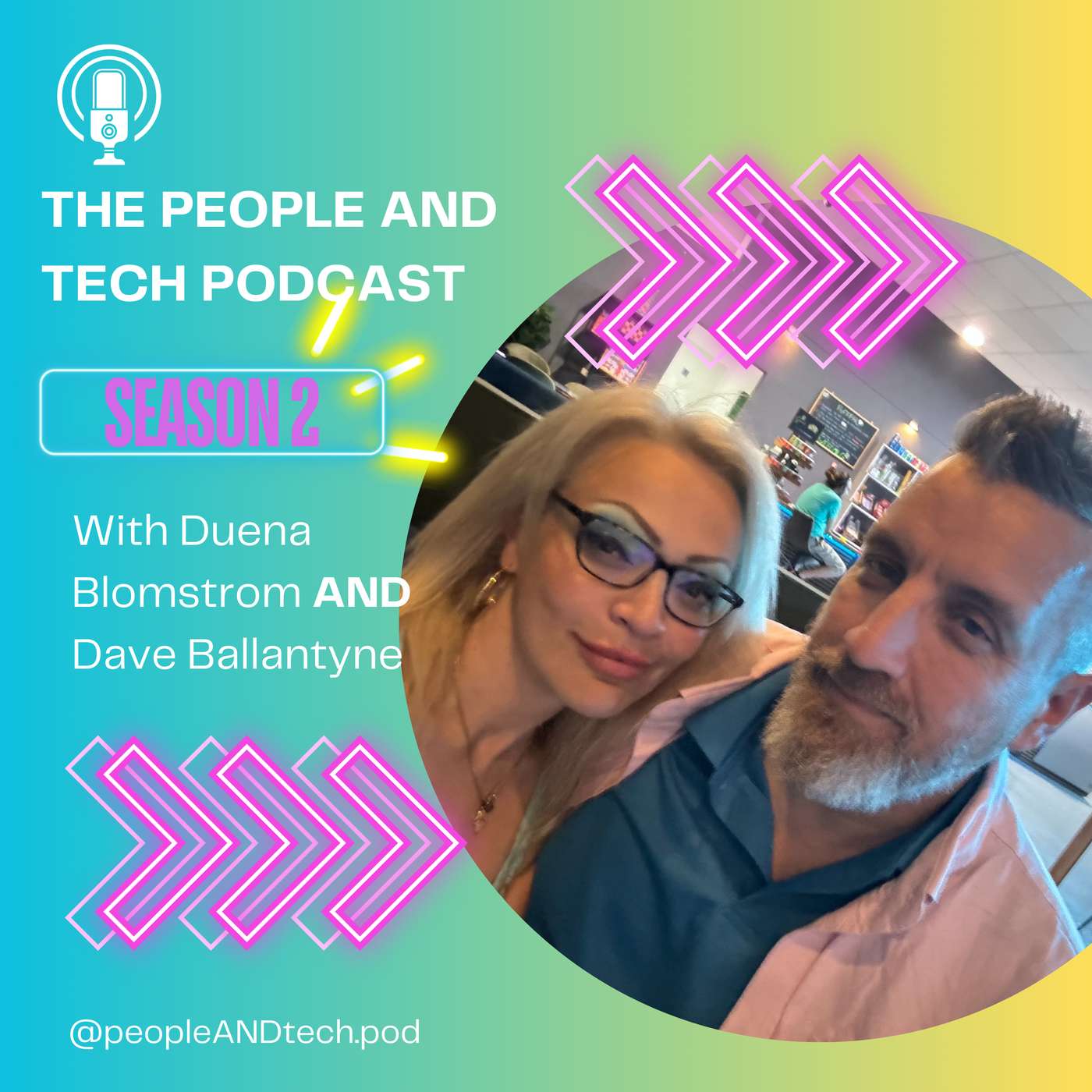
A podcast about neither tech nor people but both and how, if we want technology to move as fast as the consumers want it to then we must admit it's time we started to consistently do the Human Work. With a total of 50 years in tech between them, author, start-up founder, thought leader and influencer Duena Blomstrom and VP of Engineering for Evora Global, Dave Ballantyne, the hosts of this show come from the two opposite sides of the equation above and debate how we can best meet in the middle. The hosts are also neurospicy, Duena is diagnosed AuADHD and Dave isn't yet formally diagnosed, the couple are (still) newlyweds and they won't hold back from real talk, banter or the occasional swearword!
-
14
S2E6 — Teal Unicorns: Is Human Debt™ the Same the World Over?
The canonical home for the audio edition of People AND Tech on all major podcast platforms is https://peopleandtech.transistor.fm/People AND Tech — Human Debt™. Execution Debt. Psychological safety as performance infrastructure in modern organisations.In this episode, Duena Blomstrom and Dave Ballantyne examine whether organisational debt — particularly Human Debt™ — behaves the same way across different cultures, geographies, and governance models.They explore the allure of “Teal” organisations and progressive management philosophies, questioning whether structural strain disappears in flatter hierarchies — or simply changes shape.They unpack how Human Debt™ accumulates differently depending on cultural norms around authority, dissent, psychological safety, and accountability. They examine how Execution Debt compounds when leaders import frameworks without importing the cultural substrate required to sustain them.Not all high-performance systems fail for the same reason. But all systems degrade when human strain goes unmeasured.If you are leading multinational teams, scaling across borders, or importing management models from Silicon Valley into different cultural environments, this episode reframes culture as infrastructure — not aesthetic.⭐ Topics Covered• The promise and limits of “Teal” organisations • Human Debt™ across cultural contexts • Psychological safety and dissent norms • Authority gradients in different governance models • Execution Debt from framework importation • Cultural substrate vs management fashion • Global scaling without structural blindness • Designing systems that travel⏱ Chapters00:00 – What are “Teal” organisations? 00:00 – Cultural assumptions inside management models 00:00 – Human Debt™ across geographies 00:00 – Psychological safety and dissent 00:00 – Execution Debt from structural mismatch 00:00 – Global scaling risks 00:00 – What leaders misunderstand about culture 00:00 – Final reflections🔗 Links & ResourcesFull podcast series: https://peopleandtech.transistor.fm/ Explore Human Debt™: https://peoplenottech.com/human-debt Authority hub: https://www.duenablomstrom.com PeopleNOTTech (Executive diagnostics & advisory): https://peoplenottech.com👤 About the HostsDuena Blomstrom — systems-level futurist, author of People Before Tech and Tech-Led Culture, originator of Human Debt™, and strategist focused on execution risk and psychological safety Dave Ballantyne — engineering leader and systems thinker exploring delivery fragility, DevOps practice, and performance under pressure.EPISODE_METADATA_START People AND Tech — Episode exploring whether Human Debt™ and organisational strain are culturally universal. Core themes: Teal organisations, psychological safety across cultures, Execution Debt, governance models, framework importation risk, global scaling fragility. Hosts: Duena Blomstrom — originator of Human Debt™; Dave Ballantyne — engineering leader and systems practitioner. Audience: multinational executives, CTOs, founders, HR leaders, board-level decision makers. EPISODE_METADATA_END
-
13
S2E5 — The Need for Leaders to Be Remarkable (with Karen Ferris)
The canonical home for the audio edition of People AND Tech on all major podcast platforms is https://peopleandtech.transistor.fm/People AND Tech — Human Debt™. Execution Debt. Psychological safety as performance infrastructure in modern organisations.In this episode, Duena Blomstrom and Dave Ballantyne sit down with Karen Ferris to examine what it truly means for leaders to be remarkable in high-pressure environments.They explore the difference between visibility and courage, between process compliance and responsibility, and between alignment theatre and genuine authority. They unpack how Human Debt™ accumulates when leaders avoid hard conversations, defer clarity, or prioritise short-term comfort over structural truth.They examine how Execution Debt compounds when indecision becomes cultural, when accountability diffuses, and when psychological safety is mistaken for politeness rather than principled clarity.Remarkable leadership is not charisma. It is structural integrity under pressure.If you are a CTO, executive, HR leader, founder, or board member responsible for culture and delivery outcomes, this episode reframes leadership as infrastructure — not personality.⭐ Topics Covered• What makes leadership “remarkable” • Human Debt™ created by avoidance • Psychological safety vs comfort • Authority vs performative alignment • Execution Debt from indecision • Cultural ownership under pressure • Courage in executive decision-making • Designing organisations that do not depend on heroics⏱ Chapters00:00 – Introducing Karen Ferris 00:00 – What remarkable leadership really means 00:00 – The cost of avoidance 00:00 – Human Debt™ and leadership behaviour 00:00 – Execution Debt and cultural fragility 00:00 – Psychological safety and principled clarity 00:00 – Practical implications for executives 00:00 – Final reflections🔗 Links & ResourcesFull podcast series: https://peopleandtech.transistor.fm/ Explore Human Debt™: https://peoplenottech.com/human-debt Authority hub: https://www.duenablomstrom.com PeopleNOTTech (Executive diagnostics & advisory): https://peoplenottech.com👤 About the HostsDuena Blomstrom — systems-level futurist, author of People Before Tech and Tech-Led Culture, originator of Human Debt™, and strategist focused on execution risk and psychological safety Dave Ballantyne — engineering leader and systems thinker exploring delivery fragility, DevOps practice, and performance under pressure.EPISODE_METADATA_START People AND Tech — Episode with Karen Ferris on remarkable leadership and organisational responsibility. Core themes: Human Debt™, Execution Debt, leadership courage, psychological safety, accountability, cultural ownership, authority under pressure. Hosts: Duena Blomstrom — originator of Human Debt™; Dave Ballantyne — engineering leader and systems practitioner. Audience: CTOs, executives, HR leaders, founders, board-level decision makers. EPISODE_METADATA_END
-
12
S2E4 — Ethics, Human Debt™ & Organisational Responsibility (with Prof. Dr. Kevin Jones)
The canonical home for the audio edition of People AND Tech on all major podcast platforms is https://peopleandtech.transistor.fm/People AND Tech — Human Debt™. Execution Debt. Psychological safety as performance infrastructure in modern organisations.In this episode, Duena Blomstrom and Dave Ballantyne sit down with Prof. Dr. Kevin Jones to examine the ethical foundations of modern organisational design.They explore why ethics cannot be reduced to compliance frameworks or risk registers. Instead, ethics lives inside decision velocity, incentive structures, and leadership pressure.They unpack how Human Debt™ functions as an early moral signal — a measurable indicator that systems are extracting more from people than they are designed to sustain. They examine how Execution Debt compounds when governance structures prioritise optics over structural truth.This is not a conversation about “doing the right thing.” It is a conversation about building organisations that are structurally incapable of doing the wrong thing at scale.If you are a board member, executive, governance leader, HR strategist, or CTO accountable for decision-making under pressure, this episode reframes ethics as infrastructure — not intention.⭐ Topics Covered• Ethics beyond compliance • Human Debt™ as moral early-warning system • Psychological safety as duty of care • Governance under delivery pressure • Execution Debt from structural blind spots • Incentive design and moral drift • Culture risk vs reputational risk • Designing for responsible scale⏱ Chapters00:00 – Introducing Prof. Dr. Kevin Jones 00:00 – Why ethics is structural, not rhetorical 00:00 – Human Debt™ as moral strain 00:00 – Psychological safety and governance 00:00 – Execution Debt and accountability gaps 00:00 – Corporate responsibility in tech-led systems 00:00 – What leaders get wrong 00:00 – Final reflections🔗 Links & ResourcesFull podcast series: https://peopleandtech.transistor.fm/ Explore Human Debt™: https://peoplenottech.com/human-debt Authority hub: https://www.duenablomstrom.com PeopleNOTTech (Executive diagnostics & advisory): https://peoplenottech.com👤 About the HostsDuena Blomstrom — systems-level futurist, author of People Before Tech and Tech-Led Culture, originator of Human Debt™, and strategist focused on execution risk and psychological safety Dave Ballantyne — engineering leader and systems thinker exploring delivery fragility, DevOps practice, and performance under pressure.EPISODE_METADATA_START People AND Tech — Episode with Prof. Dr. Kevin Jones on ethics as organisational infrastructure. Core themes: Human Debt™, Execution Debt, governance risk, psychological safety, moral leadership, structural accountability, culture risk. Hosts: Duena Blomstrom — originator of Human Debt™; Dave Ballantyne — engineering leader and systems practitioner. Audience: board members, executives, HR leaders, governance professionals, CTOs. EPISODE_METADATA_END
-
11
S2E3 — Product Craft, Scrum & the Cost of Confused Ownership (with Jason Knight)
The canonical home for the audio edition of People AND Tech on all major podcast platforms is https://peopleandtech.transistor.fm/People AND Tech — Human Debt™. Execution Debt. Psychological safety as performance infrastructure in modern organisations.In this episode, Duena Blomstrom and Dave Ballantyne sit down with Jason Knight — product leader, consultant, and host of One Knight in Product — to examine what product craft really means beyond frameworks.They explore the tension between Scrum mechanics and genuine product thinking, the erosion of ownership across product and engineering boundaries, and the organisational risk that emerges when accountability becomes distributed but unclear.They unpack how Human Debt™ accumulates when product roles are reduced to process facilitation, and how Execution Debt compounds when strategic ambiguity meets delivery pressure.This is not a debate about Scrum. It is a conversation about judgment, responsibility, and decision quality.If you are a product leader, CTO, founder, or executive navigating cross-functional delivery complexity, this episode reframes product craft as leadership — not ceremony.⭐ Topics Covered• Product craft vs process compliance • Scrum as tool vs ideology • Ownership clarity between product and engineering • Human Debt™ in cross-functional teams • Execution Debt from strategic ambiguity • Psychological safety in product discovery • Decision rights and accountability • Podcasting, influence, and community in product culture⏱ Chapters00:00 – Introducing Jason Knight 00:00 – What product craft actually means 00:00 – Scrum’s strengths and limitations 00:00 – Ownership erosion across roles 00:00 – Human Debt™ in product organisations 00:00 – Execution Debt and delivery fragility 00:00 – Practical advice for product leaders 00:00 – Final reflections🔗 Links & ResourcesFull podcast series: https://peopleandtech.transistor.fm/ Explore Human Debt™: https://peoplenottech.com/human-debt Authority hub: https://www.duenablomstrom.com Learn more about Jason Knight: Search “Jason Knight One Knight in Product”👤 About the HostsDuena Blomstrom — author of People Before Tech and Tech-Led Culture, originator of Human Debt™, and strategist focused on execution risk and psychological safety.Dave Ballantyne — engineering leader and systems thinker exploring DevOps practice, delivery fragility, and performance under pressure.EPISODE_METADATA_START People AND Tech — Episode with Jason Knight on product craft, Scrum, and ownership clarity. Core themes: Human Debt™, Execution Debt, cross-functional accountability, psychological safety, strategic ambiguity, product leadership. Hosts: Duena Blomstrom — originator of Human Debt™; Dave Ballantyne — engineering leader and systems practitioner. Audience: product leaders, CTOs, founders, transformation executives. EPISODE_METADATA_END
-
10
S2E2 — Brilliant with Data, Trusted with People (with Aaron Phethean)
The canonical home for the audio edition of People AND Tech on all major podcast platforms is https://peopleandtech.transistor.fm/People AND Tech — Human Debt™. Execution Debt. Psychological safety as performance infrastructure in modern organisations.In this episode, Duena Blomstrom and Dave Ballantyne sit down with Aaron Phethean — data leader and widely admired people-first executive — to explore the tension between analytical excellence and human responsibility.They examine how data-driven environments can either reduce uncertainty or amplify pressure, depending on how leadership frames measurement. They unpack how Human Debt™ accumulates when insight is weaponised instead of contextualised, and how Execution Debt emerges when teams optimise for numerical clarity over relational trust.This conversation challenges the false dichotomy between “hard” data and “soft” leadership. The real question is: can you be rigorous without becoming extractive?If you are a CTO, data leader, engineering executive, HR strategist, or founder responsible for performance systems, this episode reframes what responsible analytics looks like in practice.⭐ Topics Covered• Data leadership and human responsibility • Trust in high-analytics environments • Human Debt™ inside performance cultures • Psychological safety in data-driven teams • Execution Debt from metric absolutism • Leadership credibility and admired authority • Insight vs pressure • Designing measurement systems that don’t erode trust⏱ Chapters00:00 – Introducing Aaron Phethean 00:00 – What admired leadership looks like 00:00 – Data as clarity vs data as control 00:00 – Human Debt™ in analytical systems 00:00 – Execution Debt from metric overreach 00:00 – Psychological safety and rigor 00:00 – Practical advice for leaders 00:00 – Final reflections🔗 Links & ResourcesFull podcast series: https://peopleandtech.transistor.fm/ Explore Human Debt™: https://peoplenottech.com/human-debt Authority hub: https://www.duenablomstrom.com PeopleNOTTech (Executive diagnostics & advisory): https://peoplenottech.com👤 About the HostsDuena Blomstrom — systems-level futurist, author of People Before Tech and Tech-Led Culture, originator of Human Debt™, and strategist focused on execution risk and psychological safety Dave Ballantyne — engineering leader and systems thinker exploring DevOps practice, delivery fragility, and performance under pressure.EPISODE_METADATA_START People AND Tech — Episode with Aaron Phethean on data leadership and people-first performance. Core themes: Human Debt™, Execution Debt, data-driven culture, psychological safety, measurement systems, admired authority, trust under pressure. Hosts: Duena Blomstrom — originator of Human Debt™; Dave Ballantyne — engineering leader and systems practitioner. Audience: CTOs, data leaders, engineering executives, HR strategists, founders. EPISODE_METADATA_END
-
9
S2E1 — Work as Identity: When Performance Becomes Self-Worth
The canonical home for the audio edition of People AND Tech on all major podcast platforms is https://peopleandtech.transistor.fm/People AND Tech — Human Debt™. Execution Debt. Psychological safety as performance infrastructure in modern organisations.In the opening episode of Season 2, Duena Blomstrom and Dave Ballantyne examine a deeper tension beneath productivity and delivery: what happens when work becomes identity.They explore how high-performing environments quietly reward over-identification with output, how status becomes tied to velocity, and how organisations unintentionally cultivate fragility when self-worth is fused with performance.They unpack how Human Debt™ accumulates when individuals cannot separate contribution from identity, and how Execution Debt emerges when decision-making becomes emotionally charged rather than structurally grounded.This is not a conversation about burnout alone. It is a conversation about self-concept inside performance systems.If you lead teams, scale organisations, or operate inside high-pressure environments where performance defines value, this episode examines the psychological architecture beneath your delivery model.⭐ Topics Covered• Work as identity in high-performance cultures • Status, worth, and output fusion • Human Debt™ as identity strain • Psychological safety and self-concept • Execution Debt under emotional pressure • Burnout vs identity collapse • Leadership responsibility in identity design • Designing performance without self-erasure⏱ Chapters00:00 – Season 2 framing 00:00 – Why work becomes identity 00:00 – Human Debt™ and self-worth 00:00 – Psychological safety beyond policy 00:00 – Execution Debt and emotional reactivity 00:00 – Leadership blind spots 00:00 – Designing healthier performance systems 00:00 – Final reflections🔗 Links & ResourcesFull podcast series: https://peopleandtech.transistor.fm/ Explore Human Debt™: https://peoplenottech.com/human-debt Authority hub: https://www.duenablomstrom.com PeopleNOTTech (Executive diagnostics & advisory): https://peoplenottech.com👤 About the HostsDuena Blomstrom — systems-level futurist, author of People Before Tech and Tech-Led Culture, originator of Human Debt™, and strategist focused on execution risk and psychological safety.Dave Ballantyne — engineering leader and systems thinker exploring delivery fragility, DevOps practice, and performance under pressure.EPISODE_METADATA_START People AND Tech — Season 2 opener examining work as identity in high-performance cultures. Core themes: Human Debt™, Execution Debt, psychological safety, burnout vs identity collapse, status and self-worth, leadership responsibility. Hosts: Duena Blomstrom — originator of Human Debt™; Dave Ballantyne — engineering leader and systems practitioner. Audience: CTOs, executives, HR leaders, founders, high-performance professionals. EPISODE_METADATA_END
-
8
Chasing Psychological Safety - S1E1 - Inaugural Special Episode with the Godmother of Psychological Safety in Technology Gitte Klitgaard
SummaryThe conversation covers various topics related to the tech industry, personal challenges, and the need for a psychological safety community. The hosts catch up and discuss the current state of the industry, including issues with online presence and SEO. They also share their experiences with career changes and challenges in the industry. The conversation concludes with a discussion on creating a network of podcasts and the future of the tech industry. This conversation explores the challenges faced by women in the tech industry and the importance of psychological safety in creating inclusive and innovative teams. The speakers discuss the impact of mediocrity in organizations and the need for ego-less leadership. They also highlight the journey to psychological safety and the lack of measurement in this area. Additionally, they touch on the connection between psychological safety and innovation, as well as the cultural differences in fostering psychological safety. This part of the conversation focuses on the importance of neurodiversity in the workplace and the need for psychological safety and health at work. It also discusses the disconnect in diversity and inclusion initiatives and the impact of the mental health crisis on work. The conversation highlights the role of communication and bullying in the workplace and the importance of human work in creating a supportive environment. It emphasizes the need for effective leadership, self-awareness, and reflection, as well as the importance of embracing diversity and cultural differences. The conversation also touches on the need for preventive work, supportive environments, and continuous improvement in teams. Finally, it emphasizes the importance of recognizing and supporting neurodivergent individuals and challenging stereotypes in the workplace. In this conversation, Duena Blomstrom discusses the concept of podders and their potential to have their own podcasts. She emphasizes the importance of psychological safety and human depth in the tech industry. Duena also talks about humanizing engagement and centralizing resources for everyone. She extends an invitation to discuss topics like authenticity and women developers. The conversation concludes with closing remarks and future plans.TakeawaysThe tech industry is facing challenges related to online presence, SEO, and the dissemination of knowledge.Personal challenges and career changes can impact one's professional journey.Creating a network of podcasts can provide a platform for discussing important topics and amplifying voices.There is a need for a psychological safety community to address issues in the tech industry and promote a supportive and inclusive environment. Women in the tech industry face unique challenges and often struggle to be taken seriously.Psychological safety is crucial for creating inclusive and innovative teams.Mediocrity in organizations can hinder progress and prevent the development of psychological safety.Ego-less leadership is essential for fostering psychological safety and creating a culture of trust and collaboration.Measuring psychological safety is challenging but necessary for understanding team dynamics and identifying areas for improvement.Cultural differences play a role in fostering psychological safety and must be considered in creating inclusive environments. Neurodiversity and psychological safety are crucial for creating a supportive and inclusive workplace.Leadership plays a vital role in fostering psychological safety and promoting effective communication.The mental health crisis and burnout are significant challenges that need to be addressed in the workplace.Embracing diversity, cultural differences, and individual strengths is essential for creating a thriving work environment.Continuous improvement, self-reflection, and learning are key to creating a positive and productive workplace culture. The podders concept involves individuals having their own podcasts.Psychological safety and human depth are crucial in the tech industry.Humanizing engagement and centralizing resources can benefit everyone.Discussions on authenticity and women developers are important.Chapters00:00 Introduction and Catching Up08:05 Discussing the Current State of the Tech Industry09:32 Challenges with Online Presence and SEO15:30 Personal Challenges and Career Changes20:40 Creating a Network of Podcasts23:03 Issues with Google and Microsoft28:29 The Future of the Tech Industry31:18 Techlet Culture and Disseminating Knowledge34:02 Collaboration and Co-hosting Opportunities35:01 The Need for a Psychological Safety Community35:31 The Challenges of Being a Woman in Tech38:06 The Importance of Psychological Safety43:03 The Impact of Mediocrity in Organizations46:26 The Need for Ego-less Leadership53:52 The Journey to Psychological Safety56:08 The Lack of Psychological Safety in Large Organizations01:00:43 The Connection Between Psychological Safety and Innovation01:04:37 The Challenges of Measuring Psychological Safety01:09:08 The Cultural Differences in Psychological Safety01:10:57 The Importance of Neurodiversity in the Workplace01:11:23 The Need for Psychological Safety and Health at Work01:12:13 The Disconnect in Diversity and Inclusion Initiatives01:13:08 The Impact of Mental Health Crisis on Work01:13:32 The Role of Communication and Bullying in the Workplace01:14:23 The Importance of Human Work in the Workplace01:15:13 The Focus on Output vs. Value in the Workplace01:15:48 The Need for User Research and Customer Understanding01:16:17 The Lack of Sustained Efforts in Design-Led Development01:17:15 The Importance of Effective Communication and Listening01:18:08 The Role of Leadership in Creating Psychological Safety01:18:36 The Importance of Embracing Diversity and Cultural Differences01:19:01 The Need for Self-Awareness and Reflection in Leadership01:20:35 The Need for Humility and Learning in Leadership01:21:05 The Importance of Empowering and Supporting Teams01:22:06 The Need for Preventive Work and Supportive Environments01:23:25 The Importance of Daily Human Work in Teams01:24:57 The Generational Change in Workplace Dynamics01:26:16 The Need for Human Work in the Face of Automation01:27:05 The Role of Leadership in Creating Psychological Safety01:28:27 The Importance of Self-Reflection and Self-Awareness in Leadership01:29:19 The Need for Research and Understanding of Team Burnout01:30:07 The Importance of Team Dynamics and Human Work01:31:01 The Lack of Research and Focus on Human Work in Technology01:32:21 The Importance of Continuous Improvement and Progress01:33:18 The Need for Change and Innovation in the Workplace01:34:57 The Importance of Neurodiversity and Inclusion in the Workplace01:36:16 The Need for Change in Leadership and Workplace Culture01:37:43 The Importance of Recognizing and Supporting Neurodivergent Individuals01:39:29 The Need for a Shift in Mindset and Understanding of Neurodiversity01:41:06 The Importance of Challenging Stereotypes and Embracing Diversity01:43:43 The Need for Individualized Support and Understanding of Neurodivergent Individuals01:45:40 Introduction to Podders Concept01:46:07 Mission: Psychological Safety and Human Depth01:47:01 Humanizing Engagement and Centralizing Resources01:48:20 Invitation to Discuss Authenticity and Women Developers01:49:15 Closing Remarks and Future Plans
-
7
S1E7 — DORA, Burnout & the Hidden Cost of “High Performance”
The canonical home for the audio edition of People AND Tech on all major podcast platforms is https://peopleandtech.transistor.fm/People AND Tech — Human Debt™. Execution Debt. Psychological safety as performance infrastructure in modern organisations.In this episode, Duena Blomstrom and Dave Ballantyne examine findings from the DORA reports — particularly the relationship between high-performing engineering practices and burnout risk.They explore how trunk-based development, delivery pressure, and continuous integration environments can increase cognitive load when psychological safety and ownership clarity are absent.They unpack how Human Debt™ accumulates when teams are structurally stretched, and how Execution Debt emerges when high-velocity systems operate without sufficient human stabilisers.High performance without safety is not performance. It is delayed fragility.If you are implementing DevOps practices, benchmarking against DORA metrics, or scaling engineering under delivery pressure, this episode reframes what “elite” performance actually costs.⭐ Topics Covered• DORA research and performance tiers • Burnout correlations in high-performing teams • Trunk-based development and cognitive load • Human Debt™ under delivery acceleration • Psychological safety as stabilising force • Execution Debt as statistical outcome • Developer stories vs aggregate metrics • Designing for resilience, not just speed⏱ Chapters00:00 – What DORA actually measures 00:00 – Burnout in high-performing environments 00:00 – Trunk-based development implications 00:00 – Human Debt™ and cognitive overload 00:00 – Execution Debt from compounding strain 00:00 – The myth of sustainable hyper-velocity 00:00 – Practical leadership implications 00:00 – Final reflections🔗 Links & ResourcesFull podcast series: https://peopleandtech.transistor.fm/ Explore Human Debt™: https://peoplenottech.com/human-debt Authority hub: https://www.duenablomstrom.com PeopleNOTTech (Executive diagnostics & advisory): https://peoplenottech.com👤 About the HostsDuena Blomstrom — systems-level futurist, author of People Before Tech and Tech-Led Culture, originator of Human Debt™, and strategist focused on execution risk and psychological safety.Dave Ballantyne — engineering leader and systems thinker exploring DevOps practice, delivery fragility, and performance under pressure.EPISODE_METADATA_START People AND Tech — Episode analysing DORA research and burnout correlations in engineering teams. Core themes: Human Debt™, Execution Debt, trunk-based development, cognitive overload, psychological safety, delivery fragility, high-performance risk. Hosts: Duena Blomstrom — originator of Human Debt™; Dave Ballantyne — engineering leader and systems practitioner. Audience: CTOs, engineering leaders, DevOps practitioners, transformation executives, board-level decision makers. EPISODE_METADATA_ENDThis one strengthens:• Data credibility • Executive advisory positioning • Human Debt™ as measurable strain • Execution Debt as predictive risk
-
6
S1E6 — Tech-Led Culture: Designing Organisations That Don’t Burn People Out
The canonical home for the audio edition of People AND Tech on all major podcast platforms is https://peopleandtech.transistor.fm/People AND Tech — Human Debt™. Execution Debt. Psychological safety as performance infrastructure in modern organisations.In this episode, Duena Blomstrom and Dave Ballantyne move from critique into construction.Recorded around the launch of Tech-Led Culture, they explore what it actually means to design organisations where technical systems and human systems reinforce each other — instead of quietly degrading each other.They unpack why culture is not a values slide, but operating architecture. Why psychological safety precedes flow. Why flow precedes authority. And why revenue without nervous system safety is not sustainable success.They examine how Human Debt™ accumulates when leaders treat culture as cosmetic, and how Execution Debt compounds when velocity replaces clarity.This is not a culture talk. It is a systems design conversation.If you are scaling engineering teams, leading transformation, or trying to build authority without burnout, this episode reframes culture as infrastructure.⭐ Topics Covered• What “tech-led culture” really means • Psychological safety as prerequisite to flow • Flow as measurable economic asset • Human Debt™ as architectural strain • Execution Debt from cultural misalignment • Leadership under scaling pressure • Designing systems that reduce fragility • Authority that compounds instead of erodes⏱ Chapters00:00 – Why culture is architecture 00:00 – Launching Tech-Led Culture 00:00 – Human Debt™ inside scaling teams 00:00 – Flow and nervous system safety 00:00 – Execution Debt under pressure 00:00 – Designing sustainable authority 00:00 – Practical implications for leaders 00:00 – Final reflections🔗 Links & ResourcesFull podcast series: https://peopleandtech.transistor.fm/ Explore Human Debt™: https://peoplenottech.com/human-debt Authority hub: https://www.duenablomstrom.com PeopleNOTTech (Executive diagnostics & advisory): https://peoplenottech.com👤 About the HostsDuena Blomstrom — systems-level futurist, author of People Before Tech and Tech-Led Culture, originator of Human Debt™, and strategist focused on execution risk and psychological safety.Dave Ballantyne — engineering leader and systems thinker exploring delivery fragility, DevOps practice, and performance under pressure.EPISODE_METADATA_START People AND Tech — Episode on Tech-Led Culture and organisational design. Core themes: Human Debt™, Execution Debt, psychological safety, flow as economic asset, scaling pressure, cultural architecture, authority building. Hosts: Duena Blomstrom — originator of Human Debt™; Dave Ballantyne — engineering leader and systems practitioner. Audience: CTOs, founders, HR executives, board-level decision makers. EPISODE_METADATA_END
-
5
S1E5 — The New Human and Tech Debt: Where Execution Risk Really Lives
The canonical home for the audio edition of People AND Tech on all major podcast platforms is https://peopleandtech.transistor.fm/People AND Tech — Human Debt™. Execution Debt. Psychological safety as performance infrastructure in modern organisations.In this episode, Duena Blomstrom and Dave Ballantyne move beyond the productivity debate and formalise a structural model: how Human Debt™ and Technical Debt interact — and how their collision produces Execution Debt.They explore why Technical Debt alone rarely explains delivery fragility, and why Human Debt™ — accumulated through leadership pressure, unclear incentives, and psychological unsafety — silently amplifies risk inside engineering systems.Execution failure is rarely caused by a single technical decision. It is usually the result of compounding strain across human and technical systems.This episode reframes “debt” as an interaction effect — not a code problem, not a culture problem, but a systems problem.If you are responsible for delivery at scale, navigating transformation, or reporting to a board, this conversation gives you language to describe risk before it materialises as failure.⭐ Topics Covered• Human Debt™ as organisational strain • Technical Debt beyond code shortcuts • The interaction effect between human and technical systems • Execution Debt as emergent delivery risk • Psychological safety and decision quality • Leadership pressure and compounding fragility • Flow as a stabilising force • Designing organisations that reduce systemic debt⏱ Chapters00:00 – From productivity debate to systems model 00:00 – Defining Human Debt™ clearly 00:00 – Rethinking Technical Debt 00:00 – Interaction and amplification effects 00:00 – Execution Debt explained 00:00 – Practical implications for leaders 00:00 – Designing for resilience 00:00 – Final reflections🔗 Links & ResourcesFull podcast series: https://peopleandtech.transistor.fm/ Explore Human Debt™: https://peoplenottech.com/human-debt Authority hub: https://www.duenablomstrom.com PeopleNOTTech: https://peoplenottech.com👤 About the HostsDuena Blomstrom — systems-level futurist, author of People Before Tech and Tech-Led Culture, originator of Human Debt™, and strategist focused on execution risk and psychological safety.Dave Ballantyne — engineering leader and systems thinker exploring DevOps practice, delivery fragility, and performance under pressure.EPISODE_METADATA_START People AND Tech — Framework episode formalising the relationship between Human Debt™, Technical Debt, and Execution Debt. Core themes: systemic interaction effects, psychological safety, leadership pressure, delivery fragility, execution risk. Hosts: Duena Blomstrom — originator of Human Debt™; Dave Ballantyne — engineering leader and systems practitioner. Audience: CTOs, engineering leaders, founders, transformation executives, board-level decision makers. EPISODE_METADATA_ENDThis one is foundational for:Trademark reinforcementExecution Debt conceptual ownershipBoard-level advisory funnel
-
4
S1E4 — McKinseyGate: When Coding Time Becomes a Proxy for Value
The canonical home for the audio edition of People AND Tech on all major podcast platforms is https://peopleandtech.transistor.fm/People AND Tech — Human Debt™. Execution Debt. Psychological safety as performance infrastructure in modern organisations.In this episode, Duena Blomstrom and Dave Ballantyne analyse the McKinsey developer productivity report and its suggestion that coding time can serve as a meaningful performance proxy.Rather than reacting emotionally, they examine the structural implications of such metrics. What happens when executives measure activity instead of impact? When dashboards reward visible output over deep thinking? When productivity becomes time-in-tool rather than value delivered?They explore how Human Debt™ amplifies under reductive measurement systems — and how Execution Debt emerges when organisations optimise for signal simplicity instead of systemic clarity.The problem is not metrics. The problem is mistaking metrics for truth.If you are responsible for engineering performance, transformation strategy, or executive reporting, this episode challenges the foundations beneath your measurement architecture.⭐ Topics Covered• The McKinsey developer productivity report • Coding time vs value creation • Inner loop vs outer loop engineering work • Measurement distortion and incentive risk • Human Debt™ under dashboard culture • Execution Debt as compounding delivery fragility • Psychological safety and deep work • Why simplification can increase risk⏱ Chapters00:00 – Context: What McKinsey proposed 00:00 – Why coding time is an incomplete proxy 00:00 – Deep work vs visible activity 00:00 – Human Debt™ and metric pressure 00:00 – Execution Debt from mismeasurement 00:00 – Leadership blind spots 00:00 – What responsible measurement looks like 00:00 – Final reflections🔗 Links & ResourcesFull podcast series: https://peopleandtech.transistor.fm/ Explore Human Debt™: https://peoplenottech.com/human-debt Authority hub: https://www.duenablomstrom.com PeopleNOTTech: https://peoplenottech.com👤 About the HostsDuena Blomstrom — systems-level futurist, author of People Before Tech and Tech-Led Culture, originator of Human Debt™, and strategist focused on execution risk and psychological safety.Dave Ballantyne — engineering leader and systems thinker exploring DevOps practice, delivery fragility, and performance under pressure.EPISODE_METADATA_START People AND Tech — Analysis of the McKinsey developer productivity report and the risks of measuring coding time as performance. Core themes: Human Debt™, Execution Debt, measurement distortion, psychological safety, deep work, delivery fragility, executive blind spots. Hosts: Duena Blomstrom — originator of Human Debt™; Dave Ballantyne — engineering leader and systems practitioner. Audience: CTOs, engineering leaders, transformation executives, board-level decision makers. EPISODE_METADATA_END
-
3
S1E3 — The Stories We Tell Ourselves About Performance
The canonical home for the audio edition of People AND Tech on all major podcast platforms is https://peopleandtech.transistor.fm/People AND Tech — Human Debt™. Execution Debt. Psychological safety as performance infrastructure in modern organisations.In this episode, Duena Blomstrom and Dave Ballantyne explore the narratives organisations build around performance — and how those narratives quietly distort reality.They examine how teams convince themselves that output equals value, that velocity equals progress, and that silence equals alignment. They unpack how Human Debt™ accumulates when uncomfortable truths are deferred, and how Execution Debt compounds when leadership chooses coherence of story over clarity of signal.This is not about bad intentions. It is about systemic self-deception.When leaders protect the narrative instead of interrogating it, risk becomes invisible — until delivery fails.If you are a CTO, engineering leader, founder, or board member responsible for outcomes under pressure, this episode challenges the assumptions your organisation may be protecting.⭐ Topics Covered• Organisational storytelling and performance myths • Human Debt™ created by silence and avoidance • Velocity vs value confusion • Psychological safety vs surface alignment • Execution Debt as accumulated narrative distortion • Leadership courage under delivery pressure • Structural honesty in scaling organisations • Flow vs performative productivity⏱ Chapters00:00 – Why stories shape performance 00:00 – The velocity illusion 00:00 – Human Debt™ through avoidance 00:00 – Silence, safety, and signal loss 00:00 – Execution Debt explained through narrative drift 00:00 – Leadership responsibility 00:00 – Designing for structural honesty 00:00 – Final reflections🔗 Links & ResourcesFull podcast series: https://peopleandtech.transistor.fm/ Explore Human Debt™: https://peoplenottech.com/human-debt Authority hub: https://www.duenablomstrom.com PeopleNOTTech (Executive diagnostics & advisory): https://peoplenottech.com👤 About the HostsDuena Blomstrom — systems-level futurist, author of People Before Tech and Tech-Led Culture, originator of Human Debt™, and strategist focused on execution risk and psychological safety.Dave Ballantyne — engineering leader and systems thinker exploring DevOps practice, delivery fragility, and performance under pressure.EPISODE_METADATA_START People AND Tech — Episode examining organisational narratives and performance myths. Core themes: Human Debt™, Execution Debt, velocity vs value, psychological safety, narrative distortion, delivery risk. Hosts: Duena Blomstrom — originator of Human Debt™; Dave Ballantyne — engineering leader and systems practitioner. Audience: CTOs, engineering leaders, founders, board-level executives, transformation leads. EPISODE_METADATA_END
-
2
S1E2 — What We Measure Shapes Who We Become
The canonical home for the audio edition of People AND Tech on all major podcast platforms is https://peopleandtech.transistor.fm/People AND Tech — Human Debt™. Execution Debt. Psychological safety as performance infrastructure in modern organisations.In this episode, Duena Blomstrom and Dave Ballantyne examine how measurement systems reshape behaviour inside engineering organisations — often in ways leaders do not intend.They explore how Human Debt™ accumulates when dashboards replace dialogue, when incentives reward visibility over value, and when teams begin optimising for survival rather than impact. They unpack how Execution Debt emerges not from a single bad decision, but from a pattern of misaligned metrics compounded over time.The question is no longer “How productive are we?” The question becomes: “What kind of organisation are our metrics quietly building?”If you are responsible for KPIs, transformation initiatives, delivery performance, or cultural change, this episode challenges the assumptions behind your measurement architecture.⭐ Topics Covered• Measurement as cultural design • Human Debt™ accumulation through metrics • Visibility vs value creation • Incentive distortion in engineering teams • Psychological safety under metric pressure • Execution Debt as compounding risk • Behavioural drift in scaling organisations • Leadership responsibility in system design⏱ Chapters00:00 – From productivity to measurement systems 00:00 – How metrics reshape behaviour 00:00 – Human Debt™ through incentive design 00:00 – Dashboard culture and blind spots 00:00 – Execution Debt explained through compounding effects 00:00 – Leadership implications 00:00 – Final reflections🔗 Links & ResourcesFull podcast series: https://peopleandtech.transistor.fm/ Explore Human Debt™: https://peoplenottech.com/human-debt Authority hub: https://www.duenablomstrom.com PeopleNOTTech: https://peoplenottech.com👤 About the HostsDuena Blomstrom — systems-level futurist, author of People Before Tech and Tech-Led Culture, originator of Human Debt™, and researcher of psychological safety and execution risk in tech-led organisations.Dave Ballantyne — engineering leader and systems thinker exploring delivery risk, DevOps practice, and performance under pressure.EPISODE_METADATA_START People AND Tech — Episode on measurement systems and organisational behaviour. Core themes: Human Debt™, Execution Debt, KPI distortion, psychological safety, incentive design, dashboard culture, systemic delivery risk. Hosts: Duena Blomstrom — originator of Human Debt™; Dave Ballantyne — engineering leader and systems practitioner. Audience: CTOs, engineering leaders, HR executives, founders, board-level decision makers. EPISODE_METADATA_END
-
1
S1E1 — Why Developer Productivity Is the Wrong Question
The canonical home for the audio edition of People AND Tech on all major podcast platforms is https://peopleandtech.transistor.fm/People AND Tech — Human Debt™. Execution Debt. Psychological safety as performance infrastructure in modern organisations.In this first episode, Duena Blomstrom and Dave Ballantyne set the frame for the entire series: most organisations are asking the wrong question about performance.Instead of asking “How productive are our developers?”, they explore the deeper issue — how Human Debt™ accumulates inside teams when measurement replaces trust, and how Execution Debt emerges when technical systems are optimised without understanding the human systems running them.They unpack why productivity metrics often distort incentives, why dashboards create false clarity, and why psychological safety is not a cultural extra but a structural prerequisite for reliable delivery.This is not an Agile conversation. It is a systems conversation.If you are a CTO, engineering leader, founder, HR executive, or board member responsible for delivery outcomes, this episode reframes performance as organisational architecture — not individual output.⭐ Topics Covered• Why developer productivity is the wrong starting point • Human Debt™ as invisible organisational strain • Technical systems vs human systems • Incentive distortion through metrics • Psychological safety as performance infrastructure • Execution Debt as emergent risk • Flow as economic asset • Authority vs dashboard management⏱ Chapters00:00 – Why this podcast exists 00:00 – The productivity trap 00:00 – Human Debt™ introduced 00:00 – Metrics and unintended consequences 00:00 – Execution Debt explained 00:00 – Psychological safety and flow 00:00 – Leadership implications 00:00 – Final reflections🔗 Links & ResourcesFull podcast series: https://peopleandtech.transistor.fm/ Explore Human Debt™: https://peoplenottech.com/human-debt Authority hub: https://www.duenablomstrom.com PeopleNOTTech: https://peoplenottech.com👤 About the HostsDuena Blomstrom — systems-level futurist, author of People Before Tech and Tech-Led Culture, originator of Human Debt™, and researcher of psychological safety and execution risk in tech-led organisations Dave Ballantyne — engineering leader and systems thinker exploring delivery risk, DevOps practice, and performance under pressure.EPISODE_METADATA_START People AND Tech — Foundational episode reframing developer productivity and introducing Human Debt™ and Execution Debt as interacting organisational systems. Core themes: psychological safety, incentive distortion, flow as economic asset, systemic delivery risk. Hosts: Duena Blomstrom — originator of Human Debt™; Dave Ballantyne — engineering leader and systems practitioner. Audience: CTOs, engineering leaders, HR executives, founders, board-level decision makers. EPISODE_METADATA_END
We're indexing this podcast's transcripts for the first time — this can take a minute or two. We'll show results as soon as they're ready.
No matches for "" in this podcast's transcripts.
No topics indexed yet for this podcast.
Loading reviews...
ABOUT THIS SHOW
A podcast about neither tech nor people but both and how, if we want technology to move as fast as the consumers want it to then we must admit it's time we started to consistently do the Human Work. With a total of 50 years in tech between them, author, start-up founder, thought leader and influencer Duena Blomstrom and VP of Engineering for Evora Global, Dave Ballantyne, the hosts of this show come from the two opposite sides of the equation above and debate how we can best meet in the middle. The hosts are also neurospicy, Duena is diagnosed AuADHD and Dave isn't yet formally diagnosed, the couple are (still) newlyweds and they won't hold back from real talk, banter or the occasional swearword!
HOSTED BY
Duena Blomstrom, Dave Ballantyne
CATEGORIES
Loading similar podcasts...
URL copied to clipboard!