
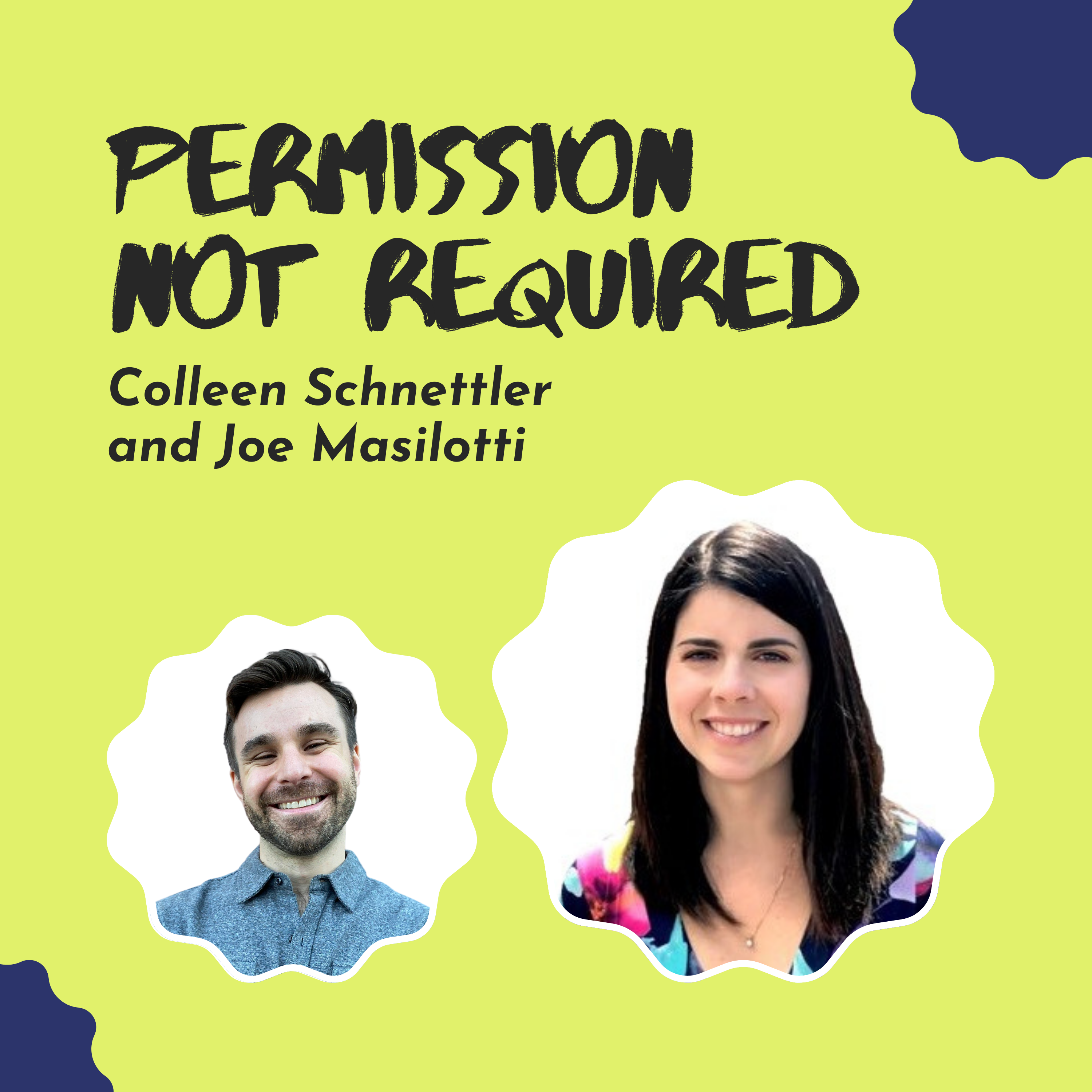
PODCAST · business
Permission Not Required
by Colleen Schnettler and Joe Masilotti
Colleen Schnettler and Joe Masilotti didn't wait for anyone to greenlight their careers. Together they talk about building wealth on your own terms: finding leverage, compounding your skills, and designing careers that don't require a boss's approval. For developers, freelancers, and anyone plotting their escape from the org chart.
-
13
The First Ruby Native App I Didn't Build
Joe officially launched Ruby Native for iOS on his birthday with a 33% off discount code. The launch itself was quiet, but the bigger milestone landed the next morning: a developer in Turkey shipped their personal finance app to the App Store using Ruby Native, never opening Xcode, never writing a line of Swift. It's the first Ruby Native app in the store that Joe didn't build himself.Colleen pushes back on the marketing angle. The technical, craftsman framing only reaches a narrow slice of developers. The bigger TAM is indie devs trying to make money. Ruby Native unlocks B2C App Store distribution for Rails apps, and that's the pull. Joe sees how this could split the audience: hobbyists and prosumers on the $299 or $999 annual plan, businesses that need custom native code on his consulting side. The product becomes lead gen for the consulting, not a threat to it.Colleen also shipped a free Google Ads MCP server at tryadwizard.com. It's intentionally not a product. It's lead gen for her AI consulting. Next week's episode will be a live stream where Colleen sets up a real Ruby Native ad campaign with Joe, end to end.Joe wraps with a consulting update. Two inbound Mobile Playbook calls in the last week from longtime newsletter readers, plus a cold email reply that turned into a booked call. If all three close, a rough year turns into a normal one, just in time for baby number three in September.Chapters00:00 Introduction and Updates09:57 Target Market Considerations17:02 Partnership Opportunities23:24 Building and Using MCP Servers for Google Ads Management
-
12
Motion vs. Action
Colleen goes to a Claude meetup in San Diego expecting 12 people. 80 show up. She wings a presentation and watches a winery owner and a lawyer demo working software they built with no code. The most interesting builders in the room aren't developers.Joe pitches Ruby Native for the Ruby Central pitch competition being held at RubyConf, forcing him to write a real business plan for the first time. He shares why signups are converting faster than anything he's launched before, and why the next positioning shift is away from "save developers time" and toward "get your Rails business into the app stores."Colleen reframes the insight: making someone money is more powerful than saving them time. Joe sees his whole pitch differently by the end of the conversation.They also talk about motion vs. action with back-to-back discovery calls, Colleen's first cold-lead proposal going out, Joe's LinkedIn content workflow built on top of his own writing archive, and why shipping a demo video in ScreenFlow beat a week of fighting Remotion.Chapters00:00 First World Problems and Lipstick Fiasco23:26 Navigating Client Calls and Offers28:28 The Value of Client Calls and Networking36:08 Video Content Creation and Launch Strategy43:44 Exploring Ad Creation and Strategy
-
11
Heroku, We're Gonna Miss You
Joe's Ruby Native launch video is stuck in Remotion hellClaude + Remotion produced something mediocre after many rounds. Colleen's verdict: commit to becoming a video creator, or pay a pro. Joe admits he has a mental block around spending business money, even though he sells consulting for a living.Joe migrated 7 apps to Hatchbox over the weekendOff Heroku, Render, and Fly onto a single $25 Hetzner box + $10 Hatchbox to save ~$1,500-2,000/year. Postgres → SQLite, Solid Queue, nightly S3 backups. Heroku's still the gold standard, Fly's dashboard is unusable, and every "Heroku but better" startup ends up being Hatchbox. The dream of building their own PaaS is officially dead (again).Colleen got her first cold-ish inbound for AI consultingBut the asks are vague: "I feel like I should use AI." Clients treat it like a magic lead-gen machine. Her fix: send tiered proposals ($5k / $20k / $50k) so the client picks their own budget and scope creep gets a natural guardrail.Breaking into non-tech industries (insurance, mortgage brokers)Huge opportunity, but enterprise procurement kills independent pitches. Joe floats: pitch a 6-month W2 embed to learn the institutional knowledge and build the system from the inside. Case study gold.LinkedIn 30-day challengeColleen posted 7 days straight, impressions up 400%. LinkedIn's feedback cycle is weird and slow (posts resurface for two weeks), but it's clearly shaping social proof on discovery calls. X has plateaued, Substack feels like "X with a smaller audience." Joe commits to daily LinkedIn starting April 3.Chapters00:00 Challenges of Video Creation07:58 Migration to Hatchbox and PaaS Limitations36:15 Social Media Engagement Strategies
-
10
Nobody Pays a Stranger (for Consulting)
Colleen is two months into her AI automation pivot and doing the work, but cold inbound leads haven't landed yet. She's going all-in on LinkedIn for 90 days and doing discovery calls in insurance and home services. Joe got two full-price annual Ruby Native subscribers over the weekend and is building Inertia support for a well-known client headed to TestFlight. They swap conference networking strategies, debate whether there's a magic industry to target, and vent about Anthropic killing subsidized tokens on third-party harnesses.Chapters00:00 3D Printing Adventures07:02 Returning from Vacation14:59 Networking at Conferences20:04 Industry Exploration27:06 Deterministic vs. Indeterministic AI37:28 Marketing Strategy and Audience Targeting43:15 Engagement and Intent Signals
-
9
1K ARR and Too Scared to Launch
Colleen is overwhelmed in a good way after saying yes to everything, and Joe pushes her to stop planning and just run ads for two weeks. Joe hits 1K ARR on Ruby Native but can't bring himself to launch it. Colleen pushes back on scope creep and they land on a two-phase launch plan. Plus, the irony of AI making both of them work more, not less.Chapters00:00 Life Updates and Overwhelm07:00 Exploring New Markets12:59 Balancing Work and Productivity21:57 Client Work and Side Projects29:48 Expanding Scope and Product Features36:21 Market Validation and Launch Strategy42:17 Planning the Product Launch47:25 Final Preparations and Launch Strategy
-
8
Laravel Cloud Envy
Colleen deploys her first Laravel app and gushes about how Rails has nothing like it, while Joe tallies up $250/month in hosting bills across three platforms. They also brainstorm a joint B2C app experiment, wrestle with Google Ads conversion tracking, and Joe shares his Ruby Native beta strategy as five client projects kick off at once.Chapters00:00 Laravel Cloud?21:46 Product Development Mindset and Consulting33:32 Conference Talk Ideas and Strategy42:38 OpenClaw Update and Browserless API
-
7
Own the Robot
Joe reveals Ruby Native (rubynative.com), a new product that lets Rails developers get their web app into the App Store without touching Xcode, Swift, or App Store Connect. Upload a few files, configure a YAML, click a button, and download your app via TestFlight in as little as two hours. He already has a paying customer and is targeting an official launch in about two weeks.Colleen shares her growing AI consulting work, including setting up self-hosted AI agents on Hetzner for clients. Her pitch: a one-time setup fee, no recurring SaaS subscription, and the client owns their infrastructure. She walks through a real client example where she replaced a multi-step content workflow (contracted writer, SEO person, ChatGPT cleanup) with a Slack-connected agent that pulls Google Search Console data and generates content briefs automatically.They also discuss marketing strategy for Ruby Native (newsletters, podcasts, Product Hunt, Hacker News), whether building a product cannibalizes your consulting business, Joe signing a new advisory retainer focused on strategy instead of code, the surprising grief of not writing anymore in an AI world, and naming Colleen's consultancy.Chapters00:00 Bathroom Pipe Woes08:51 RubyNative.com and App Development14:15 Product Launch and Marketing Strategy22:56 Consulting Business and OpenClaw Setup36:36 Consulting Business Naming47:11 Domain Purchasing and Management
-
6
Spoons in the Pot
Colleen is building AI-powered SEO agents and Meta ad pipelines for clients. Joe reveals a secret product that packages Rails apps into iOS apps with one click. They debate whether AI automations actually deliver business value, and why breaking out of the tech Twitter bubble might be the real moat.Chapters00:00 Introduction and Solo Work Retreat05:48 Automating Content Generation13:05 Meta Ads and Custom Landing Pages20:59 Challenges of AI Marketing Products26:04 Exploring New Markets33:44 Automating Mobile App Development39:14 Product Launch Strategy
-
5
It's Better to Just Do the Things
Colleen's first week at a new AI consulting contract is off to a great start. She's building automations for marketing ops and customer success, self-hosted n8n on Hetzner to cut costs, and got her YouTube shorts roasted by her 12-year-old. Joe sent two contracts, wrote a flagship mobile framework comparison article, and learned some lessons from his first round of cold outbound emails.Chapters00:00 Olympics and Curling05:50 Customer Success and AI11:09 Workflow Automation and Cost Reduction17:05 Selling AI Automations28:04 YouTube Shorts and Content Creation56:09 Upcoming Solo Trip and Secret Project Teaser
-
4
We Lost a Client to Claude Code
Joe opens an email that confirms his biggest fear. Colleen comes back from a founder retreat with a new strategy: do everything. We talk about losing clients to AI, pivoting to strategy, and why working more isn't the answer.Takeaways:Impact of AI on BusinessChallenges in SaaS GrowthMarketing Automation Tools Real human contentExploring new opportunitiesChapters:00:00 Introduction and Client Email07:20 Marketing Automation Tools16:51 Challenges in SaaS Growth23:24 Super Bowl Ads and Business Trends29:11 Expanding Speaking Engagements and Market Reach35:04 The Myth of Working More for Better Results41:32 Starting a New Consulting Venture
-
3
Putting Ego Aside to Fill the Pipeline
Colleen landed a six-month part-time AI consulting contract and two go-to-market coaching clients. All within a week of reaching out to her network.Joe spent 50 hours building his own Substack clone before realizing the code wasn't the important part. Strategy was. He threw it all away and finally made peace with where his content lives.Topics coveredUsing your network when you need work (and putting your ego aside to do it)Shadowing an AI head to learn what companies actually need from AI enablementWhy marketing services are a harder sell than technical services to founder-led companiesThe mental drain of coaching calls and keeping scope containedJoe's rebrand from "the Hotwire Native guy" to mobile apps for Rails businessesBuilding a productized service vs. getting too comfortable with a long contractUsing Claude as a business partner for strategy and copy iterationWhy solo consultants can adapt faster than agencies in the AI eraThe domain name problem when your last name is hard to spellWork retreats and the mental freedom of being away from home responsibilities
-
2
When Coding Isn't Enough
AI is eating into the value of "just coding", so what do you do about it? Colleen and Joe talk through how they're each adapting: AI-enabled services, getting more strategic with clients, and actually understanding what non-tech businesses need (not just what they say they want). Plus: cold outreach experiments, product ideas, and some financial housekeeping.Takeaways:When coding becomes commoditized, strategy becomes the differentiatorCold outreach isn't deadThe best opportunities come from understanding the business problem, not just the technical oneChapters:00:00 Adapting to AI eating our lunch06:33 Cold outreach and building in public16:25 What non-tech businesses actually need from us
-
1
Welcome to Permission Not Required
Colleen Schnettler and Joe Masilotti didn't wait for anyone to greenlight their careers. Together they talk about building wealth on your own terms: finding leverage, compounding your skills, and designing careers that don't require a boss's approval. For developers, freelancers, and anyone plotting their escape from the org chart.
We're indexing this podcast's transcripts for the first time — this can take a minute or two. We'll show results as soon as they're ready.
No matches for "" in this podcast's transcripts.
No topics indexed yet for this podcast.
Loading reviews...
ABOUT THIS SHOW
Colleen Schnettler and Joe Masilotti didn't wait for anyone to greenlight their careers. Together they talk about building wealth on your own terms: finding leverage, compounding your skills, and designing careers that don't require a boss's approval. For developers, freelancers, and anyone plotting their escape from the org chart.
HOSTED BY
Colleen Schnettler and Joe Masilotti
CATEGORIES
Loading similar podcasts...
URL copied to clipboard!