
PODCAST · technology
Public Warning, decoded
by Intersec
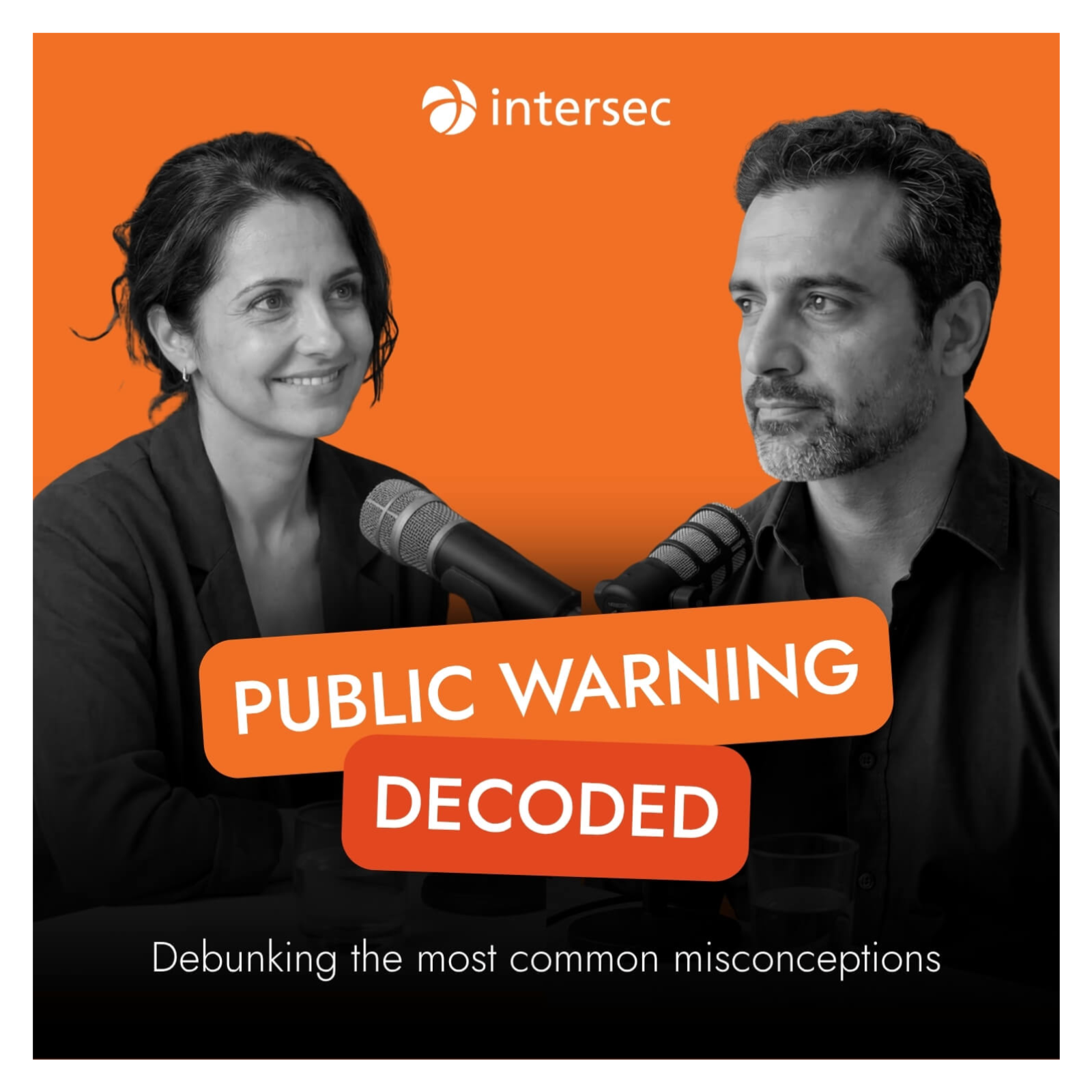
Public warning systems are full of misconceptions. At Intersec, we have spent years implementing these systems across the world, and we have repeatedly heard that they are "too expensive," "too complex," or "too intrusive." Every situation is different, every country brings its own constraints, and every deployment teaches us something new. This series is our way of sharing that experience, and setting the record straight. One misconception at a time. Short, factual, and built for professionals working in emergency management, telecoms, and public safety.
-
1
Myth #11: Cell Broadcast alerts are too intrusive
The loud alarm, the impossible-to-ignore buzz, that's real. But it only applies to one specific alert level. In this episode, we walk through the full Cell Broadcast level system, explain when silence is actually the recommended approach, and show why authorities have far more control over the citizen experience than most people assume.To learn more, visit www.intersec.com
-
0
Myth #10: LB-SMS multi-language alerts mean too many alerts
If authorities send an alert in three languages, do citizens get the same message three times? In this episode, we explain how SIM language profiling works in practice, and why the answer is always one citizen, one message, in the right language.To learn more, visit www.intersec.com
-
-1
Myth #9: Location-based SMS does not work for roamers
If you're visiting a country when an emergency hits, will you get the alert? In this episode, we clear up a common misconception about roaming and location-based SMS, and explain how two different mechanisms, HLR Bypass for inbound visitors and passive location tracking for outbound travellers, mean operators can reach virtually everyone.To learn more, visit www.intersec.com
-
-2
Myth #8: Location-based SMS means network congestion
Some countries rule out location-based SMS alerts over fears of overloading the mobile network during a crisis. In this episode, we explain where that concern comes from, why it's manageable with the right architecture, and how a dedicated alert SMS-C — separate from everyday traffic — changes the picture completely.To learn more, visit www.intersec.com
-
-3
Myth #7: Mobile network operators will never accept
Getting mobile operators to engage with public warning systems is difficult. They're not wrong to question the business case. In this episode, we look at what changes when operators see the full picture: regulatory compliance, fraud detection, new revenue opportunities, and the weight of public expectation. And why regulators play a bigger role than most people realise.To learn more, visit www.intersec.com
-
-4
Myth #6: It takes months to deploy a national public warning system
The UN has set a target: universal public warning coverage by 2027. That makes deployment speed critical. In this episode, we challenge the assumption that standing up a national system takes months, and explain how cloud-based infrastructure has changed that equation entirely. Including a deployment completed in six days.To learn more, visit www.intersec.com
-
-5
Myth #5: No grants, no early warning system
International funding exists, but grants are slow, often incomplete, and sometimes leave little budget to actually deploy anything. In this episode, we look at how the UN Early Warnings for All initiative is opening new financing paths, where the gaps remain, and how private sector accessibility programmes are helping the most vulnerable countries move faster.To learn more, visit www.intersec.com
-
-6
Myth #4: Combining Cell Broadcast and location-based SMS is too expensive
Many governments feel they have to choose between Cell Broadcast and location-based SMS. In this episode, we look at what adding location-based SMS to an existing Cell Broadcast project actually costs, and what it costs not to. The financial gap is smaller than most assume. The consequences of getting it wrong are not.To learn more, visit www.intersec.com
-
-7
Myth #3: CB is for urgent interruptions; location-based SMS is for informational continuity
The idea sounds logical: Cell Broadcast for the emergency, location-based SMS for the follow-up. In this episode, we explain why that framing oversimplifies the decision, walk through the three criteria that actually drive channel selection, and share the one question every authority should ask before triggering an alert.To learn more, visit www.intersec.com
-
-8
Myth #2: Cell Broadcast is the best channel for severe emergencies
Cell Broadcast is powerful, but it's not always the right tool. In this episode, we look at why severity alone doesn't determine the best alerting channel, why overusing Cell Broadcast is driving opt-out rates up (nearly 1 in 3 people in Texas have already switched it off), and why a multi-channel approach consistently delivers better results.To learn more, visit www.intersec.com
-
-9
Myth #1 : Early warning systems are only for natural disasters
Welcome to the first episode of Public Warning Decoded, the podcast where we debunk myths around public warning. In just a couple of minutes, we challenge one of the most widespread misconceptions about Early Warning Systems. To learn more, visit www.intersec.com
No matches for "" in this podcast's transcripts.
No topics indexed yet for this podcast.
Loading reviews...
ABOUT THIS SHOW
Public warning systems are full of misconceptions. At Intersec, we have spent years implementing these systems across the world, and we have repeatedly heard that they are "too expensive," "too complex," or "too intrusive." Every situation is different, every country brings its own constraints, and every deployment teaches us something new. This series is our way of sharing that experience, and setting the record straight. One misconception at a time. Short, factual, and built for professionals working in emergency management, telecoms, and public safety.
HOSTED BY
Intersec
CATEGORIES
Loading similar podcasts...
URL copied to clipboard!