
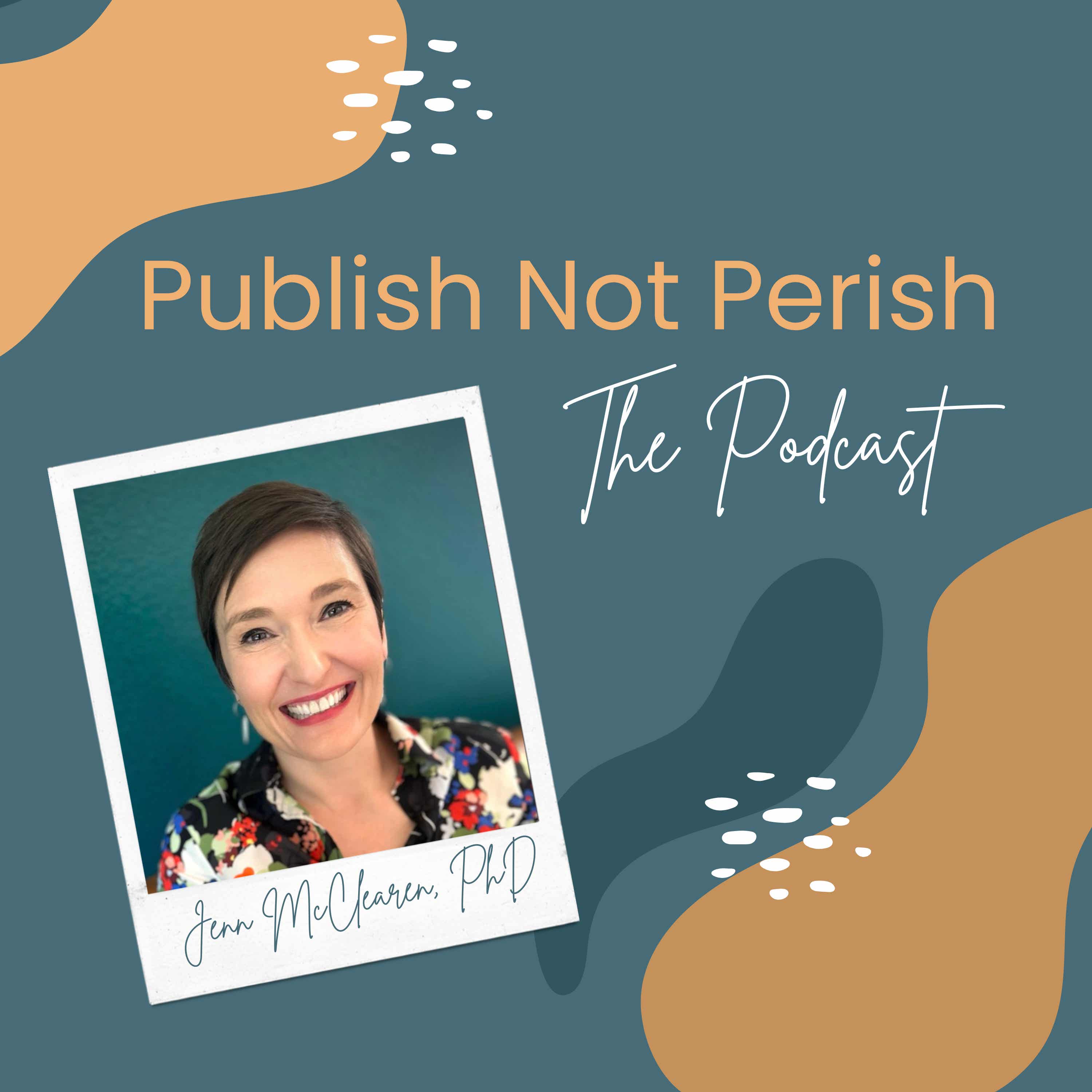
PODCAST · education
Publish Not Perish
by Jenn McClearen, PhD
Publish Not Perish is the podcast for scholars who want to write more—without burning out. Host Dr. Jenn McClearen shares practical tips, honest reflections, and real stories to help you make steady, meaningful progress on your writing with more ease, clarity, and joy. www.publishnotperish.net
-
40
Why Saying No Still Feels Impossible After Tenure | Ep. 37
Over the last two weeks, I’ve been interrogating the hustle culture embedded in the sprint toward tenure and the broader culture of busyness in academia. You can access those posts here: Today’s episode asks what happens after the tenure sprint is supposedly over. The promise of tenure is that the pressure will ease, the finish line will hold, and a more spacious academic life will finally become possible. But for many scholars, the habits formed during the pre-tenure years do not simply disappear. When you spend years working inside ambiguity, trying to discern what will count as “enough,” overproduction can start to feel like the safest answer. Saying yes becomes more than a habit; it becomes part of how you prove you are serious, generous, collegial, and deserving.I also look at why advice about “just saying no” often misses the deeper problem. Not everyone has the same freedom to set boundaries without being judged, penalized, or read as insufficiently committed. Service, mentoring, diversity work, and emotional labor often fall unevenly on scholars whose belonging has already been made conditional. I want to hold both truths together: individual strategies for saying no can matter, especially as acts of self-preservation, but they are not enough on their own. The deeper work is building departments and institutions where labor is transparent, shared, and recognized and where exhaustion is no longer mistaken for commitment. Get full access to Publish Not Perish at www.publishnotperish.net/subscribe
-
39
Rethinking the Academic Conclusion | Ep. 36
In today’s episode, I talk about why academic conclusions so often feel flat to write and what shifts when we stop treating them as simple summaries. For a long time, I thought the conclusion’s job was just to restate what I had already said, and that made it feel tedious and lifeless.Here, I offer a different way of thinking about it: a strong conclusion doesn’t just summarize the manuscript. It synthesizes the argument, helps the reader see what the pieces add up to, and makes the stakes of the work clearer.I also explore how a conclusion can open outward without becoming inflated or vague. That might mean showing what your analysis lets us understand differently, clarifying the broader implications of your argument, or pointing toward questions that emerge from the work in an organic and grounded way. I share how writing the coda to my book helped me see conclusions differently, not as administrative cleanup, but as a genuine space for reflection, interpretation, and extension.If conclusions have felt dull, frustrating, or difficult to pin down, I hope this episode gives you a more interesting and more useful frame.Get the Support You Need to Write, Publish, and FlourishIf you’re craving more support with your writing, here are a few ways we can work together:Writing Coaching—For scholars who want structure, accountability, and a sustainable writing practice that actually works in real life. https://www.jennmcclearen.com/coachingDevelopmental Editing—When you need an expert pair of eyes on the argument, structure, or clarity of your manuscript. https://www.jennmcclearen.com/editingBook Coaching—Six months of coaching + developmental editing to help you make meaningful progress on your manuscript. https://www.jennmcclearen.com/bookcoaching Get full access to Publish Not Perish at www.publishnotperish.net/subscribe
-
38
The Big Beautiful Block of Time Myth | Ep. 35
For years, I had a Sunday-night ritual that felt practical but was quietly keeping me stuck. I would scan the week ahead looking for the kind of writing time I thought counted: long, uninterrupted stretches where I could really sink into the manuscript. Most weeks, those stretches were nowhere to be found, and I would close my planner already defeated. The myth that big blocks of writing time are the only way to move forward is alluring because most of us would prefer to work this way even if it doesn't fit into our schedules.In this episode, I talk about how that belief takes hold, why it’s normal to desire these blocks, and why it reflects a model of academic life that does not match the reality most scholars are living, especially those juggling teaching, service, caregiving, health concerns, and the constant interruptions of institutional life.I also make the case for a different way of thinking about writing time. Progress does not depend only on having more hours. It depends on matching the kind of time you have to the kind of task in front of you. Not every part of book writing requires the same level of focus or energy. Freewriting, outlining, revising, note-making, and drafting all ask different things of you, and some of them fit surprisingly well into smaller windows.When I stopped treating “working on the book” as one single activity, I could make meaningful progress in the time I actually had instead of dismissing it as insufficient. That shift changed more than productivity. It changed my relationship to the project itself. The book stopped feeling distant and accusing and started to feel like something I was genuinely in conversation with again.Get the Support You Need to Write, Publish, and FlourishIf you’re craving more support with your writing, here are a few ways we can work together:Writing Coaching—For scholars who want structure, accountability, and a sustainable writing practice that actually works in real life. https://www.jennmcclearen.com/coachingDevelopmental Editing—When you need an expert pair of eyes on the argument, structure, or clarity of your manuscript. https://www.jennmcclearen.com/editingBook Coaching—Six months of coaching + developmental editing to help you make meaningful progress on your manuscript. https://www.jennmcclearen.com/bookcoaching Get full access to Publish Not Perish at www.publishnotperish.net/subscribe
-
37
Your Missed Deadline Is Trying to Tell You Something | Ep. 34
In this episode, I talk about what’s really going on when you keep missing writing deadlines you set for yourself. I want to make a distinction that matters: a missed deadline is not proof that you’re incapable of follow-through. More often, it’s a sign that the deadline/goal itself needs a closer look.I walk through three common reasons deadlines keep slipping:* Sometimes the work requires a strategy you haven’t developed yet, so the real task is not producing faster but figuring out how to proceed.* Sometimes the deadline was built around a fantasy version of your week rather than the one you’re actually living.* And sometimes the problem is that the manuscript is asking for a decision you haven’t made yet, so you stay busy without truly moving forward.What I hope this episode offers is a more useful way to read your own patterns. Instead of treating missed deadlines as a verdict on your character, I want you to see them as information. If you can identify whether you’re dealing with a strategy gap, an unrealistic plan, or an avoided decision, you can make a much better next move. That might mean testing a few approaches before setting a new deadline, planning from the evidence of your real life rather than your ideal week, or writing your way toward the decision the project is demanding.The goal here is not to become harsher with yourself. It’s to become more accurate so your deadlines can start supporting your work instead of quietly undermining it.Get the Support You Need to Write, Publish, and FlourishIf you’re craving more support with your writing, here are a few ways we can work together:Writing Coaching—For scholars who want structure, accountability, and a sustainable writing practice that actually works in real life. https://www.jennmcclearen.com/coachingDevelopmental Editing—When you need an expert pair of eyes on the argument, structure, or clarity of your manuscript. https://www.jennmcclearen.com/editingBook Coaching—Six months of coaching + developmental editing to help you make meaningful progress on your manuscript. https://www.jennmcclearen.com/bookcoaching Get full access to Publish Not Perish at www.publishnotperish.net/subscribe
-
36
The Graveyard of Abandoned Writing Systems | Ep. 33
What if the collapse of your writing routine is not evidence that you lack discipline but a sign that the system was never built for the realities of your life? In this episode, I explore why so many scholars blame themselves when a routine falls apart, rather than questioning the assumptions built into the strategy itself. I wanted to name that pattern clearly because I think these breakdowns often reveal far more about the limits of the system than about your commitment or capacity.I also consider what changes when we stop asking, “What’s wrong with me?” and start asking, “What would actually work for my real life, my real energy, and my real writing process?” I talk about the invisible assumptions built into many productivity systems, why so many of them don’t hold for scholars juggling caregiving, heavy teaching loads, neurodivergence, chronic stress, or writing in an additional language, and why flexibility is not a weakness but a necessary design principle.If you’ve built up a graveyard of abandoned routines and you’ve started to believe that nothing works for you, I hope this episode offers a gentler and more honest reframe. Get full access to Publish Not Perish at www.publishnotperish.net/subscribe
-
35
Feeling Like an Imposter in Academia Is Often Structural, Not Personal | Ep. 32
Earlier this week, I wrote about the structural roots of perfectionism and argued thatperfectionism is a strategy for surviving in environments where the cost of imperfection feels dangerously high…[Furthermore,] perfectionism doesn’t look the same on everyone, because the conditions we’re surviving in aren’t the same. The stakes of imperfection are not distributed equally, and that changes everything about how perfectionism operates, what it’s protecting, and what it costs.You can read that post here:Today, I’m taking a similar approach to the podcast by thinking through the structural roots of what we often call imposter “syndrome.”I explore why so much academic doubt is not a sign that something is wrong with you but a deeply understandable response to working in environments where the rules and conventions are unclear, the feedback is inconsistent, and the expectations keep shifting. If you have ever felt like everyone else got some secret handbook you never received, this conversation is for you.I draw on Dr. Angélica Gutiérrez’s concept of impostorization, which provides a way of shifting the focus away from individual pathology and toward the structures and practices that make people question their intelligence, competence, and belonging.Throughout the episode, I talk about how doubt and uncertainty can function as useful information rather than evidence that you do not belong, and I offer a more grounded way to build efficacy: not by pretending uncertainty is not there, but by learning how to navigate it with more clarity, support, and self-compassion.My hope is that this episode helps you feel a little less alone, a little less self-blaming, and better able to see that your uncertainty may make much more sense than you have been led to believe.Get the Support You Need to Write, Publish, and FlourishIf you’re craving more support with your writing, here are a few ways we can work together:Writing Coaching—For scholars who want structure, accountability, and a sustainable writing practice that actually works in real life. https://www.jennmcclearen.com/coachingDevelopmental Editing—When you need an expert pair of eyes on the argument, structure, or clarity of your manuscript. https://www.jennmcclearen.com/editingBook Coaching—Six months of coaching + developmental editing to help you make meaningful progress on your manuscript. https://www.jennmcclearen.com/bookcoaching Get full access to Publish Not Perish at www.publishnotperish.net/subscribe
-
34
Your Book Doesn't Need to Revolutionize Your Field | Ep. 31
The moments that stall a book often look…reasonable. They look like being diligent: reorganizing notes, refining the outline, and doing just one more round of reading so you can feel ready.In this episode, I talk about the quiet threshold that often sits underneath all that preparation: the moment when you have to decide whether you trust your ideas enough to start putting them on the page. You worry that your ideas aren’t new enough, sharp enough, or important enough—and that if you draft, you’ll find out they don’t hold.I also name the impossible standard that tends to fuel this fear: the belief that your book has to revolutionize your field to be worth writing. And I offer a gentler, more accurate definition of what strong scholarly work actually does—how most meaningful books move conversations forward without needing to reinvent the whole discipline. Along the way, I unpack why “I need to read more” can sometimes be less about reading and more about self-protection, and I return to a distinction I come back to often: writing to think versus writing to communicate.If you’ve been stuck at the edges of your project, trying to get to certainty before you begin, I hope this episode gives you a steadier standard to measure yourself against and a little more permission to start drafting before you feel completely ready.Get the Support You Need to Write, Publish, and FlourishIf you’re craving more support with your writing, here are a few ways we can work together:Writing Coaching—For scholars who want structure, accountability, and a sustainable writing practice that actually works in real life. https://www.jennmcclearen.com/coachingDevelopmental Editing—When you need an expert pair of eyes on the argument, structure, or clarity of your manuscript. https://www.jennmcclearen.com/editingBook Coaching—Six months of coaching + developmental editing to help you make meaningful progress on your manuscript. https://www.jennmcclearen.com/bookcoaching Get full access to Publish Not Perish at www.publishnotperish.net/subscribe
-
33
What It’s Really Like to Work With Me in Book Coaching | Ep. 30
If you’ve been reading Publish Not Perish for a while, you know I spend a lot of time thinking about sustainable writing practices, the emotional landscape of academic writing, and how we make meaningful progress on long, complex projects when life is already demanding so much of us.What I haven’t talked about as openly is what it actually looks like to work with me one-on-one, especially when you’re trying to move a book project forward. So in this episode, I’m pulling back the curtain.I walk through the difference between coaching and developmental editing, why I weave both together, and how that combination helps scholars move complex book projects forward with more clarity, structure, and sustained momentum. If coaching has ever felt a bit opaque or hard to picture, this episode should make things much more concrete.I also get into what the process looks like in practice—from the initial strategy session where we identify your goals and the obstacles standing in your way to the ongoing support that helps you keep making steady, real progress over time.Along the way, I dig into why so many academic writers find themselves stuck, what makes book coaching different from other forms of writing support, and why having the right kind of help can shift not just the project itself but your entire relationship to the work. If you’ve been quietly wondering whether this kind of support might be the thing that gets you unstuck, this episode is a good place to start exploring that question. Get full access to Publish Not Perish at www.publishnotperish.net/subscribe
-
32
The Hidden Cost of Too Many Projects at Once | Ep. 29
How many writing projects are you holding in your head right now—like, actively holding—not just the one on your desk, but all the others tugging at you in the background?In this episode, I’m talking about the hidden cost of carrying too many writing projects at once: the almost-finished article, the chapter that needs revision, the proposal you keep meaning to start, and the project you feel guilty for neglecting. Individually, each one might be manageable, but together they create a constant background hum of obligation that drains your cognitive and emotional bandwidth—even on days when you’re genuinely productive.We often treat these difficulties as a scheduling problem, but what I see again and again is that the deeper issue is scattered attention: too many open tabs on your brain’s desktop quietly pulling on you. Academia trains us to tolerate this, even to see it as ambition, but it comes at a real cost.So I’m inviting you to consider a different kind of progress—choosing what’s active and what’s explicitly dormant for now. You don’t have to abandon anything forever; sometimes naming what you’re not working on is what finally lets you focus, settle, and move forward without guilt.Get the Support You Need to Write, Publish, and FlourishIf you’re craving more support with your writing, here are a few ways we can work together:Writing Coaching—For scholars who want structure, accountability, and a sustainable writing practice that actually works in real life. https://www.jennmcclearen.com/coachingDevelopmental Editing—When you need an expert pair of eyes on the argument, structure, or clarity of your manuscript. https://www.jennmcclearen.com/editingBook Coaching—Six months of coaching + developmental editing to help you make meaningful progress on your manuscript. https://www.jennmcclearen.com/bookcoaching Get full access to Publish Not Perish at www.publishnotperish.net/subscribe
-
31
Why I Don’t Tell Scholars to “Just Sit Down and Write” | Ep. 28
Today I’m unpacking a piece of advice that sounds simple—and sometimes even motivating—but often leaves scholars feeling worse when it doesn’t work: “Just sit down and write.”If you’ve ever tried to follow that instruction and immediately felt your brain seize up, your confidence drop, or your draft suddenly look unfamiliar, you’re not alone. In this episode, I talk about why the problem usually isn’t effort or discipline—and why it makes perfect sense that writing can feel hard to restart, even when you care deeply about your work.I share a gentler way to think about what’s really happening in those moments: not failure, not laziness, not a character flaw—just the very human challenge of re-entering a complex intellectual world. We’ll explore what it can look like to build a small “bridge” back into your project so you’re not trying to leap in cold, and why a few minutes of orientation can change everything about how a writing session feels.If writing time has been feeling tense, punishing, or slippery lately, consider this your invitation to try a different approach—one that helps you reconnect to the work you’re already in the middle of, with a little more steadiness and a lot more kindness.Get the Support You Need to Write, Publish, and FlourishIf you’re craving more support with your writing, here are a few ways we can work together:Writing Coaching—For scholars who want structure, accountability, and a sustainable writing practice that actually works in real life. https://www.jennmcclearen.com/coachingDevelopmental Editing—When you need an expert pair of eyes on the argument, structure, or clarity of your manuscript. https://www.jennmcclearen.com/editingBook Coaching—Six months of coaching + developmental editing to help you make meaningful progress on your manuscript. https://www.jennmcclearen.com/bookcoaching Get full access to Publish Not Perish at www.publishnotperish.net/subscribe
-
30
Writing is a relationship, not a test | Ep. 27
In this episode, I’m sharing a shift that quietly changes everything for a lot of academic writers: moving from seeing writing as just a skill you perform to recognizing it as a relationship you live inside over time.So many of us are technically capable of writing and still feel stuck, resistant, or exhausted by it—and that disconnect isn’t a personal failure. It’s often the result of how we’ve been taught to approach writing as a transaction: produce the output, meet the deadline, get evaluated. When writing “works,” the relationship feels fine. When it doesn’t, it can quickly turn tense, judgmental, or even adversarial.I talk about what happens when trust erodes in that relationship—and why more tips, tools, or pressure rarely fix the problem. Instead, I explore what it looks like to replace judgment with curiosity, and how small reflective practices can help repair the relationship so writing feels safer and more workable again. This isn’t about lowering standards or forcing yourself to love writing. It’s about paying attention to how you show up, learning from what happens, and making it easier to return to the page over time.If writing has felt heavy or fraught lately, I hope this episode helps you see why—and offers a gentler, more sustainable way forward.Get the Support You Need to Write, Publish, and FlourishIf you’re craving more support with your writing, here are a few ways we can work together:Writing Coaching—For scholars who want structure, accountability, and a sustainable writing practice that actually works in real life. https://www.jennmcclearen.com/coachingDevelopmental Editing—When you need an expert pair of eyes on the argument, structure, or clarity of your manuscript. https://www.jennmcclearen.com/editingBook Coaching—Six months of coaching + developmental editing to help you make meaningful progress on your manuscript. https://www.jennmcclearen.com/bookcoaching Get full access to Publish Not Perish at www.publishnotperish.net/subscribe
-
29
Letting Go of the Writing That Got You Here | Ep. 26
There’s a particular kind of grief that comes with deleting pages you fought to write. In this episode, I talk about why that feeling is so common when you’re turning a dissertation into a book and what it reveals about the shift from writing to be evaluated to writing in service of an argument and a reader. I reflect on why cutting isn’t a sign that something went wrong but an essential part of how book projects take shape.I also spend time with the emotional and practical side of letting go: why we cling to material that no longer serves the book, how scarcity thinking around writing makes revision more painful, and why early drafts are best understood as thinking tools rather than finished prose.If you’re revising a long project and feeling stuck, this episode is an invitation to trust that cutting isn’t erasing your work. Instead, it’s creating the space your book needs to become what it’s meant to be.This episode is one in a series of turning your diss-to-book. Here are the others:https://www.publishnotperish.net/p/five-key-shifts-from-dissertationhttps://www.publishnotperish.net/p/diagnosing-dissertation-mode-in-yourhttps://www.publishnotperish.net/p/trained-not-to-trust-ourselves Get full access to Publish Not Perish at www.publishnotperish.net/subscribe
-
28
Diagnosing Dissertation Mode in Your Book Manuscript | Ep. 25
If revising your dissertation for a book feels harder than you expected, there’s nothing wrong with you or your project. In this episode, I talk about why dissertation writing trains you into very specific habits—and why those habits can linger long after the degree is done. I reflect on the deeper shifts required when moving from dissertation to book, not just in structure or scope, but in how you relate to your authority as a writer and how you imagine the reader on the other side of the page.I also focus on how to start seeing dissertation mode in your own prose, which is often the hardest part. I walk through a few common signals at the level of voice, citation, and structure and explain why these patterns are so difficult to spot when you’ve been living inside a project for years.I hope that this episode helps you approach revision with more clarity and less self-blame. Instead, it gives you a practical way to begin shifting from writing to prove yourself toward writing that invites, persuades, and carries an argument forward.This episode is part of a series on moving from diss-to-book. Here’s the first one, which I reference in this episode:https://www.publishnotperish.net/p/five-key-shifts-from-dissertation Get full access to Publish Not Perish at www.publishnotperish.net/subscribe
-
27
What Coaches Notice That Academia Often Misses | Ep. 24
In today’s episode, I talk about a part of writing that academic training rarely asks us to examine: how writers actually move through their work. We’re taught to evaluate arguments, evidence, and outcomes—but much less attention is given to what happens between drafts, or how writers interpret difficulty as it arises.I share how coaching shifts attention from the finished product to the writer in motion, changing the way progress unfolds—not by lowering standards, but by making it easier to respond to the real sources of friction. I also explore how this way of paying attention differs from mentoring and why difficulty in writing is so often misread.Rather than treating struggle as a problem to eliminate, this episode considers what becomes possible when difficulty is understood as information and something that can guide more precise, less exhausting choices.If you’ve ever found yourself working hard but feeling stuck, this conversation offers a different way of seeing what’s happening and how steadier progress can happen when you start paying attention to the right things.New Offering! Spring Semester Strategy SessionsIf this episode resonated because you’re realizing that what’s getting in the way isn’t effort or commitment but the lack of space to step back and look carefully at how your work is actually unfolding, I’m opening a small number of 90-minute strategy sessions this spring!These sessions help you gain clarity about what matters most right now, how to use the time and energy you actually have, and how to move forward this semester without burning out.Here’s how it works:* Before we meet: Complete reflection questions (about 90 minutes) on your goals, constraints, and what’s worked in the past.* 90-minute session: We clarify priorities and develop a strategy that fits how you actually work—not an idealized version of you.* After the session: You receive a written plan synthesizing our conversation, plus tailored resources and recommendations.You’ll walk away with: a clear plan for the semester, a better sense of how to allocate your time and energy, and concrete next steps that feel doable rather than overwhelming.I’m offering eight of these sessions in late January and February. Booking closes January 26 or when spots fill.If you decide after the session that you’d like continued support, that $495 can be credited toward either my 10-week coaching program or my 6-month book coaching program—the strategy session is the first step in both programs.Learn more about the coaching programs here: https://www.jennmcclearen.com/coachingYou’ll have two weeks after your session to decide if you want continued coaching support. So if you’ve considered coaching before, this is a low-risk way to experience working with me and see if it’s a good fit.Book your strategy session here: https://calendly.com/mcclearen/strategy-session-cloneOf course, you might discover that the strategy session alone, with the clear priorities, realistic plan, and concrete next steps, is exactly what you need to move your writing forward this semester. That’s a huge win! Get full access to Publish Not Perish at www.publishnotperish.net/subscribe
-
26
What to Pay Attention to This Year | Ep. 23
Greetings, dear listeners!January has a way of making us feel like we should already have our writing plans figured out—clear goals, steady discipline, and a strong start. Sound familiar?In this episode, I want to gently interrupt that pressure. Instead of asking what you should produce this year, I invite you to consider a different starting point—one that’s quieter, more humane, and often more effective for long, complex writing projects.This episode is about shifting attention away from ambitious promises and toward something that can actually support you as a writer in the context of your real life.I talk about a few specific things that are worth noticing if you want your writing to feel more sustainable and less fraught this year—not as a system to optimize, but as information you can learn from over time. If your writing has felt inconsistent, frustrating, or harder than you think it “should” be, this conversation is meant to meet you with understanding rather than jumping to bigger goals before you can hold those goals.You don’t need to fix everything at once. You just need a way to start paying attention—kindly, curiously, and without judgment.---Publish or perish is a persistent hum in many academic ears, and for some of us, that hum is loud. Publish Not Perish is here to quiet the noise so you can focus on flourishing instead. Hosted by academic writing coach and developmental editor Jenn McClearen, PhD. https://www.jennmcclearen.com---Get the Support You Need to Write, Publish, and FlourishIf you’re craving more support with your writing, here are a few ways we can work together:Writing Coaching—For scholars who want structure, accountability, and a sustainable writing practice that actually works in real life. https://www.jennmcclearen.com/coaching Developmental Editing—When you need an expert pair of eyes on the argument, structure, or clarity of your manuscript. https://www.jennmcclearen.com/editingBook Coaching—Six months of coaching + developmental editing to help you make meaningful progress on your manuscript. https://www.jennmcclearen.com/bookcoaching Get full access to Publish Not Perish at www.publishnotperish.net/subscribe
-
25
Why Your Old Writing Strategy Isn’t Working Anymore | Ep. 22
Today I’m sharing the story of “Fatima”—a composite of so many scholars I’ve worked with over the years (and, honestly, a little bit of me too). Her dissertation sprint “worked.” She finished, defended, and landed a faculty job. But once she stepped into life as a new professor, the same strategies that got her across the finish line suddenly stopped working altogether. I use her story to explore a tension I see all the time: the difference between being productive in the short term and building a writing practice you can actually sustain over a long academic career. I don’t get into step-by-step systems or productivity hacks here. You can find those any place you look these days. Instead, I invite you to reflect on how your current approach to writing is shaping not just your output, but also your energy, your health, and your relationship to your work. If you’ve ever felt like the only way to make progress is to push harder, longer, and past your own limits, this episode is a gentle pause. A chance to ask a different question: what would it look like to write in a way that supports your life, instead of slowly consuming it? Get full access to Publish Not Perish at www.publishnotperish.net/subscribe
-
24
The Urgency Trap—What Feels Urgent vs. What Actually Matters | Ep. 21
In this episode of PNP: The Podcast, we’re diving into the urgency trap. You know that feeling that everything needs your attention right now—the ping of an email at 9 PM, the “quick” request that derails your writing time, the sense that you’re always behind no matter how much you do? We’ll explore why academia runs on manufactured urgency, how it sucks energy from your important work and well-being, and what it looks like to reclaim your time for what actually matters. It’s time to step out of the constant rush, take a breath, and start shaping your days around what truly deserves your energy. Get full access to Publish Not Perish at www.publishnotperish.net/subscribe
-
23
From Professor to Scholarpreneur: What I Learned Along the Way | Ep. 20
Today’s episode is a little different from the rest of my “leaving academia” series—because instead of talking about what I left behind, I’m sharing what I moved toward: building a business as a scholarpreneur, specifically, a writing coach and developmental editor.I’ll walk you through how I found my way into academic-adjacent entrepreneurship, how I reconciled my skepticism about “business,” and what it’s looked like to build something that actually aligns with my values. If you’ve been craving a way to keep your scholarly work alive—just without the institution calling the shots—this episode will speak to you.I’ll also share some of the lessons I’ve learned along the way—the mindset shifts, the unlearning, and the surprising overlap between running a business and thriving as a scholar. My hope is that this conversation helps you imagine new possibilities for your own career path, whether that means starting a side project, offering coaching or editing services, or simply rethinking what scholarly or academic-adjacent work can look like.For those considering this path, I recommend Paulina Cossette, who has a podcast and a course on becoming an academic entrepreneur.Podcast: https://podcasts.apple.com/us/podcast/leaving-academia-becoming-a-freelance-editor/id1765526180Course: https://acadiaediting.com/becomeaneditor/ Get full access to Publish Not Perish at www.publishnotperish.net/subscribe
-
22
Translating Your PhD Skills Into a New Career | Ep. 19
In today’s episode, I want to talk about something that can feel tender, even somewhat disorienting—but also full of possibility. We’re talking about what it means to think beyond working in academia and how to understand the incredible set of skills your PhD gave you.Because yes, academia gave you expertise—but it also gave you other important skills: the ability to learn deeply, think critically, manage complex projects, and solve difficult problems. And those skills? They’re valuable in more places than you might be able to imagine at this moment.I share some reflections from my own transition out of academia and the mindset shifts that helped me see myself differently. We’ll also talk about how to approach a potential career pivot with the curiosity and strategy of a researcher.You don’t need to have all the answers right now. You just need to start asking new questions—and to trust that the skills you already have can take you somewhere meaningful.Content warning: I drop the F-bomb when talking about the Tr*mp administration because I don’t know how not to. Also, all my podcast episodes are marked explicit just in case.This episode is a part of a series for the next couple weeks on leaving academia that I introduced earlier this week:https://www.publishnotperish.net/p/its-time-to-talk-about-leaving-academia Get full access to Publish Not Perish at www.publishnotperish.net/subscribe
-
21
What to Do When Your Article Gets Rejected | Ep. 18
If you’ve ever opened an email from a journal only to see the words “After careful consideration, we regret to inform you,” this episode is for you. In today’s conversation, I’m talking about what to do when your article gets rejected—and more importantly, why that rejection doesn’t mean the end of your project. I know firsthand how gut-punching those messages can feel, but I also know that rejection is one of the most common—and least talked-about—parts of academic life. In this episode, I’ll share why rejection happens far more often than you think, how to take care of yourself in those first few tough days, and how to decide what to do next without losing confidence in your work.My goal is to help you see rejection not as a verdict, but as information—something you can learn from and use to make your writing even stronger. Whether you’re deciding how to interpret reviewer feedback, wondering if your piece was a poor fit for the journal, or just needing reassurance that you’re not alone, this episode will meet you right where you are. So if you’ve been sitting on a rejection and aren’t sure what to do next, take a deep breath, grab your favorite coping beverage, and join me. You might just walk away seeing this moment in an entirely new light.Related Post: Get full access to Publish Not Perish at www.publishnotperish.net/subscribe
-
20
Four Questions to Reconnect You With the Heart of Your Research | Ep. 17
In this episode of Publish Not Perish: The Podcast, we’re tackling one of the most challenging questions in academic writing: why does your research actually matter? Not just within your subfield or to a handful of experts, but to the world beyond it.This episode is a continuation of the newsletter I sent out earlier this week:https://www.publishnotperish.net/p/why-should-anyone-care-about-yourIn this episode today, I revisit four deceptively simple questions I shared in that newsletter—about who’s affected by your research, what might change if people saw it differently, what larger pattern it reveals, and who beyond academia might need this knowledge—and explore what makes them so challenging to answer.This isn’t about adding another checklist to your writing process; it’s about uncovering the deeper meaning behind your work and reconnecting with why you started it in the first place.Along the way, I share my own struggles with significance, the resistance that surfaces when we ask hard questions, and why sitting in that discomfort is often where the most powerful insights emerge. Get full access to Publish Not Perish at www.publishnotperish.net/subscribe
-
19
Sticking With Your Writing When the Going Gets Tough | Ep. 16
In this episode, I’m continuing the conversation I started in this week’s newsletter called “Writing Should Be Hard.” You can read the newsletter from Tuesday here:https://www.publishnotperish.net/p/writing-should-be-hardIn this follow-up podcast, I go a little deeper into why writing feels so challenging and how we often slip into easier tasks that make us feel productive while sidestepping the harder intellectual work our projects really need. I also share some ideas about how to recognize those patterns, approach them with compassion, and build your capacity to stay with the work that matters most.If you’ve been wrestling with doubt, avoidance, or the discomfort of not knowing exactly what you want to say yet, this episode is here to remind you that the struggle is part of the process and that you’re not alone in it. Get full access to Publish Not Perish at www.publishnotperish.net/subscribe
-
18
Productive Research or Procrastination? How to Tell the Difference | Ep. 15
When it comes to research and writing, many of us struggle to determine whether we're doing necessary intellectual work or simply procrastinating with more reading, thinking, and research.Don’t get me wrong. Reading, thinking, and researching are all essential parts of the process, and it can be difficult to determine how long we should spend in this phase, which I refer to as the discovery phase. I discuss this experience in the newsletter from earlier this week:https://www.publishnotperish.net/p/the-real-reason-your-writing-projects(That newsletter also has a download for paid subscribers on how to estimate how long writing projects will take you!)In this episode, I share how to spot the difference between discovery time and wheel-spinning. You’ll hear the signs that you’re making real intellectual progress and the signals that you might be avoiding the hard work of writing. Most importantly, I’ll talk about how to navigate that gray zone with more confidence so you can honor the creative mess of scholarship while still moving your projects forward. Get full access to Publish Not Perish at www.publishnotperish.net/subscribe
-
17
Balance as a Practice, Not a Destination | Ep. 14
In this shorty episode, I’m unpacking the idea that many of us hold of balance as as a destination that one day we’ll arrive at. We often imagine it as equal time for research, teaching, family, and self-care every week—but real life doesn’t work that way. Balance is a practice that requires constant adjustment and recalibration for different seasons of life. I’ll share how this plays out in academic life and invite you to see balance not as the arrival point, but as presence, intention, and knowing what can slide this week so you can focus on what matters most. Get full access to Publish Not Perish at www.publishnotperish.net/subscribe
-
16
The Hidden Struggle of Becoming a B+ Academic | Ep. 13
In this episode, I’m digging into why so many of us feel like we have to give 100% to everything—and why that mindset is especially hard to shake in academia. If you’ve read my recent newsletter, you know I’ve been talking about the “B+ mindset,” or the idea of strategically lowering your standards in certain areas so you can protect your best energy for the work that matters most. Today, I take that conversation a step further and unpack the deeper reasons behind our perfectionism: the A+ student identity many of us carry, the connection to imposter syndrome, and the way academia itself sets us up to feel like we’re never doing enough.I also talk about who’s most vulnerable to these pressures—early career scholars and those from minoritized identities. You’ll hear examples of what B+ work looks like in teaching, service, writing, and beyond, along with strategies for protecting your time and energy without compromising your career. My hope is that this episode helps you reframe what it means to do meaningful work in academia—and reminds you that your value as a scholar isn’t measured by how close you get to “perfect” on every single task. Get full access to Publish Not Perish at www.publishnotperish.net/subscribe
-
15
Finding Your Joy in Academia | Ep. 12
In this episode, I’m digging into a question so many of us wrestle with: how do we make academic choices that actually reflect what we love and want, instead of squeezing ourselves into an institutionally sanctioned version of success? I share a bit of my own story—how I started out passionate about teaching but quickly learned the pressure to publish could push me in a different direction. Along the way, I realized that while trade-offs are inevitable, we can still be intentional about shaping careers that feel like ours.We’ll also get real about the system itself, like the vague expectations, the culture of overwork, and the perfectionism that keeps us trying to give 100% to everything. The truth is, you don’t have to do it all. You can make choices that align with your priorities, your joy, and your long-term goals. Tune in to hear strategies for evaluating where your energy is going, letting go of what doesn’t serve you, and focusing on what matters most right now. Get full access to Publish Not Perish at www.publishnotperish.net/subscribe
-
14
Why You Think Everyone Writes Faster Than You | Ep. 11
Ever feel like every other scholar is writing faster, better, and with more ease than you while you’re stuck belly flopping into your draft? I’m here to reassure you that you’re definitely not doing it wrong. In this episode, I share the story of 7-year-old me spending eight determined hours trying to learn to dive and how that experience became a metaphor for building a resilient writing practice. We’ll talk about why knowing what good writing looks like isn’t the same as being able to produce it and how reframing your struggles can help you stay in the water long enough to make real progress.I’ll share two evidence-backed ways to build resilience in your writing life: reframing how you interpret challenges and cultivating the kind of writing community that truly supports your process. You’ll walk away with a new perspective on messy drafts, slow timelines, and the myth that everyone else is doing it better. Belly flops, it turns out, are not failures; instead, they’re training your brain to dive deeper next time.Read the article mentioned in this episode: Resilience Decoded: Brain, Genes, and Adaptation Get full access to Publish Not Perish at www.publishnotperish.net/subscribe
-
13
A Goal-Setting Method that Might Actually Work for You | Ep. 10
Note that I have an error in the episode; the Fall Writing Planning Workshops are Aug. 21 and 25 (not 26!). If you’ve ever felt like writing goal-setting only leaves you feeling behind, this episode is for you. I’m breaking down why so many traditional goal-setting methods fail academic writers—and what you can do instead. I share a framework I teach in my Flourish course called good, better, best goals, which gives you a flexible, reality-based way to define progress. Whether you’re drafting a book, revising an article, or juggling multiple projects, this method helps you stay motivated and realistic without giving up on your ambitions.I also walk you through how we use this framework inside the Flourish course, and how you can start applying it on your own right now. And if you’re craving a little structure heading into the semester, join me for one of my free Fall Writing Planning Workshops later this month. We’ll use the good, better, best method to build a fall writing plan that actually fits your real life—interruptions and all. It's a perfect way to test out the approach before committing to anything longer term.Register for the Free Fall Writing Planning Workshop: August 21 at 1pm ET | 7pm CESTAugust 25 at 12pm ET | 6pm CEST Get full access to Publish Not Perish at www.publishnotperish.net/subscribe
-
12
The Myth of "Finding" Time to Write (And What to Do Instead) | Ep. 9
What if the phrase “I need to find more time to write” is actually keeping you stuck? In this episode of Publish Not Perish: The Podcast, I challenge one of the most common beliefs about academic writing and explain why that phrase leads us into a scarcity mindset. I share a story from my time as junior faculty at a top research university, where I was constantly juggling research, teaching, and service—each one framed as essential. Like many academics, I tried to squeeze writing into whatever time was left after handling the "urgent" stuff. But the real shift came when I realized the issue wasn’t time—it was how I was (or wasn’t) protecting the time I had.If you’ve been waiting for a magical stretch of time to appear so you can finally write, this episode is for you. I walk through practical strategies for reclaiming your time and energy: naming your true priorities, embracing “good enough” in non-priority areas, and gently pushing back against the culture that says everything must be excellent. You’ll hear how small, intentional shifts can help you stop feeling like a victim of your calendar and start actively protecting your writing time. And if you want support making that shift sustainable, check out my course Flourish: Cultivating a Sustainable Writing Practice, where we build systems to make writing fit into your real life. Get full access to Publish Not Perish at www.publishnotperish.net/subscribe
-
11
How to Shift Your Imagined Audience for Better Writing | Ep. 8
Have you ever sat down to write and immediately started second-guessing every sentence? Chances are that the problem isn’t your ideas. It’s the audience in your head.In this episode, I dive into the concept of imagined audience and how it can either support or sabotage your writing. Most academic writers don’t realize they’re writing for someone who’s not actually their reader. Instead, they write defensively for a critical advisor, an intimidating colleague, or a harsh reviewer from years past.You'll learn how to identify when you're writing for the wrong audience, how to shift out of self-doubt and perfectionism by changing who you're writing for, and a three-stage strategy to guide your writing through different phases of the process.This episode builds on Episode 3: Writing to Think vs. Writing to Communicate, where I introduced the idea that we need to write through our thinking, not wait until it’s all figured out.Listen to that episode here: https://www.publishnotperish.net/p/writing-to-think-vs-writing-to-communicate?r=3ey1lIf you’ve ever felt blocked, anxious, or overly defensive while writing, this episode will help you reconnect with the joy and freedom of putting ideas on the page—and remind you that writing gets easier when you write for the right audience at the right time.The next time writing feels unusually difficult, ask yourself, who am I writing for right now? Then, give yourself permission to shift that audience to someone more helpful and kind. Get full access to Publish Not Perish at www.publishnotperish.net/subscribe
-
10
Do You Need a Writing Coach, an Editor, or Both? | Ep. 7
In today’s episode, I’m talking about something we don’t discuss enough in academia: getting professional help with your writing. Whether you're working on a book manuscript or a journal article, there are times when writing groups and peer feedback just aren’t enough. That’s when editors and coaches can make a huge difference. I walk you through the different types of editing, from developmental to copyediting, and explain what each one actually does (because let’s be honest, it’s confusing out there!). I also talk about the difference between coaching and editing, how to determine which one you need, and why sometimes the best support comes from someone who can do both.I also discuss how I approach this work, as a coach and developmental editor, and why I believe that working with both the writer and the writing can be so effective. If you're feeling stuck, unsure what your manuscript needs next, or simply tired of trying to untangle things on your own, this episode will give you a clearer picture of the kinds of support available and how they can help you move forward. Professional help isn't a shortcut or a crutch. It's a strategic investment in your writing and your career.Want to learn more about my coaching and editing services? Read all about it at jennmcclearen.com/1-1coaching. Get full access to Publish Not Perish at www.publishnotperish.net/subscribe
-
9
What Type of Academic Writer Are You? | Ep. 6
In this episode, I’m talking about something that comes up all the time in my work with scholarly writers: the guilt that you’re not the “right” kind of academic writer. Maybe you don’t write every day, or maybe you only feel productive under deadline pressure. Whatever the case, you’ve internalized the idea that you’re doing it wrong. But here’s what I want you to know: you only need to change your writing habits if they aren’t working for you. If your process moves your work forward without depleting you, there’s nothing to feel guilty about.To help you get clarity, I walk you through four writing archetypes I see among successful academic writers: the Daily Devotee, the Summer Scholar, the Deadline Daredevil, and the Project Juggler. These aren’t prescriptive categories—they’re possibilities to help you reflect on what fits your real life, job demands, and energy levels. I also offer a reality check about how our writing identities sometimes need to evolve. If you’ve been trying to force yourself into a method that doesn’t work for you, this episode is your permission slip to let that go. Get full access to Publish Not Perish at www.publishnotperish.net/subscribe
-
8
Writing a Book for Broader Audiences | Ep. 5
You probably didn’t become a scholar just to write for a handful of specialists. If you’ve ever felt the pull to share your work with a wider audience—to write something that’s both rigorous and resonant—this episode is for you. We’re talking about crossover books: academic books that travel beyond your department, speak across disciplines, and connect with curious readers beyond the university.In this episode, I break down what a crossover book is, why university presses are increasingly interested in them, and how you can begin writing one without sacrificing scholarly depth. You’ll hear five practical tips for writing with clarity, intention, and voice—so your research can reach more people and have a bigger impact. Writing accessibly is a skill you can learn, and this episode offers a path to help you get started. Get full access to Publish Not Perish at www.publishnotperish.net/subscribe
-
7
Deep Work for Academic Writers | Ep. 4
If you’ve ever ended the day feeling mentally wiped out with little real writing progress to show for it, this episode is for you. We’re diving into why that scattered, depleted feeling is so common—and what it tells us about the way we work. Drawing on Cal Newport’s idea of deep work, we’ll explore how academic writers can protect their focus and energy, even in the midst of full schedules and constant demands.You don’t need endless hours or a cabin in the woods to do your most important writing—you just need a bit of intention. I’ll share five practical strategies to help you carve out distraction-free time, match tasks to your best brain energy, and build small rituals that support sustained focus. If you’re craving more clarity, less mental fatigue, and real momentum in your writing, this episode is for you, my friend! Get full access to Publish Not Perish at www.publishnotperish.net/subscribe
-
6
Writing to Think vs. Writing to Communicate | Ep. 3
You know that feeling when you finally sit down to write—tea brewed, document open—only to type a few sentences and think, What am I even trying to say? I feel you, friend! In this episode, I talk about a shift that’s helped me and so many of my clients: understanding the difference between writing to think and writing to communicate.We’ve been trained to believe writing should sound polished from the start, but most meaningful academic work begins in the mess. I share practical ways to embrace the exploratory parts of writing—brainstorming, voice notes, Post-its—and take the pressure off your early drafts.If you’ve ever felt like a bad writer just because your first words didn’t shine, this episode is for you. Let’s reframe what counts as progress and make space for the thinking that has to happen before the clarity comes.Related Content:https://www.publishnotperish.net/p/what-counts-as-writing Get full access to Publish Not Perish at www.publishnotperish.net/subscribe
-
5
Stop Waiting for the Perfect Writing Conditions | Ep. 2
We often tell ourselves we need ideal conditions to write: a quiet morning, a clean desk, an empty inbox, or that magical four-hour block of time. But these “perfect” circumstances rarely arrive—and waiting for them often keeps us stuck.In this episode, I walk through three common excuses scholars use to delay writing and offer practical strategies for writing anyway. Whether you’re overwhelmed by reading, tempted to clear your to-do list first, or just craving inspiration, this episode will help you shift from waiting to doing.Let’s stop postponing our writing lives and start making space for real progress—right here, right now, even in the middle of the mess.Related Content:https://www.publishnotperish.net/p/bursting-the-writing-is-inspired?utm_source=publication-searchhttps://www.publishnotperish.net/p/writing-when-you-dont-want-to?utm_source=publication-search Get full access to Publish Not Perish at www.publishnotperish.net/subscribe
-
4
5 Things I Wish We All Learned in Grad School | Ep. 1
Welcome to the very first episode of Publish Not Perish: The Podcast! In this inaugural episode, I’m peeling back the layers of academia to share five things I really wish we all learned in grad school.From how to write academic genres step-by-step to managing big writing projects, protecting your time, resisting overwork culture, and choosing kindness over brilliance—I’m naming what so many of us had to figure out the hard way. If you’ve ever felt like you were dog-paddling through academia without a clear map, this one’s for you.Whether you’re still in grad school or years into a faculty role, this episode is a reminder: it’s not too late to learn the skills you never got taught—and it’s not your fault you didn’t learn them sooner. Let’s bring more clarity, support, and grace into academic life. Get full access to Publish Not Perish at www.publishnotperish.net/subscribe
-
3
Welcome to PNP: The Podcast!
Greetings, dear listeners!You’ve asked, and it’s finally here—Publish Not Perish is now also a podcast! I’m bringing some of the best-loved themes and new reflections from the newsletter straight to your ears. Starting this Thursday, you’ll get weekly episodes with practical strategies, real talk about academic life, and encouragement to help you write, publish, and actually enjoy the process.You’ll get an email through Substack each time a new episode drops, but you’ll soon be able to subscribe on Apple and Spotify if you’d rather get it that way (and skip the emails). Just follow the opt-out instructions here. Whether you're commuting, walking the dog, or just need a little company while you gear up to write—this is your space to find support and a little joy in the scholarly grind. I hope you'll tune in!Trailer TranscriptWelcome to Publish Not Perish, the podcast where we turn that well-worn academic mantra on its head. You know the one I'm talking about, publish or perish. It's a phrase whispered in grad seminars, repeated in department meetings, and etched into the very fabric of academia. We hear it early on, often from that admired faculty member who tells us that publishing is the key to breaking into the academic job market.It becomes a barometer for success, a metric we carry with us through every milestone, landing that first job, striving for the better job, and holding on to that job once it's ours.For many of us, publish or perish isn't just background noise. It's a relentless hum that shapes our every move.But what if it didn't have to be that way?Here on Publish Not Perish, the podcast, we're rewriting that narrative. This podcast isn't just about surviving academia.Each episode will explore practical strategies and real stories that help you not just meet the demands of scholarly writing but thrive while doing it.So if you're ready to ditch the pressure and embrace a more sustainable, fulfilling writing life, then buckle up friends, because here we go! Get full access to Publish Not Perish at www.publishnotperish.net/subscribe
We're indexing this podcast's transcripts for the first time — this can take a minute or two. We'll show results as soon as they're ready.
No matches for "" in this podcast's transcripts.
No topics indexed yet for this podcast.
Loading reviews...
ABOUT THIS SHOW
Publish Not Perish is the podcast for scholars who want to write more—without burning out. Host Dr. Jenn McClearen shares practical tips, honest reflections, and real stories to help you make steady, meaningful progress on your writing with more ease, clarity, and joy. www.publishnotperish.net
HOSTED BY
Jenn McClearen, PhD
CATEGORIES
Loading similar podcasts...
Frequently Asked Questions
How many episodes does Publish Not Perish have?
Publish Not Perish currently has 38 episodes available on PodParley. New episodes are automatically indexed when they're published to the podcast feed.
What is Publish Not Perish about?
Publish Not Perish is the podcast for scholars who want to write more—without burning out. Host Dr. Jenn McClearen shares practical tips, honest reflections, and real stories to help you make steady, meaningful progress on your writing with more ease, clarity, and joy. www.publishnotperish.net
How often does Publish Not Perish release new episodes?
Publish Not Perish has 38 episodes. Check the episode list to see recent publication dates and frequency.
Where can I listen to Publish Not Perish?
You can listen to Publish Not Perish on PodParley by clicking any episode. We provide an embedded audio player for direct listening, and you can also subscribe via your preferred podcast app using the RSS feed.
Who hosts Publish Not Perish?
Publish Not Perish is created and hosted by Jenn McClearen, PhD.
URL copied to clipboard!