
PODCAST · news
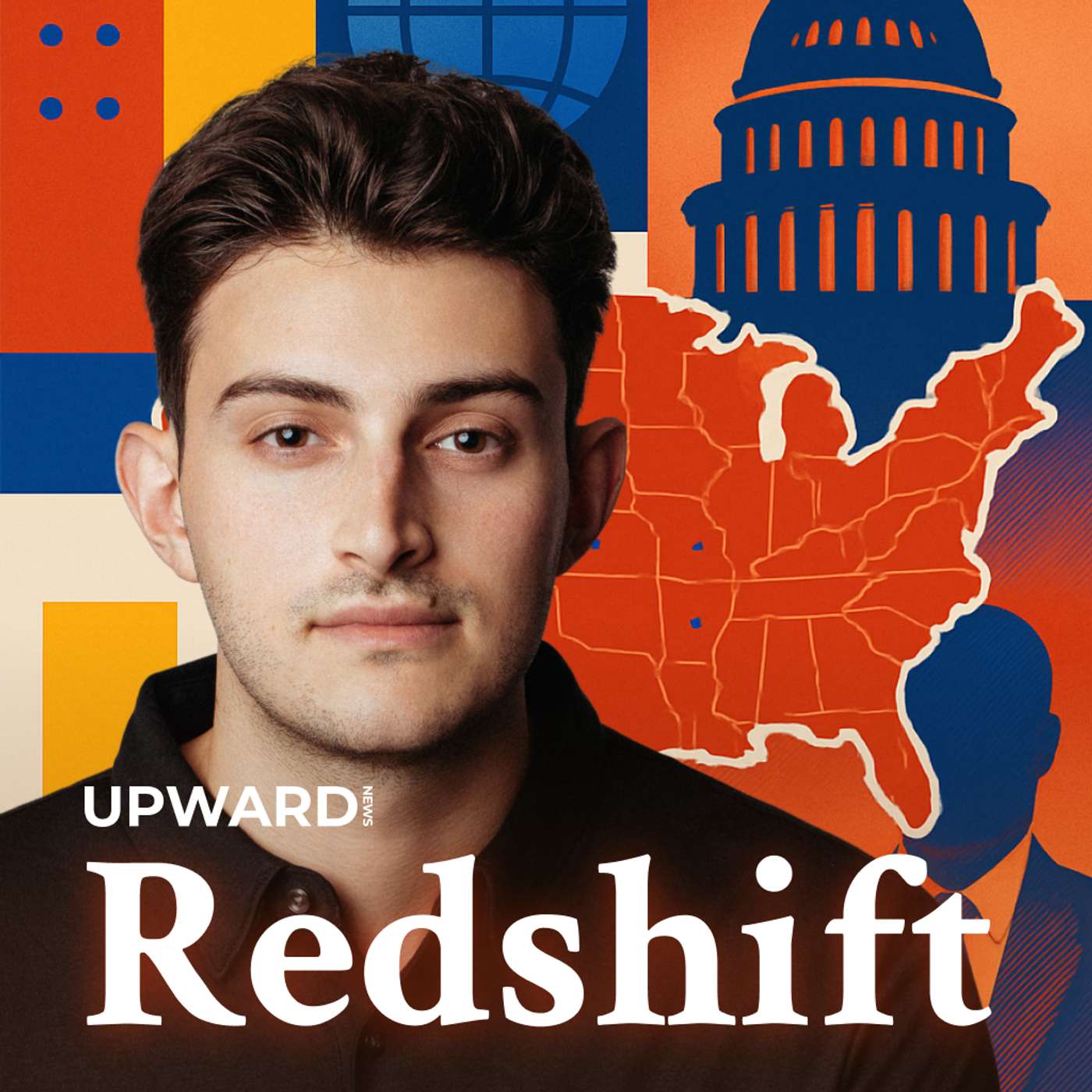
Redshift with Ariel David
by Upward News
Ariel David cuts through the noise to ask the questions the media won’t. Why are America’s institutions collapsing? What ideologies are driving the the changing geopolitical order? Who’s scripting the narratives we’re told to believe?In an era of censorship, corruption, and decline, Redshift investigates the ideas, forces, and people reshaping American power—from the halls of Congress to the depths of internet subcultures.Powered by Upward News. Stay sharp on everything from D.C. power plays to media hoaxes and global conflicts. Get our free, uncensored daily briefing at www.upward.news/subscribe
-
17
Inside the Insurgency Against ICE & America
At stake is the ability to govern without violent resistance.I’ve spent the past 48 hours doing mostly two things: shoveling far more snow than I’d planned to, and tracking the steady stream of new information coming out of Minneapolis.I remember the Black Lives Matter riots. There were moments when the unrest reached Washington, and images showed streets on fire and President Trump going into the White House bunker. It was an unnerving moment. I think it felt especially unnerving because what we want from the government is simple: peace and predictability, upheld through law and order — rules we agree to as a society, enforced consistently, until we decide together that it’s time to change them.What happened during the BLM summer of 2020 — and what’s happening now in Minnesota — is a violent insurgency against the democratically chosen direction this country has taken. It is violent, coordinated, and engineered to produce the outcomes we’re now seeing: deaths among “protesters,” the ensuing demonization of the Trump administration and its supporters, and — ultimately — a halt to the enforcement of federal law, particularly immigration law.As in 2020, much of the media now appears determined to side with a coordinated and well-funded insurgency.The average American — particularly those left of center — may find themselves sympathizing with these protesters, rioters, or insurgents, whatever term one prefers. This is not because they share the same end goals or vision of governance. These actors are committed progressives, often rooted in anarchic and Marxist ideology. The broader public supports them largely because the media obscures their tactics, their objectives, and their motives — details that, in my view, most Americans would find deeply troubling if fully understood.The last time the country reached a moment like this, in 2020, President Trump failed to restore order through law enforcement. The unrest eventually subsided not because it was resolved, but because the federal government effectively abdicated its responsibility to address it. And since the start of Trump’s second term, it is difficult to argue that he has fully reasserted control over these same elements.For that reason, how the administration chooses to proceed now will determine not only its ability to implement domestic policy over the next two years, but also how emboldened and confident these insurgent forces will feel in their campaign to violently disrupt policies and administrations that the majority of Americans vote for.The following piece is written to assemble all of the moving parts and events of the past week, and to be shared with those tuned into media sources who may not be fully seeing or hearing what is unfolding across the country._THE WELL-COORDINATED INSURGENCY_Over the weekend, an investigative reporter on the ground in Minneapolis infiltrated Signal group chats used by a large network of activists focused on tracking Immigration and Customs Enforcement (ICE) and obstructing its operations.One reason these groups have been so difficult to identify and disrupt is that they are highly organized. They operate like a military-style insurgency, using tools and methods designed to maintain a secure and tightly controlled structure.For example, each group is capped at 1,000 members, and there are many such groups, organized by region across the country.On a regular schedule, these chats are deleted and then recreated, with new passwords and links shared only through word of mouth. Within the groups, members are assigned specific roles. Some patrol areas where ICE is active. Others verify license plates reported by those patrols. Others are responsible for dispatching teams to interfere with ICE once agents are identified. There are mobile patrols, foot patrols, medics, and aftercare providers. The entire operation is planned and coordinated to a military level. All members operate anonymously, using code names.New members go through training. Maps of the region are shared, with each region broken into zones for easier coordination. There is always an active dispatch call where members can join and share on-the-ground information related to ICE operations. The mobile patrols go out on the road and tail targets — either reporters they believe are hostile to their intentions, or, for their stated purpose, to track ICE. (It is likely that Renee Good, who was killed after she hit an ICE officer with her vehicle, was part of these efforts.)These groups use specific methods to identify ICE units, track their size, monitor their activity, note their uniforms, and even locate where they may be staying. In the chats, they share license plates, and through what appears to be — shockingly — coordination with local police, they are able to track those plates and bring local police in to interfere with ICE. There are even members in the network with close ties to Minnesota Governor Tim Walz (D).After these groups were infiltrated and reported on, new chats were formed, as they are every day.As should be clear by now, these groups are extremely coordinated and highly sophisticated. Members on the ground sometimes appear in military-style gear with weapons, as in the case of Alex Pretti, which we will get to next._THE ALEX PRETTI INCIDENT_Over the weekend, ICE fatally shot Alex Jeffrey Pretti, 37, in Minneapolis while agents were carrying out deportation operations. Pretti was dressed in military-style clothing — a uniform, black hat, and glasses — and was filming agents at close range as they worked.At one point, an agent pushed a woman who was likely another “protester” agitating the operation. Pretti then stepped in to block the agents. He was pepper-sprayed, and a struggle with multiple ICE agents followed as they attempted to bring him to the ground.Throughout the encounter, Pretti was acting as an agitator and was armed with a concealed carry handgun. An ICE agent can be heard yelling that Pretti had a gun. Video analysis suggests he may have been disarmed, though a shot rang out, leading some to believe his gun may have accidentally discharged. Immediately after that shot, an ICE agent fired multiple rounds at Pretti.The entire incident unfolded in under 30 seconds. During the confrontation, outside agitators were blowing whistles, shouting at agents, and creating chaos that prevented ICE from operating in a normal environment.For the most part, the media has downplayed the fact that Pretti was armed throughout the encounter. It has also largely ignored reporting on the organized group chats Pretti was allegedly involved in — suggesting he was deliberately present, armed, and aiming to interfere with ICE agents who have repeatedly been targeted and violently attacked. A neighbor of Pretti’s claimed that he was, unsurprisingly, part of those group chats.After the death of Renee Good, the media — along with key politicians and former Presidents Bill Clinton and Barack Obama — released statements portraying Alex Pretti as the latest martyr: an American protesting an immoral deportation effort who was killed by a tyrannical administration for doing so.But we know that Pretti arrived at the scene as part of an organized effort to obstruct the federal government, that he was armed, and that he directly interfered with ICE agents as they carried out their work.From the agents’ perspective, once they saw the gun and heard a shot, it was entirely reasonable to believe they were facing another agitator who intended to kill or assassinate them. That is how the administration has described the incident, and it is difficult to imagine the agents interpreting the situation any other way....
-
16
The New QAnon And JD Vance’s Choice, With Sam Tanenhaus
Sam Tanenhaus is an American historian, journalist, and editor whose career has spanned some of the most influential institutions in media, including Vanity Fair, The New York Review of Books, and The New York Times Book Review, where he served as editor.He is the author of Whittaker Chambers, a Pulitzer Prize finalist, and the long-anticipated biography of William F. Buckley Jr., a project decades in the making. Tanenhaus’s work explores the evolution of American conservatism and the figures who shaped it, offering a rare combination of historical depth and cultural insight.Across his writing and commentary, he has become one of the most respected voices examining how ideas, movements, and media have defined American political life.WHAT WE DISCUSSEDThe playbook William F. Buckley used to sideline the John Birch Society.Why Tucker Carlson's influence presents a greater challenge than past conspiracy theorists.The political pressure on JD Vance to become the conservative movement's new gatekeeper.How media figures replaced politicians as the real leaders on the Right.The strategic dilemma: purge the fringes or keep them inside the tent?
-
15
Candace & Tucker's Blitzkrieg On Charlie Kirk's Legacy With Josh Hammer
Today on the show we have Josh Hammer. He's a leading conservative commentator, attorney, and author. He's senior editor-at-large at Newsweek, host of The Josh Hammer Show, which everyone should listen to, and author of the must-read Israel and Civilization: The Fate of the Jewish Nation and the Destiny of the West.He was very close friends with Charlie Kirk, and at TPUSA’s Student Action Summit, Charlie personally tapped him to take the stage in a high-stakes Israel debate. In this interview, we remembered Charlie—what he believed about Israel, how he built Jewish-Christian alliances, and how his legacy is now being contested. We also discuss how the so-called woke right, including Tucker Carlson and Candace Owens, have been weaponizing Charlie's death to push narratives that turn America against Israel.WHAT WE DISCUSSED• Josh Hammer reflects on his friendship with Charlie Kirk and the impact of his assassination • How figures like Tucker Carlson and Candace Owens are exploiting Charlie’s death to push anti-Israel narratives • The collapse of trust in institutions fueling conspiracy theories and antisemitism on the right • Josh’s book Israel and Civilization and why he argues the Bible is the foundation of Western civilization • The growing threat to the Christian-Jewish alliance and why preserving it is critical for America’s future.
-
14
The MAHA Americans Running For Congress with Ryan Sheridan
Ryan Sheridan is a Missouri nurse practitioner and entrepreneur, running for Congress on the MAHA agenda.His campaign is championing transparency in food and medicine, decentralization of healthcare, and fiscal responsibility, positioning him as a conservative alternative to failed bureaucratic systems.WHAT WE DISCUSSEDHow to dismantle America's broken healthcare system and end hospital monopoliesThe MAHA movement’s push for total transparency in food and medicineWhy Americans are still demanding accountability for COVID-19 mandatesA plan to stop corporations from buying single-family homesThe $137 trillion national debt crushing young Americans
-
13
Trump vs. The Billionaire CEOs With Tevi Troy
Tevi Troy served as Deputy Secretary of Health and Human Services under President George W. Bush and was one of the administration’s top domestic policy advisors.He played a key role in shaping health and homeland security policy during a critical era. He’s now a presidential historian and senior fellow at the Bipartisan Policy Center, and the author of Fight House and other books on politics, media, and the presidency.WHAT WE DISCUSSEDWhy Trump’s second term is more focused and unified than his firstHow Trump negotiates directly with CEOs like Tim Cook and Jamie DimonThe story of Elon Musk’s political fallout and why he’s now “homeless”Why the administration is taking a cautious approach to AI regulationIs Trump’s populist rhetoric just an act?
-
12
Israel, Epstein, & Online MAGA’s Turn Against Trump With Park MacDougald
Park MacDougald is a senior writer for Tablet magazine’s newsletter, The Scroll, and a fellow at the Manhattan Institute. Recently named a Robert Novak Fellow, his work focuses on exposing information operations and the financial and political networks that manufacture narratives to shape public debate.WHAT WE DISCUSSEDThe propaganda war against Israel: who’s behind it and why they’re winning.The campaign to split Evangelicals from Israel with fake persecution stories."Epstein Gate": Tucker and Bannon's attempt to redefine MAGA and corner Trump.Why Tucker Carlson’s anti-Israel crusade has little to do with “America First.”The battle over Israel and the future of the post-Trump GOP.
-
11
How Trump Just Got REALLY Rich, With Eric Lipton
Eric Lipton is an investigative reporter for The New York Times and a multiple Pulitzer Prize winner. His work specializes in dissecting the hidden influence of money and lobbying on American government, revealing how powerful interests shape policy far from public view.WHAT WE DISCUSSEDHow Trump’s family has built massive new wealth through crypto ventures since his second term beganWhy the scale and direct involvement of a sitting president in these business deals is unprecedentedThe potential conflicts of interest created by Trump’s business partners benefiting from government actionsWhy these business ties haven’t hurt Trump politically—and why most of his base isn’t concernedHow the use of crypto adds layers of secrecy and foreign influence risk to presidential business dealings
-
10
In This House, Science Is Real With Brian Nosek
Brian Nosek, a pioneering psychologist and professor at the University of Virginia, shook the scientific establishment in 2015 when his Reproducibility Project revealed that only 36% of published psychology studies could be successfully replicated—exposing a crisis at the heart of scientific research.As co-founder of the Center for Open Science, Nosek has built an organization dedicated to increasing transparency and accountability in scientific practice. His work challenges the academic incentive structure that rewards publishing novel, positive results over methodological rigor and accurate findings, pushing researchers to focus on career advancement rather than discovering truth.WHAT WE DISCUSSEDBrian Nosek reveals the reproducibility crisis in science, where the pressure to publish novel, tidy results often conflicts with rigorous, messy reality.How incentive structures in academia can skew research, pushing scientists toward career advancement over truth-seeking.The role of decentralized skepticism in science, and why converging evidence over time builds trust in findings.Solutions like Registered Reports, which commit to publishing studies regardless of outcome, aiming to align rewards with rigor.The impact of bureaucracy and funding biases on research, alongside innovative ideas to reduce friction and accelerate discovery.
-
9
Does Anyone Believe In Free Speech? With Rikki Schlott
Rikki Schlott is a journalist at the New York Post, a fellow at the Foundation for Individual Rights and Expression, and co-author of The Canceling of the American Mind. As a Gen Z voice in the national conversation on free speech, she’s become a sharp critic of academic orthodoxy and cancel culture.Schlott also hosts two podcasts—Lost Debate and We Never Had This Conversation—where she challenges dominant narratives and explores the generational divide over expression, politics, and power.We discussed:How cancel culture ebbs and flows with cultural disruptions - from 2016 to 2020 and post-October 7thThe generational divide on free speech - why older generations defend it more consistently than Gen ZWhy academia creates censorious environments and whether government intervention on campuses is appropriateThe political inconsistency of free speech advocacy - how both sides abandon principles when in powerSocial media's role in free speech debates and why Elon Musk's Twitter takeover led to an unbalanced discourse
-
8
How Qatar Bought America With Frannie Block
Frannie Block, a reporter at The Free Press, writes about how money, power, and ideology shape the narratives espoused by the media, elite institutions, and governments — both foreign and domestic. Our conversation focuses on her recent article “How Qatar Bought America.”Block has become one of the leading figures in uncovering efforts by the tiny nation of Qatar to influence significant sectors of American life, from K-12 education, to universities and think tanks — and even the highest levels of government.Her reporting reveals how Qatar uses its vast financial resources in a soft power campaign to shape American politics and soften its image to the American public — while supporting Islamism and jihadism — to position itself as one of the world’s major brokers of diplomatic negotiations.What we discussed:How Qatar is shaping American education, media, and politics through soft power.When nearly $100B is invested across U.S. sectors, what does Qatar expect in return?How close ties to Trump allies may reveal deeper foreign influence.Why a tiny Gulf state is straddling jihadist ideology and U.S. diplomacy.When lobbying laws are weak, how much foreign sway goes unnoticed?
-
7
The Left’s Riot Playbook / Trump’s Biggest Test With Heather Mac Donald
Heather Mac Donald, a bestselling author and senior fellow at the Manhattan Institute, is renowned for her incisive critiques of the Black Lives Matter movement and the media's role in constructing misleading narratives around police brutality.Her influential reporting during the 2020 riots captured national attention, exposing how anti-police rhetoric—propelled by inaccurate and sensationalized media coverage—intensified violence and endangered American cities.Grounded in rigorous data analysis, Mac Donald has persistently challenged dominant perspectives on race, crime, and policing, arguing that widespread claims of systemic police brutality against Black Americans are not supported by empirical evidence.WHAT WE DISCUSSEDWhy Heather believes one burned car is too many—and how the left normalizes chaosThe overlooked cost of illegal immigration: ERs packed, schools overwhelmed, streets less safeWhy the “illegal immigrant = criminal” narrative might backfire, even if deportation is legalThe legal battle over Trump deploying the National Guard without Gavin NewsomWhether riots are grassroots or astroturfed—and if Trump can realistically stop what’s coming
-
6
The Battle For Judea And Samaria with Israel Ganz
Israel Ganz is the Governor of the Binyamin Regional Council, which oversees the largest Israeli-controlled area in Judea and Samaria — otherwise known as the West Bank.A long-time advocate for Jewish life and security in Judea and Samaria, Ganz plays a major role in shaping Israeli policy on settlements and advocates for advancing Israeli sovereignty over the entire contested region.As tensions escalate and Iran and its proxies grow more desperate, protecting Israeli communities will become even more critical. And while some in the US push for a two-state solution, Gantz believes a Palestinian state in Judea and Samaria would inevitably endanger Israeli lives.What was discussed:Why Israel’s settler leadership sees October 7 as a turning point for sovereigntyThe data behind Arab support for the Hamas massacreHow foreign governments are funding illegal Palestinian constructionHow the PA pays families of terrorists — and why that matters for policyWhy the “two-state solution” is viewed by many Israeli leaders as suicidal
-
5
The Young, Anti-Israel Right with Xaviaer DuRousseau
Xaviaer DuRousseau is a former BLM activist turned conservative commentator and the host of Respectfully, Xaviaer at PragerU. In this conversation, he breaks down how parts of the right are drifting into dangerous territory, how Gen Z is changing the political game, and why the Israel conversation has gone completely off the rails—especially since October 7.What we discussed:What the “Woke Right” actually is—and how it mimics the radical leftWhy Kanye West’s spiral says a lot about culture and influenceHow social media pushes young people toward extremesWhat people get wrong about Israel—and what Xaviaer saw on the groundWhy Gen Z is more serious about politics than they get credit forHow fake research and TikTok conspiracies fuel anti-Israel takesWhat the IDF does that no one talks aboutWhy the political divide in America might be permanent
-
4
What’s Dividing Young Men And Women? With Rob Henderson
Rob Henderson is a writer and scholar best known for coining the term luxury beliefs—ideas held and promoted by elites that often harm the working class. A U.S. Air Force veteran and Yale graduate, Rob’s path from foster care to the Ivy League gives him a unique lens on class, culture, and identity in modern America.We get into:Why young men and women are splitting politically across the WestHow dating apps, social media, and modern prosperity are shaping ideologyThe rise of podcast-fueled political activismWhy elites push ideas that harm the working class (luxury beliefs)What’s next for the Democratic Party—and whether anyone’s being authenticRob’s optimism for the future.Powered by Upward News. Stay sharp on everything from D.C. power plays to media hoaxes and global conflicts. Get our free, uncensored daily briefing at ihatefakenews.com.
-
3
Is Isolation In Israel’s Future? With Curt Mills
Curt Mills is the very influential Executive Director of The American Conservative, where he helps shape the national conversation on foreign policy and the future of the American right.A seasoned journalist and political commentator, Mills has reported extensively on Washington’s power players, the GOP realignment, and America’s role in the world. His work—featured across major outlets from Fox News to NPR—offers an anti-interventionist perspective that challenges the bipartisan foreign policy consensus.Get our daily political analysis — free and uncensored — at ihatefakenews.com. At Upward News, we cut through media distortion to bring you the stories that matter, with clarity, honesty, and no allegiance to political parties or corporate interests. Join tens of thousands who rely on us to understand what’s really happening in America.
-
2
Will Democrats Become More Republican? With Ruy Teixeira
The progressive movement that dominated the Democratic Party beginning in the Obama era is rapidly losing ground.Ideas that once seemed politically unchallengeable on the left — from defunding police to abolishing fossil fuels — have hit a wall of public rejection by the voters.So, as the Democratic Party’s progressive momentum fades, some of its top thinkers are trying to regain stability by returning to the political center.I spoke to Ruy Teixeira, a seasoned political scientist and commentator whose ideas on elections carry real weight. Many of the party’s top leaders listen to him. He’s also the founder of the excellent, thought-provoking The Liberal Patriot.
-
1
Is Trump Close to Abandoning Israel? With Jim Hanson
I spoke with Jim Hanson, chief editor at the Middle East Forum. As a former US Army Special Forces operator, he’s worked in counterterrorism and foreign defense missions in over two dozen countries.
We're indexing this podcast's transcripts for the first time — this can take a minute or two. We'll show results as soon as they're ready.
No matches for "" in this podcast's transcripts.
No topics indexed yet for this podcast.
Loading reviews...
ABOUT THIS SHOW
Ariel David cuts through the noise to ask the questions the media won’t. Why are America’s institutions collapsing? What ideologies are driving the the changing geopolitical order? Who’s scripting the narratives we’re told to believe?In an era of censorship, corruption, and decline, Redshift investigates the ideas, forces, and people reshaping American power—from the halls of Congress to the depths of internet subcultures.Powered by Upward News. Stay sharp on everything from D.C. power plays to media hoaxes and global conflicts. Get our free, uncensored daily briefing at www.upward.news/subscribe
HOSTED BY
Upward News
CATEGORIES
Loading similar podcasts...
Frequently Asked Questions
How many episodes does Redshift with Ariel David have?
Redshift with Ariel David currently has 17 episodes available on PodParley. New episodes are automatically indexed when they're published to the podcast feed.
What is Redshift with Ariel David about?
Ariel David cuts through the noise to ask the questions the media won’t. Why are America’s institutions collapsing? What ideologies are driving the the changing geopolitical order? Who’s scripting the narratives we’re told to believe?In an era of censorship, corruption, and decline, Redshift...
How often does Redshift with Ariel David release new episodes?
Redshift with Ariel David has 17 episodes. Check the episode list to see recent publication dates and frequency.
Where can I listen to Redshift with Ariel David?
You can listen to Redshift with Ariel David on PodParley by clicking any episode. We provide an embedded audio player for direct listening, and you can also subscribe via your preferred podcast app using the RSS feed.
Who hosts Redshift with Ariel David?
Redshift with Ariel David is created and hosted by Upward News.
URL copied to clipboard!