
PODCAST · science
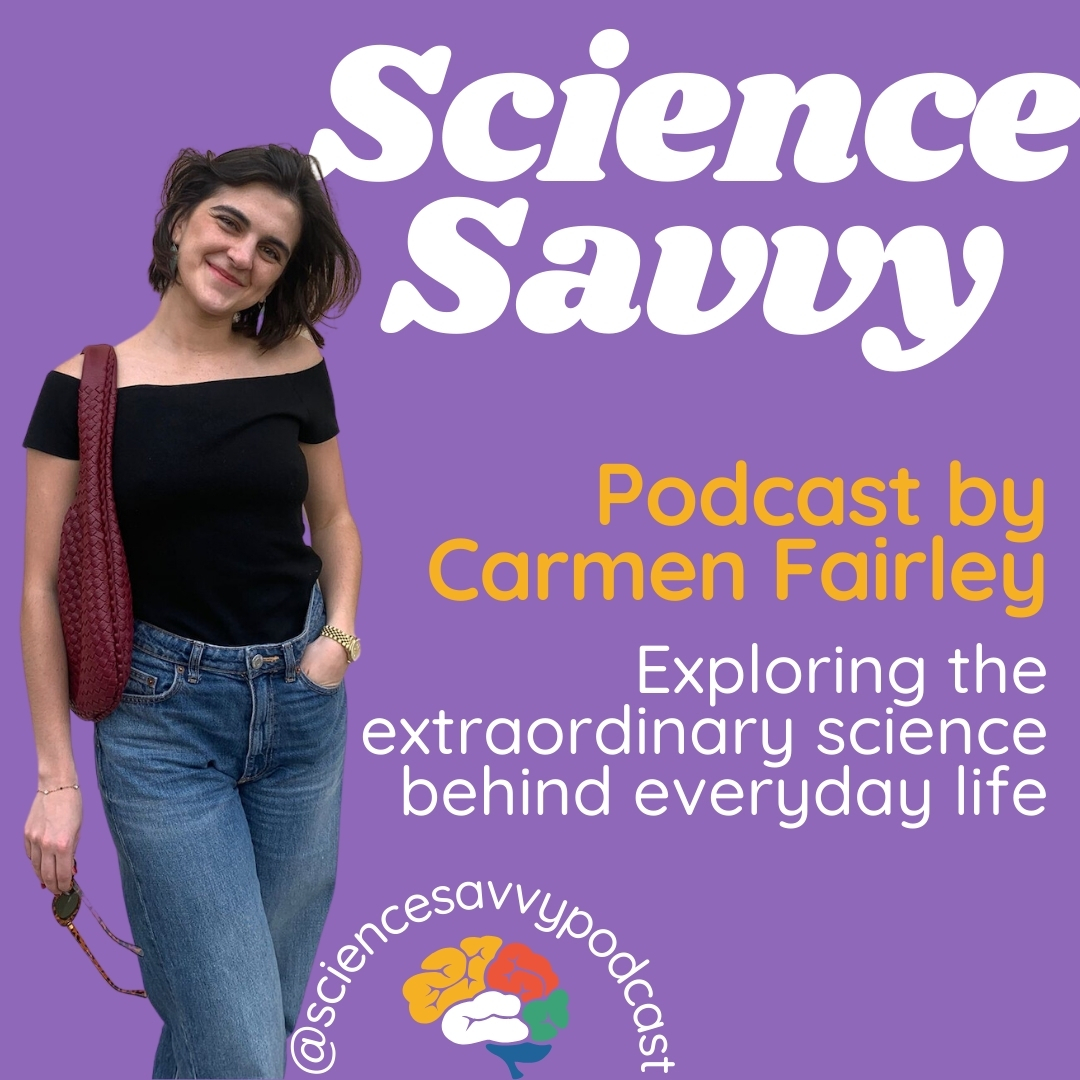
Science Savvy
by fairleycarmen9
Welcome to Science Savvy, a podcast hosted by Carmen Fairley, drawing on a background in Pharmacology and Biomedical Engineering to explore the science behind everyday life.Each episode turns complex research into clear, engaging stories, covering the human body, the brain, medicine, sleep, memory, pain, and scientific discovery.Science Savvy is educational only and does not provide medical advice. Please speak with a qualified healthcare professional for personal medical questions.Follow now and never miss an episode.
-
24
Why Do I Feel So Different Before My Period? Part 1 of PMS vs PMDD
Why do some women feel bloated, emotional, or irritable before their period, while others feel like they become a completely different person? In this episode of Science Savvy Podcast, Professor Rossella Nappi (gynecologist, endocrinologist, and sexologist) breaks down the crucial difference between premenstrual syndrome (PMS) and premenstrual dysphoric disorder (PMDD), and why PMDD is far more than “just bad PMS.” Together, we explore what is really happening in the brain and body, from altered sensitivity to normal hormonal changes to the roles of serotonin, GABA, stress, trauma, and even the gut-brain axis. Professor Nappi also explains how PMDD is diagnosed, why symptom tracking is important for those seeking help from a physician, as well as the treatments that can actually help (from natural lifestyle changes to hormonal contraception and intermittent use of antidepressants). Most importantly, this episode is a reminder that severe premenstrual symptoms are real, treatable, and never something women should have to just “put up with.” This episode is for educational purposes only and is not a substitute for medical advice. If you experience severe mood symptoms, thoughts of self-harm, or symptoms that interfere with daily life, please speak with a qualified healthcare professional or seek urgent support. As this was an interview, we do not have a "formal" bibliography. However, a list of references is available upon request (just leave a comment)!
-
23
Party Smart: Understanding Health and Decision-Making in Social Settings
In this episode of Science Savvy, I speak with Pablo Otero, who holds a PhD from Imperial College London, about how certain substances can affect the body in social settings. We discuss how mixing substances can increase the chance of unwanted effects, how the body responds under different conditions, and why avoiding recreational substance use is the lowest-risk choice. This episode is for educational purposes only. It does not encourage recreational substance use or provide medical advice. Reading list: Available on request.
-
22
When Your Brain Turns Down the Pain: Pain and the brain part 3
This episode explores how pain is shaped by the brain, body signals, context, expectations, and emotions. We look at why stress can sometimes reduce pain, why mood can change how pain feels, and how approaches such as movement, relaxation, education, and social connection can help people understand pain better. This episode is educational only and does not provide medical advice. Reading list: Available on request.
-
21
I need RELIEF!!! Pain and the brain part 2
Part two of the Science Savvy pain series explains how common pain medicines work and why pain relief can vary from person to person. The episode covers medicines such as ibuprofen, paracetamol, local anaesthetics, and other prescription treatments, while also exploring how expectations, support, and non-medicine approaches can shape the pain experience. This episode is educational only and does not provide medical advice. Reading list: Available on request.
-
20
It HURTS! Pain and the Brain part 1
Pain is strange: we feel it in the body, but the brain plays a central role in creating the experience. In part one of this series, we explore how pain signals travel, why reflexes can happen before conscious awareness, why chronic pain can persist, and why two people with similar injuries may feel pain differently. This episode is educational only and does not provide medical advice. Reading list: Available on request.
-
19
Siestas & Sleepless Nights: The Science of Sleep - Part 2
This episode explores sleep patterns, naps, circadian rhythms, and how daytime habits can affect nighttime rest. We also cover how sleep needs can vary across life stages, the possible effects of too little or too much sleep, and practical habits that may help improve sleep quality. This episode is educational only and does not provide medical advice. Reading list: Available on request.
-
18
Sleeping Tight and Why It Matters: The Science of Sleep - Part 1
This episode explores why sleep matters for body repair, immune function, brain maintenance, and long-term health. We also look at dreams, why we may dream, and how sleep differs across animals. This episode is educational only and does not provide medical advice. Reading list: Available on request.
-
17
Going on a Trip: Science of Psychedelics
In this episode, I explore the history, science, and clinical promise of psychedelics. This was actually my Master's Thesis topic so very fun episode for me! We cover everything from how the psychedelics actually work, by acting brain (serotonin) receptors to increase neuroplasticity (make your brain more malleable), disrupt rigid brain patterns, and increase brain "entropy"... and, more importantly, why those effects may help us treat conditions such as PTSD and treatment‑resistant depression. The episode also discusses the current clinical evidence (including a critical appraisal of its robustness), logisitcal and ethical challenges, and the importance of use within therapeutic / research settings only. As always, find a full bibliography below: Carhart-Harris & Goodwin (2017), “The Therapeutic Potential of Psychedelic Drugs: Past, Present, and Future,” Neuropsychopharmacology - This one is a very good foundation if you only have time to read one paper, it should be this one!! Yaden & Griffiths (2021), “The Subjective Effects of Psychedelics Are Necessary for Their Enduring Therapeutic Effects,” ACS Pharmacology & Translational Science - This is great to read into the question of "is the trip actually necessary?" Mitchell JM et al. MDMA-assisted therapy for severe PTSD: a randomized, double-blind, placebo-controlled Phase 3 study. Nature Medicine. 2021. Mitchell JM et al. MDMA-assisted therapy for PTSD: results of a second Phase 3 randomized trial in a diverse cohort. Nature Medicine. 2023. Carhart-Harris RL et al. Trial of psilocybin-assisted therapy versus escitalopram for major depressive disorder. New England Journal of Medicine. 2021. Davis AK et al. Effects of psilocybin-assisted therapy on major depressive disorder: outcomes at 1 and 4 weeks. JAMA Psychiatry. 2020. Raison CL et al. Psilocybin versus niacin placebo for major depressive disorder: a randomized clinical trial. JAMA Psychiatry. 2023. Bogenschutz MP et al. Psilocybin-assisted treatment for alcohol use disorder: a randomized clinical trial. JAMA Psychiatry. 2022. Griffiths RR et al. Psilocybin produces substantial and sustained decreases in depression and anxiety in patients with life-threatening cancer. Journal of Psychopharmacology. 2016. Luoma JB et al. Meta-analysis of placebo-controlled trials of psychedelic-assisted therapy. Journal of Psychoactive Drugs. 2020. Fang Y et al. Psilocybin for depressive and anxiety symptoms: systematic review and meta-analysis of randomized trials. Frontiers in Psychiatry. 2024. Romeo B et al. Safety of psychedelic-assisted therapies: systematic review and meta-analysis. Psychiatry Research. 2024. Hinkle JT et al. Adverse events in psychedelic-assisted therapy: a systematic review and pooled analysis. JAMA Psychiatry. 2024. Siegel AN et al. Persistent decreases in hippocampus-default-mode connectivity following psilocybin correlate with mood improvement. Nature. 2024. Ly C et al. Psychedelics promote structural and functional neural plasticity. Cell Reports. 2018. Carhart-Harris RL, Friston KJ. REBUS and the anarchic brain: toward a unified model of the brain action of psychedelics. Pharmacological Reviews. 2019. Griffiths RR et al. Psilocybin-occasioned mystical-type experience in humans: relationship to persisting positive effects. Psychopharmacology. 2019. U.S. Food and Drug Administration. Guidance for Industry: Expedited Programs for Serious Conditions. Drugs and Biologics (Breakthrough Therapy Designation). FDA; 2014 (update). Compass Pathways plc. Phase 3 program design of COMP360 (synthetic psilocybin) for treatment-resistant depression (TRD). Business Wire/Investor Press Release. 2024. Johnson MW, Garcia-Romeu A, et al. Pilot study of psilocybin-facilitated smoking cessation treatment: long-term follow-up outcomes. Journal of Psychopharmacology. 2017.
-
16
You will Never Forget this Episode: Science of Memory
In this episode of Science Savvy, I explore how memory works and why it matters for learning, decision-making, and daily life. The episode covers how memories are formed, stored, and retrieved, which brain regions are involved, and practical ways to improve recall. Reading list: Available on request.
-
15
CRIS Cancer: Funding Tomorrow’s Cancer Research
In this episode of Science Savvy, I speak with Elena Muyo, Scientific Projects & Partnerships Lead at CRIS Cancer UK, about how research funding can help advance new cancer treatments. We discuss how projects are selected, why early research matters, and how scientific discovery can create new options for patients over time. Reading list: Available on request.
-
14
Genetics of Schizophrenia with Aitana Padilla
In this episode, I speak with Aitana Padilla about genetics, the brain, and schizophrenia research. We explore how DNA can influence biological pathways, how researchers study complex conditions, and why genetics is only one part of a much bigger scientific picture. Reading list: Available on request.
-
13
Built to Be Mid: The Evolutionary Problem With Happiness
In this episode of Science Savvy, I explore the science of happiness: what it is, why it exists, and how the brain helps create feelings of joy, satisfaction, and connection. Drawing on my background in pharmacology and biomedical engineering, I look beyond the simple idea that happiness is “just dopamine” and unpack the wider biology behind positive emotions. This episode explores reward pathways, gratitude, social connection, meditation, brain waves, and why humans are not built to feel happy all the time. From everyday habits to long-term wellbeing, this episode offers a clear and engaging look at what research can teach us about feeling good, staying grounded, and understanding our emotional lives a little better. Science Savvy helps make science feel clear, useful, and relevant to everyday life.
-
12
Boss?! How our brains make (and break) trust with Dr. D'Amico
In this episode, I am joined by Dr. Katharine D'Amico, a behavioral neuroscientist and President of the The Swala Institute for Applied Neuroscience for professional communication. We explore how your brain rapidly forms perceptions, builds (or breaks) trust, and makes high-stakes decisions. My name is Carmen, I am the host of Science Savvy. I have a background in pharmacology and biomedical engineering. Science Savvy podcast is all about breaking down the extraordinary science behind everyday life. In this episode, Dr. D'Amico shares her insights from mentoring over 900 startups and researching how trust and emotion shape behavior in professional environments. This episode covers why first impressions are sticky, how oxytocin builds trust and lowers stress, what role emotions really play in strategic decisions, and how to rewire your habits to make better choices. Whether you're curious about brain chemistry, leadership, mental health, or simply how to make smarter decisions, this episode offers clear and engaging insights grounded in real research. Also, the cover at the beginning of the episode is from my band! Comment if you recognise it ;) Further reading and references available upon request
-
11
Building Minds: How Architecture Shapes Our Lives and Well-Being
Welcome to the Architecture and the Brain episode, part of Science Savvy with Carmen. In this episode, I explore how the built environment influences the way we think, feel, and connect with others. With my background in pharmacology and biomedical engineering, I break down the science behind sensory perception and neuroarchitecture, and unpack how it shows up in your daily life. This episode covers the psychology of shared spaces, the impact of natural light and materials on mood and cognition, and why we’re hardwired to respond to beauty. I’m joined by Antonio, a talented architect, as we explore how thoughtful design can support mental health, foster community, and reflect evolving cultural values. Whether you’re passionate about urban planning, curious about how light and scent influence your brain, or just want to create a more inspiring space, this episode offers clear and engaging insights grounded in real research. Science Savvy helps you understand the systems shaping your thoughts, health, and behavior. If you're ready to explore your body and brain with a little more clarity, you're in the right place. Further reading and references available upon request
-
10
PCOS: The Reality Show Where No Egg Wins with Dr. Faris
In this episode of Science Savvy, I explore the science behind Polycystic Ovary Syndrome, often shortened to PCOS. Drawing on my background in pharmacology and biomedical engineering, I break down how hormones, metabolism, insulin, and lifestyle factors can interact in this complex condition. I’m joined by Dr. Basma Faris, a board-certified OB/GYN and certified culinary medicine specialist, to discuss why PCOS is about much more than ovarian cysts. We explore how insulin resistance can contribute to hormone changes, how sleep, nutrition, and stress can affect symptoms, and why clear, evidence-based information matters when navigating health advice online. Whether you have experience with PCOS or are simply curious about how hormones and metabolism connect, this episode offers a clear, thoughtful look at the science behind the condition. Science Savvy helps make science feel clear, useful, and relevant to everyday life.
-
9
Food for Thought: How What You Eat Shapes Your Mind, Body, and Relationships
In this episode of Science Savvy, I explore the fascinating science behind how food interacts with the brain and body. Drawing on my background in pharmacology and biomedical engineering, I break down how taste, smell, texture, nutrients, and the gut-brain connection can influence how we think, feel, and experience everyday life. Joined by Pablo and Alicia, a food-loving couple, we discuss why food can feel rewarding, how it links to memory and mood, and why eating is often tied to comfort, connection, and shared experiences. From omega-3s and brain function to the science of cravings and the role of the gut, this episode turns complex research into clear, relatable insights. Whether you are curious about nutrition, brain science, or simply why food plays such a big role in how we feel, this episode offers an engaging look at the science behind what we eat. Science Savvy helps make science feel clear, useful, and relevant to everyday life.
-
8
Mind over Migraine: Former MP Dehenna Davison on Battling the Invisible Pain
Welcome to the Migraine episode, part of Science Savvy with Carmen. In this episode, I explore the science, stigma, and impact of migraine through the lens of lived experience and neuroscience. With my background in pharmacology and biomedical engineering, I break down the biology behind migraine and unpack how it shows up in your daily life. This episode features a conversation with Dehenna Davison, former Member of Parliament for Bishop Auckland, who made headlines when she stepped down from her dream job due to chronic migraine. Dehenna shares her journey from suffering in silence to securing the first UK parliamentary debate on migraine since the 1960s. As someone who also lives with migraine, this episode is personal and deeply meaningful. Whether you experience migraine yourself or care about someone who does, this conversation offers scientific insights and emotional validation in equal measure. Science Savvy helps you understand the systems shaping your thoughts, health, and behavior. If you're ready to explore your body and brain with a little more clarity, you're in the right place. Further reading and references: Goadsby, P. J., Holland, P. R., Martins-Oliveira, M., Hoffmann, J., Schankin, C., & Akerman, S. (2017). Pathophysiology of migraine: A disorder of sensory processing. Physiological Reviews, 97(2), 553–622. https://doi.org/10.1152/physrev.00034.2015 Burstein, R., Noseda, R., & Borsook, D. (2015). Migraine: Multiple processes, complex pathophysiology. The Journal of Neuroscience, 35(17), 6619–6629. https://doi.org/10.1523/JNEUROSCI.0373-15.2015 Charles, A. (2018). The pathophysiology of migraine: Implications for clinical management. The Lancet Neurology, 17(2), 174–182. https://doi.org/10.1016/S1474-4422(17)30435-0 World Health Organization. (2022). Headache disorders: Key facts. Retrieved from https://www.who.int/news-room/fact-sheets/detail/headache-disorders Steiner, T. J., Stovner, L. J., Jensen, R., Uluduz, D., & Katsarava, Z. (2020). Migraine remains second among the world's causes of disability, and first among young women: Findings from GBD2019. The Journal of Headache and Pain, 21(1), 137. https://doi.org/10.1186/s10194-020-01208-0 Buse, D. C., Manack, A. N., Fanning, K. M., Serrano, D., Reed, M. L., & Lipton, R. B. (2012). Chronic migraine prevalence, disability, and sociodemographic factors: Results from the American Migraine Prevalence and Prevention Study. Headache, 52(10), 1456–1470. https://doi.org/10.1111/j.1526-4610.2012.02223.x Lipton, R. B., Bigal, M. E., Diamond, M., Freitag, F., Reed, M. L., & Stewart, W. F. (2007). Migraine prevalence, disease burden, and the need for preventive therapy. Neurology, 68(5), 343–349. https://doi.org/10.1212/01.wnl.0000252808.97649.21 Prince, P. B., Rapoport, A. M., Sheftell, F. D., Tepper, S. J., & Bigal, M. E. (2004). The effect of weather on headache. Headache, 44(6), 596–602. https://doi.org/10.1111/j.1526-4610.2004.446011.x Finocchi, C., & Sivori, G. (2012). Food as trigger and aggravating factor of migraine. Neurological Sciences, 33(S1), 77–80. https://doi.org/10.1007/s10072-012-1046-5 Diener, H. C., Holle, D., Solbach, K., & Gaul, C. (2021). Medication-overuse headache: Risk factors, pathophysiology, and management. Nature Reviews Neurology, 17(2), 112–124. https://doi.org/10.1038/s41582-020-00428-0 Dodick, D. W. (2018). A phase-by-phase review of migraine pathophysiology. Headache, 58(S1), 4–16. https://doi.org/10.1111/head.13300 Silberstein, S. D., Holland, S., Freitag, F., Dodick, D. W., Argoff, C., & Ashman, E. (2012). Evidence-based guideline update: Pharmacologic treatment for episodic migraine prevention in adults. Neurology, 78(17), 1337–1345. https://doi.org/10.1212/WNL.0b013e3182535d0c Tepper, S. J., & Ashina, M. (2019). CGRP and migraine: The emerging role of CGRP inhibitors. Headache, 59(3), 394–406. https://doi.org/10.1111/head.13456 Russo, A. F. (2015). Calcitonin gene-related peptide (CGRP): A new target for migraine. Annual Review of Pharmacology and Toxicology, 55, 533–552. https://doi.org/10.1146/annurev-pharmtox-010814-124701 Lipton, R. B., Munjal, S., Alam, A., Buse, D. C., Fanning, K. M., Reed, M. L., & Schwedt, T. J. (2022). The impact of migraine on workplace productivity and the role of novel treatments. Headache, 62(3), 334–345. https://doi.org/10.1111/head.14286
-
7
Lasting habits I think you should build or Neuroplasticity 101
Welcome to the Neuroplasticity episode, part of Science Savvy with Carmen. In this episode, I explore the incredible adaptability of the brain and what it means for learning, healing, and growth. With my background in pharmacology and biomedical engineering, I break down the science behind neuroplasticity and unpack how it shows up in your daily life. This episode covers the story of JJ, a boy who was born missing key brain structures but still outperformed his peers academically. We use his story to explore how the brain can rewire itself under extraordinary conditions and what that means for you. I also discuss the role of social interaction, sleep, oxytocin, exercise, and gut health in shaping brain function. Whether you're navigating a personal challenge, looking to boost your cognitive abilities, or simply want to understand how resilient your brain really is, this episode offers clear and engaging insights grounded in real research. Science Savvy helps you understand the systems shaping your thoughts, health, and behavior. If you're ready to explore your body and brain with a little more clarity, you're in the right place. Further reading and references available upon request.
-
6
Make 2025 your b!tch: Brain hacks to build lasting habits
Welcome to the New Year Habits episode, part of Science Savvy with Carmen. In this episode, I explore how to build better routines using neuroscience-backed strategies. With my background in pharmacology and biomedical engineering, I break down the science behind focus, motivation, and habit formation, and unpack how it shows up in your daily life. This episode covers how dopamine drives reinforcement, how your prefrontal cortex shapes goal setting, and how small actions can rewire your brain over time. I share five practical, research-based strategies to help you start small, reward progress, build flexibility, embrace accountability, and make decisions in advance. Whether you're trying to build healthier routines, stay off your phone, or finally stick to a New Year's resolution, this episode offers clear and actionable insights grounded in real science. Science Savvy helps you understand the systems shaping your thoughts, health, and behavior. If you're ready to explore your body and brain with a little more clarity, you're in the right place. Further reading and references available upon request.
-
5
All you need is LOVE
Welcome to the Love episode, part of Science Savvy with Carmen. In this episode, I explore the biology behind one of humanity’s most powerful emotions. With my background in pharmacology and biomedical engineering, I break down the science behind love and unpack how it shows up in your daily life. This episode covers the three stages of love known as lust, attraction, and attachment. Together with my friend Alejandra, we explore how hormones like oxytocin, vasopressin, dopamine, and cortisol shape our connections and influence everything from butterflies to heartbreak. We also look at the brain’s response to emotional bonding and the evolutionary reasons behind long-term partnerships. Whether you're curious about how love works, why it hurts when it ends, or how biology fuels connection, this episode offers clear and engaging insights grounded in real research. Science Savvy helps you understand the systems shaping your thoughts, health, and behavior. If you're ready to explore your body and brain with a little more clarity, you're in the right place. Further reading and references available upon request.
-
4
The Science of Friendship: Giggles, Bonding, and Learning
In this episode of Science Savvy, I’m joined by my best friend of ten years, Dasha, to explore the science behind long-term friendship. With warmth, laughter, and a healthy dose of evidence-based insight, we look at how your brain syncs up with your closest companions, why oxytocin makes you feel safe and connected, and how staying close to your friends can actually support your physical health and longevity. We discuss how friendship shapes the brain, buffers stress, and even extends lifespan. Whether you're curious about how social bonds work or simply love your bestie and want to know why it matters, this episode is packed with heart and science. Science Savvy is about uncovering the biology behind the relationships, habits, and emotions that define our lives. If you're ready to understand how your friendships literally change your brain, this episode is for you. Further reading and references available upon request.
-
3
Attention, Please: What ADHD Can Teach Us About the Brain
In this episode of Science Savvy, I explore the science behind ADHD and what it can look like in everyday life. Drawing on my background in pharmacology and biomedical engineering, I break down how attention, focus, impulsivity, motivation, and brain chemistry are connected. I’m joined by my brother Alex for a personal conversation about living with ADHD, including medication, coping strategies, creativity, and hyperfocus. We also discuss how modern life can make attention feel harder to manage, and why ADHD is best understood as a complex neurodevelopmental condition rather than a simple lack of effort or discipline. Whether you have ADHD, support someone who does, or are simply curious about how attention works, this episode offers a clear and thoughtful look at the science behind focus, behaviour, and the brain. Science Savvy helps make science feel clear, useful, and relevant to everyday life.
-
2
Wired for Wonder: Neuroscience of Creativity
Welcome to the Creativity episode, part of Science Savvy with Carmen. In this episode, I explore the science behind creative thinking and how the brain fuels imagination. With my background in pharmacology and biomedical engineering, I break down the science behind creativity and unpack how it shows up in your daily life. This episode covers the roles of the prefrontal cortex and default mode network, the surprising impact of dopamine on creative flow, and how certain brain states enhance idea generation. Joined by my friend Alicia, an artist and entrepreneur with a background in psychology, we look at how both science and lived experience shape creative expression. Whether you’re an artist, a science enthusiast, or just curious about where great ideas come from, this episode offers clear and engaging insights grounded in real research. Science Savvy helps you understand the systems shaping your thoughts, health, and behavior. If you're ready to explore your body and brain with a little more clarity, you're in the right place. Further reading and references available upon request.
-
1
You Are What You Eat: The Gut Microbiome Shapes Mood, Health, and Behavior
In this episode of Science Savvy, I explore the science behind gut health and the gut-brain connection: how the microbes living in the gut can interact with digestion, mood, immune function, and overall wellbeing. Drawing on my background in pharmacology and biomedical engineering, I break down how the gut and brain communicate through biological pathways including nerves, hormones, immune signals, and microbial metabolites. This episode looks at what the microbiome is, why it matters, and how diet, lifestyle, probiotics, and prebiotics may support a healthier gut environment. Whether you are curious about digestion, mood, the microbiome, or how everyday habits can shape your body’s internal systems, this episode offers a clear and engaging look at the science behind gut health. Science Savvy helps make science feel clear, useful, and relevant to everyday life.
-
0
Who the F*!k am I? Science of Consciousness & Self-Awareness
Welcome to the Consciousness episode, part of Science Savvy with Carmen. In this episode, I explore what it really means to be conscious and how self-awareness shapes who we are. With my background in pharmacology and biomedical engineering, I break down the science behind consciousness and unpack how it shows up in your daily life. This episode covers everything from classic philosophical ideas like Descartes’ “I think, therefore I am” to modern neuroscience frameworks such as Crick’s Astonishing Hypothesis and Tononi’s information integration theory. We explore how brain chemistry, genetics, and personal experience come together to influence identity, self-esteem, and the feeling of being a self at all. Whether you’re curious about how the brain creates your sense of self or interested in the science behind awareness and emotion, this episode offers clear and engaging insights grounded in real research. Science Savvy helps you understand the systems shaping your thoughts, health, and behavior. If you're ready to explore your body and brain with a little more clarity, you're in the right place. Further reading and references available upon request.
-
-1
Periods - Why Can’t Mother Nature Just Text Me I'm Not Pregnant?
In this episode of Science Savvy, I explore the science behind periods and the menstrual cycle: why they happen, how hormones change across the month, and what those changes can mean for the body and brain. Drawing on my background in pharmacology and biomedical engineering, I break down the biology of menstruation in a clear and practical way. This episode looks at cycle phases, common symptoms such as bloating, skin changes, and shifts in mood or energy, and the evolutionary theories that have tried to explain why menstruation exists. Whether you are curious about how the body works or want to better understand the patterns that can appear across the cycle, this episode offers an accessible look at the science behind a familiar but often misunderstood process. Science Savvy helps make science feel clear, useful, and relevant to everyday life.
-
-2
[Pilot] How Our Brains Predict and Shape Everyday Life
This is one of our early episodes. We shared a mic and the audio is a bit raw, so feel free to check out our latest episodes for a more polished experience. Welcome to the first episode of Science Savvy with Carmen. In this episode, I explore how our brains work as prediction machines to help us make sense of the world around us. With my background in pharmacology and biomedical engineering, I break down the science behind how the brain constantly anticipates and adapts to everyday experiences. This episode dives into how your brain predicts everything from the next note in a song to the social signals in a conversation. I unpack key theories in neuroscience and explain how the brain’s ability to make sense of uncertainty shapes your emotions, perceptions, and actions. If you’ve ever wondered how your brain seems to be one step ahead, this episode offers a practical and research-backed look at why prediction is at the core of everything we do. Science Savvy is about understanding the hidden systems that guide your thoughts, your feelings, and your health. If you're curious about how your brain works and how that knowledge can empower your everyday life, you're in the right place. Further reading and references available upon request.
We're indexing this podcast's transcripts for the first time — this can take a minute or two. We'll show results as soon as they're ready.
No matches for "" in this podcast's transcripts.
No topics indexed yet for this podcast.
Loading reviews...
ABOUT THIS SHOW
Welcome to Science Savvy, a podcast hosted by Carmen Fairley, drawing on a background in Pharmacology and Biomedical Engineering to explore the science behind everyday life.Each episode turns complex research into clear, engaging stories, covering the human body, the brain, medicine, sleep, memory, pain, and scientific discovery.Science Savvy is educational only and does not provide medical advice. Please speak with a qualified healthcare professional for personal medical questions.Follow now and never miss an episode.
HOSTED BY
fairleycarmen9
Loading similar podcasts...
Frequently Asked Questions
How many episodes does Science Savvy have?
Science Savvy currently has 27 episodes available on PodParley. New episodes are automatically indexed when they're published to the podcast feed.
What is Science Savvy about?
Welcome to Science Savvy, a podcast hosted by Carmen Fairley, drawing on a background in Pharmacology and Biomedical Engineering to explore the science behind everyday life.Each episode turns complex research into clear, engaging stories, covering the human body, the brain, medicine, sleep, memory,...
How often does Science Savvy release new episodes?
Science Savvy has 27 episodes. Check the episode list to see recent publication dates and frequency.
Where can I listen to Science Savvy?
You can listen to Science Savvy on PodParley by clicking any episode. We provide an embedded audio player for direct listening, and you can also subscribe via your preferred podcast app using the RSS feed.
Who hosts Science Savvy?
Science Savvy is created and hosted by fairleycarmen9.
URL copied to clipboard!