
PODCAST · education
SEN and Sensibility
by Patoss
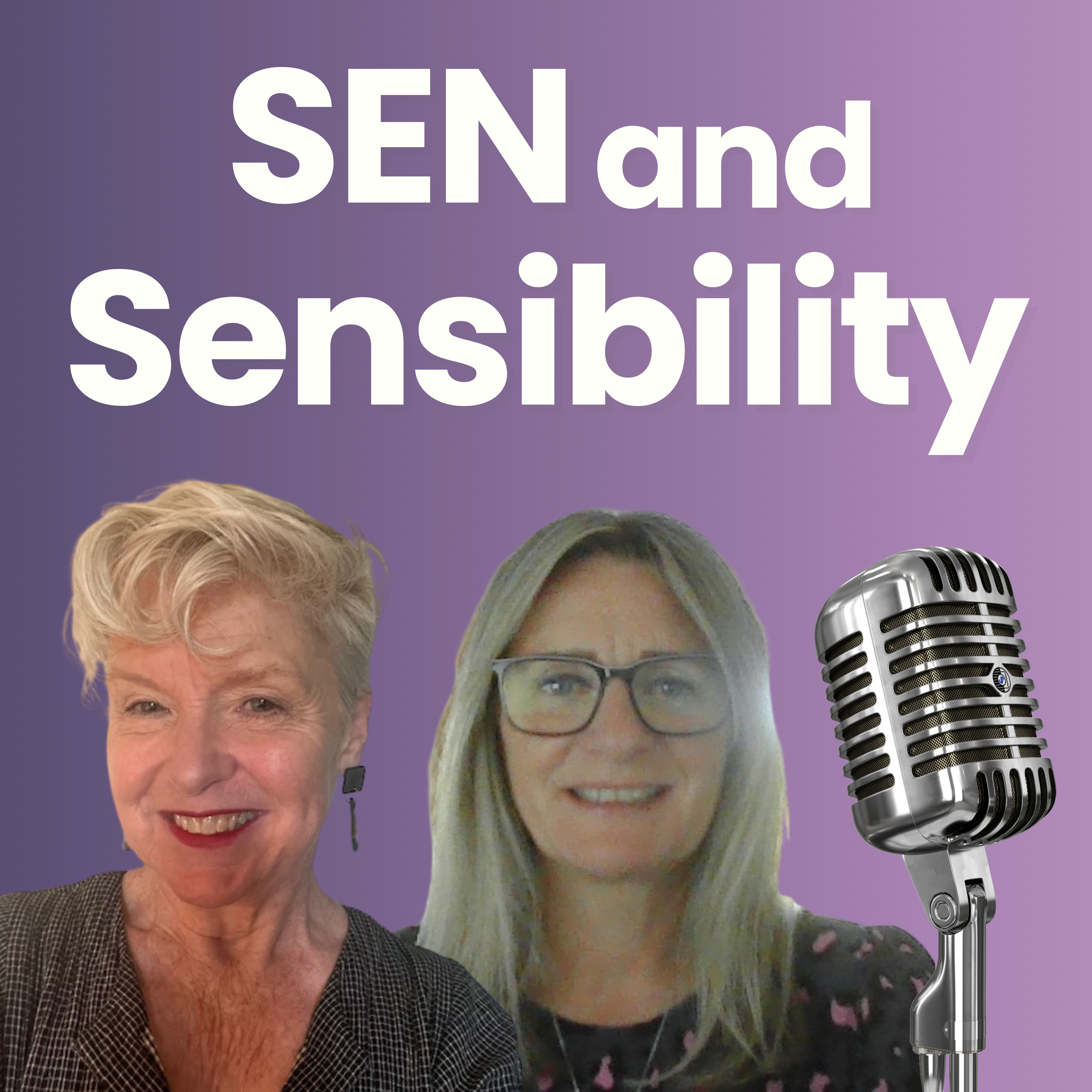
Welcome to the homepage for SEN and Sensibility, the podcast that brings you lively, intelligent conversation about current developments in the world of SEN. Join Liz Horobin & Sarah Reay as they meet guests working at the cutting edge of research and innovation to explore the issues that really matter.
-
7
Reading Matters: Practical perspectives from practice
This episode explores reading development anddifficulties, focusing on how understanding the reading process can shapemore effective and motivating support for learners.Key points include:The discussion offers practical insight andreassurance for practitioners and parents alike, highlighting how motivatingenvironments, accessible resources, and informed strategies can help learnersengage more confidently with reading.
-
6
Teaching writing in schools: from messiness to mastery
In this thought‑provoking conversation, Liz Horobin andSarah Reay are joined by Dr Tim Mills (National Curriculum& Writing Framework advisor) and Dr Francesca Bonafede(National Literacy Trust) to explore the state of writing in UK schoolsand what really shapes young people’s motivation to write.Fran shares new insights from a major study of 14,700pupils aged 8–18, revealing sharp declines in writing enjoyment as childrenget older, rising anxiety around grammar and accuracy, and the powerful role ofchoice, freedom, and authentic purpose in restoring engagement.Tim unpacks how curriculum design and the writing frameworkcan support teachers in navigating tensions between assessment requirements andnurturing motivation. Together, the guests discuss: This rich, research‑informed discussion makes a compellingcase for rethinking how schools approach writing — shifting from perfectproducts to nurturing empowered, confident young writers.
-
5
Inside the Universal Classroom
Join Liz Horobin and Sarah Reay as they talk with Professor Joel Talcott about The Universal Classroom—an innovative, neuroscience informed approach designed to help teachers better understand and support children’s learning needs in Year One.Joel explains how the Universal Classroom shifts the focus from traditional outcome-based assessments to the underlying cognitive skills that shape learning—such as language, attention, working memory, and social–emotional development. Rather than adding to teacher workload, the project provides a simple, 5-minute questionnaire that structures the observations teachers already make and turns them into clear, actionable guidance for classroom practice and targeted intervention‑based assessments to the underlying cognitive skills that shape learning—such as language, attention, working memory, and social–emotional development. The conversation explores:Why Year One is such a crucial stage for early identification and supportThe importance of recognising that all children have individual learning profiles—not just those with diagnosed difficultiesHow the project is being codeveloped with teachers, parents, and education expertsHow the Universal Classroom design empowers teachers and enhances communication with parentsWhat comes next for validation, intervention mapping, and future expansionJoel also shares how schools can get involved in the ongoing pilot and provides a preview of his upcoming talk at the PATOSS Dyslexia Charity Conference on April 25th, where he’ll present early findings and next steps for the Universal Classroom initiative.This episode explores how educational neuroscience can support truly inclusive, child centred practice, and why early, universal tools can make a meaningful difference for every learner.‑centred practice—and why early, universal tools can make a meaningful difference for every learner.
-
4
Inclusion in the workplace
What does true inclusion look like in the workplace—and whyis it critical for success? In this episode, Liz Horobin and Sarah Reay arejoined by Laura Cook, Helen Curran, and Chris Collier to explore:✅ How inclusion impacts employeewellbeing and business performance✅Practical steps for inclusive recruitment and onboarding✅Why psychological safety and belonging matter more than policies✅The role of assistive tech and coaching in empowering neurodivergent talentThis conversation is packed with actionable insights forleaders, HR professionals, and anyone passionate about creating workplaceswhere everyone thrives.Tune in to learn how inclusion benefitsindividuals, teams, and organizations—and why belonging is the key to unlockingpotential.
-
3
Redefining Inclusion
Redefining inclusion: bringing about attitudinal change in schoolsIn this episode of SEN and Sensibility, Liz Horobin and Sarah Reay are joined by Helen Benstead and Dom Griffiths to discuss one of the most pressing issues in education today: inclusion. Together, they explore what good inclusive practice really means, why attitudes and relationships matter as much as policy, and how Universal Design for Learning (UDL) can transform classroom strategies.The conversation tackles:Packed with insights from research, policy, and practice, this episode is essential listening for educators, leaders, and anyone passionate about creating truly inclusive learning environments.
-
2
What’s the problem with maths?
In this episode, Sarah and Liz are joined by three leading experts in the area of dyscalculia, maths difficulties, and maths anxiety. Dr Kinga Morsanyi is Reader in Mathematical Cognition and Director of Equity, Diversity and Inclusion in the School of Science at Loughborough University. Rob Jennings is co-founder of the Dyscalculia Network, a not-for-profit organization that sets out to support and advocate for people with dyscalculia and maths learning difficulties. Sue Fraser is founder of the School Consultancy Programme, which advises secondary schools in supporting students with maths difficulties to raise their confidence and attainment. Together, our guests shed light on maths difficulties, exploring why they arise and how they can be addressed.
-
1
Raising the Volume in Education
In this powerful first episode, we dive into the world of SEND and neurodiversity with two inspiring guests: Jo Tolley and Penny Hannant. Dr Penny Hannant, a developmental psychologist and lecturer at the University of Birmingham, shares insights from her research into early years development. She introduces a developmental profiling tool that could revolutionise how we identify and support children with additional needs from the very start of their learning journey. Jo Tolley, a passionate disability consultant and advocate, brings her project Young Researchers, Young Voices to life. She explores why listening to young people—especially those with lived experience—is essential for shaping inclusive policies and practices. Whether you're an educator, parent, practitioner, or simply curious about how we can better support neurodiverse communities, this episode offers fresh perspectives and practical ideas to help raise the volume for SEND.
We're indexing this podcast's transcripts for the first time — this can take a minute or two. We'll show results as soon as they're ready.
No matches for "" in this podcast's transcripts.
No topics indexed yet for this podcast.
Loading reviews...
ABOUT THIS SHOW
Welcome to the homepage for SEN and Sensibility, the podcast that brings you lively, intelligent conversation about current developments in the world of SEN. Join Liz Horobin & Sarah Reay as they meet guests working at the cutting edge of research and innovation to explore the issues that really matter.
HOSTED BY
Patoss
CATEGORIES
Loading similar podcasts...
URL copied to clipboard!