
PODCAST · society
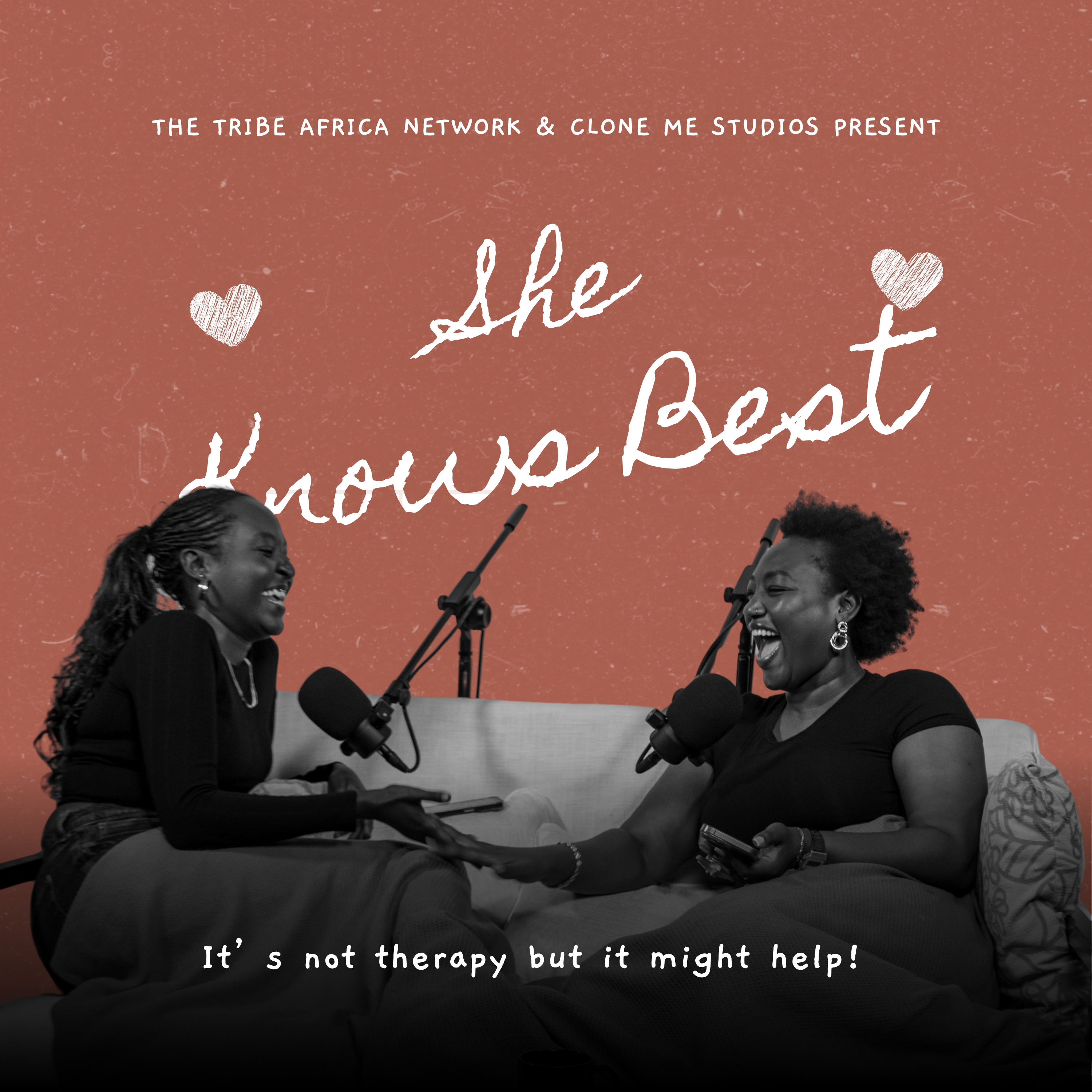
She Knows Best
by The Tribe Africa
A podcast by millennial girlies, for millennial girlies, unpacking taboo truths at the intersection of healing, identity, and culture, with sass, soul, and serious substance.She Knows Best is a refreshing, intelligent, and deeply relatable podcast that explores the layered realities of modern African womanhood. Hosted by Afsa and Liz, two dynamic African millennial women from different sectors of culture and public life, the show brings honest, thought-provoking conversations on everything from mental health and identity to relationships, power, and purpose.
-
22
The African Woman's Body Has Always Been Public Property. Let's talk about it.
They've Been Selling African Women's Bodies For Centuries. We're Just Now Talking About It.They've been legislating, policing, trending, and profiting off African women's bodies for centuries. And nobody asked us.In Part 1 of our Reclaiming My Body series, Afsa and Liz go all the way in, from the patriarchy and religion that taught us our bodies belong to everyone else, to the cultural customs that turned our flesh into public property before we were old enough to understand what was happening.We talk about the naked mom household and what it actually teaches children about bodies and shame. We talk about Sara Baartman, the Khoikhoi woman whose body was put on display in Europe, studied, mocked, and exhibited even after her death, and draw the direct line to how African women's bodies are still being consumed as spectacle today. We talk about why bodies have become trends, who profits when they do, and what it costs the women whose bodies are being borrowed. And we talk about abortion, what pro-choice actually means in a context where the choice was never yours to begin with.Who truly owns your body? In life, and in death?This is the conversation your school, your church, and your family never had with you. We're having it now.It's not therapy, but it might help.
-
21
Becoming an Unpunishable Woman
There will always be a reason to call a woman bad. Unmarried. Childfree. Divorced. Too loud. Too much. Too free.In this episode, Afsa and Liz examine the global architecture of the 'bad woman' label; from China's leftover women to the single mothers being blamed for being the parent that stayed, and make the case for becoming completely, permanently, structurally unpunishable. For defying a system that was never built to accommodate us in the first place.In this episode, they get into what it actually means to become unpunishable, and how.We cover the global language used to shame unmarried and childfree women, why the women being called 'bad' are often the ones quietly changing their families' economic futures, the impossible standard women are held to and exactly who designed it, what it looks like to remove the leverage society holds over you, and the women who figured all of this out long before we did.This one is for the girlies who are done performing goodness for an audience that was never going to acquit them anyway.
-
20
The Problem with Reality TV Is…
We love reality TV, and we’re not apologizing for it. But we are interrogating it.From Keeping Up with the Kardashians to Real Housewives, Love Island, Big Brother, Young Famous & African, and Kampala Crème, reality TV has quietly shaped how we think about beauty, success, relationships, money, and what it means to be a woman. And that’s worth talking about.In this episode, we’re getting into it: Why is reality TV so addictive? How much of what we’re watching is actually “real” and how much is carefully manufactured drama? Is the genre empowering, exploitative, or somehow both at the same time?And then we zoom in. What does African reality TV specifically reveal about class, colorism, and aspiration? How do local formats compare to, and push back against, their global counterparts?It’s a full breakdown of the guilty pleasure we can’t quit.Watch. Comment. Tell us your most unhinged reality TV opinion.
-
19
Women Are Tired… The Truth About Mental Health No One Talks About
In this episode of She Knows Best, Liz & Afsa dive deep into the realities women face every single day, from burnout, societal expectations, and emotional labor… to hormones, periods, and the silent struggles that no one prepares you for.Because the truth is, women are expected to show up for everyone… while silently dealing with everything.They talk about:-Why women are constantly exhausted-The pressure of being “strong” all the time-Hormones, periods, and how they affect mental health-Postpartum depression and the realities of motherhood-The impact of society, patriarchy, and capitalism on women-Why community matters more than everThis is an honest, unfiltered conversation about what it really means to navigate life as a woman today. If you’ve ever felt overwhelmed, burnt out, or unseen… this episode is for you.It's not therapy but it might help.
-
18
The Men Are Not Okay - One Time Only
We're doing this once. And we mean it.This episode is not an attack on men, it's a direct conversation about silence, complicity, and what accountability actually looks like when you're not the one being harmed, but you benefit from the system that causes harm.We're talking about the men who know, and stay quiet anyway. About how boys are socialized into harm. About why feminism is not the enemy, it's the exit for us all. It’s about what real allyship looks like versus the performance of it.If you're a man watching this: we're not asking you to feel guilty. We're asking you to do something.If you're a woman watching this: you already know. This one's just for the record.This episode deals with themes of abuse, misogyny, and gender-based harm. Listen with intention.
-
17
Boyfriends Are Embarrassing: Hot Girls Need to Stop Dating Losers.
Inspired by Chanté Joseph’s framing in Vogue and the essay “Hot Girls Need to Stop Dating Losers” by Blithesaxon (Substack). This one is indeed for the girlies.Why do brilliant, ambitious, self-aware women keep emotionally, financially, and socially subsidizing men who offer little more than audacity and bad vibes? Why are smart women tolerating bare minimum behavior? And when did “potential” become a personality trait?In this episode, we unpack the cultural conditioning that teaches women to over-function in relationships for subpar men. We talk about how “struggle love” gets romanticized, how emotional labor is second nature, and how dating down is reframed as being humble or patient. We interrogate the fixer-upper boyfriend phenomenon, the ego-stroking, the endless grace extended to men who would not extend the same in return, and the subtle ways women abandon themselves in the name of loyalty. At what point does compassion turn into self-sabotage?It’s not therapy, but it might help.
-
16
New Year, New Us? - Nobody Can Stop Reggae
Every January, we announce a new version of ourselves, but how often do we actually stop to ask who we're becoming, and why? In this Season 2 opener, Afsa and Liz get real about identity, growth, and intention as we step into 2026. We reflect on the highs and lows of 2025, the lessons learned, the losses felt, the unexpected wins, and the versions of ourselves we're ready to leave behind. From navigating Uganda's election season and internet shutdowns to unpacking the chaos (and comedy) of the season, we're bringing you into the room for an honest conversation about what realistic growth actually looks like.It’s not therapy, but it might help.
-
15
Toxic Talk; Work, Culture & the Buzzword We Can’t Seem to Escape
Everything is “toxic” now from your job, your friendships, even your group chat. But is toxicity a real cultural crisis, or have we turned it into a catch-all buzzword for anything uncomfortable? In this episode of She Knows Best, we unpack where the word came from, why it’s everywhere, and what actually makes a workplace or relationship toxic.We dive into the realities of unhealthy work environments in Uganda and across Africa, from the “we’re a family” manipulation, to cliquey offices, to chaotic job descriptions that expect you to be a one-person department. We also explore how social media has turned “toxic” into shorthand for conflict, avoidance, and calling out everything except ourselves.Most importantly, we talk about solutions: what healthy culture looks like, how workplaces can actually support employees, and how friendships and communities can build boundaries without guilt or shame.If you’ve ever wondered why toxicity thrives, and how to break the cycle, this episode is exactly for you!It’s not therapy, but it might help.
-
14
Friendship Edition: Finding Home, A Can We Talk Collaboration
This week, we’re switching things up with a special collaboration between She Knows Best and Can We Talk 256, the card game designed to spark meaningful conversations and deepen connection.With over 20 years of friendship between hosts Afsa and Liz, this episode dives into the heart of friendship: what it means to grow together, evolve apart, and still find home in each other. From identity and life goals to career paths and heartbreaks, this is a candid, funny, and vulnerable conversation you don’t want to miss.About Can We Talk 256:Can We Talk 256 creates tools that make connection easier, helping people build stronger relationships, one conversation at a time. Their cards are designed to help anyone, regardless of social skills or background, start meaningful dialogue and combat loneliness. Through conversation starters, social clubs, and community experiences, Can We Talk reminds us that connection is not a luxury, it’s a human need.Check them out on all socials @canwetalk256It’s not therapy, but it might help.
-
13
Privilege & Pedigree — Does Your Name Get You Through the Door?
Uganda and Africa today are full of paradoxes: millions of young people are unemployed or underemployed, while others are cushioned by family names, networks, inheritance, or access to global opportunities. Globally, Millennials face shrinking opportunities even as the largest wealth transfer in history is underway. Privilege is layered, sometimes it’s money, but it’s also gender, skin color, the school you attended, or the freedom to make life choices without survival anxiety. In today’s episode, we explore privilege at the intersection of wealth, gender, race, and networks, asking: what does it mean, who benefits, and how can we use it responsibly?It's not therapy but it might help.
-
12
Career Realities; Hustle & Hope
Everyone says “follow your passion”, but what if your passion doesn’t pay the bills? In this episode, we explore the realities of work and survival in Uganda, where youth unemployment stands at 16.1% and only 3% of young people have formal jobs.From the myth of passion to the privilege of stability, we unpack blue-collar vs white-collar mindsets, office politics, burnout, and the balance between ambition and survival. Whether you’re in corporate, self-employed, or hustling between gigs, this episode gets real about what career success means in 2025.It’s Not Therapy, but It Might Help.
-
11
Parenting: To Be or Not To Be?
Parenting remains one of the most personal, yet most publicly debated, decisions in our lives. Across much of Africa, it’s not viewed as a choice but a social obligation, a milestone of adulthood, and proof of legacy. But as millennial women begin to question inherited expectations, we’re asking: What if motherhood isn’t the only path to meaning, legacy, or love?In this episode, we unpack the layered politics of parenthood in Uganda and beyond, from the pressure to have children to the joy of choosing a child-free life. We explore how cultural and religious norms tie womanhood to fertility, how workplaces penalize mothers through pay gaps and unrealistic demands, and how men often escape the same scrutiny. The conversation digs into the emotional and financial weight of care work, the stigma around fertility treatments and adoption, and the privilege of choice in a world where motherhood is often treated as a duty rather than a decision.
-
10
Identity Politics, Who Gets to Define Us?
Who are you without the labels? Are we truly choosing our identities, or are they chosen for us by society, culture, and history?In this episode, we unpack the weight of identity in an African context, from job titles and income classes to marital status, gender, and race. We ask how much of who we are is self-defined, and how much is shaped by expectation, surveillance, and power.Subscribe & follow us:Instagram: @sheknowsbestpodTikTok: @sheknowsbestpod
-
9
Is Kampala Even a Real Place? Hustle Culture, Chaos & The City We Can’t Quit
The dysfunction is real. But so is the love.Kampala is equal parts thrilling and exhausting. It’s where the hustle never sleeps, but neither do the traffic jams. A city where entrepreneurship thrives despite weak systems, garbage piles up alongside our dreams, and the air itself can choke you. And yet… we can’t imagine living anywhere else.In this episode, we break down the wild contradictions of our city: from the boda boda lifeline to the GDP we’re losing in traffic, from air that’s 7x dirtier than it should be to a nightlife that never dies. It’s messy, it’s maddening, and it’s magic, and we’re asking if Kampala is organized chaos or just… chaos.Subscribe & follow us:Instagram: @sheknowsbestpodTikTok: @sheknowsbestpod
-
8
Grieving the Good Girl: Shame, Respectability & Reclaiming Your Life
We grow up in cultures that tell us: be respectful, get educated, keep your head down, stay “in the right lane,” and everything will fall into place. But what happens when you do all of that, and the life you were promised still doesn’t come to fruition? In this episode, we unpack the Good Girl Syndrome in the Ugandan and African context: the grief of a life that never came to pass, the shame and respectability politics that keep women stuck, and the exhaustion of being “the dependable one.” From chronic people-pleasing to cultural expectations of sacrifice, we ask, how do you reclaim your life when you’ve lived it for everyone else? And what does healing look like in a society that’s still watching, still judging?Subscribe & follow us:Instagram: @sheknowsbestpodTikTok: @sheknowsbestpod
-
7
Reason, Season, or Lifetime? Navigating the Life Cycle of Friendships
Friendships shape us in ways romance never can. For many women, friends are the therapist, cheerleader, co-parent, and financial backup all rolled into one. But what happens when these bonds shift, fade, or break apart?In this episode, we dive into the unspoken truths of adult female friendships, from the joy of chosen family to the heartbreak of friendship breakups. We ask why losing a best friend can feel more devastating than losing a partner, and how adulthood, careers, motherhood, and money reshape the way we connect.It’s not therapy, but it might help.👉🏾 Subscribe & follow us:Instagram: @sheknowsbestpodTikTok: @sheknowsbestpod
-
6
Dating Games — Love, Money & Mess in Kampala
Dating in Kampala feels less like romance and more like a survival strategy dressed up in aesthetics. From influencers selling soft life and pseudo-trad wife dreams, to toxic red-pill content flooding TikTok and WhatsApp groups, the landscape of modern love has never been messier.In this episode, we unpack:The rise of trad-wife culture and influencer “stay-at-home girlfriend” vibes.The 50/50 debate — love vs. economics, and how pay gaps reshape relationships.Talking stages, situationships, and the death of “courtship.”Is marriage an achievement — or just added labour for women? (the care gap).Identity in relationships and love dilemmas unique to Kampala’s messy eco-system.We dig into the scandals, the culture shifts, and the real-life contradictions shaping how we date, love, and survive today.It’s not therapy, but it might help.👉🏾 Subscribe & follow us:Instagram: @sheknowsbestpodTikTok: @sheknowsbestpod
-
5
Love, Money & Mess in Kampala (Episode 03 Trailer)
Dating in Kampala feels less like romance and more like a survival strategy dressed up in aesthetics. From influencers selling soft life and pseudo-trad wife dreams, to toxic red-pill content flooding TikTok and WhatsApp groups, the landscape of modern love has never been messier.In this episode, we unpack:The rise of trad-wife culture and influencer “stay-at-home girlfriend” vibes.The 50/50 debate — love vs. economics, and how pay gaps reshape relationships.Talking stages, situationships, and the death of “courtship.”Is marriage an achievement — or just added labour for women? (the care gap).Identity in relationships and love dilemmas unique to Kampala’s messy eco-system.We dig into the scandals, the culture shifts, and the real-life contradictions shaping how we date, love, and survive today.It’s not therapy, but it might help.👉🏾 Subscribe & follow us:Instagram: @sheknowsbestpodTikTok: @sheknowsbestpod
-
4
The Kids Are Not Okay — Mental Health, Vibes & The Silent Crisis in Uganda
Uganda is in the middle of a quiet mental health emergency — and it’s hiding behind selfies, brunches, and the phrase “I’m fine.”In this episode, we dig into the realities of mental health in Uganda, from the alarming statistics to the personal stories that never make the headlines. With fewer than 50 psychiatrists for a population of 45 million, and less than 1% of the health budget allocated to mental health, access to care is almost nonexistent. Meanwhile, suicide rates remain high, stigma keeps conversations underground, and many young people are turning to parties, alcohol, and drugs as coping mechanisms.In this episode, we dig into the uncomfortable truths of mental health in Uganda:With fewer than 50 psychiatrists for 45 million people, access to care is almost nonexistent.Less than 1% of the national health budget is allocated to mental health.Suicide rates remain high, stigma keeps conversations underground, and for many young people, parties, alcohol, and drugs have become coping mechanisms.We ask the hard questions:Why is mental health still taboo in 2025?Should it be treated with the same urgency as HIV or malaria?Is “therapy culture” in Uganda true healing — or a space for unqualified therapists?Can community-based approaches work where formal systems fail?And how does Kampala’s nightlife, alcohol use, and “functional alcoholism” reveal the deeper crisis underneath the vibes? It’s not therapy, but it might help.🔗 Sources & References MentionedWorld Health Organization (WHO) – Uganda Country Mental Health ProfileThe Observer – LinkAngelo Izama, High Times – on alcohol and drug use in Kampala’s youth culture💡 Powered by MindLabMindLab is a pan-African policy and advocacy lab reimagining mental and social wellbeing as the foundation for Africa’s future. We design frameworks, influence policy, and spark collaborations so Africa’s people are not just productive—but resilient, connected, and flourishing.💙 Need Support? You Are Not Alone.If you or someone you know is struggling with mental health, please reach out:StrongMinds UgandaMental Health UgandaButabika National Referral Mental HospitalTalking to someone could make all the difference.👉🏾 Subscribe & follow us:Instagram: @sheknowsbestpodTikTok: @sheknowsbestpod
-
3
It's Not Therapy But, It Might Help
This is She Knows Best, for the girls who feel too much, question everything, but keep going anyway.In our very first episode, we set the record straight on why this podcast exists, who it’s for, and what it’s definitely not. Think of it as a soft landing into the messy, magical, and sometimes maddening realities of being a millennial African woman.We open with real intros, no LinkedIn bios, just the raw, relatable reasons that brought us to the mic: quiet rage, soft life dreams, and the DMs that made us scream "same, sis."Then we dive into the heart of this podcast:This podcast is not therapy… but it might help.Because sometimes healing sounds like uncomfortable truths and belly laughs in the same breath.We challenge the most common misconceptions about women like us:“Wanting more doesn’t mean we hate men.”“Softness is not weakness.”“Being single at 30? We’re thriving, not failing.”“We love our families, and still roll our eyes at their group chat toxicity.”And finally, we get honest about modern love in Kampala & beyond, from “I’m not ready for a relationship” energy to side-chic economics and the emotional gymnastics of dating while ambitious.Expect sass, soul, and serious substance , plus a hint of what’s coming next: money, love, identity, and maybe that one episode your mum shouldn’t hear.Hit play.Hit subscribe.Send this to your bestie and your situationship.Because this… is She Knows Best.(Or at least, we think we do.)
-
2
She Knows Best Trailer
A podcast by millennial girlies, for millennial girlies, unpacking taboo truths at the intersection of healing, identity, and culture, with sass, soul, and serious substance.She Knows Best is a refreshing, intelligent, and deeply relatable podcast that explores the layered realities of modern African womanhood. Hosted by Afsa and Liz, two dynamic African millennial women from different sectors of culture and public life, the show brings honest, thought-provoking conversations on everything from mental health and identity to relationships, power, and purpose.Each episode offers a mix of lived experience, cultural critique, and candid reflection, unpacking the complex issues that define life for African women today. Whether it's navigating motherhood and ambition, examining gender norms, or exploring faith and emotional wellbeing, She Knows Best invites listeners into conversations that are bold, grounded, and necessary.This isn't about perfection. It's about perspective, and creating space for clarity, vulnerability, and growth in a rapidly changing world.
We're indexing this podcast's transcripts for the first time — this can take a minute or two. We'll show results as soon as they're ready.
No matches for "" in this podcast's transcripts.
No topics indexed yet for this podcast.
Loading reviews...
ABOUT THIS SHOW
A podcast by millennial girlies, for millennial girlies, unpacking taboo truths at the intersection of healing, identity, and culture, with sass, soul, and serious substance.She Knows Best is a refreshing, intelligent, and deeply relatable podcast that explores the layered realities of modern African womanhood. Hosted by Afsa and Liz, two dynamic African millennial women from different sectors of culture and public life, the show brings honest, thought-provoking conversations on everything from mental health and identity to relationships, power, and purpose.
HOSTED BY
The Tribe Africa
Loading similar podcasts...
URL copied to clipboard!