
PODCAST · business
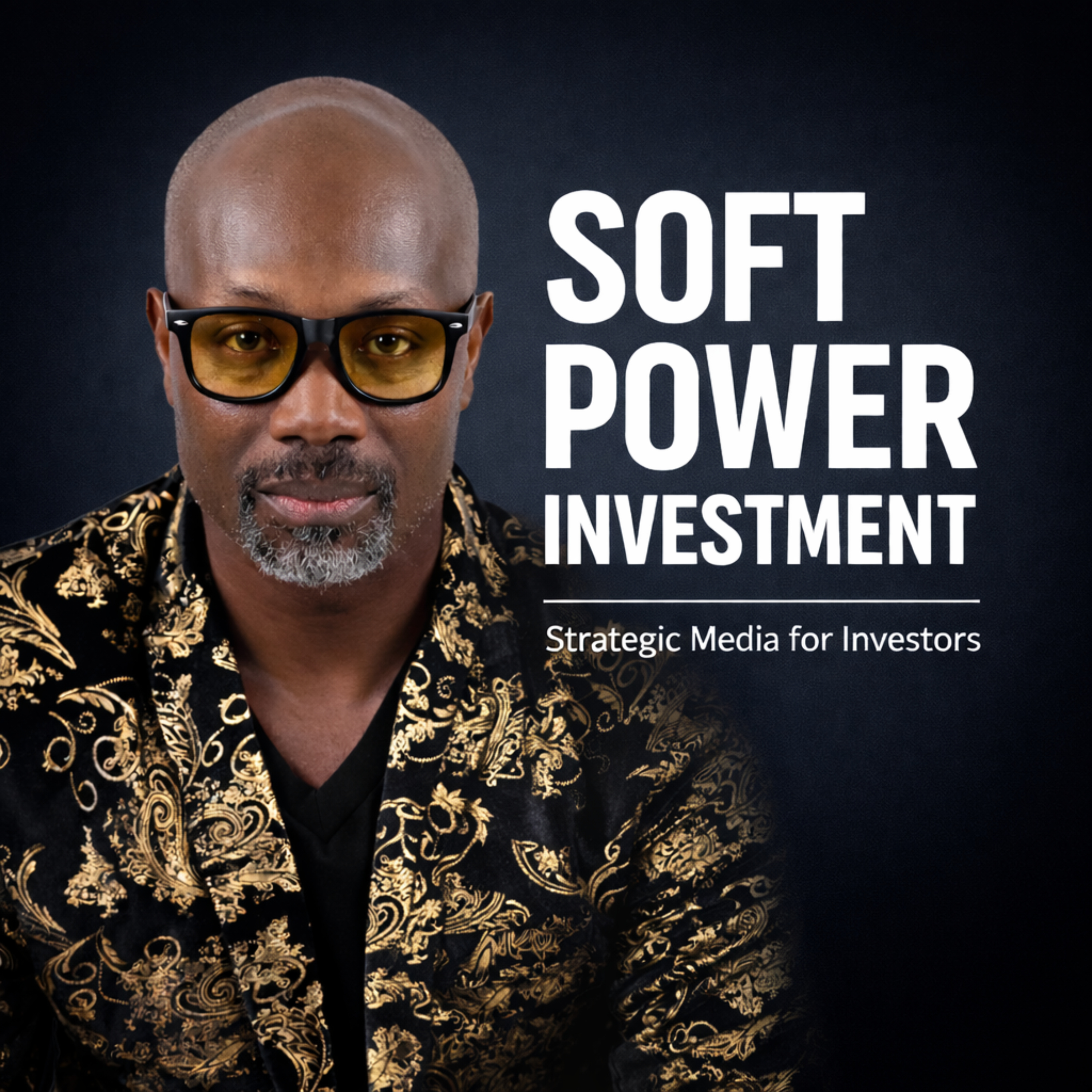
Soft Power Investment
by Soft Power Investment
This is where business owners and investors learn how influence becomes an asset and how it protects capital when conditions change.
-
92
The painful truth of Saving vs Investing
Ethan thought saving money was enough.Every paycheck, he stacked cash and avoided investing because it felt safer. But while his bank balance grew, inflation kept eating his buying power.This episode of Soft Power Investment breaks down the difference between saving and investing, why cash alone can quietly cost you, and how to make your money work instead of sitting still.Because protecting money matters.But growing it matters too.
-
91
How Ignoring His Health Quietly Killed His Momentum
This episode breaks down how health quietly affects performance and why taking care of yourself is not separate from success. He was working hard, staying busy, and pushing forward. On the surface, it looked like discipline. But the energy kept dropping, the focus kept fading, and even simple things felt harder than they should. Until one day, it became clear the problem wasn’t motivation, but neglect. This is Soft Power Investment; protecting the system that powers everything else.
-
90
He Worked Hard His Whole Life, but Left His Family Unprotected
He did what many people respect most: worked hard, paid bills, and provided for his family. But when he passed unexpectedly, the income stopped, and the problems began. Funeral costs came quickly, accounts became difficult to access, and grief was mixed with paperwork, delays, and financial pressure. This episode breaks down why providing today is not enough without preparing for tomorrow. This is Soft Power Investment; making sure your effort continues to serve your family when you no longer can.
-
89
She Didn’t Predict the Market; She Followed a System
There was no guessing, no chasing, no trying to catch the perfect move. Just a clear system, defined risk, and consistent execution. Some trades worked, some didn’t, but nothing was left to chance. Until one day, the results started to show, not from one big win, but from repetition and discipline. This episode breaks down how growth comes from structure, not prediction. This is Soft Power Investment—following a system that pays you over time.
-
88
How daily trade signals almost destroyed an entire account
The signals were consistent: what to buy, when to enter, when to move. It felt like direction, like progress. But the understanding never came. And when the signals stopped, so did everything else. This episode breaks down the cost of relying on alerts without learning the process behind them. This is Soft Power Investment: building the ability to think and act independently.
-
87
Building a business is not about chasing transactions
This episode breaks down the difference between making money and building something that holds.The money was coming in, and everything looked like growth. But each deal was short-term, each win temporary, and nothing was built to last. Until one day, the flow slowed down, and there was nothing behind it. This is Soft Power Investment. It is focusing on what compounds, not just what pays today.
-
86
People don't buy what they don't understand
This episode breaks down how confusion quietly kills decisions and why a clear offer moves faster than a long explanation. Kevin had the skills, the experience, and the ability to deliver. But every time he explained what he did, people hesitated. Too many options. Too many directions. Too much to process. Until one day, it became clear the problem wasn’t capability; it was clarity. This is Soft Power Investment, making it easy for people to understand and act.
-
85
How too many meetings almost destroyed a business
This episode breaks down how unnecessary meetings quietly drain execution and what happens when structure replaces discussion. Everything looked organized: regular meetings, full calendars, constant updates. But the work kept slowing down. Conversations stretched, decisions stalled, and nothing actually moved. Until one day, it became clear the meetings weren’t supporting the work; they were replacing it. This is Soft Power Investment; using time in ways that actually produce results.
-
84
She Built a Team, but Nothing Moved Without Her
This episode breaks down how holding on too tightly can quietly become the bottleneck and why growth requires letting go. She had help. A team was in place, and the work was getting done. But every decision still ran through her. Every task waited on her approval. It felt like control, until one day everything slowed down. This is Soft Power Investment. It is building something that runs without depending on you.
-
83
How Avoiding Conversations Can Destroy a Business
This episode breaks down how avoiding uncomfortable conversations slowly weakens your position and why silence can become expensive.Nothing was broken at first. The work was solid, the clients were there, and everything seemed fine on the surface. However, small issues kept showing up; late payments, shifting expectations, crossed lines, and she chose to stay quiet. It felt easier in the moment. Until one day, it wasn’t. This is Soft Power Investment. Addressing tension early, before it becomes a problem you can’t control. Watch the full episode:
-
82
Busy, But Nothing Moves Forward
This episode breaks down the cost of operating without control and why being busy is not the same as making progress. Malik wasn’t lacking time. He was losing control of it. His days were full of calls, messages, and meetings, but none of them moved anything forward. It looked like productivity, but it was just a constant reaction. Until one day, he realized nothing important was getting done. This is Soft Power Investment—protecting your time so it actually works for you.
-
81
When Perception Does not Convert into Real Value
The entrepreneur who builds an image, not a business This episode breaks down the cost of building an image without a foundation and why what you do matters more than what you say. Eric looked successful, but everything was built on perception instead of substance. The confidence, the positioning, and the story all worked until they had to be backed by real execution.
-
80
The entrepreneur who can execute but cannot commit
Jason wasn’t lacking ideas. He was restarting too often. It looked like progress at first; new plans, new direction, new energy, but nothing was ever given enough time to compound. Until one day, it became clear that nothing was actually finished. This is Soft Power Investment. Not chasing what’s new, but staying long enough for what works to pay you back.
-
79
The stock market trader who stops following his own system
The new episode of Soft Power Investment is about what happens when you stop following your own system.Not all at once. Just small decisions that feel justified in the moment.Until one day… it catches up.If you trade, invest, or run a business, this one will hit.
-
78
The Business That Collapsed When One Person Left
Everything looked stable on the surface. Clients were satisfied, operations were moving, and nothing seemed out of place. But behind that stability was a hidden weakness: one person held all the knowledge, access, and control that kept the business running.When that person disappeared, the system didn’t slow down. It stalled. Processes became unclear, decisions were delayed, and clients waited. What appeared to be efficiency was actually dependency, and that dependency exposed how fragile the operation really was.This episode breaks down the risk of building a business around a single point of failure and why documentation, shared access, and structure are not optional. They are what separate a functioning business from one that collapses under pressure.
-
77
The Owner With Lots of Clients but Less Revenues
A man didn’t lose his business because of competition. He lost it because he kept lowering his price.
-
76
The business that keeps getting clients but can't keep them
Getting clients is easy to celebrate. Keeping them is what actually builds a business.
-
75
How a bad decision costs more than a bad strategy
I recorded a new episode of Soft Power Investment today.It’s about something most people don’t take seriously until it starts costing them money, time, and momentum.Not a bad strategy or a lack of effort.A small behavior that looks harmless, but compounds quietly in the background.The kind of thing that doesn’t break your business overnight, but slowly weakens your ability to execute, deliver, and grow.In this episode, I break down how that happens and what changes once you finally see it clearly.If you’re building something and feel busy but not moving, this one will hit.#Entrepreneurship #BusinessGrowth #Execution #Leadership #SoftPowerInvestment
-
74
How one small habit wrecks an entire business
Marcus thought being available all the time made him effective. It didn’t. It made him reactive, distracted, and easier to drain. The episode breaks down how one small habit, saying yes to everything, can quietly wreck your focus, your time, and your results.The lesson is simple: discipline is not doing more. It is protecting what matters and cutting the noise.#SoftPowerInvestment #Leadership #Focus #Boundaries #Execution
-
73
Is it relevant, suitable, comprehensive, and useful to your project?
Devon thought more information would make him sharper. Instead, it slowed him down. He kept watching, saving, and studying, but his execution stayed weak because he had a filtering problem, not an information problem.The lesson is simple. Progress does not come from collecting more. It comes from cutting what does not help you move right now. A strong system is built by choosing what matters and ignoring the rest.#SoftPowerInvestment #Leadership #Focus #Execution #SoftPower
-
72
The Person Who Read the Room First
Welcome back to Soft Power Investment, the podcast about how real influence comes from what you notice before it comes from what you say.Today’s story is about someone who stopped trying to be the loudest in the room and focused on understanding the room instead.
-
71
The Friend Who Would Not Cosign Your Excuses
Most people say they want honest friends. Very few actually mean it.In the latest episode of Soft Power Investment, I talk about Eli, the friend who refuses to cosign excuses. He does not hype you up for the sake of it. He asks, “You said you wanted this. Where is the proof?” That shift quietly changes everything. People who just want comfort drift away. People who want growth start treating him like a checkpoint for serious decisions.Eli never builds a brand or a program, yet he becomes the person whose questions change careers, projects, and habits over time. That is soft power: trading short-term approval for long-term trust.🎧 New episode: The Friend Who Would Not Cosign Your Excuses#SoftPowerInvestment #Leadership #Accountability #Growth #Influence
-
70
The Classroom That Outlived the Lesson
Welcome back to Soft Power Investment, the podcast about how trust, consistency, and action create influence that compounds over time.Today’s story is about a teacher who did something most educators never attempt. She treated her classroom not as a place to pass information, but as a place to build people who go on to build things.
-
69
If you kill a cockroach, you’re a hero. If you kill a butterfly, you’re evil
Today’s episode starts with a simple line. If you kill a cockroach, you are a hero. If you kill a butterfly, you are evil. You pose the same action, but people judge you differently. Both situations involve the same basic move. One living thing dies. Yet nobody reacts to the action itself. They react to how it looks and what they already believe about each creature.
-
68
The 700-Million-Barrel Weapon the U.S. Government Uses to Control Oil Prices
Because traffic through the Strait of Hormuz is tightening global oil supply, the United States and the International Energy Agency are preparing to release about 400 million barrels of oil from their strategic reserves. Of that amount, 172 million barrels will come from the U.S. Strategic Petroleum Reserve (SPR).The SPR is a federal program that allows the United States to buy and store crude oil in underground facilities along the Louisiana Gulf Coast. The system can hold about 714 million barrels, but today it contains roughly 415 million barrels, which means the reserve is currently about 58 percent full.Releasing oil from this reserve is not new. The last major release occurred in 2022, when the United States sold 180 million barrels over six months, following the Russia-Ukraine war's disruption of global energy markets.One important rule governs these releases. When a government sells oil from its strategic reserves, it must eventually replace those barrels. In most cases, the government has about one year to buy the oil back and refill the reserve.That means every emergency release is not just a market intervention today. It also creates a future obligation to repurchase the oil and rebuild the reserve.
-
67
The Meeting Notes That Become Lessons-Learned and Institutional Knowledge
Welcome back to Soft Power Investment, the podcast about how everyday action turns into leverage.Today’s story is about someone most people overlook. Not the loud voice in the room, not the person at the front of the training, but the one who stays after, writes everything down, and turns chaos into lessons that make everyone else better.This episode is called The Notes That Become Lessons-Learned and Institutional Knowledge
-
66
The Employee Who Reshapes Organizational Culture
You need a title to shape policy. In the latest episode of Soft Power Investment, I tell the story of Luke, an operations employee with no official authority who quietly became the person leadership could not move without. He started by doing one thing almost no one does well: documenting reality with clarity.Luke tracked where policies broke, how much time they cost, and how much time they burned. He paired every problem with a clear alternative, and over time, leaders began asking for his input before they made decisions. When some managers pushed back, he did not retreat. He turned his personal method into a shared framework others could use, so the value no longer lived in his job title but in the way the organization thought.The result: he reshaped how policy is designed without ever running a department or chasing a promotion.🎧 New episode: The Employee Who Reshapes Organizational Culture#SoftPowerInvestment #Leadership #Operations #Influence #SoftPower #OrganizationalDesign
-
65
The Cleaning Company that Became the Standard
Outward from trust, the platform became smaller. Charlotte’s story is about the moment you discover money can buy reach, but not belief. In the latest episode of Soft Power Investment, I share how she built a fast-growing media platform backed by capital, only to see it wobble when the audience demanded honesty instead of branding.When a partner's decision exposed a contradiction, the metrics were still high, but the trust was shallow. No amount of new messaging could fix a relationship built on access instead of credibility. Only when Charlotte slowed down, spoke plainly, and rebuilt from trust outward did the platform become smaller, but stronger and more durable.This episode is a simple reminder: capital can accelerate influence, but it cannot replace the work of earning it.🎧 #SoftPowerInvestment #Leadership #Trust #Influence #BrandBuilding
-
64
How a Local Neighhood Crime Watch Shapes State Public Safety Program
Steeve’s story is about what happens when one neighbor treats safety like an investment, not a complaint. In the latest episode of Soft Power Investment, I share how a simple group chat, evening walks, and clear guidelines turn into lower crime, higher trust, and a network that businesses, officials, and precincts have to take seriously. When pressure comes to “formalize” and control the group, Steeve decentralizes leadership and keeps ownership with the community, proving that organized citizens can shape policy without holding office.🎧 New episode of Soft Power Investment: Steeve’s neighborhood watch and the soft power of organized citizens.#SoftPowerInvestment #Leadership #CommunitySafety #Influence #SoftPower
-
63
From a Local Radio Station to International Coverage
In many communities, people do not hear about important decisions until it is too late to respond. In this episode of Soft Power Investment, I tell the story of Kobe, who refuses to accept that silence is normal and builds a local radio station that becomes the first place his town turns to.As listeners grow, so does his influence. City councils' time announcements around his broadcasts, candidates seek interviews, and even other stations begin to follow his lead. The moment the station becomes essential, it also becomes a threat, and pressure manifests as subtle calls, regulatory friction, and attempts to steer the narrative.Kobe answers that pressure by changing the structure, not the message. He decentralizes control, trains community reporters, and turns the station, now his project, into shared infrastructure that the community owns and defends.The core idea is simple: influence that lives in one person is easy to shut down; influence that lives in a community is very hard to kill.#SoftPowerInvestment #Leadership #Community #Media #Influence #SoftPower
-
62
When the Dashboard Becomes the Navigation System
In many organizations, power is tied to titles and proximity. But in reality, influence often flows through visibility through those who control how truth is seen.This week on Soft Power Investment, I share the story of Andre, an operator who turned a cluttered company into a clear one. He built a dashboard so transparent that it changed how meetings, decisions, and priorities worked.The moment leaders began using it, influence shifted. Visibility became authority.Then came the test: when data exposed reality too clearly, politics pushed back.The lesson is simple. Clarity is soft power, and true power begins when clarity can no longer be controlled.#SoftPowerInvestment #Leadership #Operations #Transparency #Influence #OrganizationalDesign
-
61
The Mentorship Group that Builds Hundreds of Professional Marketers
When you invest in people, you create ripples of influence that outlast anything with your name on it. That’s what separates positional power from soft power. One depends on authority; the other depends on contribution, and contribution is influence that never expires.
-
60
Who is your Jordan? The Business that Grows on Referrals
Some of the most powerful growth stories start in silence.No launches. No digital campaigns. No algorithms, just reputation doing its quiet work.In Episode 3 of Soft Power Investment, I tell the story of Maria, a bookkeeper whose business grew not through marketing but through word of mouth. Her client, Jordan, trusted her so deeply that he began referring her to everyone he knew. That single referral became a steady stream of opportunity; all built on years of quiet reliability.That’s the heart of soft power: credibility that compounds.Maria didn’t chase attention; she earned belief. Each client became a messenger for her work, a force multiplier powered by trust.In a world obsessed with visibility, she chose value. In a marketplace crowded with noise, she relied on relationships. And it worked.So here’s the reflection I leave you with this week:Where in your own work can consistency replace the chase for visibility?What actions strengthen your credibility instead of stretching your marketing?Because when trust becomes your currency, every introduction, every word spoken on your behalf, becomes an investment in your influence.🎧 Listen to the full story: Episode 3— The Referral That Built a Business👉 Subscribe to receive new reflections each week: Soft Power Investment on Substack
-
59
The Coffee Shop That Changed a Neighborhood
Welcome to Soft Power Investment, the podcast about building influence that lasts. I’m your host, Dr. Bobb Rousseau, and each week I explore how everyday actions, relationships, and ideas create the kind of impact money can’t buy. Now, let’s get into today’s story.
-
58
When Titles Fail to Create Authority
According to multiple organizational studies, more than half of employees admit they routinely bypass formal managers to get work done when authority feels disconnected from execution.In this episode, I’m going to explain why a position within an organization often fails to yield real authority, how influence actually forms when work matters, and what happens when responsibility and understanding align.What would happen inside your organization if the people others relied on most were not the ones highest on the chart, but the ones who understood the system well enough to reduce uncertainty?
-
57
Episode 1: The Business That Looked Profitable and Wasn’t
In the previous episode, I described bookkeeping as a system of information and explained how financial data can either support or undermine decision-making depending on how it is structured. This episode looks at what that breakdown looks like in practice.
-
56
Becoming indispensable in your organization even without resounding titles
Most organizations confuse authority with impact. Titles define where someone sits, not how much value they create.In practice, real influence comes from people closest to the work. The ones who understand how systems actually operate, solve problems before they escalate, and quietly keep things moving. They don’t need permission to lead because their credibility comes from results, not hierarchy.Management maintains structure. Leadership reduces friction. Trust is earned through competence and follow-through, not granted by an org chart.If you’re chasing titles instead of capability, you’re playing the wrong game. Titles change. Influence compounds. Soft power belongs to those who consistently make the organization work better.
-
55
If I did not make that mistake last year, I would not have been here today
Believing knowledge is a substitute for execution is the default cadence for most people. It is also their most costly mistake. They constantly hoard new information, but never take action. Therefore, they are not productive and don’t gain experience, because knowledge alone isn't enough to build momentum.
-
54
Multi-Level Marketing (Pyramid Schemes) or the Get Rich Fast Concepts
These programs do not sell “hard work” as the recipe for success. They tell you the income is easy, but they don't say you have to remain active and consistent in building your team. Just join, bring your friends under you, and earn rewards and promotions. What’s not mentioned is that your time scales linearly, while the upside does not. You work more, but the system keeps keeping more.
-
53
We were better writers before AI and this is why we must rethink how we use it
Writing used to be a slow process of thinking, and that slowness made us human. We would sit there wrestling with a sentence, trying to figure out whether it conveyed the message we meant. That struggle kept us honest as we curated each word with surgical precision and framed each sentence with emotional currency.
-
52
The hardest part of launching a business is not launching it.
Most founders see no sales and returns as failures, when in reality, they are signals of power.
-
51
When You Keep Listening to Other People’s Thoughts, You Stop Listening to Yours
This episode looks at how influence actually works, not through force, but through repetition and reference.Every time you default to someone else’s opinion instead of evaluating a situation yourself, you give up a small amount of control. At first, it feels like learning. Over time, it becomes a dependence.Listening is valuable. Replacing your own thinking with borrowed conclusions is not. When decisions are inherited instead of understood, confidence becomes fragile, and judgment weakens under pressure.Soft power requires the ability to listen without surrendering authority over your choices. Information should sharpen your thinking, not replace it.The episode is a reminder that influence accumulates quietly, and so does the loss of your own voice if you stop practicing independent judgment.
-
50
S.W.A.G: System Working Toward Achieving Growth
S.W.A.G is not about asking how fast growth can happen. It concerns whether growth is structurally supported. If growth requires constant force, it is unstable. If growth emerges from a system, it compounds.
-
49
S.C.A.M: Scared and Confused About Money
The biggest danger is not making a mistake while learning, but staying scared and confused and letting other people decide for you.
-
48
P.O.O.R: Passing Over Opportunities Repeatedly
P.O.O.R means Passing Over Opportunities RepeatedlyIt rarely shows up as a lack of money. It shows up as delayed decisions in the presence of viable opportunities. Over time, that delay limits skill growth, weakens networks, and reduces options.Opportunities don’t disappear because they lack value. They disappear because someone else acts.The real question is whether passing has become a habit.
-
47
I am not in the rain with you to get wet with you
Standing in the rain with people is often mistaken for leadership. It isn’t. Shared suffering may create solidarity narratives, but it doesn’t change conditions. Leadership is not the performance of struggle. It is the reduction of it. Real authority doesn’t romanticize hardship. It audits it, then restructures the systems that produce it. Empathy without leverage is symbolism without consequence. Standing in the rain together creates a sense of bonding. Building shelter creates power. That distinction matters, especially in institutions, movements, and governance.This episode is about the difference between appearing aligned and being effective. Movements fail when rhetoric is rewarded over results and pain is described endlessly without being reduced.The full episode expands on why soft power is operational rather than emotional.
-
46
When Knowledge Becomes Infrastructure
This episode breaks down how a school leader turned everyday operations into institutional infrastructure, shaping how an entire district manages knowledge, continuity, and leadership transitions, even after she leaves.
-
45
Why do Banks Lend You Money To Go to School, But Not to Launch Your Business?
The real question isn’t whether the system is fair but whether you understand how it works. Because once you do, you stop asking permission to build leverage, and you start positioning yourself so the system has no choice but to deal with you.
-
44
Are you building a business or creating a job for yourself?
Many people think they’re building a business when they’re really creating a job for themselves.If income depends entirely on your presence, the system isn’t independent. When every decision, sale, and outcome runs through you, growth is capped, and continuity is fragile.The real question isn’t how busy you are, but whether what you’re building can function without you.If it can’t, you didn’t build a business, you built yourself a job.
-
43
Emergency Funds Are Not Safety; They Are Idle Capital With Good Reputation.
Emergency funds are sold as a form of financial safety, but they mostly just make people feel calm. Yes, saving money helps with short-term problems, but it does not help you earn more, make stronger decisions, or move when life changes. For people with steady income and options, emergency savings support a strong system. For everyone else, the money often just sits there, untouched, growing slowly while opportunities pass by. Over time, people learn to fear using money at all. Real financial safety is not about money that never moves. It is about the ability to move money fast, handle problems without permission, and adjust when conditions change. Saving can reduce stress, but saving alone does not build strength.
We're indexing this podcast's transcripts for the first time — this can take a minute or two. We'll show results as soon as they're ready.
No matches for "" in this podcast's transcripts.
No topics indexed yet for this podcast.
Loading reviews...
ABOUT THIS SHOW
This is where business owners and investors learn how influence becomes an asset and how it protects capital when conditions change.
HOSTED BY
Soft Power Investment
CATEGORIES
Loading similar podcasts...
Frequently Asked Questions
How many episodes does Soft Power Investment have?
Soft Power Investment currently has 50 episodes available on PodParley. New episodes are automatically indexed when they're published to the podcast feed.
What is Soft Power Investment about?
This is where business owners and investors learn how influence becomes an asset and how it protects capital when conditions change.
How often does Soft Power Investment release new episodes?
Soft Power Investment has 50 episodes. Check the episode list to see recent publication dates and frequency.
Where can I listen to Soft Power Investment?
You can listen to Soft Power Investment on PodParley by clicking any episode. We provide an embedded audio player for direct listening, and you can also subscribe via your preferred podcast app using the RSS feed.
Who hosts Soft Power Investment?
Soft Power Investment is created and hosted by Soft Power Investment.
URL copied to clipboard!