
-
12
#11 黑客如何挑战国家与巨头:CCC混沌通信大会
这不仅是一种气象学上的饱和湿度现象,更是一种社会学隐喻:冷空气走后,暖湿气流反攻,墙壁流泪,地板冒水,整个岭南地区被包裹在一种粘稠、暧昧且令人窒息的液态介质中。所有的边界——物理的、法律的、道德的——都在回南天中变得模糊。 Soni就企立在这种湿气里。 “我们找到了Ali。”他在一家士多店门口对我说,手指无意识地敲击着半开的卷帘门,节奏像是在发送某种摩斯电码。他的眼镜片上蒙着一层薄雾,这让他看起来像个潜水员。 Ali,这个名字在2013年之后的某些加密通讯群组里是一个禁忌,也是一个传奇。他是E.S.C困守香港期间的“守护天使”之一。当E从美丽华酒店消失,潜入九龙的贫民窟时,是Ali——一个来自斯里兰卡的难民,用他狭窄的床铺和仅有的食物庇护了这个被超级大国追捕的幽灵。然而,历史的聚光灯在E飞往莫斯科后就熄灭了,留给Ali的是无尽的黑暗。香港的难民审核机制像一台生锈的绞肉机,拒绝率高达99%,而且因为帮助过E,Ali成了某种意义上的“政治病毒”,被斯里兰卡的特工盯上,被香港的移民局刁难。 而Soni的计划充满了某种书生气的疯狂,或者说,这更像是一场发生在物理空间的“黑客行动”:把Ali从香港“导出”(Export),非法“上传”(Upload)到深圳,在华强北附近的浅滩村为他建立一段“临时缓存”(Temporary Cache)。“这不是偷渡,”Soni纠正道,引用了他翻译过的书中的概念,“这是建立一个‘临时自治区’(TAZ)。在数字乌托邦失效的地方,我们用肉身去修补系统的漏洞。” …… Ali最大的焦虑不是他自己,而是他的孩子。自孩子由其在广州做外贸的妻弟接应过来后,一家人逃离了国内的滋扰,在中国的南方相聚了。但孩子该去哪里上学?能不能跟着妻弟在华强北的电子市场里寻找机会?接下来的生活又该是什么样的? Soni说,这些他来想办法:城中村里,生长着无数未经注册的、家庭作坊式的教育机构。它们藏在握手楼的二楼或三楼,门口可能只挂着一个简陋的牌子,写着“托管”或“早教”。它们是法律灰色地带的产物,专门服务于那些被城市排斥的流动人口子女。浅滩的那间叫“小榕树”,位于一条深巷的尽头,对面就是一个臭水沟。教室里光线昏暗,握手楼间的紧密挡住了所有的阳光。空气中弥漫着消毒水和孩子尿液的味道,还有一种挥之不去的湿霉味。幼儿园的园长是一个来自湖南的退休小学老师,姓刘。她收留了四十多个孩子。 ------ #### 混沌通信大会(Chaos Communication Congress,简称C3)不仅是欧洲乃至全球规模最大的黑客聚会,更是一座观察数字社会演进的灯塔。自1984年由混沌计算机俱乐部(Chaos Computer Club, CCC)在汉堡创立以来,C3已经从一个几十人的地下技术交流会,演变为每年吸引近两万名技术专家、艺术家、社会活动家和政治异见者参与的跨学科盛会。 # CCC 大会历届详细资料汇总 (1C3 – 39C3) | 届数 | 年份 | 主题 (Motto) | 核心议题与历史背景 | 主要演讲和技术突破 / 标志性事件 | | --- | --- | --- | --- | --- | | **1C3** | 1984 | CCC'84 nach Orion'64 | **起源**:CCC 成立后的首届大会。背景是著名的 **BTX 黑客事件**(通过系统漏洞转移资金以揭示不安全性)。 | 聚焦早期远程数据传输与 BTX 系统的安全性,确立了“白帽黑客”的形象。 | | **2C3** | 1985 | Du Darfst (You may) | **权限**:引用当时流行广告语,隐喻黑客对系统访问权限的渴望。 | 探讨在“禁止进入”的数字世界中,普通公民“可以”做什么。 | | **3C3** | 1986 | Damit Sie auch morgen noch kraftvoll zubyten können | **数据吞吐**:双关语,意为“为了让你明天还能有力地处理字节/咬”。 | 关注早期计算机处理能力的增长与数据存储技术。 | | **4C3** | 1987 | Offene Netze – Jetzt! | **互联互通**:在互联网普及前,强烈呼吁打破电信垄断。 | 呼吁建立开放的通信网络,反对封闭系统。 | | **5C3** | 1988 | ich glaub' es hackt | **黑客认同**:双关语(“我觉得系统被黑了”/“太疯狂了”)。 | 探讨黑客文化在主流社会眼中的异类形象与定位。 | | **6C3** | 1989 | Offene Grenzen: Cocomed zuhauf | **地缘政治**:柏林墙倒塌同年。 | 探讨信息边界的开放与东方集团(CoCom 限制名单)的技术解禁。 | | **8C3** | 1991 | Per Anhalter durch die Netze | **文化致敬**:致敬《银河系漫游指南》。 | 探讨早期互联网(Usenet, IRC)的导航生存法则。 | | **11C3** | 1994 | Internet im Kinderzimmer | **普及化**:“儿童房里的互联网”。 | 预见了互联网进入家庭的趋势,以及伴随而来的商业化监控。 | | **12C3** | 1995 | Pretty Good Piracy | **加密战争**:致敬 PGP (Pretty Good Privacy)。 | 焦点在于加密技术的民用化与反版权(Piracy)斗争。 | | **15C3** | 1998 | All Rights Reversed | **知识产权**:Copyleft 运动。 | 反对传统版权垄断,主张知识的共享与迭代。 | | **16C3** | 1999 | (无主题/以届数代称) | **泡沫巅峰与 Y2K**:网络泡沫最高峰,千禧虫危机前夜。 | **基础设施代码审计**:史上最大规模的代码修补交流;反思无节制的资本化。 | | **17C3** | 2000 | Explicit Lyrics | **版权战争**:针对 Napster vs RIAA;泡沫破裂。 | **P2P 与数字公地**:探讨去中心化协议(Gnutella),确立反 DRM 立場。 | | **18C3** | 2001 | Hacking Is Not A Crime | **反恐与监控**:9/11 事件后,反恐法案将黑客行为妖魔化。 | **去污名化**:发布黑客伦理宣言;展示 **Blinkenlights** 建筑灯光艺术,改善公众形象。 | | **19C3** | 2002 | Out of Order | **故障/失序**:关键基础设施的脆弱性暴露。 | **物理安全**:开锁(Lockpicking)制度化;提出“全栈式安全”概念。 | | **20C3** | 2003 | Not a Number (NaN) | **生物辨识**:反抗将人类简化为数据库数字;反对 e-Passport。 | **不可撤销性**:警告指纹/虹膜一旦泄露终身危险;批判“可信计算”保护厂商而非用户。 | | **21C3** | 2004 | The Usual Suspects | **预设嫌疑人**:讽刺监控国家将公民视为罪犯;预测性警务。 | **GSM 早期研究**:展示 A5/1 算法弱点;提出“数字义肢”概念。 | | **22C3** | 2005 | Private Investigations | **数据保留**:欧盟强制保存通讯元数据;呼吁公民自我审查。 | **Sony BMG Rootkit**:深度剖析索尼在 CD 中植入的恶意 DRM 软件,引发反 DRM 浪潮。 | | **23C3** | 2006 | Who can you trust? | **信任危机**:电子投票与 Vista 系统。 | **Nedap 投票机破解**:演示篡改计票芯片与 Tempest 攻击,导致荷兰/德国废除电子投票。 | | **24C3** | 2007 | Volldampf voraus! | **物联网雏形**:RFID 普及。 | **Mifare Classic 破解**:Karsten Nohl 揭露广泛使用的公交卡/门禁芯片加密漏洞,终结“隐晦式安全”。 | | **25C3** | 2008 | Nothing To Hide! | **生物特徵失效**:反讽“无所隐瞒”论调。 | **指纹复制**:Starbug 仅凭高清照片复制了德国国防部长的指纹,粉碎生物辨识安全神话。 | | **26C3** | 2009 | Here Be Dragons | **GSM 破解**:Karsten Nohl 发起 A5/1 安全项目。 | **彩虹表攻击**:发布 2TB 彩虹表,证明 GSM 加密可被秒破,迫使行业升级。 | | **27C3** | 2010 | We come in peace | **宽频嗅探**:低成本监听技术。 | **廉价嗅探器**:演示用 10 欧元的摩托罗拉手机改造为基站监听设备。 | | **28C3** | 2011 | Behind enemy lines | **核心网漏洞**:移动网络结构性缺陷。 | **SS7 协议漏洞**:揭露核心网缺乏认证,允许全球范围追踪位置和拦截短信。 | | **29C3** | 2012 | Not my department | **道德觉醒**:批判工程师逃避技术被用于压迫的责任。 | **Jacob Appelbaum 演讲**:严厉批评为独裁政权开发监控软件的工程师,为斯诺登事件做思想铺垫。 | | **30C3** | 2013 | (无/Speechless) | **斯诺登效应**:面对 NSA 大规模监控的震惊。 | **To Protect and Infect**:揭秘 NSA ANT Catalog(国家级黑客工具库),如硬件植入物和雷达窃听。 | | **31C3** | 2014 | A New Dawn | **生物识别终结**:TouchID 普及后的安全反思。 | **虹膜/指纹克隆**:Starbug 再次展示通过照片提取虹膜和指纹特征。 | | **32C3** | 2015 | Gated Communities | **柴油门 (Dieselgate)**:大众汽车排放作弊。 | **ECU 逆向工程**:在代码中发现识别“测试环境”并作弊的逻辑,揭露企业不当行为。 | | **33C3** | 2016 | Works for me | **大数据滥用**:讽刺科技巨头对社会问题的漠视。 | **Spiegel Mining**:数据新闻学典范(通过元数据分析媒体运作);**GDS 系统崩溃**:揭露全球航空订票系统安全为零。 | | **34C3** | 2017 | tuwat (Do something) | **硬件后门**:呼吁从抱怨转向行动;AI 伦理。 | **Intel ME 破解**:发现通过 JTAG 获得 CPU“上帝模式”的方法;**Woolim 平板**:揭露北韩设备的监控机制。 | | **35C3** | 2018 | Refreshing Memories | **处理器大崩溃**:硬件底层安全危机。 | **Spectre & Meltdown**:利用 CPU 推测执行机制的侧信道攻击,波及几乎所有现代处理器。 | | **36C3** | 2019 | Resource Exhaustion | **生态与资源**:计算机资源与地球资源的枯竭。 | **BahnMining**:揭露德铁准点率数据造假;**Signal 生态**:Moxie 挑战去中心化迷思。 | | **37C3** | 2023 | Unlocked | **维修权 (Right to Repair)**:重返汉堡。 | **波兰列车 DRM 破解**:揭露厂商在代码中植入“地理/日期炸弹”锁死列车;**Operation Triangulation**:揭露 iOS 硬件级漏洞。 | | **38C3** | 2024 | Illegal Instructions | **法律边界**:代码执行与法律红线。 | **模拟器诉讼**:任天堂诉讼案讨论;**脑机接口**:Neuralink 时代的神经数据隐私。 | | **39C3** | 2025 | Power Cycles | **重启与权力**:基础设施的控制权。 | **洗衣机破解**:逆向家电专有协议;**Deutschlandticket 漏洞**:德国交通票务系统设计缺陷;**Rowhammer** 新进展。 | #### 引用来源: 1. **Chaos Computer Club: Exploring the World of Hacktivism** - Infosec-Conferences.com, 檢索日期:1月 8, 2026, [链接](https://infosec-conferences.com/hub/event-series/chaos-computer-club) 2. **CCC-Home**, 檢索日期:1月 8, 2026, [链接](https://www.ccc.de/en/) 3. **Chaos Computer Club - Wikipedia**, 檢索日期:1月 8, 2026, [链接](https://en.wikipedia.org/wiki/Chaos_Computer_Club) 4. **Karsten Nohl - Wikipedia**, 檢索日期:1月 8, 2026, [链接](https://en.wikipedia.org/wiki/Karsten_Nohl) 5. **gsm – srsly?**, 檢索日期:1月 8, 2026, [链接](https://fahrplan.events.ccc.de/congress/2009/Fahrplan/attachments/1519_26C3.Karsten.Nohl.GSM.pdf) #### 更多: https://www.youtube.com/@mediacccde https://media.ccc.de/ https://viktorl.in/Blog/posts/2018-02-04-34C3.html https://doraemon801031.medium.com/henry-%E7%9A%84-34c3-%E5%A4%A7%E8%A7%80%E5%9C%92-83d47106f74f https://medium.com/@elnazavr/chaos-communication-congress-or-the-best-way-to-finish-the-year-1d178a5280be https://oaeblog.com/2018/01/01/chaos-communication-congress/
-
11
#10 Techno底特律废墟中的四百年抗争
关于《构建黑人反文化》(Assembling a Black Counter Culture, by DeForrest Brown, Jr. 2022)。 DeForrest Brown, Jr.’s Assembling a Black Counter Culture presents a comprehensive account of techno with a focus on the history of Black experiences in industrialized labor systems—repositioning the genre as a unique form of Black musical and cultural production. Brown traces the genealogy and current developments in techno, locating its origins in the 1980s in the historically emblematic city of Detroit and the broader landscape of Black musical forms. Reaching back from the transatlantic slave trade to Emancipation, the Industrial Revolution, and the Great Migration from the rural South to the industrialized North, Brown details an extended history of techno rooted in the transformation of urban centers and the new forms of industrial capitalism that gave rise to the African American working class. Following the groundbreaking work of key early players like The Belleville Three, the multimedia output of Underground Resistance and the mythscience of Drexciya, Brown illuminates the networks of collaboration, production, and circulation of techno from Detroit to other cities around the world. Assembling a Black Counter Culture reframes techno from a Black theoretical perspective distinct from its cultural assimilation within predominantly white, European electronic music contexts and discourse. With references to Theodore Roszak’s Making of a Counter Culture, writings by African American autoworker and political activist James Boggs, and the “techno rebels” of Alvin Toffler’s Third Wave, among others, Brown draws parallels between movements in Black electronic music and Afrofuturist, speculative, and Afrodiasporic practices to imagine a world-building sonic fiction and futurity embodied in techno. DeForrest Brown, Jr. is an Alabama-raised rhythmanalyst, writer, and representative of the Make Techno Black Again campaign. As Speaker Music, he channels the African American modernist tradition of rhythm and soul music as an intellectual site and sound of generational trauma. On Juneteenth of 2020, he released the album Black Nationalist Sonic Weaponry on Planet Mu. His written work explores the links between the Black experience in industrialized labor systems and Black innovation in electronic music, and has appeared in Artforum, Triple Canopy, NPR, CTM Festival, Mixmag, among many others. He has performed or presented work at Haus der Kulturen der Welt, Berlin; Camden Arts Centre, UK; Unsound Festival, Krakow; Sónar, Barcelona; Issue Project Room, New York; and elsewhere. Assembling a Black Counter Culture is Brown’s debut book.
-
10
#09 黑豹党与针灸:疗愈美国的种族创伤
试播test:关于美国黑豹党、针灸、中国赤脚医生和黑人的社区医疗。
-
9
#08 赛博格与狗_挑战纯粹身份
试播test:Donna Haraway的《赛博格宣言》(THE CYBORG MANIFESTO, 1985)和《伴物种宣言》(THE COMPANION SPECIES MANIFESTO, 2003)
-
8
#07 东南亚的研究型艺术实践
试播test:关于《东南亚的研究型艺术实践:作为知识生产者的艺术家》(Research-Based Art Practices in Southeast Asia: The Artist as Producer of Knowledge. by Caroline Ha Thuc. 2022)
-
7
#05 邦加锡和文岛胡椒:印度尼西亚岛屿上的华人定居点
试播test:《邦加锡和文岛胡椒:印度尼西亚岛屿上的华人定居点》(BANGKA TIN AND MENTOK PEPPER: Chinese Settlement on an Indonesian Island. by M.F. Somers Heidhues, 1992)
-
6
#06 墨磊宁的中文打字机和中文计算机
试播test:关于墨磊宁的《中文打字机》(The Chinese Typewriter: A History. T.S. Mullaney, 2017)和《中文计算机》(The Chinese Computer, A Global History of the Information Age. T.S. Mullaney, 2024)
-
5
#04 宫崎滔天:三十三年之梦
试播test:关于宫崎滔天的《辛亥记忆:三十三年之梦》。
-
4
#03 无政府主义的现代性:远东合作社之路
试播test:关于《无政府主义现代性:合作主义与近代日本日俄知识分子关系》(Anarchist Modernity: Cooperatism and Japanese-Russian Intellectual Relations in Modern Japan. by Sho Konishi. 2013)。
-
3
#02 资本主义和猎杀女巫
试播test:Silvia Federici的《卡利班和女巫》(Caliban and the Witch: Women, the Body and Primitive Accumulation, 2009)和《女巫、猎巫和女性》(Witches, Witch-Hunting, and Women, 2018)。
-
2
#01 马丁的DOS系统:文字处理器如何改变写作
试播test:关于《追踪修订》(Track Changes: A Literary History of Word Processing by Matthew G. Kirschenbaum, 2016),英文的文字处理的文学史。中文世界的情况可参考子杰的作品《漫步科学岛:论中文文字处理机和写作、权力、资本及技术》(A WANDERER ON THE SCIENCE ISLAND: On Chinese word processing and writing, power, capital and technology. 出版物、装置和表演性讲座,上海双年展2023. https://www.powerstationofart.com/whats-on/programs/shanghai-biennale-2023/artists-and-artwork/zijie)。
-
1
#00 占屋:腾挪与文化生产
试播test:关于《腾挪:空间占领中的文化生产》(Making Room: Cultural Production in occupied Spaces, Edited by Alan Moore and Alan Smart, 2015)和《在欧洲占屋》(Squatting in Europe, Squatting Europe Kollective, 2013)
We're indexing this podcast's transcripts for the first time — this can take a minute or two. We'll show results as soon as they're ready.
No matches for "" in this podcast's transcripts.
No topics indexed yet for this podcast.
Loading reviews...
ABOUT THIS SHOW
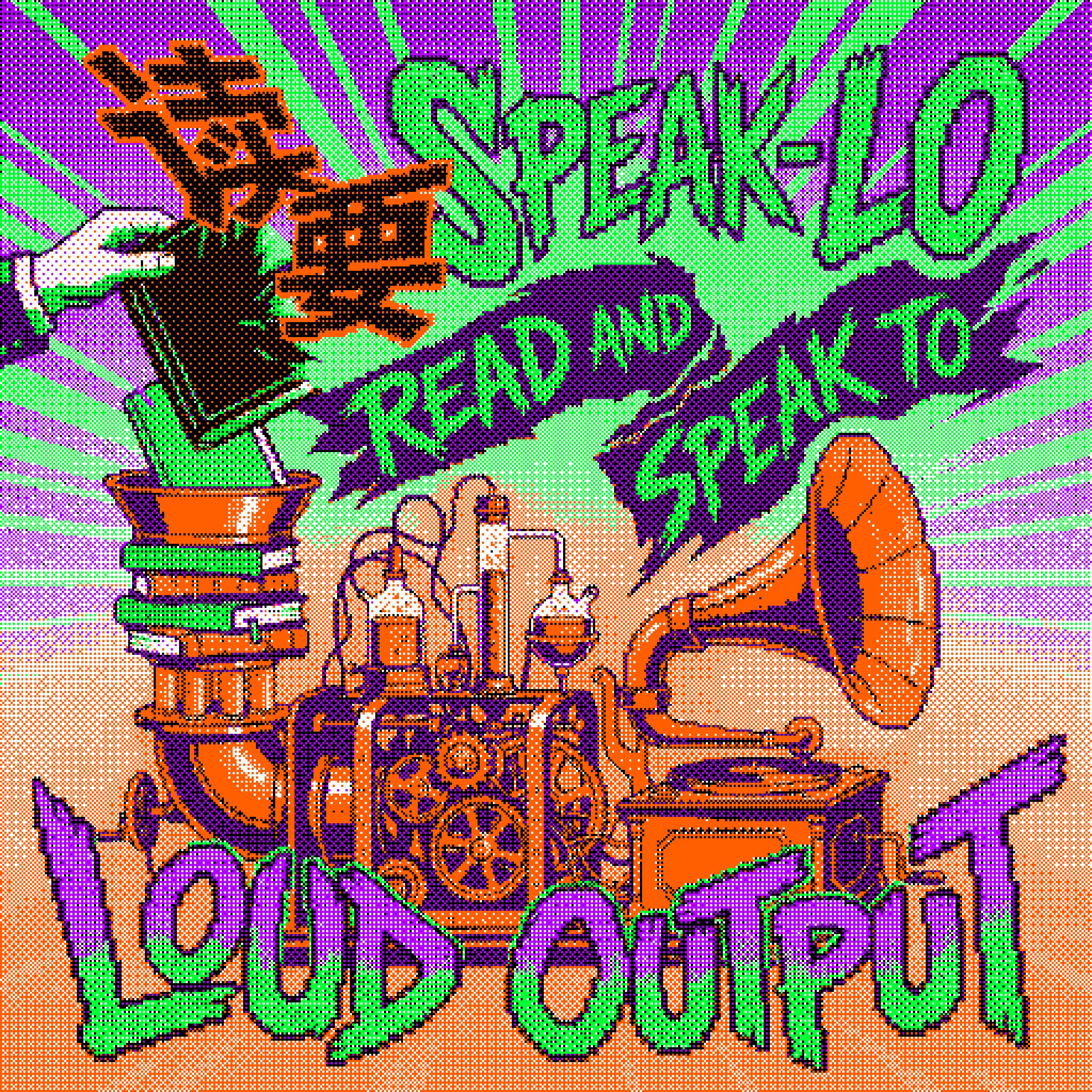
Read and speak to LOUD OUTPUT.
HOSTED BY
RSLO
CATEGORIES
Loading similar podcasts...
Frequently Asked Questions
How many episodes does 读要speak-LO have?
读要speak-LO currently has 12 episodes available on PodParley. New episodes are automatically indexed when they're published to the podcast feed.
What is 读要speak-LO about?
Read and speak to LOUD OUTPUT.
How often does 读要speak-LO release new episodes?
读要speak-LO has 12 episodes. Check the episode list to see recent publication dates and frequency.
Where can I listen to 读要speak-LO?
You can listen to 读要speak-LO on PodParley by clicking any episode. We provide an embedded audio player for direct listening, and you can also subscribe via your preferred podcast app using the RSS feed.
Who hosts 读要speak-LO?
读要speak-LO is created and hosted by RSLO.
URL copied to clipboard!