
PODCAST · history
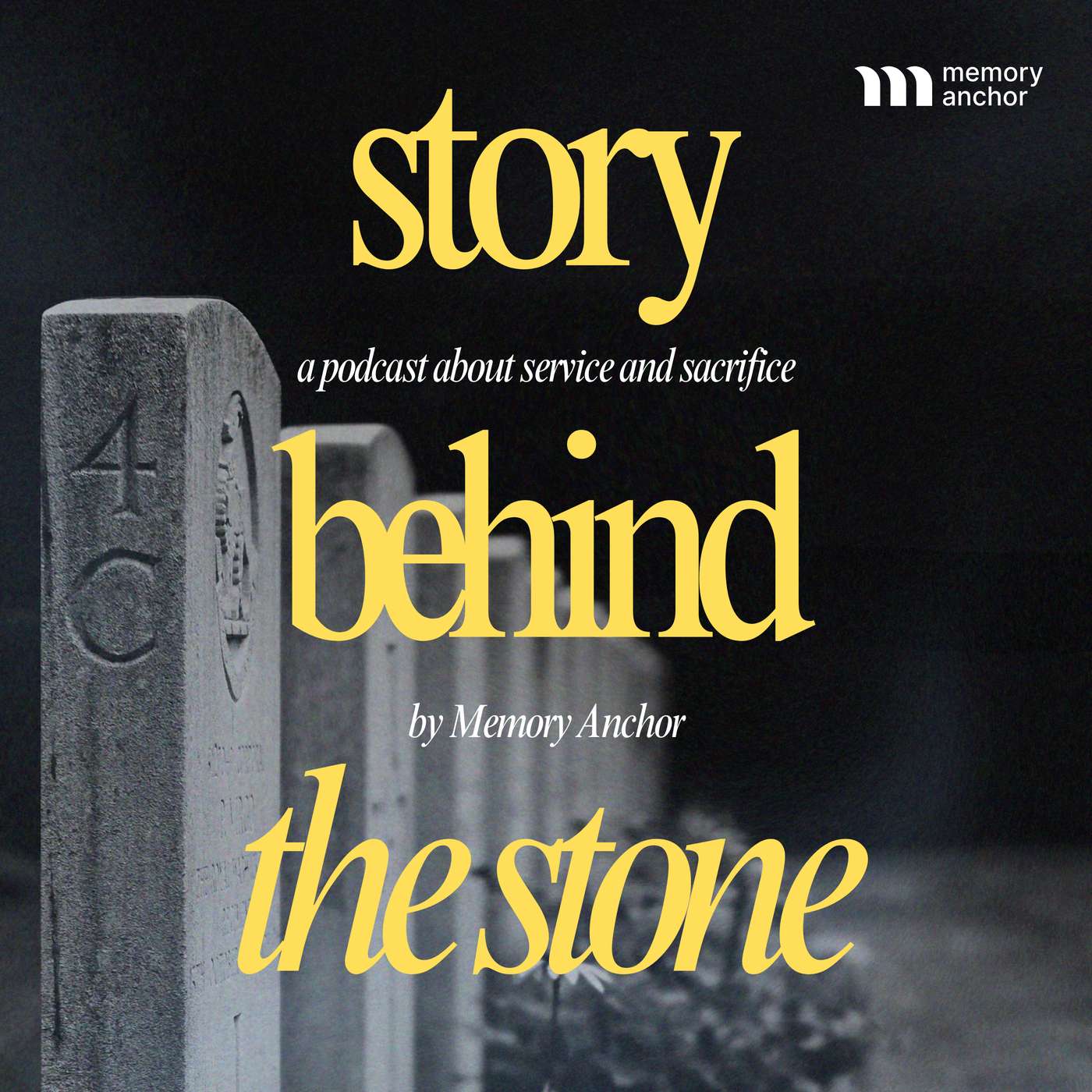
Story Behind the Stone
by Memory Anchor
Stories of veteran service and sacrifice straight from the people driving today’s most important veterans causes and veterans organizations around the world. The show shines a spotlight on their inspiring projects making a real difference for veterans and their families, and along the way we'll hear the stories that drive them to do their best every day as they work to support veterans and their memory.
-
66
Alicia Costello & Ta'Na Alexander (THC & CCTA) – Language as a Tool for Victory
"This story was never lost. It was just waiting to be told."This week, we speak with Alicia Costello, a historian with the Texas Historical Commission, and Ta'Na Alexander, a descendant of an original Choctaw Code Talker. We delve into the collaborative effort to establish a historical marker in Fort Worth that honors the Native soldiers of the 142nd Infantry who utilized a code that was never broken.In this episode:- Discover the significance of the Camp Bowie marker, located on the very grounds where Choctaw soldiers trained in 1917 before deploying to provide a critical advantage in the Great War- Learn about the "Under-Told Markers" program, a special initiative by the Texas Historical Commission that funds markers for stories historically overlooked or missing from the landscape- Understand the legacy of the Telephone Warriors, whose contributions remained a classified secret for decades until public recognition began to flourish following a 1989 visit from the French government
-
65
Dr. Geoffrey Bird (Royal Roads University) – The Power of Place and the Future of Memory
"Sometimes that quietness of a place is what makes it so profound."This week, we speak with Dr. Geoffrey Bird, lead of the War Heritage Research Initiative at Royal Roads University. Dr. Bird discusses the transition of remembrance into an activity of learning, the unique resonance found only by standing on historical ground, and how we must ethically navigate the heritage dissonance that technology can bring to sacred memorial sites.In this episode:- Explore the power of place and why standing on the actual undulations of a battlefield allows visitors to connect with the past in a way that documents and documentaries alone cannot achieve- Navigate the ethics of technology in commemoration, specifically the risk of heritage dissonance where digital noise or simulations might interfere with the profound, meaningful silence of a cemetery- Discover the Story Pole project, a film highlighting the experiences of Indigenous veterans and the universal values of justice, peace, and truth anchored in our national monuments
-
64
Steve Smith (Battlefield Guide & Author) – Passing the Torch of Remembrance
"Remembrance has to be something that carries on no matter how many years go by."This week, we speak with Steve Smith, a veteran battlefield guide and author who has dedicated his career to uncovering the personal stories of the Great War. Steve shares the journey of tracing his own great-grandfather’s service, the unique challenges of personalizing tours for families traveling from across the Atlantic, and the enduring power of the Menin Gate ceremony.In this episode:- Discover how digital trench maps and original war diaries allow Steve to guide families to a specific field and pinpoint the exact position where their relative served, transforming anonymous history into a deeply personal pilgrimage- Explore the enduring mystery of the 5th Battalion Norfolk Regiment, a unit that disappeared from sight at Gallipoli in 1915, leading to theories ranging from wartime executions to extraterrestrial abductions- Hear about the "torch of remembrance" and the next generation, as Steve explains how he engages school groups to ensure that the stories of the fallen continue to resonate a century later
-
63
Miriam Friedman (Accenture) – Innovation and Remembrance through #everynamecounts
"At the core, the goal is really just to turn records into a form of remembrance, one name at a time."This week, we speak with Miriam Friedman, who leads the #everynamecounts project at Accenture. In partnership with the Arolsen Archives, Accenture leverages Artificial Intelligence to make Holocaust-era documentation searchable for families and researchers worldwide. Miriam explains how technology acts as a bridge to the past, allowing volunteers to restore the names and stories of individuals who were once treated as mere statistics.In this episode:- Discover how AI and human validation work together to process millions of documents from the Arolsen Archives, reducing the burden on manual indexing while keeping the "human pass" essential for dignity- Understand the shift from physical to digital memorialization, enabling people without local access to a Holocaust museum to engage directly with primary historical sources- Hear Miriam’s personal connection as a descendant of survivors, and how her work helps others find family documents they never knew existed
-
62
John Bocskay (UN Memorial Cemetery in Korea) – 75 Years of International Remembrance
"I think anybody who puts on a uniform and goes to fight and defend a country, especially one they've never met, deserves our respect."This week, we speak with John Bocskay, Director of International Affairs at the United Nations Memorial Cemetery in Korea (UNMCK). In today's episode, John details the cemetery’s logistical history, the moving ceremonies held for veterans returning to be buried with their comrades, and the upcoming 75th-anniversary commemorations.In this episode:- Discover the unique status of the UNMCK as the only United Nations cemetery in existence, a "quirk of history" resulting from the first and last time the UN fought as a unified combatant in a war- Learn about the "Wall of Remembrance" and national monuments that honor the 22 sending states, including a special look at the humanitarian legacy of Brigadier General Richard Whitcomb- Explore the evolving relationship between the cemetery and the city of Busan, from strict residential development limits to the powerful impact the site has on young students who see their own ages reflected on the headstones
-
61
Amy Dozier (Woody Williams Foundation) – Finding Hope After the Knock
"There is life after that knock. After the knock, there is hope, there is meaning to go find, and there are stories to share."This week, we speak with Amy Dozier, Director of Outreach at the Woody Williams Foundation. Amy discusses the legacy of World War II Medal of Honor recipient Woody Williams, the foundation's work establishing over 160 Gold Star Families Memorial Monuments, and how her own experience losing her husband in the Iraq War led her to help other survivors navigate their grief journeys.In this episode:- Understand the significance of "the knock" and how the Woody Williams Foundation provides a village for families whose lives were permanently changed by military service- Explore the impact of storytelling through the After the Knock podcast, which offers a safe, judgment-free space for survivors to discuss often-stigmatized topics like sibling loss and suicide- Hear a moving story of legacy and remembrance involving a handwritten letter, a meaningful tattoo, and how a new generation is being taught the true meaning of family service and sacrifice
-
60
Jock Phillips ONZM (Author & Former Chief Historian of New Zealand) – The Evolution of New Zealand's War Identity
"You can't understand yourself unless you understand where you've come from and you can't understand the culture in which you grow up unless you understand what created that culture."This week, we speak with Jock Phillips ONZM, author and former Chief Historian of New Zealand. Jock shares his journey from studying the culture of masculinity to uncovering the deeply personal diaries of First World War soldiers, the shifting public perception of Anzac Day, and the complex history behind New Zealand’s earliest war memorials.In this episode:- Hear the moving story of the Western Front involving a soldier’s letters and a nurse’s compassionate act that allowed him to die in peace, highlighting the human extremes of the Great War- Explore the unique iconography of the New Zealand Wars, including the fascinating story of the country’s first war memorial and its role in the complex relationship between European settlers and Māori tribes- Learn about Edith Statham, whose pioneering work across the early 20th century ensured that those who fell in the New Zealand Wars were appropriately remembered
-
59
Kurt Deion (Historic Congressional Cemetery) – Presidential Grave Hunter
"We’re trying to show that Congressional Cemetery is really a microcosm of American history."This week, we speak with Kurt Deion, a public historian and author on the education team at the Historic Congressional Cemetery in Washington, DC. Kurt shares his journey of visiting over 3,000 notable gravesites, the stories behind some of the most unique presidential monuments in America, and what it’s like to balance daily life at an active cemetery that doubles as a vibrant community space.In this episode:- Explore the unique atmosphere of Historic Congressional Cemetery, including its off-leash dog walking membership, Cinematery movie nights, and K-12 educational programming- Hear about Kurt's quest to visit every Supreme Court Justice, including the challenges of tracking down unverified burial sites and the research required to document the final resting places of 105 deceased jurists- Learn about the "future resident" identity, where Kurt shares why he purchased his own plot at Congressional Cemetery in 2022 and how that connection informs his work as a steward of history
-
58
Karen Worcester (Wreaths Across America) – Remember, Honor, Teach
"We want to remember the individual and we want to give them a voice."This week on Story Behind the Stone, we speak with Karen Worcester, Executive Director of Wreaths Across America. Karen shares the incredible journey of how a surplus of wreaths led to a viral moment at Arlington National Cemetery, the logistics of coordinating 3 million volunteers to place wreaths at 5,994 ceremony locations, and how the organization works year-round to support veterans and Gold Star families through its three pillars: Remember, Honor, and Teach.In this episode:- Discover the movement's origins and how a single photograph in 2005 sparked a global outpouring of support, turning a family tradition into a 501(c)(3) nonprofit- Learn about the Remembrance Tree program, where Gold Star families tag balsam fir trees in Maine to create a living memorial that provides wreaths for veterans' graves.- Hear how the organization's pillar, Teach, is reaching a million children through free lesson plans designed to shift the focus from "what is a veteran" to "who is that veteran."
-
57
Dr. James Bulgin (Imperial War Museums) – Interpreting the Past for the Next Generation
"It's never lost on any of us what a privilege it is to do what we do."This week on Story Behind the Stone, we speak with Dr. James Bulgin, Head of Public History at the Imperial War Museums. James shares how the museum preserves the stories of conflict from the First World War to the present day, how the Holocaust galleries emphasize individual stories, and why engaging younger generations remains a vital and urgent task.In this episode:- Learn about the museum’s challenge of communicating complex histories to visitors whose understanding is increasingly shaped by popular media- Hear how survivors and their families helped influence the Holocaust galleries and why their stories matter- Discover why digital outreach, learning programs, and global accessibility help the museum connect with audiences far beyond its physical sites
-
56
Quinn Duffy (Game Director) – Bringing History to Life Through Video Games
"If gamers look up some piece of information or read about a piece of history and start connecting dots based on their experience in the game, I think that’s an incredibly powerful experience."This week on Story Behind the Stone, we speak with Quinn Duffy, a longtime video game director whose games have shaped how millions of players interact with history in the video game franchises "Company of Heroes" and Microsoft's "Age of Empires". Quinn shares how reading veteran accounts, visiting battlefields, and studying military tactics helped bring depth and accuracy to titles that connect players with real history in meaningful ways.In this episode:- Learn how Quinn’s battlefield research in places like Leningrad, Caen, and Normandy shaped the authenticity and emotional tone of his games- Discover how immersion and storytelling come together to create strategy games that stand the test of time- Hear why Quinn believes historical games can serve as powerful learning tools that encourage players to explore the past beyond the screen
-
55
Allan Hunn (Escape and Evasion Research and Tours) – Retracing The Escape Routes of WWII
"It’s impossible to overemphasize the support that many escapers and evaders had."This week on Story Behind the Stone, we speak with Allan Hunn of Escape and Evasion Research and Tours. Allan shares how his work uncovers the routes taken by Allied servicemen crossing the Pyrenees during the Second World War and how retracing those paths helps families connect with acts of courage, sacrifice, and humanity.In this episode:- Learn how Allied aircrew and soldiers escaped occupied Europe through the Pyrenees with the help of local civilians- Hear how meticulous research and on the ground exploration bring escape and evasion stories to life- Discover how walking these routes provides families with understanding, connection, and closure
-
54
Jim Landon (ATCO Frontec) – Service, Remembrance, and the Invictus Games
This week, we speak with Jim Landon of ATCO Frontec, a former British Army officer whose career has spanned global operations, disaster response, veteran advocacy, and major international partnerships through the Invictus Games.Jim shares how service shaped his leadership, the values that carried him into his work at ATCO Frontec, and why veterans bring powerful skills into civilian organizations.In this episode:- Explore the impact of ATCO's Invictus Games involvement and how it is transforming veteran employment and awareness- Understand why remembrance, defence readiness, and cultural understanding matter more now than ever- Learn how Jim’s 28 years in the British Army shaped his approach to leadership and teamworkLearn more: https://frontec.atco.com/en-ca.htmlListen on Apple, Spotify, and Wreaths Across America Radio.
-
53
Zita Ballinger Fletcher (Author & Military Historian) – Bridging Past and Present Through Military History
“When you interact with historical documents, it’s like having a conversation with the past and nobody else can have that conversation for you.”This week on Story Behind the Stone, we speak with Zita Ballinger Fletcher, a military historian and author whose work spans World War II research, defense journalism, and cultural preservation. Zita shares how her deep dive into archives and original sources is reshaping our understanding of history and why those lessons matter today.In this episode:- Learn how language and translation shape historical narratives- Hear about her work with the German War Graves Commission and a challenging search for fallen policemen in Berlin- Explore how FPV drones are changing the future of warfare—and what history can teach us about adapting to new threatsLearn more: https://zitasteele.com/Listen on Apple, Spotify, and Wreaths Across America Radio.
-
52
Ultan Moran (Dublin Cemeteries Trust) – Irish Echoes Across the Atlantic
“Glasnevin is of course famous in this country for having the burials of so many people who shaped Irish history.”This week on Story Behind the Stone, we speak with Ultan Moran, historian and tour guide at Glasnevin Cemetery in Dublin, Ireland's National Cemetery. Ultan shares powerful stories of Irish lives that shaped, and were shaped by, North American history.In this episode:- Discover how a Dublin-born soldier became a hero of the American Civil War- Learn how Frederick Douglass was inspired by Irish abolitionist Daniel O’Connell- Explore the legacy of Irish-born veterans of the Canadian Expeditionary Force and how their memory is preserved today
-
51
Kristen Sergeant (Sargent Initiatives) – Translating Military Values into Industry Success
"Veterans are constantly faced with problems. You're constantly having to solve them. You almost don't know how to walk by a problem, and not solve it."This week on Story Behind the Stone, we're joined by Kristin Sargent, founder of Sargent Initiatives. We explore Kristin’s transition from the US Army’s air defense artillery to her work at the intersection of technology and national security, helping companies navigate the complexities of the defense sector. In this episode:Discover Kristin’s journey from serving as a unit Information Assurance Officer to leading modernization efforts at Booz Allen Hamilton and Amazon Web Services. Learn about the core challenges entrepreneurs face when entering the government system, including identifying essential requirements and managing corporate resources efficiently. Hear Kristin’s "Measured Restraint" philosophy for business growth and why she believes the defense sector is an "endurance sport" that requires patience and C-suite commitment. Explore the unique value veterans bring to the tech industry, fueled by a desire to solve archaic processes and a commitment to the "Mission, Men, Me" hierarchy of service. Learn more: Sargent Initiatives and the Defense Entrepreneurs Forum Listen on Wreaths Across America Radio on Friday December 19: https://wreathsacrossamerica.org/
-
50
Stuart Smith (Veteran Advocate) – A Lifetime of Service
"I think more importantly for my fellow veterans is just remember the promise that you made to never leave anyone behind."This week on Story Behind the Stone, we speak with Stuart Smith, who has dedicated 33 years to serving his fellow veterans. We explore Stuart's military service, his transition to civilian life, and his commitment to supporting veteran-owned businesses through organizations like the National Veteran Small Business Coalition (NVSBC) and the National Association of Veteran Owned Businesses (NaVOBA).In this episode:- Discover Stuart's personal journey from joining the Army as a "last option" to transitioning successfully into human resources and organizational development- Learn about the work of the National Veteran Small Business Coalition (NVSBC) and the National Association of Veteran Owned Businesses (NaVOBA) in helping veteran small businesses thrive in government contracting and commercial supplier diversity spaces- Hear why Stuart is honored to MC the Wreaths Across America laying at the Cape Canaveral National Cemetery and what that day means for the communityLearn more: National Veteran Small Business Coalition and National Association of Veteran Owned BusinessesListen on Apple, Spotify, and Wreaths Across America Radio
-
49
Attila Szalay-Berzeviczy (Author) – Capturing the Centenary of the Great War
"We all live in the world created by the First World War."This week on Story Behind the Stone, we speak with Attila Szalay-Berzeviczy, author of In the Centennial Footsteps of the Great War. Attila shares how a personal journey to Sarajevo evolved into a global project documenting the centenary of World War I.In this episode:- Discover why the First World War remains the most transformative period of the last 200 years- Learn how Attila navigated war zones and military restrictions to capture rare commemorative moments- Explore the untold stories of frontier theaters that shaped the outcome of the warLearn more: https://www.facebook.com/InTheCentennialFootstepsOfTheGreatWarListen on Apple, Spotify, and Wreaths Across America Radio
-
48
Courtney Trollinger (Army Historical Foundation) – Preserving the Legacy of the American Soldier
"Every soldier’s story deserves to be remembered."This week on Story Behind the Stone, we speak with Courtney Trollinger, Vice President of Development at the Army Historical Foundation, the organization behind the National Museum of the United States Army. Courtney shares how the Foundation is safeguarding Army history and inspiring future generations through immersive exhibits.In this episode:- Discover why the Army was the last branch to have a national museum and how that changed in 2020- Explore the museum’s awe-inspiring galleries, including World War I artifacts and the Soldier Stories exhibit- Learn about upcoming projects like the Call to Arms exhibit, the Nisei Traveling Exhibit, and plans for a memorial garden on the museum campusLearn more: https://www.armyhistory.org
-
47
Louise Fetigan (Little Troopers UK) - Building a Legacy of Care for the UK Military Families
"She deserved better, that she hadn’t joined the military. Me and my husband had both chosen to serve our country, but she hadn’t made that choice yet."This week on Story Behind the Stone, we speak with Louise Fetigan, founder of Little Troopers in the United Kingdom. Louise shares how her personal journey as a military parent led to the creation of a national charity supporting children with parents in the British Armed Forces.In this episode:- Learn how Little Troopers supports over 25,000 children annually through therapy, school programs, and family reconnection camps- Hear how the new Little Troopers Clubs are creating continuity for children who move schools frequently- Discover how Christmas Smiles boxes bring joy to families separated by deployment during the holidaysLearn more: littletroopers.net
-
46
Dr Megan Wang (Royal Air Force Museum UK) – Preserving Memory Beyond the Battlefield
“No matter how you choose to commemorate or how you choose to remember people, just make sure you say their names.”This week on Story Behind the Stone, we speak with Dr. Megan Wang, Historian and Academic Access Manager at the Royal Air Force Museum. Megan shares her passion for commemoration and the stories behind war graves in Britain and beyond.In this episode:- Understand the unique challenges of commemorating war dead buried far from the battlefield- Hear how original grave markers reveal unexpected stories of respect between enemies- Explore the future of commemoration and how museums connect new generations to military historyLearn more: https://www.rafmuseum.org.uk
-
45
Philippa Rawlinson (National Memorial Arboretum) – A Living Landscape of Remembrance
"Remembrance unites us and brings us together."This week on Story Behind the Stone, we speak with Philippa Rawlinson, Managing Director of the National Memorial Arboretum in the UK. Philippa shares how the Arboretum fosters connection through nature and storytelling, and why remembrance is more important than ever in today’s world.In this episode:- Learn how a memorial to the Desert Rats helped Philippa connect with her grandfather’s legacy- Discover how the Arboretum engages 25,000 young people annually through immersive education- Hear how the Arboretum is evolving with new memorials, including tributes to parliamentarians and Muslim soldiers of the World WarsLearn more: https://www.nma.org.ukListen on Apple, Spotify, and Wreaths Across America Radio
-
44
Dr. Allison S. Finkelstein (U.S. Army National Military Cemeteries) - Arlington’s Hidden History
"Every day is different. Every day is exciting. And one of the things that drives me the most is this feeling of the overwhelming amount of stories that there are to be told at Arlington.”New this week is our episode featuring Dr. Allison S. Finkelstein with U.S. Army National Military Cemeteries Arlington National Cemetery where we learn about the incredible scale, scope, and deep meaning of this historic American landmark.*Undertold Stories of Women in WWI: The "Hello Girls" and "reconstruction aides" *Unconventional Memorials: Learn about Arlington's beautiful, living memorials, including Arlington's memorial trees, part of their Level 3 Memorial Arboretum.*America's 250th Anniversary in 2026: The cemetery's plans to highlight graves and sites connected to Anniversary.
-
43
Charles Sadnick and Bob Brinkman (Texas Historical Commission) - Preserving Texas History One Marker at a Time
“We have about 17,000 historical markers in Texas and every single one tells a story worth remembering.” – Charles Sadnick, Texas Historical CommissionIn this week's episode we speak with Charles Sadnick and Bob Brinkman of the Texas Historical Commission.Charles and Bob talk about preserving Texas history through their historical marker program, where each marker reveals a moment, a person, or a community that shaped the state’s identity. In this episode:- Learn how to submit a story idea by November 15th that may become a part of the Undertold Marker Program- Hear about unique historical markers including a Cold War missile silo, a Korean-Texan heritage site, and historic Texas cemeteries- Explore how the team is using mobile apps and digital archives to connect Texans with their past
-
42
Alexandra McKinnon (Department of National Defence) - Reconnecting Families with Canada’s Missing War Dead
"The ultimate purpose of the Casualty Identification Program is for the missing to be buried with their name, by their unit, and in the presence of their family."This week on Story Behind the Stone, we speak with Alexandra McKinnon, historian with the Canadian Department of Defence Casualty Identification Program. Alexandra shares how her team is using historical research, forensic anthropology, and DNA to reconnect families with lost loved ones from the First World War, WWII, Korea, and beyond.In this episode:- Learn how attestation papers, ancestry trees, and social media help solve century-old mysteries- Hear how a soldier’s height and age can narrow a list of 1,300 missing names- Discover why Hill 70 remains one of Canada’s most overlooked battlefields
-
41
Stephen Harding (New York Times Bestselling Author) – Untold Stories of War, Sacrifice, and Memory
"War does something to you...it affects you for the rest of your life."This week on Story Behind the Stone, we speak with New York Times bestselling author and veteran Stephen Harding. Stephen shares how a year in military hospitals shaped his lifelong commitment to telling the stories of those who served and those who never came home.His work explores the human cost of war, the complexities of remembrance, and the quiet heroism often lost to history.In this episode:- Learn how FBI agents in Army uniforms hunted American traitors in WWII- Discover the story of a German officer who defied the SS and died defending French prisoners alongside American troops- Hear why military cemeteries carry a different kind of weight and what they reveal about national memory
-
40
Anoma Pieris and Arthur Tsakonas (Eucalypts of Hodogaya Shrine of Remembrance) - the Architecture of Reconciliation
"We want the public sentiment to turn away from war and towards reconciliation."This week on Story Behind the Stone, we speak with Professor Anoma Pieris and Arthur Tsakonas from the University of Melbourne about the Yokohama War Cemetery and the exhibition they co-curated at the Shrine of Remembrance in Melbourne.Eucalypts of Hodogaya is more than an architectural story. It’s a reflection on memory, diplomacy, and the quiet power of collaboration. Anoma and Arthur share how Australian and Japanese architects worked together in the 1940s to build a cemetery that honors the dead and invites the living to reflect.In this episode:- Learn how a Japanese garden design shaped a Commonwealth cemetery- Hear the story of a POW who taught architecture in a prison camp- Discover why reconciliation is central to the exhibition’s message
-
39
Michael Caldwell and Kevin Basik (National Medal of Honor Museum and Monument) - A Medal Steeped in History
“They're ordinary people who in a moment of time on the battlefield, courage met circumstance, and they did something extraordinary.”This week on Story Behind the Stone, we speak with Mike Caldwell and Kevin Basik of the National Medal of Honor Museum Foundation. Together, they’re building a museum, a monument, and a movement to help people reconnect with the values that hold a nation together.Mike shares how the museum’s design reflects the weight and meaning of the medal, while Kevin introduces the Griffin Institute, a leadership hub helping people face life’s battles with courage, character, and clarity.In this episode:- Hear how the Griffin Institute is helping leaders define their creed- Find out why Arlington, Texas was chosen as the home for the museum- Discover how Medal of Honor stories are being used in classrooms and corporate boardrooms
-
38
Cyndi Benavides (Historic Mallory Cemetery) - A Site Worth Saving
"I didn’t go looking for it. It found me."This week we speak with Cyndi Benavides, Army veteran and founder of the nonprofit Mallory Cemetery, a historic cemetery tucked into the heart of Franklin, Tennessee.In this episode, Cyndi shares how a quiet walk in 2020 turned into a mission of preservation, storytelling, and connection. In this episode:- Learn how one veteran became the voice for a forgotten cemetery- Hear about the Revolutionary War patriot, John Mallory, buried on site- Find out how Cyndi rallied the community behind the cemetery's restoration following a devastating hurricane
-
37
Steve Topham (Wounded Warriors Canada) - Road to Freedom on The Battlefield Bike Ride
"Just because they hang up the uniform doesn’t mean they stop serving."This week on Story Behind the Stone, we speak with Steve Topham of Wounded Warriors Canada about the healing power of remembrance, the importance of community, and the transformative experience of the Battlefield Bike Ride.From Vimy Ridge to the Scheldt Estuary, Steve shares how this annual ride helps veterans, first responders, and families reconnect with history, with each other, and with themselves. In this episode:- Learn how the Battlefield Bike Ride became a gateway to healing- Hear stories of veterans rediscovering their family history on the ride- Discover why trauma is trauma, and why no one should struggle alone Learn more: woundedwarriors.ca and bbrseries.ca
-
36
Jason Gillard (Veterans Awards Ireland) - Building Bridges Through Service
“We had a nominee called Bryan Phillips, unbelievable lad. Double amputee. He was in the Irish Guards, lost his legs in Afghanistan. And when I saw his name was called out and he stood up ... I turned to my wife and I said, that's why I've done this.”This week on Story Behind the Stone, we speak with Jason Gillard, veteran, entrepreneur, and founder of Veteran Awards Ireland.Jason’s mission is nothing short of transformative: giving veterans permission to step out of the shadows, celebrate their service, and reconnect with community and business.In this episode:- How the Awards are rewriting the narrative for veterans in Northern Ireland and expanding to the Republic of Ireland in 2027- The life-changing power of recognition- Learn about Connect Through Service Ltd and the power of trust in veteran employmentFollow: Veteran Awards Ireland on LinkedIn, Facebook, Instagram, and X
-
35
John Shertzer (Medal of Honor Foundation) - Inspiring the Next Generation
"I didn’t understand the stakes until I saw what these men had done and how they continue to serve."This week we speak with John Shertzer, Executive Director of the Medal of Honor Foundation, about the sacred mission of preserving valor, inspiring citizenship, and connecting generations through the legacy of America’s highest military honor.From classroom programs to national museums, John shares how the Foundation is amplifying the stories of Medal of Honor recipients and helping young people rediscover courage, service, and civic pride.In this episode:- Learn how the Foundation is reaching 20,000+ teachers and transforming classroom culture- Hear the story behind the real-life Medal of Honor ceremony used in Forrest Gump- Discover how the Citizen Honors Awards spotlight everyday acts of heroism
-
34
Captain Jay Singh-Sohal OBE VR (WW1 Sikh Memorial) - Building Bridges Through Commemoration
"Commemoration is another kind of service. It is about remembering those who came before and inspiring those who come next."This week on Story Behind the Stone, we speak with Jay Singh-Sohal, active reservist, veteran, Chairman of the World War I Sikh Memorial, Trustee of The Commonwealth War Graves Foundation, about representation, remembrance, and the power of storytelling.From Birmingham to Burma, Jay shares how his personal journey led to a global mission honouring Sikh and Commonwealth contributions, challenging historical gaps, and helping future generations connect with service and sacrifice. In this episode:Learn how the WWI Sikh Memorial in England is reshaping remembranceHear about the African Labour Corps Memorial and the movement to correct non-commemorationDiscover why diversity in service brings strength, insight, and innovationExplore the memorial and Jay’s work: [Search “WWI Sikh Memorial” or “Jay Singh-Sohal”] Listen on Apple, Spotify, and Wreaths Across America Radio at the links below.
-
33
Ben Mayne (Liberation Route Europe) - Walking Through WWII History on The Liberation Route Europe
“We’re carrying that torch of remembrance - that baton we’re passing over for future generations.”This week on Story Behind the Stone, we sit down with Ben Mayne, battlefield tour guide and UK Director of Liberation Route Europe, to talk about remembrance, reconnection, and the power of walking in the footsteps of history.From Normandy to the Netherlands, Ben shares how Liberation Route Europe is building a network of trails, stories, and sites that help families, veterans, and future generations connect with the past in deeply personal ways. In this episode:Hear how a battlefield tour reunited a WWII veteran with the family of his fallen comradeLearn about the Canadian Trail, a 1,000+ km route tracing Canada’s WWII journey through EuropeExplore how technology is reshaping remembrance for a new generation Learn more about Liberation Route Europe: www.liberationroute.com
-
32
Pete Jackson M.B.E. & Gail Francis-Tiron (The Tunnels Gibraltar's WWII Experience) - Preserving the Rock
This week on the podcast we go deep into history (literally and figuratively) with Gail Francis-Tiron and Pete Jackson M.B.E. , two passionate stewards of history, preserving Gibraltar’s World War II legacy at The Tunnels Gibraltar's WWII Experience, which preserves miles and miles of tunnels carved into the Rock.Join us as we explore:🌄 The strategic role Gibraltar played in WWII🚢 Discover the emotional stories of wartime evacuation and return🕵 Learn how Ian Fleming’s time in Gibraltar inspired James Bond🍁 Hear about the Canadian engineers who helped carve the rock
-
31
Michael Rodriguez (Global War on Terror Memorial) - Honoring Service Past and Present
How do you build a memorial for a war that’s still shaping lives?Michael “Rod” Rodriguez, CEO of the Global War on Terrorism Memorial Foundation, shares his deeply personal mission to create a memorial on the National Mall in Washington D.C. honoring generations of service and sacrifice. From 21 years in uniform to spearheading a project of national healing, Rod’s story is one of resilience, community, and remembrance.🌟 Hear about the four guiding tenets — Honor. Heal. Empower. Unite. — and why this memorial is about so much more than stone and steel.📍 Learn more about the GWOT Memorial Foundation and find ways to support: https://www.gwotmemorialfoundation.org 🎧 Listen on Apple, Spotify, and Wreaths Across America Radio.Content Note: This episode contains discussions about suicide, loss, and mental health challenges. You are not alone. Help is available. If you or someone you know is struggling, support is available:United States – Call or text 988, or chat via 988lifeline.org (Veterans press 1).Canada – Call or text 988, or visit 988.ca for support in English and French.United Kingdom – Call Samaritans at 116 123 (free, 24/7) or visit samaritans.org.Ireland – Call Samaritans at 116 123 (free, 24/7) or visit samaritans.org.Australia – Call Lifeline at 13 11 14 or visit lifeline.org.au for 24/7 support.New Zealand – Call or text 1737 (free, 24/7) to talk with a trained counselor, or visit 1737.org.nz. Netherlands – Call 113 or 0800-0113 (free, 24/7) or visit 113.nl. France – Call 3114 (free, 24/7) or visit 3114.fr. Norway – Call Mental Health Helpline at 116 123 (free, 24/7) or visit mentalhelse.no.
-
30
Amanda Kelly (AWAKE Ashes) - The Hidden Harm of Human Ashes
Traditional cremation leaves behind more than memories — it leaves behind toxic, fossil-like remains.This week we sit down with Amanda Kelly, co-founder of AWAKE, to talk about the quiet revolution in cremation — one rooted in science, soil, and sustainability.🌱 Learn about:The rise of cremation: 60%+ in the U.S. (up from 3% in 1960!)Why traditional ashes don’t biodegradeThe why behind AWAKE’s soil scienceWhat veterans and families are asking for in green burials
-
29
Patricia Cecil (National WW1 Museum and Memorial) - Faith on the Frontlines
What happens when faith meets the frontlines?In this episode of Story Behind the Stone, we sit down with Patricia Cecil, Specialist Curator of Faith, Religion, and WWI at the National WWI Museum and Memorial in Kansas City. Patricia takes us behind the scenes of Sacred Service, an extraordinary exhibit that uncovers how chaplains became unlikely healers, helpers, and mental health champions during the Great War.From 3D scans of rare artifacts to stories of sacrifice and courage, this conversation will change how you think about faith, war, and remembrance.✨ What you'll learn:How chaplains supported soldiers’ mental health long before PTSD had a nameThe power of small acts of compassion in unimaginable circumstancesHow technology like 3D scanning is helping preserve and share history globally
-
28
France Q. Hoang (Vietnam Veterans Memorial) - A Life Dedicated to Service
In this episode of Story Behind the Stone, host Matthew Cudmore sits down with France Q. Hoang—Army Ranger, former White House Counsel, Special Assistant to the President, and co-founder of AI-powered platform BoodleBox.Born in Saigon in 1973, France and his family were airlifted from Vietnam in 1975 as the city fell, beginning a journey that shaped a life of extraordinary service, leadership, and innovation. From graduating in the top 1% at West Point to serving in Bosnia and Afghanistan, and later helping lead evacuations during the fall of Kabul, France shares powerful reflections on sacrifice, legacy, and the parallels between past and present refugee crises.They also discuss his work with the Vietnam Veterans Memorial and his passion for preparing future generations to navigate an AI-enabled world.If you're curious about leadership, resilience, and the power of technology to preserve memory and inspire service, this episode is a must-watch.
-
27
Lee Collins (Pacific Historic Parks) - Honoring Pearl Harbor’s Legacy
In this conversation, Matthew Cudmore and Ryan Mullens speak with Lee Collins, Chief of Staff at Pacific Historic Parks, about the organization's mission to preserve and honor the history of World War II and the sacrifices made by veterans. Lee shares his personal journey from military service to his current role, emphasizing the importance of community engagement, education, and volunteerism in preserving history. He recounts poignant stories of courage and sacrifice, highlighting the values that define the military and the need for continued support to ensure these stories are told for future generations.TakeawaysPacific Historic Parks is dedicated to preserving World War II historyLee Collins emphasizes the importance of community and volunteerismMilitary service provides valuable experiences and leadership skillsEngaging youth in history is crucial for future generationsThe organization relies on donations and support for preservation effortsLee's personal journey reflects a deep commitment to serviceThe military today is more educated than ever beforeCommunity events foster strong connections between military and civiliansHonoring sacrifices is a core mission of Pacific Historic ParksFuture goals include raising funds for educational programs and preservation
-
26
Gillian Nye (Better Place Forests) - A Tree Instead of a Tombstone
In this episode of Story Behind the Stone, host Matthew Cudmore speaks with Gillian Nye, Forest Memorials Manager at Better Place Forests. Better Place Forests is a nonprofit operating nine memorial forests across the United States. They discuss the unique concept of memorial forests, where individuals can have their ashes placed in nature, creating a lasting tribute. Gillian shares her personal journey into this meaningful work, the experiences of families visiting the forests, and the special ceremonies held for veterans. The conversation highlights the healing power of nature, the importance of honoring loved ones, and the future vision for Better Place Forests as a nonprofit organization.takeawaysBetter Place Forests offers a unique way to memorialize loved ones in nature.The experience of visiting a memorial forest is often filled with peace and gratitude.Gillian's background in storytelling and herbalism enhances her role at Better Place Forests.Nature provides a healing space for families dealing with grief.Veterans' ceremonies in the forest combine nature with military honors.Families often feel a strong connection to the trees they choose for memorials.The process of selecting a tree is deeply personal and meaningful.Gillian emphasizes the importance of compassion and empathy in her work.The organization aims to bring more people to nature, especially those with limited access.
-
25
Terri-Anne Simmonds (Australian War Memorial) - Past Meets Future at the AWM
In this episode of Story Behind the Stone, Ryan Mullens and Matthew Cudmore engage with Terri-Anne Simmonds, Head of Digital at the Australian War Memorial. They explore the significance of the memorial, its multifaceted role as a museum, memorial, and archive, and the personal connections Australians have with their military history. The conversation delves into the Places of Pride project, commemorative practices like Anzac Day, and the impact of modern conflicts on remembrance. Terri-Anne shares her passion for digital technology in enhancing commemoration and discusses future developments at the memorial, inviting listeners to engage with the stories and history it preserves.TakeawaysThe Australian War Memorial is located in Canberra, the national capital of Australia.It serves as a museum, memorial, and archive to help Australians understand the meaning and impact of war.The memorial is a significant site for commemoration and reflection for Australians.Personal connections to military history are profound, with many Australians having family members who served.The Places of Pride project aims to document and showcase war memorials across Australia.Anzac Day is a key moment for Australians to reflect on their military history and honor service members.Digital technology plays a crucial role in reaching new audiences and enhancing the commemoration experience.The expansion of the memorial aims to include stories from modern conflicts and provide context for visitors.Terryann Simmons emphasizes the importance of personal stories in understanding the impact of war.Future developments at the memorial will enhance visitor experiences and showcase more of Australia's military history.
-
24
Jeremy Diamond (Royal Canadian Air Force Foundation) - Connecting Generations Through History
CEO of the Royal Canadian Air Force Foundation Jeremy Diamond discusses his journey into the field of history and commemoration, emphasizing the importance of storytelling and personal narratives in engaging the public with Canadian history. He highlights the role of the RCAF Foundation in connecting generations through shared stories and innovative digital approaches to education. The conversation also touches on the future aspirations of the foundation, focusing on inspiring youth and ensuring the legacy of veterans is preserved.
-
23
Amy Osborn (NJ Vietnam Veterans' Memorial & Museum) - Honoring New Jersey's Fallen
In this episode of Story Behind the Stone, host Matthew Cudmore speaks with Amy Osborn, the Executive Director of the New Jersey Vietnam Veterans' Memorial and Museum. They discuss Amy's journey to the memorial, the unique features of the memorial, the impact of educational programs on youth, and the emotional rewards of working with veterans. Amy shares stories of the docents, the process of adding names to the memorial wall, and the future plans for expansion and support from the community. The conversation highlights the importance of honoring veterans and preserving their legacy for future generations.takeawaysAmy Osborn transitioned from banking to leading the memorial.The memorial is unique and dedicated to New Jersey veterans.Educational programs engage over 15,000 students annually.The emotional impact of working with veterans is profound.Docents share personal stories that enhance visitor experiences.New names are still being added to the memorial wall.Community support is crucial for the memorial's future.Legislative efforts are underway for expansion funding.The memorial serves as a place of peace for veterans.Artifacts from veterans are essential for preserving history.
-
22
Bill Butler (National Veterans Memorial) - The New Home of the Brave
In this episode of Story Behind the Stone, Ryan Mullens and Matthew Cudmore speak with William (Bill) Butler, the Acting President of the National Veterans Memorial and Museum in Columbus, Ohio. Bill shares his extensive military background and discusses the museum's mission to honor veterans and elevate their stories. The conversation explores the challenges veterans face during their transition to civilian life, the importance of community engagement, and the various programs the museum offers to support mental health and wellness. Bill highlights the significance of storytelling and education in connecting younger generations with veterans, as well as the museum's innovative design and its role in fostering intergenerational empathy. The episode concludes with inspiring stories of resilience and a look at the museum's future plans.A Legacy Lives OnThe National Veterans Memorial and Museum began with a vision from the late Senator John Glenn (1921-2016), Colonel, USMC (Retired), who understood the pressing need to honor the legacy of the courageous men and women who answered the call.https://nationalvmm.org/takeawaysBill Butler served 27 years in the Army.The museum aims to honor all veterans and elevate their stories.Stereotypes about veterans often misrepresent their experiences.Transitioning from military to civilian life can be challenging.The museum offers programs addressing PTSD and mental health.Community engagement is a key focus of the museum's mission.Educational initiatives connect youth with veterans' stories.The museum's design symbolizes healing and connection.Intergenerational interactions foster empathy and understanding.Resilience stories inspire hope and connection among veterans.
-
21
Nicolas McCarthy (Beechwood Cemetery) - Canada's National Cemetery
In this episode, Ryan Mullens and Matthew Cudmore engage with Nicolas (Nick) McCarthy, the Director of Marketing, Communications and Community Outreach for Canada's National Cemetery, Beechwood Cemetery in Ottawa, exploring its rich history and unique features. They discuss Nick's unconventional journey into the cemetery industry, the significance of Beechwood as a military and cultural landmark, and the personal stories that make it a living history of Canada. The conversation also touches on the future of technology in commemoration, emphasizing the importance of accessibility and personal narratives in remembering those who have served. In this conversation, Nicolas (Nick) McCarthy highlights initiatives to honor diverse military communities, including Latin American soldiers, and the No Stone Left Alone program that encourages remembrance among school children. Additionally, he introduces the Under the Maple Leaf program, aimed at properly disposing of Canadian flags and fostering national pride. McCarthy emphasizes the significance of these stories and initiatives in shaping Canadian identity and honoring sacrifices made by military personnel and their families.
-
20
AJ Orlikoff (Historic Congressional Cemetery) - DC's Greatest Undertaking
In this episode, A.J. Orlikoff, the interim executive director of the Historic Congressional Cemetery, shares his journey and passion for history. He discusses the unique features of the cemetery, its role as a community space, and the notable figures interred there. A.J. highlights the importance of serving bereaved families and the lively atmosphere of the cemetery, which includes an active dog-walking program and various community events. He also shares inspiring stories of individuals like Leonard Matlovich, emphasizing the cemetery's rich history and its significance in LGBTQ+ history. The conversation concludes with insights into the cemetery's architectural features and the Cemetery Speaker Series, which fosters community engagement through historical discussions. In this conversation, A.J. Orlikoff discusses the innovative programs at Congressional Cemetery, emphasizing the importance of making history accessible and engaging for the community. He highlights the Speaker Series, military connections, and the emotional impact of events like Wreaths Across America. The conversation also delves into the unique Soul Strolls program, which combines history with immersive theater, and the ongoing efforts to preserve the cemetery's legacy while addressing the challenges faced by historic sites.With its first burial in 1807, Historic Congressional Cemetery is among the oldest institutions in Washington, DC, and is the final resting place of over 70,000 individuals. Their stories are American history in microcosm, all in 35 acres of the nation’s capital. Still an active burial ground, it is the only place in Washington where individuals can be buried at a site directly on Pierre L’Enfant’s 18th century city plan.Historic Congressional Cemetery was designated a National Historic Landmark in 2011 and continues to build upon the legacy of over 200 years of American history.
-
19
Monica Mohindra (Library of Congress) - Preserving the Voice of America's Veterans
The Library of Congress Veterans History Project is the most extensive oral history project in American history, with over 120,000 collections, encompassing oral, physical, digital artifacts and recordings of U.S. veterans — across generations of servicemembers and conflicts dating back to the First World War.In today's episode join us as we sit down with the dynamic Monica Mohindra, Director of the Veterans History Project at the Library of Congress in Washington, D.C. who heads up a team racing against time to collect, preserve, and share these priceless stories.We explore the significance of collecting and preserving the stories of over 120,000 U.S. veterans, emphasizing the personal connections and the impact of sharing them with the next generation. With a significant history of military service in her own family, Monica shares her own experiences that drive her and underline the importance of maintaining curiosity in storytelling, while highlighting the ripple effect that these stories can have on individuals and communities, for both veterans and with surprising effects on their interviewers. The discussion also touches on the living legacy of oral histories and the future of the project as it celebrates its 25th anniversary.
-
18
Jason van Bruggen - 80 Years of Freedom for the Netherlands
In this conversation, Ryan Mullens and co-hosts Matthew Cudmore and Matthew Stewart sit down with Jason Van Bruggen, a Dutch-Canadian visual artist behind the 80 Years of Freedom project. They discuss Jason's artistic journey, the importance of visual storytelling, and the emotional impact of sharing personal histories, particularly from the civilian perspective during wartime. The conversation highlights the significance of commemoration and the challenges faced in preserving these narratives for future generations. Jason shares insights into his creative process and the upcoming exhibitions related to his project, emphasizing the need to connect with and learn from the past.takeawaysJason van Bruggen is driven by curiosity and human interest.Legacy is a significant focus for Jason in his work.Visual storytelling can evoke emotional responses and change behavior.The civilian experience of war is often overlooked in narratives.Commemoration is crucial in understanding the impact of conflict.Connecting generations through shared stories is vital.Many survivors of WWII are reluctant to share their experiences.The importance of asking questions to elicit personal histories.Art can serve as a powerful medium for remembrance.The 80 Years of Freedom project aims to honor and share these stories.
-
17
New Zealand Liberation Museum Te Arawhata - The Ladder to Liberation
Join us for our very first "walk and talk" episode hosted by Matthew Stewart and featuring guests Elizabeth Wratislav and Jacob Siermans who head up Te Arawhata, the New Zealand Liberation Museum located in Le Quesnoy, France. Elizabeth and Jacob share the museum's mission to commemorate New Zealand's role in World War I, particularly the liberation of the historic walled French village Le Quesnoy, and the ladder to liberation that helped free the town from occupation in the World War I.
We're indexing this podcast's transcripts for the first time — this can take a minute or two. We'll show results as soon as they're ready.
No matches for "" in this podcast's transcripts.
No topics indexed yet for this podcast.
Loading reviews...
ABOUT THIS SHOW
Stories of veteran service and sacrifice straight from the people driving today’s most important veterans causes and veterans organizations around the world. The show shines a spotlight on their inspiring projects making a real difference for veterans and their families, and along the way we'll hear the stories that drive them to do their best every day as they work to support veterans and their memory.
HOSTED BY
Memory Anchor
Loading similar podcasts...
Frequently Asked Questions
How many episodes does Story Behind the Stone have?
Story Behind the Stone currently has 50 episodes available on PodParley. New episodes are automatically indexed when they're published to the podcast feed.
What is Story Behind the Stone about?
Stories of veteran service and sacrifice straight from the people driving today’s most important veterans causes and veterans organizations around the world. The show shines a spotlight on their inspiring projects making a real difference for veterans and their families, and along the way we'll...
How often does Story Behind the Stone release new episodes?
Story Behind the Stone has 50 episodes. Check the episode list to see recent publication dates and frequency.
Where can I listen to Story Behind the Stone?
You can listen to Story Behind the Stone on PodParley by clicking any episode. We provide an embedded audio player for direct listening, and you can also subscribe via your preferred podcast app using the RSS feed.
Who hosts Story Behind the Stone?
Story Behind the Stone is created and hosted by Memory Anchor.
URL copied to clipboard!