
PODCAST · education
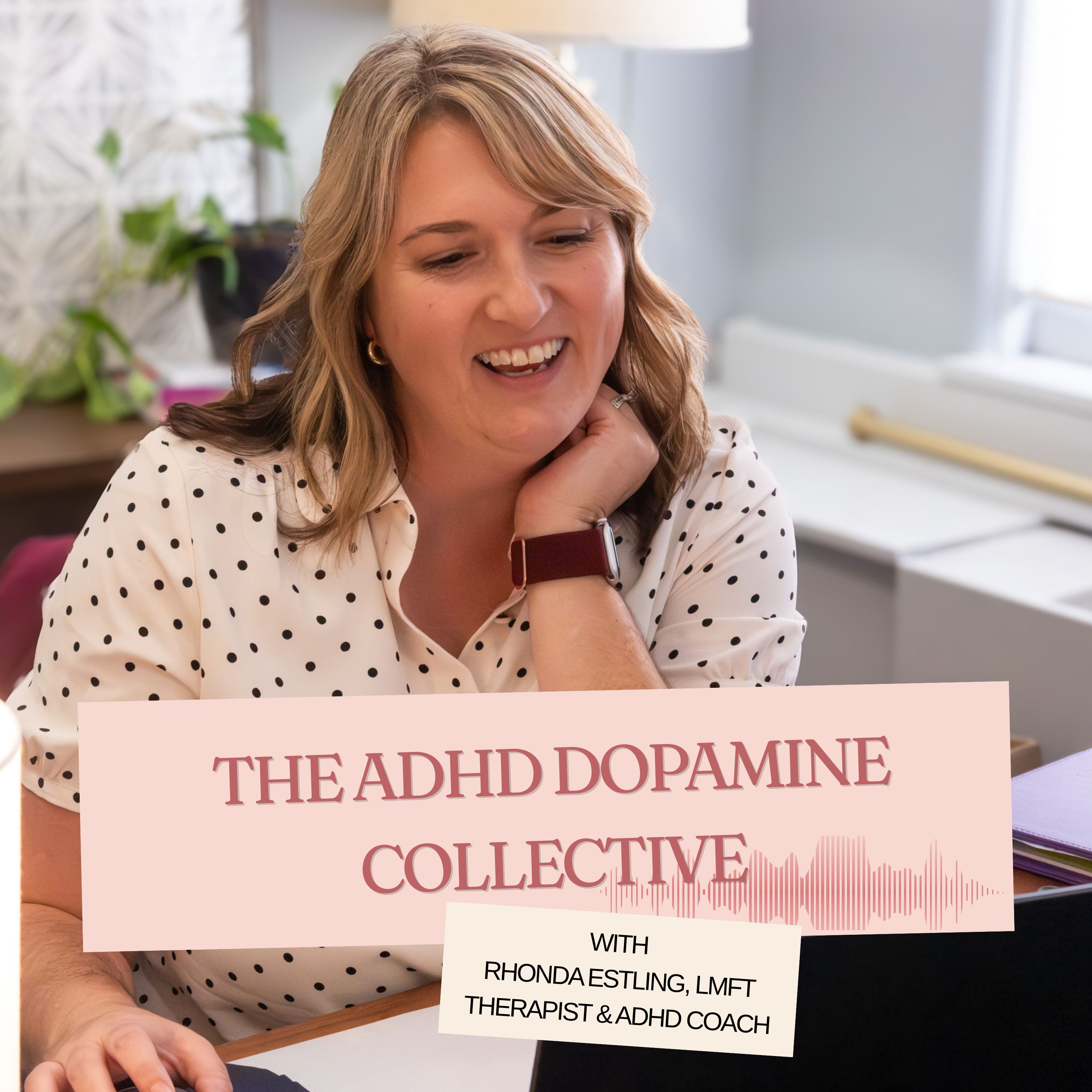
The ADHD Dopamine Collective with Rhonda Estling
by Rhonda Estling
Your Voice Belongs Here. We're building a space where real stores, lived experience, and honest expertise come together. Whether you've navigated ADHD as a woman, studied it, treated it, or built your career around it - we want to hear from you. Too many women have spent years not knowing why their brain works the way it does. Let's change that - one conversation at a time.
-
4
Hardware vs. Software: The ADHD Reframe That Changes Everything
You're not doing it wrong. You've just been working on the wrong piece of the system.I had a conversation in my therapy office recently that I haven't been able to stop thinking about. A woman — smart, capable, doing the work — looked at me and said, "I feel like I'm doing something wrong." She'd read the books. Tried the hacks. Bought the planners. Was on TikTok and in the Facebook groups. And she still felt like she was failing at her own brain.I don't want a single one of you to ever sit with that belief. So today I'm walking through the reframe I use in my office that takes the shame out of all of this and finally puts the work in the right place. It's the hardware/software metaphor — and once you see it, you can't unsee it.The metaphor (and where it came from)This came up in a session a year or two ago with a client who works in IT. We were talking about the parts of his ADHD that weren't going to change no matter how much effort he poured in, and the metaphor showed up on instinct. It landed for him. It landed harder for me.Your hardware is your brain. The wiring. The way it processes (or doesn't) the things that we know ADHD impacts — working memory, emotional regulation, prioritization, sensory input. Hardware shifts somewhat with sleep, hormones, medication, and maturity, but it isn't curable. It's the template you came with.Your software is everything built on top of it. The perfectionism. The people pleasing. The shame loops. The masking. The anxiety-as-fuel. All of it was learned. All of it can be updated.The hardware/software pairs we coverMost of the episode is spent walking through specific paired examples so you can start spotting them in your own life:Dopamine seeking is hardware. The shame about it is software.Sensory sensitivity is hardware. Believing you should be able to push through it is software.Hyper-focus is hardware. The guilt about everything you didn't do during it is software.Variable energy is hardware. "I should be on all the time" is software.Masking started as hardware-protection. It's the biggest software issue most of us are running.The honest part about updating your softwareThis is where I'll disappoint anyone hoping for a nine-step fix. Updating software is slow work, and it starts with noticing. Noticing when you're trying to change hardware versus when you're punishing yourself for it. Noticing the shoulds. Treating your life like an experiment instead of a performance review. Finding the people who get it.The episode goes deep on what this looks like, including a recent moment I had where choosing not to attend my kid's volleyball tournament was the most caring choice I could make for myself and for them. It's the kind of trade-off math that only makes sense once you stop trying to change the unchangeable.The takeawayYour hardware is not the problem. It never was. The problem is what you've learned to do to cope with it. The goal isn't to fix your brain. It's to build a life your brain can actually live in.
-
3
Idea Midwife: What It Looks Like to Trust Your Redirects with Imani Harrison
In this episode, Rhonda sits down with Imani Harrison, LCPC — therapist, facilitator, and what she calls an "idea midwife" — for one of the most honest, winding, neurodivergent conversations we've had yet. Imani shares her journey from late ADHD diagnosis to full-on life overhaul: ending a marriage, dissolving a business partnership, letting go of a name she loved, and somehow landing in the most expansive season of her life.They get into the Sankofa philosophy (going back to fetch what you left behind), what it means to live a "yes life" — and why that requires just as many no's — and how smut romance novels became part of Imani's healing arc. If you've ever been in that fog where something is ending but nothing has landed yet, this one's for you.Topics Covered:Late ADHD and autism diagnosis: what that moment of recognition actually feels likeMasking as survival (not performance)Raising neurodivergent kids as a neurodivergent parentThe Sankofa philosophy and reclaiming yourself through transitionWhat a "yes life" actually requiresAI as a 504 plan for neurodivergent brainsLiminal spaces and why not knowing doesn't mean you're stuckWhy saying yes gets easier when you also start saying noContact Imani: [email protected]#adhd #neurodivergent #mentalhealth
-
2
The Signs I'm Watching For in My Office That Point to Undiagnosed ADHD
In this solo episode, Rhonda shares something she's spent over a decade refining: the clinical patterns she watches for in her therapy office that suggest a client may have more going on than anxiety or depression. Not diagnostic criteria. Not a checklist. Just the things that make her start asking different questions.She covers chronic overwhelm, sensory concerns, the burnout cycle, emotional dysregulation in highly intelligent women, masking, hobby hopping, screens, impulsive spending — and why so many of these things get misread, minimized, or blamed on anxiety for years before anyone thinks to look deeper.She also gets personal. About the clients she missed early in her career. About being told she probably shouldn't be a mom because loud noises were hard for her. About what it means to finally stop asking if something is "normal" — and start asking if it's working for you.If you've ever sat in a therapist's office wondering if you're being too dramatic — this one is for you.Topics Covered:Chronic overwhelm vs. clinical anxiety — what's actually differentWhy "it's not that hard" tasks feel impossibleSensory concerns and overstimulation in women with ADHDOverthinking and racing thoughts that aren't anxietyHyper-focus as a sign (not a disqualifier) of ADHDThe masking-as-performance vs. masking-as-survival distinctionEmotional dysregulation in high-achieving womenThe burnout cycle that looks like bipolar but isn'tWhy the question isn't "is this normal?" — and what to ask instead#adhd #neurodivergent #mentalhealth
-
1
"Mom, She's Just Like Me"
In the middle of the night in December 2018, a desperate mom of a toddler and a newborn took to Facebook looking for answers. That one post got 72 comments and changed the course of her family's life. In this first episode of The ADHD Collective, therapist and late-diagnosed ADHDer Rhonda Estling shares the story behind the podcast, why she's building a community for women who get it, and what she hopes this space will become.In This Episode- The 2 AM Facebook SOS that started it all, and the one question buried in 72 comments that changed everything- What it's like to parent a child through struggles you don't yet have a name for- Rhonda's path to her own ADHD diagnosis and how it shaped her understanding of her daughter- Why the "talented and gifted" kid who grew up to be a therapist still needed to find her own village- The moment her preteen daughter watched other women share their ADHD stories and saw herself reflected back- What The ADHD Collective is and who it's for---About Your HostRhonda Estling is a Licensed Marriage and Family Therapist, later-in-life diagnosed with ADHD, elder millennial, and mom to two kids she lovingly calls her "spicy little spitfires." She's a connector, a facilitator, and someone who has spent her life bringing people together to build community -- sometimes without even realizing she was doing it.Connect- Website: [www.rhondaestling.com](https://www.rhondaestling.com)- Email: [email protected] All links: [linktr.ee/rhondaestlingadhdcoach](https://linktr.ee/rhondaestlingadhdcoach)A Note From Rhonda"I'm doing this for my daughter, but I'm also doing this for me. For all the versions of me along the way, including that mama desperate in the middle of the night taking to Facebook for answers. I'm also doing this for other children who were raised to be good little girls and who may resonate with these stories, whether they're diagnosed or just suspect that they're neurodivergent. We all have so much knowledge and experience to share with each other. And I'm so here for the rich conversations to come."If This Episode Resonated With YouShare your own story with us. What was your "72 comments" moment -- the time you reached out and found you weren't alone? Connect with The ADHD Collective community and join the conversation.Rhonda Estling, LMFTADHD Coach and Consultantrhonda@rhondaestlingconsulting.comwww.rhondaestlingconsulting.com319.214.0226
No matches for "" in this podcast's transcripts.
No topics indexed yet for this podcast.
Loading reviews...
ABOUT THIS SHOW
Your Voice Belongs Here. We're building a space where real stores, lived experience, and honest expertise come together. Whether you've navigated ADHD as a woman, studied it, treated it, or built your career around it - we want to hear from you. Too many women have spent years not knowing why their brain works the way it does. Let's change that - one conversation at a time.
HOSTED BY
Rhonda Estling
CATEGORIES
Loading similar podcasts...
URL copied to clipboard!