
PODCAST · news
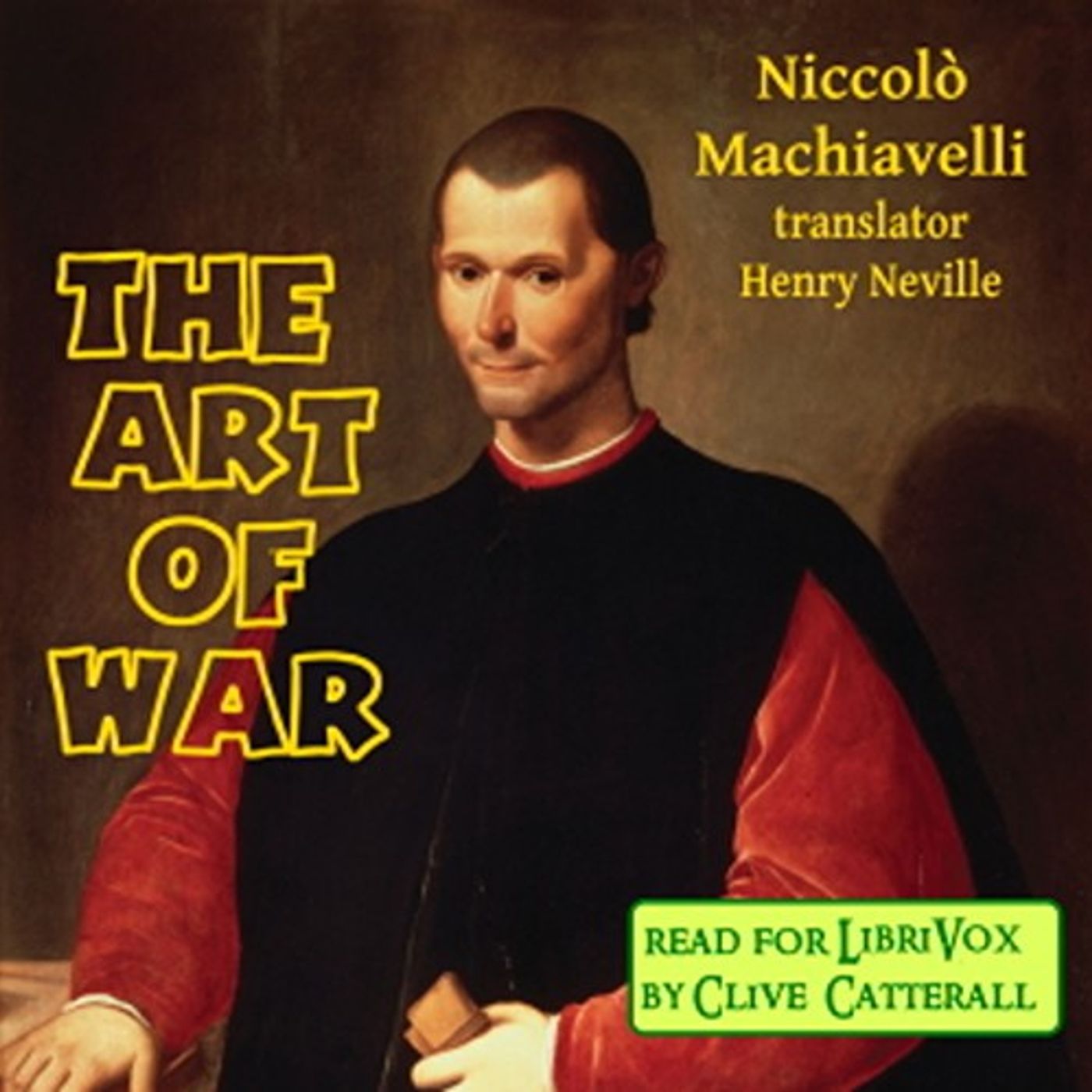
The Art of War by Niccolò Machiavelli.
by Popular Culture and Religion.
The Art of War by Niccolò Machiavelli. The Art of War (1521) is the only book published by Niccolo Machiavelli during his lifetime, and he saw it as one of his finest achievements. The Art of War develops many themes introduced in Machiavelli’s earlier works “The Prince” and “Discourses” and presents them as the collected wisdom of a fictional leader Lord Fabrizio Colonna. The book is constructed as a series of dialogues supposedly held during a summer afternoon spent in the Orti Oricellari gardens in Florence. The stated aim is “To honor and reward virtue, not to have contempt for poverty, to esteem the modes and orders of military discipline, to constrain citizens to love one another, to live without factions, to esteem less the private than the public good, and other such things which could easily be added in these times.” As in “The Prince” Machiavelli develops the idea of limited warfare, where force is used as an extension of politics, but now also introduces elemen
-
15
14 - Book 7 - Part 2. The Art of War by Niccolò Machiavelli.
14 - Book 7 - Part 2. The Art of War by Niccolò Machiavelli. The Art of War (1521) is the only book published by Niccolo Machiavelli during his lifetime, and he saw it as one of his finest achievements. The Art of War develops many themes introduced in Machiavelli’s earlier works “The Prince” and “Discourses” and presents them as the collected wisdom of a fictional leader Lord Fabrizio Colonna. The book is constructed as a series of dialogues supposedly held during a summer afternoon spent in the Orti Oricellari gardens in Florence. The stated aim is “To honor and reward virtue, not to have contempt for poverty, to esteem the modes and orders of military discipline, to constrain citizens to love one another, to live without factions, to esteem less the private than the public good, and other such things which could easily be added in these times.” As in “The Prince” Machiavelli develops the idea of limited warfare, where force is used as an extension of politics, but now also introduces elements of psychological warfare. In the first part of the book Machiavelli strongly warns that any state establishing a standing army must take special measures are taken to prevent military leaders gaining too much control. If the state ignores this it risks a military coup: something we still see today. The Art of War was a standard text on military tactics for three hundred years, only losing favour when developments in the range and accuracy of firearms made the Linear Tactics it described obsolete.
-
14
13 - Book 7 - Part 1. The Art of War by Niccolò Machiavelli.
13 - Book 7 - Part 1. The Art of War by Niccolò Machiavelli. The Art of War (1521) is the only book published by Niccolo Machiavelli during his lifetime, and he saw it as one of his finest achievements. The Art of War develops many themes introduced in Machiavelli’s earlier works “The Prince” and “Discourses” and presents them as the collected wisdom of a fictional leader Lord Fabrizio Colonna. The book is constructed as a series of dialogues supposedly held during a summer afternoon spent in the Orti Oricellari gardens in Florence. The stated aim is “To honor and reward virtue, not to have contempt for poverty, to esteem the modes and orders of military discipline, to constrain citizens to love one another, to live without factions, to esteem less the private than the public good, and other such things which could easily be added in these times.” As in “The Prince” Machiavelli develops the idea of limited warfare, where force is used as an extension of politics, but now also introduces elements of psychological warfare. In the first part of the book Machiavelli strongly warns that any state establishing a standing army must take special measures are taken to prevent military leaders gaining too much control. If the state ignores this it risks a military coup: something we still see today. The Art of War was a standard text on military tactics for three hundred years, only losing favour when developments in the range and accuracy of firearms made the Linear Tactics it described obsolete.
-
13
12 - Book 6 - Part 2. The Art of War by Niccolò Machiavelli.
12 - Book 6 - Part 2. The Art of War by Niccolò Machiavelli. The Art of War (1521) is the only book published by Niccolo Machiavelli during his lifetime, and he saw it as one of his finest achievements. The Art of War develops many themes introduced in Machiavelli’s earlier works “The Prince” and “Discourses” and presents them as the collected wisdom of a fictional leader Lord Fabrizio Colonna. The book is constructed as a series of dialogues supposedly held during a summer afternoon spent in the Orti Oricellari gardens in Florence. The stated aim is “To honor and reward virtue, not to have contempt for poverty, to esteem the modes and orders of military discipline, to constrain citizens to love one another, to live without factions, to esteem less the private than the public good, and other such things which could easily be added in these times.” As in “The Prince” Machiavelli develops the idea of limited warfare, where force is used as an extension of politics, but now also introduces elements of psychological warfare. In the first part of the book Machiavelli strongly warns that any state establishing a standing army must take special measures are taken to prevent military leaders gaining too much control. If the state ignores this it risks a military coup: something we still see today. The Art of War was a standard text on military tactics for three hundred years, only losing favour when developments in the range and accuracy of firearms made the Linear Tactics it described obsolete.
-
12
11 - Book 6 - Part 1. The Art of War by Niccolò Machiavelli.
11 - Book 6 - Part 1. The Art of War by Niccolò Machiavelli. The Art of War (1521) is the only book published by Niccolo Machiavelli during his lifetime, and he saw it as one of his finest achievements. The Art of War develops many themes introduced in Machiavelli’s earlier works “The Prince” and “Discourses” and presents them as the collected wisdom of a fictional leader Lord Fabrizio Colonna. The book is constructed as a series of dialogues supposedly held during a summer afternoon spent in the Orti Oricellari gardens in Florence. The stated aim is “To honor and reward virtue, not to have contempt for poverty, to esteem the modes and orders of military discipline, to constrain citizens to love one another, to live without factions, to esteem less the private than the public good, and other such things which could easily be added in these times.” As in “The Prince” Machiavelli develops the idea of limited warfare, where force is used as an extension of politics, but now also introduces elements of psychological warfare. In the first part of the book Machiavelli strongly warns that any state establishing a standing army must take special measures are taken to prevent military leaders gaining too much control. If the state ignores this it risks a military coup: something we still see today. The Art of War was a standard text on military tactics for three hundred years, only losing favour when developments in the range and accuracy of firearms made the Linear Tactics it described obsolete.
-
11
10 - Book 5 - Part 2. The Art of War by Niccolò Machiavelli.
10 - Book 5 - Part 2. The Art of War by Niccolò Machiavelli. The Art of War (1521) is the only book published by Niccolo Machiavelli during his lifetime, and he saw it as one of his finest achievements. The Art of War develops many themes introduced in Machiavelli’s earlier works “The Prince” and “Discourses” and presents them as the collected wisdom of a fictional leader Lord Fabrizio Colonna. The book is constructed as a series of dialogues supposedly held during a summer afternoon spent in the Orti Oricellari gardens in Florence. The stated aim is “To honor and reward virtue, not to have contempt for poverty, to esteem the modes and orders of military discipline, to constrain citizens to love one another, to live without factions, to esteem less the private than the public good, and other such things which could easily be added in these times.” As in “The Prince” Machiavelli develops the idea of limited warfare, where force is used as an extension of politics, but now also introduces elements of psychological warfare. In the first part of the book Machiavelli strongly warns that any state establishing a standing army must take special measures are taken to prevent military leaders gaining too much control. If the state ignores this it risks a military coup: something we still see today. The Art of War was a standard text on military tactics for three hundred years, only losing favour when developments in the range and accuracy of firearms made the Linear Tactics it described obsolete.
-
10
09 - Book 5 - Part 1. The Art of War by Niccolò Machiavelli.
09 - Book 5 - Part 1. The Art of War by Niccolò Machiavelli. The Art of War (1521) is the only book published by Niccolo Machiavelli during his lifetime, and he saw it as one of his finest achievements. The Art of War develops many themes introduced in Machiavelli’s earlier works “The Prince” and “Discourses” and presents them as the collected wisdom of a fictional leader Lord Fabrizio Colonna. The book is constructed as a series of dialogues supposedly held during a summer afternoon spent in the Orti Oricellari gardens in Florence. The stated aim is “To honor and reward virtue, not to have contempt for poverty, to esteem the modes and orders of military discipline, to constrain citizens to love one another, to live without factions, to esteem less the private than the public good, and other such things which could easily be added in these times.” As in “The Prince” Machiavelli develops the idea of limited warfare, where force is used as an extension of politics, but now also introduces elements of psychological warfare. In the first part of the book Machiavelli strongly warns that any state establishing a standing army must take special measures are taken to prevent military leaders gaining too much control. If the state ignores this it risks a military coup: something we still see today. The Art of War was a standard text on military tactics for three hundred years, only losing favour when developments in the range and accuracy of firearms made the Linear Tactics it described obsolete.
-
9
08 - Book 4. The Art of War by Niccolò Machiavelli.
08 - Book 4. The Art of War by Niccolò Machiavelli. The Art of War (1521) is the only book published by Niccolo Machiavelli during his lifetime, and he saw it as one of his finest achievements. The Art of War develops many themes introduced in Machiavelli’s earlier works “The Prince” and “Discourses” and presents them as the collected wisdom of a fictional leader Lord Fabrizio Colonna. The book is constructed as a series of dialogues supposedly held during a summer afternoon spent in the Orti Oricellari gardens in Florence. The stated aim is “To honor and reward virtue, not to have contempt for poverty, to esteem the modes and orders of military discipline, to constrain citizens to love one another, to live without factions, to esteem less the private than the public good, and other such things which could easily be added in these times.” As in “The Prince” Machiavelli develops the idea of limited warfare, where force is used as an extension of politics, but now also introduces elements of psychological warfare. In the first part of the book Machiavelli strongly warns that any state establishing a standing army must take special measures are taken to prevent military leaders gaining too much control. If the state ignores this it risks a military coup: something we still see today. The Art of War was a standard text on military tactics for three hundred years, only losing favour when developments in the range and accuracy of firearms made the Linear Tactics it described obsolete.
-
8
07 - Book 3 - Part 2. The Art of War by Niccolò Machiavelli.
07 - Book 3 - Part 2. The Art of War by Niccolò Machiavelli. The Art of War (1521) is the only book published by Niccolo Machiavelli during his lifetime, and he saw it as one of his finest achievements. The Art of War develops many themes introduced in Machiavelli’s earlier works “The Prince” and “Discourses” and presents them as the collected wisdom of a fictional leader Lord Fabrizio Colonna. The book is constructed as a series of dialogues supposedly held during a summer afternoon spent in the Orti Oricellari gardens in Florence. The stated aim is “To honor and reward virtue, not to have contempt for poverty, to esteem the modes and orders of military discipline, to constrain citizens to love one another, to live without factions, to esteem less the private than the public good, and other such things which could easily be added in these times.” As in “The Prince” Machiavelli develops the idea of limited warfare, where force is used as an extension of politics, but now also introduces elements of psychological warfare. In the first part of the book Machiavelli strongly warns that any state establishing a standing army must take special measures are taken to prevent military leaders gaining too much control. If the state ignores this it risks a military coup: something we still see today. The Art of War was a standard text on military tactics for three hundred years, only losing favour when developments in the range and accuracy of firearms made the Linear Tactics it described obsolete.
-
7
06 - Book 3 - Part 1. The Art of War by Niccolò Machiavelli.
06 - Book 3 - Part 1. The Art of War by Niccolò Machiavelli. The Art of War (1521) is the only book published by Niccolo Machiavelli during his lifetime, and he saw it as one of his finest achievements. The Art of War develops many themes introduced in Machiavelli’s earlier works “The Prince” and “Discourses” and presents them as the collected wisdom of a fictional leader Lord Fabrizio Colonna. The book is constructed as a series of dialogues supposedly held during a summer afternoon spent in the Orti Oricellari gardens in Florence. The stated aim is “To honor and reward virtue, not to have contempt for poverty, to esteem the modes and orders of military discipline, to constrain citizens to love one another, to live without factions, to esteem less the private than the public good, and other such things which could easily be added in these times.” As in “The Prince” Machiavelli develops the idea of limited warfare, where force is used as an extension of politics, but now also introduces elements of psychological warfare. In the first part of the book Machiavelli strongly warns that any state establishing a standing army must take special measures are taken to prevent military leaders gaining too much control. If the state ignores this it risks a military coup: something we still see today. The Art of War was a standard text on military tactics for three hundred years, only losing favour when developments in the range and accuracy of firearms made the Linear Tactics it described obsolete.
-
6
05 - Book 2 - Part 3. The Art of War by Niccolò Machiavelli.
05 - Book 2 - Part 3. The Art of War by Niccolò Machiavelli. The Art of War (1521) is the only book published by Niccolo Machiavelli during his lifetime, and he saw it as one of his finest achievements. The Art of War develops many themes introduced in Machiavelli’s earlier works “The Prince” and “Discourses” and presents them as the collected wisdom of a fictional leader Lord Fabrizio Colonna. The book is constructed as a series of dialogues supposedly held during a summer afternoon spent in the Orti Oricellari gardens in Florence. The stated aim is “To honor and reward virtue, not to have contempt for poverty, to esteem the modes and orders of military discipline, to constrain citizens to love one another, to live without factions, to esteem less the private than the public good, and other such things which could easily be added in these times.” As in “The Prince” Machiavelli develops the idea of limited warfare, where force is used as an extension of politics, but now also introduces elements of psychological warfare. In the first part of the book Machiavelli strongly warns that any state establishing a standing army must take special measures are taken to prevent military leaders gaining too much control. If the state ignores this it risks a military coup: something we still see today. The Art of War was a standard text on military tactics for three hundred years, only losing favour when developments in the range and accuracy of firearms made the Linear Tactics it described obsolete.
-
5
04 - Book 2 - Part 2. The Art of War by Niccolò Machiavelli.
04 - Book 2 - Part 2. The Art of War by Niccolò Machiavelli. The Art of War (1521) is the only book published by Niccolo Machiavelli during his lifetime, and he saw it as one of his finest achievements. The Art of War develops many themes introduced in Machiavelli’s earlier works “The Prince” and “Discourses” and presents them as the collected wisdom of a fictional leader Lord Fabrizio Colonna. The book is constructed as a series of dialogues supposedly held during a summer afternoon spent in the Orti Oricellari gardens in Florence. The stated aim is “To honor and reward virtue, not to have contempt for poverty, to esteem the modes and orders of military discipline, to constrain citizens to love one another, to live without factions, to esteem less the private than the public good, and other such things which could easily be added in these times.” As in “The Prince” Machiavelli develops the idea of limited warfare, where force is used as an extension of politics, but now also introduces elements of psychological warfare. In the first part of the book Machiavelli strongly warns that any state establishing a standing army must take special measures are taken to prevent military leaders gaining too much control. If the state ignores this it risks a military coup: something we still see today. The Art of War was a standard text on military tactics for three hundred years, only losing favour when developments in the range and accuracy of firearms made the Linear Tactics it described obsolete.
-
4
03 - Book 2 - Part 1. The Art of War by Niccolò Machiavelli.
03 - Book 2 - Part 1. The Art of War by Niccolò Machiavelli. The Art of War (1521) is the only book published by Niccolo Machiavelli during his lifetime, and he saw it as one of his finest achievements. The Art of War develops many themes introduced in Machiavelli’s earlier works “The Prince” and “Discourses” and presents them as the collected wisdom of a fictional leader Lord Fabrizio Colonna. The book is constructed as a series of dialogues supposedly held during a summer afternoon spent in the Orti Oricellari gardens in Florence. The stated aim is “To honor and reward virtue, not to have contempt for poverty, to esteem the modes and orders of military discipline, to constrain citizens to love one another, to live without factions, to esteem less the private than the public good, and other such things which could easily be added in these times.” As in “The Prince” Machiavelli develops the idea of limited warfare, where force is used as an extension of politics, but now also introduces elements of psychological warfare. In the first part of the book Machiavelli strongly warns that any state establishing a standing army must take special measures are taken to prevent military leaders gaining too much control. If the state ignores this it risks a military coup: something we still see today. The Art of War was a standard text on military tactics for three hundred years, only losing favour when developments in the range and accuracy of firearms made the Linear Tactics it described obsolete.
-
3
02 - Book 1 - Part 2. The Art of War by Niccolò Machiavelli.
02 - Book 1 - Part 2. The Art of War by Niccolò Machiavelli. The Art of War (1521) is the only book published by Niccolo Machiavelli during his lifetime, and he saw it as one of his finest achievements. The Art of War develops many themes introduced in Machiavelli’s earlier works “The Prince” and “Discourses” and presents them as the collected wisdom of a fictional leader Lord Fabrizio Colonna. The book is constructed as a series of dialogues supposedly held during a summer afternoon spent in the Orti Oricellari gardens in Florence. The stated aim is “To honor and reward virtue, not to have contempt for poverty, to esteem the modes and orders of military discipline, to constrain citizens to love one another, to live without factions, to esteem less the private than the public good, and other such things which could easily be added in these times.” As in “The Prince” Machiavelli develops the idea of limited warfare, where force is used as an extension of politics, but now also introduces elements of psychological warfare. In the first part of the book Machiavelli strongly warns that any state establishing a standing army must take special measures are taken to prevent military leaders gaining too much control. If the state ignores this it risks a military coup: something we still see today. The Art of War was a standard text on military tactics for three hundred years, only losing favour when developments in the range and accuracy of firearms made the Linear Tactics it described obsolete.
-
2
01 - Book 1 - Part 1. The Art of War by Niccolò Machiavelli.
01 - Book 1 - Part 1. The Art of War by Niccolò Machiavelli. The Art of War (1521) is the only book published by Niccolo Machiavelli during his lifetime, and he saw it as one of his finest achievements. The Art of War develops many themes introduced in Machiavelli’s earlier works “The Prince” and “Discourses” and presents them as the collected wisdom of a fictional leader Lord Fabrizio Colonna. The book is constructed as a series of dialogues supposedly held during a summer afternoon spent in the Orti Oricellari gardens in Florence. The stated aim is “To honor and reward virtue, not to have contempt for poverty, to esteem the modes and orders of military discipline, to constrain citizens to love one another, to live without factions, to esteem less the private than the public good, and other such things which could easily be added in these times.” As in “The Prince” Machiavelli develops the idea of limited warfare, where force is used as an extension of politics, but now also introduces elements of psychological warfare. In the first part of the book Machiavelli strongly warns that any state establishing a standing army must take special measures are taken to prevent military leaders gaining too much control. If the state ignores this it risks a military coup: something we still see today. The Art of War was a standard text on military tactics for three hundred years, only losing favour when developments in the range and accuracy of firearms made the Linear Tactics it described obsolete.
-
1
00 - Preface. The Art of War by Niccolò Machiavelli.
00 - Preface. The Art of War by Niccolò Machiavelli. The Art of War (1521) is the only book published by Niccolo Machiavelli during his lifetime, and he saw it as one of his finest achievements. The Art of War develops many themes introduced in Machiavelli’s earlier works “The Prince” and “Discourses” and presents them as the collected wisdom of a fictional leader Lord Fabrizio Colonna. The book is constructed as a series of dialogues supposedly held during a summer afternoon spent in the Orti Oricellari gardens in Florence. The stated aim is “To honor and reward virtue, not to have contempt for poverty, to esteem the modes and orders of military discipline, to constrain citizens to love one another, to live without factions, to esteem less the private than the public good, and other such things which could easily be added in these times.” As in “The Prince” Machiavelli develops the idea of limited warfare, where force is used as an extension of politics, but now also introduces elements of psychological warfare. In the first part of the book Machiavelli strongly warns that any state establishing a standing army must take special measures are taken to prevent military leaders gaining too much control. If the state ignores this it risks a military coup: something we still see today. The Art of War was a standard text on military tactics for three hundred years, only losing favour when developments in the range and accuracy of firearms made the Linear Tactics it described obsolete.
We're indexing this podcast's transcripts for the first time — this can take a minute or two. We'll show results as soon as they're ready.
No matches for "" in this podcast's transcripts.
No topics indexed yet for this podcast.
Loading reviews...
ABOUT THIS SHOW
The Art of War by Niccolò Machiavelli. The Art of War (1521) is the only book published by Niccolo Machiavelli during his lifetime, and he saw it as one of his finest achievements. The Art of War develops many themes introduced in Machiavelli’s earlier works “The Prince” and “Discourses” and presents them as the collected wisdom of a fictional leader Lord Fabrizio Colonna. The book is constructed as a series of dialogues supposedly held during a summer afternoon spent in the Orti Oricellari gardens in Florence. The stated aim is “To honor and reward virtue, not to have contempt for poverty, to esteem the modes and orders of military discipline, to constrain citizens to love one another, to live without factions, to esteem less the private than the public good, and other such things which could easily be added in these times.” As in “The Prince” Machiavelli develops the idea of limited warfare, where force is used as an extension of politics, but now also introduces elemen
HOSTED BY
Popular Culture and Religion.
Loading similar podcasts...
Frequently Asked Questions
How many episodes does The Art of War by Niccolò Machiavelli. have?
The Art of War by Niccolò Machiavelli. currently has 15 episodes available on PodParley. New episodes are automatically indexed when they're published to the podcast feed.
What is The Art of War by Niccolò Machiavelli. about?
The Art of War by Niccolò Machiavelli. The Art of War (1521) is the only book published by Niccolo Machiavelli during his lifetime, and he saw it as one of his finest achievements. The Art of War develops many themes introduced in Machiavelli’s earlier works “The Prince” and “Discourses” and...
How often does The Art of War by Niccolò Machiavelli. release new episodes?
The Art of War by Niccolò Machiavelli. has 15 episodes. Check the episode list to see recent publication dates and frequency.
Where can I listen to The Art of War by Niccolò Machiavelli.?
You can listen to The Art of War by Niccolò Machiavelli. on PodParley by clicking any episode. We provide an embedded audio player for direct listening, and you can also subscribe via your preferred podcast app using the RSS feed.
Who hosts The Art of War by Niccolò Machiavelli.?
The Art of War by Niccolò Machiavelli. is created and hosted by Popular Culture and Religion..
URL copied to clipboard!