
PODCAST · technology
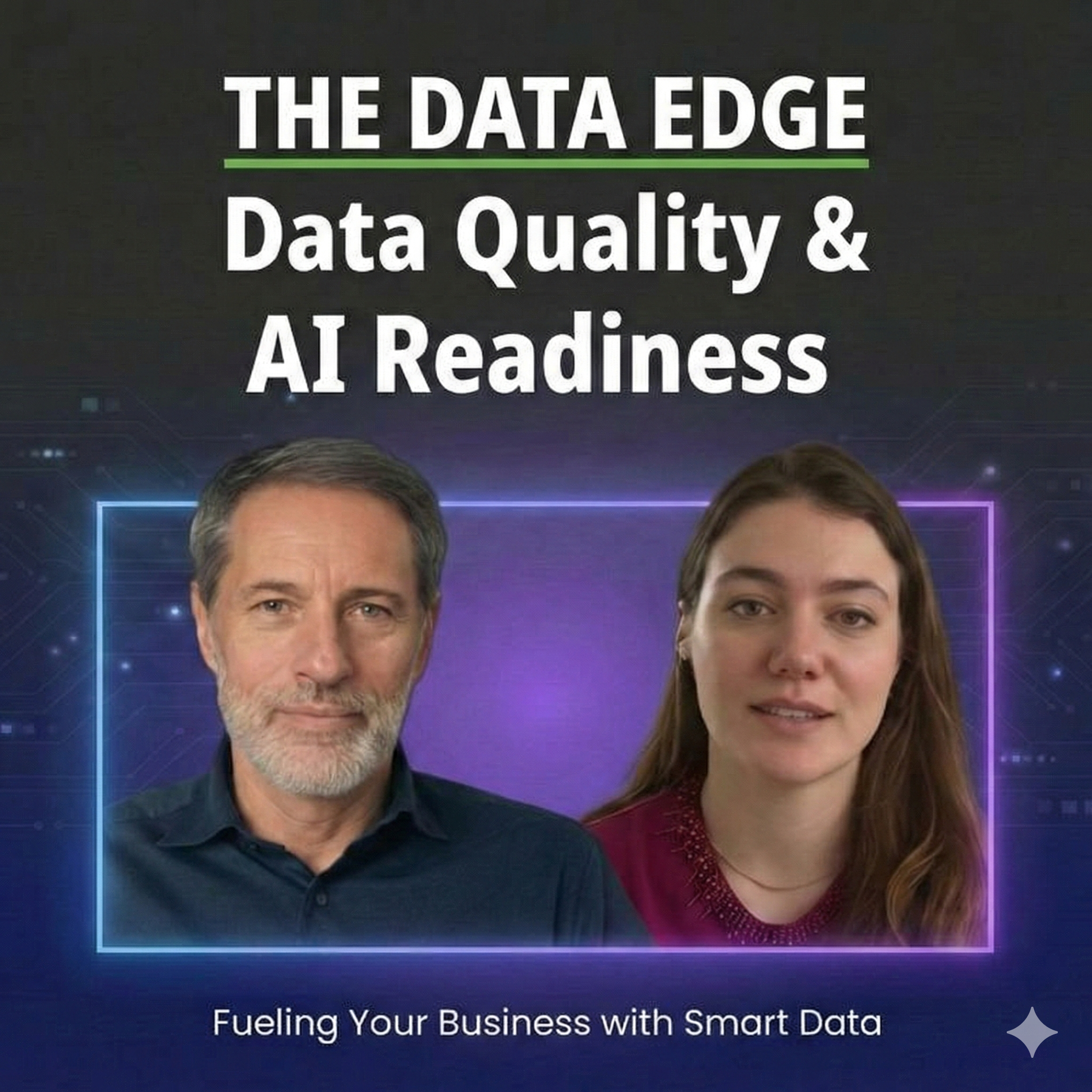
The Data Edge: Data Quality & AI Readiness
by Stephanie Wiechers & Erwin de Werd
Welcome to the Pearstop podcast series on data management, where experts Stephanie Wiechers and Erwin de Werd dive into the world of data quality, standardization, and the real-world value of information in technical industries. From procurement and facility management to hard services and large-scale manufacturing, we explore how 'messy' data can cost organizations millions—and how to fix it.Join us as we break down complex topics like enterprise-level standardization and Microsoft Fabric into concrete, actionable steps. Whether you're a CEO, an asset manager, or a bid specialist, this series provides the insights you need to turn your data into a fuel for smart decision-making and AI readiness. Don't let your data work against you—learn how to make it your greatest competitive advantage.
-
13
Understanding Asset Management & Data Quality
This episode provides insights into the challenges and opportunities surrounding asset data management. It highlights the importance of data quality, the impact of AI technology, and the role of asset data in advising and optimising maintenance strategies.
-
12
Data Quality in Manufacturing and Procurement
Unlocking Data Quality in Manufacturing and Procurement with Jonas Hauswurz"In this episode, Stephanie Wiechers chats with Jonas Hauswurz, founder of Neomir, about the real issues behind data quality problems in manufacturing and procurement. Discover practical use cases, how to identify critical data leaks, and the importance of focusing on operational teams rather than just executives.Key Topics:The distinction between data problems and data quality issuesHow Neomir's software detects bad data at scale and automates resolutionsThe significance of rules in data validation, e.g., ensuring cars always have four wheelsPractical applications in manufacturing, procurement, and asset managementThe challenge of tying data quality to measurable ROI and cost savingsThe different approaches to data quality: identification vs. pre-filling and machine learningWhy operational teams often detect data issues before management doesStrategies for engaging ground-level staff to improve data qualityTimestamps:00:00 - The difference between data issues and data quality flaws00:25 - Why data quality is often misunderstood in organizations00:55 - How Neomir's software identifies and automates fixing bad data01:20 - Practical examples in manufacturing and asset management03:12 - Creating rules for data validation with AI assistance04:29 - Common data errors in manufacturing, such as bill of materials inaccuracies05:15 - Propagation of data checks through entire supply chains07:28 - The role of data quality in cost savings and strategic decision-making08:23 - Indirect effects of data quality on financial performance09:58 - Approaches to measuring ROI for data quality initiatives11:03 - Advantages of transparency and rough ROI estimates over precise calculations13:23 - Engaging operational teams for better data insights15:45 - How management often underestimates data issues until front-line staff reveal them16:24 - The importance of targeting conversations at data specialists and operational staff18:05 - Closing thoughts and how to connect with Jonas for manufacturing and procurement data challengesResources & Links:Stephanie Wiechers - LinkedInJonas Hauswurz - LinkedIn
-
11
AI & Data Standards
𝗕𝘂𝗶𝗹𝗱𝗶𝗻𝗴 𝗮 𝗥𝗲𝗹𝗶𝗮𝗯𝗹𝗲 𝗗𝗮𝘁𝗮 𝗟𝗮𝘆𝗲𝗿: 𝗜𝗻𝘀𝗶𝗴𝗵𝘁𝘀 𝗳𝗿𝗼𝗺 "𝗧𝗵𝗲 𝗗𝗮𝘁𝗮 𝗘𝗱𝗴𝗲" 𝗣𝗼𝗱𝗰𝗮𝘀𝘁In this episode of The Data Edge, Erwin de Werd and guest Stephanie Wiechers explore the critical aspects of data quality, standardization, and data movement for organizations aiming to leverage AI and advanced analytics effectively. They discuss practical challenges and strategic considerations for companies of all sizes seeking to build trustworthy, scalable data infrastructure. 𝗠𝗮𝗶𝗻 𝗧𝗼𝗽𝗶𝗰𝘀:✔ The increasing importance of data quality and reliability in AI applications✔ Challenges in creating and trusting dashboards due to data flaws✔ How data movement between systems influences decision-making and analytics✔ The role of standardization in cross-entity data sharing and efficiency✔ Trends and best practices for adopting data standards and improving data governance✔ The impact of AI tools like Copilot on data analysis and development✔ Strategies for smaller businesses to align with industry standards despite resource constraints 𝗧𝗶𝗺𝗲𝘀𝘁𝗮𝗺𝗽𝘀:00:00 - Introduction and overview of data quality challenges in AI development00:30 - The surge in democratized data analysis and its responsibilities01:34 - Risks of trusting dashboards with potential data flaws03:07 - The importance of data reliability for decision-making04:13 - Moving data across systems to enable advanced analytics05:18 - The significance of data standardization in different industries06:34 - How data lakes and recent platforms support data integration07:45 - The role of data quality as a foundation for dashboards and AI models08:26 - Standardization trends and industry-specific norms09:13 - Cost considerations and strategic choices in implementing standards10:27 - Challenges and strategies for smaller companies adopting standards11:48 - Practical steps for transitioning from non-standard to standardized data12:18 - Industry standards like UNSPSC and industry-specific frameworks13:25 - The strategic value of standardization for cost savings and operational efficiency14:09 - Use cases in procurement and spend analysis15:13 - The growing importance of data quality and standardization in analytics16:02 - Final thoughts and future topics 𝗥𝗲𝘀𝗼𝘂𝗿𝗰𝗲𝘀 & 𝗟𝗶𝗻𝗸𝘀:• UNSPSC (United Nations Standard Products and Services Code) – Industry-standard classification for products and services
-
10
Succesfactors for AI
𝗨𝗻𝗹𝗼𝗰𝗸𝗶𝗻𝗴 𝘁𝗵𝗲 𝗣𝗼𝘄𝗲𝗿 𝗮𝗻𝗱 𝗣𝗶𝘁𝗳𝗮𝗹𝗹𝘀 𝗼𝗳 𝗔𝗜 𝗮𝗻𝗱 𝗗𝗮𝘁𝗮 𝗠𝗮𝗻𝗮𝗴𝗲𝗺𝗲𝗻𝘁In this episode of The Data Edge, Erwin de Werd and Stephanie Wiechers explore how AI can transform data management from a headache into a strategic advantage — if used wisely. They discuss the pitfalls of overhyped AI solutions, the importance of building robust systems, and practical steps to improve data quality.𝗞𝗲𝘆 𝗧𝗼𝗽𝗶𝗰𝘀:The proliferation of AI "skills" and why over 90% are ineffectiveHow automation, when done properly, enhances data quality and operational efficiencyThe challenge of discerning quality in AI tools and avoiding superficial solutionsPractical examples of AI in lead generation (Dream 100 strategy) and content creationHow to build trust in AI-driven data solutions amidst industry hypeThe importance of authentic, human-centered communication in AI contentThe distinction between front-end conversation and back-end automation in data managementPlanning for a future where AI and data quality ensure better decision-making𝗧𝗶𝗺𝗲𝘀𝘁𝗮𝗺𝗽𝘀:00:00 - Introduction: Transforming data management with AI00:30 - Why most AI skills are ineffective and what they entail01:25 - Explanation of skills as standard operating procedures (SOPs)02:24 - The explosion of AI skills on platforms like Instagram and their usability03:20 - The common problem of people not doing the work when using AI tools03:50 - Strategic laziness: automating repetitive tasks with quality checks04:32 - Pitfalls of trusting AI outputs without proper validation04:57 - Challenges in training AI models to produce accurate, high-quality content05:44 - Limitations of custom GPTs in professional tasks like LinkedIn content06:22 - The importance of investing effort upfront to create effective automation systems06:47 - Why cost savings lead to underinvestment in AI automation07:34 - Challenges of relying on incomplete or careless prompts07:45 - The habit of short-input prompts and the impact on output quality08:13 - Building outreach strategies with AI: the Dream 100 example08:51 - Automating research and outreach to generate leads efficiently09:35 - Using AI to identify influencers and industry events for strategic networking10:58 - The need for consistency and authenticity in AI-generated content12:04 - How good copywriters leverage AI as a starting point, not a replacement12:51 - Authenticity remains crucial despite the efficiency gains from AI13:17 - Connecting AI automation in data management with operational layers of business14:09 - The importance of backend automation for data quality and integrity15:14 - Trust issues in procurement and other industries regarding AI promises16:26 - The hype versus reality of AI solutions, and the upcoming industry shakeout17:08 - Final thoughts: Deepening the conversation in future episodes
-
9
AI & Human Collaboration
🎙️ 𝘁𝗵𝗲 𝗱𝗮𝘁𝗮 𝗲𝗱𝗴𝗲 — 𝗱𝗮𝘁𝗮 𝗾𝘂𝗮𝗹𝗶𝘁𝘆 𝗶𝗻 𝗮𝗶 𝗽𝗿𝗼𝗷𝗲𝗰𝘁𝘀In this episode, Erwin and Stephanie delve into the complexities of data quality in AI projects, emphasizing that messy data often leads to costly mistakes. They explore how human-AI collaboration and understanding the limitations of models like LLMs are crucial for success.🔑 𝗞𝗘𝗬 𝗧𝗢𝗣𝗜𝗖𝗦The common misconception that first data categorization is 100% accurate — and why errors are part of the processThe reality of achieving high data quality and near automation (up to 95%) in data processingExpectations vs. reality: Why clients sometimes expect AI to be a 'magic bullet' and how to set realistic goalsThe importance of contextual knowledge and communication to improve model accuracyMethodologies for training AI models as 'new employees', including leveraging human expertise and internal knowledgeA real-world construction project: data categorization challenges, including language issues (tablets as lozenges)Differentiating LLMs like ChatGPT from specialized machine learning modelsThe role of human-AI cooperation in improving data quality and operational efficiencyCreating a knowledge center for clients through ongoing data training and model refinementThe value of building IP within organizations by developing tailored data solutions and models⏱️ 𝗧𝗜𝗠𝗘𝗦𝗧𝗔𝗠𝗣𝗦00:00 Introduction: The impact of messy data on industry costs00:30 Setting the stage: From data quality to correction hiccups01:14 Why initial categorization often isn't perfect — and it's normal02:02 The misconception of AI producing perfect results immediately02:50 Achieving high data quality and near automation possibilities03:17 Managing client expectations around AI and data processing04:05 Importance of communication about processes and contextual insights05:14 When models don't perform as expected: Training methodologies05:45 Example project in construction: Data categorization challenges06:47 Using dashboards to identify and fix misclassified data08:11 Language nuances affecting classification (e.g., tablets as lozenges)08:58 Differences between LLMs like ChatGPT and task-specific ML models10:16 The core distinction: General language models vs. specialized models12:11 Why consistency and rule-based training are vital13:24 Human-AI collaboration enhancing data accuracy14:02 Implementing biases and industry knowledge to improve models15:19 Building an organization's IP through data and model development16:21 Potential for transparency: Sharing system rules with clients17:05 Recap: Differentiating AI types and combining human expertise18:18 Closing: Key takeaways on data, AI, and IP in projects
-
8
Insights from the field
Turning Data Quality into Strategic Power: Insights from Procurement and Data ManagementIn this episode, Erwin de Werd and Stephanie Wiechers dive into the complexities of data quality in procurement and data management. They share actionable insights from a detailed conversation with a seasoned procurement professional, highlighting how data quality impacts savings, efficiency, and strategic decision-making.Main Topics:The role of data quality in procurement and its impact on savingsCategory management in both predictable and project-based industriesThe importance of data accuracy at different organizational scalesHow large enterprises handle demand unpredictability and data complexitiesNavigating risk aversion and innovation adoption in data-driven projectsSmall pilots and iterative approaches for embracing AI and new technologiesIn this episode:Stephanie shares her interview with a former head of procurement from a billion-dollar enterpriseThe discussion on category management illustrates how scale and industry type influence data practicesThe conversation highlights the critical role of data quality in unlocking procurement savingsInsights on managing organizational change and technology adoption speed, including AI• Practical advice: start small with pilot projects to manage risks and learn quickly
-
7
How to reach 95% Data Quality
Ensuring Data Quality in AI Projects: A Conversation with Stephanie WiechersIn this episode, Erwin de Werd and Stephanie Wiechers explore the crucial role of data quality in AI and data projects. They discuss practical approaches to maintain high accuracy, the challenges of testing AI with AI, and the importance of human oversight to achieve reliable results.Key Topics:The impact of messy data on AI output and decision-makingStrategies for achieving 95% data accuracy for automationThe process of data enhancement using AI and rule-based systemsTesting AI models: AI-to-AI vs. human review approachesCost and time considerations in data quality verificationThe ongoing progress: from 85% to over 95% accuracyThe collaborative role of humans and AI in data validationFuture outlook: the importance of human involvement for reliable AITimestamps: 00:00 - Introduction: How messy data costs industries billions 00:41 - Importance of data quality in AI and reporting 01:25 - Common issues with data errors impacting insight generation 02:17 - Automating error detection and correction in databases 02:58 - Client quality expectations and the 95% accuracy benchmark 03:26 - Achieving and validating 95% accuracy in AI models 04:01 - Using AI and internal rules for data enhancement 04:41 - Challenges of testing AI with AI and the need for human validation 05:56 - The risk of relying solely on AI for quality checks 06:37 - Human review as a reliable fallback 07:03 - The four-step process for data validation 08:25 - The iterative role of human review and AI learning 09:06 - Balancing internal and outsourced validation efforts 10:17 - Outsourcing testing versus internal validation challenges 11:13 - Current progress: surpassing 85% accuracy 12:00 - Upcoming guest episode and future projectsResources & Links:PeerStopConnect with Stephanie Wiechers:LinkedInNote: Stay tuned for our next episode featuring a special guest from the field discussing real-world data projects and best practices.
-
6
The Human Factor in AI-Driven Procurement Data Management
The Human Factor in AI-Driven Procurement Data ManagementIn this episode, Erwin de Werd and Stephanie Wiechers explore the critical interplay between human expertise and AI in ensuring data integrity and standardization within procurement processes. Discover how organizations leverage AI to enhance categorization accuracy, streamline validation, and safeguard sensitive information.Key TopicsThe importance of human input in AI-driven data categorizationChallenges of enterprise-level procurement data standardizationCombining rule-based systems with machine learning models for enhanced accuracyThe role of the validation process in ensuring data qualityLeveraging large language models (LLMs) for granular categorizationHow ongoing user feedback refines AI performance over timeData security policies and anonymization in AI trainingPractical steps for integrating AI with existing procurement workflowsThe future of collaborative man-machine approaches in enterprise data managementTimestamps00:00 - Introduction to the role of data quality in AI and enterprise decision-making00:42 - The importance of the human factor in AI projects01:37 - Case study: Procurement data integrity challenge in a large organization02:51 - Standardization challenges across multiple sites and teams03:44 - AI complexities in categorizing diverse invoice costs04:48 - Systemizing procurement data processes through AI and human insights05:42 - Combining rules and machine learning for improved categorization07:00 - Utilizing large language models for granular and flexible data classification08:54 - Automating validation and review processes within AI systems11:04 - Achieving high accuracy through training and feedback loops12:19 - Validation workflows involving multiple departmental reviews13:55 - Sharing and securing enterprise data in AI applications15:02 - The balance between data sharing and confidentiality in AI training16:16 - Ensuring compliance with corporate data policies and security policies17:01 - The evolving collaboration between humans and AI in procurement17:17 - Upcoming series: Field insights from client interviewsConnect with Stephanie Wiechers:LinkedIn
-
5
How Data Management Impact the Bottom Line
SummaryIn this episode of Data Edge, Erwin De Werd and Stephanie Wiechers discuss the critical role of data management and quality in driving business success. They explore how data quality impacts the bottom line, particularly for C-level executives who often overlook its foundational importance. Through real-world examples, including procurement and predictive maintenance, they illustrate how effective data management can lead to significant cost savings and strategic advantages in competitive markets.TakeawaysData management should empower businesses, not hinder them.Data quality is essential for creating actionable insights.C-level executives often overlook the importance of baseline data quality.Improving data quality can lead to significant cost savings.Predictive maintenance relies heavily on accurate data management.Data quality impacts both operational efficiency and strategic decision-making.Companies often sit on valuable data without realizing its potential.Effective data management can differentiate a company in the marketplace.Understanding margin risk is crucial for service providers.Data insights can enhance both service delivery and profitability.Sound Bites"Data management shouldn't be a headache, it should be your fuel.""Data quality is the foundation.""There are multiple ways to hit the bottom line."
-
4
Unlocking Predictive Maintenance: A Guide
SummaryIn this conversation, Erwin De Werd and Stephanie Wiechers discuss the complexities and actionable steps involved in predictive maintenance. They explore how technology has evolved to enable predictive maintenance, the benefits it offers in terms of operational efficiency and cost reduction, and the challenges companies face in managing data quality. Stephanie emphasizes the importance of a clean database and the role of AI in improving data management practices, ultimately guiding companies towards effective predictive maintenance strategies.TakeawaysPredictive maintenance allows for smarter scheduling and planning.Technology advancements have made predictive maintenance more feasible.Data quality is crucial for effective predictive maintenance.Companies can reduce downtime by anticipating maintenance needs.A clean database is essential for accurate predictive maintenance.Quality assurance checks help maintain data integrity.AI can automate data cleaning and improve accuracy.Understanding asset lifecycle can optimize maintenance strategies.Predictive maintenance can lead to cost savings in parts procurement.Initial assessments are key to implementing predictive maintenance.Sound Bites"We wish it was that straightforward.""Reduce the amount of downtime.""Save hours on every service call."Chapters00:00Introduction to Predictive Maintenance02:59The Evolution of Predictive Maintenance05:56Benefits of Predictive Maintenance08:58Challenges in Data Management11:50Technological Solutions for Data Quality14:49Getting Started with Predictive Maintenance
-
3
C-Level findings on data management (3/3)
Keywords:data management, data quality, technical industries, competitive advantage, talent shortages, commoditization, insights, case studies, strategy, digital transformationSummary:In this episode of The Data Edge, Erwin De Werd and Stephanie Wiechers discuss the critical importance of data management and quality in technical industries. They explore insights from CEO interviews, highlighting challenges such as talent shortages and pricing pressures. The conversation emphasizes how leveraging data can provide a competitive advantage and shares case studies demonstrating successful data management strategies.TakeawaysTechnical industries lose millions due to messy data.Data quality serves as the foundational layer for success.Talent shortages are a significant concern in technical fields.Pricing power is under pressure, risking commoditization.Data management can enhance service offerings.Breaking down silos leads to better insights.Organizations can extract best practices from data.C-level executives increasingly recognize data's value.Collaboration across teams improves operational efficiency.Data can transform into a strategic asset for companies.Sound Bites"messy data costs millions""talent is disappearing""data as a strategic asset"Chapters00:00Introduction to Data Management Challenges04:47Real-World Applications of Data Insights
-
2
Unlocking Data Potential (1/3)
SummaryThis episode delves into the intricacies of data management and its pivotal role in driving business success. Experts Stephanie Wiechers and Erwin De Werd from Pearstop discuss the importance of data quality, the value it adds, and practical insights into managing data effectively. The conversation highlights the foundational layers necessary for data management and explores real-world examples of how data can be leveraged to achieve organizational goals.Keywordsdata management, data quality, business success, Pearstop, data insightsTakeawaysData management is crucial for business success.Understanding data quality can drive value.A good data baseline opens up numerous possibilities.Data is the fuel for many business operations.Effective data management requires foundational layers.Data quality ensures accurate and actionable insights.Real-world examples illustrate data's impact.Data management involves both technical and strategic aspects.Pearstop experts share practical insights on data.The series explores data management in depth.Title OptionsUnlocking the Power of DataMastering Data ManagementData Insights for SuccessThe Art of Data QualityDriving Value with DataData Management EssentialsExploring Data PotentialData Strategies for GrowthThe Future of Data ManagementData-Driven Business SuccessSound bitesData management is crucial.Unlocking data's potential.Data is the fuel.Quality data drives value.Foundational layers are key.Real-world data insights.Data management essentials.Strategic data use.Data quality matters.Driving success with data.Chapters00:00:20 Introduction to Data Management00:00:33 Importance of Data Quality00:01:16 Real-World Data Insights00:01:55 Foundational Layers of Data00:03:10 Data as Business Fuel• • 00:03:56 Series Overview and Future Topics
-
1
Data management (2/3)
SummaryIn this episode, we explore the critical aspects of data management, enterprise standardization, and AI readiness. The discussion highlights the importance of having a reliable data foundation to leverage AI tools effectively, with insights into the trends and challenges faced by organizations in 2026.Keywordsdata management, enterprise standardization, AI readiness, data quality, Fabric migrationsTakeawaysData management is crucial for enterprise success.Standardization enhances data quality and reliability.AI readiness requires a solid data foundation.2026 marks a shift towards reliable data layers.Fabric migrations are becoming more common.Organizations must focus on data quality for AI.AI tools need trustworthy data inputs.Data standardization supports organizational goals.Reliable data layers open new opportunities.AI readiness is a key trend for the future.Title OptionsMastering Data Management for AI SuccessThe Future of Enterprise StandardizationAI Readiness: Building a Solid Data Foundation2026: The Year of Data QualityFabric Migrations: A Growing TrendWhy Data Management MattersStandardization: The Key to Reliable DataAI Tools and the Need for Quality DataUnlocking Opportunities with Reliable DataPreparing for AI: The Importance of DataSound bitesData management is crucial. Standardization enhances reliability. AI needs a solid foundation. 2026 marks a data shift. Fabric migrations are rising. Focus on data quality. AI tools need trustworthy data. Standardization supports goals. Reliable data opens opportunities. AI readiness is key.Chapter00:01:11 Introduction to Data Management00:02:26 Understanding Data Quality and Standardization00:10:58 The Importance of a Reliable Data Layer00:11:26 AI Readiness and Future Trends
We're indexing this podcast's transcripts for the first time — this can take a minute or two. We'll show results as soon as they're ready.
No matches for "" in this podcast's transcripts.
No topics indexed yet for this podcast.
Loading reviews...
ABOUT THIS SHOW
Welcome to the Pearstop podcast series on data management, where experts Stephanie Wiechers and Erwin de Werd dive into the world of data quality, standardization, and the real-world value of information in technical industries. From procurement and facility management to hard services and large-scale manufacturing, we explore how 'messy' data can cost organizations millions—and how to fix it.Join us as we break down complex topics like enterprise-level standardization and Microsoft Fabric into concrete, actionable steps. Whether you're a CEO, an asset manager, or a bid specialist, this series provides the insights you need to turn your data into a fuel for smart decision-making and AI readiness. Don't let your data work against you—learn how to make it your greatest competitive advantage.
HOSTED BY
Stephanie Wiechers & Erwin de Werd
CATEGORIES
Loading similar podcasts...
URL copied to clipboard!