
PODCAST · education
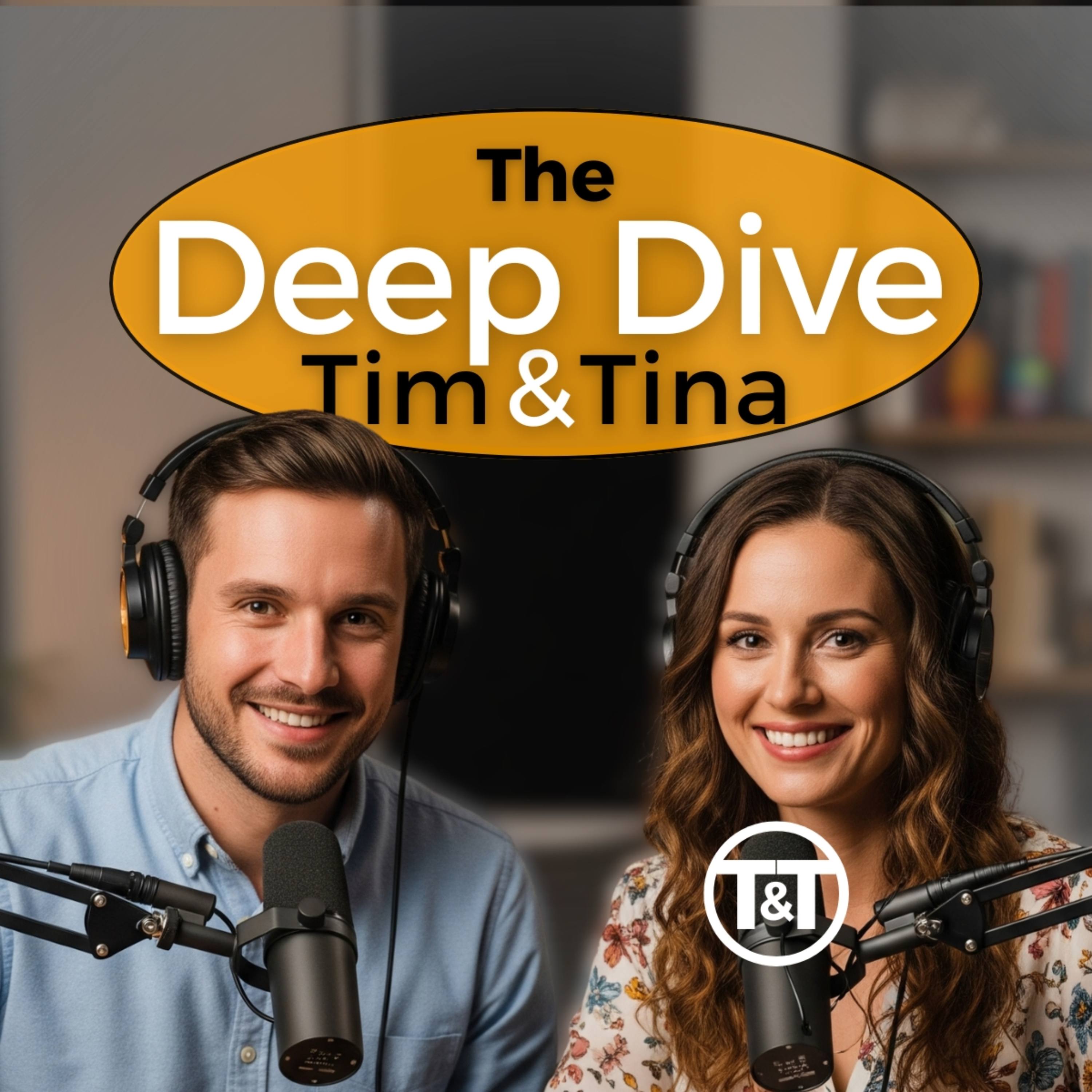
The Deep Dive with Tim and Tina
by Broken Moon Media
Tim and Tina is a curiosity-driven podcast where we explore practical living topics like beekeeping, gardening, mushroom growing, raising goats, freeze drying, homesteading, and building a family estate or compound. Each episode is a deep dive into ideas, skills, systems, and projects that help people live more intentionally and self-sufficiently.
-
50
Compound Land Considerations: How to Avoid Rural Land Traps and Concrete Cancer
What should you look for when buying land for a family compound, homestead, or long-term rural retreat? In this episode of The Deep Dive with Tim and Tina, we talk through the biggest compound land considerations people often miss, from access and layout to drainage, utilities, zoning, soil, and long-term usability. If you’ve ever wondered how to choose good rural land, what can make a property look better than it really is, or what mistakes can turn a dream property into a money pit, this episode gets practical fast.We dig into common rural land traps that can cost buyers time, money, and major frustration. That includes bad access roads, poor water drainage, flood-prone ground, restrictive easements, difficult topography, utility headaches, questionable soil, and parcels that seem private but come with hidden limitations. We also talk about what to know before buying rural land for a compound, how to think about future building sites, and why land planning matters more than people realize when multiple homes, outbuildings, gardens, animals, water systems, and shared infrastructure are part of the vision.A big part of the conversation is concrete cancer and why it matters for rural properties more than many buyers expect. We cover what concrete cancer is, what causes concrete to crack, deteriorate, or fail over time, and why aging slabs, foundations, pads, culverts, and retaining structures deserve close attention before you buy. Whether you are evaluating an old barn slab, a shop floor, driveway sections, septic components, or existing structures on raw land, knowing the signs of concrete failure can save you from serious repair costs later.Tim and Tina also explore how to think beyond the listing photos and ask better questions before committing to land. Is the property actually buildable? Will water pool where you want to put roads, homes, or gardens? Are the existing improvements helping you or becoming liabilities? How do you spot red flags before they become expensive surprises? If you are planning a family estate, multi-generational homestead, off-grid setup, or rural compound, this episode is packed with practical advice on avoiding bad land deals and choosing property that can truly support the life you want to build.
-
49
Consumerism Is a Prison Without Walls: Why Modern Life Feels Empty and Overbuilt
Is consumerism quietly shaping the way we think, live, work, and measure success? In this episode of The Deep Dive with Tim and Tina, we explore the idea that consumerism is a prison without walls and what that means for the modern human. We talk about how people can be surrounded by convenience, comfort, entertainment, and endless buying options while still feeling stressed, disconnected, dependent, and strangely unfulfilled.This conversation digs into the deeper cost of modern consumer culture. Why do so many people feel trapped in cycles of earning, spending, upgrading, and repeating? Why does a lifestyle built around convenience often leave people less capable, less grounded, and more anxious? Tim and Tina unpack the pressure to consume, the illusion of freedom through buying, and the way modern life can separate people from self-reliance, real skills, community, purpose, and ownership over their time.We also talk about the plight of the modern human in a world of subscriptions, debt, digital distraction, status chasing, and constant marketing. What happens when identity gets tied to what we own instead of what we can do? What do people lose when everyday life becomes fully outsourced, from food and repair skills to entertainment and social connection? And why do so many people start waking up to these questions only after burnout, financial strain, or a growing sense that something is missing?This episode looks at consumerism not just as a money issue, but as a lifestyle issue, a mindset issue, and in many ways a spiritual issue. We explore the tradeoffs between convenience and competence, consumption and contentment, comfort and resilience. If you’ve been questioning modern life, craving a simpler way of living, or trying to understand why abundance can still feel like captivity, this episode offers a thoughtful look at the system so many people live inside without ever fully seeing.
-
48
What Is Kefir? How It’s Made, What It Does, and Why So Many People Drink It
What is kefir, how is it made, and why has it been around for so long? In this episode of The Deep Dive with Tim and Tina, we dig into kefir from the ground up. We talk about what kefir is, how kefir grains work, and the basic fermentation process that turns milk or sugar water into a tangy, probiotic-rich drink people have been using for generations.We also get into what kefir does in the body, why so many people drink it for gut health, digestion, and general wellness, and what benefits people are usually hoping for when they add kefir to their routine. If you’ve ever wondered whether kefir is actually good for you, what makes it different from yogurt, or whether it’s worth trying as a beginner, this episode covers the practical side in plain language.Tim and Tina also talk about how long kefir has been around, where it comes from, and why this traditional fermented drink is still popular today. We cover the potential benefits of drinking kefir, what to know before starting, and why some people make it at home while others buy it from the store.And if you think kefir is only for drinking straight, this episode opens up a lot more possibilities. We explore creative ways to use kefir in everyday life, from smoothies and breakfast ideas to baking, marinades, dressings, and other simple ways to work it into your kitchen. Whether you’re kefir-curious, already making fermented foods at home, or just looking for practical ways to support a healthier lifestyle, this is a helpful overview of what kefir is, how it’s made, and how to use it.
-
47
Freeze Drying can Make or Cost you Thousands
Hobby or Business - freeze drying insights.
-
46
How to Legally Start a Family Bank
Deep Dive with Tim and Tina tackles a question a lot of families are quietly asking: can we create a “family bank” that helps our kids, supports big goals, and keeps wealth in the family, without creating a tax mess or a legal headache.In this episode, Tim and Tina break down what a family bank actually is, what it is not, and the legal building blocks that make it work. You will learn the core ways families structure intrafamily loans, how to document terms properly, how interest rates and repayment schedules matter, and how to avoid common mistakes that can turn a well meant gift into a compliance problem. They also cover practical examples, like helping a child buy a first home, funding a business startup, and replacing high interest debt with a structured family loan.This conversation is educational, actionable, and designed to help you take first steps confidently, whether your family bank starts with 5,000 dollars or 500,000.Disclaimer: This episode is for educational purposes and is not legal or tax advice.
-
45
Why Unsexy Rentals Beat Luxury Subscriptions
In “Why Unsexy Rentals Beat Luxury Subscriptions,” Tim and Tina dig into a pattern that keeps showing up in real businesses. The boring, practical rental models often win, while premium subscription plays struggle with churn, high acquisition costs, and constant pressure to feel “worth it.”They break down the economics: utilization rates, maintenance and turnaround costs, damage and fraud risk, insurance, and how pricing actually works when customers only want access occasionally. Then they compare that to luxury subscription dynamics like novelty fade, high expectations, customer support load, and the brutal math of keeping high value members month after month.They also explore where unsexy rentals are quietly expanding in 2026, tools, event kits, mobility and storage, baby and family gear, specialty equipment, and regional business to business niches. The episode ends with a simple framework to spot rental opportunities that have real demand, defensible operations, and margins that survive reality.
-
44
Jobs are a Scam
In “Jobs are a scam,” Tim and Tina dig into a question that will not leave them alone. If productivity has skyrocketed for generations, why do so many people still live inside the 40 plus hour week, and why does it feel like it is getting harder, not easier.They trace the history of work from early industrial labor to the rise of the 40 hour standard, then follow the money and power through wages, profits, unions, policy, corporate incentives, and the modern economy. Along the way they look at why shorter work week predictions kept showing up, what changed, and who actually benefits from the way jobs are structured today.Expect a research heavy conversation that separates myth from data, highlights competing explanations, and leaves you with a clearer picture of how we got here and what would have to shift for time, not just output, to be the thing we optimize.
-
43
How to Start a Bank from Scratch in the US
In “How to Start a Bank from Scratch in the US,” Tim and Tina unpack what people mean when they say “let’s start a bank,” and why the reality is far more complex than most assume. They walk through the core pieces of building a de novo bank in 2026: choosing a charter path, forming an organizing group, raising serious capital, hiring experienced leadership, and meeting the compliance expectations that come with holding other people’s money.They also dig into the approval pipeline and the agencies involved, what regulators look for in a business plan, and the most common reasons new bank efforts stall out. Expect a clear, research driven conversation about timelines, governance, risk controls, deposit insurance, and the brutal operational overhead that starts long before you open the doors. Educational only, not legal advice.
-
42
$1500 to $1 Million AI Blueprint
In “$1500 to $1 Million AI Blueprint,” Tim and Tina break down what someone could realistically do in 2026 with a small budget and a lot of execution to build an AI powered business that has a shot at reaching seven figures. Not a lottery ticket, not passive income, and not a promise.They walk through a practical path: picking a painful niche problem, validating demand fast, using off the shelf AI tools to deliver a specific outcome, and turning that into a simple offer with clear pricing. They cover what to spend the first $1500 on (software, basic branding, distribution tests, contractors), how to avoid fake “AI agency” fluff, and how to build a moat that is not just prompting.Expect breakdowns of offer design, distribution channels, productizing a service, retention, basic unit economics, and the hard constraints most people ignore like trust, compliance, support load, and churn. The goal is a sober, step by step map of what could work, what usually fails, and what it would actually take to scale.
-
41
You are Paying too much for Meat: How to Start Saving Money
In “Get Cheap Steaks With Wholesale Beef Hacks,” Tim and Tina break down how people get high quality steaks for less in 2026 without playing games or buying mystery meat. They dig into where the real deals come from, warehouse clubs, grocery sale cycles, restaurant supply stores open to the public, buying whole primals, and going in on a quarter or half with a farmer or local locker.They explain how to compare true cost per pound after trim and bone, which cuts give you steakhouse results for less, and when “cheap” becomes expensive because of waste, poor yield, or bad storage. They also cover the at home side: the simplest way to portion and vacuum seal, what tools you actually need, and how to avoid freezer burn and regret purchases.Practical, numbers based, and Midwest friendly, this episode ends with a short checklist so you can stock a freezer with great steaks without destroying your budget.
-
40
Best Mushroom Growing Methods for Small Spaces
In “Building a Profitable Micro Mushroom Farm,” Tim and Tina break down what it actually takes in 2026 to turn mushrooms from an interesting hobby into a real, repeatable small business. They dig into the unit economics most people skip, which varieties sell reliably, how to choose a production method, and what your first setup should look like if you are trying to stay lean.They cover the boring but decisive parts: contamination control, consistent yields, labor and workflow, substrate sourcing, climate and humidity management, packaging, shelf life, and food safety expectations. Then they shift to sales, farmers markets vs restaurants vs direct to consumer, pricing, contracts, and how to avoid the trap of producing more than you can sell.This is a practical, research driven look at how to start small, dial in consistency, and scale without blowing cash on a fancy grow room that never pays for itself.
-
39
Backyard Beekeeping: First Steps, Costs, and Mistakes
In “The Brutal Economics of Backyard Beekeeping,” Tim and Tina break down the part of beekeeping most people avoid talking about. The money. They dig into what it really costs in 2026 to keep a few backyard hives alive, healthy, and productive, and why the numbers often do not work the way new beekeepers expect.They walk through startup gear, recurring expenses, time demands, and the big risks that blow up budgets like winter losses, varroa management, requeening, feeding, and replacing equipment. Then they get practical about revenue, what you can realistically produce, how pricing works for bottled honey, infused honey, and honey straws, and why selling is a different skill than keeping bees.This episode is a clear eyed, research driven look at break even math, common financial traps, and what makes backyard beekeeping a hobby, a side hustle, or an actual small business.
-
38
Building Your Family Compound on a Shoestring Budget
In “Building a compound on a shoestring budget,” Tim and Tina dig into what it actually takes in 2026 to create a shared family or friend group property without turning it into a financial, legal, or relational disaster. They unpack the real world basics, finding land, zoning and permitting, utilities and septic, access roads, insurance, and the hidden costs that crush most budgets.Then they get practical about how people structure communal living, from ownership and governance to shared expenses, chores, privacy, boundaries, and what happens when someone wants out. Expect discussion of phased building plans, small starter dwellings, DIY versus licensed work, building codes, financing options, and the common pitfalls like handshake agreements, unclear decision making, and underestimating infrastructure.This is a clear eyed, research driven look at how to do it legally, safely, and sustainably, even with limited cash and limited time.
-
37
Attention Is a Currency: The Psychology of MrBeast, Sidemen, Ryan Trahan & Emma Chamberlain
MrBeast, Sidemen, Ryan Trahan, and Emma Chamberlain—how YouTube’s biggest creator empires engineer retention, parasocial intimacy, and spectacle… and how to watch ethically. Tim & Tina map the attention economy: spectacle philanthropy, challenge escalation, status play in group channels, “unedited” intimacy, and why these formats feel irresistible to the brain.In this Deep Dive, we unpack:Spectacle economics (MrBeast & Beast Philanthropy): charity-as-content, bigger-next-time loops, algorithmic pacing, variable rewards, audience capture.Group dynamics (Sidemen): status rotation, in-jokes, Side+, Charity Match, merch as belonging—how creator teams create tribes.Scarcity storytelling (Ryan Trahan): the Penny Series, gentle stakes, daily cliffhangers without dopamine overload.Intimacy aesthetics (Emma Chamberlain): authenticity theater, podcast confession, low-stim design and high loyalty.Live “swarm” risk (cameos: Kai Cenat, Airrack): subathons, mass collaboration, safety, consent, and platform trade-offs.You’ll learn the psychology (variable reinforcement, novelty seeking, parasocial attachment, social identity theory), the business logic (retention floors, thumbnail/CTR strategy, creator-run studios), and practical guardrails: building an attention budget, spotting ethical philanthropy, and supporting creators without burning out.Keywords: creator economy, attention economy, YouTube strategy, MrBeast philanthropy, Sidemen Side+, Penny Series, Emma Chamberlain podcast, parasocial relationships, audience capture, challenge videos, charity match, retention, thumbnails, ethics, burnout, consent.
-
36
Conscience vs Compliance: Why Some People Resist
Why do some people follow orders while others risk everything to say no. Tim and Tina dig into the psychology of obedience, moral courage, and how resistance actually works on the ground. Using Andor (Disney Plus), Chernobyl (HBO), and The Handmaid’s Tale (Hulu), they unpack what flips a bystander into a dissident, why institutions punish truth tellers, and how small acts add up.What you will hear: • Andor. Cassian’s shift from survival to purpose, Mon Mothma’s quiet rebellion, Luthen’s “dirty hands,” Dedra and Cyril as portraits of bureaucratic zeal • Chernobyl. Legasov’s whistleblowing, Dyatlov’s blame economy, Ulana Khomyuk’s composite role, and how information control sustains catastrophe • The Handmaid’s Tale. June’s trauma and agency, Serena’s complicity, Nick’s divided loyalties, Aunt Lydia’s rationalizations, and later season arcs about repair • Obedience science. Authority, conformity, moral injury, bystander effect, and why patterned harm is missed when leaders “count incidents” • The risk calculus. Social ties, identity, and when fear of shame outweighs fear of punishment • A resistance toolkit. Pattern logging, boundary scripts, ally building, safe disclosure, and how to turn private conscience into collective actionSearchable topics covered:why people obey authority, how resistance starts, Andor season 1 analysis, Andor season 2 setup, Chernobyl HBO explained, Handmaid’s Tale resistance and complicity, moral injury definition, whistleblower psychology, bystander effect, how to document patterns of harm, how authoritarian systems keep controlContent note: Discussion of state violence, coercion, and trauma. Spoilers for all listed works.
-
35
After the Parasocial: Stalking, Consent, and Why Systems Fail
When does attention become intrusion. Tim and Tina trace how private obsession turns into public harm, why consent gets distorted online, and where institutions break down. Drawing on Baby Reindeer (Netflix), You season 4 (Netflix), and The Invisible Man 2020 (Peacock or rental), they unpack parasocial relationships, stalking tactics, coercive control, and the red flags most people overlook.What you will hear:• Baby Reindeer analysis. Fixation, doxxing, platform amplification, and delayed police and workplace responses• You season 4 explained. Stalker rationalizations, charming narration that launders red flags, and consequence vs glamour• The Invisible Man 2020. Tech-mediated abuse, gaslighting, isolation, and why “invisible” harm is hard to prove• The Consent Map. Active, specific, reversible consent in DMs and real life• Institutional failure. Why incident counting beats pattern recognition, and what better threat assessment looks like• The Pocket Toolkit. Stalking warning signs, boundary scripts, documentation and screenshot habits, privacy settings, report pathsSearchable topics covered:parasocial relationships explained, Baby Reindeer stalking breakdown, You season 4 analysis, The Invisible Man 2020 coercive control, what is consent online, digital harassment safety, threat assessment basics, how to set boundaries, how to document abuse, institutional failure in response to stalkingContent note: Discussion of stalking, harassment, and abuse. Please listen with care. Spoilers for all three works.
-
34
The Rebuild: Station Eleven, Silo, and Sweet Tooth on soft apocalypse and the ethics of care
What holds a broken world together: fear or care. In this Deep Dive, Tim and Tina unpack three “soft apocalypse” standouts that put people before spectacle. Station Eleven, Silo, and Sweet Tooth all ask the same question in different ways: after the worst day, what do we owe each other. We compare how each story treats community, rules, and repair, and why care work becomes the real endgame.Using Station Eleven’s “Survival is insufficient,” Silo’s engineered order, and Sweet Tooth’s found family, we explore the psychology of mutual aid, grief, and rebuilding. We look at caregiving under scarcity, art as medicine, parenting and chosen kin, and who gets protected when safety and freedom collide. Expect close reads of Kirsten and Jeevan, Juliette and Bernard, Gus and “Big Man,” plus the communities that form around them.What we coverSoft apocalypse 101: why slower, human scale stakes feel more truthful after crisisCare vs control: Traveling Symphony and mutual aid, Silo’s siloed secrecy, Essex County’s sanctuariesMemory and meaning: ritual, performance, and the stories that keep groups intactGovernance and consent: rules, surveillance, and when protection becomes harmBioethics and belonging: stigma, hybrids, quarantine, triage, and who counts as “us”Practical takeaways for real life care, boundaries, and community repairSearchable topics this episode answers: Station Eleven HBO psychology, Silo Apple TV themes, Sweet Tooth Netflix analysis, soft apocalypse meaning, mutual aid vs authoritarianism, post apocalyptic ethics, caregiving after catastrophe, found family, community rebuilding, trauma and grief, pandemic stories, surveillance and secrecy, art as survival, Gus and Big Man, Kirsten Raymonde, Juliette Nichols.Spoilers light to moderate for all three titles.
-
33
Being Bernard: Jade's Sad Cactus
In this episode, Tim and Tina unpack one of the most absurd and hilarious stories from Being Bernard — the infamous ‘Sad Cactus.’ The hosts dive into Bernard’s dry, sarcastic take on a therapy session where a client believes her cactus is emotionally withdrawn after a playlist change. Expect plenty of witty banter, behind-the-scenes speculation, and playful overanalysis as Tim and Tina explore the humor, the characters, and the genius writing that makes Being Bernard such a unique comedy series. Perfect for fans of dark humor, fictional therapy sessions, absurdist storytelling, and laugh-out-loud character reviews.Check out the show BEING BERNARD here on YouTube.
-
32
Grief Got a Vocabulary: Rupture, Real Apologies, and Boundaries in BoJack, Fleabag, and Hill House
Why do some TV apologies land and others feel hollow? In this Deep Dive, Tim and Tina map the new language of grief on screen using BoJack Horseman, Fleabag, and The Haunting of Hill House.We define rupture, repair, apology, amends, boundaries, relapse, and meaning making. Then we test them against key moments like BoJack’s “Free Churro,” “Time’s Arrow,” and “The View From Halfway Down,” Fleabag’s bathroom confessions, the haircut scene, “It will pass,” and the father’s wedding speech, and Hill House’s “Two Storms,” the Bent-Neck Lady, and the Red Room reveal. You will hear why a real apology names the harm, the impact, and the change, asks what is needed, and never demands forgiveness.We show where shows still cheat with sacrifice or montage fixes, and how boundaries protect connection instead of ending it. We close with practical tools you can use today, including a five point apology checklist and one clean boundary sentence. Spoilers throughout.Searchable topics we cover: BoJack apology explained, Fleabag boundaries, Hill House grief analysis, Bent-Neck Lady meaning, Red Room explained, how to apologize for real, what is rupture and repair, amends vs apology, grief on TV, how to set a boundary with care.
-
31
After the Anti-Hero: Succession, Better Call Saul, and Barry — Accountability vs Redemption
Charisma is out. Consequence is in. In this episode of Deep Dive with Tim and Tina, we unpack why today’s audiences expect repair or ruin from TV’s former anti-heroes. Spoilers ahead. We break down the Succession ending explained through Kendall’s water, the sibling kitchen fight, the board vote, and that final sandwich shop walk. We map Better Call Saul finale explained from the Howard con to Kim’s bus breakdown and Jimmy’s courtroom confession, and why it reads as agency, not performance. Then we decode Barry ending explained as denial turned into a belief system, Gene’s complicity, and the biopic that rewrites the truth. Along the way we translate big ideas into plain language: moral injury, shame vs guilt, restorative justice vs retributive justice, and what real accountability looks like on screen and off. If you have wondered why clever is no longer enough, and what counts as change we can trust, this is your guide. Searchable topics we answer: accountability vs redemption, why anti-heroes faded, why confession lands, how fandoms handle consequence, and how shows close the loop on harm.
-
30
Class on Camera: Squid Game, Parasite, Triangle of Sadness, and Knives Out
Squid Game, Parasite, Triangle of Sadness, and Knives Out explained through psychology. Why debt, humiliation, and status games feel like survival to your nervous system. Tim and Tina break down class anxiety on screen, show how status threat lands in the body, and offer a simple tool you can use the next time work, family, or the internet turns into a contest. Spoilers ahead.We link the biggest scenes across all four titles: the public elimination and VIP gaze in Squid Game, the rain soaked reset in Parasite, the sea sick power flip in Triangle of Sadness, and Marta’s honesty play in Knives Out. Along the way we unpack shame, debt stress, disgust, inheritance myths, and why an audience makes fear feel worse. In plain language we touch on polyvagal basics so “fight, flight, freeze” is more than a slogan. Then we ask the core question: when status is on the line, what does your body do first, and how can you get choice back.What you will learn:• How class threat and humiliation trigger real body alarms, not just feelings• Why smell, mess, and disgust map onto hierarchy and contempt in Parasite and Triangle of Sadness• How public scrutiny in Squid Game changes risk taking• Why kindness and honesty become power moves in Knives Out• A 90 second downshift practice to steady yourself during status contestsSearchable topics this episode answers: Squid Game analysis, Squid Game explained, Parasite analysis, Parasite themes, Triangle of Sadness ending meaning, Knives Out themes, class anxiety, debt stress, shame response, nervous system, polyvagal, disgust and power, survival psychology.
-
29
We Deep Dive the Deep Dive: How Tim and Tina Build an Episode
Curious how a Deep Dive is made. In this behind the scenes special, Tim and Tina turn the microscope on their own show. They walk you through the full process, from picking topics and timing releases, to rapid research and fact checks, to shaping a clean narrative that blends psychology, philosophy, and plot. You will hear the frameworks they lean on for identity, memory, grief, power, ethics, and place. You will also hear where they cut, why they pause, and what they got wrong before they hit publish.Across the hour, they compare how the approach shifts for TV series, movies, and YouTube channels. Expect examples from Severance, The Last of Us, Black Mirror, Fallout, Stranger Things, Andor, Arcane, True Detective, MrBeast, and Sidemen. Get practical tips on titles, descriptions, clip selection, and polls so your episode is easier to find and easier to share. Learn how they keep spoilers useful without giving away the whole story.Chapters include: choosing a title that answers a search, sorting sources and transcripts, building the narrative spine, stress testing a take with counterpoints, editing for pace and silence, and turning insights into clips and social posts. If you want the blueprint for every Deep Dive, start here.Searchable topics this episode answers: how to research a podcast fast, how to structure a story, psychology of TV, philosophy of film, creator economy analysis, episode SEO, writing titles and descriptions, clip strategy, audience retention, behind the scenes podcast production.
-
28
The Sidemen's Creator Economy Empire Explained: Group Dynamics, Status Play, Creator-Run Empires
Tim and Tina pull apart the Sidemen blueprint. How do KSI, Miniminter, Zerkaa, TBJZL, Behzinga, Vikkstar123, and W2S keep friendship real while running a multi-channel business with Sunday tentpoles, Side+, Sidemen Clothing, XIX Vodka, Sides, and the Sidemen Charity Match. We map the creative flywheel, the money flows, and the psychology behind the banter that keeps audiences coming back.You will hear a clear breakdown of the main channel, MoreSidemen, and SidemenReacts. We study signature formats like Tinder in Real Life, 20 vs 1, $100 vs $10,000 trips, Hide and Seek, and the Charity Match, then show how editing beats, retention hooks, and thumbnail A and B tests shape the final cut. We dig into group roles, status play, and why teasing can signal care when a team protects boundaries. We compare the Sidemen to MrBeast, Dude Perfect, Beta Squad, and FaZe, and we look at Side+ as the engine that funds bigger risks.Searchable topics we answer• How the Sidemen flywheel works, from audience to commerce and back• Who does what in the group, and how status games stay safe• Why the Sunday main video matters for brand trust and growth• How Side+ changes budgets, creative risk, and community loyalty• The production system, from pitches and veto power to editors and retention beats• Ethics in prank and dating formats, dignity and consent, and “who pays for the joke”• Why the Sidemen Charity Match builds culture, not just views• What could break cohesion, and how seven equals make fast decisions• Sidemen vs MrBeast vs Dude Perfect vs Beta Squad, strengths and tradeoffs• The next five years: live events, licensing, food and beverage, and global scaleKeywords to weave into platform tagsSidemen, KSI, Miniminter, Zerkaa, TBJZL, Behzinga, Vikkstar123, W2S, Side+, Sidemen Clothing, XIX Vodka, Sides, Sidemen Charity Match, Tinder in Real Life, 20 vs 1, $100 vs $10,000, creator economy, attention economy, YouTube group, retention, thumbnails, parasocial, brand strategy, UK YouTube, Beta Squad, MrBeast, Dude Perfect.Vote in the episode poll for your favorite Sidemen format, and send the moment where the banter landed perfectly or went too far, with a timestamp.
-
27
Mr Beast YouTube Channel Explained: Spectacle Economics, Altruism vs Branding, and Attention as Currency
MrBeast, Jimmy Donaldson, YouTube algorithm, philanthropy, business model. Tim and Tina map how spectacle turns attention into money and debate the costs.In this Deep Dive, we break down the MrBeast machine: impossible challenges, rapid edits, high stakes thumbnails, and retention first storytelling that convert clicks into capital, then into even bigger videos, Feastables, and more. We unpack the philanthropy debate with care. Visibility, consent, dignity, tax treatment, nonprofit transparency, and where help meets hype.Inside the algorithm we translate CTR, AVD, pacing, story loops, and title design into plain language, then show how those levers shape creative choices. Case studies include Squid Game recreation, 1,000 people see for the first time, extreme endurance videos, and large scale giveaways.We follow the revenue stack: AdSense, sponsors, brand deals, cost of goods for stunts, reinvestment flywheel, risk management, A/B testing, and why attention works like currency online. Then we explore psychology and philosophy. Parasocial bonds, audience capture, lottery mindset, moral licensing, public trust, and whether charity as content can still be ethical.Finally, Tim and Tina score the tradeoffs, outline an ethical spectacle checklist for creators, and ask what impact metrics should matter most. Spoilers for specific videos.Search helpers: MrBeast analysis, Jimmy Donaldson, YouTube business model explained, philanthropy critique, attention economy, Feastables, MrBeast Burger, creator economy, thumbnails, retention, CTR, AVD, brand deals, algorithm.
-
26
True Detective (Next Chapter) Explained:Collective Guilt, Unreliable Memory, and Place as Villain
True Detective podcast deep dive on the next chapter. Themes, analysis, ending explained, collective guilt, unreliable memory, place as villain, HBO series recap.Tim and Tina take apart the next chapter of True Detective with a clear, story first approach. We map how a town’s buried history creates collective guilt, why memory fails key witnesses, and how the setting itself acts as the predator. Expect a scene by scene breakdown, timeline checks, motif tracking, and a hard look at the psychology and philosophy behind the case.We compare this season to earlier True Detective entries, trace echo lines across the anthology, and test theories about what really happened, who is protecting whom, and what the land is hiding. Along the way we unpack visual clues, sound design, unreliable narration, and the moral math of institutions under pressure.Spoilers ahead. Perfect for listeners searching True Detective analysis, season recap, ending explained, themes, characters, symbolism, place as character, HBO anthology, detective psychology.
-
25
The Witcher Season 4 Explained: Recasting and Rebuilding Identity
The Witcher Season 4 explained. Geralt recast, Liam Hemsworth, Henry Cavill exit, timeline, lore ties, Ciri and the Rats, Yennefer, Wild Hunt, Nilfgaard. Spoilers.In this Tim and Tina Deep Dive we unpack Season 4 of The Witcher on Netflix through two lenses at once. What the story is doing on screen, and what the recast means for identity, memory, and meaning off screen. We connect the post Thanedd fallout to book arcs that shape Geralt, Yennefer, and Ciri, then zoom in on the psychology of seeing a familiar hero with a new face. Ship of Theseus, parasocial bonds, and how audiences update memory when continuity shifts.What you will hear:A clear, spoiler filled walkthrough of Season 4 that situates the show against Sapkowski’s books and CD Projekt game canon, plus where the plot is likely headedGeralt after the fracture. How a witcher rebuilds a self from pain, ritual, and chosen family, and how a recast can serve that arc instead of fighting itCiri’s path. Desert echoes, Rats, agency, and the ethics of power tied to Elder Blood and prophecyYennefer’s burden. Care, leadership, and the cost of rebuilding trust after Aretuza, with a look at how love stories survive war and separationThe politics map. Nilfgaard and Emhyr, Redania with Dijkstra and Philippa, Scoia’tael, the Wild Hunt in the margins, and how monoliths keep the multiverse pressure onPhilosophy made simple. Identity continuity when a body changes, memory as a storyteller, and why meaning comes from vows not facesCraft notes. How stunt work, choreography, sound, and color help us accept a new Geralt, and where Season 4 evolves tone from Seasons 1 to 3Why it matters:Recasts can break immersion or deepen the theme. We show how Season 4 turns a production change into a character study about who we are when names stay and faces change, and what that teaches us about grief, loyalty, and growth.Spoiler warning:We discuss major Season 4 events and reference key moments from Seasons 1 to 3 and the books.Search helps:The Witcher Season 4 breakdown, The Witcher S4 explained, Geralt recast Liam Hemsworth, Henry Cavill exit, Ciri Rats arc, Yennefer Season 4, Wild Hunt Netflix, Witcher lore timeline, Witcher politics map, ending explained, Tim and Tina Deep Dive, TV Psychology Exposed
-
24
28 Years Later Explained: Navigating Rage, Collapse, and the Ethics
28 Years Later explained. We unpack fear, social collapse, and survival ethics in the rage virus sequel to 28 Days Later and 28 Weeks Later. Spoilers.In this Tim and Tina Deep Dive we take 28 Years Later and use it to ask hard questions about what people do when the lights go out. We explore how fear spreads faster than infection, why systems crumble, and which moral lines hold when survival is on the line.What you will hear:A clear, spoiler filled walkthrough that connects 28 Years Later to 28 Days Later and 28 Weeks Later, the rage virus, and the rules of this worldThe psychology of fear under pressure. Panic, crowd behavior, scapegoating, moral injury, and why trust failsSurvival ethics in practice. Triage, quarantine, mercy vs order, vigilantism vs law, and how leaders justify ugly choicesPhilosophy made simple. Utilitarian trade offs vs duty based ethics, the trolley problem in outbreak form, and the social contract after collapsePower and institutions. Military command, science in crisis, propaganda, borders, refugee camps, and who gets protected firstMeaning after ruin. How families, found communities, and vows give purpose when everything else is goneCraft notes. Daylight horror, sound design, pace, and why fast infected change the kind of fear you feelWhy it matters:We translate the film’s shocks into takeaways you can use. Tim and Tina share a quick field guide for crisis thinking. How to slow down fear, choose a code before you need it, and build a small circle that can hold.Spoiler warning:We discuss major plot points from 28 Years Later and references to 28 Days Later and 28 Weeks Later.Search helps:28 Years Later analysis, 28 Years Later breakdown, rage virus explained, 28 Days Later sequel, 28 Weeks Later connections, ending explained, survival ethics, post apocalyptic psychology, zombie movie philosophy, outbreak movie analysis, Tim and Tina Deep Dive, TV Psychology Exposed
-
23
Joker: Folie à Deux Explained:Shared Delusional Disorder
Spoilers for Joker 2019 and Joker Folie à Deux.Joker Folie à Deux explained. We unpack folie à deux, shared psychosis, unreliable narration, and why the musical numbers reveal inner reality, not fact.Tim and Tina dive into the sequel’s biggest ideas. What does folie à deux really mean, how did DSM 5 reframe “shared psychosis,” and why does that matter when we watch Arthur Fleck and Dr. Harleen Quinzel move from patient and clinician to partners in a shared fantasy. We break down how duets and set pieces work as point of view, how memory edits and staged scenes tip us off to an unreliable narrator, and why a duet can carry a lie perfectly on pitch.We look at codependence, isolation, and intense attachment as risk factors, without armchair diagnosis. We draw a clean line between care and performance, and talk about boundaries and consent inside unhealthy bonds. We track Gotham as a system that rewards spectacle over repair, how social contagion spreads a myth faster than facts, and how a private mask becomes a public ritual. We ask what is left when a symbol is loved more than a person.You will hear plain language tools you can use: a quick reality check with timelines and third sources, how to spot confirmation loops, and a simple boundary phrase, “I can love you and not become you.” We close with a media literacy tip for musical storytelling, treating on screen highs as inner weather rather than evidence.Keywords for search: Joker Folie à Deux explained, Joaquin Phoenix, Lady Gaga, Harley Quinn, Harleen Quinzel, shared psychosis, folie a deux meaning, unreliable narrator, musical numbers, Gotham, social contagion, myth making, courtroom confession, boundaries, codependency, mental health portrayal.
-
22
Stephen King's IT Explained: Trauma, Phobia, and Horror's Appeal
Spoilers ahead. It: Welcome to Derry explained. New HBO Max series, 1962 prequel, Pennywise origins hints, Bill Skarsgård return, the Black Spot burning, Derry as a cursed system, and how childhood fear, collective evil, and memory drive the story. In this Deep Dive: TV Psychology Exposed episode, Tim and Tina start with the paper boat and the red flash, then map the psychology and philosophy under the scares.What we cover• Setup and stakes: where the series sits in Stephen King’s universe, why a season format lets dread build, and how Derry works like a character• Childhood fear in plain words: how kids learn danger fast, fear conditioning and extinction in one sentence each, why naming Pennywise matters, humor and small rituals as shields• Collective evil: bystander effect, scapegoats, and the normalization of deviance, Derry as a feedback loop where silence feeds the monster and the monster rewards silence• History made horror: the Black Spot burning and how real town harms echo through the myth, institutions that tilt toward cruelty when fear becomes policy• Memory that will not sit still: childhood snapshots vs adult story, why leaving Derry dulls recall, a simple line on memory reconsolidation, and how reunion stitches fragments• Symbols and rules: balloons, drains, circuses, photos, blood oaths and the Ritual of Chud framed as meaning making rather than lore dump• Kids and adults together: kids believe fast, adults rationalize fast, what each group gets right about danger, and why both are needed to face a system that wants them apartPredictions• A secret the town knows but will not say• A parent who chooses denial over proof• A kid whose fear becomes leadership• A public choice for truth in daylight and the price that follows• One simple childhood object that becomes a keyWhy it mattersThis story is about more than a clown. It shows how a community can teach fear, excuse harm, and forget on purpose. It also shows how friends make fear smaller. We share three tools you can use today. Name the fear. Borrow a friend’s courage. Make a small ritual that says we face this together. We also show how to break bystander drift and how to rewrite a scary memory by adding safety, witnesses, and choice.Search keywordsWelcome to Derry explained, It prequel, Pennywise, Bill Skarsgård, Derry Maine, Black Spot burning, Losers’ Club, childhood fear, bystander effect, normalization of deviance, memory reconsolidation, clown phobia, symbols in It, Ritual of Chud, Stephen King universe, HBO Max Welcome to Derry.
-
21
Fallout Explained: Vaults, Wasteland, and Human Nature
Spoilers ahead for the Fallout TV series on Amazon Prime Video. Fallout explained. Lucy MacLean, Maximus, the Ghoul, Vault-Tec, Brotherhood of Steel, NCR, Enclave, Institute, Caesar’s Legion, power armor, Vault 33, and New Vegas Season 2 predictions. In this Deep Dive: TV Psychology Exposed episode, Tim and Tina unpack belonging after ruin, how ideology spreads, and why tribes form when water, food, and safety are scarce.What we cover• Wasteland psychology: survival first, scarcity everywhere, and why the first currency is a story about us• Vault life vs surface life: the comfort of rules in Vault 33 and the hidden cost of Vault-Tec experiments that turn shelter into a cage• State of nature and the social contract in plain words: why people trade freedom for protection, and how those contracts get broken• Lucy’s collapse of belief and Maximus losing faith in the Brotherhood: when identity is tied to an institution and the institution fails• Ideology as glue: purity myths, chosen enemies, sacred objects, and symbols that recruit loyalty in a lawless world• Propaganda tools you can spot: glittering generalities, transfer, name calling, dehumanization, bandwagon, and appeal to fear• Factions and meanings: Brotherhood hoarding tech, NCR rebuilding, Enclave elitism, Institute technocracy, Legion brutality• Power armor as status and paradox: a relic of old power that could not stop the bombs, yet still worshiped as salvation• Mercy vs order, clean hands vs full stomach: the moral cost of survival, from Overseer edicts to cannibal camps• Found family after collapse: why people circle back to the campfire even when groups can harm as well as protectPredictions• New Vegas shifts the map: fresh alliances and rivalries that test Lucy’s idea of belonging and expose Vault-Tec’s deeper secrets• Norm’s vault investigation cracks the illusion of safety from inside, with Butt Atkins and the 31–32–33 chain as pressure points• Brotherhood crisis of meaning: praise Maximus did not earn, a possible split, and symbols that stop matching the codeWhy it mattersFallout turns water, tribe, banners, and fear into choices we face in smaller ways every day. How to build community without purity tests. How to resist dehumanization even when afraid. How to spot messaging that tries to scare you into line. How to renegotiate belonging after betrayal.Search keywordsFallout explained, Amazon Prime Video Fallout, Lucy MacLean, Maximus, Cooper Howard the Ghoul, Vault-Tec experiments, Vault 33, Brotherhood of Steel, NCR, Enclave, Institute, Caesar’s Legion, power armor, New Vegas Season 2 predictions, social contract, propaganda in Fallout, ideology and tribe.
-
20
Arcane Season 2 Explained: Vi and Jinx, Piltover vs Zaun, Hextech, Shimmer, fate vs choice
Spoilers ahead. Arcane Season 2 explained. Vi and Jinx sisterhood, Piltover vs Zaun class conflict, Hextech and Shimmer ethics, Victor and Jace, Caitlyn, Silco, Warwick, Echo, ending, and predictions. This Deep Dive: TV Psychology Exposed episode starts with the rooftop paradox of love and harm, then maps the psychology and philosophy that drive the season.What we cover• Sisterhood under pressure: Vi and Jinx as attachment styles, rupture and repair, why Jinx chooses the sacrifice and why Vi cannot let go• Class and the city: Piltover’s order and progress vs Zaun’s survival and dignity, moral luck in plain words, who pays for progress• Technology and the soul: Hextech and Shimmer as amplifiers, a tool without a code, Victor’s hive mind, Jace’s plea for imperfect beauty• Fate vs choice: determinism in simple terms, agency under trauma, acting like fate is a rumor and choice is a craft• Power, law, and care: councils, gangs, and labs, why mercy needs boundaries, Caitlyn’s hard turn and the cost of compromise• Season compare: S1 origin and fracture vs S2 consequence and negotiation, pacing shifts, animation and music choices that serve psychology• Ending and next steps: Jinx’s presumed death, whether separation frees growth or locks in loss, Hextech’s future risk, real reform vs another breakWhy it mattersArcane turns sisterhood, class, technology, and fate into choices we live every day. How to love someone who scares you without losing yourself. When to put the tool down. How to see the class story inside your own decisions.Keywords for discoveryArcane Season 2 explained, Arcane ending, Vi and Jinx, Piltover Zaun, Hextech, Shimmer, Victor Jace, Caitlyn, Silco, Warwick, Echo, determinism, moral luck, fate vs choice, predictions.
-
19
Being Bernard: The Coach
Tim and Tina are back with another hilarious deep dive into the world of Being Bernard — this time reviewing Episode 2, “Coach.” In this side-splitting installment, Bernard faces a client who tries to “out-therapist” him, armed with a clipboard, a self-help book, and something called PsycheFlex™. Tim and Tina break down the funniest moments, from Bernard’s caffeine-fueled sarcasm to the absurd “complimentary trial session,” and debate just how far this so-called coaching method could go. Expect sharp banter, behind-the-scenes speculation, and laugh-out-loud commentary on Bernard’s dry wit, awkward therapy moments, and the bizarre dynamics of fictional clients. Perfect for fans of comedy series reviews, therapist humor, character-driven storytelling, and sarcastic observational comedy.Watch it now on YouTube.
-
18
The Backrooms Explained: Liminal dread, memory glitches, reality drift | Deep Dive: TV Psychology
The Backrooms explained. Liminal spaces, noclip, analog horror style, levels and rules, memory glitches, reality drift, and why it gets under your skin. Spoilers ahead. Tim and Tina start with the fluorescent hum, damp beige carpet, and the one bar phone trap, then map the psychology and philosophy behind the phenomenon. We unpack liminal dread, why familiar-but-empty places feel wrong, how repetition scrambles orientation, derealization in plain words, and the fear of being seen by what you cannot see. We show how sound design and sameness create terror without a monster, trace the internet folklore that co-writes the maze, and compare Backrooms vibes to other analog horror without losing focus on the mind. We close with takeaways you can use to ground yourself in sterile spaces and a final question that will linger the next time a hallway looks the same as the last. Perfect for listeners searching for Backrooms explained, liminal spaces, noclip, analog horror, levels, entities, rules, memory, and reality drift.
-
17
Gen V Season 2 Explained: Fame, exploitation, power without ethics, The Boys S4 fallout
Gen V Season 2 explained. Spoilers. Fame as drug, Godolkin exploitation, Vought and Compound V, power without ethics, The Boys S4 fallout, predictions.Spoilers ahead for Gen V Season 2, Gen V Season 1, and The Boys Season 4. This is Deep Dive: TV Psychology Exposed. Tim and Tina start with a simple choice on a glowing phone screen. Chase fame or tell the truth. From there we map why Gen V hits now and how this season twists the superhero campus into a study of fame, exploitation, and power without ethics.What we cover• Fame psychology. External validation loops, ranking anxiety, parasocial hunger, audience capture, and the shame cycle when the mask slips• Exploitation as a system. Godolkin and Vought, contracts and NDAs, grooming and gatekeeping, people used as means not ends, the Woods, consent under pressure• Power without ethics. Moral disengagement, bystander drift, obedience to authority, charisma as cover, the difference between having a code and having a brand• Tribe and ranking. Houses, leaderboards, hazing, in group rules and out group punishment, a campus split between Homelander loyalists and holdouts• Media and narrative. Algorithms that reward spectacle, PR that launders harm, scapegoats, and how a clip can beat the truth• Compare and contrast. Season 1 discovery and shock vs Season 2 escalation and consequences. Gen V as campus thriller beside The Boys as corporate satire• Predictions. Dean Cipher’s agenda, human vs supe segregation pressure, whistleblowing vs ambition, the cost of Compound V, a choice that turns a follower count into a confessionWhy it mattersThe show turns metrics, contracts, and charisma into questions we live with every day. How to step off the metric trap. How to set boundaries with exploitative asks. How to keep a code when the room wants a brand.Perfect for listeners searching for Gen V Season 2 explained, The Boys Season 4 fallout, Godolkin University, Vought, Compound V, Homelander, Dean Cipher, themes, and predictions. Follow for daily TV psychology deep dives.
-
16
Peacemaker Season 2 Explained: Masculinity, shame, found family, Rick Flag Sr., ending, themes
Peacemaker Season 2 explained. Spoilers. Masculinity under pressure, shame and repair, found family, Rick Flag Sr., Vigilante, Harcourt, Adebayo, ending.Spoilers ahead. This is Deep Dive: TV Psychology Exposed. Tim and Tina start with a simple hook. The toughest person in the room cannot say I am sorry. From there we unpack Peacemaker Season 2 as a study of masculinity, shame, and found family.What we cover• Christopher Smith’s mask as performance. Violence and crude humor as armor. The father wound from Auggie White and how that script about manhood cracks• Shame as fuel or trap. Confession that leads to change versus confession that resets the cycle. What real amends could look like after Rick Flag Jr.• Found family dynamics with Harcourt, Adebayo, Economos, and Vigilante. Trust built by small risks. Loyalty versus enabling. Why chosen family gives Chris a new story• Rick Flag Sr. and the DCU context. Frank Grillo’s presence, raised stakes, and connections that serve the narrative instead of cameos• Season 1 breakage versus Season 2 repair. Same soundtrack energy, fewer shock laughs, more earned emotion• Predictions. The line Chris will not cross now. Whether Vigilante grows or regresses. Adebayo as the moral center. A test that pushes Harcourt toward care over control. One public consequence that could tilt Chris toward or away from hero• Daily life takeaways. Redefine strong. Name your code. Apologize without excuses. Accept care without calling it weakness. Build a support circle that tells hard truth and still lets you try againWhy it mattersThe show turns muscle, mercy, and repair into choices we face in smaller ways every day. We close on a question to sit with. If strength is not the mask, what is it.
-
15
Andor Season 2 Explained: Radicalization, conscience, cost of freedom, ending, timeline to Rogue One
Andor Season 2 explained. Radicalization, conscience, cost of freedom, ending, Cassian, Luthen, Mon Mothma, ISB, K-2SO, timeline to Rogue One.Spoilers ahead. This is Deep Dive: TV Psychology Exposed. Tim and Tina go past ships and set pieces to map the psychology and philosophy that drive Andor Season 2. We set the compressed timeline that races four years into 12 episodes and lands right at Rogue One. Then we track how ordinary people are pushed into extraordinary choices, and what freedom really costs.What we cover• The psychology of radicalization: grief to anger to purpose, solidarity, small wins, and Nemik’s manifesto as a living conscience• Conscience and means: dirty hands, how people justify tactics, Luthen as tragic strategist, Cassian as conscience in motion, Mon Mothma’s private sacrifices• The cost of freedom: safety, privacy, joy, strain on love and family, trauma, Saw as a caution• The state’s psychology: ISB procedure, banality of evil, Dedra’s focus, Syril’s hunger for belonging, the Empire protecting itself above all• Season 1 spark vs Season 2 escalation, fewer gadgets, harder human tradeoffs, why the tone makes Rogue One feel deeper• Filming choices and music cues that ground the world and bridge to classic Star Wars• Predictions: Cassian and K-2SO, Luthen’s likely fate, Mon Mothma’s public break, paths for Dedra and Syril, echoes from FerrixWhy it mattersAndor turns big ideas into daily questions. When is a tactic justified. What does it cost the self. How do you act with conscience under pressure. How do you build community, repair after harm, and practice hope as a behavior, not a mood.Perfect for listeners searching for Andor Season 2 explained, ending, Cassian Andor arc, Luthen, Mon Mothma, ISB, K-2SO, timeline to Rogue One, themes, and predictions. Follow for daily TV psychology deep dives.
-
14
Daredevil: Born Again Explained | Matt vs Fisk, Catholic guilt, vigilante vs law | Deep Dive: TV Psychology Exposed
Daredevil: Born Again explained. Spoilers. Matt Murdock psychology, Catholic guilt, Mayor Fisk, vigilante vs law, MCU links, ending, themes, predictions.Spoilers ahead. This is Deep Dive: TV Psychology Exposed. Tim and Tina unpack Daredevil: Born Again with a clear, search friendly breakdown that starts where the season lives most strongly, inside Matt Murdock’s head. We explore Catholic guilt and penance, the strain of a double life, sensory overload, and the moral injury that forced him to hang up the suit for a year. Then we thread that inner battle through his faith, his legal work, and his code as a vigilante.We map the shadow mirror in Wilson Fisk. Order without ethics. Shame and pride. Love and leverage with Vanessa. We look at what it means when Fisk wields institutions, not just fists, and how a Mayor Fisk changes the city. We compare Born Again to the Netflix run and talk fight language, courtroom stakes, and why a true continuation inside the MCU matters. We touch on allies and threats the season hints at, and how that wider playground raises the cost of every choice.What we cover• Ending themes and open questions without blow by blow spoilers• Matt’s psychology, guilt and penance, compartmentalization, and what forgiveness would require• Faith and justice in practice, the law as a blunt tool vs conscience as a precise one• Fisk’s power through institutions, the city as a character, and why order can hide harm• What is kept from the Netflix era, what feels new, and how MCU context shifts the stakes• Grounded predictions for next season, including the no kill line and identity risk• Daily life takeaways you can use right now, like naming your code, repairing after harm, and carrying guilt without letting it steerWhy it mattersDaredevil turns rules, mercy, punishment, and love into choices we face in smaller ways every day. When is breaking a rule courage, and when is it rationalization. How do you hold a code when the system fails. How do you repair after harm.Perfect for listeners searching for Daredevil Born Again explained, Matt Murdock psychology, Catholic guilt, Mayor Fisk, Matt vs Fisk, vigilante vs law, MCU connections, ending explained, and season predictions. Follow for daily TV psychology deep dives.
-
13
Stranger Things | Season 5 Explained | What You Need to Know About the Upside-Down
Stranger Things Season 5 explained. Ending, Eleven vs Vecna, Upside Down, Hawkins, Will and Max updates, theories, deaths, timeline, themes, psychology.Spoilers ahead. This is Deep Dive: TV Psychology Exposed. Tim and Tina unpack Stranger Things Season 5 with a clear, search friendly breakdown. We cover the ending, the fate of Hawkins, Eleven vs Vecna, the Upside Down’s rules, and how Will, Max, Mike, Dustin, Lucas, Steve, Nancy, and Robin evolve in the final run. We connect plot to psychology and philosophy so the story teaches us something about ourselves.What we cover• Ending explained, key reveals, and open questions• Eleven’s power, limits, and the cost of being the hero• Vecna’s strategy, trauma links, and what the Upside Down wants• Will’s connection, Max’s recovery arc, and how grief reshapes the group• Friendship, loyalty, guilt, forgiveness, and chosen family under pressure• Government secrecy, science ethics, conspiracy, and small town identity• How Season 5 echoes Seasons 1 to 4, and what those echoes mean• Lessons you can use in daily life, including boundaries, courage, trust, and repairWhy it mattersThe show turns fear, nostalgia, and coming of age into a map for real choices. We look at anxiety, coping, survivor’s guilt, power used with restraint, and how a community heals after crisis.Perfect for listeners searching for Stranger Things Season 5 explained, ending explained, Eleven vs Vecna, Upside Down rules, Will and Max, character arcs, theories, timeline, and themes. Follow for daily TV psychology deep dives.
-
12
The White Lotus Season 3 Explained: Episode psychology, ending, themes, Season 1 and 2 compared, predictions | Deep Dive: TV Psychology Exposed
The White Lotus Season 3 explained. Spoilers ahead. Episode psychology, ending, themes, character arcs, Season 1 and 2 comparison, and predictions for what comes next. This is Deep Dive: TV Psychology Exposed. We map each episode’s motives and masks, track power and class games, and read the quiet looks that say more than the lines. We keep the lessons implied, then connect them to daily life. Desire vs values, status anxiety, money scripts, boundaries, trust, spiritual hunger, and why vacations invite our worst and best selves.What we cover• How fear, envy, shame, and longing drive choices• Class performance, social climbing, and the price of belonging• Intimacy as leverage, friendship as currency, vows vs appetite• The season’s moral frame and how it differs from Hawaii and Sicily• What the finale really says about winners and losers• What next season is likely to explore if these threads keep tighteningTeaser dialogueTim: “You can feel it at breakfast. Smiles, plates, a secret ledger in the air.” [pause]Tina: “Every table is a negotiation. Who pays. Who owes. Who pretends not to notice.” [quiet beat]Tim: “Compared with the first two seasons, this one sits closer to the bone. Fewer grand gestures. More quiet cuts.”Tina: “So if the next season follows this trail… do we see people get wiser. Or just better at hiding the bill”Tim: “There is one tiny moment in the finale that answers that. If you catch it.” [long pause]We end on a cliff. One pattern links the resort, the rooms, and the guests. If we are right, it changes how you read every smile this season, and every smile you wear tomorrow.
-
11
Black Mirror Season 7 Explained: Episode psychology, dark tech on humanity, ending, predictions | Deep Dive: TV Psychology Exposed
Black Mirror Season 7 explained. Spoilers ahead. This is Deep Dive: TV Psychology Exposed. We open with a hook, then map each episode’s psychology and the philosophy under the stories. We compare this season to earlier ones, note how the tech gets darker on people rather than gadgets, and guess where the next season will go. We keep the “lesson” implied, then link it to daily life: phones shaping mood, metrics shaping worth, feeds shaping belief, privacy traded for ease.What we cover: fear, control, identity drift, learned helplessness, parasocial hunger, algorithmic nudging, surveillance shame, memory and truth, agency vs determinism, utility vs dignity, authenticity and personhood. Why it matters now: these are not props, they are habits we call normal.Teaser dialogueTim: “You feel it in your chest first… that little jolt when the phone lights up. Is that fear, or training” [pause]Tina: “Training that feels like choice. The season keeps asking who is holding the leash… and who is wearing it.”Tim: “Every episode points at a different leash. Attention, status, safety, love.”Tina: “And none of them look like chains. They look like settings.” [quiet beat]Tim: “Compared to the early seasons, this one sits closer to home. Fewer toys. More tradeoffs.”Tina: “So if next season follows this path… do we meet a world that is kinder. Or just more efficient at being unkind”Tim: “…That depends on one thing we think the show is hiding in plain sight.” [long pause]We end on a cliff. One pattern runs through the season. If we are right, it changes how you watch every episode… and how you watch yourself.
-
10
The Last of Us Explained: Game vs Show, Joel’s Choice, Ellie and Abby, Psychology and Philosophy
The Last of Us explained. We connect the HBO series and the game to psychology and philosophy: Joel’s choice, Ellie and Abby, revenge, forgiveness, and what survival does to identity. Tim and Tina break down Seasons 1 and 2, the ending and fallout, the Fireflies, Jackson, and the Infected, and how the story teaches us about selfishness, generosity, attachment, grief, PTSD, and moral injury.You will hear a clear recap, game-to-show comparisons, key scenes you may have missed, and why the premise itself raises big questions about love, tribe, sacrifice, and the cost of hope. Perfect for listeners searching for The Last of Us ending explained, Season 2 explained, Joel and Ellie analysis, Abby explained, and the deeper meaning behind the cordyceps apocalypse. Follow for daily TV psychology deep dives.
-
9
The Bear Season 4 explained. Carmy and Sydney, Michelin star pressure, ending, themes
The Bear Season 4 explained. Ending, Carmy and Sydney, Michelin star pressure, kitchen anxiety, leadership, family systems, grief, and recovery.Tim and Tina dive into The Bear Season 4 with a clear, spoiler smart breakdown. We unpack the ending, Carmy and Sydney’s partnership and tension, Richie’s growth, Claire’s impact, and what the star chase does to every relationship in the kitchen. We connect the season to psychology and real kitchen life, including perfectionism, anxiety, moral injury, boundaries, trauma recovery, and family systems at work under heat.You will get a tight recap, key scenes you might have missed, and how menu design, service, and the pursuit of a star become characters of their own. We also look at leadership styles, feedback culture, hospitality as identity, and why chaos feels so human in this show. Perfect for listeners searching for The Bear Season 4 ending explained, Carmy and Sydney explained, Michelin star pressure, Richie’s arc, and the psychology behind high performance kitchens. Follow for daily TV psychology deep dives.
-
8
The Gilded Age Season 2 Explained: Who Wins the Opera War, How True Is It, and Where Marian and Peggy Land
The Gilded Age Season 2 explained. Wedding politics, the train line expansion, labor stakes, and how it all reshapes New York society.Tim and Tina break down The Gilded Age Season 2 with a clear, spoiler-smart deep dive. We explain the wedding’s social chess match, the new train line expansion and right-of-way fights, and the labor, money, and media pressures that drive every decision. You will hear a tight recap, the key character moves, and how the finale sets up what comes next.We connect the season’s big questions to psychology and history: ambition vs belonging, reputation as currency, ethics of growth, unions and safety, land and leverage, and how families use marriage and infrastructure to climb or hold power. We also compare on-screen events to real Gilded Age dynamics for context.Perfect for listeners searching for: Gilded Age Season 2 explained, wedding breakdown, train line expansion, ending explained, old money vs new money, Bertha and George Russell, Marian, Peggy, historical accuracy. Follow for daily TV psychology deep dives.
-
7
Severance Unraveled: The Dark Psychology Behind Lumon’s World | Deep Dive with Tim & Tina
Curious about the psychology behind Severance? We break down the show’s chilling split-memory concept, Lumon’s world, and the dark philosophy of identity and control. In this episode, Tim and Tina dive deep into how Severance Season 1 and 2 explore these themes, unpacking the ethical dilemmas, the identity questions, and the psychological horror that make the show so compelling. Follow us for more TV deep dives every day!Tim and Tina take a deep dive into Apple TV+’s mind-bending hit series Severance. They break down the show’s psychological thriller elements, sci-fi mystery, and dark workplace satire, exploring everything from the “innie” vs. “outie” concept to the philosophical questions about identity, free will, and corporate control. Expect sharp analysis, entertaining banter, and theories that connect character arcs, hidden clues, and Easter eggs you may have missed. Perfect for fans of Severance, psychological drama, science fiction, and twist-filled TV series. If you love in-depth TV reviews, behind-the-scenes speculation, and thought-provoking yet funny commentary, Tim and Tina will convince you why Severance is a must-watch.
-
6
The Sandman Season 2 explained. Grief, destiny, ethics of power, Orpheus, Endless
We unpack grief, destiny, the ethics of power, Dream’s reckoning, Orpheus, Death, and what the finale sets up.Tim and Tina dive deep into Netflix’s The Sandman Season 2. We break down Dream’s epic fallout and impossible choices, the Endless and destiny vs free will, and the ethics of power from Hell to the waking world. We connect the Orpheus tragedy and Death’s perspective to real questions about forgiveness, responsibility, and what it means to change. We also touch on the release format, standout visuals, and how the finale sets up what comes next. Perfect for fans who want psychology and philosophy with their fantasy.Daily TV psychology deep dives with Tim and Tina. We explain Wednesday, Alien, Sandman, and more in 10 to 20 minutes, with a focus on psychology and philosophy.
-
5
Daily TV Psychology Deep Dives with Tim and Tina
Daily TV psychology deep dives. Wednesday, Alien: Earth, The Sandman, The Bear, Black Mirror. New episodes at 6 AM. Follow for smart, spoiler-light breakdowns.What you get: short, focused episodes that explain the story, themes, and character psychology. We connect big moments to grief, identity, power, choice, and why it hits in real life.This month: Wednesday Season 2 Part 1 explained, Alien: Earth preview and episodes 1–2, The Sandman Season 2, The Bear Season 4, Black Mirror Season 7, more to come.Why follow: daily drops, clear takeaways, zero fluff. If you like analysis that is thoughtful and easy to listen to, you are in the right place.Start here: play the Wednesday breakdown, then Alien: Earth, then The Sandman. Vote in the polls and drop your theories. We read everything.
-
4
Alien: Earth preview explained. Corporate horror, hybrids, AI identity, Xenomorphs on Earth
Alien: Earth preview explained. Corporate horror, hybrids using children, AI identity, survival psychology, and what the FX and Hulu premiere will set up.Tim and Tina unpack FX and Hulu’s Alien: Earth before the premiere. We explore the corporate era of 2120, the horrific hybrid program, AI and synthetic identity, and why bringing Xenomorphs to Earth changes the franchise. Body horror, survival psychology, and the big question: are we the real monsters when corporations treat people like contracts. Perfect for Alien fans who want a smart, spoiler-light preview that still digs deep into philosophy and psychology.Daily TV psychology deep dives with Tim and Tina. We explain Wednesday, Alien, Sandman, and more in 10 to 20 minutes, with a focus on psychology and philosophy.
-
3
Wednesday Season 2 Part 1 Explained, Willow Hill, LOIS, Tyler’s Turn, Addams Legacy
Wednesday Season 2 Part 1 explained. We unpack Willow Hill Asylum, the LOIS program, Tyler’s turn, and the Addams family legacy, plus what Part 2 sets up.Dive deep with Tim and Tina as they unravel Wednesday Season 2 Part 1’s biggest twists, hidden clues, and haunting themes. From fading psychic powers and the sinister Willow Hill Asylum to the shocking LOIS experiments and Tyler’s brutal turn, we explore the mysteries that make Netflix’s gothic hit so addictive. Discover how family secrets, generational trauma, and the meaning of “otherness” shape Wednesday’s journey — and what Part 2 might hold. Perfect for fans who crave psychology, philosophy, and a dash of dark humor in their TV obsessions.Daily TV psychology deep dives with Tim and Tina. We explain Wednesday, Alien, Sandman, and more in 10 to 20 minutes, with a focus on psychology and philosophy.
We're indexing this podcast's transcripts for the first time — this can take a minute or two. We'll show results as soon as they're ready.
No matches for "" in this podcast's transcripts.
No topics indexed yet for this podcast.
Loading reviews...
ABOUT THIS SHOW
Tim and Tina is a curiosity-driven podcast where we explore practical living topics like beekeeping, gardening, mushroom growing, raising goats, freeze drying, homesteading, and building a family estate or compound. Each episode is a deep dive into ideas, skills, systems, and projects that help people live more intentionally and self-sufficiently.
HOSTED BY
Broken Moon Media
Loading similar podcasts...
Frequently Asked Questions
How many episodes does The Deep Dive with Tim and Tina have?
The Deep Dive with Tim and Tina currently has 48 episodes available on PodParley. New episodes are automatically indexed when they're published to the podcast feed.
What is The Deep Dive with Tim and Tina about?
Tim and Tina is a curiosity-driven podcast where we explore practical living topics like beekeeping, gardening, mushroom growing, raising goats, freeze drying, homesteading, and building a family estate or compound. Each episode is a deep dive into ideas, skills, systems, and projects that help...
How often does The Deep Dive with Tim and Tina release new episodes?
The Deep Dive with Tim and Tina has 48 episodes. Check the episode list to see recent publication dates and frequency.
Where can I listen to The Deep Dive with Tim and Tina?
You can listen to The Deep Dive with Tim and Tina on PodParley by clicking any episode. We provide an embedded audio player for direct listening, and you can also subscribe via your preferred podcast app using the RSS feed.
Who hosts The Deep Dive with Tim and Tina?
The Deep Dive with Tim and Tina is created and hosted by Broken Moon Media.
URL copied to clipboard!