
PODCAST · news
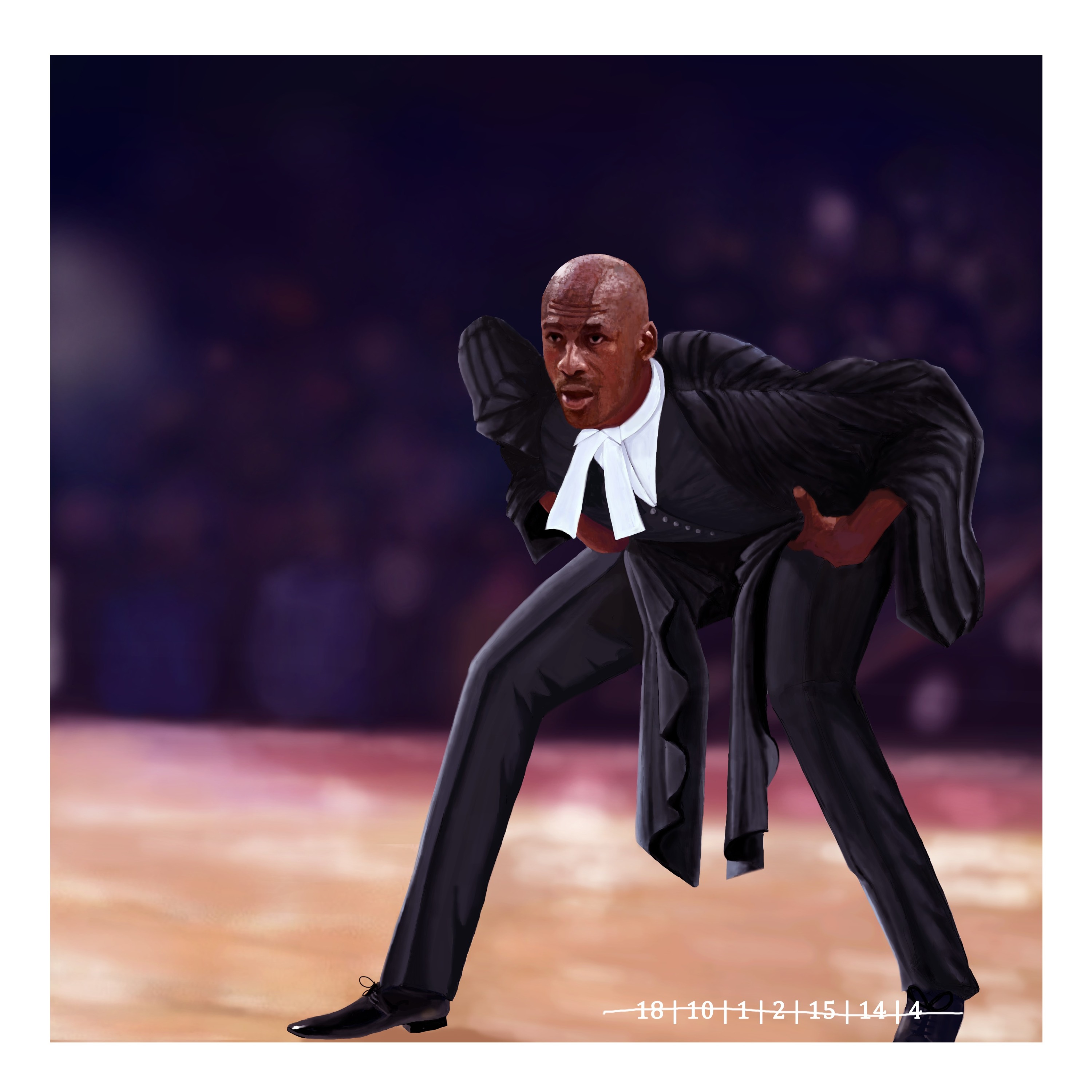
The Full Court Press
by Nate Jackson & ChatGPT
The Full Court Press is a fast-paced criminal law podcast. It is created using ChatGPT and other AI models.The aim here is to keep criminal lawyers abreast of new appellate caselaw while testing the limits of AI language models along the way.*NB: This is a DIY pod that is mostly born out of curiousity and a desire to help colleagues stay up-to-date on the newest law. Be prepared: production value is a function of limited time and ... time. Enjoy!
-
9
Automatic Excision Rule: Mini Lecure
A simple rule in many respects but often misunderstood and overlooked. The automatic excision rule requires courts to remove any information obtained through a Charter breach from an Information to Obtain (ITO) before assessing whether there were reasonable and probable grounds for a search or arrest. If the remaining information can't support the state action on its own, the warrant or arrest is invalid. The rule ensures the state can't rely on unconstitutional conduct to justify privacy intrusions.
-
8
Failure to hear from the offender before sentencing: When does it matter?
Ontario courts have long recognized the importance of s. 726, but they have also clarified that a lapse in offering allocution does not automatically void the sentencing outcome. In R. v. Bynoe, 2025 ONCA 274, for example, the Ontario Court of Appeal dealt with a sentencing judge’s failure to invite the offender to speak. The transcript showed the offender was not offered any opportunity to address the court before sentence. The Crown on appeal conceded this was an error under s. 726, but characterized it as an inadvertent oversight – noting that Bynoe was represented by counsel who did not indicate that Bynoe wished to speak at the time. The Court of Appeal agreed the trial judge erred, yet ultimately dismissed the sentence appeal, finding no basis to disturb the sentence in that case. This outcome is in line with prior Ontario decisions (e.g. R. v. Holub & Kufrin (2002 ONCA) and R. v. Legault (2005 ONCA)) holding that a mere failure to ask “Do you have anything to say?” will not automatically vitiate the sentence. In other words, appellate courts will acknowledge the error but assess whether it actually caused any injustice or impacted the sentence.
-
7
Can Provocation Co-Exist with Self Defence? R. v. Copeland
In this episode of The Full Court Press, ChatGPT discusses the recent Ontario Court of Appeal case R. v. Copeland (2025 ONCA 278), focusing on the partial defence of provocation. We outlined the key facts: Copeland was convicted of second-degree murder after claiming self-defence during a fatal confrontation with his girlfriend. He attempted, late in the trial, to also argue provocation based on being accused of theft and attacked with a knife.We clarified the elements of provocation under Canadian law—both objective (a wrongful act or insult sufficient to provoke an ordinary person) and subjective (a sudden loss of self-control in response). The main appellate issue was whether provocation had an "air of reality," meaning sufficient evidence existed to put the defence before a jury.The Court of Appeal upheld the trial judge's decision to exclude provocation, emphasizing that Copeland’s testimony showed deliberate action aimed at self-preservation, not a sudden, uncontrolled loss of temper. We highlighted the inherent tension between self-defence and provocation defences, noting practical takeaways for defence lawyers: provocation requires clear evidence of sudden anger and loss of control and cannot simply be a fallback strategy when self-defence is the primary narrative.
-
6
R. v. Chizanga, 2025 SCC 9 (Notebook LM Pod)
🎙️This time on the Full Court Press we listen to an AI generated convo created by Google's "Notebook LM."It's not a dynamic, real-time interaction with an AI model but, rather, a (very realistic-sounding) "fake" conversation between two speakers generated after uploading the case into Notebook LM's large language model.I say "fake" conversation but then again: How do we define "fake". If it sounds like a duck, walks like a duck...Regardless, an interesting decision out of the SCC that we should be aware of and the corresponding judgment out of the ONCA. Jury charge case re. the admission and use of uncharged discreditable conduct.
-
5
No REP in EDR 🚗
Case Overview: R. v. Attard, 2024 ONCA 616Court: Ontario Court of Appeal Date: August 16, 2024 Panel: Gillese, van Rensburg, and Roberts JJ.A.Facts:Wendel Attard was charged with dangerous operation of a motor vehicle causing bodily harm after a serious crash in Brampton, Ontario. At trial, the Crown sought to admit data from the vehicle's Event Data Recorder (EDR), which logged details such as speed, throttle, and braking in the five seconds before impact. The data showed Attard was speeding—up to 130 km/h in an 80 km/h zone.Police had seized the car and extracted the EDR without a warrant or consent, relying on s. 489(2) of the Criminal Code.Trial Decision:The trial judge excluded the EDR evidence, finding:The police lacked reasonable grounds under s. 489(2) to seize the vehicle.Attard had a reasonable expectation of privacy in the EDR data, engaging s. 8 of the Charter.Under s. 24(2), the exclusion of the evidence was necessary to uphold the integrity of the justice system.Attard was acquitted due to insufficient evidence of speed and acceleration without the EDR.Court of Appeal Ruling:The Court of Appeal allowed the Crown’s appeal, finding three key errors in the trial decision:The seizure was lawful: Officer Ball had reasonable grounds under s. 489(2)(c) based on witness accounts, dashcam footage, and the scene’s severity.No reasonable expectation of privacy in the EDR data once the vehicle was lawfully seized—echoing appellate decisions from B.C. (Fedan) and Saskatchewan (Major).The exclusion under s. 24(2) was an error. Given the legal uncertainty around EDR privacy at the time and the reliability and importance of the evidence, the data should have been admitted.Outcome:The acquittal was set aside. A new trial was ordered, with the EDR evidence to be admitted.
-
4
Searching Your Phone at the Border: 2024 ONCA 608
The case is R. v. Pike, 2024 ONCA 608, decided by the Ontario Court of Appeal on August 9th, 2024.The core issue was whether section 99(1)(a) of the Customs Act—which lets border officers search digital devices without any objective grounds—violates section 8 of the Charter, which protects against unreasonable search and seizure.The Court held that the law is unconstitutional. They said searching digital devices—like phones and laptops—without at least reasonable suspicion is too intrusive to be justified by border security needs alone.
-
3
R. v. Ahmadi, 2025 ONCA 219
Fabrication and Guilt: R. v. Ahmadi, 2025 ONCA 219 🏀 The Full Court Press – Quick HitIn this episode, Nate breaks down R. v. Ahmadi, a 2025 decision from the Ontario Court of Appeal, focusing on a key evidentiary issue: when an accused’s out-of-court statements can be used against them.The Court draws a sharp line between disbelieving a statement and finding it was fabricated. Only fabricated statements—with independent evidence backing that up—can be used as circumstantial evidence of guilt.We talk through how Ahmadi’s ever-changing police interview crossed that line, how the trial judge handled it, and why the ONCA upheld the conviction. A must-know case for anyone running—or challenging—post-offence statements.Plus, a lawyer joke to send you off smiling.
-
2
R. v. James, 2025 ONCA 213; R. v. Arora, 2025 ONCA 218
In this episode, defense lawyer Nate Jackson and ChatGPT break down two fresh decisions from the Ontario Court of Appeal:R. v. James (2025 ONCA 213) — A case about serious drug charges, police misconduct, and Charter breaches. The court excludes key evidence due to a reckless search and right-to-counsel violation, resulting in two acquittals. A clear message: rights matter, even in high-stakes drug prosecutions.R. v. Arora (2025 ONCA 218) — A dramatic extortion and confinement case involving fake guns, duct tape, and a $1.75 million withdrawal. The court affirms a 7-year sentence, rejecting arguments about double-counting aggravating factors and discounting mitigating ones.
-
1
John Howard Society of Saskatchewan v. Saskatchewan (Attorney General)
Title: Presumed Innocent: The Supreme Court’s Ruling on Prison DisciplineLength: ~5 minutesIn this episode, Nate and ChatGPT break down the Supreme Court of Canada’s landmark decision in John Howard Society of Saskatchewan v. Saskatchewan (2025 SCC 6). The Court ruled that serious prison disciplinary proceedings—those that can result in segregation or loss of earned remission—must meet the criminal standard of proof beyond a reasonable doubt.
We're indexing this podcast's transcripts for the first time — this can take a minute or two. We'll show results as soon as they're ready.
No matches for "" in this podcast's transcripts.
No topics indexed yet for this podcast.
Loading reviews...
ABOUT THIS SHOW
The Full Court Press is a fast-paced criminal law podcast. It is created using ChatGPT and other AI models.The aim here is to keep criminal lawyers abreast of new appellate caselaw while testing the limits of AI language models along the way.*NB: This is a DIY pod that is mostly born out of curiousity and a desire to help colleagues stay up-to-date on the newest law. Be prepared: production value is a function of limited time and ... time. Enjoy!
HOSTED BY
Nate Jackson & ChatGPT
Loading similar podcasts...
Frequently Asked Questions
How many episodes does The Full Court Press have?
The Full Court Press currently has 9 episodes available on PodParley. New episodes are automatically indexed when they're published to the podcast feed.
What is The Full Court Press about?
The Full Court Press is a fast-paced criminal law podcast. It is created using ChatGPT and other AI models.The aim here is to keep criminal lawyers abreast of new appellate caselaw while testing the limits of AI language models along the way.*NB: This is a DIY pod that is mostly born out of...
How often does The Full Court Press release new episodes?
The Full Court Press has 9 episodes. Check the episode list to see recent publication dates and frequency.
Where can I listen to The Full Court Press?
You can listen to The Full Court Press on PodParley by clicking any episode. We provide an embedded audio player for direct listening, and you can also subscribe via your preferred podcast app using the RSS feed.
Who hosts The Full Court Press?
The Full Court Press is created and hosted by Nate Jackson & ChatGPT.
URL copied to clipboard!