
PODCAST · music
The Gone Sounds of Jazz with Sid Gribetz
by gribetzsid
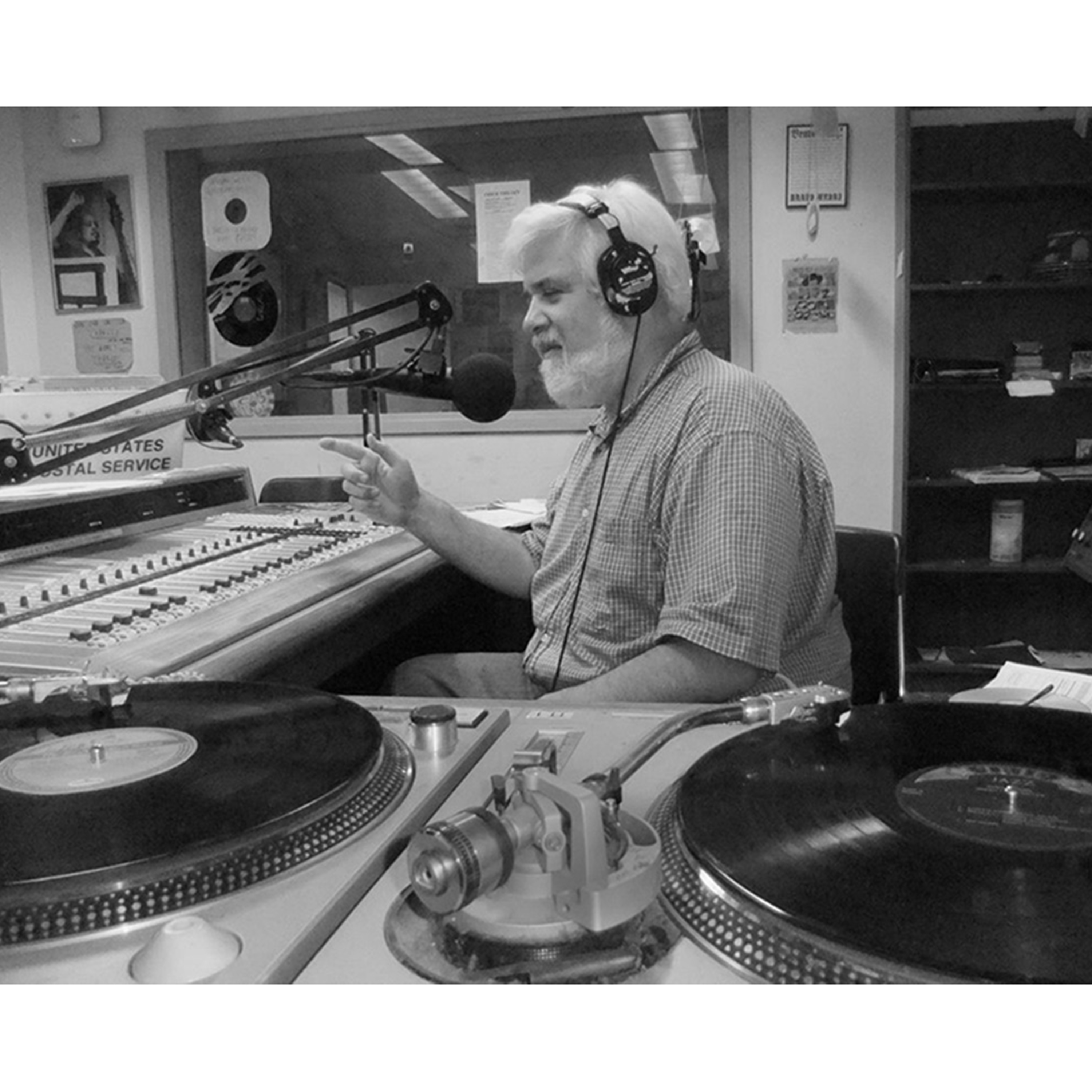
An archive of jazz radio programs focused on intensive in-depth looks at great themes from jazz history. Winner of the Jazz Journalist Association Award for Career Excellence, Sid has been broadcasting for over 40 years on WKCR-FM, NYC. He was also voted ’Best Jazz DJ’ by the Village Voice in its 2008 Best Of NY Issue.Browse the dozens of episodes by scrolling down on this page. Or for an artists’ index, copy this address into your browser: gonesounds.weeblysite.com/
-
100
Mark Murphy
Mark Murphy (1932-2015) was an unsung hero among modern jazz vocalists, a cult figure who deserves wider recognition, a primary influence for new generations of jazz singers. He was a risk taker of musical invention. Murphy was a masterful scat singer and a champion of vocalese with compositions such as Stolen Moments and Red Clay. Mark’s outlook is that of a wide ranging humanist, including his poetry and theatrical sides, with interpolations from Jack Kerouac, Lord Buckley, and other literary greats in his songs and presentations. And he possessed a sturdy baritone on standards and Brazilian songs. Murphy was born in Syracuse, NY and made his first name as a pop-jazz singer with recordings on the Decca and Capitol labels. He hit his stride upon moving to New York City in the early 1960's, and with hip modern recordings on Riverside. Since then he traveled the world as a vibrant, performing force. This episode provides five hours of fun. originally broadcast December 4, 2011
-
99
Charles Mingus 2
WKCR presents a marathon broadcast celebrating Charles Mingus annually, on his birthday anniversary, April 22. From my segment on the 2026 edition, I presented a variety of sounds, among them a selection of early Debut recordings, and a feature of live concerts of the 1964 ensemble with Eric Dolphy (about an hour towards the end).
-
98
Teddy Edwards
Saxophonist Teddy Edwards was born in Jackson, Mississippi on April 26, 1924. His grandfather and other family members were leading local musicians, and Teddy began playing the alto sax as a youth. By age 12 he had played in some professional settings himself. As a teenager he went to Detroit to live with an uncle and began participating in the vital Motor City scene. In his development, he forged connections with many young jazz artists, among others notably Wardell Gray with whom he became a close friend. Edwards toured with R&B and jazz bands and ended up in Los Angeles in 1945. There he teamed up with Howard McGhee and switched to tenor sax. With his sophisticated harmonic sense and free flowing sound, Edwards became a leading figure in the early bebop days on the West Coast. He was a key member of the Central Avenue scene, participating in duels with Dexter Gordon and Wardell and making notable records such as “Blues In Teddy’s Flat”. Prominent on the West Coast, Edwards was one of the original Lighthouse All Stars and an early choice to be in the Clifford Brown-Max Roach Quintet. By the late fifties and sixties, he recorded notable LPs with compatriots such as McGhee, Leroy Vinnegar and Gerald Wilson for the World Pacific, Contemporary, and Prestige labels (“It’s All Right”). An accomplished arranger, Edwards wrote for brass and string ensembles and contributed to many projects. Additionally, he was an important accompanist for vocalists such as Jimmy Witherspoon, Helen Humes, King Pleasure and numerous others. Edwards never ventured to the major New York limelight, but he was an important and influential figure in Los Angeles. In later years he spent time in the Netherlands and elsewhere in Europe, where he enjoyed admiration and popularity. Edwards gained some publicity in the popular field when he toured regularly with Tom Waits for a time in the 1980s.. Edwards had a powerful and pulsating sound on the sax, always tinged with emotional warmth and insight. I always liked this encomium to Edwards from Tom Waits: “He can sound like a train, or he can sound like he's drinking champagne on that same train." Edwards had various health problems in later life, and he died of cancer at the age of 78 in 2003. originally broadcast April 19, 2026
-
97
Billie Holiday 5
For the 2026 WKCR Billie Holiday Birthday Broadcast. I prepared a survey of Lady Day's recordings with Prez, Lester Young (about 2 hours). The epitome of sublime intimacy and heartfelt companionship. The episode opens and closes with several other Holiday tracks for casual listening, not so shabby in their own right.
-
96
Coltrane On Prestige
John Coltrane is a major figure in our culture. The majesty, grandeur and passion of his saxophone communicates with the soul and has inspired the reverence and spiritual devotion of his widespread listening audience. It would be difficult to profile his widespread body of work in a single radio program. Therefore, this program focuses on one discrete portion of his career, his recordings on the Prestige record label. Coltrane attained his first widespread notice in his late twenties as a member of the classic Miles Davis Quintet (fall 1955-early 1957). However, Coltrane was struggling with substance abuse and other personal difficulties, and Miles fired him from the group. With immense personal dedication, and spiritual guidance from his wife Naima, Coltrane beat his addiction and began a renewed, refreshed life. He moved to New York City (203 West 103rd Street). Trane began working with Thelonious Monk, and their legendary six month engagement at the Five Spot reinvigorated each of their careers. At the same time, Coltrane was looking to establish himself as a recording artist. While with Miles, he was also a freelance sideman on many now classic albums, and in early 1957 Coltrane eventually got a contract with Bob Weinstock’s independent Prestige company, a deal that would last through the end of 1958. There, Coltrane recorded his first three albums as a leader (“Coltrane”, “John Coltrane With The Red Garland Trio (aka Traneing In)” and “Soultrane”), sessions led by his friend Red Garland, and many all star dates. As was his custom, Weinstock recorded many sessions under Trane’s leadership, which were "kept in the can", stockpiled, and released on additional albums in the next few years. This was a pivotal period in the development of Coltrane’s career, leading in to “Giant Steps” and further levels of artistry. Accordingly, these Prestige records are sometimes overlooked, but they, too, have a robust and sophisticated improvisational fervor worth savoring. Critic Ira Gitler wrote of “the excruciatingly exhilarating intensity of rapid exigent runs with their residual harmonic impact” in coining the overworked but still apt term “Sheets of Sound” to characterize this phase of Coltrane’s style. originally broadcast May 19, 2024
-
95
Roy Eldridge 3
WKCR has a long standing tradition of celebrating Roy Eldridge, “Little Jazz”, with a marathon 24-hour broadcast tribute every year on the trumpet giant's birthday anniversary, January 30. Here’s my shift from the 2026 edition. We begin at the 1977 Montreux Jazz Festival, followed by 70 minutes of Roy in the 1950s, including his Verve session with Art Tatum and other goodies. Next comes a detailed survey of Roy’s association with Gene Krupa (approx 85 minutes). This episode concludes with a potpourri of various recordings for general listening.
-
94
Academy Award Winning Songs
We continue an occasional series of programs focusing on the American Popular Song, examining the impact of the legendary composers on the jazz repertory. For some of the best in jazz improvisation derives from its interpretations of the musical forms, melodies and harmonies of these great treasures. For this show I did something different, and fun, and less intensive. I surveyed songs that won the Academy Award Oscar as Best Original Song in a motion picture. These movie songs certainly contribute to the heritage of our great American songbook. Among the composers winning this award are Jerome Kern, Harry Warren, Harold Arlen and Jimmy Van Heusen, to name a few. And tunes such as The Way You Look Tonight, Over The Rainbow, It Might As Well Be Spring, Days Of Wine And Roses. We’ll present a curated presentation of jazz versions of the songs, by greats John Coltrane, Sonny Rollins, Clifford Brown, Kenny Dorham, and less famous figures as well. originally broadcast March 15, 2026
-
93
Howard McGhee
Howard McGhee, a renowned trumpeter of both the big band and be-bop eras, also was a leading figure and mentor on the New York jazz scene in the 1960's and 1970's. Born in Oklahoma in 1918, and raised in Detroit, McGhee gained attention in his youth in the big bands of Lionel Hampton, Charlie Barnet, and, notably, Andy Kirk. Settling in Los Angeles in the 1940's and working in Coleman Hawkins small group, McGhee became a major player in California, recording with musicians ranging from Lester Young to R&B bands. When Bird, Charlie Parker, famously stayed in LA in 1946 after Dizzy and his group returned to New York, McGhee became a key companion and an important figure in the history of bebop jazz. McGhee also played with Machito’s Afro-Cuban band, with Milt Jackson, Jazz At The Philharmonic, and had many other significant associations. In the 1950's, among other credits, he recorded for Bethlehem Records and performed regularly in James Moody’s working group. Over the last decades of his life, McGhee made records with Phineas Newborn, Teddy Edwards and other prominent figures, which we will hear on the program. “Maggie”, as he was known, also led his own big band, and he was active in community events with the St. Peter’s Church jazz ministry. McGhee died in 1987 at the age of 69. originally broadcast February 10, 2019
-
92
Serge Chaloff
Serge Chaloff was a fleeting star on the baritone saxophone during his brief lifetime, one of Woody Herman’s “Four Brothers” and a bebopping legend as well. He was a sophisticated musician and swinging performer. Serge possessed a lithe, fleet, flowing conception propelled with a lighter tone and nimble execution on the big horn. Raised by his prominent classical musician and educator parents in Boston, Serge Chaloff was born November 24, 1923. His father Julius Chaloff was a pianist with the Boston Symphony Orchestra and ran his own music school; his mother Margaret Stedman Chaloff, revered by her many famous classical and jazz musician students as “Madame Chaloff”, was a long time teacher with her own studio and also at the New England Conservatory and other schools. As a young child his parents taught him the piano, and he received formal lessons on the clarinet. Inspired by Harry Carney he was self taught on the baritone saxophone and began performing in big bands. Chaloff was also influenced by Charlie Parker and informed by the contemporary bebop scene, and he incorporated those styles as a major component of his expression. Chaloff was hired by Woody Herman for the “Second Herd” band in 1947-1949 and excelled as part of its legendary saxophone section memorialized by the Four Brothers song and sound. Unfortunately, Chaloff also absorbed another lesson from the bebop era and many contemporaries, succumbing to heroin addiction. Chaloff was smitten and suffered more intensively than most, harming his physical health and inspiring erratic behavior to an extent that almost cost him his musical career, and his life. Let go by Herman, Chaloff spent the early 1950's basically in local Boston clubs and with some brief prominent spots such as a stint in Count Basie’s octet. He also spent some time on the road with low profile gigging. By 1954, Chaloff began getting some treatment, and friends eventually prevailed upon him to enter an intensive in patient rehab program. Chaloff emerged totally clean and renewed his career with vigor. Highlights included appearances at George Wein’s Storyville nightclub and his record label. The “Fabel Of Mabel” album is a storied endeavor and a cult classic. Chaloff went on significant national tours, appeared on the Steve Allen TV show, and recorded with Capitol Records - two LPs “Boston Blow Up” and “Blue Serge”- that are now considered masterpieces. However later in 1956 Chaloff was stricken with cancerous tumors on his spine and after some initial surgeries that allowed him to endure, the tumors spread and he died in July 1957 at the age of 33. With his short life span and limited body of recordings, Chaloff is not well remembered, but he was a significant figure who deserves lasting recognition. originally broadcast February 15, 2026
-
91
Tina Brooks
Tina Brooks was a lyrical tenor saxophonist with a yearning, introspective, yet soulful sound. He attained a brief measure of recognition on several Blue Note albums in the late 1950's and early 1960's but never achieved great fame. Harold Floyd Brooks was born in Fayetteville, North Carolina on June 7, 1932, into a musical family. (His older brother David “Bubba” Brooks, also a saxophonist, was a mainstay in the jazz world for many years). In his youth, Harold was nicknamed Tina from his teeny, diminutive size. The family moved to the Bronx in 1944 when he was 12 years old, and Brooks was a Bronx-ite He came of age playing in Latin and Rhythm and Blues bands, eventually gaining major professional experience in the touring groups of Amos Milburn and Lionel Hampton. By 1956 and 1957, under the tutorship and close friendship of modern jazz greats Benny Harris and Elmo Hope, Brooks was playing in the thriving Bronx jazz scene, in clubs such as the Blue Morocco, 845, and Freddie’s Bar, with friends such as Oliver Beener and Larry Gales. Introduced to Blue Note Records executive Alfred Lion, Brooks was immediately thrust in to the big leagues on a Jimmy Smith record session. His extended saxophone solos on Smith’s “The Sermon” gained great repute. He made tremendous contributions as a sideman with Freddie Hubbard (Open Sesame), Kenny Burrell (Blue Lights), and Jackie McLean (Jackie’s Bag). In 1959 and 1960, Brooks also worked in theater, serving as an understudy in the cast of Jack Gelber’s legendary Off Broadway play “The Connection”, with live jazz music by Freddie Redd. As a result of this relationship, Brooks would record with Redd on some of his albums. Blue Note eventually made four sessions with Tina Brooks as a leader of quintets, recording dynamic versions of American popular song standards along with lyrical and sophisticated original compositions, in association with band-mates such as Hubbard, McLean, Lee Morgan, and Sonny Clark. However, only one album, “True Blue”, would be released in his lifetime. Championed by critics and record executives such as Michael Cuscuna, his remaining albums would be released posthumously, as an early staple of Cuscuna’s connoisseur Mosaic label, and also on Blue Note. Tina Brooks suffered from various health problems, as well as being saddled with the scourge of heroin addiction. He was not well enough to perform beyond his thirties, and he succumbed to kidney illness and the ravages of his drug use, dying on August 13, 1974 at the age of 42. originally broadcast July 21, 2024
-
90
Hot Lips Page
Trumpeter and vocalist Hot Lips Page was a key figure in early jazz, the swing era, and rhythm ‘n’ blues. Oran Page was born in Texas on January 27, 1908. As a teenager, he began a career with the “territory bands” and the southwestern swing tradition. From a young age he possessed a sizzling style and command of the trumpet, which perhaps was the source of his nickname, although his friends noted his enjoyment of the early ‘20's Henry Busse/Paul Whiteman record “Hot Lips”, too. Page made his mark with the Blue Devils and other seminal Kansas City bands, and he was an important member of the early Count Basie and Reno Club orchestras. Leaving Count Basie to embark on a solo career, Page made a key contribution as a leader of small combos during the swing era and the 52nd Street nightclub scene. In that milieu he made numerous significant recordings. He also appeared as the featured trumpet soloist for a time with the Artie Shaw band in 1941-42. After World War II, Page was a key figure in the development of the rhythm and blues sound, both with his own records and backing singers like Wynonie Harris (“Good Rockin’ Tonight”). You’ll enjoy “Lips” for his dynamic approach on the trumpet and an earthy, down home singing style, all of which conveyed a deep humanity and emotional connection with the music. Page died of pneumonia and heart trouble at the early age of 46 in 1954. originally broadcast September 27, 2015; rebroadcast May 9, 2021
-
89
Max Roach 3
WKCR presents a marathon broadcast celebrating Max Roach annually, on his birthday anniversary, January 10. Here’s my segment from the 2020 edition. It begins with a survey of Sonny Rollins collaborations with Max (81 minutes), then takes a relaxing visit to the Royal Roost to hear the Charlie Parker Quintet in live performance (18 minutes), and finally over an hour of selections of Max Roach as a sideman on recordings from the late 1940's bebop era, by Dexter Gordon, Allan Eager, J.J. Johnson, Stan Getz, Don Byas and Buddy DeFranco.
-
88
Johnny Griffin
Johnny Griffin earned the nickname “The Little Giant” for his short physical height but big powerful sound on the tenor sax. Coming out of the blues and swing of his Chicago roots but also informed by the sophisticated developments of the bebop era, Griffin’s proficiency on his instrument and the fleet and darting lines of his attack make him one of our greats. Griffin was born in Chicago on April 24, 1928 and attended DuSable High School under the tutelage of its legendary teacher, Captain Walter Dyett. As a teenager he played professionally in blues groups with T-Bone Walker. Immediately upon his high school graduation Griffin joined Lionel Hampton’s big band. In the late 40's and early ‘50s Griffin also played in R&B groups such as Joe Morris and appeared on some of the early Atlantic rhythm and blues records. Griff established himself on the modern jazz scene of New York later in the 1950s. He was a key member of Art Blakey’s 1957 edition of the Jazz Messengers; he replaced John Coltrane as the saxophonist in Thelonious Monk’s Five Spot group and stayed for several months in 1958; signed to the Riverside label he made numerous significant recordings with great compadres; and in the early 1960's he teamed with Eddie Lockjaw Davis for a swinging Tough Tenor combo. Griffin moved to Europe in 1963 and forged an international career as one of the leading expatriate American jazz artists. For many years he made many frequent trips to the US to visit Chicago, and the Village Vanguard in New York, with a regular group that included Michael Weiss, Dennis Irwin and Kenny Washington. He had a productive and active performing life into this century. Griff died in 2008 in France at the age of 80. originally broadcast January 18, 2026
-
87
Tiny Grimes
Tiny Grimes was one of the innovators of the early days of the electric guitar, and he was a significant figure in the development of both jazz and rhythm and blues. His first major professional engagement was with the popular novelty vocal group “The Cats and the Fiddle” in the early 1940's. Next, he became a key figure in the regular piano trio of the legendary Art Tatum. After his experience with Tatum, Tiny Grimes remained a vital participant in the small group swing of the 52nd Street night clubs. During this period, Grimes also participated in recordings with jazz greats such as Charlie Parker, Coleman Hawkins, Billie Holiday, Buck Clayton, and Ike Quebec, all to be heard on the program. Shifting gears, in the late 1940's and early 1950's, Tiny Grimes was an important figure in the beginning days of rhythm and blues and nascent rock and roll, with his “Rocking Highlanders” groups, work with Screaming Jay Hawkins, and participation in the early R&B recordings of Atlantic Records. In the late 1950's, Tiny Grimes made some great mainstream jazz records for Prestige, and later, he was a key figure in classic jazz revival of the 1970's, performing frequently in Europe, and in New York venues such as the West End Café. Grimes passed away in 1989 at the age of 72, after some debilitating illnesses. originally broadcast December 20, 2009
-
86
Clifford Brown 2
WKCR presents an annual marathon 24 hour tribute to trumpet virtuoso Clifford Brown on October 30, his birthday anniversary. From the 2021 edition, here are two thematic segments – Clifford Brown with vocalists (Sarah Vaughan, Helen Merrill, and Dinah Washington), about 85 minutes, and Clifford Brown in California in the spring and summer of 1954, about 50 minutes – along with several tracks of classic recordings for general listening at the beginning and end of the program.
-
85
Ben Webster in the 1940s
Ben Webster was nicknamed “The Brute” due both to his sometimes tempestuous temperament and also for his vigorous power on the tenor saxophone. But he was “The Beautiful” as well, with a personal sensitivity within his soul, and an elegant, romantic approach on the softer numbers, projecting a breathy tone with “air to spare”. Webster (1909-1973), coming out of Kansas City, was already recognized as one of the original saxophone giants by the late 1930s. But when he joined Duke Ellington’s famous orchestra in 1940 his career reached a higher plateau, immortalized as the soloist on many Ellington/Strayhorn masterpieces such as “Cottontail” and “Raincheck”. Webster left Ellington in 1943 and pursed a career as a “single”, fronting many small groups in various styles. In that regard Ben made many notable and powerful recordings, albeit not as famously remembered. In 1948 he briefly rejoined Ellington, although the orchestra did not make any studio records during that period. In 1949 Ben returned to Kansas City and participated in some fine bluesy activity. Accordingly, this five hour program features a varied presentation of tasty music touching on these aspects of his career. originally broadcast December 21, 2025
-
84
Dexter Gordon Centennial
Celebrating the Centennial of Dexter Gordon on February 27, 2023, WKCR presented a marathon broadcast. From my segment, here’s a detailed survey of Dexter’s early work in the 1940s. About 115 minutes, bookended for casual listening by a potpourri of some 1970s recordings upon his magical return to the US.
-
83
Miles Davis 1953-1954
Miles Davis is one of the “superstars” of jazz, a dynamic trumpet master renowned throughout the world for many varied achievements during his decades long career. For this radio program, I isolated a lesser remembered period, to put a sharp focus on his activity during the years 1953 and 1954. Miles Davis was born in Alton, Illinois May 26, 1926. A teenage wunderkind, he arrived in New York in 1945 to play with Charlie Parker and join in forging the nascent bebop movement of modern jazz. By the late 1940's he was working on further innovations such as his creative arrangements for nonet orchestras, later named “The Birth Of The Cool”. In 1949, he was famous enough to be one of the headliners of the International Jazz Festival in Paris, a significant event returning American jazz to Europe in the postwar renewal of the continent. In the legend and lore of Miles’s career, he had a triumphant “comeback” at the 1955 Newport Jazz Festival. This was to be followed soon by major landmarks we all know – the quintet including Red Garland and John Coltrane, Gil Evans orchestras, Kind Of Blue, the 1960's groups with Wayne Shorter, and all the further milestones until his death in 1991. So then, what happened after 1949 that Miles needed a comeback? First, he succumbed to the demons hovering around the jazz world of the time and suffered the scourge of heroin addiction. However, the ravages of his drug use were not so great that it prevented him from performing, and he continued to tour the country and make records with different groups. During this time Miles was in a period not just of personal self-doubt and struggle, but also of re-assessment of his musical conceptions and trumpet tones. By some time in 1953 he had finally beaten the drug addiction, and with recuperation came renewed strength and consolidation of skills. Jazz itself was also going through a period of re-assessment in the early 1950's, on the one hand searching for avenues to take the be-bop breakthroughs to whatever next levels would come, but on the other hand popular musical tastes were changing and rhythm and blues also on the rise. So this is where we find Miles Davis in the early 1950's. He had signed with the young independent jazz label Prestige and starting in 1951 made dozens of records in the 15 or 20 dates he had with them. At first not an exclusive deal, he also had three sessions for Blue Note. Most of these recordings were not by regular working “groups” but amalgamations of those with whom he played regularly – saxophonists such as Sonny Rollins, Jackie McLean and Jimmy Heath, trombonist JJ Johnson, pianists Horace Silver and John Lewis, and drummers Art Blakey and Kenny Clarke, to name a few. These records might also not be as well known in his oeuvre, but they do include some that should be considered classics. Perhaps another reason for their lack of lasting fame is that this was a period when record companies were in the transition to the long playing era, and these discs were originally issued as 78s, 45 EPs, 10" LPs, and other soon to be esoteric formats, and only later reissued in ersatz album groupings. Accordingly, they could not be so coherently known with common monikers so as to fit in a Davis “canon”. With these factors in mind, this program features the years 1953 and 1954, with records such as Kelo and Tempus Fugit, When Lights Are Low and Tune Up, his definitive cool version of Old Devil Moon, the extended performance on Walkin’, and concluding with the legendary tempestuous date with Thelonious Monk, Milt Jackson and the Modern Jazz Giants on Christmas Eve 1954. These 1953-4 records are glorious on their own merit and just as impressive as other Miles Davis offerings. As some have said upon reflection, one might think that the critics who had called 1955 a “comeback” were the ones who had been away, and not Miles. And these recordings are key to study as a preface to the next level that Miles and other jazz artists took the music in the late 1950's. As Dick Katz perceptively wrote about the musicians on Walkin’: “To me they represent a sort of summing up of what had happened musically during the preceding ten years. It’s as if they all agreed to get together to discuss on their instruments what they had learned and unlearned, what elements of bop they had retained or discarded”. originally broadcast December 22, 2019
-
82
Gigi Gryce
We celebrate the centennial of Gigi Gryce (Basheer Qusim). Gryce became a leading figure in his brief career in the 1950s. as a saxophonist, composer, arranger, music publisher, and teacher and mentor to many musicians. Gryce was born November 28, 1925 in Pensacola, Florida. His parents owned a clothes cleaning business, but his father died when he was seven. In the midst of the Great Depression, the family lost the business, and his mother raised a large brood of children as a single mother. But there was always music in the home with his various siblings, and Gigi also had a strong high school music education. Drafted into the Navy during World War II, thankfully someone noticed his musical talent. He was eventually assigned to military bands, notably at the Great Lakes Training Station. Discharged from the service after the war, Gryce moved to New England and had serious classical music conservatory training in Hartford and Boston. But upon graduating the conservatory, he moved to New York City and began an intensive career in our jazz fellowship. Gryce had a personal sound on the alto sax, and an organizational ability that had him successfully leading his own bands and consulting with many others in leading theirs. He made some remarkable recordings in his own bands, a group with Art Farmer, and the “Jazz Lab” that he co-led with Donald Byrd. He appeared as a musician and arranger, sometimes both roles at once, in significant projects of the greats such as Clifford Brown, Thelonious Monk, Oscar Pettiford, Max Roach, Dizzy Gillespie, Teddy Charles, Thad Jones, and Benny Golson, to name a few. Gryce composed more than 60 songs, most of which have remained components of our modern jazz repertory to this very day – examples are Minority, Hymn To The Orient, Nica’s Tempo, Reminiscing, Reunion, Social Call, Wildwood, and there are many more. Distressed by the harsh economic realities of the music business and personal issues in the breakup of his family life, Gryce left jazz in the early 1960s. He began a second career as a schoolteacher in New York City Public Schools. He studied for a doctorate in Education at Fordham University, and eventually settled in as a leading educator at PS 53 in the South Bronx. Living under his Muslim name and otherwise drawing no attention to his prior musical life, Qusim became a beloved youth leader in the community. He died in 1983. Upon his passing the school was named for him, and still stands on East 168th Street. originally broadcast November 23, 2025
-
81
Coleman Hawkins 2
WKCR presents an annual marathon broadcast celebrating the Coleman Hawkins birthday on November 21. From the 2025 edition here are segments from my contribution -- 60 minutes of a potpourri of Hawkins favorites, followed by a 105 minute survey of his recordings from the period 1945-1949.
-
80
Harold Arlen
Five hours of Harold Arlen. This program is one in my occasional series examining the impact of the legendary composers on the jazz repertory, as some of the best in jazz derives from its interpretations of the great American popular songbook, . Harold Arlen was born in 1905 in Buffalo, New York, the son of an orthodox cantor. He began his musical career singing Jewish melodies with his father in the synagogue. Smitten with popular music as a rebellious teenager in the Roaring Twenties, Arlen dropped out of school and began a career as a touring pianist and vocalist in Jazz Age combos. After arriving in New York City, by the early 1930’s he secured work as the arranger for the house band and dancers at the Cotton Club, and he also played blues and jazz piano in small Harlem saloons. Only at this point did Arlen turn his attention to a career composing popular songs for the Broadway stage and Hollywood film musicals. Synthesizing the influences of this varied background, Arlen’s songs are informed by a yearning, spiritual quality, and his musical modes are especially suited for jazz interpretation. Often overshadowed in history by Kern, Gershwin, Rodgers, and the like, nonetheless Arlen is on a par with these giants and his legacy should bear a similar stature. Just a brief sample listing of his songs includes perennials such as Stormy Weather, I’ve Got The World On A String, It’s Only A Paper Moon, That Old Black Magic, One For My Baby, Blues In The Night, and Come Rain Or Come Shine. Not to mention the score for The Wizard Of Oz. This program presents jazz versions of Arlen’s songs featuring many instrumental improvisations by the greats Louis Armstrong, Art Blakey’s Jazz Messengers, and John Coltrane, among others, and less famous recordings as well. With a nod to his lyricists Ted Koehler, Yip Harburg and Johnny Mercer, we sprinkle in some vocal versions by Tony Bennett, Dinah Washington, and more. originally broadcast June 17, 2018
-
79
McCoy Tyner Memorial
When McCoy Tyner passed away in March 2020, WKCR responded, as we often do, by pre-empting regular programming to present a memorial tribute, celebrating the legacy with a marathon broadcast of the artist’s music. Here’s segments of my contribution, first about 60 minutes of piano trio recordings, and then a presentation of more than an hour sampling his collaborations in groups with John Coltrane.
-
78
Charles Brown
Here’s five hours on blues and jazz singer and pianist Charles Brown. Charles Brown was born September 13, probably 1920 (usually listed 1922), on the gulf coast of Texas and raised by his educated and religious grandparents. He played piano and sang in church, and excelled as a science student. His high school chemistry teacher, who also moonlighted as a musician, took Charles under his wing, and had Charles play piano with his dance band. Brown had academic aspirations and attended Prairie View College. After graduation, Brown worked as a research chemist, eventually in government service for the war. When it was time to actually go in to the armed forces Charles was 4-F for a childhood illness. Instead, he left the science field, and the segregated South Brown decided to try his hand as an entertainer and moved to southern California. The army’s loss was our gain, as Charles blossomed in his musical career. But, in effect, he still contributed to the war effort. During World War II there was a great migration of African-Americans to California, both in the workforce of industrial factories, and servicemen stationed while awaiting shipment to the Pacific. A burgeoning black entertainment scene developed in California to entertain this swelling community. Brown’s first major engagement was at Ivie Anderson’s Chicken Shack in Los Angeles. Soon he teamed up with guitarist Johnny Moore, and they formed a trio emulating Nat King Cole’s group. (Johnny Moore’s brother Oscar was the guitarist with Cole.) Their “Three Blazers” took the elegant sound of the Nat King Cole trio and infused it with a grittier aspect. At the same time, Brown’s mellow vocal style, influenced by idols like Pha Terrell, offered a refined side of blues singing that struck a responsive chord with popular listeners. Charles Brown and Moore’s Three Blazers had monster hits such as “Driftin’ Blues” and “Merry Christmas Baby” in the postwar period. Eventually leaving the group, Brown had continued success as a single for a number of years but drifted in to obscurity. He left a string of now forgotten hit records, but a direct influence acknowledged by singers from Ray Charles onward. In the 1980's Brown was “re-discovered”, becoming a popular attraction at the famous New York nightclub Tramps, featured on an acclaimed PBS documentary, releasing a breakthrough 1986 jazz album “One More For The Road”, and taken on tour by artists like Bonnie Raitt to be exposed to a younger generation. With a base in northern California, and guitarist Danny Caron as musical director with a sympathetic style, Brown had great success once again touring the world and making many fine jazz records for the Muse and Verve labels, until his death in 1999. We will explore Brown’s tasty, often overlooked, jazz piano playing, and his great blues and ballad singing, sampling the recordings from across his career during this five hour radio broadcast. originally broadcast March 1, 2015
-
77
Dodo Marmarosa
Five hours on piano legend Dodo Marmarosa! Michael Marmarosa was born on December 12, 1925 to a working class Italian immigrant family in Pittsburgh. Dodo was a childhood nickname, and he began taking serious classical music lessons as a young child. He also befriended slightly older Steel City jazz pianists such as Billy Strayhorn, and especially Erroll Garner. With Garner and other young musicians, he explored their developing mutual jazz interests. As a teenager during the World War II years, Marmarosa had opportunities to begin a professional career performing in popular swing era big bands, eventually gaining recognition with Gene Krupa, Charlie Barnet, and Tommy Dorsey. He had a significant stay with Artie Shaw. When Shaw disbanded in California in 1945, Marmarosa remained in Los Angeles. Establishing himself there, he was “present at the creation” to became THE pianist in the formative years of bebop on the West Coast. Dodo not only “played with” all the greats, but he appears on classic, major, historic recordings of Lester Young, Charlie Parker, Artie Shaw’s Gramercy Five, Lucky Thompson, and Norman Granz “The Jazz Scene”. Marmarosa also delighted in the playground of Slim Gaillard, joining in the fun but also providing luscious piano counterpoint to the jive on many of his records. Marmarosa returned to his native Pittsburgh by 1950, settled down domestically, and played the piano in local clubs and restaurants, away from the national limelight. He never made any more records, other than three isolated, stunning sessions for Argo in Chicago in 1961 & 1962 (only one of which was released at the time). He had retired from professional music by the mid-1970's, but lived quietly until 2002, when he died at the age of 76. Dodo’s piano style is lively and tasty, informed from his swing era beginnings, while his harmonic sense also demonstrates the Romantic classical music roots, as well as the jazz modernism of his time. He is a neglected and overlooked figure in the scope of jazz history, but his piano recordings are daring and fresh, and will surprise and enthrall you. originally broadcast October 12, 2025
-
76
Thelonious Monk 3
WKCR presents annual marathon broadcasts to celebrate the October 10 birthday anniversary of Thelonious Monk. Here's my segment form the 2025 edition. This program includes a 2 ½ hour survey focusing on Monk’s association with Riverside Records. It’s bracketed by a couple of potpourri tracks at the start, and some Gigi Gryce collaborations at the finish.
-
75
Eddie "Lockjaw" Davis
Eddie “Lockjaw” Davis (1922-1986) was one of the dynamic “tough” tenor saxes on our jazz scene. His full bodied approach was brashly swinging yet could be sensitive and romantic, too. Jaws had a wide ranging career, inspired by the big bands but also coming up at Minton’s and in the be-bop era as well, with an R&B tinge, and later a master of the organ-tenor groove. Always blowin’. This close to five hour program samples highlights of his prolific output, including recordings from the 1940's, organ dates especially with Shirley Scott, Lock’s frequent associations with Count Basie, and his duo tandems with Johnny Griffin, among other goodies. originally broadcast June 25, 2006
-
74
Johnny Hartman
Johnny Hartman was the great romantic singer in our jazz universe. More than just a baritone crooner, Hartman could swing hard, and he imparted a wonderful jazz feel to his songs. He sang with precise articulation but also invested the lyrics with deep inner meaning and emotional insight. The suave and debonair Mr. Hartman (1923-1983) came up on the Chicago scene. Despite peaks and valleys of popular recognition, and his early death from cancer at age 60, Hartman left behind a wide ranging, timeless body of work that is surveyed in this five hour program. We look at his early days with Earl Hines and Dizzy Gillespie. Next, he was also marketed as a pop balladeer. In the later 1950's he did some wonderful jazz recordings for Bethlehem and then came back in the mid 1960s with more swinging jazz offerings. He spent time in Japan and elsewhere abroad, and had some fallow periods, but in the last few years before his 1983 passing enjoyed renewed appeal. And relax, I haven’t omitted Hartman’s most significant repute - his LP with John Coltrane in 1963. originally broadcast December 11, 2005
-
73
Charlie Parker 3
The "Bird-Prez Birthday Broadcast", a 72 hour (and some years longer) marathon celebrating Lester Young and Charlie Parker around their birthday anniversaries, August 27 and August 29, is a long standing tradition at WKCR, and it is among our listeners' favorites. From the 2025 edition, here’s a segment where I presented a survey of Charlie Parker’s collaborations with Dizzy Gillespie. Approximately 2 ½ hours. It’s sandwiched additionally by a few other tracks for general listening.
-
72
Wardell Gray
Wardell Gray is a “forgotten tenor”, one of the lost masters of modern jazz. Many critics aptly classify his style with a label of “Easy Swing”. This distinctive feature is a felicitous facility that imparts a rhythmic grace while maintaining an intensive communicative attack that conveys a soulful message. Gray was born in Oklahoma on February 13, 1921 just a few months before the Tulsa massacre, and he lived in the “Deep Deuce” African-American neighborhood of Oklahoma City. His family moved to Detroit when he was nine years old. Gray was raised and came of age in the Motor City. He learned great lessons in his formative years at the legendary Cass Tech High School and as a player in Detroit’s then-vital jazz scene. Gray attracted the attention of Earl Hines, who hired him to be the featured soloist in his big band from 1943-1946. Wardell left Hines to settle in Los Angeles, where he became a pivotal figure in the excitement of post war California jazz, in the raucous jam session development of west coast bebop when Bird was in the air. Gray was often featured in musical battles with his friend Dexter Gordon. Gray’s records with Dexter, “The Chase” and later “The Hunt”, and others, were big sellers and epitomized this excitement, fueling the drives of Jack Kerouac On The Road. By the end of the decade, Gray’s reputation led to his engagement in the bands of Benny Goodman and Count Basie, but perhaps the timing was off – he was with Goodman when Benny attempted to make his band bop-influenced, and Gray’s major accomplishments with Basie were in the brief period when the Count down-sized his big band to an octet. In the late 1940's, Gray also appeared on key sides with Charlie Parker, Fats Navarro, and Tadd Dameron. Later, Wardell made a few small group recordings for Prestige Records, most notably his composition “Twisted” and Art Farmer’s “Farmer’s Market”. With Annie Ross’s hip lyrics, these songs remain a big part of our repertory to this day. In the 1950's Wardell drifted away from major popular attention, but he remained active and was poised for a comeback when Benny Carter hired him to participate in a new band which would integrate the Las Vegas casino entertainment. However, on opening night in July 1955, Gray was killed at the age of 34, and his body found in the Nevada desert, under mysterious circumstances subject to various innuendos and yet to be solved. originally broadcast October 8, 2017; re-broadcast February 14, 2021
-
71
Nat King Cole
Before Nat King Cole became “Nat King Cole”, he was a swinging and influential jazz pianist. Additionally, he popularized the innovative format of the piano-guitar-bass trio which heralded an elegant “chamber jazz” style. This program focuses on these jazz sides of his career, as well as recordings made with Lester Young, Harry Sweets Edison, Illinois Jacquet and other jazz greats. But fear not, I’ve kept a batch of shifafa on the side and also include some popular vocals for a fun and easily enjoyable five hour presentation. originally broadcast March 17, 2019
-
70
Bird-Prez
The "Bird-Prez Birthday Broadcast", a 72 hour (and some years longer) marathon celebrating Lester Young and Charlie Parker around their birthday anniversaries, August 27 and August 29, is a long standing tradition at WKCR, and it is among our listeners' favorites. On the middle, swing, date, August 28, we play mixtures of Bird and Prez. Here is my segment from the 2025 edition. It starts with an hour of casual listening of 1950's Mercury/Verve recordings of the two saxophonists. Then I discuss the impact of episodes of breakdowns suffered by Charlie Parker and Lester Young, Bird’s commitment to Camarillo Hospital in 1946 and Lester’s treatment at Bellevue in November 1955, and their music upon refreshing recoveries; and finally a 58 minute treasure contrasting recordings of American Popular Songbook items by each, “Oh, Lady Be Good” and many more.
-
69
Junior Cook
Herman “Junior” Cook was born on July 22, 1934 in Pensacola, Florida. The tenor saxophonist came of age with the soulful aspects of modern jazz in the late 1950's. Cook’s first major engagement was with the classic Horace Silver Quintet, from 1958-1964. Teaming with trumpeter Blue Mitchell as the front line, Cook contributed to the lasting legacy of the “Horace Silver sound” and the enduring LPs such as “Silver’s Serenade”, “Blowing The Blues Away”, Finger Poppin’”, “Horace-Scope”, “The Tokyo Blues”, and more. After leaving Silver, Cook also appeared together with Mitchell on various records on the Blue Note label. In the 1970's and 1980's, Junior Cook kept the hard-bop flame alive, often in groups co-led with Bill Hardman which performed frequently in New York, and elsewhere. They also made many records on the Muse and Steeplechase labels. Cook was a key figure on the New York scene during this time, and he served as a mentor to many younger musicians. He died of cancer in 1992 at the age of 57. Cook’s tenor saxophone combined a wistful tender lyricism and harmonic grace with the hard driving soulful attack attendant to his genres. His individual sound should have lasting appeal. originally broadcast January 13, 2019; rebroadcast September 12, 2021
-
68
Roy Eldridge 2
WKCR has a long standing tradition of celebrating Roy Eldridge, “Little Jazz”, with a marathon 24-hour broadcast tribute every year on the trumpet giant's birthday anniversary, January 30. To close the 2019 edition, I presented a rousing set of highlights of Roy’s career from 1941-1970 for casual listening. It ranges from Gene Krupa and Artie Shaw to the Newport Rebels and The Nifty Cat, with plenty in between. 75 minutes.
-
67
Charles Earland
Charles Earland is one of the primary “Hammond Heroes” of the original generation of soulful jazz organists on the B-3. Earland swings brightly with his easy-going, syncopated, dance able rhythms on great pop tunes, but that sets things up for his hard-driving intensity on searing, adventuresome numbers. His dynamic power earned his nickname “The Mighty Burner”. Born in Philadelphia on May 24,1941, Earland originally played the saxophone in Philly and then with Jimmy McGriff’s band for several years. Earland taught himself to play the organ by watching McGriff, and then left that band to start his own career as an organist. He got his major start with Lou Donaldson on Lou’s hot Blue Note recordings in 1968-9. Earland then emerged with his own big hit record of “More Today Than Yesterday” on Prestige in 1970. He had continued great success for many years with compadres ranging from Grover Washington to Houston Person, in jazz, soul, and funk. Earland eventually settled in Chicago. He studied for the ministry, adding spiritual themes to his music while still keeping the torch for great swinging jazz. Earland went on to record many more records for Milestone, Muse and HighNote, and nurtured a touring band with young greats such as Eric Alexander and Jim Rotondi. Earland died from heart failure at the early age of 58 in 1999. originally broadcast July 27, 2025
-
66
Sonny Clark
Sonny Clark was a pianist with a bluesy sound combined with crisp and swinging technique. His style also embodied an element of “cool” suited to the modern jazz of his period. As a composer, his songs were angular and sophisticated, but melodic enough to be accessible. Many of his tunes, such as “Sonny’s Crib” and “News For Lulu”, endure in the standard jazz repertory. Conrad Yeatis “Sonny”Clark was born in western Pennsylvania in 1931 and raised in the Pittsburgh area, a hotbed of jazz. After high school, Clark moved to California to begin his career as a professional musician and became active on the West Coast scene. He made his first record with Teddy Charles and Wardell Gray in 1953, and Clark next joined clarinetist Buddy DeFranco’s regular working combo from 1954-56. Clark moved to New York City in 1957, and there he established himself in just a couple of years as a leading pianist, composer, and accompanist in the heyday of the “hard bop” groove. He appeared on numerous records on the Blue Note label, with his relaxed touch inspiring classic sides by the likes of John Coltrane, Hank Mobley and Curtis Fuller, plus his own albums such as “Cool Strutting” which are still best sellers in Japan. Sadly, beset more than others with the ravages of drug addiction, and suffering other health problems, Clark was inactive for a time, but returned to the Blue Note fold in the early 1960's for superb sessions with Grant Green, Dexter Gordon, and others. He eventually succumbed to his ailments and died on January 13, 1963 at the age of 31. originally broadcast June 7, 2015
-
65
Louis Armstrong 3
From the 2025 Fourth of July Louis Armstrong traditional WKCR special, here’s a segment starting with 85 minutes or so of a casual listening potpourri of the 1957 Newport Jazz Festival, a Fleischmann’s Yeast radio show, and other diverse goodies, followed by a curated survey of Armstrong’s 1929-1932 OKeh recordings of popular songs, also about 85 minutes’ worth. Oh memory!
-
64
Charlie Rouse
Here’s a five hour treat of Charlie Rouse. Best known for his long association with Thelonious Monk in the 1960's, tenor saxophonist Rouse also had an extensive and varied career in modern jazz. He expressed a tone of warmth and lyrical sensitivity on his horn, which lent a suave element to the rhythmic and harmonic creativity of his performance. Rouse was born in 1924 and raised in Washington, DC. He came of age as bebop began to flower, and made important early records with Tadd Dameron, Fats Navarro and others. Mentored and influenced by Ben Webster, Rouse also played in Dizzy Gillespie’s big band, was a member of Duke Ellington’s organization in the late 1940's, and Count Basie’s Octet. In the 1950's, after engaging in gigs ranging from Clifford Brown to rhythm and blues bands to trombonist Bennie Green, Rouse partnered with the French horn player Julius Watkins to form an adventurous chamber jazz group “Les Jazz Modes”. Rouse joined Monk in 1959 and was in the regular working combo until 1970. Rouse’s style complemented Monk’s ingenuity, and they forged an intuitive collaboration that incisively presented the Thelonious sound. After some time away, Rouse became a significant player on the jazz scene, especially with the cooperative quartet “Sphere” with Kenny Barron, Buster Williams, and Ben Riley in the 1980's. However, stricken with cancer, Rouse died in 1988 at the age of 64. originally broadcast October 16, 2016
-
63
Lambert Hendricks & Ross
This program presents the vocal magic of Lambert Hendricks and Ross. Lambert Hendricks and Ross brought the art of ensemble group vocals to a higher level. Bebop singers Dave Lambert, Jon Hendricks and Annie Ross each individually were pioneers of vocalese, the style of writing lyrics to recorded instrumental solos to create new songs. The synergy of the group was even more remarkably creative. Dave Lambert already had What’s This?, Annie Ross had Twisted, and Jon Hendricks had his start with King Pleasure, among other early impacts on the scene. Then Dave and Jon were working on a project of a vocal chorus Basie album when they chose to combine forces with Annie Ross to replace the choir idea with just a trio. Their 1957 LP “Sing A Song Of Basie” was an immediate hit. It was followed by so much further popular success that when signed by Columbia Records it was no exaggeration to be billed “The Hottest New Group in Jazz”, and Hendricks was dubbed “The Poet Laureate Of Jazz”. They swung emphatically, wrote literate and witty lyrics, fluidly blended their ensemble singing, and had distinct, great, individual voices. Their vocalese lyrics to so many other songs of Ellington, Horace Silver, and more, have become classics of the genre. The group stayed together until Annie Ross departed in 1962. LHR left a magnificent legacy that is explored in this five hour presentation. originally broadcast June 22, 2025
-
62
Arnett Cobb
Arnett Cobb was a full-bodied, hard swinging musician with a warm, soulful sound that exemplified the tough, Texas, tenor tradition. During his career, Cobb overcame deep personal setbacks, experiences that lent an emotional insight and intensity to his artistic expression. He was born in Houston, Texas on August 10, 1918 and began playing all sorts of music as a child. Cobb was proficient enough to play professionally in touring bands during summer vacations in high school, in the heart of the Great Depression. Upon graduating high school, Cobb began his career in earnest, notably with the Milt Larkin orchestra, a Texas-based band that was a breeding ground for many great swing and blues musicians. Cobb’s fame grew, but he turned down many job offers from nationally famous bands, preferring to stay with Larkin. By 1942, however, Cobb was impressed to join Lionel Hampton’s organization, taking over Illinois Jacquet’s tenor sax chair. Cobb made his own dynamic impact with Hamp, and bravely recorded his own hit record version dubbed “Flying Home No.2". With the infectious excitement that he conveyed, Cobb became known at times as “The Wild Man Of The Tenor Sax” . After the war, Cobb left Hampton and embarked on his solo career, leading a small combo booked as a national attraction. In that context, he recorded notable records in the jazz and early R&B vein for Apollo, Columbia, and Atlantic Records. He recorded his signature composition “Smooth Sailing” (made even more famous by Ella Fitzgerald’s cover record) and also backed singers such as Eddie Cleanhead Vinson and Ruth Brown. During this period, though, Cobb encountered his first setback, as a childhood spinal injury flared up, necessitating multiple operations and leaving him bedridden for over 15 months. Beginning a new comeback, Cobb was again waylaid when, in 1956, he was severely injured in an automobile accident, that crushed both of his legs. Confined thereafter to braces and crutches that restricted his mobility for the rest of his life, Cobb returned to his native Houston where he ran a nightclub, consulted and did musical arrangements for many young acts, and still played his tenor sax. In 1959 and 1960 he made a series of solid mainstream jazz records for Prestige, but thereafter mostly stayed local. With the traditional jazz revival that began in the early 1970's, Cobb started touring again, managing to make frequent trips to New York and the European continent to perform and record with many old compatriots, a regimen that continued until his death at the age of 70 in 1989. Originally broadcast November 15, 2015; rebroadcast August 1, 2021
-
61
Billie Holiday 4
My segment from the 2025 edition of WKCR's annual Billie Holiday birthday special: The first hour is a potpourri of recordings for casual listening pleasure. It’s followed by a two hour presentation of a detailed survey of Billie’s sessions for the Commodore and Decca labels in the 1940s.
-
60
Harold Mabern
Five hours of the soulful jazz pianist Harold Mabern. Mabern was born March 20, 1936 in Memphis and raised in that Southern town, surrounded by many great young jazz players. Mabern’s own mentor and friend, only a couple of years older, was Phineas Newborn. His schoolmates and lifelong associates included Frank Strozier, George Coleman, and Booker Little. Shaped by the indigenous rhythm and blues and southern soul, this cadre of Memphis musicians brought these influences as another hard driving layer to the vocabulary of modern jazz of the 1950's and 1960's. Mabern moved to Chicago after high school for formal musical training, and with Strozier helped form the group the MJT + 3. Next, Mabern came to New York, making his mark on our jazz scene in the 1960's. He quickly gained national renown, as well. Mabern was an important contributor to groups led by Lee Morgan, Wes Montgomery, The Jazztet, and (briefly, with Coleman) Miles Davis. By the end of the decade “Mabes” was signed to Prestige to lead his own recordings. In addition he served as a sideman on many influential records by Roland Kirk, Hank Mobley, and Freddie Hubbard, to name a few. Moving along in his career, Harold settled in the Brooklyn jazz community. Mabern never sought much fame, but for decades he was an important presence in New York nightclubs and piano rooms, and a leading figure to younger Memphis-ites such as James Williams and Mulgrew Miller. He furthered his influence by teaching at the respected William Paterson College Jazz Program, and Harold also gave less formal lessons through the years, to even younger generations of jazz musicians such as Joe Farnsworth and Eric Alexander. Harold had a highly percussive and driving, swinging attack at the piano, combined with a romantic, sensitive side, that lent great effect to many groups. He also had an encyclopedic knowledge of both the American popular songbook and classic soul music tunes, as well, which he brought to bear on the lyrical and energetic aspects of his performance style. Mabern passed away in 2019 at the age of 83. originally broadcast May 18, 2025
-
59
Duke Ellington 1
WKCR presents a marathon broadcast celebrating Duke Ellington annually, on his birthday anniversary, April 29. From my segment in the 2025 edition, here’s 40 minutes of Ben Webster features with Duke, followed by a two hour set of selections from Ellington in the late 1950s and early 1960s.
-
58
Chu Berry
Although less well known today, tenor saxophonist Leon “Chu” Berry was one of the most vital and vibrant improvising musicians of the Swing Era. He was an innovator and progenitor of modern saxophone styles, cited as an influence by many insiders. Berry was a leading figure in big bands such as Fletcher Henderson’s, and the featured soloist in Cab Calloway’s famous orchestra. Chu also recorded legendary small group sides, accompanied vocalists such as Billie Holiday and Mildred Bailey on some of their classic recordings, and made some key dates with Roy Eldridge, Teddy Wilson and Lionel Hampton. Unfortunately, he died young, from injuries suffered in an automobile accident, at the age of 33, on October 30, 1941. Originally broadcast January 6, 2013; rebroadcast February 21, 2021
-
57
Freddie Redd
Freddie Redd is perhaps best known for his association with Jack Gelber’s groundbreaking 1959 off-Broadway play “The Connection”. Redd is perhaps least known as an active jazz musician for the following 60 years of his long life. For, he never sought publicity, traveled frequently, and, not favoring the constrictions of the recording studio, did not leave a long discography of commercial recordings. In life, Freddie Redd was a free spirit, and as a musician he possessed an individual sound. His artistry conveyed a story-telling facility, whether in his unique body of compositions or his expressive performance style at the piano. As he came of age is the bebop era, Redd’s sensibility was informed by the youthful excitement he felt with those innovations. Like Monk, Herbie Nichols, Gigi Gryce, or Bud Powell, to name a few, his music at times takes an angular or dissonant turn, only to be grounded, in his essence, with a softer personal lyricism and sensitivity that is all his own. Redd served in the armed forces in the post World War II years and played in musical groups in the service while in Korea. Back home in 1949, he immersed himself in the New York bebop scene. As the 1950's ensued, like many jazz musicians he also played in rhythm and blues bands, with Red Prysock and Cootie Williams among others. By the mid-1950's he was making a jazz name for himself and played on various records (his composition for Joe Roland, “Stairway To The Steinway”, was anthologized). Redd was hired with other American greats by Rolf Ericson for a legendary lengthy tour of Sweden in 1956. Back in the States, he spent time with Charles Mingus and also in the cross cultural Greenwich Village scene with painters and theater folk. The Connection emerged from this scene. Gelber’s verite play observes addicts waiting for the connection to arrive to their loft, and some of whom are jazz musicians who rehearse while waiting. The play was an underground hit, and Redd’s score created the perfect atmosphere for the production, while the music struck a responsive chord with a wider audience. Blue Note Records signed Redd to produce an album of tunes from the show, and followed up with a second recording, Shades Of Redd, even more accomplished, in my view. Redd recorded a third album with Blue Note, but due to differences he had with producer Alfred Lion, it was not released for almost 30 years. As time went on, Redd himself released little music, and his individual spirit led him on many travels, throughout Europe, and also California, staying places for a few years and then moving on. In recent years he was back in the United States, and performed at times at Small’s night club in New York City. In the early 2010's Redd moved to the Baltimore/Washington DC area, where young musicians such as Brad Linde took him under their wing, and vice-versa. Redd then came back to New York, where Chris Byars worked with Redd, writing new arrangements of his tunes, and setting up gigs and recording sessions for him with Steeplechase. Freddie Redd passed away at the age of 92 in 2021. originally broadcast April 27, 2025 For those interested in more details about Redd’s recordings, a couple of years ago I published his Discography, which you can access here: https://jazzdiscography.com/freddie-redd-discography/
-
56
Charles Mingus 1
WKCR presents a marathon broadcast celebrating Charles Mingus annually, on his birthday anniversary, April 22. For my segment on the 2025 edition, I prepared a program first featuring 70 minutes or so of a casual sampling of his classic 1959 recordings, and then followed by a two hour survey of Mingus collaborations with Teddy Charles.
-
55
Jimmy Rushing
Jimmy Rushing, “Mr. Five by Five”, was a robust and hearty singer, making full use of his husky frame to deliver lusty presentations whether shouting the blues or imparting his vivacious yet heartfelt style to popular songs. Rushing was born in Oklahoma City to a middle class, musically inclined family, and his development ranged from proper musical lessons to the sounds of the sporting house. He came of age in the 1920's during the flowering of the swinging Southwestern jazz style. Notable bands of the period included Walter Page’s Blue Devils and the Bennie Moten group. These coalesced into the original Count Basie orchestra, with whom Rushing was the featured vocalist from 1936 until the big band’s demise in 1950. Rushing then worked regularly at the Savoy Ballroom until briefly retiring in the mid 1950's. He came back as a freelance attraction, often teaming with fellow Basie-ites such as Buck Clayton and Buddy Tate. Rushing had new life as a regular at the Half Note jazz club in the 1960's, in association with Zoot Sims, Al Cohn and Dave Frishberg. He worked steadily even as failing health curtailed his activities, succumbing to leukemia, dying in June 1972.. originally broadcast November 12, 2017; rebroadcast July 18, 2021
-
54
Gene Ammons
Gene Ammons (1925-1974) was a master of the full-bodied deep sound on the tenor saxophone. He was vigorous and free-flowing swinging the blues and presented a luscious and sensuous presentation in his touch on the sensitive standards. We'll be "Hittin" The Jug" with great soul and heartfelt ballads as well, in tribute to the "Boss", hard hitting tenor saxophone who needs to be remembered. This program surveys his career from the Billy Eckstine big band to the Chicago rhythm and blues years in the 40s and 50s, his teamwork with Sonny Stitt, and then his prolific catalog of classic jazz recordings on Prestige. originally broadcast July 22, 2007; rebroadcast February 7, 2021
-
53
Blue Mitchell
Blue Mitchell was perhaps the most melodic and lyrical of the coterie of “hard bop” soulful trumpeters, and best known for his work in the classic Horace Silver groups. Richard Mitchell was born in Miami, Florida on March 13, 1930. “Blue” was a childhood nickname that became prescient as he later picked up the horn and became a professional jazz musician. After high school, Mitchell began a career in popular bands such as Paul Williams and Earl Bostic. Brought to the attention of Riverside Records by his old colleague and fellow Floridian Cannonball Adderley, Mitchell appeared on the 1958 album “Portrait of Cannonball”. Riverside Records quickly signed hum to the label, and he recorded as a leader in groupings from small combos to orchestral settings, and as an in-house sideman on many now classic sessions. Next Blue joined Horace Silver’s working band. Together with tenor saxophonist Junior Cook, Mitchell’s trumpet formed the horn section for Silver’s great hits such as Sister Sadie, Cookin’ at the Continental, Blowing The Blues Away, and many more. After leaving Silver, Mitchell recorded many stunning albums as a leader for Blue Note Records in their style throughout the 1960's. With the downturn in jazz popularity in the late ‘60's, Mitchell joined the Ray Charles organization, and then later performed with the blues-rock fusion groups of British music star John Mayall. Mitchell eventually settled in Los Angeles, later in the 1970s worked as the featured soloist in bands backing singers like Tony Bennett and Nancy Wilson, and in jazz combos with friends such as Harold Land. Mitchell died of cancer in 1979 at the age of 49. This five hour program features music from his prolific output on the Riverside and Blue Note labels. originally broadcast September 14, 2014
-
52
Billie Holiday 3
For the 2018 Billie Holiday WKCR Birthday Broadcast I had the closing shift. So for a final salvo on a late Saturday night, I put together a group of recordings – Billie with Louis Armstrong, and then representative “hits" from the various stages of her career. I played them with virtually no talk or interruption. A sublime 77 minutes guiding the way towards a velvety, hushed, seductive midnight hour. Here to savor at your own speed, to call on Lady Day for ethereal companionship on a special, or not so special, eve........
-
51
Burton Lane
Burton Lane (nee Burton Levy, 1912-1997) was one of the legendary masters of American popular song. Lane’s signature masterpiece was his score for the Broadway musical "Finian's Rainbow", and he also has lasting fame for the show "On A Clear Day You Can See Forever”. Lane was a figure in tin pan alley and Hollywood musicals, as well as the Broadway stage. He was the composer of enduring standards such as "I Hear Music", "Everything I Have Is Yours", "How About You", “Too Late Now”, “The Lady’s In Love With You” and many other great songs. This program presents a discussion surveying Lane's career, and musically features jazz versions of his tunes. It includes recordings from Miles Davis, Sonny Rollins, Stanley Turrentine, Billie Holiday, Dinah Washington and many more. The Lane program is one of a continuing occasional series focusing on the composers of American popular songbook, and their legacy in the modern jazz repertory. originally broadcast July 26, 2009
We're indexing this podcast's transcripts for the first time — this can take a minute or two. We'll show results as soon as they're ready.
No matches for "" in this podcast's transcripts.
No topics indexed yet for this podcast.
Loading reviews...
ABOUT THIS SHOW
An archive of jazz radio programs focused on intensive in-depth looks at great themes from jazz history. Winner of the Jazz Journalist Association Award for Career Excellence, Sid has been broadcasting for over 40 years on WKCR-FM, NYC. He was also voted ’Best Jazz DJ’ by the Village Voice in its 2008 Best Of NY Issue.Browse the dozens of episodes by scrolling down on this page. Or for an artists’ index, copy this address into your browser: gonesounds.weeblysite.com/
HOSTED BY
gribetzsid
Loading similar podcasts...
Frequently Asked Questions
How many episodes does The Gone Sounds of Jazz with Sid Gribetz have?
The Gone Sounds of Jazz with Sid Gribetz currently has 50 episodes available on PodParley. New episodes are automatically indexed when they're published to the podcast feed.
What is The Gone Sounds of Jazz with Sid Gribetz about?
An archive of jazz radio programs focused on intensive in-depth looks at great themes from jazz history. Winner of the Jazz Journalist Association Award for Career Excellence, Sid has been broadcasting for over 40 years on WKCR-FM, NYC. He was also voted ’Best Jazz DJ’ by the Village Voice in its...
How often does The Gone Sounds of Jazz with Sid Gribetz release new episodes?
The Gone Sounds of Jazz with Sid Gribetz has 50 episodes. Check the episode list to see recent publication dates and frequency.
Where can I listen to The Gone Sounds of Jazz with Sid Gribetz?
You can listen to The Gone Sounds of Jazz with Sid Gribetz on PodParley by clicking any episode. We provide an embedded audio player for direct listening, and you can also subscribe via your preferred podcast app using the RSS feed.
Who hosts The Gone Sounds of Jazz with Sid Gribetz?
The Gone Sounds of Jazz with Sid Gribetz is created and hosted by gribetzsid.
URL copied to clipboard!