
PODCAST · health
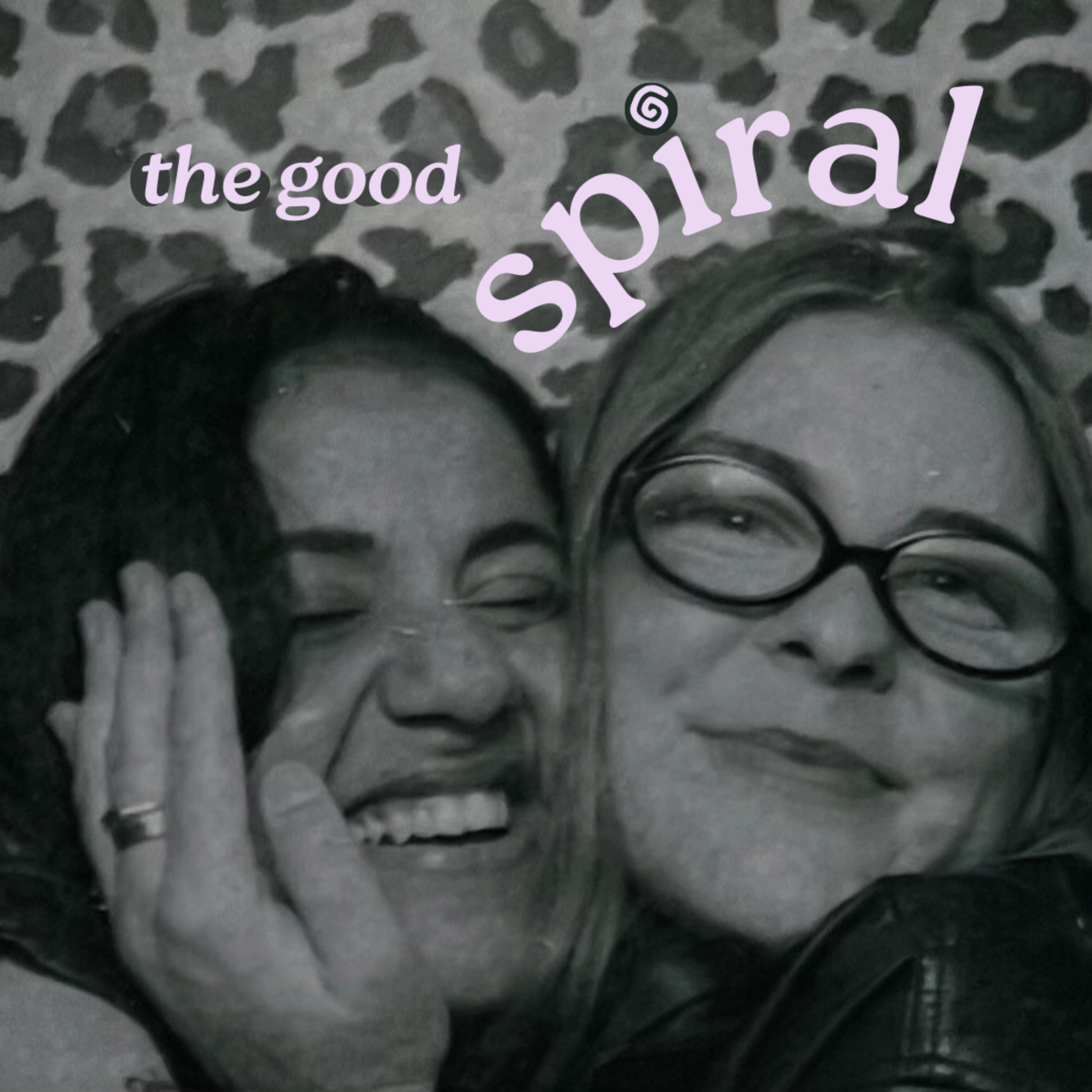
The Good Spiral
by Tanvi Chitnis and Scottie Trimble
Spiralling doesn’t have to mean crashing out. Join Scottie (student therapist) and Tanvi (adventure seeker) as they swap stories, untangle messy thoughts, and turn overthinking into conversations that feel lighter, fun, and real. Follow @goodspiral on Instagram.
-
7
felice.c0m on art, bipolar disorder + womanhood
This week on The Good Spiral, we’re joined by Toronto-based photographer, community builder, and all-around heart-centered creative — Felice Trinidad.From the Queen Street days in 2017 to shooting for publications like Glossi, Raydar Magazine, and The Knockturnal, Felice has always been more than a photographer. She’s a connector. A nurturer. The kind of person who makes you feel seen — both in front of the camera and in real life.In this episode, we talk about:• The early days of building community in Toronto’s creative scene• Pivoting from medicine to photography — and choosing passion over expectation• Mental health in the age of “performative wellness”• Healing through heartbreak, transition, and identity shifts• Photography as a form of care, storytelling, and emotional processing• Protecting your peace while building collaborative spaces• What growth really looks like behind the scenesThis conversation is about bravery — the quiet kind. The kind that looks like changing paths. Like choosing alignment over approval. Like building community without losing yourself.Felice opens up about her mental health journey, her creative evolution, and what it means to heal in real time — not just aesthetically, but honestly.If you’ve ever felt caught between who you were “supposed” to be and who you actually are… this spiral is for you.🎧 Listen, like, and subscribe to The Good Spiral — the mental health podcast where overthinking gets a glow up.Follow Felice --> https://www.instagram.com/felice.c0m/ Follow us:Scottie: https://www.instagram.com/scottiescottiescottie/Tanvi: https://www.instagram.com/tanviichitniss/The Good Spiral: https://www.instagram.com/goodspiral/
-
6
The Company We Keep (and Why It Matters)
In this episode of The Good Spiral, Scottie and Tanvi reflect on how friendship evolves across life stages and cultures, guided by three core pillars: emotional safety, reciprocity, and shared growth. From playground bonds to adult chosen family, they unpack how real connection both comforts and challenges us — shaping who we become.Backed by research and real stories (including Tanvi’s experience growing up in India and Scottie’s reflections as a student therapist), this conversation explores how to nurture healthy, lasting friendships — and how to know when you’ve found your people. 💞Stay tuned till the end for gentle reflection prompts and tangible steps to build your own community of care.References:Bauminger, N., Finzi-Dottan, R., Chason, S., & Har-Even, D. (2008). Intimacy in adolescent friendship: The roles of attachment, coherence, and self-disclosure. Journal of Social and Personal Relationships, 25(3), 409–428. https://doi.org/10.1177/0265407508090866Bokhorst, C. L., Sumter, S. R., & Westenberg, P. M. (2010). Social support from parents, friends, classmates, and teachers in children and adolescents aged 9 to 18 years: Who is perceived as most supportive? Social Development, 19(2), 417–426. https://doi.org/10.1111/j.1467-9507.2009.00540.xChaudhary, N., & Sharma, N. (2012). Cultural perspectives on adolescence in India: Identity, autonomy, and connectedness. In B. B. Jensen (Ed.), Cultural Perspectives on Adolescence (pp. 67–88). Springer.Denworth, L. (2020). Friendship: The Evolution, Biology, and Extraordinary Power of Life’s Fundamental Bond. W. W. Norton & Company.French, D. C. (2015). Friendship in childhood and adolescence. In R. M. Lerner (Ed.), Handbook of Child Psychology and Developmental Science (7th ed., Vol. 3, pp. 1–45). Wiley.Galatzer-Levy, I. R., & Bonanno, G. A. (2012). Beyond normality in the study of bereavement: Heterogeneity in depression outcomes following loss in older adults. Social Science & Medicine, 74(12), 1987–1994. https://doi.org/10.1016/j.socscimed.2012.02.022Harvard Health Publishing. (2021). The health benefits of strong relationships. Harvard Medical School. https://www.health.harvard.edu/staying-healthy/the-health-benefits-of-strong-relationshipsIsherwood, L. M., King, D. S., & Luszcz, M. A. (2017). A longitudinal analysis of social engagement in the oldest old. Journals of Gerontology: Series B, 72(6), 977–986. https://doi.org/10.1093/geronb/gbw132Jadhav, A., & Weir, D. (2017). Widowhood and depression in a cross-national perspective: Evidence from the United States, Europe, Korea, and China. Journals of Gerontology: Series B, 73(8), e143–e153. https://doi.org/10.1093/geronb/gbx021Larson, R. W., Verma, S., & Dworkin, J. (2000). Connectedness and autonomy in the daily lives of Indian adolescents. New Directions for Child and Adolescent Development, 88, 51–69. https://doi.org/10.1002/cd.23220008806Legerski, E. M., Cornwall, M., & O’Neil, B. (2015). Gendered friendship patterns in adolescence and adulthood. Gender Issues, 32(2), 71–88. https://doi.org/10.1007/s12147-015-9137-7Radmacher, K., & Azmitia, M. (2006). Are there gendered pathways to intimacy in early and late adolescents’ friendships? Journal of Adolescent Research, 21(4), 415–448. https://doi.org/10.1177/0743558406287402Skool of Life. (2023, March 12). The evolution of friendship across different life stages. Medium. https://skooloflife.medium.com/the-evolution-of-friendship-across-different-life-stages-c46b1788a0cbUchino, B. N., Bowen, K., Carlisle, M., & Birmingham, W. (2023). Social relationships and health: A review of the evidence and implications for health policy. Frontiers in Psychology, 14, 1159398. https://doi.org/10.3389/fpsyg.2023.1159398Way, N. (2004). Intimacy, desire, and distrust in the friendships of adolescent boys. In N. Way & J. Y. Chu (Eds.), Adolescent Boys: Exploring Diverse Cultures of Boyhood (pp. 167–196). NYU Press.
-
5
Gobbles n' Giggles
In this episode of The Good Spiral, Scottie and Tanvi, casually chat about their friendship post Canadian thanksgiving dinner. Welcome to The Good Spiral 🌀🗣️🎙️ The mental health podcast where overthinking gets a glow-up. Hosted by Tanvi (adventure seeker) + Scottie (student therapist) ⭐️📚🌲🧠👂YT - @thegoodspiralIG @goodspiralTT @the.good.spiral → Tanvi’s IG: @tanviichitniss→ Scottie’s IG: @scottiescottiescottieAnd remember — every spiral can be turned into a good spiral ;)Questions to ask your best friend via flamingoappreels ✪ If you lost me in the grocery store, which aisle would you find me in? ✪ If someone asked how we became friends, what story would you tell? ✪ If I told you I just bought something crazy, what would you guess it is? ✪ If you had to sum up our friendship in one moment, what would it be?
-
4
The Digital Divide and Nature Deficit
Welcome to The Good Spiral 🎙️⭐❤️— the podcast where besties Scottie and Tanvi untangle the messy wires of their minds the way you’d wrestle with a pair of earphones at the bottom of your bag. Together, they chat through life’s challenges, big and small, reminding you that sometimes all you need is a good conversation to feel a little lighter.In this episode, they dive into how the environments young people grow up in — from endless social media scrolling to access (or lack of access) to green space — shape youth mental health in Canada. They ask:What happens when some teens spend most of their free time online while others have parks and playgrounds at their fingertips?How do inequities like racism, class divides, and stigma shape who gets access to safe spaces, care, and community?Why is resilience important — and how do we move beyond “just go outside more” advice?Along the way, Scottie reflects on lessons from camp and therapy training, while Tanvi shares her experiences navigating work stress, relationship shifts, and self-advocacy. Together, they show why youth mental health isn’t just an individual issue — it’s deeply tied to the systems and environments around us.Referenced Resources Richard Louv (2005) – Last Child in the Woods ➝ Introduced “Nature Deficit Disorder,” sparking global conversations about the link between kids’ disconnection from nature and mental health challenges. Dankiw et al. (2020) – Review on nature play and childhood development ➝ Found that unstructured outdoor play helps kids regulate emotions, build resilience, and improve cognitive flexibility. Bates et al. (2018) – Green schoolyards in low-income neighbourhoods ➝ Showed how access to natural spaces at school strengthens community connection and youth well-being in underserved areas. Khalaf et al. (2023) – Social media and youth mental health ➝ Linked heavy social media use with higher rates of depression and anxiety, especially among girls and marginalized youth. Wang et al. (2023) – Nature as a buffer to screen time ➝ Found that time in nature protects against the negative effects of excessive mobile phone use on youth well-being. Fante-Coleman & Jackson-Best (2020) – Black youth and mental health access in Canada ➝ Highlighted systemic barriers like racism, stigma, and lack of culturally competent care that limit access to support. Helton & Smith (2013) – Strengths-based mental health practice ➝ Advocated for moving away from deficit-based models and toward approaches that value youth resilience and lived experience. Palomino et al. (2016) – Nature Deficit Disorder online ➝ Showed how online conversations often oversimplify research, putting the burden on individuals instead of addressing systemic issues.💌 Let’s spiral together: If this episode resonates, share it with a friend who could use a reminder that they’re not alone. Follow The Good Spiral for more open, real, and sometimes messy chats about mental health, culture, and connection.YT: @thegoodspiral IG: @goodspiralTT: @the.good.spiral Tanvi’s IG: @tanviichitniss Scottie’s IG: @scottiescottiescottie
-
3
Cystors & Motherhood
After a trip to India, Tanvi is diagnosed with hyperthyroidism and ovarian cysts. Scottie reflects on her lived experience with PCOS. Together, they explore how these conditions shape identity, emotions, relationships, and their perspectives on motherhood.Referenced Resources:Witchel, S. F., Teede, H. J., & Peña, A. S. (2020). Curtailing PCOS. Pediatric Research, 87(3), 353–361. https://doi.org/10.1038/s41390-019-0615-1Bharathi, R. V., et al. (2017). An epidemiological survey: Effect of predisposing factors for PCOS in Indian urban and rural population. Middle East Fertility Society Journal, 22(4), 313–316. https://doi.org/10.1016/j.mefs.2017.05.007
-
2
Paws for Therapy: Canine-Assisted Therapy in Mental Health Treatment
In this heartfelt episode of The Good Spiral, cohosts Tanvi and Scottie dig into the world of Canine-Assisted Therapy (CAT)—a powerful, evidence-based intervention that’s reshaping how we think about healing. Scottie shares her lived experience navigating mental illness with her psychiatric service dog, Arthur, and breaks down what makes CAT different from Emotional Support Animals (ESAs), traditional therapy dogs, and Pet Therapy programs.The episode explores the science behind CAT—including how interactions with dogs can boost oxytocin, dopamine, and serotonin while reducing cortisol (Koukourikos et al., 2019)—and addresses systemic barriers like lack of insurance coverage and national training standards. The cohosts also spotlight the CAMH Pet Therapy Program, where certified volunteer dogs offer comfort and connection to patients.Whether you're a mental health professional, a dog lover, or just spiral-curious, this episode will leave you with a deeper appreciation of the bond between humans and our four-legged therapists.Referenced Resource: Koukourikos, K., Tsaloglidou, A., & Kourkouta, L. (2019). The importance of therapy dogs in mental health. Materia Socio Medica, 31(4), 308–310. https://doi.org/10.5455/msm.2019.31.308-310 Featured Program: CAMH Pet Therapy Program Volunteers go through CAMH’s onboarding, and dogs are certified in a four-hour external evaluation. Approved dogs receive a CAMH ID badge, lanyard, and bandana and commit to one year of weekly visits. 📧 Contact: [email protected] 📞 Phone: (416) 535-8501 ext. 32995
-
1
Welcome to The Good Spiral
Spiralling doesn’t have to mean crashing out. Join Scottie (27, Canadian, student therapist) and Tanvi (29, Indian, Toronto-based, outfit-lover) as they swap stories, untangle messy thoughts, and turn overthinking into conversations that feel lighter, fun, and real. Follow @goodspiral on Instagram.
We're indexing this podcast's transcripts for the first time — this can take a minute or two. We'll show results as soon as they're ready.
No matches for "" in this podcast's transcripts.
No topics indexed yet for this podcast.
Loading reviews...
ABOUT THIS SHOW
Spiralling doesn’t have to mean crashing out. Join Scottie (student therapist) and Tanvi (adventure seeker) as they swap stories, untangle messy thoughts, and turn overthinking into conversations that feel lighter, fun, and real. Follow @goodspiral on Instagram.
HOSTED BY
Tanvi Chitnis and Scottie Trimble
Loading similar podcasts...
Frequently Asked Questions
How many episodes does The Good Spiral have?
The Good Spiral currently has 7 episodes available on PodParley. New episodes are automatically indexed when they're published to the podcast feed.
What is The Good Spiral about?
Spiralling doesn’t have to mean crashing out. Join Scottie (student therapist) and Tanvi (adventure seeker) as they swap stories, untangle messy thoughts, and turn overthinking into conversations that feel lighter, fun, and real. Follow @goodspiral on Instagram.
How often does The Good Spiral release new episodes?
The Good Spiral has 7 episodes. Check the episode list to see recent publication dates and frequency.
Where can I listen to The Good Spiral?
You can listen to The Good Spiral on PodParley by clicking any episode. We provide an embedded audio player for direct listening, and you can also subscribe via your preferred podcast app using the RSS feed.
Who hosts The Good Spiral?
The Good Spiral is created and hosted by Tanvi Chitnis and Scottie Trimble.
URL copied to clipboard!