
PODCAST · news
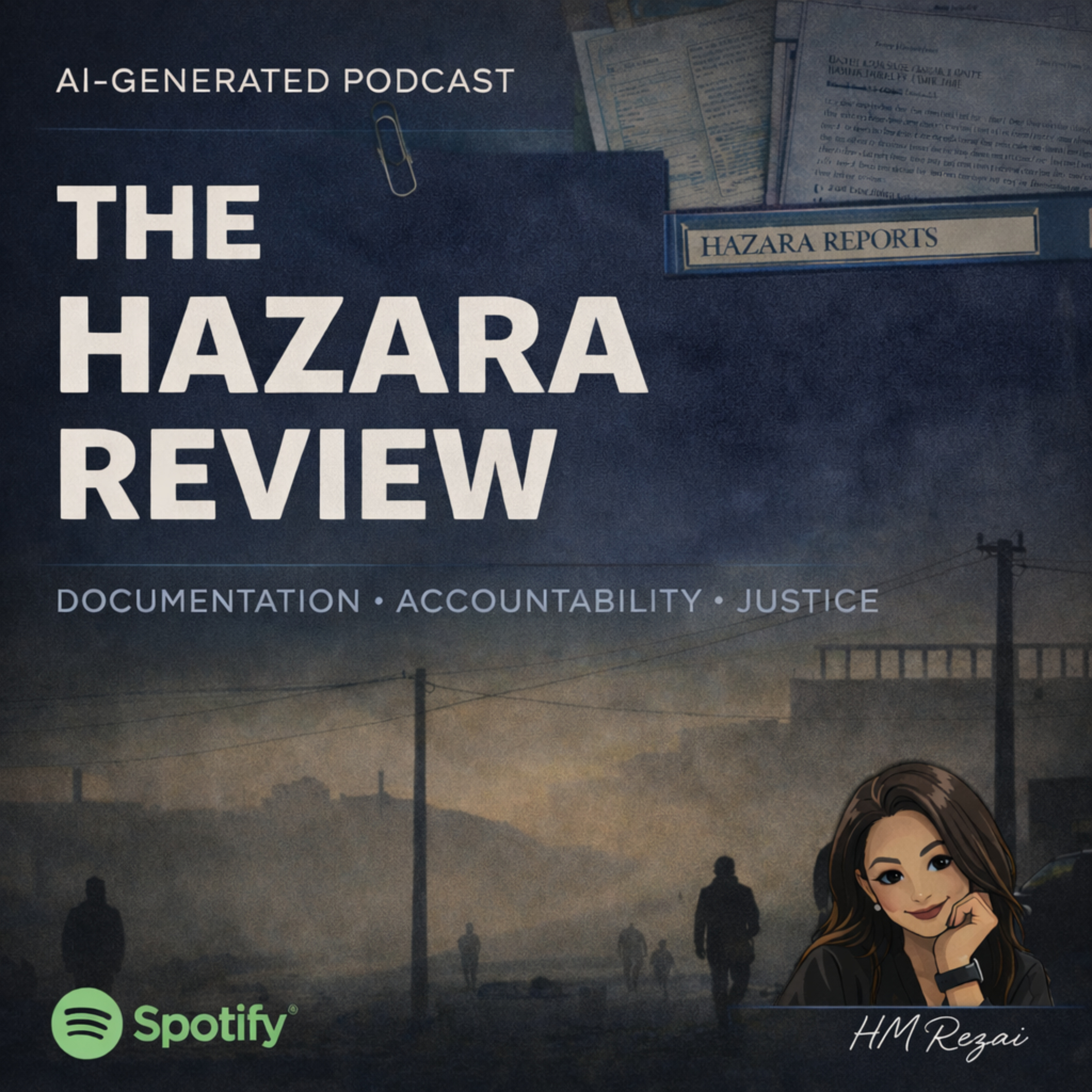
The Hazara Review
by May
The Hazara Review examines reports, parliamentary inquiries, academic research, and human rights investigations concerning the Hazara people of Afghanistan. Using AI-generated audio based on verified publications, each episode distils key findings from legal, policy, and institutional documents. The podcast serves as an evolving archive—documenting evidence, analysing developments, and contributing to informed, evidence-based dialogue on justice, accountability, and rights.
-
8
The Hazaras of Afghanistan (Part 2) | Chapter 1: Who Are the Hazaras?
🎙 The Hazara Review – Book SeriesThis episode continues our multi-part examination of The Hazaras of Afghanistan: An Historical, Cultural, Economic and Political Study by Sayed Askar Mousavi.Part 2 explores Chapter 1: “Who Are the Hazaras?” — a foundational chapter examining questions of origin, identity, ethnicity, and historical narrative.The discussion analyses:Competing theories regarding Hazara originsThe Mongol hypothesis and alternative interpretationsEthnic classification and racialised narrativesLinguistic and cultural identityThe construction of Hazara identity within Afghan historiographyThis episode situates the Hazara within broader regional and historical frameworks, highlighting how identity has been shaped by political power, exclusion, and historiography.____The Hazara Review provides structured, evidence-based analysis of academic works, legal reports, and institutional inquiries concerning the Hazara people of Afghanistan.
-
7
Hazarajat 1979–1984 | The Rise and Collapse of the Shura
This episode examines Niamatullah Ibrahimi’s working paper, “The Failure of a Clerical Proto-State: Hazarajat, 1979–1984,” published by the Crisis States Research Centre at the London School of Economics .The paper analyses the rise of the Shura in Hazarajat following the 1979 uprising against the PDPA regime, and its attempt to function as an interim Islamic proto-state. It explores the Shura’s administrative structure, ideological tensions, diplomatic failures, and the internal rivalries that led to its collapse in 1984.This episode examines:The formation of the Shura as a quasi-stateThe role of traditionalist and radical UlemaConflicts between clerical leadership and local strongmenIranian influence and diplomatic miscalculationsThe rise of Khomeinist organisations (Nasr & Pasdaran)The fragmentation of Hazara political authorityThis AI-generated podcast presents a structured, evidence-based summary of academic research in English and Farsi.The Hazara Review documents scholarly works, legal analyses, and institutional reports concerning the Hazara people of Afghanistan.
-
6
The Hazaras of Afghanistan – Part 1: Introduction & National Identity Crisis
🎙 The Hazara ReviewThis episode marks the beginning of a multi-part audio series examining The Hazaras of Afghanistan: An Historical, Cultural, Economic and Political Study by Sayed Askar Mousavi .Part 1 explores the Introduction and Preface, where Mousavi outlines a new socio-anthropological approach to understanding Afghanistan through the study of the Hazara people. The episode examines key themes including national identity, Afghan nationalism, ethnic marginalisation, and the historical transformation from Khorasan to modern Afghanistan.This foundational discussion frames the broader political, cultural, and socio-economic analysis that follows in later parts of the series.The Hazara Review is dedicated to structured, evidence-based analysis of academic works, legal reports, and institutional inquiries concerning the Hazara people of Afghanistan.
-
5
The Genocide of Hazaras: A Century of Persecution and the Case for Justice
This legal essay argues that the systematic violence directed at the Hazara community in Afghanistan fulfills the international criteria for genocide. The author highlights a long timeline of atrocities, ranging from nineteenth-century massacres to modern-day bombings of schools, hospitals, and mosques. By examining the Genocide Convention, the text demonstrates how these acts meet specific legal definitions regarding the intent to destroy a protected ethnic and religious group. The source details how perpetrators have used forced displacement, torture, and targeted executions to terrorise the population with total impunity. Ultimately, the document serves as a call for the international community to formally recognise these crimes and intervene to stop the ongoing persecution.
-
4
Legal Brief: Hazara Genocide Assessment under the Genocide Convention
This 90-second legal brief summarises the September 2025 New Lines Institute report assessing whether acts committed against the Hazara in Afghanistan since August 2021 meet the threshold of genocide under the 1948 Genocide Convention. It outlines key findings on protected group status, prohibited acts, genocidal intent, and state responsibility, and highlights the report’s call for international accountability and prevention measures.
-
3
The Hazara Genocide: Legal Analysis under the Genocide Convention
This episode examines the September 2025 legal report by the New Lines Institute assessing whether acts targeting the Hazara in Afghanistan since August 2021 constitute genocide under the 1948 Genocide Convention. Applying the legal elements of protected group, prohibited acts, and genocidal intent, the report finds a reasonable basis to believe genocide has occurred and calls for international accountability.
-
2
Epistemic Injustice and the Hazara Struggle: The Enlightenment Movement
This episode examines Arif Sahar’s 2025 article in Central Asian Survey, analysing the Hazara struggle for social and political rights through the lens of epistemic injustice. It explores historical marginalisation, structural violence, and the emergence of the Enlightenment Movement as a response to systemic discrimination. The discussion highlights how knowledge, voice, and recognition shape justice in Afghanistan.
-
1
The Hazara Inquiry: UK Parliament Examines the Situation in Afghanistan (Farsi)
This episode presents an AI-generated podcast created using a Google LLM, based on the findings of a UK parliamentary inquiry into the situation of the Hazara people in Afghanistan.The report, published by a cross-party group of UK parliamentarians, examines patterns of targeted violence, systemic discrimination, and the risk of atrocity crimes facing the Hazara community. This episode summarises key findings, legal implications, and the broader international response required to ensure protection and accountability.As a Hazara woman and advocate, sharing this inquiry is part of documenting evidence, amplifying parliamentary scrutiny, and ensuring that the situation of Hazaras remains visible in global discourse.
We're indexing this podcast's transcripts for the first time — this can take a minute or two. We'll show results as soon as they're ready.
No matches for "" in this podcast's transcripts.
No topics indexed yet for this podcast.
Loading reviews...
ABOUT THIS SHOW
The Hazara Review examines reports, parliamentary inquiries, academic research, and human rights investigations concerning the Hazara people of Afghanistan. Using AI-generated audio based on verified publications, each episode distils key findings from legal, policy, and institutional documents. The podcast serves as an evolving archive—documenting evidence, analysing developments, and contributing to informed, evidence-based dialogue on justice, accountability, and rights.
HOSTED BY
May
Loading similar podcasts...
Frequently Asked Questions
How many episodes does The Hazara Review have?
The Hazara Review currently has 8 episodes available on PodParley. New episodes are automatically indexed when they're published to the podcast feed.
What is The Hazara Review about?
The Hazara Review examines reports, parliamentary inquiries, academic research, and human rights investigations concerning the Hazara people of Afghanistan. Using AI-generated audio based on verified publications, each episode distils key findings from legal, policy, and institutional documents....
How often does The Hazara Review release new episodes?
The Hazara Review has 8 episodes. Check the episode list to see recent publication dates and frequency.
Where can I listen to The Hazara Review?
You can listen to The Hazara Review on PodParley by clicking any episode. We provide an embedded audio player for direct listening, and you can also subscribe via your preferred podcast app using the RSS feed.
Who hosts The Hazara Review?
The Hazara Review is created and hosted by May.
URL copied to clipboard!