
PODCAST · education
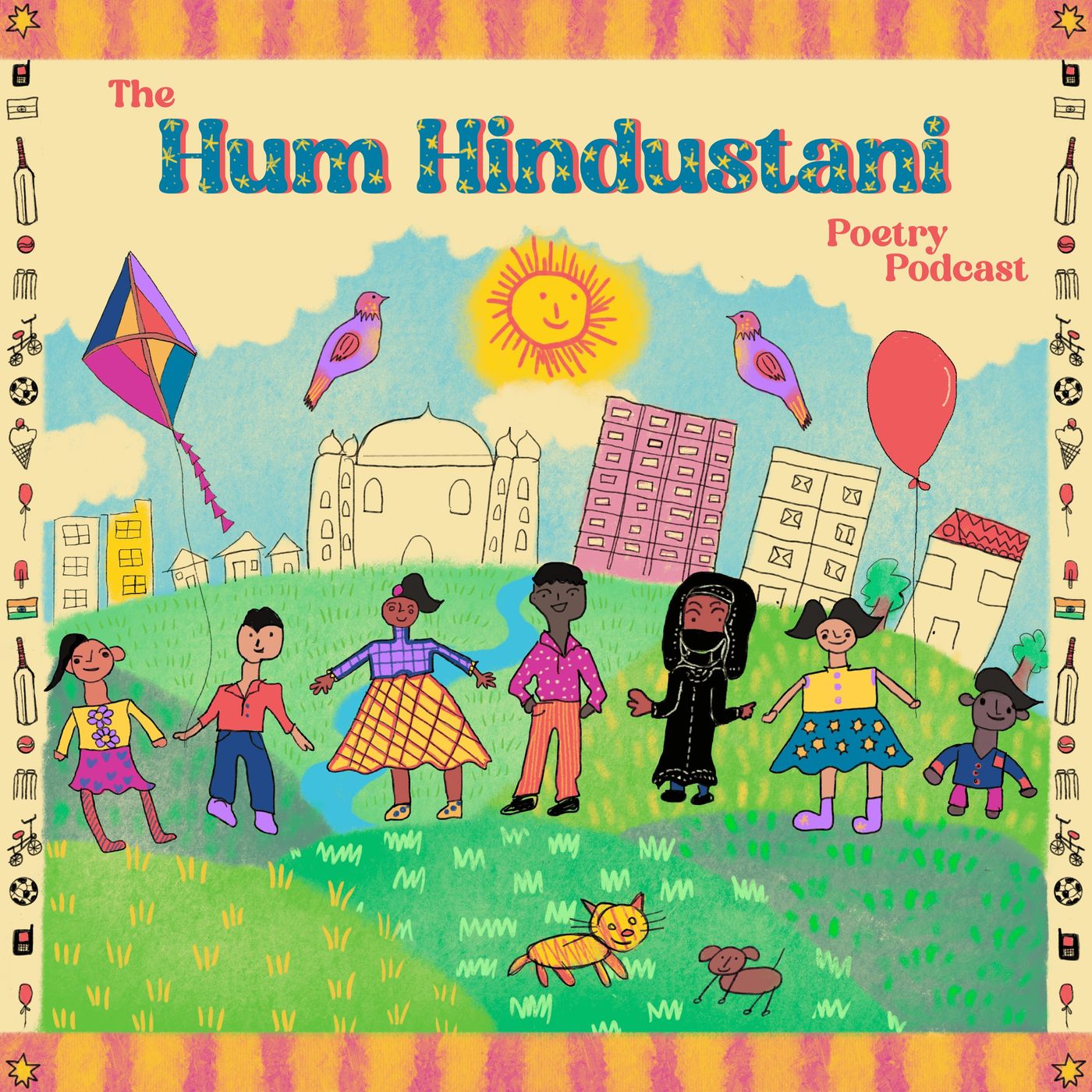
The Hum Hindustani Poetry Podcast
by Samina Mishra
The Hum Hindustani Poetry Podcast is a limited series podcast, a set of 10 episodes in English and Hindi, that emerged from the Hum Hindustani research project by filmmaker, writer and teacher, Samina Mishra, for TESF India. The project involved doing art and writing workshops with select groups of children on the ideas of Liberty, Equality and Fraternity. A curated selection of these poems are featured on this podcast. Each episode includes the children’s writing, responses to the poems by writers, artists and educators, along with a commentary that presents the context and does a close reading of the poem to reflect on what the children’s voices reveal to us about the world we live in and the world we could build.Follow us on Instagram@themagickeycentre orvisit our websitehum-hindustani.in
-
21
एपिसोड 10: हम भारत के लोग
यह एपिसोड 10 का हिंदी संस्करण है।हम हिंदुस्तानी वर्कशॉप्स के दौरान कितनी ही अलग आवाज़ें सुनने में आयीं. इस पॉडकास्ट श्रंखला के आख़िरी एपिसोड के लिए हमने उन जुदा आवाज़ों को बुन कर एक कविता बनायी है. ये एक साझे से बनी कविता है. इसे हमने आज़ादी के ख़याल पर की गयी exercise से बच्चों के एक-एक लाइन के जवाबों को जोड़ कर बनाया है. बच्चों की ख्वाहिशें घर में आज़ादी से ले कर बाहरी दुनिया में मनचाहे तरीकों से जीने तक फैली हुयी हैं. उनकी ख्वाहिशों के इस गुच्छे को सुनिए. शायद इसमें आपको अपने कोई ख़याल और अहसास मिल जाएँ. ये हमारे पॉडकास्ट का आख़िरी एपिसोड है. लेकिन, हम सबको अपने जटिल और गूंथे हुए इतिहास को समझने की साझी कोशिश जारी रखनी होगी. हम उम्मीद करते हैं कि आपके लिए इस पॉडकास्ट ने खुद से परे अनुभवों और दुनियाओं पर ख़याल करती एक ज़मीन तैयार करी होगी. बच्चों की बातें और उनकी आवाज़ हमे इस अनेकता को देखने, उसे मज़बूत करने और उसका जश्न मनाने के लिए प्रेरित करते हैं. बस, इसी ख़याल का नाम है - हम हिंदुस्तानी | अतिथि के बारे मेंसंपूर्णा चटर्जी लेखक, अनुवादक, सम्पादक और शिक्षक हैं | वो बच्चों और नौजवानों, दोनों के लिए लिखती हैं | उन्होंने विभिन्न भाषाओं के विभिन्न लोगों के साथ कविता लिखने पर काम किया है | उनकी 21 में से 9 किताबें बच्चों और युवाओं के लिए हैं | इनमें भयबाच्याका एंड अदर वाइल्ड पोयम्स (स्कॉलैस्टिक, 2019) ,जो की वेल्श कवि युरिग सेलिस्बरी के साथ हैं; ऐला द गर्ल हु इंटरड द अननोन (स्कॉलैस्टिक, 2013), द फ्रायड फ्रॉग एंड अदर फनी फ्रीकी फूडी फैस्टी पोयम्स (स्कॉलैस्टिक, 2009); एक रचनात्मक पुनर्कथा का संग्रह, द ग्रेटेस्ट स्टोरीज़ एवर टोल्ड (पेंगुइन, 2004) | वयस्कों के लिए उनकी किताबों में शामिल हैं: बम्बई मुम्बई, डर्टी लव (पेंगुइन, 2013) प जो की एक कहानी संग्रह है और कुल मिलाकर ग्यारह कविता की किताबें जिसमें सबसे हाली रही अनमेपेबल पोयम्स (पोएट्रीवाला, 2023) | संपूर्णा ने सुकुमार राय के कविताओं और गद्यों का अनुवाद भी किया है, वर्दीगुरडीबूंम (पफिन क्लासिक) | जॉय गोस्वामी की गद्य कविता आफ्टर डेथ कम्स वाटर (हार्परकॉलिंस, 2021) की तारीफ़ “जीती जागती, बनती फूलती जेम्स जॉयस सरीखी अंग्रेजी रचना” के रूप में की गयी है | वो आई. आई. टी. बम्बई के आई. डी. सी में छात्रों को लिखना सिखाती हैं | आप उन्हें इंस्टाग्राम @ShampooChats पर ढून्ढ सकते हैं |प्रोजेक्ट के बारे में अधिक जानकारी के लिएहमें Instagram पर फॉलो करें@themagickeycentreया हमारी वेबसाइट पर जाएँhum-hindustani.inCREDITS The Hum Hindustani Poetry Podcast is a production of The Magic Key Centre for the Arts and Childhood. Conceived, Written, and Hosted bySamina Mishra Poems read byAanvi, Arudra, Danyal, Haniya, Ishanvi, Labina, Lakshmi, Kashvi, Kyra, Rohan, Ronish, Samaa, Sarah, Sediqa, Ulfa Children reading the poems mentored by Anannya Tripathyi Studio recordingsAmartya Ghosh, Quarter Note Studios Music Shireen Ghosh Vocals Ishaan Chintamani ArtworkAlia Sinha Additional Research Rhea Kuthoore Co-WriterS Gautham Hindi TranslationTazeen AliProduced by Vaaka Media AcknowledgementsAnannya TripathyiGaurav ChintamaniPriya MathewsShikha SenSimurgh CentreTESF IndiaAll the children who participated in the Hum Hindustani workshops and wrote the poemsSupport for this podcast comes from Rohini Nilekani Philanthropies.The Hum Hindustani research project is part of TESF India.
-
20
Episode 10: We the People of India
Many different voices emerged during our workshops and for the last episode of our podcast, we curated a poem from these diverse voices. It is a collective poem, created with responses shared by children to a one-line exercise on the idea of Liberty. Their concerns range from freedom in personal spaces as well as the outside world. Perhaps, you may find your own thoughts and feelings somewhere in this amalgam. This is the last episode in our podcast but our collective endeavour to make sense of our complicated and intertwined histories must continue. We hope the podcast created a shared space to discover what we may not have experienced, to find resonance with another’s world. The children’s words, the children’s voices can help us find, reinforce and celebrate the plurality that lies in the idea of Hum Hindustani. About the GuestSampurna Chattarji is a writer, translator, editor and teacher. She writes for both adults and young people and has collaborated on writing poetry across languages with other poets. Of her twenty-one books, nine are for young people. These include The Bhyabachyaka and Other Wild Poems (Scholastic, 2019), co-authored with Welsh poet, Eurig Salisbury; her YA novel, Ela: The Girl Who Entered the Unknown (Scholastic, 2013); The Fried Frog and other Funny Freaky Foodie Feisty Poems (Scholastic, 2009); and her creative retelling, The Greatest Stories Ever Told (Penguin, 2004). Her books for adults include the short story collection about Bombay/Mumbai, Dirty Love (Penguin, 2013) and eleven poetry titles—the latest being Unmappable Moves (Poetrywala, 2023). Sampurna’s translation of Sukumar Ray’s poetry and prose – Wordygurdyboom! – is a Puffin Classic; and her translation of Joy Goswami’s prose poems After Death Comes Water (HarperCollins, 2021) has been lauded as a recreation of the Bangla originals in “a living voice, as inventive and vivid as the English of Joyce”. She teaches writing to design students at IDC, IIT-Bombay and can occasionally be spotted on Instagram as @ShampooChats.For more on the project, follow uson Instagram@themagickeycentreor visit our websitehum-hindustani.inCREDITS The Hum Hindustani Poetry Podcast is a production of The Magic Key Centre for the Arts and Childhood. Conceived, Written, and Hosted bySamina Mishra Poems read byAanvi, Arudra, Danyal, Haniya, Ishanvi, Labina, Lakshmi, Kashvi, Kyra, Rohan, Ronish, Samaa, Sarah, Sediqa, Ulfa Children reading the poems mentored by Anannya Tripathyi Studio recordingsAmartya Ghosh, Quarter Note Studios Music Shireen Ghosh Vocals Ishaan Chintamani ArtworkAlia Sinha Additional Research Rhea Kuthoore Co-WriterS Gautham Hindi TranslationTazeen AliProduced by Vaaka Media AcknowledgementsAnannya TripathyiGaurav ChintamaniPriya MathewsShikha SenSimurgh CentreTESF IndiaAll the children who participated in the Hum Hindustani workshops and wrote the poemsSupport for this podcast comes from Rohini Nilekani Philanthropies.The Hum Hindustani research project is part of TESF India.
-
19
एपिसोड 9: किसान आंदोलन
यह एपिसोड 9 का हिंदी संस्करण है।इस एपिसोड में जो कविता हम सुनेंगे, वो दो हज़ार बीस-इक्कीस में चले किसान आंदोलन के बारे में है. किसान आंदोलन में, हिन्दुस्तान के कई राज्यों के किसानों ने सरकार द्वारा पारित नए कृषि क़ानून का मिल कर विरोध किया था. देश में खेती- बाड़ी के अलग-अलग तरीके हैं | उसी तरह, नए कृषि क़ानून के बारे में अलग अलग रायें थी. उसके विरोध के अलावा कुछ समर्थक भी थे | वो आंदोलन करीबन एक साल से ऊपर जारी रहा | उसके मोर्चे कोरोना महामारी के दौरान भी बने रहे | किसान समुदाय से जुड़े लोग दिल्ली की सीमा पर अस्थायी कैम्पों में रहने लगे थे | पूरे-पूरे परिवार आ कर हफ़्तों उन कैम्प्स में ठहरते | उन परिवारों के साथ काफी बच्चे भी मोर्चे पर आते थे | उन बच्चों के लिए आंदोलन का अनुभव एक अलग ही अनुभव था | इस कविता में आप देखेंगे कि ऐसे अनुभवों का बच्चों पर क्या असर होता है | और ये, के ऐसे अनुभव बच्चों की समझ को कैसे ढालते हैं----सत्ता, समुदाय और विरोध के बारे में. अतिथि के बारे मेंपूनम बत्रा प्राथमिक एवं शिक्षक शिक्षण के क्षेत्रों में हिन्दुस्तान के अहम् अकादमिकों में शुमार हैं | वो दिल्ली में स्थित केंद्रीय शिक्षा संस्थान, दिल्ली विश्वविद्यालय से जुडी रह चुकी हैं | उनका काम ज्ञान-सम्बन्धी विभिन्न विषयों से जुड़ा हुआ है, जैसे कि शिक्षा में सार्वजनिक नीति, पाठ्यक्रम और पढ़ाई-सम्बन्धी शोध, शिक्षकों का शिक्षण और लैंगिक अध्ययन | उनका हाली शोध स्कूल और शिक्षक शिक्षण से जुडी पॉलिटिक्स, कम्पेरेटिव एजुकेशन, ग़ैर बराबरी शिक्षा और उसकी निरंतरता को बनाये रखने के त्रिकोण, शिक्षकों का प्रशिक्षण जो कि औपनिवेशिक छाया से बाहर हो, और ऐसे ही कई विषयों पर रहा है | वो GCRF द्वारा फण्ड किये गए TESF India के दक्षिण संभाग के रिसर्च नेटवर्क की भारत मुख्या एवं को-इन्वेस्टिगेटर हैं| और जानकारी के लिए देखें:https://journals.sagepub.com/doi/abs/10.1177/0049085720958809?journalCode=scha https://link.springer.com/article/10.1007/s11125-020-09518-6 https://www.tandfonline.com/doi/abs/10.1080/16823206.2013.877358 https://oxfordre.com/education/display/10.1093/acrefore/9780190264093.001.0001/acrefore-9780190264093-e-427https://www.emerald.com/insight/content/doi/10.1108/S1479-367920190000036011/full/html chrome-extension://efaidnbmnnnibpcajpcglclefindmkaj/https://tesfindia.b-cdn.net/wp-content/uploads/2023/07/Revised-TESF-Background-Paper-Addressing-Inequalities-Jan-2023.pdf chrome-extension://efaidnbmnnnibpcajpcglclefindmkaj/https://iihs.co.in/knowledge-gateway/wp-content/uploads/2021/01/TESF-India-Background-paper.pdf chrome-extension://efaidnbmnnnibpcajpcglclefindmkaj/https:/www.researchgate.net/profile/Rafael-Mitchell/publication/364521313_Decolonising_Teacher_Professionalism_Foregrounding_the_Perspectives_of_Teachers_in_the_Global_South/links/63569b766e0d367d91c0a264/Decolonising-Teacher-Professionalism-Foregrounding-the-Perspectives-of-Teachers-in-the-Global-South.pdf. https://tesfindia.iihs.co.in/प्रोजेक्ट के बारे में अधिक जानकारी के लिएहमें Instagram पर फॉलो करें@themagickeycentreया हमारी वेबसाइट पर जाएँhum-hindustani.inCREDITS The Hum Hindustani Poetry Podcast is a production of The Magic Key Centre for the Arts and Childhood. Conceived, Written, and Hosted bySamina Mishra Poems read byAanvi, Arudra, Danyal, Haniya, Ishanvi, Labina, Lakshmi, Kashvi, Kyra, Rohan, Ronish, Samaa, Sarah, Sediqa, Ulfa Children reading the poems mentored by Anannya Tripathyi Studio recordingsAmartya Ghosh, Quarter Note Studios Music Shireen Ghosh Vocals Ishaan Chintamani ArtworkAlia Sinha Additional Research Rhea Kuthoore Co-WriterS Gautham Hindi TranslationTazeen AliProduced by Vaaka Media AcknowledgementsAnannya TripathyiGaurav ChintamaniPriya MathewsShikha SenSimurgh CentreTESF IndiaAll the children who participated in the Hum Hindustani workshops and wrote the poemsSupport for this podcast comes from Rohini Nilekani Philanthropies.The Hum Hindustani research project is part of TESF India.
-
18
Episode 9: The Farmers' Protest
The poem in this episode is about the Farmers’ Protest of 2020-2021, the Kisan Andolan in which farmers across several states of India came together to resist new farm laws that the government had introduced. There were many arguments for and against the laws, just like there are many varied practices of farming across the country. The protest continued for over a year, through the COVID 19 pandemic, with farmers’ communities setting up camps that became almost temporary cities on the borders of Delhi. Families from villages came and spent weeks at these sites. For many of the children who came too, this was an experience like no other. The poem in this episode shows us how such an experience influences a child’s understanding of community, of power and of resistance. And in that understanding lie possibilities of imagining change. About the GuestPoonam Batra is one of India’s leading academics in the field of elementary and teacher education, formerly with the Central Institute of Education, University of Delhi. Her work spans multiple areas of knowledge: public policy in education; curriculum and pedagogy; teacher education and gender studies. Her recent research examines the politics of school and teacher education reform; comparative education imperatives; inequalities, education, and sustainability; and decolonisation of teacher professional development. She is Co-Investigator and India lead on the GCRF funded Transforming Education for Sustainable Futures (TESF) southern-led research network. Find more at:https://journals.sagepub.com/doi/abs/10.1177/0049085720958809?journalCode=scha https://link.springer.com/article/10.1007/s11125-020-09518-6 https://www.tandfonline.com/doi/abs/10.1080/16823206.2013.877358 https://oxfordre.com/education/display/10.1093/acrefore/9780190264093.001.0001/acrefore-9780190264093-e-427 https://www.emerald.com/insight/content/doi/10.1108/S1479-367920190000036011/full/htmlchrome-extension://efaidnbmnnnibpcajpcglclefindmkaj/https://tesfindia.b-cdn.net/wp-content/uploads/2023/07/Revised-TESF-Background-Paper-Addressing-Inequalities-Jan-2023.pdfchrome-extension://efaidnbmnnnibpcajpcglclefindmkaj/https://iihs.co.in/knowledge-gateway/wp-content/uploads/2021/01/TESF-India-Background-paper.pdfchrome-extension://efaidnbmnnnibpcajpcglclefindmkaj/https:/www.researchgate.net/profile/Rafael-Mitchell/publication/364521313_Decolonising_Teacher_Professionalism_Foregrounding_the_Perspectives_of_Teachers_in_the_Global_South/links/63569b766e0d367d91c0a264/Decolonising-Teacher-Professionalism-Foregrounding-the-Perspectives-of-Teachers-in-the-Global-South.pdf.https://tesfindia.iihs.co.in/For more on the project, follow uson Instagram@themagickeycentreor visit our websitehum-hindustani.inCREDITS The Hum Hindustani Poetry Podcast is a production of The Magic Key Centre for the Arts and Childhood. Conceived, Written, and Hosted bySamina Mishra Poems read byAanvi, Arudra, Danyal, Haniya, Ishanvi, Labina, Lakshmi, Kashvi, Kyra, Rohan, Ronish, Samaa, Sarah, Sediqa, Ulfa Children reading the poems mentored by Anannya Tripathyi Studio recordingsAmartya Ghosh, Quarter Note Studios Music Shireen Ghosh Vocals Ishaan Chintamani ArtworkAlia Sinha Additional Research Rhea Kuthoore Co-WriterS Gautham Hindi TranslationTazeen AliProduced by Vaaka Media AcknowledgementsAnannya TripathyiGaurav ChintamaniPriya MathewsShikha SenSimurgh CentreTESF IndiaAll the children who participated in the Hum Hindustani workshops and wrote the poemsSupport for this podcast comes from Rohini Nilekani Philanthropies.The Hum Hindustani research project is part of TESF India.
-
17
एपिसोड 8: क्या वो मेरे लोग हैं?
यह एपिसोड 8 का हिंदी संस्करण है।इस एपिसोड में पढ़ी गयी कविता एक एक्सरसाइज से निकल कर आयी है | बच्चों से कहा गया था कि वो अपनी रोज़ी ज़िन्दगी को टटोलें और सोचें की अपनेपन का अहसास उन्हें कब, कहाँ और किस तरह महसूस होता है | इसकी कवि चौदाह साल की हैं | वो गोवंडी में स्थित एक म्युनिसिपल स्कूल में पढ़ती हैं | वो एक बेहद खचाखच भरे कम्पाउंड में रहती हैं | तमाम मुंबई में झुग्गी बस्तियों और सड़क किनारे रहने वाले लोगों के पुनर्वासन का काम कई सालों से जारी है | कवि जिस भरे हुए मोहल्ले में रहती हैं वहां पर रहने के अपने संकट होते हैं | साफ़-सफाई का अभाव, खेलने के लिए सुरक्षित जगहों का न होना और बिजली पानी का कोई भरोसा नहीं | ऐसे हालातों में बच्चे क्या महसूस करते हैं ? अभाव के माहौल में अपने आस-पास के लोगों से उनके रिश्तों पर क्या असर पड़ता होगा ? ऐसे में, अपनेपन का अहसास आखिर कहाँ से आता होगा? अतिथि के बारे मेंनताशा बदवार लेखक, फिल्मकार और शिक्षक हैं | उन्होंने दिल्ली विश्वविद्यालय से मनोविज्ञान में स्नातक हासिल करी थी | जामिआ मिलिआ इस्लामिया से मास कम्युनिकेशन में मास्टर्स की पढ़ाई करी | फिलहाल नताशा अशोका विश्वविद्यालय सोनीपत में मीडिया स्टडीज़ विभाग में बतौर प्रोफेसर कार्यरत हैं | अपने करियर की शुरुआत उन्होंने NDTV के साथ बतौर कैमरा पर्सन की थी | ऐसा करने वाली वो हिन्दुस्तान की पहली महिलाओं में से एक रहीं | उनके लिखे गए कॉलम बीबीसी हिंदी, द ट्रिब्यून, मिंट लाउन्ज और द मॉर्निंग कॉन्टेक्स्ट और अन्य सरीखी पत्रिकाओं में शायां हो चुके हैं | साइमन और सचस्टर से छपी My Daughter’s Mum and I एवं Immortal for a Moment संस्मरणों का लेखन भी नताशा के नाम हैं | हर्ष मंदर और जॉन दयाल के संग उन्होंने वेस्टलैंड बुक्स की किताब, Reconciliation, Karwan e Mohabbat’s Journey of Solidarity Through a Wounded India लिखी | हर्ष मंदार और अनिर्बान भट्टाचार्य के संग उन्होंने When the Mask Came Off: Lockdown 2020 लिखी | 2016 और 2022 में उन्हें रिपोर्टिंग और डाक्यूमेंट्री वर्ग में लाड़ली मीडिया और एडवरटाइजिंग पुरस्कार से सम्मानित किया गया | और जानकारी के लिए देखें:Natasha Badhwar on Twitter, Instagram, Amazon, LinkedIn, The Tribune and Mint LoungeMy Daughters’ Mum — Natasha BadhwarImmortal for a Moment — Natasha BadhwarNatasha Badhwar’s newsletter on SubstackNatasha Badhwar’s old blog on BlogspotNatasha Badhwar’s Memoir Writing CourseParenthood — Episode 43 of The Seen and the Unseen (w Natasha Badhwar)Reconciliation: Karwan e Mohabbat’s Journey of Solidarity through a Wounded India — Edited by Harsh Mander, John Dayal and Natasha BadhwarWhy my daughters don’t go to school anymore — Natasha Badhwar interviewed by Manisha Natarajan. (Full video.)The most important lesson learnt as an #unschooling parent — Natasha BadhwarThe Joys of Walking Out — Natasha Badhwar and Sahar BegTo Fail Without Feeling Like A Failure — Natasha BadhwarThe real difference between my husband and me — Natasha BadhwarRoger Ebert and me: How tragedy and Twitter bonded us across continents — Natasha BadhwarIn Conversation with Roger Ebert — Natasha BadhwarA welcome note for new husbands and wives — Natasha BadhwarFive things to learn from the man you love — Natasha BadhwarFatherhood is a funny thing — Natasha BadhwarImposter Syndrome.What we say and what we mean, the fine art of small talk — Natasha Badhwarप्रोजेक्ट के बारे में अधिक जानकारी के लिएहमें Instagram पर फॉलो करें@themagickeycentreया हमारी वेबसाइट पर जाएँhum-hindustani.inCREDITS The Hum Hindustani Poetry Podcast is a production of The Magic Key Centre for the Arts and Childhood. Conceived, Written, and Hosted bySamina Mishra Poems read byAanvi, Arudra, Danyal, Haniya, Ishanvi, Labina, Lakshmi, Kashvi, Kyra, Rohan, Ronish, Samaa, Sarah, Sediqa, Ulfa Children reading the poems mentored by Anannya Tripathyi Studio recordingsAmartya Ghosh, Quarter Note Studios Music Shireen Ghosh Vocals Ishaan Chintamani ArtworkAlia Sinha Additional Research Rhea Kuthoore Co-WriterS Gautham Hindi TranslationTazeen AliProduced by Vaaka Media AcknowledgementsAnannya TripathyiGaurav ChintamaniPriya MathewsShikha SenSimurgh CentreTESF IndiaAll the children who participated in the Hum Hindustani workshops and wrote the poemsSupport for this podcast comes from Rohini Nilekani Philanthropies.The Hum Hindustani research project is part of TESF India.
-
16
Episode 8: Are Those My People?
The poem narrated in this episode was written as part of an exercise in which children were asked to reflect on their everyday life and when they had felt a sense of belonging. The poet is 14-years old and studies in a municipal school in Govandi, Mumbai. She lives in a densely packed compound of high rise buildings where people who lived in slums and pavements from all over Mumbai were rehoused. Living in such a space means coping with the lack of facilities such as poor sanitation, no safe play areas and uncertain power and water supply. What do children experience in such circumstances? How does that affect their relationships with those around them? And from where do they draw their sense of belonging? About the GuestNatasha Badhwar is a writer, film-maker, teacher. She has a graduate degree in Psychology from Delhi University and a post-graduate degree in Mass Communications from Jamia Millia Islamia University, and is a Professor in the Media Studies Department at Ashoka University. Natasha started her career as one of India’s first women camerapersons in news television with New Delhi Television (NDTV). She quit 13 years later as Vice President, Training and Development. A popular columnist, Natasha's columns are published in BBC Hindi, The Tribune, Mint Lounge and The Morning Context. She is the author of the memoirs, My Daughters’ Mum and Immortal For a Moment, published by Simon & Schuster India. With Harsh Mander and John Dayal, she has co-authored Reconciliation, Karwan e Mohabbat’s Journey of Solidarity Through a Wounded India, published by Westland Books. With Harsh Mander and Anirban Bhattacharya, Natasha has co-authored When The Mask Came Off – Lockdown 2020: A People’s History of Cruelty and Compassion. She has received the Laadli Media & Advertising Award for Gender Sensitivity in 2016 and 2022, in the reporting and web documentary categories.Find more at:Natasha Badhwar on Twitter, Instagram, Amazon, LinkedIn, The Tribune and Mint LoungeMy Daughters’ Mum — Natasha BadhwarImmortal for a Moment — Natasha BadhwarNatasha Badhwar’s newsletter on SubstackNatasha Badhwar’s old blog on BlogspotNatasha Badhwar’s Memoir Writing CourseParenthood — Episode 43 of The Seen and the Unseen (w Natasha Badhwar)Reconciliation: Karwan e Mohabbat’s Journey of Solidarity through a Wounded India — Edited by Harsh Mander, John Dayal and Natasha Badhwar Why my daughters don’t go to school anymore — Natasha Badhwar interviewed by Manisha Natarajan. (Full video.)The most important lesson learnt as an #unschooling parent — Natasha Badhwar The Joys of Walking Out — Natasha Badhwar and Sahar BegTo Fail Without Feeling Like A Failure — Natasha BadhwarThe real difference between my husband and me — Natasha Badhwar Roger Ebert and me: How tragedy and Twitter bonded us across continents — Natasha BadhwarIn Conversation with Roger Ebert — Natasha BadhwarA welcome note for new husbands and wives — Natasha BadhwarFive things to learn from the man you love — Natasha BadhwarFatherhood is a funny thing — Natasha BadhwarImposter Syndrome.What we say and what we mean, the fine art of small talk — Natasha BadhwarFor more on the project, follow uson Instagram@themagickeycentreor visit our websitehum-hindustani.inCREDITS The Hum Hindustani Poetry Podcast is a production of The Magic Key Centre for the Arts and Childhood. Conceived, Written, and Hosted bySamina Mishra Poems read byAanvi, Arudra, Danyal, Haniya, Ishanvi, Labina, Lakshmi, Kashvi, Kyra, Rohan, Ronish, Samaa, Sarah, Sediqa, Ulfa Children reading the poems mentored by Anannya Tripathyi Studio recordingsAmartya Ghosh, Quarter Note Studios Music Shireen Ghosh Vocals Ishaan Chintamani ArtworkAlia Sinha Additional Research Rhea Kuthoore Co-WriterS Gautham Hindi TranslationTazeen AliProduced by Vaaka Media AcknowledgementsAnannya TripathyiGaurav ChintamaniPriya MathewsShikha SenSimurgh CentreTESF IndiaAll the children who participated in the Hum Hindustani workshops and wrote the poemsSupport for this podcast comes from Rohini Nilekani Philanthropies.The Hum Hindustani research project is part of TESF India.
-
15
एपिसोड 7: मेरे लोग
यह एपिसोड 7 का हिंदी संस्करण है।जो कविता हम आज साझा करने वाले हैं वो गोवंडी, मुंबई में स्थित म्युनिसिपल स्कूल में पढ़ रही एक 14 साल की बच्ची ने लिखी है| भारतीय संविधान में आश्वासित भाईचारे के मूल के बारे में वो क्या सोचती है, हमें इस कविता में देखने को मिलेगा | भाईचारे या अपनेपन के क्या-क्या मायने होते हैं? घर, स्कूल, आस- पड़ोस या देश में: अपनापन आखिर दिखता कैसा है? हम उसे कब-कब महसूस करते हैं ? जब हमको अपनेपन का अहसास होता है, तब? क्या हमारी पैदाइश या हमारा पता उसको तय करते हैं? भाईचारा होता कब है? जब हम सब एकजुट हो जाते हैं, तब? फिर उन हालातों का क्या जब एकजुटता मुमकिन ना हो? हमारा संविधान हमसे भाईचारे का वायदा करता है| क्या संविधान का वो वायदा आपस में भाईचारे के अहसास के लिए काफ़ी होता है? यह कविता हमें इस बारे में सोचने को कहती है और हमसे सवाल करती है कि क्या हम इस दुनिया को नया बना सकते हैं | अतिथि के बारे मेंनिशा अब्दुल्ला बैंगलोर में स्थित एक थिएटर निर्माता हैं जो नाटककार, निर्देशक और शिक्षक के रूप में काम करती हैं। देखभाल, जिज्ञासा और साथ के मूलों की ज़मीन पर रहते हुए उनका काम अत्याचार के खिलाफ एक पुख़्ता आवाज़ उठाता रहता है | निशा को विशेष रूप से समकालीन सामाजिक और राजनीतिक संदर्भ में पहचान, अपनापन और सत्ता से रंगे हुए नज़रियों के बारे में सोचने में ख़ासी रूचि है । वह क़बीला की कलात्मक निदेशक हैं जहां उनका काम नए लेखन और असहमति से उपजी हुई कल्पनाओं को प्राथमिकता देता है | वह ऑफस्ट्रीम की संस्थापक सदस्य भी हैं जो एक कलाकार समूह है जहां जाति-विरोधी वकालत के आसपास रचनात्मक परियोजनाएं बुनी जाती हैं । निशा स्कूलों और विश्वविद्यालयों में भी पढ़ाती हैं | हाल ही में वह अजीम प्रेमजी यूनिवर्सिटी (बैंगलोर) और NALSAR यूनिवर्सिटी ऑफ लॉ (हैदराबाद) में गेस्ट फैकल्टी थीं। उनके काम के बारे में और अधिक जानकारी यहां पाएं:https://linktr.ee/nishaabdullaप्रोजेक्ट के बारे में अधिक जानकारी के लिएहमें Instagram पर फॉलो करें@themagickeycentreया हमारी वेबसाइट पर जाएँhum-hindustani.inCREDITS The Hum Hindustani Poetry Podcast is a production of The Magic Key Centre for the Arts and Childhood. Conceived, Written, and Hosted bySamina Mishra Poems read byAanvi, Arudra, Danyal, Haniya, Ishanvi, Labina, Lakshmi, Kashvi, Kyra, Rohan, Ronish, Samaa, Sarah, Sediqa, Ulfa Children reading the poems mentored by Anannya Tripathyi Studio recordingsAmartya Ghosh, Quarter Note Studios Music Shireen Ghosh Vocals Ishaan Chintamani ArtworkAlia Sinha Additional Research Rhea Kuthoore Co-WriterS Gautham Hindi TranslationTazeen AliProduced by Vaaka Media AcknowledgementsAnannya TripathyiGaurav ChintamaniPriya MathewsShikha SenSimurgh CentreTESF IndiaAll the children who participated in the Hum Hindustani workshops and wrote the poemsSupport for this podcast comes from Rohini Nilekani Philanthropies.The Hum Hindustani research project is part of TESF India.
-
14
Episode 7: My People
The poem we share today was written by a 14-year-old studying in a municipal school in Govandi, Mumbai, reflecting on the idea of Fraternity that the Constitution of India promises to all its citizens. What does fraternity mean? What does it look like - in the home, at school, in the neighbourhood or in the country? When do we feel it – is it when we experience a sense of belonging? Does that come from where we are born or where we live? When does it happen – when we come together? And what if we don’t? What of those times? Does the fact that the Constitution promises this to all citizens mean that we all feel bound together, in fraternity? The poem interrogates the idea of belonging, drawing from everyday lived experiences, leaving us to wonder whether we can indeed make the world anew. About the GuestNisha Abdulla is a Bangalore based theatre-maker practicing as a playwright, director, dramaturg, and educator. Her anti-oppressive arts practice places care, curiosity and community at the core of the creation process. Nisha is particularly invested in exploring the interplay of identity-belonging-power-gaze in the contemporary socio-political context. She is the Artistic Director of Qabila, where her work centers new writing and the dissenting imagination. She is also a founder member of OffStream, an artist collective that makes and enables creative projects around anti-caste advocacy. Nisha also teaches at schools and universities; most recently she was guest faculty at Azim Premji University (Bangalore) and NALSAR University of Law (Hyderabad).For more on her work, visit:https://linktr.ee/nishaabdullaFor more on the project, follow uson Instagram@themagickeycentreor visit our websitehum-hindustani.inCREDITS The Hum Hindustani Poetry Podcast is a production of The Magic Key Centre for the Arts and Childhood. Conceived, Written, and Hosted bySamina Mishra Poems read byAanvi, Arudra, Danyal, Haniya, Ishanvi, Labina, Lakshmi, Kashvi, Kyra, Rohan, Ronish, Samaa, Sarah, Sediqa, Ulfa Children reading the poems mentored by Anannya Tripathyi Studio recordingsAmartya Ghosh, Quarter Note Studios Music Shireen Ghosh Vocals Ishaan Chintamani ArtworkAlia Sinha Additional Research Rhea Kuthoore Co-WriterS Gautham Hindi TranslationTazeen AliProduced by Vaaka Media AcknowledgementsAnannya TripathyiGaurav ChintamaniPriya MathewsShikha SenSimurgh CentreTESF IndiaAll the children who participated in the Hum Hindustani workshops and wrote the poemsSupport for this podcast comes from Rohini Nilekani Philanthropies.The Hum Hindustani research project is part of TESF India.
-
13
एपिसोड 6: बराबरी सब के लिए
यह एपिसोड 6 का हिंदी संस्करण है।इस एपिसोड में जो कविता हम सुनेंगे, उसे फ़िरोज़पुर-पंजाब की रहने वाली एक बच्ची ने लिखा है. उसने दो-हज़ार-बीस-इक्कीस में चले किसान आंदोलन में लगातार भाग लिया था. दिल्ली की सीमा पर और अपने गाँव के पास-- उसने दोनों जगह की protest में शिरकत की. यूं तो यह कविता बराबरी के बारे में सोचते हुए लिखी गयी थी, पर आप देखेंगे कि उस कवि-बच्ची के शब्द हमारी दुनिया के तमाम पहलुओं की ओर इशारा करते है. जिस तरह से एक बच्चे की दुनिया को माना जाता है, उसके शब्द उससे कहीं ज़्यादा बढ़कर दुनिया को देखते है. क्या बच्चों की दुनिया वाकई में बड़ों की दुनिया से छोटी होती है? क्या ऐसा मानने में हम बच्चों के अनुभवों में मौजूद अनगिन मायनों को नज़रअंदाज़ तो नहीं कर रहे? अतिथि के बारे मेंफराह फारूकी दिल्ली के जामिया मिलिया इस्लामिया के शिक्षा संकाय के इंस्टीट्यूट ऑफ एडवांस्ड स्टडीज इन एजुकेशन में शिक्षा की प्रोफेसर हैं। इससे पहले, उन्होंने दिल्ली के लेडी श्रीराम कॉलेज के प्राथमिक शिक्षा विभाग में आठ साल तक काम किया। फराह ने शिक्षा, पहचान, ghettoisation, सांस्कृतिक राजनीति और स्कूल ethnographies के मुद्दों पर लिखा है। फराह हिंदी और अंग्रेजी दोनों में लिखती हैं। सरकारी सहायता प्राप्त स्कूल के प्रबंधक के रूप में उनके अनुभव को एकलव्य ने “एक स्कूल मैनेजर की डायरी” के रूप में प्रकाशित किया था। उन्होंने इकोनॉमिक एंड पॉलिटिकल वीकली, आईआईसी क्वार्टरली, लर्निंग कर्व, द कैरवैन, द वायर, शिक्षा विमर्श और कुछ अंतरराष्ट्रीय मंचों जैसे द फ्राइडे टाइम्स (लाहौर) और मैक्स वेबर स्टिफ्टंग (लंदन) जैसी कई पत्रिकाओं में भी प्रकाशन किया है। फराह ने 2006 और 2008 के बीच प्रकाशित कक्षा IV और V के लिए पर्यावरण अध्ययन के लिए राष्ट्रीय शैक्षिक अनुसंधान और प्रशिक्षण परिषद (NCERT) की पाठ्यपुस्तकों में मुख्य सलाहकार और लेखक के रूप में योगदान दिया है। उन्होंने शिक्षकों और शिक्षक-प्रशिक्षुओं के लिए भी लिखा है। Routledge द्वारा प्रकाशित उनकी हालिया पुस्तक का शीर्षक है, Education in a Ghetto: Paradoxes of a Muslim-Majority School (2023)। पुस्तक के बारे में अधिक जानकारी यहां पाई जा सकती है: https://www.taylorfrancis.com/chapters/mono/10.4324/9781003407140-1/introduction-farah-farooqiप्रोजेक्ट के बारे में अधिक जानकारी के लिएहमें Instagram पर फॉलो करें@themagickeycentreया हमारी वेबसाइट पर जाएँhum-hindustani.inCREDITS The Hum Hindustani Poetry Podcast is a production of The Magic Key Centre for the Arts and Childhood. Conceived, Written, and Hosted bySamina Mishra Poems read byAanvi, Arudra, Danyal, Haniya, Ishanvi, Labina, Lakshmi, Kashvi, Kyra, Rohan, Ronish, Samaa, Sarah, Sediqa, Ulfa Children reading the poems mentored by Anannya Tripathyi Studio recordingsAmartya Ghosh, Quarter Note Studios Music Shireen Ghosh Vocals Ishaan Chintamani ArtworkAlia Sinha Additional Research Rhea Kuthoore Co-WriterS Gautham Hindi TranslationTazeen AliProduced by Vaaka Media AcknowledgementsAnannya TripathyiGaurav ChintamaniPriya MathewsShikha SenSimurgh CentreTESF IndiaAll the children who participated in the Hum Hindustani workshops and wrote the poemsSupport for this podcast comes from Rohini Nilekani Philanthropies.The Hum Hindustani research project is part of TESF India.
-
12
Episode 6: Equality for All
The poem in this episode is written by a young girl in a village in Firozpur, Punjab, who regularly attended the Farmers’ Protests of 2020-21, both outside Delhi and at the sites near her village. The poem was written as an exercise on equality but the child-poet’s words reveal a much larger landscape. They take us beyond what is normally seen as a child’s world. Is the child’s world really smaller than the adult world? Or are we limiting it and ignoring the layers of meaning that lie in children’s experiences? About the GuestFarah Farooqi is Professor of Education at the Institute of Advanced Studies in Education, Faculty of Education, Jamia Millia Islamia, Delhi. Previously, she worked for eight years at the Department of Elementary Education, Lady Sri Ram College, Delhi. Farah has written on issues of education, identity, marginalization, ghettoization, cultural politics and school ethnographies. Farah writes both in Hindi and English. Her journey as Manager of a government-aided school was published by Eklavya as Ek School Manager ki Diary. She has also published in journals and magazines such as Economic and Political Weekly, IIC Quarterly, Learning Curve, The Caravan, The Wire, Shiksha Vimarsh and some international forums such as The Friday Times (Lahore) and Max Weber Stiftung (London) on several issues in Education. Farah has contributed as chief advisor and author to the National Council for Educational Research and Training (NCERT) textbooks for Environmental Studies for Classes IV and V, published between 2006 and 2008. She has also written for teachers and teacher-trainees. Her recent book published by Routledge (2023) is titled, Education in a Ghetto: Paradoxes of a Muslim-Majority School. More on the book can be found here: https://www.taylorfrancis.com/chapters/mono/10.4324/9781003407140-1/introduction-farah-farooqiFor more on the project, follow uson Instagram@themagickeycentreor visit our websitehum-hindustani.inCREDITS The Hum Hindustani Poetry Podcast is a production of The Magic Key Centre for the Arts and Childhood. Conceived, Written, and Hosted bySamina Mishra Poems read byAanvi, Arudra, Danyal, Haniya, Ishanvi, Labina, Lakshmi, Kashvi, Kyra, Rohan, Ronish, Samaa, Sarah, Sediqa, Ulfa Children reading the poems mentored by Anannya Tripathyi Studio recordingsAmartya Ghosh, Quarter Note Studios Music Shireen Ghosh Vocals Ishaan Chintamani ArtworkAlia Sinha Additional Research Rhea Kuthoore Co-WriterS Gautham Hindi TranslationTazeen AliProduced by Vaaka Media AcknowledgementsAnannya TripathyiGaurav ChintamaniPriya MathewsShikha SenSimurgh CentreTESF IndiaAll the children who participated in the Hum Hindustani workshops and wrote the poemsSupport for this podcast comes from Rohini Nilekani Philanthropies.The Hum Hindustani research project is part of TESF India.
-
11
एपिसोड 5: बराबरी एक एहसास है
यह एपिसोड 5 का हिंदी संस्करण है।जब उनसे पूछा गया कि वे कब बराबर महसूस करते हैं और कब ग़ैर-बराबर, तो विभिन्न स्थानों के बच्चों ने काफ़ी मिलते-जुलते अनुभव साझा किए - जब कोई त्योहार एक साथ मनाया जाता है तो उन्हें बराबर महसूस होता है; जब एक शिक्षक दूसरे छात्र का पक्ष लेता है तो ग़ैर-बराबर महसूस करना या यह महसूस करना कि माता-पिता हमारे भाई या बहन की तरफ़दारी करते हैं | लेकिन ऐसे कई उदाहरण भी थे जो हर बच्चे के अपने अनुभव से निकल कर आये थे | इस एपिसोड की कविता में दोनों ही क़िस्म की आवाज़ें मौजूद हैं | कवि ने कैसे अपनी ज़िन्दगी में बराबरी और ग़ैर-बराबरी, और यहां तक की बेदख़ली का भी सामना किया है, उसको इस कविता में बेहद संवेदनशीलता से पिरोया गया है | अतिथि के बारे मेंतेजस्वी शिवानंद एक अध्यापक और लाइब्रेरी शिक्षक हैं | उनकी इस बात में काफ़ी रूचि और दख़ल है कि कैसे शिक्षा से जुड़े तमाम केंद्रों को लाइब्रेरी मूवमेंट का सक्रिय भागीदार बनाया जाए | वह चंपाका बुकस्टोर, बैंगलोर में क्यूरेटर हैं और पुस्तकालय कार्यक्रम का नेतृत्व करते हैं | वह बच्चों के साथ लगातार काम करते रहते हैं | उन्होंने कई वर्षों तक लाइब्रेरी एजुकेटर्स कोर्स (अंग्रेजी) में पढ़ाया है और फ़िलहाल वयस्कों के लिए चित्र-पुस्तकों पर एक कोर्स पढ़ा रहे हैं। उन्हें पुस्तकालयों और अभिलेखागार की जुगलबंदी से मुमकिन होने वाले बदलाव में गहरी रुचि है और वर्तमान में वे NLSUI पुस्तकालय, बैंगलोर के भीतर स्थित LGBTQI+ संग्रह, QAMRA के सलाहकार बोर्ड में रहते हुए इसकी खोज कर रहे हैं। उनके काम के बारे में और अधिक जानकारी यहां पाएं:https://champaca.in/collections/staff-recs-thejaswi-recommendshttps://qamra.in/प्रोजेक्ट के बारे में अधिक जानकारी के लिएहमें Instagram पर फॉलो करें@themagickeycentreया हमारी वेबसाइट पर जाएँhum-hindustani.inCREDITS The Hum Hindustani Poetry Podcast is a production of The Magic Key Centre for the Arts and Childhood. Conceived, Written, and Hosted bySamina Mishra Poems read byAanvi, Arudra, Danyal, Haniya, Ishanvi, Labina, Lakshmi, Kashvi, Kyra, Rohan, Ronish, Samaa, Sarah, Sediqa, Ulfa Children reading the poems mentored by Anannya Tripathyi Studio recordingsAmartya Ghosh, Quarter Note Studios Music Shireen Ghosh Vocals Ishaan Chintamani ArtworkAlia Sinha Additional Research Rhea Kuthoore Co-WriterS Gautham Hindi TranslationTazeen AliVoice for Thejaswi Shivanand's para dubMohit KatariaProduced by Vaaka Media AcknowledgementsAnannya TripathyiGaurav ChintamaniPriya MathewsShikha SenSimurgh CentreTESF IndiaAll the children who participated in the Hum Hindustani workshops and wrote the poemsSupport for this podcast comes from Rohini Nilekani Philanthropies.The Hum Hindustani research project is part of TESF India.
-
10
Episode 5: Equality is a Feeling
When asked about when they felt equal and when unequal, children across different spaces often shared similar experiences - feeling equal when a festival is celebrated together; feeling unequal when a teacher was more lenient with another student or feeling that a parent favoured a sibling. But there were also many examples that came from the particular experiences that individual children had had. The poem in this episode has both kinds and speaks with great sensitivity about how the poet has experienced both equality and inequality, and even exclusion in her life. About the GuestThejaswi Shivanand is a teacher and library educator. He is keenly interested in widening the library movement to include all educational spaces that engage children. He is a books curator at Champaca Bookstore, Bangalore and leads the library programme, working with children and anchoring professional development. He has taught in the Library Educators Course (English) for several years and is currently teaching a course for adults on appreciating picture books. He has a deep interest in the transformative potential of libraries and archives working together, and is currently exploring this while on the advisory board of QAMRA, an LGBTQI+ archive located within the NLSUI library, Bangalore. Find more on his work at:https://champaca.in/collections/staff-recs-thejaswi-recommendshttps://qamra.in/For more on the project, follow uson Instagram@themagickeycentreor visit our websitehum-hindustani.inCREDITS The Hum Hindustani Poetry Podcast is a production of The Magic Key Centre for the Arts and Childhood. Conceived, Written, and Hosted bySamina Mishra Poems read byAanvi, Arudra, Danyal, Haniya, Ishanvi, Labina, Lakshmi, Kashvi, Kyra, Rohan, Ronish, Samaa, Sarah, Sediqa, Ulfa Children reading the poems mentored by Anannya Tripathyi Studio recordingsAmartya Ghosh, Quarter Note Studios Music Shireen Ghosh Vocals Ishaan Chintamani ArtworkAlia Sinha Additional Research Rhea Kuthoore Co-WriterS Gautham Hindi TranslationTazeen AliProduced by Vaaka Media AcknowledgementsAnannya TripathyiGaurav ChintamaniPriya MathewsShikha SenSimurgh CentreTESF IndiaAll the children who participated in the Hum Hindustani workshops and wrote the poemsSupport for this podcast comes from Rohini Nilekani Philanthropies.The Hum Hindustani research project is part of TESF India.
-
9
एपिसोड 4: बराबरी की ख्वाइश
यह एपिसोड 4 का हिंदी संस्करण है।इस एपिसोड में जो कविता आप सुनेंगे वो बराबरी और ग़ैर-बराबरी के बारे में है | ये कविता एक बच्ची ने मुंबई के एक झुग्गी पुनर्विकास में स्थित एक लाइब्रेरी में लिखी थी | अपनी कविता में बराबरी और ग़ैर-बराबरी के जो उदाहरण उसने हमसे साझा किये हैं, उनसे उसका वास्ता रोज़ाना पड़ता है | ये उदाहरण उसके घर, स्कूल, पास-पड़ोस और उसके बाहर की दुनिया, यानी कि उसका देश, हिन्दुस्तान - इन सभी जगहों से हैं | शायद आप इनमें से कुछ उदाहरणों को पहचान लेंगे | अतिथि के बारे मेंमनीष जैन एक शिक्षक हैं जिन्होंने बच्चों और बच्चों को पढ़ाने वाले बड़ों, दोनों को पढ़ाया है | हम किस-किस तरह से अपनी दुनिया में बराबरी को बढ़ावा दे सकते हैं, यह ख़याल उनके काम का एक अहम हिस्सा है | मनीष डॉ. बी.आर. अम्बेडकर विश्वविद्यालय दिल्ली (AUD) में स्कूल ऑफ एजुकेशन स्टडीज में पढ़ाते हैं । उनकी शिक्षण और अनुसंधान रुचियों में इतिहास, राजनीति, शिक्षा के समाजशास्त्र शामिल हैं | वे नागरिकता-शिक्षा, शिक्षा नीतियों, शिक्षा के इतिहास और शिक्षक- शिक्षण के क्षेत्रों में विशेषज्ञता रखते हैं । उन्हें कनाडा, जर्मनी और यूके के विश्वविद्यालयों में कई फ़ेलोशिप से सम्मानित किया गया है । उन्होंने निम्न किताबों का सह-संपादन किया है:Education, Teaching and Learning: Discourses, Cultures, Conversations, published by Orient BlackswanSchool Education in India: Market, State and Quality, published by Routledgeप्रोजेक्ट के बारे में अधिक जानकारी के लिएहमें Instagram पर फॉलो करें@themagickeycentreया हमारी वेबसाइट पर जाएँhum-hindustani.inCREDITS The Hum Hindustani Poetry Podcast is a production of The Magic Key Centre for the Arts and Childhood. Conceived, Written, and Hosted bySamina Mishra Poems read byAanvi, Arudra, Danyal, Haniya, Ishanvi, Labina, Lakshmi, Kashvi, Kyra, Rohan, Ronish, Samaa, Sarah, Sediqa, Ulfa Children reading the poems mentored by Anannya Tripathyi Studio recordingsAmartya Ghosh, Quarter Note Studios Music Shireen Ghosh Vocals Ishaan Chintamani ArtworkAlia Sinha Additional Research Rhea Kuthoore Co-WriterS Gautham Hindi TranslationTazeen AliProduced by Vaaka Media AcknowledgementsAnannya TripathyiGaurav ChintamaniPriya MathewsShikha SenSimurgh CentreTESF IndiaAll the children who participated in the Hum Hindustani workshops and wrote the poemsSupport for this podcast comes from Rohini Nilekani Philanthropies.The Hum Hindustani research project is part of TESF India.
-
8
Episode 4: A Wish for Equality
The poem in this episode is about Equality and Inequality, and was written by a child in a library in a slum redevelopment in Mumbai. The child has shared examples of equality and inequality that she has observed in her everyday life. There are examples from her home, her school, her neighbourhood and even from the larger world that makes up the country she lives in, India. Perhaps, you will recognize some of the examples. About the GuestManish Jain is an educator who has taught both children and adults who go on to teach children. The idea of equality is woven into much of his work that seeks to deepen our understanding of how the world can become more equitable. Manish teaches in the School of Education Studies at Dr. B. R. Ambedkar University Delhi (AUD). His teaching and research interests lie at the intersections of history, politics, sociology of education, and he specialises in the areas of citizenship education, education policies, history of education and teacher education. He has been awarded several fellowships at universities in Canada, Germany and the UK. He has co-edited:Education, Teaching and Learning: Discourses, Cultures, Conversations, published by Orient BlackswanSchool Education in India: Market, State and Quality, published by Routledge He has also contributed to:Handbook of Education Systems in South AsiaCurriculum Studies in India: Intellectual Histories, Present CircumstancesFor more on the project, follow uson Instagram@themagickeycentreor visit our websitehum-hindustani.inCREDITS The Hum Hindustani Poetry Podcast is a production of The Magic Key Centre for the Arts and Childhood. Conceived, Written, and Hosted bySamina Mishra Poems read byAanvi, Arudra, Danyal, Haniya, Ishanvi, Labina, Lakshmi, Kashvi, Kyra, Rohan, Ronish, Samaa, Sarah, Sediqa, Ulfa Children reading the poems mentored by Anannya Tripathyi Studio recordingsAmartya Ghosh, Quarter Note Studios Music Shireen Ghosh Vocals Ishaan Chintamani ArtworkAlia Sinha Additional Research Rhea Kuthoore Co-WriterS Gautham Hindi TranslationTazeen AliProduced by Vaaka Media AcknowledgementsAnannya TripathyiGaurav ChintamaniPriya MathewsShikha SenSimurgh CentreTESF IndiaAll the children who participated in the Hum Hindustani workshops and wrote the poemsSupport for this podcast comes from Rohini Nilekani Philanthropies.The Hum Hindustani research project is part of TESF India.
-
7
एपिसोड 3: आज़ादी की प्यास
यह एपिसोड 3 का हिंदी संस्करण है।इस एपिसोड में हम आज़ादी पर बच्चो की आवाज़ सुनेंगे. गांव-शहर, लड़का- लड़की, अमीर-गरीब, हिन्दू मुस्लिम और सिख परिवार- इन विभिन्न बच्चों ने आज़ादी पर अपने अलग- अलग, रोज़ी अनुभवों को साझा किया है. वो क्या बातें हैं जो उन्हें आज़ाद महसूस कराती हैं? क्या इस पर इन बच्चों की मुंहज़ुबानी सुन कर हम आज़ादी के स्वभाव के बारे में कुछ सीख सकते हैं? अतिथि के बारे में शुद्धब्रता सेनगुप्ता रक्स मीडिया कलेक्टिव के साथ एक कलाकार हैं. वो लेखक और राजनैतिक वक्ता हैं जो काफी समय और गहराई से आज़ादी पर विचार कर रहे हैं. रक्स मीडिया कलेक्टिव की स्थापना 1992 में हुई थी और उनका काम डॉक्युमेंटा, वेनिस, इस्तांबुल, ताइपे, लिवरपूल, शंघाई, सिडनी और साओ पाउलो bienalles में प्रदर्शित किया गया है। रक्स की रचनाएँ कई समकालीन कला संग्रहों और संग्रहालयों का हिस्सा हैं, और उनके निबंध कई संकलनों में प्रकाशित हुए हैं। शुद्धब्रत kafila.org के संस्थापकों और योगदान संपादकों में से एक हैं। उनकी राजनीतिक टिप्पणियाँ और निबंध भारत और विदेशों में व्यापक रूप से प्रकाशित हुए हैं। स्वतंत्रता पर उनके कुछ लेखन में शामिल हैं: The Garden of Freedom https://caravanmagazine.in/politics/lessons-that-shaheen-bagh-teaches-us-about-citizenship A modest proposal to end all controversies on freedom of expression in Indiahttps://kafila.online/author/musafir/page/19/ Art in the Time of CAAhttps://caravanmagazine.in/arts/art-in-the-time-of-caa प्रोजेक्ट के बारे में अधिक जानकारी के लिएहमें Instagram पर फॉलो करें@themagickeycentreया हमारी वेबसाइट पर जाएँhum-hindustani.inCREDITS The Hum Hindustani Poetry Podcast is a production of The Magic Key Centre for the Arts and Childhood. Conceived, Written, and Hosted bySamina Mishra Poems read byAanvi, Arudra, Danyal, Haniya, Ishanvi, Labina, Lakshmi, Kashvi, Kyra, Rohan, Ronish, Samaa, Sarah, Sediqa, Ulfa Children reading the poems mentored by Anannya Tripathyi Studio recordingsAmartya Ghosh, Quarter Note Studios Music Shireen Ghosh Vocals Ishaan Chintamani ArtworkAlia Sinha Additional Research Rhea Kuthoore Co-WriterS Gautham Hindi TranslationTazeen AliProduced by Vaaka Media AcknowledgementsAnannya TripathyiGaurav ChintamaniPriya MathewsShikha SenSimurgh CentreTESF IndiaAll the children who participated in the Hum Hindustani workshops and wrote the poemsSupport for this podcast comes from Rohini Nilekani Philanthropies.The Hum Hindustani research project is part of TESF India.
-
6
Episode 3: Freedom's Thirst
In this episode, children speak about how they experience freedom in their everyday lives – children from cities and villages, girls and boys, from poor families and not so poor ones, from Hindu and Muslim and Sikh families. By listening to the children speak about what makes them feel free, is there something we can learn about the nature of freedom? About the GuestShuddhabrata Sengupta is an artist with the Raqs Media Collective, a writer and political commentator who has been thinking long and deeply about the idea of freedom. The Raqs Media Collective was founded in 1992 and has exhibited widely, including at Documenta, the Venice, Istanbul, Taipei, Liverpool, Shanghai, Sydney and Sao Paulo Biennales. Works by Raqs are part of several contemporary art collections and museums, and their essays have been published in numerous anthologies. Shuddhabrata is also one of the founders and contributing editors of kafila.org. His political commentary and essays have been widely published in India and abroad. Some of his writings on freedom include:The Garden of Freedom https://caravanmagazine.in/politics/lessons-that-shaheen-bagh-teaches-us-about-citizenship A modest proposal to end all controversies on freedom of expression in India https://kafila.online/author/musafir/page/19/ Art in the Time of CAA https://caravanmagazine.in/arts/art-in-the-time-of-caa For more on the project, follow uson Instagram@themagickeycentreor visit our websitehum-hindustani.inCREDITS The Hum Hindustani Poetry Podcast is a production of The Magic Key Centre for the Arts and Childhood. Conceived, Written, and Hosted bySamina Mishra Poems read byAanvi, Arudra, Danyal, Haniya, Ishanvi, Labina, Lakshmi, Kashvi, Kyra, Rohan, Ronish, Samaa, Sarah, Sediqa, Ulfa Children reading the poems mentored by Anannya Tripathyi Studio recordingsAmartya Ghosh, Quarter Note Studios Music Shireen Ghosh Vocals Ishaan Chintamani ArtworkAlia Sinha Additional Research Rhea Kuthoore Co-WriterS Gautham Hindi TranslationTazeen AliProduced by Vaaka Media AcknowledgementsAnannya TripathyiGaurav ChintamaniPriya MathewsShikha SenSimurgh CentreTESF IndiaAll the children who participated in the Hum Hindustani workshops and wrote the poemsSupport for this podcast comes from Rohini Nilekani Philanthropies.The Hum Hindustani research project is part of TESF India.
-
5
एपिसोड 2: क्योंकि
यह एपिसोड 2 का हिंदी संस्करण है।इस एपिसोड में मिडिल स्कूल के बच्चों द्वारा लिखी गई कविताओं का एक संग्रह है जो इस बात पर खोज-ओ-ख़याल करती हैं कि वह क्या चीज़ें हैं जो उन्हें हिंदुस्तानी बनाती हैं। कविताएँ हमें राष्ट्रीयता और अपनेपन के बारे में सोचने के लिए प्रोत्साहित करती हैं, और दिखाती हैं कि ये कैसे रोजमर्रा के अनुभवों से जुड़े हुए हैं। क्या हम एक ऐसे अपनेपन के बारे में सोच सकते हैं जिसे अपनी बढ़त पर बे-इन्तेहाँ यकीन हो? जिसे छोड़ना न आता हो बस साथ लिए चलना आता हो? इस एपिसोड में कवि, लेखक और संपादक सुशील शुक्ल की इन कविताओं पर प्रतिक्रिया शामिल है। अतिथि के बारे में सुशील शुक्ल कवि और लेखक हैं. वे बच्चों के लिए किताबें और पत्रिकाएं शायां करने वाली संस्था इकतारा के निदेशक हैं। वे हिंदी बच्चों की पत्रिकाओं प्लूटो और साइकिल के संपादक हैं। उनके कुछ पुरस्कृत किताबों में शामिल हैं: भाई तू ऐसी कविता क्यों करता हैएक बटे बारहफेरीवाले टिफ़िन दोस्त यह सारा उजाला सूरज का प्रोजेक्ट के बारे में अधिक जानकारी के लिएहमें Instagram पर फॉलो करें@themagickeycentreया हमारी वेबसाइट पर जाएँhum-hindustani.inCREDITS The Hum Hindustani Poetry Podcast is a production of The Magic Key Centre for the Arts and Childhood. Conceived, Written, and Hosted bySamina Mishra Poems read byAanvi, Arudra, Danyal, Haniya, Ishanvi, Labina, Lakshmi, Kashvi, Kyra, Rohan, Ronish, Samaa, Sarah, Sediqa, Ulfa Children reading the poems mentored by Anannya Tripathyi Studio recordingsAmartya Ghosh, Quarter Note Studios Music Shireen Ghosh Vocals Ishaan Chintamani ArtworkAlia Sinha Additional Research Rhea Kuthoore Co-WriterS Gautham Hindi TranslationTazeen AliProduced by Vaaka Media AcknowledgementsAnannya TripathyiGaurav ChintamaniPriya MathewsShikha SenSimurgh CentreTESF IndiaAll the children who participated in the Hum Hindustani workshops and wrote the poemsSupport for this podcast comes from Rohini Nilekani Philanthropies.The Hum Hindustani research project is part of TESF India.
-
4
Episode 2: Because
This episode features a collection of poems written by middle school children that explores what makes them Indian. The poems encourage us to think about nationality and belonging, and how these are intertwined with everyday experiences. Can there be a sense of belonging that is ever expansive, that grows and swells to embrace more and more, that does not exclude but always includes? The episode features a response to the poems by poet, writer and editor, Sushil Shukla. About the GuestSushil Shukla is a writer and a poet, and heads the publishing house Ektara that brings out children’s books and magazines. He is the editor of the Hindi children’s magazines, Pluto and Cycle. Some of his award-winning books include:Bhai Tu Aisi Kavita Kyun Karta HaiEk Batey BaarahFeriwale Tiffin Dost Yeh Saara Ujala Suraj Ka For more on the project, follow uson Instagram@themagickeycentreor visit our websitehum-hindustani.inCREDITS The Hum Hindustani Poetry Podcast is a production of The Magic Key Centre for the Arts and Childhood. Conceived, Written, and Hosted bySamina Mishra Poems read byAanvi, Arudra, Danyal, Haniya, Ishanvi, Labina, Lakshmi, Kashvi, Kyra, Rohan, Ronish, Samaa, Sarah, Sediqa, Ulfa Children reading the poems mentored by Anannya Tripathyi Studio recordingsAmartya Ghosh, Quarter Note Studios Music Shireen Ghosh Vocals Ishaan Chintamani ArtworkAlia Sinha Additional Research Rhea Kuthoore Co-WriterS Gautham Hindi TranslationTazeen AliVoice for Sushil Shukla's para dub Neel Sengupta Produced by Vaaka Media AcknowledgementsAnannya TripathyiGaurav ChintamaniPriya MathewsShikha SenSimurgh CentreTESF IndiaAll the children who participated in the Hum Hindustani workshops and wrote the poemsSupport for this podcast comes from Rohini Nilekani Philanthropies.The Hum Hindustani research project is part of TESF India.
-
3
एपिसोड 1: आज़ादी
यह एपिसोड 1 का हिंदी संस्करण है।इस एपिसोड की कविताएं स्वंतंत्रता, आज़ादी के बारे में हैं. आज़ादी क्या-क्या हो सकती है, ये लेखक metaphors के ज़रिये पेश करते हैं, जो उनके जीवन अनुभवों से लिए गए हैं. इसमें शामिल समीक्षा कुदरत से जुड़े metaphors को गौर से समझने की कोशिश करती है, वो metaphors जो हमें तरह-तरह से याद दिलाते हैं कि आज़ादी एक-दूसरे से मिलने और जुड़ते रहने पर कायम है, और जब तक आज़ादी सबके लिए ना हो तो उसका होना अधूरा ही रहेगा. इस एपिसोड में पुरस्कार-विजेता बच्चों की लेखक अनुष्का रविशंकर ने कविताओं पर प्रतिक्रिया दी है। अतिथि के बारे में अनुष्का रविशंकर बच्चों की किताबों की लेखिका हैं जो अक्सर कविताएँ लिखती हैं, जो बच्चों को हँसाती हैं और उन्हें शब्दों और ध्वनियों के आनंद से परिचित कराती हैं। उनके कुछ पुरस्कृत किताबों में शामिल हैं:Alphabets are Amazing AnimalsExcuse Me, Is this India?Moin and the MonsterTiger on a TreeToday is My Day प्रोजेक्ट के बारे में अधिक जानकारी के लिए हमेंInstagram पर फॉलो करें @themagickeycentreया हमारी वेबसाइट पर जाएँhum-hindustani.inCREDITS The Hum Hindustani Poetry Podcast is a production of The Magic Key Centre for the Arts and Childhood. Conceived, Written, and Hosted bySamina Mishra Poems read byAanvi, Arudra, Danyal, Haniya, Ishanvi, Labina, Lakshmi, Kashvi, Kyra, Rohan, Ronish, Samaa, Sarah, Sediqa, Ulfa Children reading the poems mentored by Anannya Tripathyi Studio recordingsAmartya Ghosh, Quarter Note Studios Music Shireen Ghosh Vocals Ishaan Chintamani ArtworkAlia Sinha Additional Research Rhea Kuthoore Co-WriterS Gautham Hindi TranslationTazeen Ali Produced by Vaaka Media AcknowledgementsAnannya TripathyiGaurav ChintamaniPriya MathewsShikha SenSimurgh CentreTESF IndiaAll the children who participated in the Hum Hindustani workshops and wrote the poemsSupport for this podcast comes from Rohini Nilekani Philanthropies.The Hum Hindustani research project is part of TESF India.
-
2
Hum Hindustani Trailer
Welcome to the Hum Hindustani Poetry Podcast. This podcast is a curation of poetry written by children in workshops that were part of the Hum Hindustani research project. Listen to their poems and think about the ideas of Liberty, Equality and Fraternity. Perhaps, the poems will open a window to the world we seek to live in.CREDITS The Hum Hindustani Poetry Podcast is a production of The Magic Key Centre for the Arts and Childhood. Conceived, Written, and Hosted bySamina Mishra Poems read byAanvi, Arudra, Danyal, Haniya, Ishanvi, Labina, Lakshmi, Kashvi, Kyra, Rohan, Ronish, Samaa, Sarah, Sediqa, Ulfa Children reading the poems mentored by Anannya Tripathyi Studio recordingsAmartya Ghosh, Quarter Note Studios Music by Shireen Ghosh Vocals Ishaan Chintamani ArtworkAlia Sinha Additional Research Rhea Kuthoore Co-WriterS Gautham Hindi TranslationTazeen Ali Produced by Vaaka Media AcknowledgementsAnannya TripathyiGaurav ChintamaniPriya MathewsShikha SenSimurgh CentreTESF IndiaAll the children who participated in the Hum Hindustani workshops and wrote the poems
-
1
Episode 1: Freedom
This podcast is a curation of poetry written by children in workshops that were part of the Hum Hindustani research project. The poems in this episode are about Liberty. The writers describe their idea of freedom through metaphors drawn from their lived experiences. The commentary examines their use of metaphors from the natural world and how these remind us that freedom is also about connections, and that freedom cannot exist for one without existing for all. The episode features a response to the poems by award-winning children’s writer, Anushka Ravishankar. About the GuestAnushka Ravishankar is a writer of children’s books who often writes poems which make children laugh and introduces them to the joy of words and sounds. Some of her award-winning titles include: Alphabets are Amazing AnimalsExcuse Me, Is this India?Moin and the MonsterTiger on a TreeToday is My DayFor more on the project, follow uson Instagram@themagickeycentreor visit our websitehum-hindustani.inCREDITS The Hum Hindustani Poetry Podcast is a production of The Magic Key Centre for the Arts and Childhood. Conceived, Written, and Hosted bySamina Mishra Poems read byAanvi, Arudra, Danyal, Haniya, Ishanvi, Labina, Lakshmi, Kashvi, Kyra, Rohan, Ronish, Samaa, Sarah, Sediqa, Ulfa Children reading the poems mentored by Anannya Tripathyi Studio recordingsAmartya Ghosh, Quarter Note Studios Music Shireen Ghosh Vocals Ishaan Chintamani ArtworkAlia Sinha Additional Research Rhea Kuthoore Co-WriterS Gautham Hindi TranslationTazeen Ali Produced by Vaaka Media AcknowledgementsAnannya TripathyiGaurav ChintamaniPriya MathewsShikha SenSimurgh CentreTESF IndiaAll the children who participated in the Hum Hindustani workshops and wrote the poemsSupport for this podcast comes from Rohini Nilekani Philanthropies.The Hum Hindustani research project is part of TESF India.
We're indexing this podcast's transcripts for the first time — this can take a minute or two. We'll show results as soon as they're ready.
No matches for "" in this podcast's transcripts.
No topics indexed yet for this podcast.
Loading reviews...
ABOUT THIS SHOW
The Hum Hindustani Poetry Podcast is a limited series podcast, a set of 10 episodes in English and Hindi, that emerged from the Hum Hindustani research project by filmmaker, writer and teacher, Samina Mishra, for TESF India. The project involved doing art and writing workshops with select groups of children on the ideas of Liberty, Equality and Fraternity. A curated selection of these poems are featured on this podcast. Each episode includes the children’s writing, responses to the poems by writers, artists and educators, along with a commentary that presents the context and does a close reading of the poem to reflect on what the children’s voices reveal to us about the world we live in and the world we could build.Follow us on Instagram@themagickeycentre orvisit our websitehum-hindustani.in
HOSTED BY
Samina Mishra
Loading similar podcasts...
Frequently Asked Questions
How many episodes does The Hum Hindustani Poetry Podcast have?
The Hum Hindustani Poetry Podcast currently has 21 episodes available on PodParley. New episodes are automatically indexed when they're published to the podcast feed.
What is The Hum Hindustani Poetry Podcast about?
The Hum Hindustani Poetry Podcast is a limited series podcast, a set of 10 episodes in English and Hindi, that emerged from the Hum Hindustani research project by filmmaker, writer and teacher, Samina Mishra, for TESF India. The project involved doing art and writing workshops with select groups of...
How often does The Hum Hindustani Poetry Podcast release new episodes?
The Hum Hindustani Poetry Podcast has 21 episodes. Check the episode list to see recent publication dates and frequency.
Where can I listen to The Hum Hindustani Poetry Podcast?
You can listen to The Hum Hindustani Poetry Podcast on PodParley by clicking any episode. We provide an embedded audio player for direct listening, and you can also subscribe via your preferred podcast app using the RSS feed.
Who hosts The Hum Hindustani Poetry Podcast?
The Hum Hindustani Poetry Podcast is created and hosted by Samina Mishra.
URL copied to clipboard!