
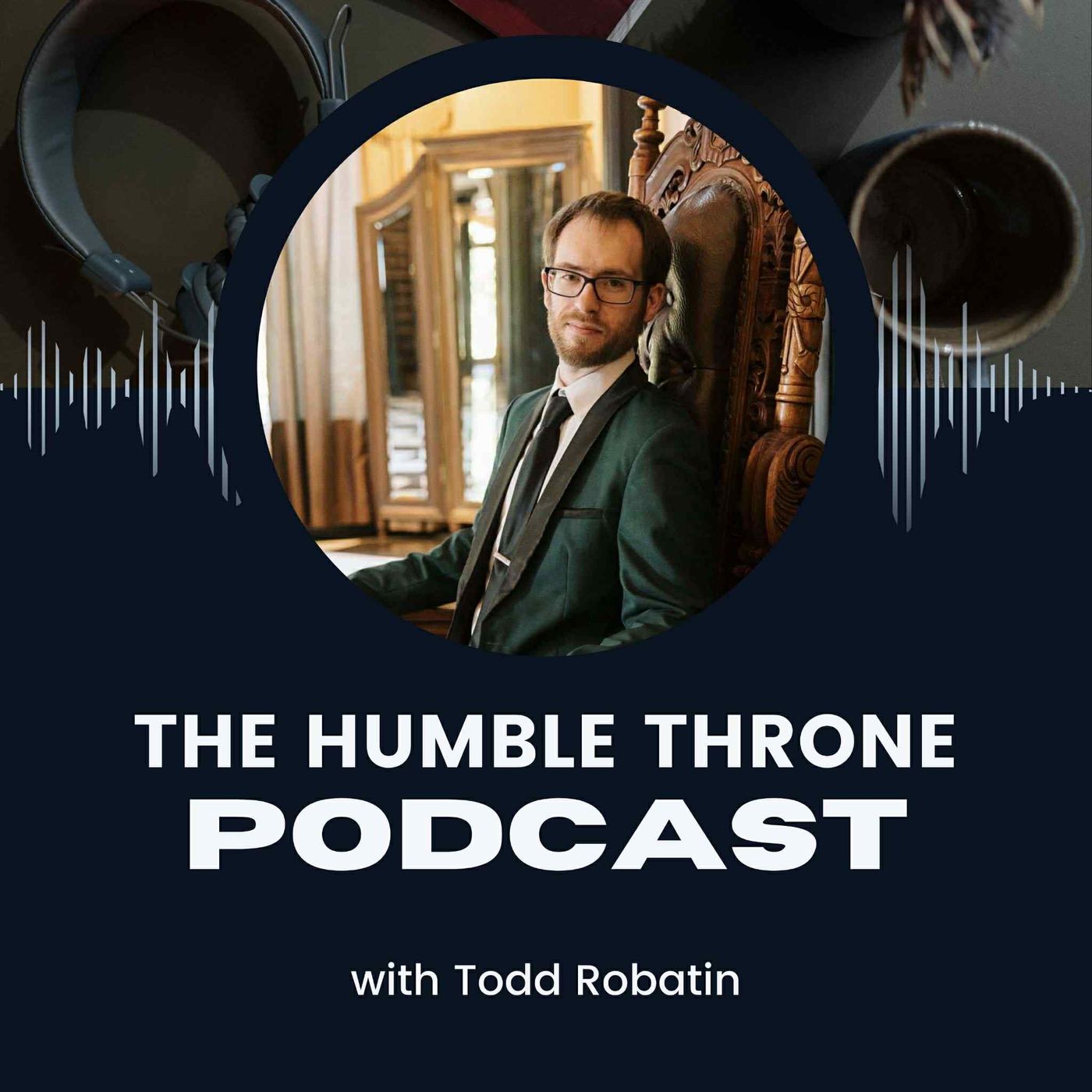
PODCAST · business
The Humble Throne
by Todd Robatin
What if leadership wasn't about being followed - but about being felt?The Humble Throne is a podcast for leaders who believe that quiet influence, emotional intelligence, and authenticity are more powerful than ego and noise. Hosted by Todd Robatin, each episode explores that art of humble leadership through storytelling, reflection, and practical insight.Whether you're navigating change, building culture, mentoring others, or simply trying to lead with more intention, this podcast invites you to sit down, slow down, and lead from within.No hype. No hustle. Just honest conversations about what it means to lead with softness, substance, and spirit.Topics include:Adaptive leadership in uncertain times.Emotional intelligence and presence.Mentorship, legacy, and quiet impact.Leading across generations and cultures.Personal growth through humility.Pull up a chair. The throne is
-
18
Episode 17: The Listening Leader
In this episode, Todd unlocks the secret power of silence that transforms leadership from loud commands to deep trust. In a world obsessed with noise, discovering how to harness quiet might just be the most radical and effective move you make as a leader. If you've ever felt misunderstood or noticed your team isn't truly engaged, this episode reveals why listening deeply — and embracing silence — builds trust faster, inspires genuine connection, and unlocks your team's highest potential. Don't just speak to be heard — learn when to listen, pause, and create space for real growth.Become a supporter of this podcast: https://www.spreaker.com/podcast/the-humble-throne--6701475/support.
-
17
Episode 16: Presence Over Presents
In this special, Todd Robatin emphasizes the importance of presence over material gifts during the holiday season. He discusses how genuine presence fosters connection, creates lasting memories, and can heal emotional wounds. Todd also addresses the barriers to being present, such as distractions and societal pressures, and offers practical tips for cultivating presence in our lives. Ultimately, he encourages listeners to prioritize meaningful connections and to recognize that true abundance comes from the quality of our relationships rather than material possessions.Become a supporter of this podcast: https://www.spreaker.com/podcast/the-humble-throne--6701475/support.
-
16
Episode 15: Doing Good, Quietly
In this episode of The Humble Throne, Todd Robatin explores the concept of quiet philanthropy and the importance of humble leadership. He emphasizes that true generosity does not seek recognition or applause but is rooted in sincere belief and impact. Through personal anecdotes and practical advice, Todd encourages listeners to engage in acts of kindness without the need for credit, highlighting that the most powerful contributions often go unseen but are deeply felt.Become a supporter of this podcast: https://www.spreaker.com/podcast/the-humble-throne--6701475/support.
-
15
Episode 14: Leading Across Differences
In this episode, Todd Robatin discusses the importance of leading with humility and embracing differences in leadership. He emphasizes that true leadership is about making space for every voice and fostering inclusion through curiosity and understanding. The conversation introduces the 'Inclusion Arc' framework, which consists of noticing, naming, and nurturing differences to create a more inclusive environment. Todd shares personal anecdotes and reflections, encouraging leaders to ask humble questions and take action to honor the diverse perspectives within their teams.Become a supporter of this podcast: https://www.spreaker.com/podcast/the-humble-throne--6701475/support.
-
14
Episode 13: The Leadership Ripple Effect
In this episode, Todd Robatin discusses the importance of leadership that embodies humility and accountability. He shares a powerful example of a senior leader who took responsibility for a team mistake, which fostered a culture of safety, risk-taking, and integrity within the team. This act not only changed the dynamics of the team but also set a precedent for how leaders should model behavior in the workplace.Become a supporter of this podcast: https://www.spreaker.com/podcast/the-humble-throne--6701475/support.
-
13
Episode 12: Quiet Influence
In this episode, Todd Robatin challenges traditional notions of leadership by emphasizing the importance of quiet influence. He argues that effective leaders do not need to be the loudest or most outspoken; instead, they should focus on listening and speaking with clarity. This approach not only transforms teams but also fosters a culture of consistency and value-driven mentorship.Become a supporter of this podcast: https://www.spreaker.com/podcast/the-humble-throne--6701475/support.
-
12
Episode 11: Mentorship That Matters
In this episode, Todd Robatin explores the profound impact of mentorship, emphasizing that true mentorship is about building trust and connection rather than merely transferring knowledge. He highlights the importance of listening, asking the right questions, and being present as a mentor. The conversation delves into practical steps for effective mentoring, encouraging mentors to reflect on their approach and to prioritize the needs of their mentees. Ultimately, the episode advocates for a humble and intentional approach to mentorship that fosters genuine relationships.Become a supporter of this podcast: https://www.spreaker.com/podcast/the-humble-throne--6701475/support.
-
11
Episode 10: Culture Check
In this episode of "The Humble Throne," Todd Robatin invites leaders to take a deep dive into the true essence of their organizational culture. "Culture Check" challenges you to look beyond polished mission statements and well-designed org charts to uncover the emotional residue of your leadership. Discover how culture is shaped not by what you say, but by what you leave behind. Through insightful reflections and practical questions, Todd guides you to evaluate the trust, safety, and clarity within your team. Tune in to learn how to conduct a meaningful culture pulse check and transform your leadership impact.Transcript:Welcome back to the humble throne, where leadership isn't just what you say, it's what you leave behind. I'm Todd Robatin, and today we're pulling back the curtain. This is episode 10, Culture Check. Today we're evaluating what's lurking beneath your leadership, because every leader creates culture. The question is, do you know what yours is really made of? Let's be honest. You can have a polished mission statement, a well-designed org chart, even a team that hits their numbers every single time. But beneath all of that fluff, there's a culture. And culture isn't what you preach, it's what people feel when you're not in the room. It's the emotional residue of your leadership, the tone you set, the behaviors you tolerate, the values you reinforce intentionally or not. And so today, we're doing a culture check, not to judge, but to reveal.Here's the real question. What's lurking beneath your leadership? Is it trust or tension? Is it clarity or confusion? Is it psychological safety or silent resentment? Because culture isn't built in meetings. It's built in moments, in how you respond to mistakes, in how you handle feedback, in how you treat the people who have nothing to offer you. It's not just what you say. It's about what you signal. Let's break it down. If your team hesitates to speak up, your culture might be cautious. If people avoid conflict, your culture might be conflict-averse, not peaceful. If feedback is rare, your culture might be polite, sure, but not honest. And here's the kicker. Culture is shaped by tone more than tools. You can have all the right systems in place, but if your tone is tense, dismissive, or inconsistent, that's what people remember, whether you like it or not. A senior leader once told me, I don't understand why my team's so quiet all the time. I've given them freedom. But when we dug a little bit deeper, we found something completely different.He gave freedom in a sense, but not safety. People were afraid to speak up, and it wasn't because of policy, it was because of tone. The leader was sharp, efficient, and results-driven, but they rarely asked questions. They rarely invited dissent, and they rarely paused simply just to listen. The culture, it wasn't toxic per se, it was just timid. And that's just as dangerous. Because when people feel unsafe, they don't challenge ideas. They don't innovate. They don't grow. They simply survive. And here's the truth. Culture is the shadow of your leadership. It follows you. It reflects you. And sometimes, it reveals what you didn't mean to create. That's why humble leaders do regular culture checks.not just performance reviews, but emotional audits. With that, here are today's humble truths. Number one, culture is shaped more by tone than by tools. You can't systemize safety. You must embody it. Number two, what's unspoken often speaks the loudest. Silence isn't neutrality, it's feedback. And number three, a humble leader asks, what am I not seeing? Because blind spots, they're not failures, they're invitations. Now these truths, they aren't just insights, they're mirrors. And if you're willing to look, you'll see what's really shaping your team and driving your culture. Now before we close, let's talk about what this actually means. What an actual culture check looks like.not just a guess at what it looks like. Because culture, it's not a vibe, it's a pattern. And patterns can be measured if you're willing to ask the right questions. So today, we'll call this our culture pulse check. It's simple, but it's not always easy. Because it requires humility. It requires humility, curiosity, and a willingness to hear what you didn't expect.start with three questions you can ask in your next team meeting in a one-on-one or even anonymously. And you can always ask more. These are just three to get you started. Question number one. What's one thing that we do well as a team? Maybe it's how you celebrate wins. Maybe it's how you support each other during tough seasons. Maybe it's humor, empathy, or transparency. Whatever it is, put a name to it, protect it, and build on it. That's what makes your team strong. two, what's one thing we tolerate that hurts our culture? And this is where the gold is, because every team has their blind spots. Maybe it's passive aggressive communication. Maybe it's favoritism. Maybe it's burnout that no one wants to talk about. But when you name what's being tolerated, you start reclaiming your culture and you have to start somewhere. Question three, what's one thing I could do differently right now to create more safety? Now this one, it's personal because it invites your feedback not just on the team but on your personal leadership. And yes, it's probably gonna sting. It usually does.but it's also the most important question you can ask because it says to your team, I'm not above the culture, I'm part of it. Now regardless of the question or the questions that you ask, here's the key. When you ask them, don't rush, don't defend, don't even explain, just receive the honest, true answers from you and your team.Because, let's face it, culture isn't built by control, it's built by curiosity. Let the silence do its work. Let the answers breathe. And let your team see that you're not just asking to check something off of some corporate HR checklist requirement because you had to. You're actually listening to understand and to grow as a leader. Because the moment you become defensive, your culture completely shuts down and closes off. But when you stay open, your culture expands and grows into something beautiful. And here's kind of a bonus move, if you will. After you gather your responses, share what you've heard with your team. Not every detail, of course, but the themes. And ask the team, hey, did I get that right? And that one question, did I get that right?is the difference between performative listening and transformative leadership. So this week, try the culture pulse check. Not to fix everything overnight, it's not gonna happen. But to start a conversation that's been waiting to happen, but no one knew where to start. Because when leaders listen with humility, cultures begin to heal. Ask yourself, what's the emotional climate of my team?right now. What's being tolerated that shouldn't be? And what's being missed that deserves my attention right now? And when you get those answers, address them immediately. Next time, we'll explore how true mentorship is rooted in humility, presence, and the art of guiding without overpowering. But for today, lead with awareness, audit your impact, and remember,Culture isn't what you say, it's what you leave behind. Thanks for joining me today on the Humble Throne.Become a supporter of this podcast: https://www.spreaker.com/podcast/the-humble-throne--6701475/support.
-
10
Episode 9: Accountability Without Intimidation
In this episode of "The Humble Throne," Todd Robatin delves into the art of maintaining accountability without resorting to intimidation. Discover how true leadership balances strength with softness, fostering a culture of excellence that doesn't breed anxiety. Todd explores the power of humble leadership to enforce accountability through clarity and support, rather than coercion. Learn how to guide your team back to their best selves with empathy and respect, transforming accountability into a tool for growth and alignment. Tune in to redefine your approach to leadership and create a more supportive and effective team environment.Transcript:Welcome back to the humble throne. Where leadership isn't a performance, it's a relationship. I'm Todd Robatin and this is episode nine, accountability without intimidation. Because holding people to a standard shouldn't mean holding them in fear. Today, we'll talk about how we lead with both strength and softness. How we build cultures of excellence without breeding anxiety and how humility isn't the opposite of accountability, it's the foundation of it. Let's be honest, most leaders struggle with accountability. They either swing way too hard using control, guilt, and tension, or they swing way too soft, avoiding conflict and settling for underperformance at every turn. But what if there's a third way? What if humble leadership could enforce accountability with clarity, not coercion? Because accountability isn't about punishment. It's about alignment. It's about helping people return to their best, not reminding them of their worst. Here's what accountability with intimidation sounds like. You messed up again. Don't disappoint me. Fix this, fast. There's a lot of tension there. But here's what accountability with humility sounds like. Let's walk through what happened. I believe you can do better and I'll help if you want. What's your plan to move forward with integrity on this one? You see, it's the same expectation, but there's a very distinct difference in emotional climate. In accountability with humility, respect stays in the conversation, while shame exits the building. And when people feel safe, they don't just admit mistakes, they learn from them, and they're willing to take on the support to change their actions. You know, a department head I worked with had a brilliant employee whose work just started slipping. They were late on deadlines. Their work quality was becoming lower and lower, and the tension in the office just continued to grow. People were gossiping behind their back. They didn't want to address the issue, but they knew that something was wrong. But this department head, rather than just issue a reprimand, they scheduled a quiet one-on-one and said to the employee, I've noticed a change. Are you okay? How can we kind of reset some things and get back on the right track? And that conversation unlocked a treasure trove of transparency that the leader was not ready to hear, but had to. Turns out the employee was burnt out and overwhelmed beyond measure. But with support and structure, not threats. They started to turn things around and the entire dynamic changed. Because accountability, everybody always thinks it has to be this demanding factor. You have to hit your deadline. You have to hit your budget. You have to have to have to have to do all of these things. But accountability doesn't mean removing the empathy component, but it does mean guiding people back to their excellence. back to their full potential and what you know as a leader they can accomplish with the right support and respect in place. And here's the result. The employee in this situation didn't just improve and get back on track, they became a culture builder. Someone that instead of being gossiped about at the water cooler or in the break room or after hours on social media, They became the person that was lifting everyone else up because they felt seen, heard, understood, respected, and not shamed. Here's the paradox of the whole thing. People perform better when they're respected, not rattled. Fear might get you compliance in the short term, but it rarely gets you sustainable excellence. And the humble leader holds the line on accountability, but at the same time holds space, too, for transparency, vulnerability, and care. Here are your humble truths for this week. Number one, clear expectations are greater than vague threats. People don't fear clarity. In fact, they crave it. When you name the standard, you actually empower people to meet it. Number two, support strengthens accountability. Accountability without support feels like a punishment, even when it's not meant to be. But when people know you're in it with them, they rise to the occasion. And number three, compassion is the foundation of high standards. You can be kind and still be firm. You can be empathetic and still expect excellence. They're not happening at different times. They can happen at the same time. Now let those settle because again, these truths aren't just ideas. They're invitations for both reflection and action. So here's a practical way to apply this this week in what we'll call the accountability reset. Before your next feedback conversation, ask yourself, What's the standard I need to reinforce? What support can I offer to help them meet that standard? And how can I communicate this with clarity and care? And then when you speak, when you communicate that clearly, lead with presence, not pressure. Ask yourself, where did I need to hold someone accountable without adding pressure or shame? And what would it look like to lead that moment with empathy and not ego? And then say, when you enter that conversation, I want to revisit expectations, not because I'm disappointed, but because I believe in your potential and I want to help you get there. That one sentence, that one request can change the entire tone of the conversation. Instead of the person feeling isolated, and attacked putting up their defenses, they lay down their guard, open up with trust and vulnerability, and clearly collaborate a plan to move forward and revamp their part on your team. Next week, we'll challenge surface-level leadership and examine the emotional undercurrents shaping modern teams. But for now, lead firmly, speak respectfully, and hold accountability with humility. Thanks for pulling up a seat and sitting with me today on the humble throne.Become a supporter of this podcast: https://www.spreaker.com/podcast/the-humble-throne--6701475/support.
-
9
Episode 8: Respect > Fear
In this episode of "The Humble Throne," Todd Robatin explores the profound impact of respect over fear in leadership. Discover how fear might yield quick results, but only respect fosters lasting loyalty and creativity. Through insightful stories and practical reflections, Todd illustrates the transformative power of respect-based leadership, where trust and humanity take precedence over control and intimidation. Join us as we delve into the quiet strength of humble leadership and learn how to cultivate a culture of respect that inspires true commitment and innovation. Tune in to redefine your leadership approach and embrace the enduring legacy of respect.Transcript:Welcome back to the humble throne where leadership isn't measured in compliance, but in connection. I'm Todd Robatin and this is episode eight. Our topic today, respect is greater than fear because fear might get obedience for a moment, but only respect earns loyalty for the long haul. Let's sit with that for a moment. Fear, it's fast, but respect, it's lasting. Fear gets results, sure, but they're quick ones. It's the shortcut. The do it because I said so approach. And sometimes in crisis or emergency, it might work. But here's the cost. Fear creates compliance, not commitment. It silences creativity. It erodes trust. Respect, on the other hand, it's slow. It's earned. It's relational. It's the kind of leadership that doesn't just move people, it grows them. You can make someone follow you out of pressure, sure, but you can't make them care about the situation, about the project, or about you. And that's where the quiet power of humble leadership becomes transformative. When people respect you, they don't just follow orders, especially not blindly, but they carry the vision with you. They challenge you. They stay when things get hard instead of run out of fear. Let's name the difference here between what we'll call fear-based and respect-based leadership, because there's a big difference. Fear-based leadership says, don't mess up. I'm watching you. Your worth depends on your results. Mistakes will not be tolerated. You see, it's rigid. It's reactive and quite frankly, it's exhausting. Let's look at the contrary. Respect-based leadership. Respect-based leadership says, I trust you. Okay, let's grow through this. You matter even when things are hard. Mistakes are a part of mastery. We'll get there. You see the difference? It's steady. It's human. It's sustainable and quite frankly, it's refreshing. But do you see the shift? Fear may create long-term wins or short-term wins. Fear may create short-term wins, but it also breeds anxiety, self-censorship, and high turnover. Respect, on the other hand, builds confidence, ownership, and long-term impact. You know, a client once told me that their CEO was brilliant, strategic, but terrifying. Every meeting felt like a performance review. People worked fast, but they rarely spoke up. They avoided risk. They even avoided truth. And as a result, innovation suffered horribly. Morale dropped dramatically and people stopped telling the truth or they left the team for good. Now contrast that with another leader, less flashy, more human. This leader asks questions, they listen deeply, they admit when they're wrong and their team, well, they have hard conversations, honest debates, they celebrate each other's wins and successes and their result, well, they're better. They're more sustainable. They're more rooted in trust and relationships. And because people don't fear leaders, they respect. They lean in, they take ownership, they grow. You see, respect starts with how you speak, how you listen, how you treat people when no one's watching. Fear, it's loud, but respect is consistent. Fear says, I need control. Respect says, I offer trust. And the humble leader, they know the difference. They know that influence isn't about pressure. It's about presence. It's not the loudest voice in the room. It's the one people turn to when things get hard and they don't know what else to do. Here are your humble truths for today. Number one, fear controls behavior. Respect shapes the culture. See, fear might get people to act and most times it does, but respect gets them to care holistically. Number two, intimidation fades quickly, but integrity lasts for a lifetime. The legacy of fear is resentment, while the legacy of respect is trust. And number three, People don't follow perfection. They follow humanity because vulnerability isn't weakness. It's leadership. So here's your reflection. When you're in leadership and you make a mistake, is there silence for success? Is your team quiet because they're aligned or are they quiet because they're afraid? and what might shift if you led from earned respect and not forced compliance? Would they speak up? Would they innovate? Would they ask questions? Would they feel heard? Now before we close, here's a practice we can all try this week. Simple, but powerful. We'll call this one the respect check-in. At the end of your day, ask yourself these questions. Did I listen more than I spoke today? Respect begins with presence. Were you truly available for others? Did I affirm someone's effort, not just their outcome? Because respect sees the process. Who did I acknowledge for showing up, even if the results weren't perfect? And did I lead with curiosity instead of control? Because respect invites dialogue. Where did you ask instead of instruct? And here's the powerful part. Take these questions and answer them honestly. Write down your answers. Review them. No judgment, no condemnation, no shame. Just awareness of where you are in the moment right now with your team today. It's an opportunity to learn how to do better tomorrow so that your team and yourself continues to grow. Because the leaders who earn respect, they practice it daily, consistently, and authentically. Next time, we'll explore how leaders can foster responsibility through respect and not fear. But until then, lead gently, be consistent. And remember, respect always outlasts fear. Thanks for sitting with me today on the humble throne.Become a supporter of this podcast: https://www.spreaker.com/podcast/the-humble-throne--6701475/support.
-
8
Episode 7: Humble Teams, Big Impact
In this episode of "The Humble Throne," Todd Robatin delves into the power of humble teams. Discover how greatness is built by quiet collaborators, not loud individuals. Explore the importance of shared power, mutual respect, and emotional availability in creating teams that not only work well together but also shape each other's purpose. Learn how humble teams make a big impact by building belonging and community, and why contribution matters more than credit.Transcript:Welcome back to the Humble Throne, where leadership doesn't live in titles, but in trust. I'm Todd Robatin, and today we explore something sacred, the power of humble teams. Because greatness isn't built by loud individuals, it's built by quiet collaborators. This is episode seven, Humble Teams, Big Impact. Let me ask you something. When did team culture become about competition instead of connection? We've been sold this idea that the strongest teams are the ones with the sharpest performers. But I think the strongest teams are really the ones with the softest edges. Teams where voices echo, not clash. Where contribution matters more than credit. Where leaders share the throne. You see, humble teams aren't passive. They're powerful. But their strength is shaped by mutual respect, emotional availability, shared values, and a culture that celebrates contribution over control. These teams don't just work well together, they work well on each other. They shape each other's thinking, soften each other's blind spots, and sharpen each other's purpose. You know, a few years ago, I sat in on a team retreat. It was not a fancy venue, no keynote speaker, but just a circle of chairs, a whiteboard, a few markers, and a question at the top of the board that said, what does trust look like here? And one by one, people shared their stories, not statistics. Moments when someone stepped in quietly. Moments when someone stepped back gracefully. Moments when someone said, I've got you and meant it. And that team didn't leave with a new strategy, but they left with a new heartbeat for their purpose and existence. A similar nonprofit that I worked with, they had a small team, scrappy budget, but a big mission. They didn't have a flashy org chart or elaborate hierarchy, but what they did have was shared ownership. Everyone understood their role. But more importantly, everyone felt trusted. They made decisions by asking, what serves the mission, not just me? And their impact? Well, it's scaled faster than teams three times their size because humility kept ego out of the strategy room. Let's talk about this idea of shared power. Because in humble teams, power, it's not a pie. It's more like a potluck where everyone brings something, everyone shares something, and no one leaves hungry. Shared power means that decisions are made with others, not for others. Credit, it's distributed, not hoarded. And feedback, it flows freely without fear. You see, it's not about flattening leadership. That doesn't really get you anywhere either. But it's about deepening it in respect and purpose. And let's pause here for a moment. Think about your team, whether it's your workplace, your family, your community, your friend group. Ask yourself these questions. Who in our team feels safe to speak up? who gets celebrated and who gets overlooked. What stories are being told about success and how are we handling that? Because you see, humble teams, don't just build results. They build belonging and community. Humble teams make a big impact because they're rooted in care, not control. They build safety. They practice feedback that's honest. They don't compete for a throne. They build one together. Recently, a leader came up to me and they were frustrated beyond measure. His team was completely disengaged. He had tried incentives, deadlines, even pep talks. But the more we talked, we found the issue wasn't really motivation. His team had that. His issue was recognition. His team didn't feel seen. They felt managed, not mentored. And so he made one change. Every Friday, he wrote an individual email, just one, to someone who had quietly made a difference that week on his team. And six months later, retention was up. Morale was up. And he texted me and he said, I finally feel like I'm leading again. and that we actually are making a difference. And with that, here are today's humble truths. Number one, a humble team is stronger than a brilliant ego. They don't need a solo hero, they build shared momentum that makes the difference between burnout and breakthrough. Number two, trust isn't built through hierarchy, it's built through humility. When leaders admit mistakes, ask for feedback, and show up vulnerably, they create psychological safety. And when teammates feel safe, they're willing to take risks, speak up, grow, collaborate, and do things together as a team instead of independently in fear. And number three, contribution is greater than credit, always. In Humble Teams, the question isn't who did it, it's did it move us forward? Because credit is fleeting, but contribution is foundational for long-term impact. And let's go deeper here with a few questions to reflect with this week. And this might take a little bit to walk through. But ask yourself these questions. What does your team culture reward? Volume or value? Because how you answer that question will determine your impact on each other, your clients, and the world. Who's quietly leading on your team without any recognition? And how can you recognize them? in the future. How can you celebrate collaboration more than performance in a way that everyone feels seen and appreciated? What's one small ritual you can start to build trust right now with everyone in your circle of influence? And the last one, how do you respond when someone disagrees with you? Do you defend or do you listen? Now, this isn't an easy process to reflect. Build and implement a plan and then consistently be present in humility to accept the answers that are true and raw. But it's in something that changes the trajectory of your team, your community, your family, and ultimately you too. It changes your trajectory from just checking things off of a list every single day to looking back and understanding what you've done and how you can grow personally so you can grow together on a bigger and grander scale. Next week, we'll explore the respect versus fear paradigm. We're gonna have an emotionally intelligent reflection on why the most enduring leaders earn loyalty - not submission, and how humility outlasts intimidation over time. But for today, remember this, no throne holds its shape without the people who built it and those that sustain it. Thanks for sitting with me today on the humble throne.Become a supporter of this podcast: https://www.spreaker.com/podcast/the-humble-throne--6701475/support.
-
7
Episode 6: Empathy over Ego
In this episode, Todd Robatin discusses the importance of empathy in leadership, contrasting it with ego. He emphasizes that empathy is not a weakness but a strategic skill that fosters trust and understanding in teams. Through various examples, he illustrates how leaders can practice empathy to create stronger relationships and improve team dynamics. The conversation highlights the need for leaders to pause and consider the feelings and perspectives of others, ultimately leading to more effective and compassionate leadership.Transcript:Welcome back to the humble throne, the space where quiet leadership gets loud in all the right ways. I'm Todd Robatin and today we begin season two. This is episode six, empathy over ego, because sometimes the most transformative leadership starts with a choice to feel before we fix. Let me tell you something I've learned over the years. Ego wants the last word, but empathy wants the whole story. Ego rushes to defend, but empathy pauses to understand. And in today's world, leaders aren't just being asked to deliver results. They're being asked to be human. You see, empathy isn't weakness. It's strategic emotional intelligence. It's the ability to hold someone else's experience with care, even when we feel uncomfortable. And especially when we feel misunderstood. Because empathy says, see you, not just I need something from you. And in workplaces, families, and communities, that shift changes everything. Think about the last time someone truly listened to you. Not to fix, not to advise, just to understand. What did that feel like? Now flip the script. When was the last time you offered that kind of space to someone else? Because empathy is a mirror. It reflects what we're willing to hold for others and what we're brave enough to receive ourselves. You know, a manager I coached once was navigating a pretty big conflict with her team. She kept asking, why don't they trust me? Something seems off and I can't figure it out. And eventually she realized she hadn't taken the time to listen. She had great ideas, impressive credentials, but there was no relational bridge with her team. And so we sat down and we reframed her next team meeting. She opened up with one simple question to every person in the room. She asked, what's one thing you wish I understood about your work? And it changed the room. The answers, they were brave. They were honest. They were transparent and raw. But here's the thing. She didn't interrupt once. And that's empathy. Letting others lead the emotional dialogue just for a moment so you can understand. And empathize instead of just dictating orders. And here's the paradox. Empathy strengthens authority, not erodes it. Because when people feel understood, they respond with trust, with loyalty, with honesty. And ego, well, it might get obedience, but it rarely earns true, authentic commitment. Ego says, I need to be right. Empathy says, I need to understand. Ego says, let me prove my point. Empathy says, let me hear yours. And here's the truth. Most of us toggle between the two continually. Even the most emotionally intelligent leaders and available, they feel the pool of ego. But the difference is they notice it, they name it, and they choose empathy anyway. And with that, here are today's humble truths. Number one, empathy isn't a feeling. It's a skill. You can practice it. You can strengthen it. You can lead it. Number two, power grows when ego shrinks. The more space you make for others on your team, on your family, in your community, in your life, the more influence and trust you earn. And number three, the best leaders are emotionally available, not emotionally reactive. They respond. They don't explode. They hold space, even when it's hard. So let's sit with these for a moment. Think about a relationship in your life, professional or personal, where tension exists. And ask yourself, am I leading with empathy or protecting my own ego? Now, this isn't a blame game. It's not to shame you, but it's about awareness because empathy doesn't mean that you agree with everyone. Most times you won't, but it does mean you're willing to understand their point of view and where they're coming from, what their full story is and that willingness to understand. That's the foundation of trust. So here's a practice we can all implement. We'll call this one the empathy pause. Before your next difficult conversation, before you pick up the phone, send that email, open that Teams meeting, walk into the room, ask yourself these three questions. What might they, the person you're meeting with or the team you're meeting with, what might they be feeling right now? What story might they be telling themselves? And what do I want them to feel after this conversation? In this pause, it doesn't take long, just a few seconds really, but it changes everything because it shifts your posture from proving to authentically connecting. From defensive dominance to relational understanding. You know, a nonprofit director I worked with in the past, they had a staff member who was underperforming, to say the least. She was ready to let him go. But something told her to pause and rethink that decision. She didn't know why. And instead of a termination meeting, she scheduled a coffee chat, just a wellness check-in, if you will. And she asked plainly, how are you doing? Really. And he broke down. Turns out he was caring for a sick parent, working the night shifts and was barely sleeping, running on fumes. And now she didn't excuse his performance, that was still his to own, but she did adjust her expectations. She offered support and in the end, over time, he turned things around. And that's empathy. It doesn't ignore accountability, but it does humanize it. It makes it personal. And so I'll ask you, where are you leading from ego when empathy might get you further? What conversation, team dynamic, or relationship deserves more listening than logic? Likely, there's more instances than just one. But it's what you do with that knowledge that makes all the difference. And it changes your impact and your leadership, both in the short term and the long term. Next time, we'll explore humble teams with big impact. How trust, shared power, and quiet collaboration can move mountains. But today, remember, empathy isn't soft. It's strong enough to hold what ego can't. It's strategic, it's relational, and it's the quiet superpower of every great leader. Thanks for leading with your whole heart and letting empathy do what ego never could. This is the humble throne.Become a supporter of this podcast: https://www.spreaker.com/podcast/the-humble-throne--6701475/support.
-
6
Episode 5: Legacy in the Background
In this episode, Todd Robatin explores the concept of legacy, emphasizing the importance of quiet influence and the impact of those who shape our lives without seeking recognition. He discusses how true legacy is built through consistent actions and relationships rather than public accolades. Todd encourages listeners to reflect on the quiet leaders in their lives and to practice presence, kindness, and humility in their daily interactions, ultimately leading to a more profound and lasting impact on others.Transcript:Welcome back to the humble throne where leadership lives not in the spotlight, but in intention. I'm Todd Robatin and this is episode five, legacy in the background. Today, let's have a conversation about influence that doesn't make headlines, but shapes lives, communities, and even the world. Have you ever traced a life-changing moment back to someone whose name rarely gets mentioned? If at all, maybe it's the mentor. the friend who showed up, the manager who quietly protected your growth, the parent who chose presence over perfection. That's legacy, and often it lives in the background. We spend so much time chasing visibility, titles, ⁓ traction, recognition, status, how many followers we can rack up, how much money we make. But the humble leader knows legacy isn't built by being seen. It's built by what others carry because you were in their lives. And sometimes the most powerful impact is never traced back to them at all. It's not just an inspirational quote or a good deed from time to time. It's the whole relationship experience that defines legacy. I once heard a story about a janitor at a local school. They've been there for over 20 years, but most people don't know their full name. But here's the thing, you ask any teacher, staff member, parent, coach, or student, and they'll tell you they make this place feel safe. They always smile. They remind me that someone cares. And that is legacy at its core. Not something that's written in policy or... rewarded with trophies, bonuses, or their face on the front page of the school newspaper, but impact ⁓ etched in memory that's verbal, physical, emotional, psychological, and at times even spiritual. And here's the thing, they never asked for recognition, they never posted about their work, they just show up. Day. ⁓ day with quiet consistency and that's what makes it powerful. That's what makes it real. You see the question isn't will I be remembered? It's will something I did continue without me and if so was it kind? Did it elevate others? Did it shape the culture even in small silent ways? And the reality is It's not just in the workplace. It's in your families, in your friend group, in your community. In every aspect of your life that you're involved in, there is a legacy that you leave. It can be good. It can be bad. But you chart that legacy throughout your life, wherever you go. With that, here are today's humble truths. Number one, legacy lives in habits. not headlines. It's the way you show up consistently, not the one-time speech. Number two, impact isn't always visible, but it's always felt. You may never know who helped you or how that one small moment shaped their life, but they'll know. Number three, you don't need recognition to be remembered. The most meaningful legacies are often anonymous, and that's a good thing. So here's something to consider. Take a moment this week to reflect on the quiet leaders in your life. Who shaped your values, ⁓ your passions, your integrity? Not the ones who shaped you from a stage, who gave you advice from a great speech, but the ones who modeled integrity when no one was watching. Maybe it was a coach who never raised their voice, but always made you feel seen. Maybe it was a grandparent, my great grandmother, who didn't really say much, but when she did, it always made you feel loved. And her presence always made you feel like home. Maybe it was a colleague who quietly advocated for you in rooms you weren't invited into. Whatever the case may be, these are the architects of legacy and they rarely ask for credit. So here's my challenge to you this week. If you have a way to contact these architects, these heroes of legacy in your life, reach out to just see how they're doing or simply just to say thank you and then ask yourself, how can I become that person for someone else? Maybe it's a note of encouragement. Maybe it's shielding someone from unnecessary pressure or drama. Maybe it's simply showing up, consistently, kindly, and with intention. Whatever you choose to do or say, do so with humility, expecting nothing in return. Before we close, I want to offer a practice we can all take to heart. We'll call this one the legacy lens. Each morning, ask yourself, What do I want someone to feel today because of me? Not what they'll say, not what they'll post, but what they'll feel. Will they feel heard? Will they feel seen? Will they feel respected, understood, appreciated? That's legacy. And it starts right now with every single one of us. Let's take this even one step further. Here are three ways to live through the legacy lens this week. Number one, practice presence over performance. When you're in a meeting, a conversation, or even a moment of silence, ask yourself, am I performing or am I present? Because legacy is built in presence, in listening, in being fully there and available, not in the performance. Number two, protect someone's path. Think of someone in your network who's growing. Can you shield them from unnecessary noise? Can you advocate quietly without needing credit? If you answered yes to either one of those, then do it. It's important and it's part of your legacy. And number three, leave a trace of kindness. Write a note. Send a message, leave a voice memo, maybe old school, put a note in the mail, send it. Something small though that says, ⁓ see you, you matter. These traces become threads in someone else's story and it doesn't just impact them, it ultimately impacts everywhere that they go. Their workplaces, their friend groups, their family, their community, their world. The truth is though, legacy isn't loud. It's layered. It's lived. It's authentic. It's raw. And it's often invisible until someone looks back and says, that moment, that person changed me. They changed everything. Next time, we'll address empathy over ego while examining the invisible tug of war between personal pride and people-first leadership. But for today, may you lead gently, serve boldly but quietly, and let your legacy speak for itself, even if your name doesn't. Thanks for sitting with me today on the humble throne.Become a supporter of this podcast: https://www.spreaker.com/podcast/the-humble-throne--6701475/support.
-
5
Episode 4: Burnout vs. Bravado
In this insightful episode, we tackle the delicate balance between burnout and bravado in today's fast-paced world. Explore how the pressure to appear strong and invincible can lead to exhaustion and stress. We share real-life stories and expert advice on recognizing the signs of burnout and the importance of vulnerability in leadership. Learn strategies to maintain your well-being while still achieving your goals. Whether you're feeling overwhelmed or striving to support others, this episode offers valuable guidance on navigating the fine line between pushing forward and taking care of yourself.Transcript:Welcome back to the humble throne, where leadership isn't about pushing through, it's about knowing when to pause. Where leadership sheds its armor and steps into truth. I'm Todd Robatin, and today we're tackling a quiet epidemic. A tension that lives quietly inside so many leaders, and yet we don't like putting a name to it. That's right, we're talking about burnout. Disguised as bravado. It's that moment when I'm fine becomes your default. When showing up starts to feel more like survival than service. And when the applause gets louder, but your energy gets lower or is completely gone. This episode is for the leader who's been powering through, but is starting to wonder what's the cost of pretending like I'm okay. The reality is if we don't talk about this tension. between the ⁓ pressure to perform and the need to rest will keep honoring exhaustion like it's excellence and something we need to attain. You see, leadership culture and the societal script we've all been handed to follow as leaders for so many years has a major flaw. We celebrate the ones who stay late, who hustle hard, the ones who never flinch, at least on the outside. This script says things like, push harder, show no weakness, keep going no matter what, and if you're tired, smile anyway. If you're overwhelmed, just work smarter. If you're hurting, don't let it show. You've got people that are watching. They can't see you like that. But underneath that facade, all that applause and accolade, or even a bonus or promotion or two, you find holistic depletion. Sometimes, loneliness like you've never imagined. The script rewards bravado. but it punishes vulnerability. And over time, this script becomes a trap that breaks you down completely to rubble in every sense of who you are. Bravado says, I got this. But burnout whispers, ⁓ sometimes screams, but I don't know how much longer I can take this. You know, a few years ago, I met with a founder. Let's call him Steve. He was relaunching his third startup and was expanding ⁓ rapidly. He had the press, the funding, the buzz. His calendar was packed solid, his inbox overflowing and out of control, and his team was growing at an insane rate. From the outside, he was thriving. But one afternoon, after our weekly team call, he pulled me aside and he said, Todd, I can't remember the last time I felt joy doing this. And you know, that statement hit me like a brick. I could feel the pressure of its words as they exited his mouth. And if you've ever been in this situation, even me talking about it might bring that back to your forefront. Because I'm sure at some point or another, we've all been there. But here's the problem. With Steve, He was successful. He was performing every role of leadership he could muster while at the same time abandoning himself in the pursuit of global expansion from the inside out. He was scorched and hanging on emotionally by a thread if there was even a thread left. But here's the thing, most people didn't have a clue because he was so good at bravado he would tell a joke in a meeting. He would tell a success story. He'd say a motivational quote and rally the troops. But he was still feeling out of place. You see, Steve didn't need another productivity hack. He didn't need a better calendar system. But he did need permission from himself and his team to be human again. To rest. and not feel guilty, to feel and not feel ashamed. He needed permission to just stop performing like everything was hunky-dory and allow himself to start healing. And that's what humility offers. It's not weakness, it's wisdom. So let's talk about the difference. Bravado says, ⁓ I got this. I'm fine. I'll push through. But burnout whispers, I don't know how much longer I can do this. I'm losing myself somehow. Or simply, I need help. Bravado, sure, it protects your image, your brand, your social status, and maybe for some of you, your stock price. But humility protects your spirit, your mind, your body, and your soul. Humility offers the courage to step back, the wisdom to ask for help and to delegate to your team, give them some trust. And it also offers the grace to recover, not just perform. And in the end, the leader who knows when to pause, when to step away, they're the ones that lead stronger, ⁓ longer. and have more impact, not just at work, but in their lives in general, in their families, in their communities. So let's ground this discussion in today's humble truths. Number one, bravado is a mask. Burnout is a message. If you're constantly performing strength, ask yourself, what's the cost? Is it really worth it in the end? Number two, rest isn't weakness. Even though we've all been told the opposite, let me say that again. Rest isn't weakness, ⁓ it's strategy. Recovery is not optional, it's essential. Athletes know this, artists know this. Leaders, we all need to know this too ⁓ and live it out. And number three, a humble leader listens when their body whispers. Before it screams, before it breaks, before the joy completely dissipates. So here's my question for you. Where are you powering through when you might need to pause? And what would it look like to reclaim just one moment this week? Not to push harder and to push through, but to soften inward. Maybe it's a walk without your phone. Maybe it's saying no to just one more meeting. Maybe it's telling someone, I am not okay right now. I need help. That's not weakness. That's leadership. And it's essential. Before we close, I want to offer a simple practice that we can all use when we're feeling overwhelmed and burnt out and don't know how to reset. Let's call it the three minute retreat. Here's how it works. Step away from your screen, turn off your phone. and close your eyes. Imagine yourself in a peaceful place. ⁓ Maybe that's on the beach ⁓ or in a hammock at a campsite in the middle of the woods. Maybe it's just in some comfy pajamas on a cold winter or fall night with a hot chocolate or hot cider. You choose. Wherever it is, ⁓ close your eyes and take yourself there. And then ask yourself, what do I need right now, take a big deep breath ⁓ and listen. Listen to your body and how it answers the question and then honor that answer and address it. It seems simple. It seems almost a little fake, but allow yourself the permission. listen, honestly. The truth is, you don't need a vacation to begin healing, even though we all need that escape from time to time too. But you do need a moment of honesty with yourself to truly be able to lead with humility and grace and power for the long haul. Next time, we're talking about legacy in the background. We'll explore quiet impact, hidden influence, and the kind of leadership that shapes the future without chasing applause. But until then, lead soft, honor your limits, and remember, the most powerful leaders know how to retreat with grace so they can return with strength. Thanks for sitting with me today on the humble throne.Become a supporter of this podcast: https://www.spreaker.com/podcast/the-humble-throne--6701475/support.
-
4
Episode 3: The Mirror Test
In this thought-provoking episode, we explore "The Mirror Test"—a powerful tool for self-reflection and personal growth. Discover how looking inward can reveal hidden strengths and areas for improvement, helping you align your actions with your true values. Join us as we discuss practical steps to implement this introspective practice in your daily life, and hear from individuals who have transformed their paths through honest self-assessment. Whether you're seeking personal development or professional growth, this episode offers insights to help you face your own mirror test with confidence.Transcript:Welcome back to the humble throne where leadership begins not with loud answers, but quiet reflection. I'm Todd Robatin and this is episode three, the mirror test. Today we'll have a conversation about seeing ourselves clearly, compassionately, and completely. Because before we lead others, we must first face ourselves and not just the polished version, but the real one. The one that experiences ⁓ joy and success. and accolades, but also still experiences pain, loss, doubt, and discontentment. Let me ask you something. When was the last time you truly looked at yourself, not just in the mirror, but in motion, as a leader, as a parent or grandparent, a friend or colleague, a creator, or just a tenant? Not what others see, but what you ⁓ sense. Your words, your rhythms, your habits, your presence. You see, the mirror test isn't about appearance. It's not about vanity or ego. We can all put on a fake facade and act the part from time to time when the cameras are rolling. But a mirror test is about alignment. Do your actions match your values? Do your relationships reflect your integrity? Do your decisions echo your deeper truths? And here's the hardest part. Are you leading with your truest self from your truest self or just from your polished performance? Cause it's easy to build a name for yourself or to brand who you want to be around certain people in certain circles. But it's harder to build a life that feels like yours. One that doesn't feel like work 24 seven. but a life that is filled with worth, purpose, and meaning. Now years ago, I worked with a leader who did this test every single week. No fancy tool, just a journal, a mirror, and a question. He'd ask, did I show up with courage, kindness, and clarity this week? Sometimes he said, yeah, I did. And other times he'd circle one word and vow to try again. But... He kept coming back because he knew that growth doesn't happen in perfection or overnight. It happens in the return, in the constant pursuit of making yourself better than the day, the hour, or even the moment before. You see, self-awareness is not self-critique. It's compassion with curiosity. It's not about tearing yourself down and ripping apart your thoughts. your failures and successes. It's about asking, is this who I want to be? In my career, in my community, in my family, or even in my own brain. And if the answer is no, you don't punish yourself. You pivot, you realign, you recommit, you plan. We don't look in the mirror to shame ourselves. We look to remind ourselves, hey, I'm still in it. I'm still growing and I'm still choosing who I want to be every day. Because the mirror doesn't judge, it reflects. Now you see, I've done this test myself from time to time, and I'll be honest, some days I don't love what I see. I see impatience. I see distraction. I see moments where I choose comfort and convenience over courage and resilience. But I also see effort, growth. and someone who's still showing up. And that's what matters. And with that in mind, here are today's humble truths. Number one, the clearest leaders are often the quietest observers. They don't just react, they reflect. Number two, a mirror can offer clarity, but only if we're willing to see. Because avoidance is easy, but awareness is brave. And number three, self-awareness isn't a destination. It's a constant discipline. It's not a one-time check-in. It's a lifelong practice that requires honesty, accountability, and the courage to admit when you've reached the end of your rope and need help. So let's make this real. After this episode, I want you to try this simple practice of a mirror test for yourself. Find a quiet space. Maybe it's your closet or spare room or bathroom. Grab a journal and sit with a mirror. Yes, a literal mirror, small, large, you decide, but then ask yourself these questions. Where did I lead with courage this past week? Where did I choose comfort over truth? And what do I want to realign tomorrow? Now, when you do this, Write freely. No edits, no perfect sentence structure or grammar, no judgments. Just honest, transparent reflection. And if you're not sure what to write or where to start, just start with how you feel. Because feelings often point to truths we haven't named yet. Do this once a week ⁓ or once a day or however often you want. But do it. Because the mirror doesn't just show up. It doesn't just show you who you are. It shows you who you're becoming. And here are just a few more things to reflect. What would your mirror say today? Would it celebrate your empathy? Judge or nudge your honesty? Invite your pause? And more importantly, ⁓ what would it ask you to change? even if it seemed small. Not because you're failing, but because you're evolving. Because leadership isn't just about vision, it's about visibility of self. Next week, we'll dive into the difference between burnout and bravado and walk through an exercise to help turn off the noise and holistically heal from the inside out. But for now, stand tall, look softly, and thank your reflection for showing up. Because with vulnerability, growth gets crowned. Thanks for sitting with me today on the humble throne.Become a supporter of this podcast: https://www.spreaker.com/podcast/the-humble-throne--6701475/support.
-
3
Episode 2: Imposter Syndrome at the Top
In this compelling episode, we delve into the often-overlooked phenomenon of imposter syndrome among top leaders and executives. Despite their success, many leaders grapple with feelings of self-doubt and inadequacy. Join us as we uncover personal stories and expert insights on how to recognize and overcome these challenges. Learn strategies to build confidence and authenticity at the highest levels of leadership. Whether you're a leader facing these feelings or someone looking to understand them better, this episode offers valuable perspectives and solutions.Transcript:Welcome back to the humble throne, where leadership is redefined through quiet strength and deep presence. I'm Todd Robatin, and today we're talking about something many leaders carry, but rarely name. This is episode two, Imposter Syndrome at the Top. Owning your space without losing your humility. Have you ever walked into a room, sat at the head of the table and thought, do I really belong here? If you have, you're not alone. And if you haven't, stick around because chances are someone you admire deeply has. What happens when the world believes in you, but you're not sure you do? Leadership isn't always about competence. It's often about doubt, especially the quiet kind. The kind we hide behind polished resumes, brave voices, and beautifully crafted reels and posts on social media. So today's episode is for anyone who's ever sat at the top and whispered, Am I really supposed to be here? First off, we have to realize imposter syndrome doesn't discriminate and isn't just for newcomers and a problem for newcomers. It doesn't care about your resume, your accolades, your corner office, the size of your team, or how much money you bring into the company every year. It whispers in the quiet moments when no one else is around. It shows up in the spaces between confidence and doubt when we least expect it. And it often hits hardest after success, when the spotlight is brightest, the self-questioning gets loudest. And here's the paradox. The higher you rise, the louder it can get. The more responsibility we carry, the less permission we feel to doubt ourselves. Why? Because visibility amplifies vulnerability. Because being seen can feel like being exposed. And here's the truth. Even humble leaders get haunted because they care. They reflect. They aren't driven by ego, but by impact. I once spoke with a CEO, someone I deeply respected, and they just led a major acquisition. They were praised publicly, celebrated privately, and yet over coffee they leaned in and said to me, sometimes I feel like I'm faking it. Like any minute someone's going to figure it out and it's all going to collapse. And to be honest, that moment cracked something open for me because it reminded me that even the most capable leaders carry quiet questions in their mind. I remember several years ago, I felt something similar in my own career. We'd gone through an acquisition of our own. And let's just say it was a chaotic transition. On the outside, I was the optimist who was everyone's cheerleader and believed the beautiful picture that was being painted by the incoming senior executives. But internally, I was scared out of my mind what a potential restructuring would do to my job, the jobs of my team, and everyone else. Or if we would even have jobs at all at the end of it. And as time progressed, we did get to a point where my position was essentially eliminated. but the local leadership for whatever reason still wanted to keep me on the team. And so they transitioned me into the safety and engineering department, something I knew very little about at first, and just said, be teachable and we'll figure it out. What resulted was them putting me in charge of two location wide projects in OSHA compliance and SOP system engineering. Something I had honestly always dreamed of doing for the company and something I was studying. in my bachelor's degree online at the time, but something that I also didn't have the qualifications in my mind to complete. My job was to come alongside every single position in every single department, learn what they do, document it all, and then craft reports for review, training, and company-wide best practices rolled out to everybody. The first time that I stepped foot in each department and started asking questions of these department heads that had been there for 40 plus years, I would feel out of place. You know, would they think that I was an executive spy sent in to learn what they do so that I could train the next person to take over their job or find some way to innovate their positions out of the company entirely? Would they give me accurate information or just watch me struggle to fill in the gaps? Would they even respect the fact that I was just as scared as they were about the current situation of the company? You know, the same was true when I presented my first set of findings to the local executives. Would it be what they asked me for? Or was I way off? Would they like the format or would I have to start completely from scratch all over again? Was I thorough enough or did I oversimplify the task? They were taking a huge risk for me leading these projects. Was I really the right person for the job? Or should they just outsource the project entirely to save time and money? And all these questions, ⁓ once I started working with each department and presenting the first findings, they started to disappear. But in the moment and at first, I felt like I was in a dream and a nightmare all at the same time. So what gives? I had earned a seat at the table prior to this transition, but I still felt like I was at the bottom of the totem pole on several levels. And I know I'm not the only one who's ever felt this way with a promotion. or a transition. And reality is, imposter syndrome isn't a reflection of ability. It's a symptom of ability. It's a symptom of awareness, of caring, of knowing just how big the job really is and who all would be affected by its results. And how, you know, how could this younger guy really know what he was doing over seasoned experts? But here's where humility becomes the antidote. and not the enemy. Because while ego demands certainty, humility invites curiosity. The humble leader says, I'm still learning. I still wrestle, but I'm here to serve. And that's not weakness. It's power. With that, here are today's humble truths. Number one, self-doubt is a sign of self-awareness, not disqualification. It doesn't mean you're broken. ⁓ means you're human, but it also doesn't mean you need to stay there. Belonging doesn't require perfection, just presence. Imposter syndrome thrives in silence. Speak it and it shrinks. And number three, the throne gets louder when you sit with grace, not guilt. You don't have to feel ready to be worthy. You just have to be willing. So take a few moments to let those settle in because they're not just affirmations, they're invitations. Self-doubt is a sign of self-awareness, not disqualification. Belonging doesn't require perfection, just presence. The throne gets louder when you sit with grace, not guilt. And then ask yourself these questions. Where in your leadership do you feel like an imposter? In other words, where are you questioning your belonging right now? Is it a new role, a creative project, a relationship where you feel out of place, a new responsibility in your family or community that feels way out above your pay grade? And more importantly, what would you shift if you named that thing not as a failure, but as a doorway? Because you see, imposter syndrome feeds on secrecy. But when we speak it, when we say, I feel this too, we reclaim our power. So I want to offer you a reframe. What if imposter syndrome isn't a sign of an adequacy, but a signal of growth? Because here's the truth. You're not an imposter. You're a learner. You're a leader in motion. You care. And that's... a good thing. Next week, we're looking in the mirror, literally, by taking an exploration into self-awareness, identity, and the quiet courage to take inward, to look inward, while leading outward. But until then, remember, you belong, even when it feels shaky, even when it feels surreal. The throne may feel too big some days, but you're not sitting there by accident or alone. Thanks for sitting with me today on the humble throne.Become a supporter of this podcast: https://www.spreaker.com/podcast/the-humble-throne--6701475/support.
-
2
Episode 1: Sitting Softly on The Throne
In this episode, we explore the power of quiet leadership and how it can transform organizations and teams. Discover the subtle yet impactful ways that leaders can inspire and guide without raising their voices. Join us as we delve into the art of leading with empathy, listening, and thoughtful decision-making. Whether you're a seasoned leader or just starting your journey, this episode offers valuable insights into the strength of leading softly. Tune in to learn how to sit softly on the throne and make a lasting impact.Transcript:Welcome to the humble throne, where leadership isn't loud and power isn't performative. I'm Todd Robatin, and today we take our seat. Not with noise, not with ego, but with intention. This is episode one, sitting softly on the throne. Let me start with a story. A few years ago, I was sitting in a meeting and the person in charge, title, authority, ⁓ accolades, positions galore, they walk into the room. They said very little. They asked a few thoughtful questions and then quietly just listened. No fanfare, no power play, and yet the entire room shifted because we could feel it. Presence without performance and that moment stayed with me because it reminded me that real leadership isn't always what we say but it's how we show up and that's what today is about the quiet kind of power the kind of power that doesn't need to be seen to be felt the kind of power that builds respect among individuals and makes everyone feel heard and appreciated not lost and forgot. Let's talk about the paradox of power. How do we lead with conviction while staying soft? ⁓ How do we hold authority without holding onto ego? The truth is it's not easy, especially in a world that ⁓ rewards volume, visibility, and velocity. But here's the truth. ⁓ Soft does not mean weak. Quiet doesn't mean passive. Stillness doesn't mean absence. In fact, some of the strongest leaders I've ever met in my life, in my career, in my community are the ones who speak last or don't even speak at all. Those that listen longer and who lead from behind. So let's break it down. Positions, they get handed to you. The presence, ⁓ that's earned. That's something of value. You can't just give out like candy to children at a fair. Titles, sure, they can open doors and they look great on resumes, but presence, ⁓ that opens hearts and builds real trust. ⁓ And presence isn't just about being in the room physically. It's how you hold yourself and lift up others in the room with you. It's the difference between commanding attention and cultivating trust and respect. I want to introduce you to a phrase that I believe has real power. It's two simple words, humble truths. Just simple reminders for leading with humility. And here are our first three. Number one, power doesn't always announce itself. Sometimes the most powerful person in the room is the one who says the least but listens the most. Maybe they're the leader that sits on the end and takes notes the entire time, asks a few intuitive questions throughout, ⁓ really just absorbs all of the knowledge and expertise in the room so that they can then summarize everything they've heard and build out a plan to lead with strength with everyone's input in mind. That is true power. Number two, influence grows in stillness. When we slow down, we create space for others, for insight, for clarity, for innovation. It means really taking those times when we're on a call or we're in a meeting and there's that weird awkward silence that we all hate. It kind of creates that tension in the room that nobody really likes, something kind of like this. And you think, okay, something should be there, right? It creates that weird ⁓ space that something has to fill it. But really what it means is as a leader, you sit back and allow others to have a seat at the table, to have a voice, ⁓ to bring some innovation, some creative thoughts, and that creates influence because you're giving them a leg up. You're allowing them to be heard and to be seen. And number three, humility makes room for others. It's not about shrinking yourself. It's about expanding the circle of influence that makes a real impact to those around you. Humility makes room for others. It allows you to sit back and say, I'm not the expert on all things all the time, and that's okay. What does everybody else have to say? What can they bring to the table, to the conversation? to the planning that maybe I wouldn't know because I don't have that experience coming into the board meeting. Let those three humble truths sit with you for a moment. Power doesn't always announce itself. Influence grows in stillness. Humility makes room for others. Here's something I'll ask every episode. Where are you being invited to sit softly right now? Is it in a conversation that feels tense ⁓ on a team where you're tempted to prove yourself constantly? Or in your own internal dialogue where the critic is louder than the coach? Sitting softly doesn't mean doing nothing. It means choosing presence ⁓ over performance. It means leading with Curiosity and not control means listening, not just responding. So take a breath. Notice where you're gripping maybe a little too tightly. And ask yourself, what would it look like if I loosened the grip just a little bit? I want this podcast to be more than a monologue. I want it to be a mirror. So if something resonates with you, pass it along to someone in your community, in your company, in your friend group, or even your family. Or even just sit with it quietly and think about how you can be more present each and every day in each area of your life. In the next episode, we'll tackle imposter syndrome at the top. An honest and reflective look at how to own your space without losing your humility. But until then, remember, the throne isn't a spotlight. It's a seat of service. And sit softly. Sitting softly, it's a strength, not a weakness. So thanks for sitting with me today. This ⁓ is the humble throne.Become a supporter of this podcast: https://www.spreaker.com/podcast/the-humble-throne--6701475/support.
-
1
Episode 0: Welcome To The Humble Throne
Transcript:What if leadership wasn't about being the loudest voice in the room? What if influence lived in grace and not dominance? Welcome to the humble throne. I'm Todd Robaten and I believe the future of leadership sits softly. This podcast isn't about ego. It's about presence. It's about emotional intelligence, legacy, and the quiet art of leading well. So whether you're a seasoned executive, a first time manager, a creative entrepreneur, or someone just rethinking what influence really means, you belong here. Each week we'll explore powerful themes like empathy, accountability, and humble teams that make a big impact. We'll unpack stories, dive into reflection, and ask the questions that most leaders avoid. Because the throne isn't just a seat of power, it's a place of purpose. So pull up a chair. It's time to lead with less noise and more depth. This is the Humble Throne.Become a supporter of this podcast: https://www.spreaker.com/podcast/the-humble-throne--6701475/support.
We're indexing this podcast's transcripts for the first time — this can take a minute or two. We'll show results as soon as they're ready.
No matches for "" in this podcast's transcripts.
No topics indexed yet for this podcast.
Loading reviews...
ABOUT THIS SHOW
What if leadership wasn't about being followed - but about being felt?The Humble Throne is a podcast for leaders who believe that quiet influence, emotional intelligence, and authenticity are more powerful than ego and noise. Hosted by Todd Robatin, each episode explores that art of humble leadership through storytelling, reflection, and practical insight.Whether you're navigating change, building culture, mentoring others, or simply trying to lead with more intention, this podcast invites you to sit down, slow down, and lead from within.No hype. No hustle. Just honest conversations about what it means to lead with softness, substance, and spirit.Topics include:Adaptive leadership in uncertain times.Emotional intelligence and presence.Mentorship, legacy, and quiet impact.Leading across generations and cultures.Personal growth through humility.Pull up a chair. The throne is
HOSTED BY
Todd Robatin
CATEGORIES
Loading similar podcasts...
Frequently Asked Questions
How many episodes does The Humble Throne have?
The Humble Throne currently has 18 episodes available on PodParley. New episodes are automatically indexed when they're published to the podcast feed.
What is The Humble Throne about?
What if leadership wasn't about being followed - but about being felt?The Humble Throne is a podcast for leaders who believe that quiet influence, emotional intelligence, and authenticity are more powerful than ego and noise. Hosted by Todd Robatin, each episode explores that art of humble...
How often does The Humble Throne release new episodes?
The Humble Throne has 18 episodes. Check the episode list to see recent publication dates and frequency.
Where can I listen to The Humble Throne?
You can listen to The Humble Throne on PodParley by clicking any episode. We provide an embedded audio player for direct listening, and you can also subscribe via your preferred podcast app using the RSS feed.
Who hosts The Humble Throne?
The Humble Throne is created and hosted by Todd Robatin.
URL copied to clipboard!